Posts Tagged ‘aalbum review’

Cruel Nature Records – 28th November 2025

Christopher Nosnibor

November always feels like plunging into an abyss. It’s the month when , after the clocks change on the last weekend of October, the darkness encroaches at an exponential pace, while, simultaneously, the weather deteriorates and temperatures suddenly drop. I struggle with November, and I’m by no means alone in this – but the darkness and muffling cold brings with it a blanket of isolation, too.

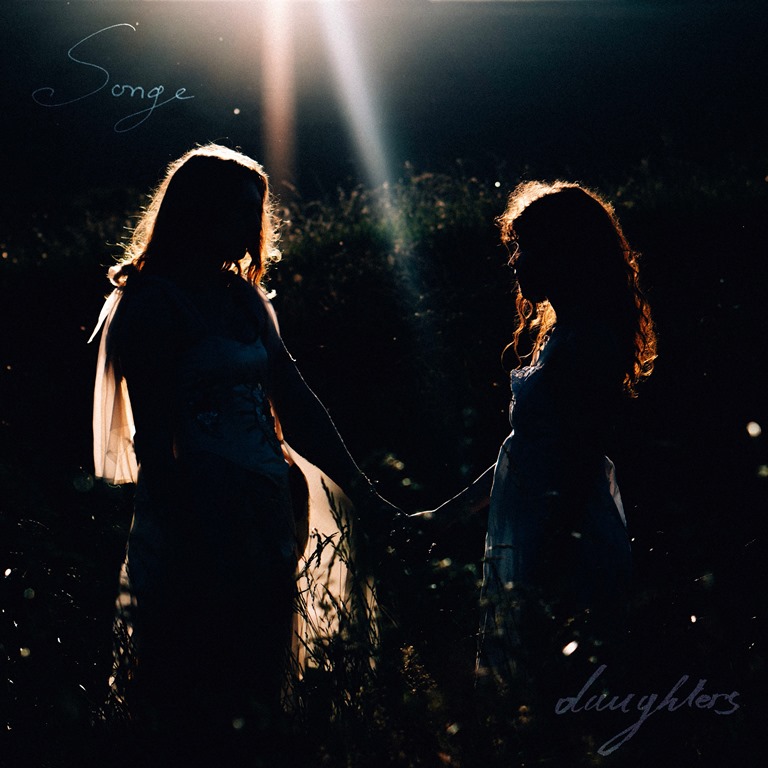
Listening to the debut album proper by Songe in this context makes for a heavy experience. And it’s the context that counts here, because in reality, Daughters is largely calm and spacious rather than dark and oppressive.

The Anglo-French duo consisting of Gaëlle Croguennec and Phoebe Bentham formed in 2023 ‘upon stumbling on a lonely church piano’, and, we learn that ‘Songe explores what it means to live in a postmodern world that feels rooted in destruction’.

This resonates. Right now, it feels as if the world is on a collision course. The so-called ‘great pause’ of the pandemic seems more, in hindsight, as if it was a time during which tensions built and nations pent up rage ready to unleash the moment the opportunity arose. Some of this a matter of perception and distortion, but the bare fact is that the last COVID restrictions were lifted here in the UK on 21 February 2022, and Russia invaded Ukraine three days later. The pandemic, for many, felt apocalyptic. It wasn’t simply the deaths, the fear, but the impact of the restrictions, which didn’t suddenly dissipate the moment those restrictions lifted. The end of restrictions felt like a deep-sea diver coming up for air, the aftereffects akin to the case of the bends. While we were recovering our breath and dealing with the cramps, Russia invaded Ukraine, and from thereon in it’s felt like an endless succession of disasters, storms, and then – then – the annihilation of Gaza.

Musically, Daughters – on which the duo deliver a set of ‘vibrant and experimental soundscapes using a variety of e-pianos, pedals and theremin, pairing a traditional playing style with bit-crushed granular delays to create a soaring top line met with ethereal vocals’ – is by no means dark, bleak, or depressing. In fact, quite the opposite is true. It’s a delightful set of compositions.

But sometimes, the more graceful, delicate, uplifting the music, the harder it hits. And on Daughters, Songe reach some dark and hard-to-reach places. From the most innocuous beginnings, the epic, nine-minute ‘Warmer, Hotter’ swells to a surge of discordant churn beneath soaring, ethereal vocals. The piano-led ‘Ashes’ borders on neoclassical in its delivery, and is rich in brooding atmosphere. ‘Heol’ begins with distorted, discordant harmonics, with frequencies which torment the inner ear. Gradually, through a foment of frothing frequences and fizzing tones, bubbling undercurrents rise. Haunting vocals rise through the mist, the haze, the dense and indefinable drift. It’s ethereal, spiritual, bewildering in terms of meaning.

Waves crash and splash before soft, rippling piano takes the lead on penultimate track, ‘Eveil’. It’s graceful, majestic, emotive – but not in a way which directly or obviously speaks of the album’s subject or context. The vocals are magnificent, but the words impenetrable. It works because of this, rather than in spite of it. It’s slow, subtle, powerful.

It’s not until the final composition, ‘Wraith’, that we feel the emotive power of a droning organ, paired with saddest of strings, that we really feel the depth and emotion al resonance of Daughters. As it fades in a brief reverberation, I find myself feeling sad. No, not sad: bereft. This is an album that takes time to take effect, to soak in. It deserves time to reflect.that time.

AA

AA
cover

Cruel Nature Records – 25th October 2024

Christopher Nosnibor

Mike Vest’s output continues to be nothing short of staggering. He’s played with a host of bands – great bands at that – Bong, 11Paranoias, Drunk In Hell, Blown Out – to name but four, and Discogs records a total of one hundred and sixty credits, with a hundred and nineteen of them being for instruments and performance.

Sear is the latest album from Vest’s ongoing solo project, Lush Worker. The accompanying notes promise a work ‘Blending smouldering guitar explorations with old-school noise psychedelia,’, and an album which ‘showcases Vest’s signature maximalist guitar sound mixed with heavy riffs and drone-rock atmospherics. A blissful yet intense listening experience.’

With stoner doom merchants Bong, Vest explored, in detail, droning riffs over longform formats: 2018’s Thought And Existence contained just two tracks, each just shy of twenty minutes in duration. Around the same time, Vest released Cruise as Lush Worker, a half-hour long behemoth, and he’s continued to pursue epic soundscapes.

Sear is perhaps the most epic yet.

Momentarily, on noting the title, I thought of the Swans album, which spans a full two hours, and its monumental title track. But a single letter makes all the difference. While a ‘seer’ is one who sees, a visionary, with all of the connotations of spirituality and mysticism, ‘sear’ is to scorch, burn, or to fry meat at a high heat. And over the course of thirty-eight monumental minutes, Vest spins forth guitar work which blisters and peels, the sonic equivalent of white-hot sheet metal. At first, drums thump away, almost submerged as if engulfed by a flow of molten lava. The squalling wall of noise heaves and howls, while sibilant sounds like whispering voices of the dead burst like pockets of has rupturing from the seething sonic miasma.

Long, meandering lead work emerges over time, the most spaced-out trippy solo seeping out over a thick, grainy backdrop of droning overdrive, from which strains of feedback break through, before everything gradually sinks into a swirling soup of feedback and distortion, the rhythm having collapsed.

The experience is somewhat akin to listening to Metal Machine Music and Earth 2 simultaneously, but that’s only an approximation of everything that’s going on here. While there’s no overt structure to Sear, there is a strong sense of ebb and flow, and each time the immense sound tapers off for a time, it gradually rebuilds to a point that seems even denser and more intense than before. Around the twenty minute mark, the percussion is back, and there is later upon layer of yawning drone which swirls into an eternal vortex. And the fact that it does go on for what feels like forever is essential to the fullness of the experience. A burst of this may give a flavour, but ultimately, Sear is designed as a fully immersive work, and indeed, it is.

For all the detail here – there are so, so many layers and textures to this – it’s the immense drone that sucks you in and leaves you staring into space. It’s like the cyclical growing hum of ten thousand didgeridoos, amplified and reverbed, and over time, the sounds seems to bend and twist, and it feels as if your very perception is warping as it slowly melts out of shape.

After half an hour, the drums once again stop, and an eight-minute wind-down begins. It’s another lifetime of slow-shifting blurring shades as darkness gradually descends and silence finally follows.

AA

cover

Sacred Bones – 1st December 2023

Christopher Nosnibor

The unexpected and unannounced arrival of Khanate’s fifth album, some seventeen years after they declared that they were calling it a day, and fourteen years after the release of the posthumous Clean Hands Go Foul caused quite a stir in certain circles – predominantly those occupied by black-clad beard-strokers. Although this is very much a stereotype, I’m reminded of the time I went to see Sunn O))) at The Sage in Gateshead on the same night one of Cheryl Cole’s X-Factor protégé’s was performing in the foyer of the three-stage venue. Incongruous doesn’t come close, and suffice it to say, I wasn’t hard to tell who was there for the ultimate lords of drone-doom and who was there for the cheesy mass-market commercial cash-in shit. There were a lot of beards and leather coats.

The reason Khanate are such big news on the underground is that the band is comprised of James Plotkin, Stephen O’Malley, Alan Dubin and Tim Wyskida, and according to their bio, ‘Together, they make terrifying music.’ Between their formation in 2001 and separation in 2006, they managed to find time out from their main projects to record four monumental albums, and the release of To Be Cruel earlier this year came with the announcement of the reissue of all four, both digitally and physically. And so this brings us to the first of these, their eponymous debut.

The press release sets the expectation, for those unacquainted or unfamiliar, telling of how ‘The cramped corner of hell that Khanate takes the listener to, sonically and psychologically, has almost nothing in common with the doom bands that populate stoner-oriented music festivals across the globe. Khanate is doom as a foregone conclusion, as merciless atmospheric pressure, as a blunt object to crack you over the skull with, slowly, repeatedly, and forever.’

Having only released some demos and their debut ØØ Void, Sunn O))) had yet to really break by the time Khanate came out, and in some ways, they beat Sunn O))) to the mark on launching blasting longform drone to the masses, with an album that featured just five tracks spanning a fill hour. And their colossally expansive duration is matched every inch of the way by the sonic brutality.

The album arrives in a squall of feedback before intestine-crushing low-end chords crash in and grind hard, immediately unsettling the lower colon. Thew gnarliest, most demonic vocals shriek amidst the raging infernal wall of noise, dredged from the molten mantel of deep down below. ‘Pieces of Quiet’ is punishing in every way, but not least in that while its devastating, annihilative work is done after about five minutes, it pounds and grinds on well past the thirteen-minute mark.

In context, doom and drone had both crawled out of the depths a good few years before, and with Earth 2: Special Low Frequency Version in 1993, Earth had defined a new form of metal with what will likely stand for all eternity as the ultimate heavy drone work. And yet, these guys believed they could add something further to this – and they were right. Drums, for a start. And vocals.

‘Skin Coat’ is every bit as nasty as the serial killer enthusiast title implies, the guitars mangled to fuck, combining to optimal effect the snarling nastiness of the most blackened of black metal and the sludgiest, most gut-churning doom, with 23bpm drum crashes at the crawling pace of Cop-era Swans. It’s dark and its overtly unpleasant, snarling subterranean oozing tar-thick blackness which crawls like larva and destroys everything in its wake.

‘Torching Koroviev’ is simply a brief interlude which fleetingly opens a portal into hell, before the eighteen-minute ‘Under Rotting Sky’ brings what is arguably the definitive representation of Khanate, again, a squall of feedback prefacing a shredding wall of downtuned and overdriven guitar, billowing and thick with a sludge-like density. It is, of course, an absolute copy of the Sunn O))) model, but with demonic vocals echoing, anguished and wracked with eternal pain through the crushing mesh of noise. It’s fearsome, deranged, the crazed vocal screaming into the abyss. There is no rational or clear way of exploring this: it’s scary, and there is no other way to look. This is the final pulverisation, pacing the way for the album’s brutally dark last track. ‘No Joy’ is appropriately titled, and as heavy as it gets. I crawl, cracked, from the crushing drone experience and as long an hour as nature evaporates from my weary body Slowly the lack-hole darkness takes its grip and begins to crush the very life from my limbs.

This album is twenty-two years old. Yes: twenty-two years. And yet it hasn’t aged a day or even a second. While so much music – particularly rock and metal – has aged and sounds of its time, Khanate froze time when they came together, and the result was like nothing else – and still stands to this day.

AA

a0016720513_10

The Helen Scarsdale Agency – 8th December 2023

Christopher Nosnibor

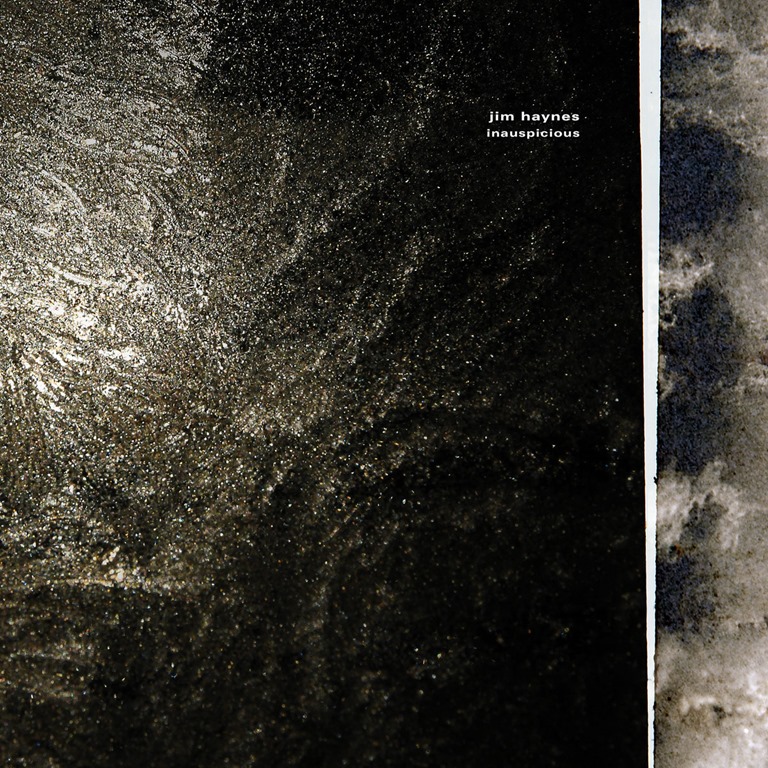
It’s often difficult to keep up with artists’ outputs, especially the super-prolific ones. Jim Haynes not quite make the super-prolific category, but having first written on his work with a review of The Decline Effect back in 2011, I’ve covered three albums between 2017 and 2021 alone. I tend to take a particular interest in albums released through The Helen Scarsdale Agency, which despite sounding rather prim and literary, is a label which has a particular knack for platforming music of an experimental and often difficult and noisy nature.

Haynes’ work has become progressively harsh over time, and the press release for Inauspicious notes that this has been particularly true post-pandemic, while acknowledging the cliché that the pandemic marked a pivotal point for many musicians. Crucially, it notes that ‘The tools for Haynes’ work remain limited: motors, electronics, shortwave radio, found objects, all applied with considerable pressure. Compositionally, Inauspicious is a very rough moire pattern from overlapping elliptical structures that can negate and obfuscate just as easily as they can compound and aggregate. The album surges and collapses upon the two twenty minute chunks of controlled noise that follow an internal logic that snakes from brooding power drones, spectral radio transmission, and an aktionist demolition cast upon metal, glass, and unfortunate wooden objects. Rupture and release. Purge and pulse.’

As such, while the output, and the dynamic may be different, Haynes’ fundamentals remain unchanged, and this matters, in that it demonstrates that more often than not, the end product is not so much dependent on the input and the raw materials, but their application and the process.

Inauspicious features just two compositions, ‘Variant, Number Fourteen’ and ‘Variant, Number Fifteen’, which each run to precisely twenty minutes apiece. It’s a work that’s seemingly designed for a vinyl release, with each piece occupying a side of the LP, and I daresay that the dank ambient rumblings have their greatest impact when rolling from the grooves of a thick chunk of vinyl. Still, it works digitally when played through some decent speakers which afford air to the album’s slow, granular churnings. It’s not that fat into ‘Variant, Number Fourteen’ that it’s built to a brain-shredding blast of drilling noise. Beneath the ear-destroying mesh of treble and shredding abrasion, there are swells and surges of lower-end noise. It’s easy to overlook the slight details in the face of such a wall of abrasion, but it matters. While Haynes is bringing a relentless assault, it’s important to pause by the details, and Inauspicious is abrim with them, although ‘Variant, Number Fourteen’ spins into a restless ancient howl in its final minutes and tapers into a dank rumbling that brings a heavy tension.

‘Variant, Number Fifteen’ brings more of the same: heavy drone, grainy texture, harsh noise, spluttering and droning,  a deep sense of ominous foreboding, only with lower, deeper, more resonant bass, the tone of which drags on the lower abdomen among the swishes and swirls. And then grating mid-range abrasion. It’s hard to know how to react to this truly painful grind. By turns, I feel as if I need to defecate and vomit, although in the end I do neither as I simply clench my stomach during passages of this dark mess.

This is an album that brings noise and it brings pain. It’s a relentless grind and growl, and not for the first time, Jim Haynes has tapped into a sense of awkwardness which really grates and grinds.

AA

a3232720135_10

Antenna Non Grata – 8th September 2023

Christopher Nosnibor

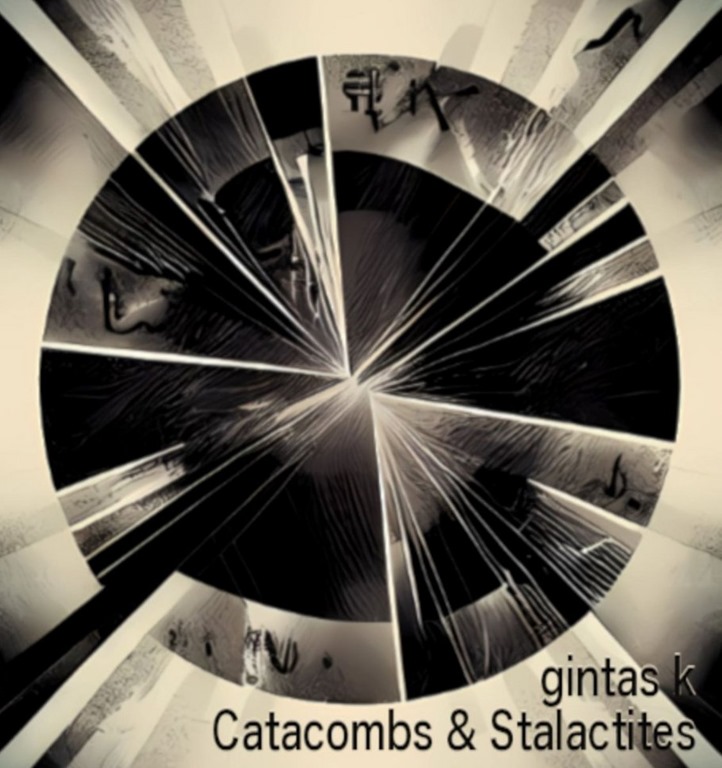
Bloody hell, he’s at it again: Lithuanan soundmachine Gintas K has yet another album out – and this one is different again. While Catacombs & Stalactites does, almost inevitably, feature rapid, bubbling, bibbling, watery electronic skitters, which sound like flurrying insects, bubbling water racing around a drain., and R2-D2 fizzing in malfunction, the dominant sonic feature here is not the microtonal bleeps which have been the focus of many of his albums, but heavy, grating synth sounds which buzz, scrape, and distort.

Things begin comparatively gently, but by the third track, ‘Into deepness’, we’re into pretty heavy territory. There are hints of tune to be found in places – dark, gothic synth motifs briefly emerge from the thick haze. It feels loud, and the listening experience is oppressive, like pressure being applied to either side of your skull, and the track really tests your mettle over its six minute duration, because there’s simply no let up, and the thick buzz presses at your brain relentlessly. It’s the same thick, hazy sounds which blare forth on the next piece, ‘Somewhere’ – only rent with tearing laser blasts and distortion which scratches and scrapes at the speaker cones, threatening damage, before it culminates in a crackling blast.

‘Wandering Joy’ wanders through dissonance and discord, warping and scraping through tearing walls of noise and aberrant glitches, spiralling around and spinning through territory shared with power electronics and the more experimental end of industrial (in the Throbbing Gristle sense, not the latter-day Industrial metal of Ministry et al). For all of its wandering, whether or not it brings joy is a matter for discussion, I suppose.

The bold, buzzing, abrasive synths sounds are broad and bassy, and the grinding lower-end oscillations are evocative of Suicide, only amped up to eleven. ‘Atmosphere / Voices’ crashes in on a wall of feedback and overloading distortion. At this point, things reach a new intensity, and the crackling, fizzing buzz at the edges of this enveloping blanket of noise simply adds to the tension which rips from the speakers.

There are lighter moments, which are more quintessential K: then flickering flutters, clicks and pops of ‘Mystery’ are almost playful, sounding somewhat like the pouring of carbonated mortar with twangs and deadened thwaps creating a muggy texture, and ‘Local Beings’ brimming with zaps and squelches which fly every which way before trickling down to a dribble resembling a fast leak.

This is very much Gintas K’s way: his approach to ‘composition’ is very loose and geared toward improvisation.

The album’s title derives from the ninth and tenth tracks, ‘Catacombs’ and ‘Stalactites’ which both in their way evoke the subterranean, darkness, tunnels, claustrophobia. ‘Stalactites’ shutters and reverberates, grates and gyrates, the frequencies registering around the navel amidst another squall of fragmented, glass-like shattering, and ‘Stalactites’ hangs heavy amidst blasts of noise. ‘Catacombs’ fractures and disintegrates as it leads the listener down, down, down. In my mind’s eye, I’m drawn towards recollections of the Paris catacombs – endless miles of tunnels lined with bones, neatly stacked, row upon row of old skulls, fibulas and tibias piled high and all around to forge cavities of death. Few things hold a mirror to mortality more powerfully than infinite piles of dank bones, and K leads – or moreover drags – us through these gloomy tunnels, while still electronic sparks skip and flash like damaged lighting or split cables before explosions of sparking white noise collapse into nothingness.

We’re grateful for a few light splashes and bubbles near the end, but the chances are the trauma has already taken hold.

Catacombs & Stalactites is a harsh and heavy album, and one that isn’t easy to lay to rest, to move on from.

a3613065534_10

nynode intermedia – 7th July 2023

Christopher Nosnibor

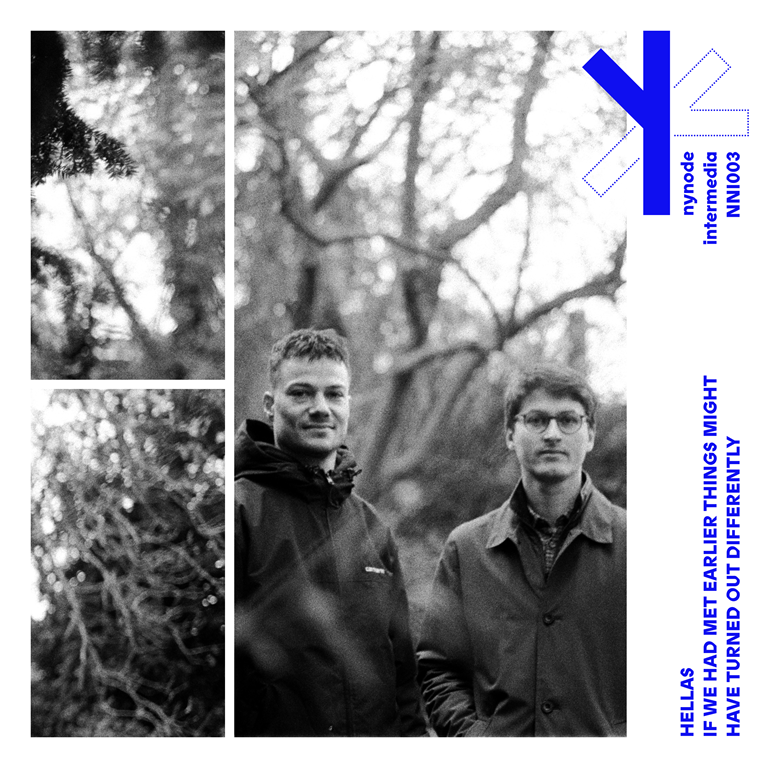
Sometimes, a title just captures the imagination. And in some respects, art – be it a book, an album, or a movie, will take one unawares in the same way as a new person. Sometimes, it’s something unexpected at precisely the right time, discovering something you don’t even know you need until it’s there. To select a quote from what may appear to be an unlikely source, ‘just when you least expect it, just what you least expect’, sang The Pet Shop Boys on ‘Love Comes Quickly’. It’s a great line because it so succinctly summarises the unpredictable nature of life, and this wordy title tripped a similar trigger, which, I accept is uniquely personal…. But then, in the personal lies the universal. It must be so true for many that we’ve met the right person, but at the wrong time, for whatever reason.

And so it is that I’m spiralling on a chute of reflection, a wall of mirrors inset with faded and distorted memories of people I’ve met and lost along the way as I begin to ease myself into what ultimately proves to be a remarkably diverse album, with deft compositions flitting between retro electronica, sparse techno, trance and shoegazy electrombience – and a lot more besides. Other times, mood-dependent, I may find the perceived lack of identity frustrating, the gentle mellifluousness without any obvious focus nigglesome, but right here, right now, I’m ready to experience transportation. And having emerged from a journey for the artists, If We Had Met Earlier Things Might Have Turned Out Differently feels like a suitable soundtrack.

As the accompanying notes recount, ‘Hours of recorded improvisations were arranged afterwards to slowly shape what would be the new sound of the duo. After three years of experimenting and writing various compositions the album slowly began to unravel itself and took its final form. Eleven unique pieces — deep explorations of sound — that all have their own story to tell are assembled in this collection of snapshots from the past years.’

In some ways, then, If We Had Met Earlier Things Might Have Turned Out Differently is more of a work of sculpture than composition, moulding and shaping the recordings into pieces with form and structure. Rising from a mist of gentle ambience, ‘Arbour’ soars, but is pinned down by a solid martial drum and ambulant, bulbous bass.

Listening to the ominous discordant experimentalism of ‘X’, I reflect on the fact that there was a time I’d have found this boring, just as I’d have cringed at anything remotely jazz-flavoured and sneered at anything overtly dance, before the clattering mess of ‘Techno | Hovestaden’ arrives, chanking and chiming over some ponderous keys, rippling piano, and evolving drones. In the background, as the piano plays mellow chords, there’s a banging tune giving it large way off in the distance, and it’s like hearing a neighbour’s music through your own. It’s irritating, but it’s real: as William Burroughs wrote, ‘life is a cut up’.

‘Ghost’ is suitably eerie, and ‘Shinjuku’ goes all-out tweaking electro, straddling late 90s dance and new age which just shouldn’t work and I should detest, but having lived through this and experienced a somewhat fractious relationship with tunes like ‘The Sun Rising’ and ‘Sadeness Part 1’, I’m rather more at peace with the incorporation of diverse elements to conjure sensations of spaciousness and spirituality, as long as they don’t involve pan pipes. Gotta have limits, y’know. This doesn’t actually sound like these musical forebears, but it feels as if there’s a certain context and progression at play here. The present only exists because of the past.

We’re plunged back into ominous drone territory with ‘Odessa’, and its warping grind which quavers up and down is most unsettling, building to a droning roar that’s hard not to equate to missiles and jets as the oppressive buzz grows louder.

The looming brass and slow, deliberate percussion of the spacious ‘Noon’, as it trickles slowly toward the album’s soft ending, with clattering percussion slowly marking a long wind-down before ‘Tide’ smoothy washes everything away to a smooth, blank state once more.

So what does this say? It says Hellas have conjured a majestic work from – well, who knows what source material? How much of this album came to fruition in the wake of its recording? And how much does it matter? It’s not as it’s an AI work, contentiously bypassing human input: pianist Peter Sabroe and drummer Jeppe Høi Justesen, with the assistance of producer Brian Batz have created something with personality, intricacy, depth. If I’d have heard it ten years ago, I’d have hated it: now… it reaches me. It’s an accomplished work, subtly complex and possessing significant depth. It’s amazing how things can turn out.

AA

NNI003_art

Constellation – 12th May 2023

Christopher Nosnibor

Ky Brooks’ solo work is, on the face of things at least, a very far cry from her output with noise-punk trio Lungbutter. This, of course, explains why it’s her solo project rather than the new addition to the Lungbutter catalogue: sometimes things just don’t belong together under the same banner.

That said, there was always a slightly experimental / arty bent to Lungbutter’s work, and it’s this which stands to the fore on Ky’s solo album. The title track is exemplary – and ultimately, fucking weird. Entitled with ‘teeth’ in parenthesis, it features a robotically-delivered monologue about ‘the integrity of the teeth’ and some weird shit over a gently gliding drift of warm, fuzzy synths. Teeth often make me think of Martin Amis, and specifically Dead Babies, but also my late grandmother who had all of her teeth removed when she was nineteen, to be replaced with false teeth she would wash with soap. I suppose you might say I’m easily triggered on account of my randomly-tripping memory which tends not to be my friend. But if it seems like an epic tangent, bear with me: it’s relevant because this is what music does: it sends you places. They’re not always good places, they’re not always or even often the places you expect, but it can open doors to recollections.

I suppose this makes the joy of music something of a double-edged sword, something I hadn’t always appreciated. You want it to open the channels and provide conduits for emotional connection, to evoke and provoke – well, at least some of us do. It’s not always comfortable or easy, but it’s about feeling something, and that emotional resonance simply cannot be found in the oil slick of mainstream middlingness, where everything is processed and pre-digested. Power Is The Pharmacy is anything but.

‘All the Sad and Loving People’ does rippling, pulsating ambience before whappy automated vocal wanders around all over it and things go strange. It’s pinned together by a slow, clacking beat that’s murky and subdued, evoking the spirit of Portishead with a smoky trip—hop vibe, which is in stark contrast to the sharp, stark spoken word of ‘Work that Superficially Looks Like Leisure’ which is unsettling in its Stepford Wives pro-conformity zeal which we instinctively understand to be false long before it turns rabid, both in its vocal delivery and crashing jazz drum explosion that rides in on a swell of expanding noise.

The Dancer’, released as a single is hypnotic, entrancing, and detached, deranged, with a looping synth blip bubbling along through sonorous scrapes and driven by an insistent, impersonal beat. You can probably dance to it, but you’re more likely to feel a growing tension as it cyclically bubbles its way over the course off nearly five minutes.

But then what do you do when immediately presented with a song like ‘Revolving Door’? It’s like Jarboe-era Swans and Big |Brave, with crushing chords providing the backdrop to a breathy, haunting vocal. You certainly don’t find a comfortable category for Ky or her work that’s for certain. ‘Dragons’ brings next-level intensity, and while there numerous comparisons which float into my mind, perhaps it’s better to highlight a unique talent rather than tame it with contextualisation.

There are so many details and textures here that make Power Is The Pharmacy an album that requires repeat listens in order to absorb them. That’s a challenge in itself, because it’s not an immediate album, and it’s a record that leaves you feeling like you need a break, to sit and stare into space for a bit after.

And perhaps that’s the way to approach this: with space, to allow it to breathe, and with no concrete expectations. The spoken word passages are very much akin to David Bowie’s Outside, I realise, and Power Is The Pharmacy could be described as a concept album of sorts. It’s certainly a strange album, but it’s interesting.

AA

cover Ky - Power Is The Pharmacy

Thanatosis produktion – 24th March 2023

Christopher Nosnibor

Having frothed with enthusiasm over Mammock not so long ago, I was particularly thrilled to discover Organ Donor, a Swedish/Greek outfit featuring members of Viagra Boys, Grismask, VÖ, Mammock, Angles, Fire! Orchestra, Aurora Ensemble, CBVB and the Mute. Admittedly, I’d expected something more guitar-driven and noisy in the rock sense, but expectations are best when confounded.

Malplacé evolved through improvisation, resulting in what they describe as ‘6 diverse yet coherent tracks, spanning from instrumental kraut, to mystic themes perhaps reminiscent of John Lurie or Loren Connors, to dark, minimal pulsating improv and punkish, full-on, noise outbursts.’ Diversity and coherence tend not to converge too commonly, and in truth tend to sit at opposite ends of the spectrum.

As the rippling vibes and subtly trilling horns of the abstract jazzy post-rock of the first track, ‘A Sleeping Beauty’ meander their way from the speakers, I’m struck by just how far a cry this is from Mammock and The Viagra Boys, and, on reflection, this is something to be pleased about. Why have a collaborative side project that sounds like your main project? It’s like having a hobby that’s the same as your dayjob. You can insert your own example here, because, well, I can’t help but feel that too labour  the point with explicit examples would be crass.

‘Touch’ spills jazz juices across a chiming guitar that jangles over an insistent yet mellow groove, where post-rock meets psychedelia and krautrock. Sometimes, for a moment, I find myself wishing there was slightly less sax, but then, again, the overloading nature of the jazzery is what makes this what it is, and things get really scratchy and discordant on the ten-minute ‘Stemless’. This is one of those freeform pieces that hurts the brain. Everything jars and flits, and toots and parps, squeaks and squawks and twangs and pings, like rubber bands being stretched and plucked across pans and bin lids, bowed notes bend, drone and grind, and it sounds more like a scrap than a song. It groans and wheezes and stutters and heaves, to the point that it’s enough to induce motion sickness.

‘A Sleepwalking Beauty’ provides a welcome moment of rest and tranquillity, before ‘Power Tools’ goes all out on the avant-jazz noise frenzy trip. It’s noisy, noisy, and noisy, a wild chaotic and cacophonous blast and an instant headache which feels a lot longer than a minute and a half.

In contrast, ‘Sci Fi Marmots’ is slow and smoky, an odd yet sedative piece where everything melts away into a haze. I’m tired, and need sleep. I’m all the more tired after experiencing the bind-bending chaos of Malplacé, but have to hand it to the guys in Organ Donor for creating an album that has the capacity to both exhilarate and drain the very life through aural excess. It’s a significant achievement.

AA

THTD4_art

Plinki – 15th April 2021

I’ve been vegetarian since around 1994 or 95. My vegetarianism amuses some people, including a couple of friends who are such hardcore meat enthusiasts the prospect of a meal without at least some meat element makes them shudder and quiver and slowly foam away like a slug having salt poured over it. Then again, there’s a real risk they might dehydrate through salivation at the prospect of a tray of meat. Yes, the promise of meat can have a profound and indeed physical effect.

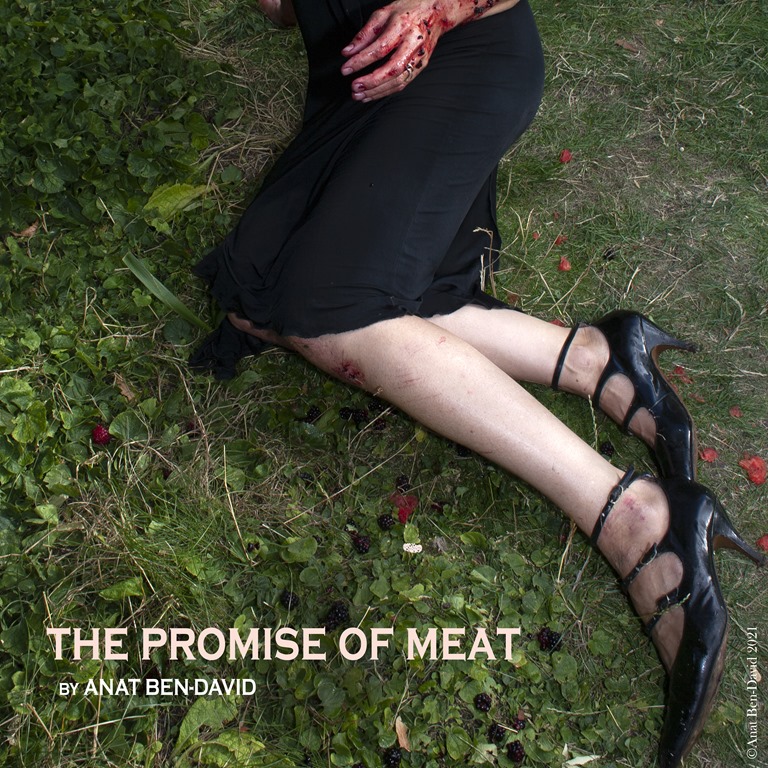
On this album, Anat Ben David and collaborators aren’t promising any meat you can actually eat and digest, but only chew on, which will no doubt disappoint my carnivorous chums. But there is much to chew on, and to ponder, as they present a vast array of styles and sounds that don’t always sit comfortably aside one another and will test many listeners on a number of levels. At times it’s pop, and with an electronic beat, but at others, it’s overtly experimental. And what does the cover art say?

Each of the songs on the album according to the liner notes, takes as its starting point ‘a text by a different author’ with ‘the new compositions bringing out a shared theme: the interaction of humans and the natural world and the assimilation of technology into our being’.

The five tracks on The Promise of Meat are stunning in their dramatic structures, their contrasts, their juxtapositions, and Anat’s soaring operatic vocals are utterly breathtaking. And there is no one overarching style that defines the album beyond the method, a focus on the minimal, the brooding. Pitched against groaning, droning electronica and stammering synths, it’s a striking sensation that creates a certain cognitive dissonance? What is this? How does one process and assimilate it?

‘Naked Axes’, the first song, is sparse and dissonant, dramatic and while the vocal is perhaps most reminiscent of Billie MacKenzie and there are hints of the high drama and tension of The Associates, it’s Scott Walker’s later work that’s perhaps the closest comparison here.

‘Cherish the Birds; is a chorus of delirium, while ‘Face Mixed With Phone’ is a stuttering barely- there dual-vocal acapella / spoken word piece with some bloopy, gloopy incidentals. It’s a shade awkward, especially when growls and whoops collide with shuddering organ-like drones and the crack of the snares of vintage drum machines to forge a wibbly sonic mirage.

The title track, a sprawling ten-minute morass of meanderance, is where things really get weird, and it’s sonorous, lugubrious, as an acoustic guitar plods a deadened strum, augmented by mournful brass sounds sad, lost notes into nothing, and amidst squelches and digital glitches. As atonal and varikeyed vocals collide against one another in the instrumental drift, it becomes increasingly disorientating and deranged.

Maybe this isn’t an album to process or assimilate in the usual ways. There is no clean or simple way to position this or to otherwise feel comfortable with the unexpected transitions and perspectives. But it is an album to spend time with, and to reattenuate your expectations by.

AA

POM001_art