Archive for the ‘Albums’ Category

Love Love Records

Christopher Nosnibor

It’s no secret I’m quite a fan of Matt Cargill and Co’s oddball, off-kilter approach to freeform experimental weird noisy shit that stubbornly defies genre categorisation – largely on account of the fact that it is weird noisy shit that stubbornly defies genre categorisation (although the blurbage that accompanies Walk it Dry, the follow-up to 2019’s Gentle Persuaders describes them as ‘London’s neo-jazz wrecking crew’.

Sly have trod themselves a unique path, and find themselves in the curious position of being one of the most obtuse bands beloved by almost everyone I know in underground musical circles. I’d like to think it’s a combination of their uniqueness and the fact that they are unequivocally

On this outing, they promise ‘the familiar sound palette of skronked electronics, bulging noise blasts, wailing sax & Kalashnikov drums that was found on ‘Gentle Persuaders’’ but at the same time say that this ‘is a very different beast. The tracks here are shorter and punchier as the band digs deeper than ever to find increasingly potent sonic pockets.’

Mad horns and a crushing, slow-paced jazz beat explode from the speakers the second the ‘play’ button his hit, and with ‘A Black Uniformed Strutting Animal’ they plunge into a collision of heavy rhythms and divergent notes that counteract one another in a battle between order and chaos, where there is no clear winner.

‘Dead Cat Chaos Magician’ is frivolous, glooping electronics, with a fast-paced jitter of tension and some ragged blasts of drums that are nothing to do with rhythm and everything to do with dramatic punctuation, sudden explosions that disrupt any semblance of an emerging flow.

The compositions on Walk it Dry are difficult, dissonant, and while they are indeed more succinct than the bult of the pieces on previous outings, they condense those dank, disrupted soundscapes into dense chunks of ‘Bulgarian Steel’ brings the kind of swampy mess of nose that’s quintessentially Sly, dominated as it is by booming beats and murky mid-range, before ‘Shrieking Grief’ steps the torturous din up a notch, with more thunderous rhythms bashing frantically into a void of grinding greyness while horns flash and flail

The lack of pun-based titles is compensated to an extent by ‘Sunken Disorderly’, while ‘My Torso is a Shotgun’ is a cranium-crushing morass of tension, a bludgeoning battery of hammering and noise.

This all stacks up to an album that’s classic Sly: the same dark industrial clanking, doomy undercurrent and warped jazz overtones, but in much shorter segments. It’s still dark, dingy, difficult, jazzy, otherly, and there’s no other band who quit straddle so many boundaries. Walk it Dry may mark a certain evolution, but more than anything, it’s the work of a band who simply don’t do compromise. And that’s why we love them.
d3eccc40-ed8c-40da-bbbc-16f704d3b8be

5th May 2020

Christopher Nosnibor

Starless is a new musical project from Yurii Samson of Ukranian industrial noisemakers Kadaitcha. It’s pitched as being ‘less industrial and noisy than Kadaitcha, but more acoustic and lyrical’, although this very much depends on the strain of industrial you’re angling towards.

Admittedly, my first thought is less ‘more acoustic and lyrical’ than Kadaitcha, but ‘fuck me, this is spaced-out experimental jazz!’ ‘Entro’ piles in haphazard and chaotic, as a riot of parping horns hoot and honk seemingly at random though a twittering electronic oscillation with bleeps and quirts, and wandering notes that are difficult to assimilate, stylistically or psychologically. There’s a lot going on at once.

But the title track goes much more industrial / dark ambient, a restless thrumming providing the backdrop to a distanced, echo-heavy vocal and squalls of extraneous noise, swells of feedback and layers of serrated electronica, whole distorted impenetrable vocals ring out with a bold authority. It’s the sound of Big Brother’s dictation, monotone, cold, flat, and impervious, while metallic noise spirals and swirls.

Next up, ‘Chudovys’ka’ begins all aclatter and aflutter, a clicking flicker or delicate beats, before a warped vocal begins to nag away in the background. And then, before long, it goes full Throbbing Gristle with churning electronic rhythms and hard-edged noise butting up against them. And this is a sustained sonic attack, the best part of ten minutes of difficult noise that simultaneously rumbles and screes, a low-end wash that rolls and throbs while clattering percussion ricochets off in all directions.

‘Kiviten’’ goes all-out with the heavy-duty percussion, calling to mind the thunderous battery of Test Dept. It also brings droning church organ and shrieking feedback that hurts the ears and bends the brain, as well as heralding introduction of epic choral voices on the scale of Carl Orff’s ‘Carmina Burana’, only distant and dissonant. It’s big on drama, and also disquiet.

Closer, ‘Saga’ is also impressive in its depth, and equally the depth of the discomfort it discharges as wheezing monotone vocals drone out over a shifting soundscape of hesitant beats, creeping jazz horns and scrapes and bubbling synths. It’s sparse, low, slow, and trepidatious, making for an unexpectedly Low-key conclusion that also happens to leave the listener hanging on the edge of a swamp hidden by fog, wondering what lies beyond.

AA

a3986107524_10

Rock is Hell Records – July 2020

Christopher Nosnibor

At the risk of repetition, there are no two ways about it: these are desperate times. No, not unprecedented. Desperate, dire, and fucked-up. The liner notes to BUG’s latest offering, Nunc finis offer a fair summary:

‘Global warming. Trump. Corona virus. New normal. We are living in interesting times. It is one minute before midnight on the doomsday watch. Nunc finis means end of time, end times or end now. And if you buy the ticket, you gonna take the ride.’

Fucked-up times require some fucked-up heavy shit by way of a soundtrack, and BUG bring it in spades here. I for one am immensely grateful: I’ve found myself frequently returning to Calamitas, and Nunc finis brings the same blend of familiar noise rock tropes and uniqueness, with jarring riffs, sludgy low-end and crazed, gruff-throated vocals. Above all, BUG know how to create tension through music, to articulate that tightening of the chest, evoke that clenching of the jaw, the grinding of the teeth.

The opening salvoes leave no doubt that this is a dark album reflecting darkness back in on itself, a tumultuous tempest of disaffection and (internal) conflict. ‘Happy Pills’ kicks off in pretty savage style, a hell-for-leather raging blast of overdriven guitars and angled vocals. You can barely make out a word, but then, the delivery communicates the sentiment, the manic fury. ‘Hell is Empty’ drops down several shades darker toward sludgy doom territory, before ‘Lost Soul’ takes a more conventionally noise-rock turn. It also provides the first softer moments, as chiming guitars effect a more ponderous perspective before exploding into a ragged riff. Exploiting the quiet / loud dynamic, it’s a classic slow-burner that builds to a killer climax.

‘Leftovers’ is a standout by virtue of its sheer brutality, while the seven-minute closer, ‘Hass gegen Rechts’ is positively schizophrenic, switching between a strolling vaudeville waltz and volcanic, earth-shattering blasts of noise, and is everything the album represents distilled into a single gut-wrenching track. It’s intense, alright.

Jolting riffs and stop-start noodles define the structures, to bewildering, dizzying effect: it’s not a regular bludgeoning, but successive left / right hooks, followed by an upper-cut, a headbutt, and a knee in the nuts for good measure. It’s heavy, hard, harrowing, and, ultimately physically and emotionally draining – just as it should be.

AA

a0890670568_10

Christopher Nosnibor

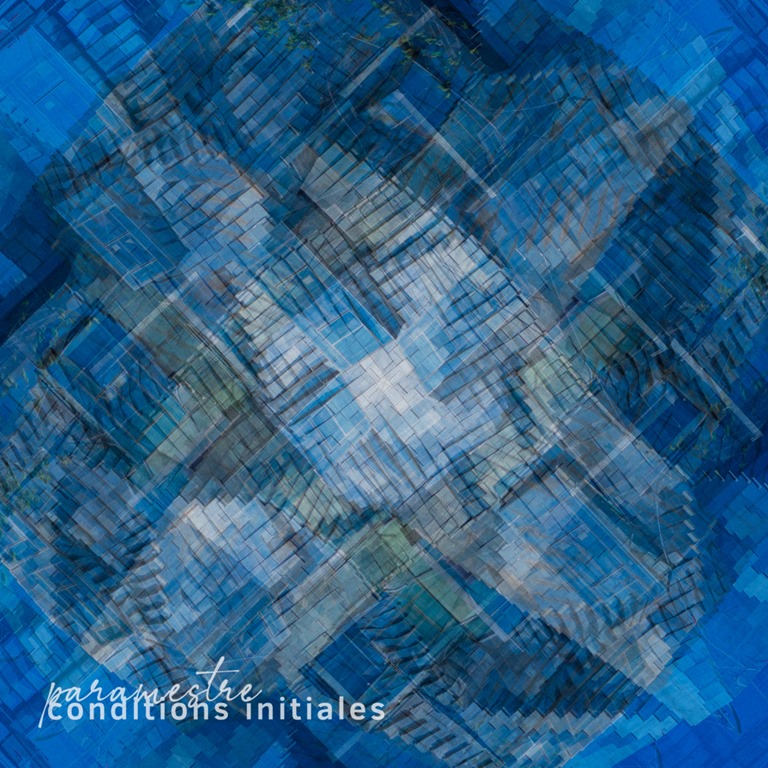
Pierre Massé, the man behind the Paramestre project, threatens ‘Electronic-ish music with human vocals, guitars (played by a human), and far too many effects (along with a healthy dose of digital manipulation)’. It’s an intriguing proposition, and is it even possible to have too many effects, at least when used well?

As Massé explains in the liner notes, ‘As stated by the opening track, it is nothing “perfect”; there are artefacts from tortured source material, there is noise, there are glitches from randomized effects processing, and there is no pitch correction. But there is also warmth, groove, melancholy, and hope. I hope you find something that speaks to you amidst it all.’

This is, to my mind, a succinct summary of why any artist creates; in the hope of there being a shred of commonality with the receiver in the work. But, at the same time, creating not with the audience at the forefront of the creative process. This, ultimately, is what differentiates art from entertainment. The latter is primarily commercial, designed for the (perceived) audience. Art exists for its own sake, and any audience it attracts finds it.

Rippling post-rock guitars with an almost Spanish vibe cascade softly over a dislocated beat that bumps and bounces and flickers on the aforementioned opening track, providing a supple, mellow backdrop to Pierre’s dreamy, soulful vocals, and it’s a smooth, Gallic air that permeates the lilting synth pop of ‘Elle’. It’s pleasant, but it’s not an instant grab by any means, and much of Conditions Initiales feels in some ways exploratory, tentative. It isn’t that the songs themselves feel incomplete, because they certain don’t: it’s more that one feels Massé is still working towards a sound that is one he’s entirely comfortable with, that translates his sonic ambition into the final recorded output.

‘Conceal/Reveal’ goes a shade darker, but it’s the subdued waltz of the seven-minute ‘Madeleines’, with its echoing sampled background conversation that creates a subtle but clear level of juxtaposition, that really draws the listener in, in search of its evasive heart amongst the layers.

And it’s when Massé goes still darker and brings thudding beats to the fore that Conditions Initiales really becomes interesting: ‘Carry’ and closer, ‘Endless’ are both sparse but feature more prominent percussion, the latter worthy of favourable comparisons to Depeche Mode.

Understated as it is, Conditions Initiales contains no shortage of detail, and it’s an intriguing debut that hints at even better to come.

AA

a0628153917_10

Unsounds 65U – 15th June 2020

Christopher Nosnibor

While Andy Moor’s distinctive guitar playing is central to this collaborative work, it’s worth stating from the outset that this is a challenging listen. Spacious and eerie, above all it’s atonal and discordant, as if the two musicians are playing against one another, rather than with, and, moreover, against themselves, particularly in Moor’s case as he digs deep to pick notes in counter-time and counter-melody.

How this album came to be is worth recounting, so I shall quote directly: ‘In 2017 Andy Moor and Yannis Kyriakides were invited to participate in Xavier Veilhan’s ‘Studio Venezia’ at the French pavilion for the 57th Venice Art Biennale. This was a space where a series of musicians were in residence throughout the six month duration of the festival, recording and performing there in an open environment. The two musicians had access to a variety of instruments and machines including Moog, Buchla and Vermona synths which were used for some of the recordings. The unusual situation here was that they were working in a studio, experimenting, trying out ideas while at the same time being a part of an ongoing art installation. So they were part of the space, yet not really knowing whether they should play for the crowds who were constantly passing through the pavilion or just ignore them.’

‘The result was nine hours of recorded material mostly improvised or based on a few basic rhythmic patterns that Kyriakides had prepared as starting blocks. For this album they selected 45 minutes of what they considered to be the strongest material after several listenings and editing sessions.’

That’s a lot of material, and a lot of whittling and editing, but the end result is well-assembled and flows together nicely – while at the same time mining a seam of arrhythmia and clanging dissonance. Moreover, each piece is distinct and distinctive, with different textures, tones, and moods, and as such, Pavilion represents a disorientating, difficult journey.

The layers on ‘Camera’ build at different rates, crossing over one another and interfering with one another’s time signatures so as to become bent out of shape, colliding against one another in a clutter of discoordination. The synth bass on ‘Dedalo’ warps and scratches and scrapes away as low grooves that trip and curl, wow and flutter. There’s a playful side to it, with the rhythmic swing and metallic clattering that sounds like pots and pans, which contrasts with the more ponderous atmospherics of ‘Concha’, a nine-and-a-half minute exercise in detuning and retuning, as notes bend and bow with a slow, resonant decay.

‘Diluvio’ is unpleasantly tense and prickly, and the album ultimately drifts towards an uneasy conclusion with the last couple of pieces, which are simultaneously dolorous and soporific, albeit in a dark, horror-movie dreamscape sort of a way.

Pavilion leaves you feeling… not quite bewildered, but spaced, separated, as if standing half a step behind your own body or your own shadow. It’s less about if this is a good thing in itself, as much as the fact that this is a work which has a degree of psychological resonance, which marks it as a creative success.

AA

Yannis Kyriakides Andy Moor – Pavilion

Gizeh Records – GZH99 26th June 2020 (Digital) / 25th September 2020 (LP/CD)

Christopher Nosnibor

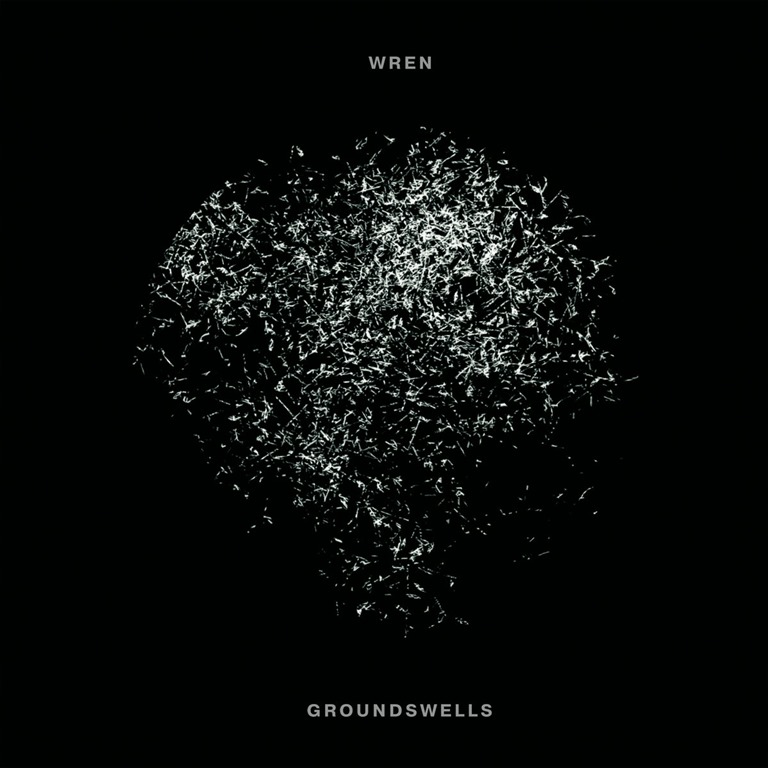
Wren’s third album – or ‘third chapter in Wren’s seasonal lore exploration’ as the press release puts it – is their first on Gizeh, and promises ‘six melancholy-shrouded sonic ruminations [which] swell between intimate performances devoid of adornment, and evolving soundscapes of auditory ruin’. And pitched as being of interest to fans of Godflesh, ISIS, Kowloon Walled City, Neurosis, it does the job of bringing slow-burning slow-trudging metal with an emotionally-articulate aspect and certain musical nuance.

The first megalithic sonic slab to assail the listener is the nine-minute ‘Chromed’, an epic battery of guitar and anguished vocal, and it piledrives in with a repetitive chord sequence, there are heavy hints of Amenra, and it’s the grainy, earthy quality that’s most reminiscent of Neurosis. There’s a lot of space here between the crushingly weighty power chords that drive, hard, low, and slow, less like a battering ram and more like a tank driving against a wall: slow, deliberate, and completely devastating.

There is detail, there is texture, and there is space within the broad parameters of this ambitious work, giving moments of respite and pauses for reflection between the raging infernos of fury that flare upwards toward the skies from the troughs of gloom. And yes, Groundswells is gloomy, dark, lugubrious, the soundtrack to motional trauma and swings from anguished introspection to annihilative rage.

If the album’s entirety could be encapsulated on a single track, it would be the dynamically-flexible ‘Subterranean Messiah’, which stretches out beyond ten minutes as it works it was way though a series of peaks and troughs, venturing into a range or mood-spaces and sonic terrains to forge a compelling sonic journey that’s utterly immersive. Jo Quail adds layers of subtlety and not to mention sonic depth with her cello work on the track also.

The final song, ‘The Throes’ is a grinding dirge, Godflesh played at the pace of Swans’ Cop. But amidst the torture, punishment, and the anguish – those excoriating vocals and that shrieking lead guitar that battles against the dense, slow chug and grind coalesce to form a perfect prism of pain, the psychological expressed through the physical.

If the band’s name suggests something soft, delicate, melodic, then Groundswells tears those expectations to shreds in the most obliterative way. It’s simultaneously harrowing and beautiful, and an all-consuming experience.

AA

a3321068616_10

Jam Records/343Records

Christopher Nosnibor

Misophonia is the third solo outing for Third Of Never guitarist/founder Jon Dawson, and it’s certainly quite a departure from his main musical vehicle. Instead of mining a seem of driving rock with clear ‘classic’ roots in the vintage greats, Misophonia is an exercise in dreamy floaty, droney electronica, punctuated with some magnificently mellow, understated guitar work.

Everything is drenched in infinite reverb, and has an aura of ethereal otherness and distance. On ‘Lighter Fluid’, a child’s voice cries out amidst crunches and crackles of static, while ‘Coffee From a Stranger’ is a sliver of whimsical country slide that chimes and tinkles and fades in and out of focus. There are dark undertones and dank rumblings to be found on ‘David Lynch Owes Me Money’ as well as distant instrumentation and a rising tension.

Birdsong, glitches and extranea feature heavily across the album’s fifteen short segments which segue into one another to form a near-continuous abstract drift, and the story behind the album’s development during the recording of Third of Never’s last album, Austerity, as told by Dawson himself, is interesting and useful in proving some context:

“I started the Misophonia project during the sessions for the Third Of Never album Austerity, which turned out to be a real bruiser,” Dawson said. “As a way to cleanse the palette between sessions, I started scoring the events of the day using drones, soundscapes, and piano. Listening back to it now, it seems as if the proceedings had taken a tense tone.”

It resonates: while taking isolated walks, like many, I have noticed birdsong more. Perhaps not because there are more birds or more songs, but because the roar of traffic and planes and general noise is diminished. Then, against the backdrop of such quiet, distant engines and other sounds stand out more. I’ve heard fewer sirens, but suspect that’s because ambulances and other emergency vehicles have no traffic to clear, not because of a lack of emergencies. Context counts, and it makes sense to clear the mind with something completely unstructured and soft while bashing out hefty riffs by way of a dayjob.

‘Someone is Walking Toward the House’ is filmic, but also captivatingly haunting, as a picked guitar motif drifts across a low-end grumble, while the final piece, ‘The Age of Anxiety’ pins a rarefied atmosphere to a sad, lonely piano that echoes into emptiness. And it hits home: we are all there, surrounded by nothing, just sound in space and we cling to whatever we can. This is indeed not only the age of anxiety, but the specific point where life threatens to overwhelm us.

What Misophonia offers is the opportunity to step back, reflect, and create much-needed mental space.

AA

AA

su4683-A_Late_Night_Stroll

Front & Follow

Christopher Nosnibor

The demise of the label Front & Follow was a sad one, for many reasons. I mean, it was understandable: a one-man enterprise, the degree of effort required to curate, release, and promote music – especially obscure, niche music – is astounding. It’s always going to be a labour of love, but all the love in the world doesn’t pay the bills.

This does mean that the return of F&F, however brief, with a view to issuing a series of lockdown / isolation compilations is extremely welcome, simply in principle. Not only because it’s a reminder of a time before what’s rapidly looking like a collapse of civilisation, not only because it’s a reminder of what a great label it was, but also because despite the tidal wave of lockdown releases that are flooding the virtual world right now, we still need more music like this: music from the fringes, music that coveys the intense cognitive dissonance of the current situation in non-lyrical terms.

To unpack this: the title summarises the situation as it stands for many in the most succinct form. Whether or not you’re officially ‘isolating’, we’re all still isolated for the most part, either alone or with the rest of out household. But it seems that however ‘together’ we are, however connected, however well we communicate, everyone’s individual experience is different, and in many was incommunicable: we’re all islands, isolating inside our own heads. Words get in the way, and impose the experience of others on our own private thoughts, so the fact that this collection is largely instrumental is welcome, and where there are vocals, they tend to be absorbed into the fabric of the sonic experience.

With twenty contributions from a host of artists. Many of whom I’m unfamiliar with, there’s a theoretical pot-luck element to this compilation, but F&F have always been strong on curatorial skills, and while the contribution from Kemper Norton (arguably one of the bigger ‘names’ on the release) is surprisingly brief, it’s positioned in a prominent position opening proceedings, and sets the tone with its tonally-balanced ambience.

Grey Frequency’s ‘Dissolve’ which follows is more what you might expect: almost seven minutes of mellifluous mellowness, but with crackling snippets of static and shadowy undercurrents that run dark and deep.

Picking standout tracks is difficult and also rather to undermine the project, although

‘Basic Design’s ‘Dream Archipelago’ does stand out by virtue of having vocals first and foremost, but also for it’s woozy, fugue-like qualities, something echoed by the ethereal ‘Dining with Phineus’ by Carya Amara.

AZAK BROMIDE bring a more power electronics / industrial slant to the dark ambient party, but it’s the seventeen-minute behemoth that is Boobs of Doom’s ‘Scumbellina’ that really is the ineffable centrepiece here: a towering monolith of a track it’s all the experimental electronica distilled into a single movement of analogue oddness.

Elsewhere, Ekoplex capture the essence of early cabaret Voltaire on the dubby ‘Rejected Replekz’, Thomas Ragsdale delivers some signature ambience with beats with ‘The Light Between’, and Elizabeth Joan Kelly’s ‘Waking Up With a Cat on My Face’ perfectly encapsulates that moment or panic, that abject spasm through a minute and three quarters of swampy discord and sonic confusion. Hibernation’s nine-minute ‘Fragile Times’ is a perfect summary of everything: so fragile and soft as to be barely-present, it’s a mist-like ambient piece that’s impossible to place your hands on it, much less pin it down, and that wisp-like intangibility, that vague ephemerality is the essence of the collective mind right now. However you may think about think about it, whatever your beliefs, pinning down the mood of the moment is nigh on impossible on the tumultuous psychological rollercoaster we find ourselves on.

Thankfully, soothing, spacious sonic wanderings like the album’s final contribution, TVO’s ‘A Wave as the Coast Disappears from View’ offer id to calm, even if the title reminds us we’re only barely afloat and only so far from drowning in an instant.

Isolation & Rejection Vol 1 is a magnificent collection at any time, but also serves as a contemplative soundtrack to strange and troubling times. It’s also classic F&F.

AA

a1782742595_10

Loyal Blood Records – 22nd May 2020

Christopher Nosnibor

Nothing says metal like calling your band Barren Womb. And nothing says DIY like making that metal / noise-rock hybrid racket like being a duo. Norwegian noisemongers Timo and Tony have been hard at it for nine years, and Lizard Lounge is their latest effort: it’s pitched as being for fans of Quicksand, Melvins, Clutch, Refused, and Big Business, and the work of a band who capture ‘their raw and unpolished live energy in studio recordings’.

‘Raw and unpolished’ perhaps does them a disservice, with implications of amateurism and a certain shambolicism. Lizard Lounge is cranked up, the production direct, unfiltered, but they’re tight and everything is perfectly balanced. They know what they’re doing, and they fucking nail it here.

Bringing the intense blast of 80s hardcore but with a twist of humour (as titles like ‘Crop Circle Jerk’ and ‘Karma as a Tour Manager’ indicate), and elements of mania that so indeed call to mind Melvins and also contemporaries Cinema Cinema, they burst out of the traps at a hundred miles an hour with ‘Cemetery Slopestye’, a sub-two-minute punk roar that sounds like a full band.

‘Hairy Palms’ brings a loose swaggering groove and grunge pop flavour that combines Pulled Apart by Horses with DZ Deathrays, and this pretty much encapsulates the playful edge that brings light to the hefty riffery that defines their sound.

The aforementioned ‘Crop Circle Jerk’ is jaunty, almost indie, in its funk-tinged style, but its delivery is more like Melvins or JG Thirlwell covering Tom Waits, while ‘Molten Pig’ brings the sweaty, grungy heft of Tad: it’s dirty, dingy, the cyclical overdriven riff simple but effective and played hard and fast, while the vocals grunt and snarl, and it certainly captures the essence of that late 80s / early 90 Sub Pop sound. ‘Nerve Salad’ continues along the same vein. It’s not pretty, but it’s got a vital energy.

Likewise, ‘Be Kind, Have Fun, And Try Not to Die’, which is the poppiest song on here by a mile. Fuck me, I might even call it ‘anthemic’, but it’s anthemic in the way bands like, say, hawk Eyes’ do anthemic, and melds Kerrang! Radio with full metal edge that borders on a mid-90s Ministry kind of grind, and closer ‘Hydroponic Youth’ carries that Filth Pig vibe to the close.

It’s no criticism to say that for all the lyrical intents and purposes, this is an album you just allow to pummel you. The sentiments are articulated through the medium of sound more than the words themselves, the delivery of which conveys more power in context. Lizard Lounge is wild and loud and absolutely hits the spot.

AA

a3511453681_10

MUZAI Records – 12th June 2020

Christopher Nosnibor

Theo Gowans, aka Territorial Gobbing, is a frenzy of wild creativity at the best of times. Not only are his frequent live performances bewildering displays of manic energy and cacophonous noise, but his recorded output is less a constant stream than a relentless spate. He’s still doing posters and virtual gigs, but with no actual gigs to promote or do sound for, he’s seemingly got time on his hands which he’s filling with the production of even more intense noise than ever, and this collaboration with Newcastle artist Plastiglomerate is exemplary.

Packing five cuts of swirling sonic soup, a chaotic collage of samples, rolling tones and extraneous blasts of noise, it’s all churning like mad in kaleidoscopic postmodern blender. The first track, ‘Crocodile Mayonnaise’ chucks everything in up front, with clanking chimes and rattling cutlery and electronic foam and twanging elastic and just a completely brain-bending blizzard of random shit, and some extreme stereo panning only makes it more nausea-inducing.

It doesn’t get any easier or more accessible thereafter, with the ten-minute ‘Government Gloves’ being an utterly head-shredding stuttering blast of noise that surges and splurges so hard and so fast as to cause whiplash. The question is, of course, is it really 10 minutes and 43 seconds long, or is it 643 seconds long? Or do we count left and right channels separately, making it 1,286 seconds long? Or should we also include the tracks either side, or the soundchecks and outtakes in that statistic? Should we amplify it by the frequency range? I have no answers. I have no thoughts. I have too many thoughts, all of them conflicting, none of them coherent. In that context, The Internet Made Me Parkour is a perfect soundtrack.

Lockdown – and moreover, the circumstances surrounding it, and the (mis)management of information in an already difficult situation – is enough to drive anyone round the bend. These guys were already several corners further on than many, and this weird, whacky wig-out is perhaps as sane as response to life as it is right now as any: certainly, ‘Total Lobby’ is total nonsense, but makes perfect sense if you’re looking to purge your brain of everything else, and the obliterative blast of white noise that is the final track, ‘A Generous Fly on that Mascot’s Outfit’ is cleansing: it’s impossible to consider anything while the inside if your cranium is being scoured by such abrasion. No-one knows what the fuck is going on: every message is scrambled, and you can’t trust anything – certainly not your government, and probably not even your instincts. But you can trust these guys to make a crazy racket. And we love them for it.

AA

TG