Archive for the ‘Albums’ Category

Christopher Nosnibor

Eric Copeland, operating outside of his main musical outlet of Black Dice, continues his understates solo career with the discreet release of Dumb it Down. It’s almost as if he’s on a campaign of anti-promotion, and would prefer his work to spread by word of mouth and osmosis. There’s a perverse logic in that, which corresponds with his unusual career trajectory: bursting onto the scene as an act with decidedly hardcore leanings, Black Dice released a slew of singles and Eps between 1998 and 2000 that charted their evolution towards abrasive experimental noise, before an unexpected swerve saw their debut album in 2002 present expansive pieces of an infinitely more chilled-out nature.

Having subsequently influenced – and crossed over with – Animal Collective who, they put in contact with the Fat Cat Records label back in 2003, Black Dice may have been somewhat eclipsed and Copeland’s solo work existing some way below the radar.

Dumb it Down isn’t exactly a hugely commercial proposition, to be fair: the title track is the first on the album and while it got a sort of bouncy feel to it, with hints of early Wire, Suicide, Stooges, and Cabaret Voltaire tossed together and blended with a psychedelic twist, most of it’s buried in so much murk: it’s fuzzy, bassy, and sounds like a demo recorded on a condenser mic. But then, it’s cool, because it also sounds like a lot of the stuff on the Pebbles compilation series. So yes, it sounds more like a lost gem than a contemporary work, and this is true of the album as a whole.

Across the album’s ten tracks, all of which are so swampy that they sound as if they’ve been recoded from underwater, or from the next room. There are some viable sabs of electro-funk, with hints of Taking Heads and dashes of 80s robotix all churned in together, but it seems to have been recorded and mixed to deliberately undermine any commercial potential. In the past, commenting on the likes of The fall, Pavement, and Silver Jews among others, I’ve suggested that lo-fi production or not, you can’t keep a good song down, but Copeland has seemingly gone out of his way to absolutely fucking bury an entire album’s worth f good song – give or take.

There are strains of Silver Apples’ analogue tripouts which emerge from the dark depths, ‘Motorcycles’ sounds like Suicide playing ‘Louie Louie’ in a basement bar three blocks away. And far from dumbing things down as the title suggests, this album presents a real challenge to the listener, namely ‘do you have the patience?’ Well, do you? Such patience is rewarded, however much frustration the audio levels may cause, because the no-fi primitivism is, ultimately, integral to the experience of the album.

The MP3 age has made us snobbish about fidelity – and the trend for 180gm vinyl pressings likewise. And some may say that there’s no excuse for rough, sloppy recordings anymore, but anyone who recalls or has a taste for lo-fi, be it 60s psych, late 70s / early 80s bedroom 4-tracking will vouch for the way in which this kind of stuff can touch the listener in ways which resonate beyond the articulable. Ultimately, Dumb It Down is lowkey, lo-fi and low-impact, and I like it.

AA

a4244930402_10

2nd October 2020

Christopher Nosnibor

Back in July, elk impressed with the Beech EP, a magnificently understated work of haunting grace. The project of 22-year old Leeds based multi-instrumentalist Joey Donnelly, elk has now evolved into elkyn, which comes with certain connotations of what elvin is to elves, and is certainly easier to find on-line.

This first release under the new moniker features re-imaginings of the songs from beech by family and friends, including Miles. (brother Mikey), Mark Peters, S.T. Manville, Tim Wright, and others.

It’s not entirely surprising that the artists who’ve reshaped the songs have focused on their dreamy quality, and Mark Peters’ soft, soporific take on ‘yue’, which was aired in advance of the release is representative.

With the exception of ‘something’, which on this release is retitled as ‘here’ (which sounds like a Depeche Mode doing dreamwave), it’s the same songs in the same sequence, but such a very different record.

Although being twice the length of the original, ‘avenue’ is perhaps the least radically altered, at least in terms of the song itself between an extended intro and outro. Elsewhere, Miles. brings some stark synths and waves of ambience, not to mention sampled narrative to ‘Seventeen’, and it’s a radical transformation as the softly-picked acoustic song becomes a wistful dapple-shaded shoegazer, with Joe’s voice floating on a cloud above it all. Shed Seven’s Joe Johnson retains the brittle fragility of ‘winter’, and the last song, ‘stupid world’ sees Tim Wright introduce some grinding, wheezing organ drone and some stuttering to add more weight and tension to the cracked melancholic introspection.

What makes this release is just how sensitive and considered the reworkings are, completely transforming the songs – in very different ways – while preserving their essence and integrity.

AA

AA

a2856295865_2

2nd October 2020

Christopher Nosnibor

Having been brought into Talk Talk to assist with remixing on ‘It’s My Life’ in 1984, Tim Friese-Greene became an integral contributor to the band on their subsequent albums. Short Haired Domestic sees Tim come together with his wife, Lee, formerly of 90s act Sidi Bou Said and currently lead vocalist and guitar player for Pavlova.

As the liner notes explain, the vocals for each song are sung in a different language, and ‘have at their heart a breakbeat loop, sampled fragments, scratching, insistent funk and Latin rhythms, surprising appearances of acoustic guitar and just about every sound it’s possible to wring from a WASP synthesiser’.

This manifests as a collection of songs with a quirky charm to their style, which has something of a mainland European, vaguely gallic feel to it, and their touchstones of Stereolab and Francois Hardy, among others, sit comfortably. It’s so not my regular bag, but sometimes I need something to chill to, and a complete change of scene by way of a pallete-cleanser.

The titles are helpful in their explanatory nature but disclose little about the stance on the subjects being sung about – but that probably speaks more of a global Anglocentrism when it comes to song lyrics than anything – and also highlights that you don’t necessarily need words to appreciate a song.

It’s a laid-back sashaying groove and swinging beat that sets the scene with ‘A song in Latin about the importance of comfortable shoes’, and without a lyric sheet and translation, it’s hard to be certain, but it sounds like they rather like them. And who wouldn’t? Who says you can’t have style and comfort?

They hit an insistent funk groove of ‘A song in Spanish addressed to men who drive big cars’, and work it hard, while ‘A Song in Bulgrian for Lovers of Gin; is positively loungey in its laid-back jazziness, a head-nodding groove as smooth as the silkiest chocolate. Things get a bit Prince on ‘A song in Italian saluting his mother’, and there’s even a dash of piano reminiscent of Talk Talk on the slower, sparser head-nodding A song in Hindi for insomniacs’.

For their sugared pop coating of sunny melodies, these simple-sounding and accessible tunes are layered and steeped in experimentalism, and they pull it off with a deceptive ease.

AA

Short-Haired Domestic (album cover)

13th September 2020

Christopher Nosnibot

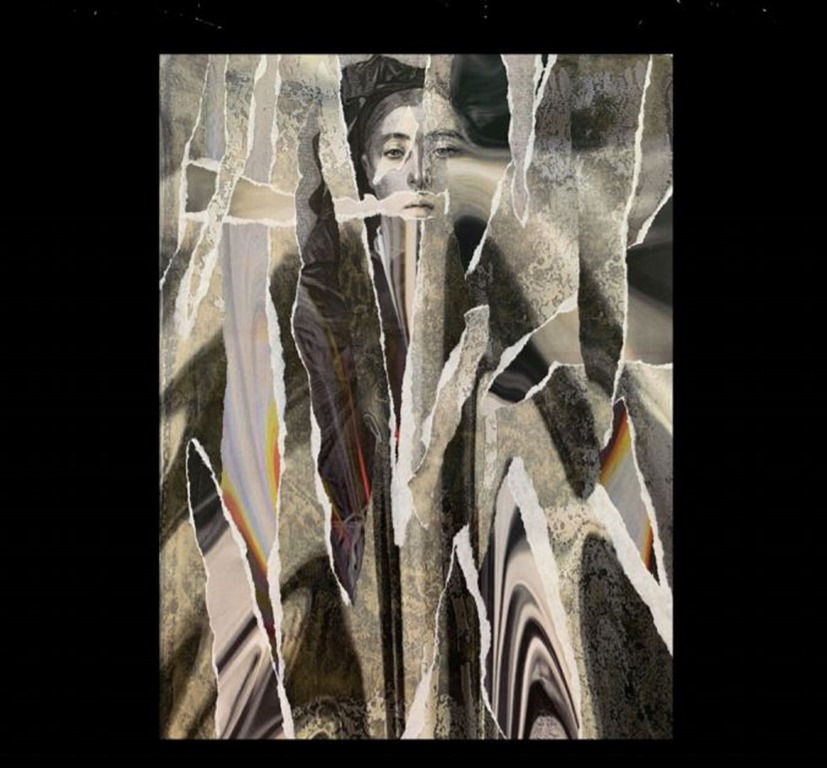
Barnyard Baptism’s biographical info is nil, but the cover art to their new EP, 9:58 is probably all the info you need: it’s dark and disturbing, and it’s not entirely clear what you’re looking at beyond a face and a door. Mostly it’s a blur, but a blur that positively screams mental derangement, anguish, psychological torture, distress, and pain.

And this is precisely what Barnyard Baptism articulate with their full-on sonic assault: pain and anguish and a soul-sapping sense of being utterly overwhelmed yet fermenting a frenzied disquiet, burning from the inside is what’s conveyed by the tempestuous tumult that tears from the speaker from the offset, with ‘Dead on the Water’ plunging us deep into the harshest of harsh noise explosion, a blizzard of white noise ruptured by blasting nuclear winds and the occasional piercing shriek of ultra-sharp, shrill feedback that cuts through like a rapier puncturing a gauze drape, tearing to shreds in an instant any smoothness of surface.

‘Negative Headspace’ is a gouging blast of mid-range nastiness, a full-force blast of frequency with a tearing, serrated edge. There’s nothing to be extracted here, no musical revelation: this is nothing but all-out sonic horror, noise on noise.

The title track is mined from a seem of vintage power electronics with an experimental edge, with a thrumming oscillating drone crackling into snarling distortion. As a child, I used to suffer a recurring nightmare, where things would present as line drawings, smooth and silent, before being crumpled like paper and destroyed in a black scribbly mess. These dreams were silent – conspicuously so – to the extent the silence filled my head to a roar, and the crumpling of the lines actually hurt, crumpled my cranium like distortion expressed without sound. These dreams still haunt me now, at 45, and the way these gliding hums crunch into a distorted mess of noise reminds me of that. On a personal level, it’s painful, traumatic. In its own context, it’s still painful and traumatic: this is head-shredding abrasive noise of the highest order, and it hurts, both physically and psychologically.

The noise swells and grows in pace, volume, and sheer nastiness over the course of the last couple of tracks, which bled into one another in a billowing bluster of pulverising distortion.

Barnyard Baptism don’t do breaks or contrast, and there are no tranquil segments or rests here; no spaces between songs, no breaks in which to restore a sense of equilibrium: this is relentlessly brutal, and there isn’t a moment to breathe during the crackling horror of 9:58 – no so much as a moment of calm, and Barnyard Baptism are utterly obliterative.

AA

a3430755877_10

Hex Records (USA) / Bigout Records (Europe) – 23rd October 2020

Christopher Nosnibor

For what is essentially a side-project for some of its members, USA Nails have sustained a remarkable output since their inception in 2014, with Character Stop being their fifth full-length release.

It is less full-on, less manic, and less of a messy blur than the bulk of their previous works, but the energy is still very much present, manifesting in a sound that’s more defined, more sharply focused. Which means, in short, it’s more like being attacked with a saw than a hammer. That said, there’s no shortage of blistering punk assaults: ‘I Am Posable’ is a furious flurry of slurry, and hits the spot hard.

We’ve already been given a flavour of the album with the short sharp shocks of ‘I Don’t Own Anything and the opening track ‘Revolution Worker’ both of which combine the growling bass rumble of Shellac with skewed guitars and a motoric beat, and consequently comes on like an early Fall outtake being covered by Tar, and it’s fair to say they’re wholly representative of the album as a whole. Well, don’t you just hate it when you buy an album because of a great single only to find the rest of the album is absolutely nothing like it, and it’s crap to boot? Maybe it happens less now in the digital age, but I used to find that a lot back in the 80s and 90s. Anyway, what this means is that if the prefatory releases appealed, then you’ll be happy to get lots more of the same, while conversely, if the singles didn’t do it for you, then you’re really going to find this a chore.

Recorded in just four days at Bear Bites Horse in London with producer Wayne Adams, Character Stop is urgent, immediate, and raw, and the songs are all brief and more angular than a great-stellated dodecahedron. And yet for that, it’s not math-rock, nor does it really belong to any specific genre, unless jolting, jarring, slightly discordant shit is a recognised genre now.

The album’s longest track, clocking in at four and a quarter minutes, ‘How Was Your Weekend?’ slows the pace and darkens the tone, with a stark, post-punk feel, a tone vocal paired with a thumping metronomic beat at tripwire tense guitars, and likewise the stark, jittery ‘Preference for Cold’. The bass shudders as it runs hither and thither, while the guitars crash in splintering shards. Elsewhere, if ‘No Pleasure’ filters The Stooges through Black Flag and slips its way through at a hundred miles an hour in a torrent of sweat and angst, it’s still got a vaguely post-punk tint to compliment its hardcore hue, and ‘Temporary Home’ is all about the motoric thud. It’s also got something that sounds like a chorus and a bit of melody, although it’s soon swallowed up in a scream of nail-scraping feedback and racketous riffage.

You wouldn’t exactly call Character Stop a minimalist work, but it is often stark, almost contemplative, going beyond all-out thunderous noise to explore dynamics and contrast. In short, it’s a cracking album.

AA

a4096156322_10

23rd October 2020

Christopher Nosnibor

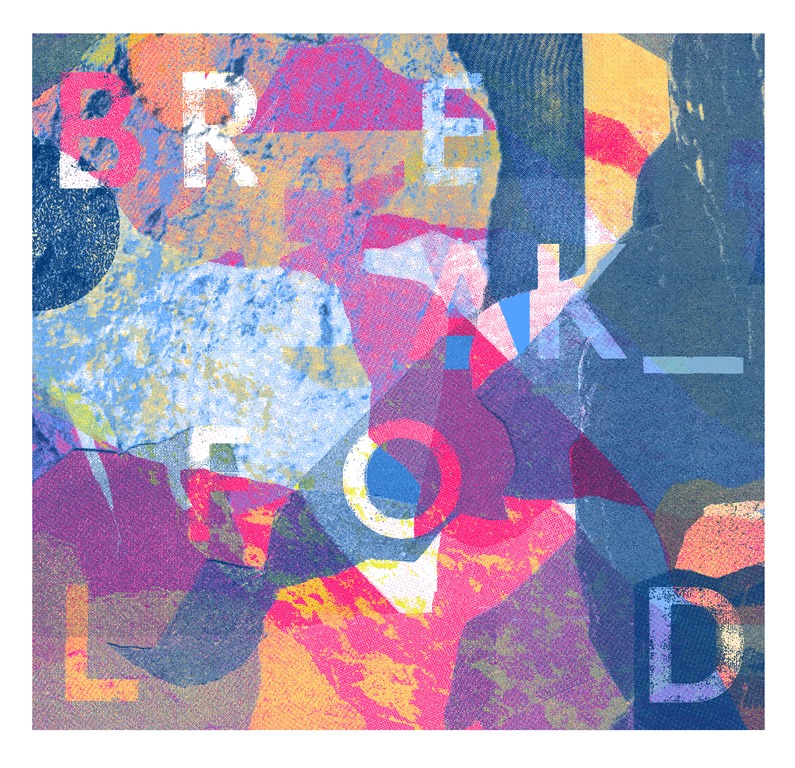
It’s been a while since we’ve heard from break_fold, the electro-semiambient project of former i concur front man Tim Hann. But life has a habit of getting on the way of creative endeavours, so it’s not entirely surprising. This is the third eponymous break_fold release, and it marks a clear continuation from its precedents, including the song titling, with the majority of tracks denoted as a date which this indicates when work started on the song. The two exceptions are ‘Gaps_in_the_Mesh_(Remix)’, a reworking of a track by ambient artist and collaborator, Ten, and ‘JP’, which is dedicated to a friend of Tim’s who unfortunately passed away in 2019.

That the first two tracks date back to 2018 give an indication of the length and laboriousness of the assembly of this third excursion. The previous release, 27_05_17 – 21_01_18 was a comparatively speedy work.

The first piece, ‘22_12_18_Pt1’ is soft, supple, floating mellifluous ambience that evolves from an elongated, ominous drone, into a cascading piano motif, while its counterpart brings the beats – soft, yet strong, clear, and propellent, it’s a cinematic electro groover, which radiates an uplifting vibe.

From this point, the album begins to develop a definite sense of having a forward trajectory. A dark, serrated hum blossoms into a multi-hued shimmer of radiance, pushed along by a solid danceable rhythm on ‘15_11_18’. There are some quite noodly synth details behind the broader sweeps. There are hints of Jan Hammer about some of this, and there are moments that stray into drivetime dance that’s kinda smooth, kinda accessible: the buoyant basslines are easy on the ear and there’s an undeniable bounce in the background. It feels rather escapist, and it’s rather nice: we all need somewhere to escape to at times, especially now, so immersion is good. And breathe…

‘29_04_18’ feels fully formed as ripple waves of gentle sound pulse across a flickering, understated dance beat – more one to nod along to than to get down t, but nevertheless, it’s unexpectedly uptempo, and while it does still evoke chin-stroking ponderousness, it equally creates a rich atmosphere in which to wander and ponder.

There is a lot off space to be explored on break_fold, a lot of texture and tone, and while it may largely favour the light and melodic and easy on the ear, it’s got range and ventures into shadowier realms in places. There are parts that evoke 80s film soundtracks, and others still more chillwave in their orientation.

The album ends with ‘JP’, and one can’t help but feel the abrupt ending is significant, a work truncated, unfinished and unresolved. But for all that, it feels like the work for this album is done, as though this particular creative cycle is complete. Where to go from here remains to be seen, but in the now this resonates majestically.

AA

breakfold_album_front

Christopher Nosnibor

Sometimes, the full depths of dark ambient works only reveal themselves at a certain volume and this is very much true of brb>voicecoil’s Alms of Guilt. Played at a low or even regular volume, it sounds very much distant, rolling rumbling, and rather low-impact. Turn it up, and it’s a different album and a completely different experience.

The first composition, ‘Cost of Redemption’ is disturbing. Clanking, clattering extraneous noises thud like the boots of troops searching a ruined building against a backdrop of a hovering hum of a nuclear wind. There’s no specific dialogue, and of course, that’s part of the appeal and purpose: it’s very much about the listeners projections, about reception, and from my seat, I feel a growing paranoia. Nothing specific, nothing I can pinpoint, just a sense of awkwardness. What do you do with that?

The nine-and-a-half minute ‘Seven Swords to the Heart’ is dark ad foggy, imbued with a certain sense of mysticism, shifting from groaning drones to clattering yet heavily-muffled percussive sounds like pieces of wood bouncing in a barrel over rapids, over and over and on and on… it’s the sound of bruising, of cracked ribs, of physical battery.

‘Welcome Back to the Days of Book Burning’ is dark, dank, and doomy, a rumbling drone of brooding lower-end dark ambience. It feels almost medieval in its dark, oppressive shadowy tones, but the fact seems to be that we’re so far off the dystopia the title suggests. And it’s here that it hits: sitting alone once again in my little office – what would for most other people be the spare bedroom – it’s dark outside and I haven’t seen anyone socially for days, but news channels and social media are bursting with updates on how police shut down an anti-mask rally in London this afternoon. Anti-intellectualism has reached a new peak in the rising tide of opposition and antagonism toward ‘experts’ and even health workers attending emergencies. This, seemingly, is what we’ve come to. And it’s a bleak prospect. I had previously come to the opinion that, in the age of the Internet, there was no excuse for ignorance, as all information was available at the click of a button. But so is misinformation and propaganda, and these seem infinitely more popular. Such a realisation is painful. He dark sludge-filled wreckage of this track provides no comfort or solace, but an ideal soundtrack to these thoughts.

‘Buried’ is gnarly, a subterranean earthwork of a composition, while the nine-minute ‘The Truth of my Demons’ returns to the basement of gloomy rumbles, muffled bangs of doors, and a swashing swampy gloop and grind hat has no real sense of trajectory.

There is so much depth, so many layers… and so much grumbling, rumbling mid-to-low frequency that bubbles, swirls, and eddies like so much discomfort in the gut. And like so much guilt, this is a noisewerk that nags away without any real sense of direction, or even idea.

Alms of Guilt is the swashing soundtrack to a ship run around, with no sense of space or direction. It may not be explicit about it, but it’s an album of our times. Tense, claustrophobic, oppressive, this is the soundtrack to the world now.

AAwork=small]

a3868920290_10

Cruel Nature Recordings – 16th October 2020

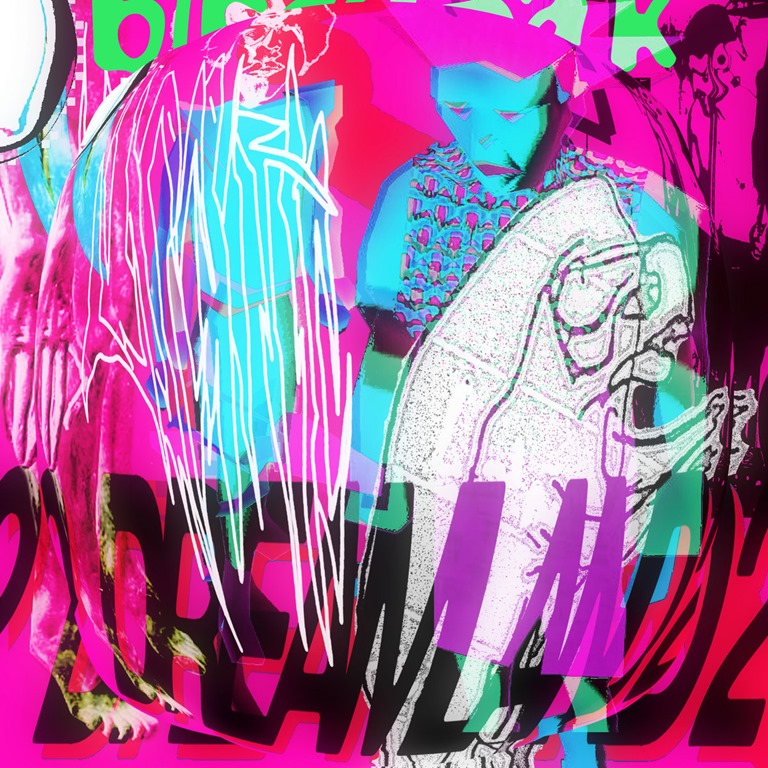
New York’s Lip Critic return with their second album, imaginatively titled Lip Critic II. Now, I have a tendency – and I know it’s spurious – to associate numbered albums with prog and indulgence, ranging from Peter Gabriel to Led Zeppelin. But there is nothing remotely proggy or indulgent about Lip Critic’s second eponymous release, which crams nine tracks into 21 minutes of genre hybridity and maniacal mayhem. And make no mistake: this is intense and crazy shit, all going off in a boiler at once.

The lazy hookline would be that the album’s first track, ‘Why Not’, sounds like The B52s on acid, but more accurately, it sounds like The B52s on acid and meth imitating a fictitious Dead Kennedys / obscure hip-hop collaboration for the Judgement Night soundtrack. But none of this really convey just how frantic, frenetic, fucked-up and actually quite how wrong this all is. Yes, the world of Lip Critic is a bewildering one that absolutely defines the concept of ‘crossover’, and the closest comparison I can think of is Castrovalva, who were ace but niche and probably for a reason. It’s so far into niche crossover it’s hard to determine the level of seriousness behind the hybridized mess of noise that is Lip Critic II: this is an album that goes beyond so many boundaries all at once.

I don’t know what this is, and I suspect it doesn’t either. And nor should it: music should exist for its own sake, free from any constraints of genre. But with Lip Critic, it’s brain-bending and bewildering: there is simply so much going on, and all of it’s incongruous and seemingly incompatible.

‘Dreamland I’ is out-and-out mad, not so much a mash-up or hybrid as a multi-genre pileup with gas tank explosions and flames and wailing sirens and probably some people being cut from cars by fire and rescue and others being abducted by aliens.

‘Like a Lemon’ brings garage, grime, and industrial-strength hip-hop together with mangled beats a punishingly heavy groove that provides a backdrop to a more narrative-orientated approach to the lyrics, describing a guy with ‘A double-breasted suit and tight shorts / they’re so tight they cut off the circulation to his legs / … he said ‘I’m going to fill you up with rhinestones’.

At every turn, Lip Critic deliver mind bombs of every shape and form: sonically, stylistically, lyrically, Lip Critic II is simply an explosion. With every song being so brief, one barely has time to realise it’s started before it’s finished, and by the end, the listener is left punch-drunk, bewildered and dizzy. I think it’s good. I think it’s horrible. I think it’s a mess. But I can’t be sure.

AA

a4151206807_10

Cruel Nature Recordings – 16th October 2020

Christopher Nosnibor

While the 90s was awash with obscure bands cranking out gnarly, guitar-driven noise, the last decade or so (alright, I mean two decades, because I’m old and still can’t get my head around the fact that 1990 was 30 years ago and that Nevermind is 30 years old next year) has seen such music emerge only in pockets, with the likes of Leeds’ Blacklisters being prime exponents and one of the few to reach a wider audience – and it’s Blacklisters who probably stand as US noisemongers TRVSS’ closest contemporaries.

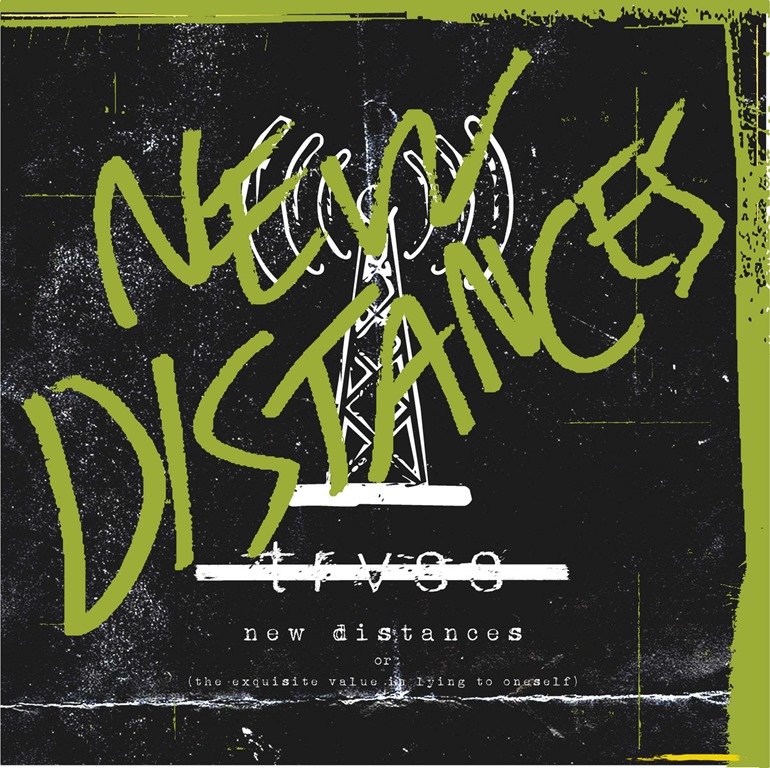
TRVSS are very much in the early 90s vein: I’m not just talking Am Rep and Touch and Go, but way further beneath the radar. Listening to the grainy, gritty grind of New Distances, I’m transported back, way back, and while I’m hearing The Jesus Lizard, I’m equally hearing Zoopsia, Headcleaner, Oil Seed Rape. Not familiar? To be clear here: I’m not promoting obscurest elitism here, but trying to give a flavour of just how choc-full of rabid guitar bands the underground scene was at a certain point in time – a time when bands like Terminal Cheesecake and Tar would receive coverage in the national music press, back when there was a national music press. They were exciting times, and that’s not the rose-tinting of a 45-year old reflecting on his youth: things were changing, and fast, and there was something in the air, and in your local record shop, in pub gig venues, and even on the radio

New Distances is a nasty mess of guitars driven by low-slung lurching basslines and drums that thud away in the background, half-buried in the welter of noise. Things are still changing at pace, of course, but mostly venues are closing, and there are no solid channels by which to access new and emerging talent. Where are the equivalents of The Tube, Snub:TV, The Word now? The Old Grey Whistle Test wasn’t even entirely the domain of proggy old farts, and now, we don’t even have Jools fucking Holland. There’s no M on MTV, and 4Music is a misnomer as well, but I digress.

TRVSS would probably never have made TV even back then, but it’s almost certain that John Peel, Melody Maker, and NME would have found a bit of room for some exposure for their raging, demented brand of no-wave / noise mania, and New Distances has no shortage of meat to give it appeal to a niche but substantial audience.

‘Stigma’ encapsulates the album’s rabid grunged-up noise-rock vibe, coming on like both side of the Nirvana / Jesus Lizard split ‘Oh The Guilt’ / ‘Puss’ simultaneously with it jarring guitar riffage and raw-throated vocal roar. ‘The Ventriloquist Always has the Last Laugh’ pitches skewed guitars galore, crash-landing in the space between The Jesus Lizard, Shellac, and the criminally underrated and proportionally obscure Milk.

It’s likely that TRVSS will remain forever obscure, although not on account of lack of appeal or lack of ability: sure, their stuff is dark, driving and ultimately extremely niche but all of this is ok: against the backdrop of blanket mass-media and sameness, such deliberately obscure an anti-mainstream music is essential and invigorating: lap it up while you can.

AA

a3636013255_10

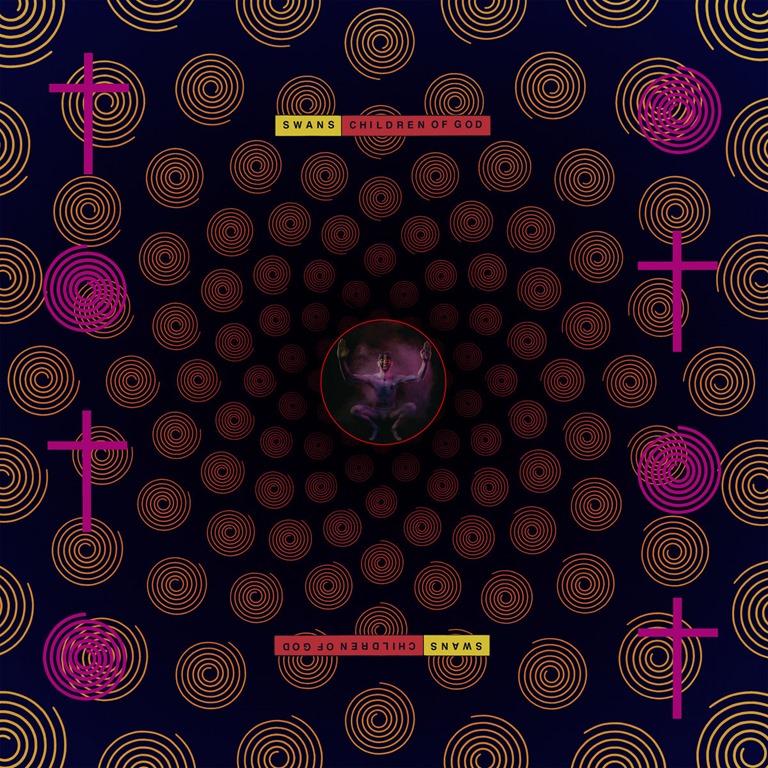
It was through Children of God that I was first introduced to Swans. It was probably around 1988 or ‘89, so Children of God was their then latest album, and I was starting to properly spend my Saturdays hanging out at the second-hand record shop where I would subsequently land a job. Another guy who hung around / worked there had dark, diverse, and obscure musical tastes, and passed me a copy of the album he’d recorded to tape. This is a perfect example of why home taping didn’t kill music.

And so, while it’s an album I have played a lot over the last – urgh – thirty years – it’s one I’ve listened to without necessarily reappraising. There’s nothing like a reissue to provoke such contemplation.

And even now it’s by turns eerie, chilling, and heavy as hell. Admittedly, it’s not as heavy as the releases which preceded it, and which I would subsequently discover – at that time by plundering racks at record fares, at a time when it was paying £8 for a vinyl copy of Cop or the Young God EP felt like a lot of money but there was no other means of hearing this stuff back then.

There isn’t a lot audibly different from the early 00’s reissue here. For any remastering, the sound is still dense and murky, and that’s to the good, and it’s an integral part of the listening experience.

The first grainy chords of ‘New Mind’ bludgeon hard, and it’s a bleak, oppressive trudge when taken in isolation (by which I mean, without comparison to their back catalogue). It doesn’t exactly scream ‘MTV exposure’, but weird shit was happening back then. And shift didn’t get much weirder than Swans’ foray into evangelism – pitched as an exploration, it adopted the tropes with such a seriousness that it almost felt like the real thing.

‘You’re not Real, Girl’ is dreamy, opiate woozy, sultry, serpentine: Gira croons lazily, drawling, but also hollow, empty, his voice reverberating in a chasm of nothing. It’s hard to articulate precisely how deeply this resonates, and it’s all in the delivery, which rattles and reverberates around the ribcage and the cranium in an hypnotic swoon.

‘Beautiful Child’ is a raging stomp, ‘this is my life! This is sacrifice! This is my damnation! This is my only regret! That I ever was born!’ Gira screams maniacally, over and over, and over and over. Jarboe’s vocals soar like a chorus of ghosts over the ugly march.

My personal favourite track on the album is ‘Trust Me’, with a trilling harmonica intro giving way to a landslide of discord and gut-punching percussion. Against lurching guitars, Gira’s vocal is detached, inhuman, other-wordly, a cavernous monotone

As fans will be more than aware, the Swans catalogue is a shade messy, particularly around their late 80s / early 90s period. ‘Blackmail’ first appeared on the ‘Time is Money’ 12” in ’86, so the Children of God album version is a revisitation and a subtle reworking. With the 1999 compilation Various Failures and the previous CD reissue being long out of print, it may have perhaps been nice for the ‘New Mind’ b-sides ‘Damn You to Hell’ and ‘I’ll Swallow You’ to have been included here, but on the other hand, this release retains the integrity of the original.

The contemporaneous live album, Feel Good Now very much does, though. Recorded on the European tour supporting Children of God, it packs some storming live renditions of songs culled from Children of God performed during a quite specific peak of the band’s live career.

Swans have always pushed the limits live, and taken the songs to new and different levels of intensity and duration, and the eighteen-minute rendition of ‘Blind Love’ on offer here is a prime example. It’s barely recognisable, and despite being led by a simple acoustic guitar, it’s absolutely fucking punishing – and not necessarily in a good way: Gira’s elongated notes and wordless, formless yells are uncomfortable, a raging beast tortured and pained, while the guitar and rhythm section batter away without mercy. The drums are brutal. Having witnessed Swans live post-millennium, I have come to appreciate that nothing short of nuclear annihilation can convey the sheer force and volume of Swans live. However, Feel Good Now definitely goes a long way to capture the intensity of that volume.

The tracks appear in a different order from the original release, instead representing the sequence of the 2002 reissue. As this isn’t an actual concert, but a document of a tour, the sequencing is largely inconsequential, and ultimately it’s about the cumulative, bludgeoning effect. The sawing churn of ‘Like a Drug’ is pulverising, brutal, nauseating, and while ‘Children of God’ may only run for five and a half minutes, the effect is something else, the drumming thumping relentlessly in rolls of pure assault. Gira hollers impenetrably into the void as Jarboe ‘s voice floats effortlessly and with grace and true beauty over the ugly, pounding mess.

‘Beautiful Child Reprise’ is so savage as to be almost unlistenable long before it gets to the ‘Kill, kill, kill’ chant. It will come as no surprise for anyone who’s encountered Swans’ pre-85 live material, but fuck me. If one band could be considered to define excruciating sonic brutality, it’s Swans.

Children of God was a pivotal album, and remains a particular high point in the band’s career on many levels. There is no question that it broke new ground, or that it broke them to a new and far wider audience, although there is no way you could describe it as commercial or even accessible in terms of the common understanding of the term. It also very much stands alone in terms of its sound, defining the crossroads between the crushing basalt slabs of violent loathing which defined their early years, and the almost folksy melodicism of their early 90s releases.

What this edition lacks in terms of additional material and, indeed, any radical audio differences from any other editions through its remastering, it makes up for by simply making the recordings available again, particularly on vinyl.

AA

a3577880318_10