There’s niche, and then there’s microniche. Swedish cassette label Dret Skivor, this time in collaboration with Bad Tapes, present a split release that on paper doubles the audience, meaning they could probably shift a larger run. So is the run of just twelve copies of the cassette an act of wilful obscurantism? Or is it simply an awareness of market reach for what is, by all accounts, an obscure and difficult release?
Housed in some particularly (out of character) tranquil fine art depicting a rustic scene worthy of Turner, created by the ubiquitous one-man noise scene that is Theo Gowans, this collaborative effort was recorded to celebrate the midsummer of 2021 – released, appropriately just days after the end of British summertime, and also coincidental with November’s Bandcamp Friday.
Side A is occupied by ‘midsommar’, a celebration Scandinavian style. It’s not exactly a celebration in the sense of a carnival atmosphere, but it is a celebration of a momentary pause, the point at which the year hangs at its apex before its gradual retreat back towards darkness and autumn.
It manifests as fourteen minutes of ominously hovering drone during which almost precisely nothing happens. It’s ominous, and its power lies in its commitment. That is to say, it’s the Waiting for Godot of drones. Practically nothing happens. There is no discernible variation. There’s not even much to listen to for change; the texture is flat, the tone is flat. So many releases are referred to as exponents of drone, but this, this is the definition of drone. It’s not doomy, it’s not dark: it’s almost completely blank. Not so much sound pouring into a sonic void, but fourteen minutes whereby sound creates a sonic void.
Flipside ‘midsummer’ is typically Gowans; midsummer English style – some chatter over the setting up of mics and the loke, some field recording ambience, birdsong and a small choir starts things off gently if there’s a lot going on at once, and then a barrage of feedback and churning noise that obliterates everything. It gradually slides into a morass of interweaving drones that undulate and twist, with all sorts of extraneous fizzes and scrapes intersecting throughout. If ‘midsommar’ is a smooth drone, an endless stretch to a clear horizon ‘midsummer’ is an unsettled and unsettling experience dominated by disruption, there is discord and discontinuity, and a pervading air of discomfort.
Taken together, the two pieces provide contrasting perspectives which illustrate that experience is not fixed, but something which comes from perception.
Over recent months – and more – we’ve unravelled the series of releases by experimental oddballs Kröter, via their affiliation with the king of quirk, Mr Vast, formerly of cack pop maestros Wevie Stonder, aka Wevie De Crepon. You can never have too many side-projects, offshoots, and affiliated acts, and so it is that Kröter-associated Hunger give us Wollufos. (Hunger is Christoph Rothmeier & Jörg Hochapfel; Rothmeier is the other half of Kröter along with Henry Sargeant, aka Mr Vast). This is their eighth self-distributed album, and their first on vinyl.
Have you managed to keep up so far? Good, because it’s only going to get more complex and convoluted, because these guys are a prolific, self-contained community cranking out endless oddities, and Wollufos is no exception. They pitch it as ‘mixing fake folk acoustic instrumentation like banjos and open tuning guitars with Harry Partch-style homemade devices’. Fake folk?
From the springy sproingy lo-fi shuffling synth whackout of the brief intro piece that is ‘Zwergenfieber’, it’s immediately apparent that this is going to be a substantial serving of quirky, off-the-wall music that doesn’t conform to any conventions, even their own. The Berlin-based duo work across time signatures and genres at the same time, with some woozy, warpy synths and picked guitars existing in the same space but seemingly playing different songs. Then there’s the leaning towards titling their quirky, heavily rhythm-orientated instrumental ditties in French.
‘Mambo Momie’ is an exercise in bleepy motoric minimalism, and the album is brimming with minimal beats and squelchy synths, as is nowhere more apparent than on the strolling ‘Sunset Sling’. When it comes to making music with all the bells and whistles, Hunger take this quite literally: download bonus cut ‘Schuhe aus Brot’ sees them pull out all the stops to create something that borders on the overwhelming, with additional droning horn sounds and blasts of noise on top of the stuttering, clamorous percussion, before winding down to trickling chimes.
There’s some kind of half-baked wonky country / space crossover on ‘Chariot de Pipi’, and the atonal, off-key pickings of ‘Macramée Cramée’ are truly brain-bending. And then there’s the twelve-minute ‘Hundenebel’, a quivering proggy space-rock workout that makes optimal use of space and distance and of Daniel Glatzel’s clarinet to forge a vast sonic vista. Great, yawning siren wails rub against bubbling synth swells, and there are so many contrasts, to may layers, so many juxtapositions.
Why do we find discord so difficult to process? Even while I enjoy it, I find that numerous things that are seemingly disconnected or otherwise independent create something of a sensory overload that isn’t always entirely pleasurable, and can at times prove quite disorientating and uncomfortable. It messes with our orientation and equilibrium, trips our sense of balance and spins us off centre. Wollufos will leave you dizzy. At times it’s quite bewildering, but it’s never dull or lacking in inspiration.
Yol is, unquestionably, a definitive presence of the self-professed ‘no-audience underground’. If you’re unfamiliar with this (and there’s no shame in that, because the clue’s in the name), it’s a term coined by Rob Hayler who blogs at radiofreemidwich, who says ‘there is no ‘audience’ for the scene because the scene is the audience’. If it sounds incestuous and self-involved, then maybe it is, but in a good way: that is to say, it’s more of a community than a scene, and one defined not by sound or style, but an ethos of mutual support, and it’s an incredibly broad church. Global domination isn’t on anyone’s agenda: this is art for art’s sake, free expression, experimentalism because. No-one is judged on technical competence – in fact, no-one is judged at all. Anything goes, and yol absolutely encapsulates that, with ‘music’ that’s utterly off the wall.
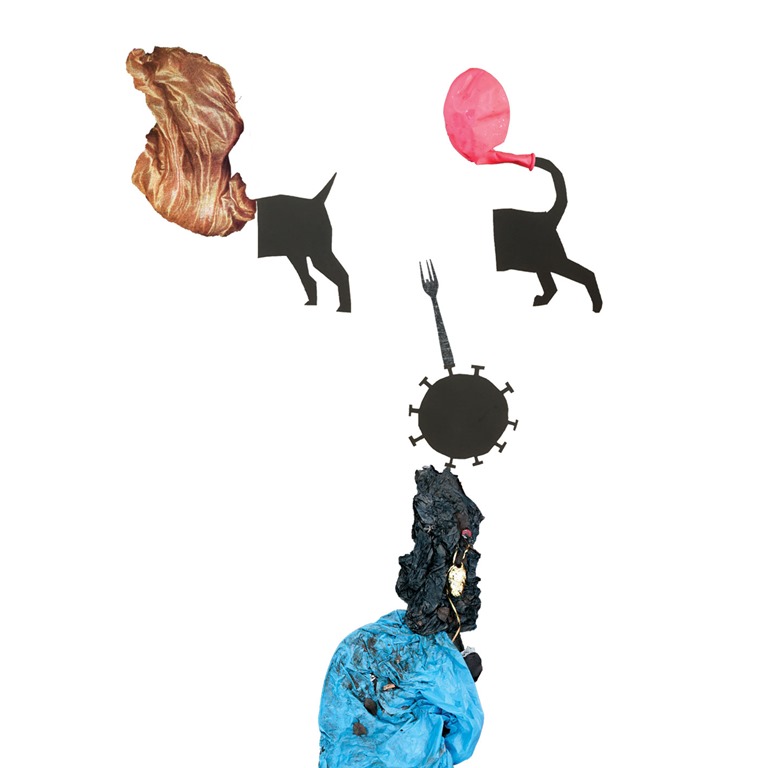
The blurb advises that viral dogs and cats offers ‘five tracks that revolve around the essential ‘found objects / mouth noise / mangled language’ core of yol’s practice, brimming with razor-sharp observations, absorbed and regurgitated to form absurd, looping, distending cantillations. Visceral, cathartic and piss-funny in equal measure!’
The first piece, ‘chunks of tongue’ (it’s not a song, by any stretch), is deranged, demented, with what sounds like some kind of contact mic slattering and random tweets providing the backdrop to some utterly dented shouting and yelping and gargling about expensive ice cream being sold as strawberry, but… well, he doesn’t believe it. The strawberry pieces are chucks of tongue! He splutters and spews like he’s choking on the offensive material, and as amusing and Dadaist as it is, it’s also quite disturbing. Context counts, of course: this is an album (albeit a short one that’s more of an EP), so it’s art, but if you found someone doing this in the street, they’d likely be sectioned.
There’s very little musical backing on here, apart from whistles and trills of feedback and random extranea, meaning that it’s almost a spoken word album of sorts. But it’s crazed, cracked spoken word – there’s no narrative, only crazed spluttering and yelping. More than anything, I’m reminded of Mike Patton’s Adult Themes for Voice album. The simplicity and sparseness is a major feature here: yol shows that you don’t really need anything to make an impact, and when we’ve become accustomed and conditioned to polished, produced song-orientated music , to be assailed by something so primitive as almost nothing but a human voice, contorting every way possible is an unusual experience, and one that will likely freak some people out. Good, I say.
‘eat out to help out’ isn’t only representative of the album as a whole, but a standout. He stammers and mumbles around, catching his breath, panting, while struggling to verbalise some deep, frenzied anguish about a plastic fork with a nugget on it. The repetition of a single phrase with varying emphasis is very much an extension of the permutational technique initiated by Brio Gysin in the late 1950s and early 1960s, only here, the sequence of the words remains unchanged, with the delivery and emphasis changing on each repetition instead. The effect of the repletion is quite challenging and ultimately disorientating.
‘Viral cats and dogs get bored… Get back to shitting everywhere!’ he screams on the title track. ‘Yes, but not in my backyard!’ I want to shout back after waking to frequent turds from neighbourhood cats on the sliver of AstroTurf at the end of my yard. Bastards. And immediately, I find myself foaming at the mouth with fury, and realise that this is it. Tapping that vein into raw emotion and unspeakable fury, I’m seconds away a fit of from inchoate screaming abdabs – which is precisely what yol serves up here.
viral dogs and cats isn’t an album to be judged on technical competency – in fact, it’s not an album to be judged on any scale of merit of whatever, beyond ‘does it have an impact?’ Of course it does. It leaves you feeling weird. Because it is weird. And that’s the fun of it.
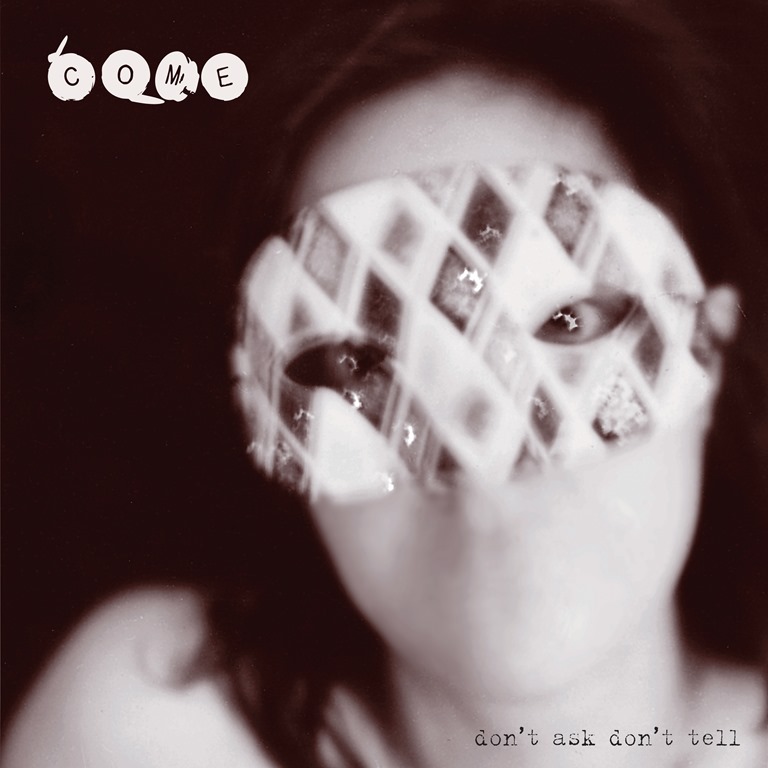
“What does ‘regret’ mean?” “Well, son, a funny thing about regret is that better to regret something you have done, than to regret something you haven’t done.” I have no shortage of regrets, but one is that I saw Come and thought ‘meh’. It was 1993: they were supporting Dinosaur Jr, who’s just released Where You Been?, along with Bettie Serveert in Nottingham. I’d read reviews of, but was still yet to hear Eleven: Eleven at the time. They’d been all over the press with that debut album. And I just didn’t get gripped. Maybe it was because, at seventeen, I was just so revved for the headliners I wasn’t in a place to fully appreciate the supports.
I had no way of knowing that their second album would become one of my absolute favourites. Again, having picked up Don’t Ask, Don’t Tell, I wasn’t immediately enamoured. I guess it took me awhile to appreciate the album’s subtlety and emotional depth – and it has so much depth – but investing in listening properly and not holding out for the big riffery of Nirvana or Dinosaur Jr or the general sound of the class of ’93-’94 unlocks Don’t Ask, Don’t Tell. Some of it’s about maturity, some of it’s about patience – I didn’t really dig The God Machine on the first few spins of Scenes from the Second Storey.
It was a long album, for a start. Only two of the songs are under four minutes long, and half are five or more. The structures aren’t obvious, there’s not a lot that’s straight verse / chorus / verse. It was also a bit slow, and quite country / blues. It really wasn’t the sound of the grunge zeitgeist of 1994. But one day, somehow, something clicket. Quite possibly it was by absently half-listening to it, that moment arrived in ‘String’. I have this thing, whereby a fleeting moment of a song -m a change of key, chord, a single sound, or something else otherwise minor, extraneous, will absolutely make it for me. By which I mean, I am completely obsessive about this. When a moment strikes me as ‘pivotal’ I simply have to hear it, over and over, and that will be a reason to play an entire song – on repeat. That first scrape of fingers on strings at the start of ‘My Black Ass’ on Shellac at Action Park? Yeah, that’s one such moment. That moment at 3:05 on ‘String’ in Don’t Ask, Don’t Tell is another. It just hits an instant of musical perfection, and it’s absolute bliss.
The song is a standout – on the CD, it’s positioned after the slow, blooding ‘Let’s Get Lost’ and picks the tempo up. The fact it arrives after a false ending or sorts and a change in direction is key, and the guitar interplay is sublime… The trouble is, explaining it in words simply doesn’t convey the impact, the way it resonates. But there it is. And now, here it is again, remastered. And it sounds great, all over again, as well as giving reason to revisit what is a remarkable and courageous album, one that represents a band committed to making the music they want to make instead of succumbing to trends or record company or peer pressure. And revisiting it only further highlights the dynamics, the tempo changes and unexpected shifts, and the way those sonic twists can instantly alter the mood, and the way the band imbue every bar with emotion. It’s so, so powerful, and all the more so for the fact it isn’t immediate. In fact, all of the things that made it ‘difficult’, that I struggled with at first, are the reasons I love it now and are the reasons it’s such a remarkable and accomplished album, and one that proved without doubt that volume is not the sole driver of intensity. Thalia Zedek’s vocal with its rich patina has a deep rasp, and carries a greater emotional than tonal range, and it’s perfectly suited to the twisting, restlessness of the songs: these are songs to lose yourself in.
The remastering is nicely done – nothing too intrusive, it just feels that bit crisper, somehow, the details clearer, and that’s nice.
The bonus disc, Wrong Sides contains an entire album’s worth of additional material, and with the exception of the demo version of ‘German Song’ (with some magnificent spiralling guitar work and if anything, this slightly less polished take, with the notable addition of clarinet and piano packs only more aching beauty), it’s not a gathering of alternative takes, radio sessions, and rehearsals, but a truly worthy assembly of contemporaneous material – B—sides, stray compilation tracks, and unreleased material, and it’s fair to say that it’s all killer.
‘Angelhead’ – a ‘String’ 12” B-side was recorded on a stop-off on tour, and is one of the most directly riff-centric grungers of the band’s career. ‘Cimarron’ is up there with the best of Come, with some crunchy guitars augmented by sweeping violin. Their cover of Swell Maps’ ‘Loin of the Surf’ is a groove-led math-rock instrumental workout, while ‘Submerge’ is chunky, crunky, dense, lumbering. This is the version that actually predates the one that appears on Eleven: Eleven, and instead came out on the German Sub Pop 12” and CD of the menacing ‘Car’ (also featured here with its warping guitars alongside B-side ‘Last Mistake’. But what matters most is that every single bonus cut here would have been worthy of the album.
With the additions as strong as the album, what the expanded version of Don’t Ask, Don’t Tell reveals is an insight into a great – if massively underrated – band at their absolute peak.
There’s something magnificent about the naming of Oli Heffernan’s project Ivan the Tolerable. It not only places a charming spin on history, neutralising and disarming the fearsome image of ‘the terrible’ with a superbly balanced piece of bathos, but it’s also so very quintessentially English. It’s the weak smile, the stiff upper lip… it’s not terrible. It’s not good either. It’s, you know, tolerable. No-one died. Or only a few people, it could be worse.
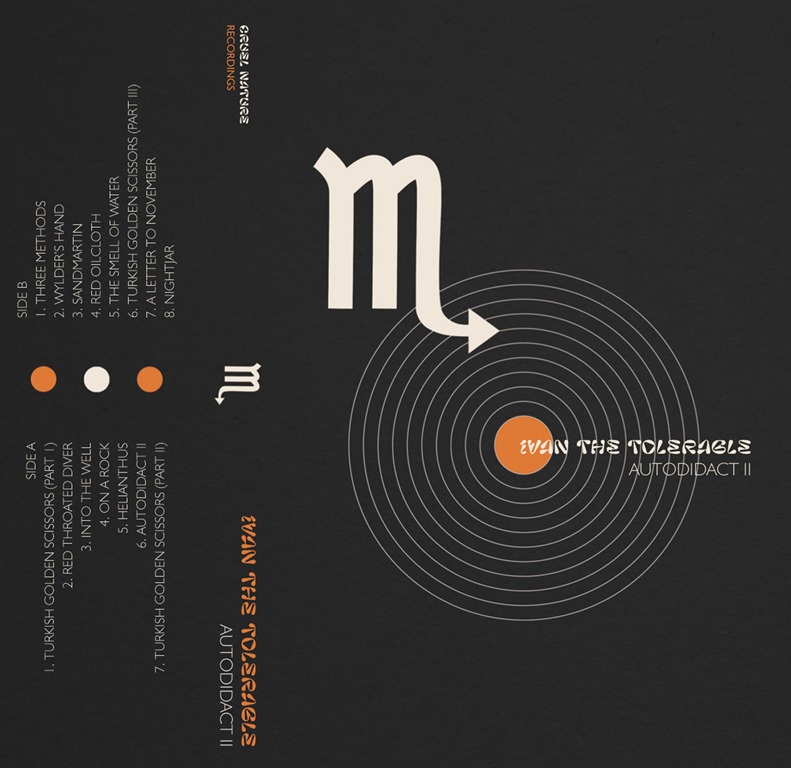
Autodidact II is the follow-up to 2018’s Autodidact, separated not only by three tears abut about a dozen releases. Heffernan is nothing if not prolific, and equally, nothing if not diverse.
This fifteen-track behemoth opens with the fifteen-minute ‘Turkish Golden Scissors (Part I) – there are two subsequent, shorter parts, situated strategically about the album. It’s a meandering progressive piece with pseudo-mystical Eastern leanings, a trippy, psychedelic jazz experience that’s utterly baked, man. There’s a trilling keyboard swirling and twirling around in the midst of the sonic sandstorm, and it’s like a collision between a deconstructed Doors track performed by The Necks.
‘Red Throated Diver’, which is centred around acoustic guitar playing a looping, cyclical motif in the style of Michael Gira, paired with some ominous and atmospheric brass and rippling synths, and clocking in at a fraction over two minutes, is a contrast in every way.
The album’s title is perhaps something of a clue to the form, presenting Heffernan as the self-taught experimentalist finding his way as he navigates the sounds in his head and working through ideas and concepts, and Autodiadact II is big on the expansive, rippling Krautrock noodling, with bubbling analogue synth sounds and trilling tones weaving over lower-end oscillations and grind and lay a gurgling, churning bedrock.
Notes chime into space amidst crackling samples and reverberations that connote space voyages – and ultimately being lost in space. It’s appropriate, as Autodidact II is not an album of focus, butt a work that wanders with or without direction in search of… well, what it’s in search if isn’t entirely clear. Not that it matters. The album started life as three separate recording sessions in July and August 2021 as work for a soundtrack to a series of films about psychogeography and North Yorkshire folklore, and as such, if the expanses of North Yorkshire, the moors and beyond, are buried in a sonic fog of otherness, the psychogeographical element reminds us that the end is not the end: it’s all about the journey. And Autodiadact II, while springing numerous surprises and drifting in and out of an array of varied sonic spaces, leads the listener on a unique, if uncertain journey.
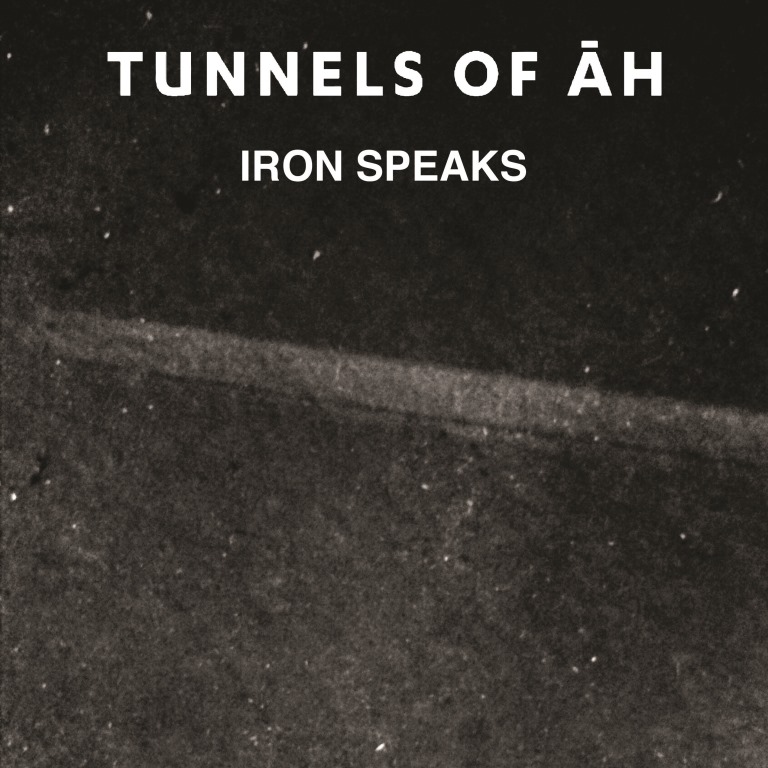
Chronology can be a real bitch sometimes. Linearity is incredibly overrated. How can it be that even now, the world can be so far behind William S. Burroughs’ concept that the conventional novel in its staid, conventional, linear form is passe, and ultimately fails to represent life as it’s lived? Iron Speaks is a release that may trouble some sequential obsessives, as it was in fact recorded before 2020’s Deathless Mind, the fifth album from Stephen Āh Burroughs, formerly known as Stephen R. Burroughs of heavy makers of noise Head of David. Since 2013, he’s pursued subterranean channels of darkness via the medium of fundamentally ambient music, but with an ancient and spiritual undercurrent.
As the press release explains, ‘Iron Speaks has become known as the ‘lost’ Tunnels of Āh album since it was abandoned as the fifth album release due to it sounding ‘unengaged’ to writer Stephen Āh Burroughs; until now. After reworking the original material, Iron Speaks emerges as a rediscovered official sixth album release.’
This is perhaps to overstate the album’s mythology – being shelved for a time is one thing, but to attain ‘lost’ status within three years another. Nevertheless, fans who’ve been keen about this album’s development will likely be happy with both its eventual emergence and its content, which is predominantly a dark whorl of bleak, churning ambience laced with a ghoulish shriek of feedback and general top-end tension. And tense it is: the six pieces bleed together to forge a continuous work that offers no respite and continually works at the psyche and the gut, twisting and gnawing at both. Time stalls, and you find yourself sucked into a subterranean space that’s dark and disorientating.
According to the accompanying blurb, ‘The material deals with the transitional stages of life and death, and it’s an ominous possessive piece of work. As ever though, the darkness of Tunnels of Āh’s output stems from and towards a place of infinite light.’ None of this is so readily apparent on listening, with any light feeling particularly distant as Burroughs leads the listener deeper and deeper through tunnels that rumble and surge with dense walls of noise – and sometimes, it hurts as the weight of it all bears down on the listener. It’s a rich, dense, elemental sound, born of earth and minerals.
We’re told that ‘The title, Iron Speaks, is a reference to the chapter in the Koran which states that iron emerges from the heavens as a gift to mankind. This is often graphically depicted as a blazing ball of molten fire approaching its earthly target, and that image perfectly encapsulates the sonic dynamism of this album. This album is a consuming experience as it slowly enters its intended orbit to its chosen point with inevitable crushing impact.’ The tile track does indeed pack that crushing impact, an oscillating tumult of treble atop layers of rhythmic squalling; in contrast, ‘Every Hour Wounds’ inflicts a different kind of pain as the lower-end notes bounce like oxygen bubbles in murky water in a deep, dark pool. Ominous drones and hums hover before an industrial slash of sheet metal strikes.
The album’s six pieces all sit around the seven- or eight-minute mark, and are densely-textured, and often quite oppressively heavy works. The first, ‘Wardens’ is a smog of bubbling murkiness, where the sound churns ad churns, like dense cloud and uncomfortable gut churning. Long strains of feedback scrape out over a barren wasteland, and ominous hums and drones hover over heavily-textured earth-shifting grind. It’s ultimately not really about ‘engagement’, but about tone texture, and atmosphere, and this is bleak, dense, and uncomfortable, and in a way that draws the listener in. Thunder rumbles, and the experience is quite discomforting. It’s more than that: it’s claustrophobic, suffocating. ‘Terminus Est’ clanks and chimes and booms out dolorous, depressing notes that offer no space to breathe or to reflect. It leaves you feeling compressed, and if not necessarily anxious, then far from relaxed or soothed, but instead on edge and unsettled – and this is why Iron Speaks is a strong work: it has the capacity to have a palpable effect on the listener.
Neurot Recordings / Gilead Media – 8th October 2021
Christopher Nosnibor
Less is more. This is something that few bands appreciate or understand half as well as Kowloon Walled City. And less doesn’t have to mean less intense: if anything, it’s a major factor in the ‘more’ element of the equation. Instead of hitting the listener with hard volume, relentless drumming, and gnarly distortion, Kowloon Walled City distil emotional pain into something simple and direct, and in doing so achieve optimal impact.
Their last album’s crushing weight derived not from its pace or even its volume, but its sense of space. Instead of filling the air with big noise, each chord crashed down hard and rang out into silence. In that space, Singer/guitarist Scott Evans’ vocals conducted pure anguish and blank nihilism. No throaty metal stylisation or posturing, just a kind of shouting – a shout of pain, of psychological torture – the torture of existence.
It’s the space between the sound that they’ve explored in the evolution of their fourth album, Piecework – their first output in six years.Make no mistake: Piecework is fucking heavy. It packs some utterly gut-punching, seismic riffs that drive hard, and when they hit, they’re utterly pummelling. But it’s the bleakness, and the blankness, that’s most affecting, that really hits the hardest. In the first instance, it’s simply so raw, so unprocessed. With the vocals clean and up-front, it’s the humanity that’s at the fore.
Not that there was any fat on Grievances, but with Piecework they pare it right down to the bone, and then scrape away a little more. Whereas most of the songs of its predecessor sat around the five or even six-minute-plus mark, Piecework packs seven songs into around half an hour. In cutting back so hard, the effect if heightened as the grey walls close in tighter, faster, more likely to bring a crushing end. The effect is cumulative, and there are no clear standouts on Piecework, only a sustained slug driven by a low, lumbering bass. It’s a bass that really churns the gut, and it has a physical force.
The production captures this dark, dense force perfectly, conveying a sound that feels live, that feels real. Wish you were there? Hell yes: we all need a bit of fortune, and Piecework is both beautiful and harsh. When they bring it down to nothing but a single note hanging in the ear, I’m reminded of latter-day Earth, and it’s clear that space and time matter.
As the press notes tell us, ‘Evans was dealing with the loss of his father during the writing of the album. He found strength in the women in his life, especially his maternal grandmother, who worked at a shirt factory in Kentucky for 40 years while raising five kids. The album name (and title track) is a nod to her line of work—and her quiet resilience.’ The lyrics are at once abstract and packed with images. There are no specifics, only scenes, and they’re bleak ones, of claustrophobic confined spaces, of deathbeds.
And it’s no criticism that this feels like an album of graft: the rhythm section ploughs on, and on, relentlessly, as if their duty is pure graft, digging, digging, digging. In the same way that early Swans was the sound of punishment, so Piecework is a soundtrack to the brutal reality of production-line capitalism.
The album’s predominantly slow pace is not the sound of rapid mechanisation, but of soul-sapping drudgery, the crushing weight of negative progress. There is no respite, no detours to bathe in moments of human kindness, the idea that for everything, there are glimmers of light and optimism. No, Piecework is an album with no let-up, in the way that Unsane are unrepentant, unremittingly grey in their outlook and execution. It hammers and bludgeons away at the senses and prods hard at the frayed nerve endings, the space and dead air speaking to the emptiness that hits us when the noise stops. Life is short and life is cruel, and Piecework is the perfectly merciless reminder of that.
Since their formation in 2002, Enablers have forged a career that has truly defied categorisation, and they’ve maintained a steady output, delivering eight albums – occasionally in flurries, sometimes with longer pauses between – each of which has pushed different directions and different boundaries.
But while their debut saw them showcase a sound that was different, it was their second album, released on Neurot in 2006, that really made a definitive statement that set Enablers in afield of their own creation. 2006 is now a whole terrifying fifteen years ago, and so, just as the time is right to reflect and reappraise the feat that is Output Negative Space, so the time is also right for a magnificent reissue courtesy of Human Worth. And being a Human Worth release, 10% of the proceeds plus Bandcamp cut going to charity – on this occasion, Sounds of Saving, who aim to improve mental health and reduce suicide rates by celebrating the power of human connection to music and directing people to the resources they need before it’s too late – in respect of drummer Joe Byrnes, with this release also marking the tenth anniversary of his passing.
The album features the lineup of Joe Byrnes (Drums), Pete Simonelli (Words ), Kevin Thomson (Guitar), and former Swans bassist Joe Goldring (Guitar & Hammond), and they really do cohere as a unit: the interplay between the four is outstanding; everything flows, so fluid, so natural, so intuitive. The chemistry and the electric vibe is immediate from the opening track, ‘Five O’Clock, Sundays’, which touches so many areas, crosses so many boundaries, and yet belongs to no one genre.
Simonelli’s delivery certainly isn’t rap, but then, it’s not singing either; it’s spoken word but with a sort of poetical, beat slant, with rhythm and a wonderful cadence that’s calm, even, but dynamic, too. The instrumentation is a bit jazz but it’s not jazz, it’s a bit mathy but doesn’t have quite that cutty, choppy, angularity, instead meandering and noodling, but without ever hinting at indulgence, and then there are crests and waves and low-level crescendos.
Most spoken word with backing feels very much like that – spoken word with fumbled instrumentation or otherwise awkward and juxtaposed. Not so Output Negative Space. This feels like a band, a complete collaboration, where each contributor is fully cognisant of the bigger picture, that their part is just that – a part of a whole, where nothing works unless everything works. And everything does work. There isn’t a second that doesn’t hit a sweet spot in terms of the performers coming together.
Output Negative Space is a stunning journey, and it’s wildly unpredictable. And yet it works.
There are moments when riffs break out and things get as almost conventionally rock; elsewhere, as on ‘Mediterranean’, everything happens all at once and comes in from all angles, and there really isn’t a moment that’s predictable – but at the same time, it’s not unduly jarring, and it doesn’t feel disorientating or chaotic. What it does feel is remarkably balanced; all of the elements combine to forge a real sonic synergy, and the music is so, so sympathetic and intuitive in the way it provides an understated backdrop to Simonelli’s nonchalant, world-weary vignettes, brimming with observations, details, and aa palpable sense of humanity.
Fifteen years on, it still sounds fresh, unique, and absolutely amazing.
With a small and selective roster and a keen focus on quality, Human Worth have done a super job, to, producing a limited edition run of heavyweight 180g vinyl, packaged in a gatefold sleeve which includes a hand numbered booklet featuring writings by vocalist Pete Simonelli and friends of the band remembering drummer Joey Byrnes 10 years after his passing, accompanied by rare tour photography by Owen Richards.
A paroxysm is either a fit, attack, or sudden increase or recurrence of symptoms, or a sudden violent emotion or action, an outburst.
This paroxysm – the act – consists of Werner Dafeldecker (double bass) and Roy Carroll (electracoustic media), and between them, they forge a paroxysm – the work – which is a sustained sonic spasm consisting of two longform compositions that each extend to around the twenty-five minute mark.
This is one of those works that doesn’t really feel or sound like the sum of its parts – partly because it’s difficult to disentangle precisely what the parts actually are. Especially when it comes to ‘electracoustic media’. That’s not a criticism, so much as a passing critique: this isa collection of soundscapes forged from sounds of non-specific origin. Ominous hums and drones and scrapes and hesitant feedback loops all toss and turn together to conjure an ever-shifting expanse of amorphous, mellifluous sound. Clunks and thunks and clatters provide a percussive element of sorts, but again, these sounds are non-specific in their origins. As notes hang, quivering, or otherwise scrawl and hover around certain frequencies, the way they resonate and rub against one another becomes the listening focus. Listen closely, and some notes just nip the side of consciousness, and they’re bearable until there’s a friction against other frequencies, other rates of resonance. Upper-frequency chimes and tinkles collide with lower-end clanks and thuds, the swing of heavy bells decay slowly over shivering, shuddering extranea. It’s a slow creep, and while the sound never settles, over time one grows accustomed to the whistling, the how, and the hum.
If side two’s ‘Basalt’ contains all of the same elements as ‘Tendencies’, that’s because Paroxysm is a work that’s very much focused on detail, and progressively delves deeper into it with cumulative effect. As such, ‘Basalt’ is starker, sparser, sonically harder in every sense – but particularly tonally, and as an experience. Around the mid-point things get really dark and murky, before the percussion dominates the final minutes of slashing, crashing, difficult sounds.
And this – THIS – is the point of paroxysm. For most of the album, it feels drony hummy scrapy, but it emerges climactic, dense, a physical force that is longer merely background. It comes by stealth but hits by force. Boom. Never underestimate the subtle, slow build.
I strongly believe that the most potent writing encapsulates the foibles and unpredictable nature of life itself, be it ‘credible’ dialogue that makes no sense, or seemingly inexplicable sub-plots and character deviances that seem incongruous. For all their irrationality and incongruity, these things seem more relatable, more real, than the artifice of linearity. Because life isn’t linear. Life is unpredictable. Life makes no sense. And life isn’t only what happens while you’re making other plans, but life exists in the detours and dead-ends, in the swerves off-piste and the unexpected diversions.
So, to begin with a detour, it seems like a reasonable place to begin by confessing that ‘invalid’ is a word I struggle with. It seems somehow wrong that ‘invalid’ as in one who is incapacitated by illness, injury, or disability, is a homograph of ‘invalid’ as in ‘not valid’, faulty, expired, of no worth. If coincidental, it feels like a particularly cruel linguistic twist. If not coincidental, if feels all the crueller.
This is relevant, because with next to no biographical information available, I find myself trying to picture Bunny & the Invalid Singers while listening to their latest offering, the idiosyncratic Flight of the Certainty Kids. It’s been a full sixteen years now since I first encountered the quirky Edinburgh act – ensemble? Collaborative project? – reviewing second album The Invalid Singers back in the summer of 2015. A lot has changes since then, but Bearsuit Records pursuit of oddness has remained undiminished, and so has Bunny’s.
Prefaced by the single release of ‘The Certainty Kids’ b/w ‘None of This Happened’, Flight of the Certainty Kids delivers on the promise of something that’s a bit retro, a bit kitsch, a bit Stereolab. It’s a bit everything, to be fair: a bit lounge, a bit calypso, a bit whimsical, a bit glitchcore bit microtonal, a bit of fun – and totally unpredictable, an eye-popping swirl of hybridity.
There’s nothing noisy or harsh about this, there’s nothing difficult about the sounds or the structures, and Flight of the Certainty Kids is very kind to the ears. And yet it’s this proximity to something accessible that renders the album all the more uncomfortable. I suppose you may call it uncanny or unheimlich.
Just as things are settling into a mellow drift on the first track, ‘A Sniper’s Heart’, a deep bass throb and thumping beat crash in and take things down a completely different, and altogether darker, alley. There’s a dash of East Asian influence on the aforementioned ‘None of This Happened’, while ‘Buckled & Bleeding’ melts ambience and prog into some kind of dystopian elevator music. Shuddering beats stutter and tremor like palpitations on ‘The Certainty Kids’, rupturing the surface of summery synths and in turn setting an uneven surface for the soft acoustic guitar that subsequently emerges.
For every element of ease, of tranquillity, there is one of jarring otherness, from the stealthy orchestral strikes of ‘There’s More Conjuring to be Done’ – which suddenly yield, albeit briefly, to some monumental riffing, before spiralling into some ultra-noodly synths, and then again transition into some delicate pastoral folk. How do you reconcile these elements?
It certainly shouldn’t work, and I’m scratching my head as to why it does while the trilling woodwind of ‘This is Happening’ drifts over me, then suddenly slaps me to alertness as it switches to an indie disco stomper. And here we are: this is an album that doesn’t even agree with itself? How are we supposed to know what’s happening, if it is or isn’t? Maybe we’re not supposed to, or otherwise it’s best if we don’t.
In a mad, mad world, the crazy world of Bunny & the Invalid actually seems pretty rational – lose yourself in the mania, and things seem a whole lot better. Don’t question it, don’t overthink it, just delve in.



 Aural Aggravation