Archive for the ‘Albums’ Category

8th June 2024

Christopher Nosnibor

This release is as intriguing – and strange – as its enigmatic and beautifully-crafted handmade packaging.

Music for Strangers continues the reissue programme for releases from underground experimental duo Photographed By Lightning, and arrives on the heels of NO, Not Now, never which represented their first new material in twenty years. For this one, we dive back twenty years, to 2004, the most prolific year of their career, until, suddenly, it halted.

While Blood Music (also 2004) consisted of a large number of comparatively brief pieces, Music for Strangers is a very different proposition, featuring as it does four longform tracks, with a couple around the ten-minute mark and a couple around the twenty. Each simply bears a numerical title.

The original release – produced in a CD edition of 100 – was disseminated not for sale on line or anywhere, but by covert means, with copies being left at random in public places. This was quite a thing in avant-garde circles for a time in the years after the turn of the millennium, particularly when MySpace was at its peak, and something that I myself participated in, leaving various pamphlets in pubs and the like, and slipping A5 leaflets various books in WHS and Waterstones. Why? Because.

Dave Mitchel and Syd Howells – aka Photographed by Lightning – are very much part of that avant-garde milieu. Something has been lost over time, and now there’s a certain nostalgia for it, meaning that the arrival of this reissue carries a certain resonance beyond the thing in itself.

There are bits of vocals interspersed here and there – abstract enunciations and discombobulous jabberings – and they emerge for fleeting moments amidst sprawling expanses of strange, otherworldly instrumental passages.

‘One’ (denoted as ‘I’ on the CD version) combines swampy abstraction and space-rock bleeepery to disorientating and atmospheric effect, which descends into dense murk in the final minutes before silence descends for a full minute. The silence is even more disconcerting than the sound which preceded it. The truth is, silence unsettles us, scares us even. It’s the reason some people can’t stand to be alone, and the reason many simply can’t shut the fuck up for a moment: they can’t handle silence, and find silence more terrifying than darkness. I suppose that while both are forms of sensory deprivation, in the modern world, while darkness still feels like a natural phenomenon – if your blinds or curtains blank out light pollution and you switch off your electricals – silence is almost beyond comprehension. There is always traffic, a distant siren, a phone vibration, the wind, rain, the babble of one’s own internal monologue. When was the last time you can honestly say you experienced true silence? That isn’t to say that with the hum of the hard-drive and my laboured hayfevery breathing, in connecting with this album I did, but the abrupt end of sound emanating from the speakers, in a time when a minute feels like an eternity, really struck me, left me feeling… what?

But at thirteen minutes, this is merely a prelude to the second track, a plunge into the subterranean swamps which drags the listener deeper into suffocating darkness for an immersive but uncomfortable nineteen minutes. There’s dadaist quirky playfulness in evidence here, the sonic equivalent of shooting water pistols and throwing overripe windfall berries at random passers-by, which redresses the balance against the backdrop of tetchy, grumbling noise created first and foremost to antagonise – which is course it does. It tests the patience and challenges the senses, with bubbles and ripples echoing as if from within a cave – for extended periods, as the sounds gradually mutate. For a spell, it sounds like water-filled lungs laboriously respiring, which makes for more difficult listening than it may appear on paper, drifting into something resembling the relentless rock of nodding donkeys at an oil drill site, and creeping into ‘Three’, it’s like sneaking down into the sewers to escape one threat only to be confronted with another.

Music for Strangers is certainly their darkest, most suffocating work, stretching dark throbs and abstract sound to the absolute limits and nudging beyond.

The bonus disc which is part of the physical release, containing Music from Nowhere, offers further insight into their prolific and prodigious experimentalism at the time, providing jut short of an hours’ worth of additional material. That it’s essentially more of the same only heightens the effect.

Given the varied and experimental nature of their output, there isn’t really a definitive release which encapsulates the work of Photographed By Lightning, and Music for Strangers isn’t really an entry-level release – but this does very much encapsulate their experimental spirit, their singularity – their awkwardness – and knack for creating difficult soundscapes.

AA

a0888861779_10

Human Worth – 5th July 2024

Christopher Nosnibor

Almost four years on, and still the shadow of the pandemic hangs over us. The way in which this manifests varies widely, and it feels as if it could yet take considerably more time yet to unravel the traumatic aftereffects. During the time people were forced to stay inside, many found themselves looking inside, too – inside themselves – and finding darkness and demons, and a whole lot more besides. Many were forced to face these alone, without the usual support mechanisms – support mechanism which may no longer be accessible, or even exist. The new normal in which we find ourselves is nothing like the one which seemed possible at the time, and that vague hope people clung to of emerging in a better world has been utterly devastated since, not only by global wars and accelerating climate change, but in the everyday, which simply feels like a battle for survival so much of the time, with the cost of gouging crisis, a mental health crisis, a collapsing NHS, decimated public services… the list goes on. Things have changed radically, but not for the better.

Pascagoula’s second album, For Self Defence, is a thorny thing which grew over the pandemic years and has taken some time to reach fruition. It’s not unusual in itself for an album to take four years from conception to release, but as we learn of this particular album, the circumstances and timing unquestionably influenced the end result:

‘The title of the band’s second album For Self Defence was decided upon in 2020 – It seemed fitting considering what was happening in the world then, and remains bitterly relevant now. Pascagoula remained in their secret tin-foil prefab shelter in Brighton (near Europe) and reflected the tightening chaos and hardship of the world outside. The nine songs on their second album are sharper and more barbed, more violent and vitriolic, and more cruelly calculated than before. Songs about past traumas, regrets, anxieties, damaging relationships, mental illness, the bad choices we make in life, and their consequences. It’s no easier in here than it is out there.’

Perhaps unsurprisingly, then, For Self Defence is hard-hitting, harrowing. The title tracks opens the album and its slow and heavy, but not in a raging deluge of distortion way, but more glacial math rock in the vein of Kowloon Walled City, and the tone of For Self Defence is very much in the vein of the slow, thick-timbred, gritty, granular metal with a really earthy, organic feel of Neurosis and a number of other Neurot bands.

Then again, ‘Insecurity Breach’ is a straight-up shouty noise song with lumbering bass and grungy guitars, evoking the sound of the underground in the early 90s – not grunge, but all of the mangled noisy shit you’d find in tiny venues and released on microlabels that only managed a handful of releases, and the album seems to get darker and denser and dirtier as it progresses. ‘Valve Kilmer’ is a title worthy of those niche 90s acts, too, or the numerous post-millennium noise acts emerging from Leeds.

And while such a title hints at there being humour to be found here, the off-the-cuff flippant wordplay is at odds with the overall mood. In keeping with the way in which For Self Defence shares much commonality with that early 90s scene, so it is that what the album conveys is inner turmoil, conflict, and yes, angst, articulating emotions which words alone cannot convey via the medium of churning guitars and a howl of anguish. ‘Consultants of Swing’ (boom boom) mines a seam that carves its way from the Jesus Lizard to Blacklisters, tossing in some noddlesome proggy post-rock elements into the gnarly noisy math metal mix. The result is dense, tense, and claustrophobic. This isn’t music that’s intended to make you feel at ease, and it doesn’t. You feel that knot in your chest tighten and the tension in your shoulders grow to a persistent ache, as if carrying a heavy load.

Since seemingly forever, there have been those who have decried the death or guitar music, who have declared it redundant, insisted that rock’s dead, grunge is dead, that metal is passé. Nothing could be further from the truth. These instruments, and these genres, are where people turn when looking to vent these most difficult emotions, when seeking release, catharsis. For Self Defence is pure catharsis, rabid in its intensity, foaming in its fury, exhausting in its weight: ‘Mournography’ brings the slugging monotony of early Swans, and Godflesh, and by the time we arrive at ‘Eternity Leave’, we’re ready for it. Relentless, raw, For Self Defence is quite simply a monster.

AA

HW035_Pascagoula_ForSelfDefence_CoverArtwork

Mortality Tables – 16th June 2024

Sometimes, personal events drive creative work in a way which runs away from the artist. It ceases being first and foremost about ‘art’, and the need to expunge, to offload, to outpour takes precedent. It’s not a conscious thing, something planned: the fact is that creativity leads the way, and art is not something one necessarily can direct or determine – at least, not true art. Art happens in response to things, and oftentimes, the most powerful art is born from exploring the deepest, most intensely personal scenarios. Such explorations may not reveal a great universal truth, but then again, they may present something that’s unexpectedly relatable. And this is where we find ourselves with The Engineer.

Mat Smith has no ambitions of leading the country, and nor does his musical output seek to obfuscate his journey or his reality. The Engineer documents this reality, and I shall quote, quite comfortably, the press release which provides vital context here:

‘In 2012, writer and Mortality Tables founder Mat Smith (Electronic Sound, Clash, Further. wrote a short story, ‘The Engineer’. A work of fiction, the story was loosely based on his father, Jim Smith, a skilled mechanical engineer who had spent most of his adult life working in a factory in Stratford-upon-Avon. The Engineer represented Mat’s thoughts, feelings and fears about his father’s retirement.

‘The story was later narrated by author, producer, playwright and poet Barney Ashton-Bullock. 29 artists, working in the fields of sound art, electronic, experimental and contemporary jazz music, were then approached to provide a sound response to a thirty-second extract of Barney’s narration. The order in which they agreed to be involved determined which section of narration they would be asked to respond to.

‘The collated 29 responses were curated and recorded over the next two-and-a-half years and assembled into a single, 14-minute collage by James Edward Armstrong. Its sprawling, disjointed presentation of short, rapidly-replaced ideas is intended to evoke the devastating confusion of Alzheimer’s, which Mat’s father was diagnosed with in 2018.’

This is about as intense and personal as it gets, and I’d like to think that this well-crafted work makes for a fitting homage. The sleeve image depicts a teenage Jim Smith on Margate’s Promenade in the 1950s, and the narrative tells the story based on his life against a shifting sonic backdrop.

On the surface, it’s a quite charming work. But it’s also sad, a tale of the way the ageing process is one of decline. And as the story progresses, a different kind of decline becomes the focus. It’s also a narrative of the way work has a way of stealing life away, especially for the manual worker. It also speaks of the difficulty of relationships, emotional disconnection, and ultimately faces the issue of mortality in the most real and matter-of-fact way. Time passes, and it passes far too fast. When you reach a certain age, every birthday gives pause for thought, and every picture gives rise to a pang of sadness. Even the passage of a year or two… how do you compute? How do you deal?

It seems that many simply don’t: I often hear or read people remark how people dying – and they die, they don’t pass, although hardly anyone ever says or writes it – people dying in their 60s or even early 70s is ‘no age’ or how they were ‘taken too soon’. I struggle with this. People have a finite time, and I speak from painful personal experience when I write that I feel that it’s quality of time which counts most. To witness a slow degeneration tends to be far more painful for those around the person experiencing it. Alzheimer’s is a cruel disease, and all profits from this release are going to the Alzheimer’s Society. This is to be applauded, of course, but not simply for its charitability, but because of its art.

The Engineer may only be fourteen minutes in duration but represents twelve years in the making, and the input of more than thirty people in various capacities. In short, it’s an immense project, and the amount of time and energy poured into such a complex, detailed work is immeasurable.

The narrator starts out feeling vaguely AI, but in no time, we come to feel a connection with poet Barney Ashton-Bullock’s delivery. It’s crisp and clear, and in some respects has BBC documentary commentary. Its power derives from its simplicity: the narrative itself is straightforward and linear. Its sonic backdrop is not, and it’s disorientating, and at times uncomfortable, incongruous, at odds with the point of the narrative with which it’s paired. The sounds behind the narrative range from grinding, churning industrial din to woozy blooping electronica and shuffling disco and is altogether less linear, mutating over the course of the piece. It will leave you feeling disorientated, it will leave you feeling harrowed, possibly even stunned, and drained. But this is as it should be. The Engineer is ambitious, and a quite remarkable work.

AA

a0182982649_10

Human Worth – 20th July 2024

Christopher Nosnibor

Exciting times always abound with Human Worth, and while the summer has up to now been a truly dismal washout, and it’s hard not to be sceptical about the hype around an imminent heatwave in a couple of weeks, July is almost guaranteed to be a scorcher in the environs of our favourite boutique London Label, with an album from Brighton supergroup Pascagoula, and this, the debut long player from Newcastle electro-disco-riot noisemakers Fashion Tips. The fact that the initial run of fifty ‘vibrant’ pink cassettes sold out in forty-eight hours, leading to an immediate second batch, indicates the level of buzz around this band – one might even say they’re pretty hot right now, and it’s not hard to understand why.

They only coalesced in late 2022, with the founding members of bass player Liam Slack and guitarist Jorden Sayer subsequently being joined by Esme Louise Newman who had established a name for herself with black metal duo Penance Stare. Fashion Tips signify quite a departure for her, but she seems well-suited and to be enjoying the change of style – pardon the pun. With opening slots for the mighty Mclusky and a tour with cult Leeds wonky noisemongers Thank, not to mention a well-received (and not just by us) debut EP.

For I Wish You Every Success, they’ve managed to get Anthony Chapman (Collapsed Lung, Mclusky, Bis, Skinned Teen) to work production duties – and a fine job he’s done, too.

The title may be a little less stunned – and stunning – than predecessor Fucking Hell, but is interesting and amusing, given that it’s a phrase you most commonly encounter on leaving cards or other notes of departure. One has to hope that this is knowingly ironic, given that the Tips (as at some point they should come to be known by an ardent and substantial fanbase) are very much still warming up here.

The album’s eight songs are cumulatively impactful, a sharp-edged, pointy-cornered assault of back-and-forth oscillating synths and thudding beats dominated by booming basslines which often threaten to submerge the abrasive, antagonistic vocals, which swing between sneer and squawk. ‘Radio Song’ – a song designed for the moshpit rather than the radio – is thee perfect opener, a raw blast of antagonism, a sonic middle finger to pretty much everything, and at the same time. That Bikini Kill have recently made a powerful and triumphant return suggests that now is the time for a riot grrrl revival after everything lese has been trawled over, but it’s the stabbing electronics and hard-edged synths which render Fashion Tips quite distinct.

‘The Lovers’ emerges in a blast of noise and locks into a frenetic groove before going wild disco, and it’s a proper hard slap around the face, electropunk cranked up to eleven.

They pack three songs’ worth of ideas into each composition, the majority of which clock in at around three minutes. It crackles and fizzes and bends the brain. Buzzing, bleeping, pumping single cut ‘Don’t Call Me’ is entirely representative of the blistering attack that I Wish You Every Success delivers. Hyped-up and hyperactive, it leaves you dizzy, dazed, punchdrunk even before the bratty drum ‘n’ bass blast of ‘Steve Lamaq’ crashes in and absolutely slays with two minutes of pure frenzy.

Grinding bass and laser-like blasts dominate the hi-NRG punk attack of ‘Hot Problems’, and Fashion Tips pack ‘em in tight and hard. There is quite literally no respite, not a moment to regain breath while listening to I Wish You Every Success, and you’re moshing in your head to some utterly punishing riffs.

Fashion Tips are the band we need right now. They are all the energy, and I Wish You Every Success is a massive rush from beginning to end.

They’ll probably be onto the third pressing by the time you read this. I certainly hope so. There ought to be a CD and vinyl edition, too. And, simply, taking quality to the next level, this album needs to be everywhere. I really do wish them every success – because they deserve it. And not in the leaving card sense.

AA

AA

a1197341982_10

Thrill Jockey – 21st June 2024

Christopher Nosnibor

You want epic? Look no further that this. As the press notes set out, ‘Over the course of 4 tracks in 76 minutes, SUMAC presents a sequence of shifting movements which undergo a constant process of expansion, contraction, corruption and regrowth.’

Four tracks. An hour and a quarter. And then we have the context, and the content of ‘the thematic nature of the record – narratives of experiential wounding as gateways to empowerment and evolution, both individual and collective.’

The emotional weight may not be immediately apparent without this context, but the sonic heft crashes down the doors with the opening chord, a low-down, distortion-heavy heave. The dynamic is one of a lumbering lurch rather than a forceful blast, a long, slow spew, a ruined speaker flapping a sigh in devastation. And then the bass grinds in, so slow, so dark, so heavy, like an emptying of the guts – a slow, painful Dysenteric purge. Around six minutes in, drums and vocals enter the mix and the picture – a scene of the most ruinous pain beyond imagination – is complete. ‘World of Light’ is either the most ironic or misleading song title going: it’s twenty-six punishing minutes, with extended passages of droning feedback in between riffs more brutal than crucifixion. This one track alone isn’t only the duration of some albums, but contains everything necessary.

Comparisons are references are easy and abundant, but, equally, futile: The Healer is a singular, monumental work. It would be an oversight to comment only on the brutal, crawling riffs and gut-shredding density when there are passages of haunting elegance and quite touching beauty. Solo guitar ripples and eddies like a small, quiet stream, and there are moments The Healer of calm, of grace. And the consequence – apart from rendering this post-metal – is a strong dynamic, meaning hat the bulldozer blast gave more than double impact when they hit. And hit they do.

During the gut-churning ‘Yellow Dawn’, you feel yourself hollow out, slumping inwardly following a punishing display of power. It’s hard, it, heavy, it hurts. The final track, ‘The Stone’s Turn’, is again twenty-five minutes in duration and it’s a punishing, pulverising sonic assault.

The Healer leaves you feeling hollowed out, sapped, sucked to a husk. It’s also a work of ambitious enormity. Immense doesn’t come close.

THRILL470-ocard-alt

19th April 2024

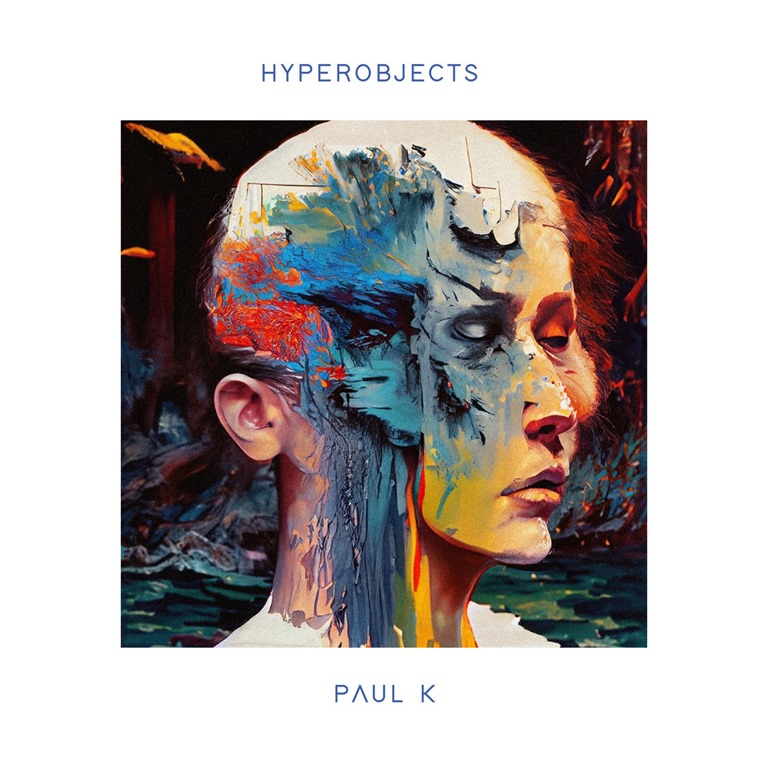
It’s been out a little while now, but some releases have a slow diffusion. Hyperobjects is one of them, and it seems fitting, given that Paul K’s latest work is an immersive work which is ‘a study in musical simplicity with a stripped-down sound creating a space where the listener can both listen to the album and imagine the worlds created by each track’s individual atmosphere’. Paul’s long-shown a fixation with space, as his last album The Space Between, evidenced. But Hyperobjects does something different, and heads in a different direction.

Space. And it’s immediate relative, time. We never seem to have enough of either in the present, or overall. We live in a state of perpetual future-placement, eternal postponement, dragging ourselves through endless days of drudge while promising ourselves a brighter future, be it a holiday, breaking free from a bad relationship, leaving the awful job, or retirement. Gratification is always over there, the aspiration is forever just over the horizon, on the other side of the next hurdle, an inch beyond reach. And we find ourselves entrapped within the special confines of our limitations, the four walls of our homes, the constraints of being unable to go places because of needing to be up and at work the following day, confined by affordability, and so on and so forth. Horizons shrink, and time passes in a blink and suddenly, time and space have both evaporated. What have you done, and what have you got to show for it?

‘Hyperobjects’ is a gentle work, and while much of it is electronically-created, many of the sounds replicate conventional instruments. As such, it’s a moving and mournful piano which leads the first track, a four-part neoclassical composition, ‘Diaspora (Movements I-IV)’.

It’s the sound of a soft, rolling piano which dominates this album, which is in equal parts classical and post-rock, with ambient elements interwoven throughout. ‘Döstädning’ sounds a little like an instrumental outtake by Talk Talk. Ethereal whisps and traces of voice swish around the piano and occasional strings which trace the supple structures of ‘Hyperobjects’, but in the main, it’s showcase of the most minimal compositions.

On ‘Hyperobjects’, the tracks drift into one another to create a continuous, mellifluous whole. Its power lies in its simplicity, its purity, and in doing so, Paul K has achieved something new, artistically, as well as attaining a new peak.

AA

a2391105810_10

Christopher Nosnibor

Goths are the most knit-picking pedants and harshest critics of their favourite bands of any genre’s fans I know. Actually, that’s not quite true: fans of The Sisters of Mercy are the worst knit-picking pedants and harshest critics of their favourite bands. I preface this review with this observation as a Sisters fan first and foremost, and contestably as a goth second.

Y’see, most of the bands which emerged after that initial post-punk crop which included The Sisters, Siouxsie, The Cure, Bauhaus – disparate bands who have little in common sonically and stylistically beyond reverb, dyed hair, and studded belts – and sure, The March Violets, The Danse Society, UK Decay, and a handful of others, were toss. By the time ‘goth’ was formalised as a ‘genre’ it had gone to shit, mostly with every other band ripping off the guitar and bass for ‘Walk Away’ and diluting it to a pissweak rehash, and all too often with ghastly theatrical booming vocals. And they all started wearing waistcoats and frilly cuffs and appropriating ‘gothic’ imagery to boot. That was circa 86, by which time – that’s which time, not witch time – The Sisters and The Cure and Siouxsie had very much evolved, so we can probably as much blame The Mission for the start of the rather more naff second wave. By the 90s, derivative cack like Every New Dead Ghost was crawling out of the woodwork, amplifying the cliches on top of simply being laughably bad.

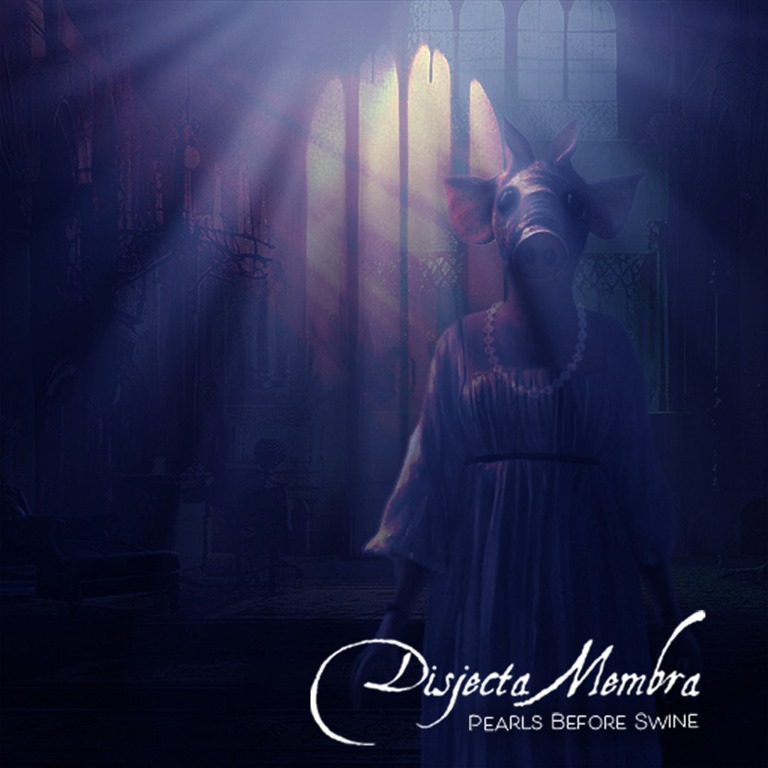
It so happens that Disjecta Membra have been going 30 years, emerging from that early 90s milieu of corny goth revivalism – presumably pining for 1985 and sobbing into their baggy sleeves when The Sisters went cock-rock with Vision Thing. This release is a career-spanning retrospective, which they’re giving away free on their Bandcamp. And this is the first I’ve heard of them.

I kinda wish it had stayed that way. It starts off with the single version of ‘Whakataurangi Ake’, which features Rob Thorne, and it’s a preposterous, pretentious semi-ambient new-age effort with over-the-top dramatic vocals. I mean, fair enough in that it draws on their New Zealand heritage, but it’s pretty obvious and cheesy as. And it’s all downhill from there.

‘Lilitu’ might actually be quite exciting if X-Mal Deutschland had never existed. But as it is, it might as well be a cover of ‘In Der Nacht.’ Talking of covers, there are a few here. And again, after The Sisters broke the ground of taking songs that didn’t obviously sit with the style – like ‘Jolene’, and disco faves ‘Gimme Gimme Gimme’, and Hot Chocolate’s ‘Emma’ and made it their schtick, every other goth band thereafter just had to toss in some quirky covers… and lo, we get a take on Boney M’s ‘Rasputin’ and covers of other goth bands, because they obviously add so much more. ‘Rasputin’ sounds like you’d imagine, of course: drum machine with a head-splitting snare and spindly guitars. It’s cack, but the worst thing is that it doesn’t really bring anything new and doesn’t even sound like it’s done vaguely ironically, meaning it’s neither cool nor funny.

And while we’re in the realms of cliche, what’s the obsession with marionettes in contemporary goth? ‘Antoinette Marionette’ is as obvious as it is lame as wordplay goes., and with its crashing snare and chilly synths and spindly guitars, the best that can be said for it is that it’s uptempo. I did kinda wish that ‘Skin Trade’ was a Duran Duran cover instead of the po-faced and predictable goth-by-numbers that it actually is.

Apparently, ‘Madeline! Madeline!’ and ‘Death by Discotheque’ are both good enough to warrant two versions on a thirteen-track compilation. They aren’t, and it suggests a lack of material of a quality to fill a single album over the course of thirty years. The latter, especially is a derivative disappointment, a stab at rambunctious goth-country in the vein of Fields of the Nephilim while attempting to create their own take on Suspiria’s ‘Allegedly, Dancefloor Tragedy’- one of the few decent songs to come out of the early 90s revival. This isn’t a patch on it, and just seems to think it’s amusing bashing cybergoths. I mean, they have a point, in that cybergoth was a ridiculous thing, but of all the audiences to alienate in their position.

The last track, ‘Walking in Light’ is quite interesting, marking a shift in tone towards droning guitar ambience, at least initially, but then it descends into a glam-infused rock stomp which turns out to be a cover anyway.

30 years, and this is the best they’ve got.

AA

a0980357481_10

Dret Skivor – 7th June 2024

Christopher Nosnibor

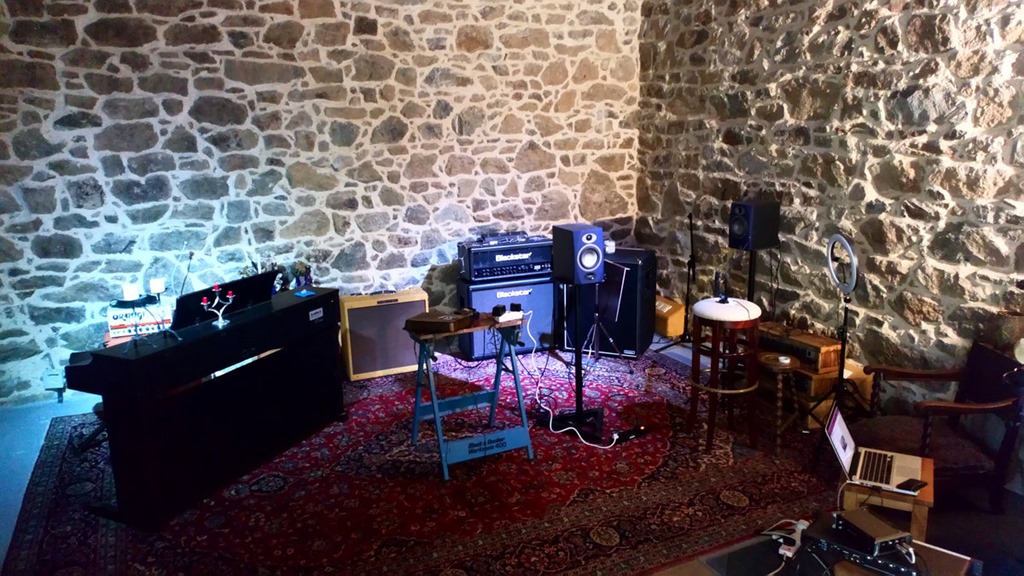
Legion of Swine trotted out for a few live exhibitions in the last few months, but Live at Plourac’h documents a show which was something of a one-off among these, with the performance having taken place in a studio (Soundfackery Studios in Brittany) and streamed live, followed by a Q&A, with audio from both featuring here.

Like many noise acts, T’ Swine tends to keep performances brief. The brevity is, in may respects, part of a tradition on the scene, and while Masonna’s explosive three-minute sets take this to an extreme – and why not? Noise is all about extremity, and finding new limits to push beyond. It’s all about the impact of the short, sharp, shock. Leave them wanting more – those who haven’t fled the room, hands clasped to their ears, while holding back the urge to vomit, anyway.

Even in the absence of the old performance aspects of Legion of Swine shows, whereby Dave Procter would be anonymous in a lab coat and latex pig mask, which means we get to witness the bearded, bespectacled northerner looking quite unassuming, sonically, LoS remains a formidable force.

Opening with strains of feedback and scratching buzzes of distortion, the set holds a single, undulating note of wailing, droning feedback noise for what feels like an eternity, the frequencies and tone changing but still offering nothing more than feedback for the first five minutes of the set. The level of strain and the tension builds, but still, holding back, holding back, testing the patience as well as the eardrums. To have been in a room with this, at gig volume would hurt. Then, unexpectedly, things drop in intensity, and it’s a heavy hum, a long, low, whine that nags and throbs.

As a noise sculpture, this is a restrained, patient piece which hovers within the parameters of a very limited range in terms of frequencies and particularly texturally, manipulating feedback in the mid- and lower-ranged for the bulk of the sixteen-minute duration.

Even recorded, with the separation from the actual event, the frequencies and volume are conveyed clearly here, and there’s a gut-trembling grind to the lower-end oscillations. The release notes summarise the kit as a ‘trusty metal roasting tin and a couple of effects pedals’, and whatever the truth of the facts around the gear involved – which I suspect would have been minimal – the racket created is significant.

There’s a long, long fade to nothing.

There is a certain amusement in the fact that the Q&A lasts twice the duration of the set itself. Dave speaks engagingly on the technical processes of his use of contact mics, and, yes a baking tin, and the mechanisms involved in changing pitch and creating feedback, and so on. It’s a nerdfest that Steve Albini would have been impressed by. He discusses room space, PA, body temperature. ‘Every time, it’s a different thing’, he says.

His recollection of room temperatures and their effect on sound is remarkable, and the dialogue is illuminating. Like so many noise artists, there is a yielding to the random, to circumstance, eventuality, accepting that no two performances will be alike as acoustics and the way sounds interact is spontaneous and unpredictable.

The interview is interesting and wide-ranging, but to discuss and dissect it at length here feels like a job for a longer, more academic discursion.

This is a niche release: that’s a given. Side one will inevitably receive more plays. But both warrant same time. Listen, and learn. Enjoyment is probably optional.

AA

a0816152283_10

Bin Liner records – 5th July 2024

Christopher Nosnibor

The band hailed by Louder Than War as ‘probably the Last Great Gothic Rock Band’ – Portsmouth based post-punk/goth band Torpedoes – return with their fourth album, Heaven’s Light Our Guide, six years after their previous outing, Black Museum (2018). To compensate for the time away, they’ve made it a twenty-track beast of a double-album, and when coupled with something of a transition in their sound towards something rather more keyboard-driven, it’s almost certainly their most ambitious release to date.

The album’s themes are pretty bleak, but no-one’s here for a party goth album, right? The press release is worth quoting for context: ‘Principal songwriter Ray (Razor) Fagan (Ex Red Letter Day) gives his take on the world we must all inhabit whether we like it or not. Lyrically the album focuses on largely dark themes from the destruction of the planet & corruption to bereavement and historic tragedies. Including a song inspired by a mass suicide in the town of Demmin, north of Berlin in May 1945. Over a thousand of Dremmin’s inhabitants, mostly women and children elected to commit suicide rather than face the advancing Russian troops….’

Hopefully, this sets the context, rather than torpedoing the mood – pun intended, of course.

Heaven’s Light Our Guide is by no means a concept album, or a work which focuses specifically on any one tone or theme, which would be difficult to sustain and likely difficult to listen to over such a duration: instead, the album is in many ways a pick ‘n’ mix from the smorgasbord of goth, in the way that The Cure’s Kiss Me Kiss Me Kiss Me offers contrasting elements of light and dark. These contrasts do make for a work that feels like it pulls in different directions at times – not nearly as schizophrenic as Kiss Me, but certainly the product of a band on a voyage of discovery.

‘Somekindaheaven’ kicks things off with a quintessentially gothy bass groove, that foot-to-the-floor, four-four thudding bass, and while it’s draped in cold synths, the guitars rip in just shy of a couple of minutes into its expansive six. There are some nagging gothy guitar breaks, too, and it presents balance between introspective and anthemic.

‘End of the World Party’ is far from a knees-up, but it’s a dreamy, wistful Curesque slice of jangling, indie which definitely sits at the poppier end of the goth spectrum. It’s fitting, inasmuch as it was The Cure who really broadened the spectrum of what is generally recognised as ‘goth’ – a term I really do struggle with despite principally identifying as such myself. Then, as many of the songs on here are more 90s grunge than goth, as ‘Idiot’ evidences perfectly.

‘Blue Sky (In the Rain)’ sits somewhere between Dinosaur Jr and REM, and in its execution ends up sounding not unlike later Red Lorry Yellow Lorry. None of this is a criticism: it’s a solid tune, and Heaven’s Light Our Guide has plenty of them.

There is a strong leaning towards that mid-late 80s alternative sound as showcased by the likes of The Rose of Avalanche and IRS-era Salvation. The fact that the latter toured extensively with The Alarm does give some indication of the more commercial sound which had evolved by this time, and hints at the tone of Heaven’s Light Our Guide. In the main, this is a highly accessible set of songs. But then they chuck in some really hefty darker-hued cuts along the way: ‘Made of Stone’ comes on like The Mission in their early years, but heavier and more fiery, and it’s by no means the only stomper in this vein here. The grungy ‘Your Democracy’ certainly brings the riffs on one of the album’s most blatantly political songs, which goes a bit Metallica, too.

The title track is different again, a sweeping post-rock instrumental sweep that really mellows things down, and it’s clear that Torpedoes really want to demonstrate their range and musical skills here. Takings its title from a novel by Dostoyevsky, ‘Notes from the Underground’ is another gritty slice of sociopolitical critique, which contrasts with the altogether folkier acoustic-based ‘Fear of Human Design’.

Despite its length, Heaven’s Light Our Guide manages to hold the attention: it’s varied and interesting enough to do so, but not so diverse as to feel unfocussed or messy. Perhaps an even greater feat is that it doesn’t feel like there are any filler tracks or any which it would have been beneficial to cut.

AA

Copy of HLOG Front Cover text black star (1)

Field Records – 24th May 2024

Christopher Nosnibor

It’s funny to reflect on how things evolve, and how one evolves as an individual. Ten years ago, I was pretty underwhelmed on my first encounter with Celer, commenting on Zigzag that ‘aside from the occasional ripple and swell, there are no overt peaks or troughs, there is no drama. In fact, very little happens.’

Over time – a lot of time, in truth – I’ve come to appreciate that things happening aren’t always the maker of a quality album. And when it comes to more ambiently-inclined works, there’s not a lot that’s supposed to happen.

Released on 24th May, like every other album this year, Perfectly Beneath Us was originally released way back on CD in 2012, and now, 12 years on, it’s getting a well-deserved vinyl release, with four tracks spanning roughly thirty-four minutes occupying an album.

Each side contains a longform sonic expanse and a shorter piece, approximately three minutes in duration, and everything is segued to bring a connected flow the work. I’m not going to debate the pros and cons of the formats or how nigglesome some may be. If you buy the vinyl, you’ll need to turn it over after about a quarter of an hour. It’s exercise at least, and that’s a positive as this certainly isn’t ruining music.

Just as I complained that nothing much happens on Zigzag, nothing much happens on Perfectly Beneath Us, either, only now I’m not complaining.

Since the inception of Celer In 2005, initially as a collaborative project2005 between Will Long and Danielle Baquet, until the passing of Baquet in 2009, since when, as the Celer bio outlines, ‘Long opted to keep their project going, and Celer has continued to grow as an expansive exploration of purest ambient.’ Purest ambient is indeed a fair description of Perfectly Beneath Us, and to report that I found myself nodding off at my keyboard on more than one occasion while trying to pen my critique of the album is proof positive of a mission accomplished. It isn’t that Perfectly Beneath Us is dull, or boring – as I may have surmised many years ago – it’s just the very essence of ambience. It’s mellow, it’s background, it’s soporific, and it’s supposed to be.

a3346002469_10