Archive for the ‘Albums’ Category

Ipecac Recordings – 1st September 2017

Christopher Nosnibor

Dälek have always been about progress and evolution, and not only remaining contemporary but pushing the parameters. Since they emerged in ’98, they’ve stood at the forefront of the challenging end of hip-hop, a genre which has witnessed immense expansion over the last two decades – but has equally seen its horizons shrink dramatically within the suffocating avenues of the commercial mainstream. One might say that this polarity is a key fact in the framing of Endangered Philosophies. The polarisation between the mainstream and everything else musical is representative of the world at large: the political landscape provides perhaps the most significant and substantial indicator here, with left and right parties both moving further away from centre and claiming almost equal ground in the process, and not just domestically here in England.

Endangered Philosophies is an album for the now, as the press release points out: ‘Within the context of the current political landscape, the title Endangered Philosophies certainly brings to mind pertinent issues of moment, notably the rampant rise of anti-intellectualism, as well as the all too rapid erosion of genuinely progressive values in the face of fearful reactionary forces.’

‘Echoes Of…’ launches the album with a nauseating washing machine churn that grinds along before the thumping rhythm crashes in. the vocals are low in the mix – rare and seemingly contradictory for a hip-hop album, but this is Dälek, an act as inclined toward rock and industrial tropes as conventional hip-hop stylings. It’s a gnarling industrialised trudge, and the whiplash scratching and other overt concessions to genre form are crushed hard against one another into an oppressive and intense slab of sound.

‘Weapons’ is woozy, dark, and suffocating. ‘Few Understand’ is less abrasive, but rides on a dense, pulsating swell of sound underpinned by a plodding beneath that carries a real weight. Sometimes, a live drum sound is all it takes to elevate a hip-hop track above the conventions and into fresh, liberated territories.

With the vocals enveloped in delay and heavy layers of extraneous noise, the lyrics aren’t always entirely prominent, but the sentiment is entirely clear at all times. The shuffling trudge of ‘Son of Immigrants’ is underpinned by an almost subsonic bass. In contrast, there’s something approaching a levity about ‘Beyond the Madness’, the semi-ambient synths drifting cinematically over the insistent rhythm, and the seven-minute ‘A Collective Cancelled Thought’ is monumentally weighty, the bass churning beneath a shifting, turning squall of sound. ‘Battlecries’ is slow and bleak, with lyrics about black males being murdered and the state of culture and society providing the message to the work of the mixed medium.

It’s the contrasts which lie at the heart of the compositions on Endangered Philosophies which make it the album it is, and which render it so compelling.

Dalek_EP_Cover

Ventil Records – V006

James Wells

I know next to nothing about this release. Here’s a moment of transparency: music reviewers receive absolutely shedloads of stuff to review. Press releases are handy, not just as a shortcut when it comes to research, but also for locating inroads into a work. But even with a press release to hand, details surrounding Wealth are sketchy.

Consisting of Michael Lahner (synths) and Manuel Riegler (drums, synths), Wealth draw on a range of different forms of electronic music to create what they consider to be a ‘highly organic mix’. Sonically, there’s very much a preoccupation with soft-edged pulsations: the beats are largely rounded, bulbous, and when more angular rhythms do emerge, as on ‘Plate LXXVI (Diagram for Lilies), they’re countered by altogether less aggressive synth tones with hazy outlines.

Subtle, stealthy, glitchy ambience with backed-off beats are on offer with Primer. Sonic washes and rippling, elongated, undulating bleeps eddy around agitated, juddering rhythms so backed off in the mix as to be barely subliminal. ‘Floor’ lays a deep groove; not so much one to get down to as to lie down and allow total immersion.

Primer is a delicate, balanced work, with considerable range beneath its more subtle, subdued surfaces.

Wealth - Primer

Hispid Records / PNL Records

Christopher Nosnibor

Another one lifted from the epic and eternal backlog, Pan-Scan Ensemble’s Air and Light and Time and Space is a document of the first live improvisation by this Scandinavian collective centred around the ever-active free jazz drumming luminary Paal Nilssen-Love. Perhaps as one would predict, the nine players, with two drummers, three trumpets, a piano, a whole slew of saxophones and a flute, contrive to create quite a dizzying racket.

There are just two pieces on the album: ‘Air and Light’ and ‘Time and Space’. The former is a punchy twelve minutes in duration, and after a calm beginning, with just sporadic clatters of soft percussion to punctuate the aural vista, all free jazz hell breaks loose around five minutes in. Discordant piano and wild brass fly in all directions simultaneously, different keys and time signatures clash. It’s not music that will help soothe a headache, that’s for certain.

On ‘Time and Space’, things begin in a calmer place, and the incidental rolls and rumbles are slow but jarring. It all seems quite restrained. However, by the six-minute mark, it’s a frenzied mayhem of horns and arrhythmic drums crashing and…. It’s a dizzying cacophony, and after a while, when they finally bring things back down a couple of notches, it’s quite a relief.

The second extended crescendo is slower, more deliberate, weightier, but no less dramatic. Finally, some twenty-five minutes in, something recognisable as a tune emerges. Dolorous piano rolls over a steady, insistent beat. The horns still run wild all over the place, but they’re held in check by the solid rhythm. It builds and builds to an immense climax.

I know that this type of free jazz improv is supposed to be ‘difficult’, and some works are more difficult than others. In the main – and this is purely my personal taste rather than a comment on its musical or artistic merit – I find it all too much. Air and Light and Time and Space is a bewildering tumult of chaos, busy, uncoordinated and in some respects wilfully unmusical. None of those things are bad in themselves, but I struggle to grasp the purpose beyond self-entertainment for the musicians in the room. Apart from the last seven minutes or so, when a certain sense of structure coalesces from out of the chaos, it’s not fun. Nevertheless, the passion of the players is unmistakable, and the way they do bounce off one another to evolve the ebbs and flows and monstrous crescendos is impressive.

Pan Scan Ensemble

Christopher Nosnibor

Fractal, stripped back strumming and spacious strings define the compositions Skeletikon. Having misplaced the press release, I know next to nothing about Fjellstrom’s purpose or intention with Skeletikon.

‘Born out of shattered dreams and an obscured vision of the future, Skeletikon is a delirious yet lucid exploration of the farthest and most conflicted reaches of the heart, teeming with confusion, passion, and ghostly shadows. Being no conventional composer in any way, Marcus stumbles further down his musical domain of detuned orchestral (re-)arrangements and pain-inducing synth passages, arriving at a most unique and personal result.’ So says the blurb accompanying the album.

Across the album’s ten compositions, Fjellstrom explores all of the essential elements, namely texture and tone, atmospherics and dynamics.

‘Aunchron’ is a light, lilting folksy composition that in some respects invites comparisons to early 90s Swans in the way it builds. But it’s a magnificently multifaceted piece, which shifts and glides supply though a series of transitions which head in various directions over the course of its six-minute duration, by turns cascading gently over rippling chimes and rolling through delicate thunder.

‘Skeleton Dance 2’ is dark, tense and atmospheric in a brooding, difficult way: it gives way to the lilting yet urgent acoustic strumming of ‘Modulus’. Dark clouds rumble as they gather under tremulous strings on ‘Arboretum’: less a sonic representation of the breeze through the leaves on the trees in Spring, and more of a haunted forest with growling, marauding hunters lurking in the undergrowth.

Skeletikon is one of those albums which never stays still, which slowly trickles around a succession of haunting sonic spaces and does so incredibly deftly. As such, its impact is subtle to the point of being barely perceptible for the most part. Skeletikon is sparse, and reaches in by stealth.

The album closer ‘Boy With Wound’ is a haunting, creepy composition, and while it employs myriad classic tropes common to music which is designed to instil certain sense of dread, of trepidation, it’s also a musical journey through a series of tense moods and nerve-jangling tension.

Skeletikon is not an album to enjoy, per se, but one to experience at leisure and to slowly absorb. It’s an album with the capacity to affect the listener, and to effect the psychological axis upon which they ordinarily exist.

Marcus Fjellstrom – Skelektion

Babylon Pink – 23rd June 2017

James Wells

Ooh. This is actually quite nice. Heavy hints of Amplifier colour the album’s opener, ‘Salt in Our Veins’, but I’m equally reminded of subtly psych-tinged 90s alt rock merchants 8 Storey Window. Their sole album, produced by Terry Bickers of House of Love, stands as something of a lost classic.

It seems odd to be writing about 8 Storey Window and House of Love – both very much 90s bands – given that Nasher is the current musical project of Brian Nash, formerly of 80s giants Frankie Goes to Hollywood.

‘432-1 Open the Vein’ certainly pegs back the abrasion and aggression of Brian’s forebears. In fact, Nash’s provocative past is cast aside here, with the songs on Open the Vein ditching synths and dancefloor-friendly beats in favour of what one might describe as a more alt-rock / indie sound which is very much guitar-orientated.

There are so many easy but emotive melodies stashed away in the layers of ‘Open the Vein’, with the soft, supple acoustic-led ‘Whole’ calls to mind Oceansize’s softer moments, with its processed harmonies and subtle sense of the expansive.

‘Where Will the Kids Live’ is dark, claustrophobic and uncomfortable despite its melodic accessibility. ‘Prostitutes and Cocaine’ slips into Doves-y pop orientated territory, and ‘Just Sounds Like Noise’ is an accessible piece of 80s prog-pop that strums along easily in its acoustic-led way, with heavily processed, smoothed-out and massively layered vocals. It sounds less like noise than some lame, overproduced bollocks, but given that the majority of the album is strong and dynamic, I’ll let it pass.

Nasher – 432-1 Open the Vein

ChristopherNosnibor

The split album seems to be in vogue again, and it’s a format which perhaps offers more scope for artists who don’t trade in punchy little tunes than the split single or EP. Shine on you Crazy Diagram may only contain four tracks and have a running time of just over thirty minutes, but it allows both contributing acts to showcase the range of their sound by presenting expanded, developed musical works.

The two tracks by Splitter Orchestra explore and examine weird digital percussion: the ever-shifting pitch creates the illusion of ever-shifting tempo (or does it? Perhaps the tempo does shift albeit subtly) beneath whistling contrails of feedback. They sputter and scrape and drone and hum. ‘Diagram 1’, at under four and a half minutes, is but a prelude to its counterpart, ‘Diagram 2’ which hums and wheezes for almost eleven minutes. There are rhythms in the mix, but they’re pinned back in the mix and bounce around against a shimmering backdrop of feedback and extraneous noise.

Kubin’s compositions are altogether less overtly structured, or at least rhythmic, as swampy swashes and thumps rumble and eddy before – from seemingly out of nowhere – faceripping blasts of distortion roar and blast. ‘Lückenschere’ is constructed around a clattering, shifting rhythm.

‘Lichtsplitter’ clatters and moans and hums and drones for an eternity, before stepping up about ten gars. By the end, one has a fair idea of what it just be like to stand within two feet of a Boeing 474 taking off.

This is, without doubt, one of those releases which lends itself perfectly to vinyl: it is, after all, an album of two halves. They compliment and contrast, and showcase two quite different sides of the experimental digital coin.

There’s a digital bonus track from the Splitter Orchester. ‘Diagram 3’ is a ten-minute extravaganza of thick, impenetrable hums and drones. It might not exactly change the complexion of the release, but it does unquestionably fill out and round off the intangible, non-physical format nicely.

Splitter Orchestra   Felix Kubin

Editions Mego – eMEGO241 – 11th August 2017

Christopher Nosnibor

Hell, this is gnarly. It’s painful. This is not music designed to entertain. It’s not music deigned for comfort. To many ears, it’s not even music. It is, of course, but it’s not music or pleasure. AI Deviation #1, #2 comprises two grinding, cacophonous, chaotic longform tracks which sound like a protracted meltdown of circuitry.

‘Deviation #1’ is a full forty minutes of splintering, spluttering, bleeping, blooping electronic carnage. The whoosh and swirl of the Tardis relocating vaporises into a churning black hole, and by the ten-minute mark, it’s grown to a raging tempest of overloading noise. From thereon in, it’s a brain-melting succession of sonic ruptures. Skittering, spidery notes are scorched away to blackened shards in a flame-torch of white noise blasts. Squelching, squirming subaquatic sounds bubble and broil in a hectic froth of digital swash in between tidal waves of distortion and static.

Flickering chirps like R2-D2 on amphetamine bibble frenetically against a backdrop of bloops and gloops before being consumed in a tearing blizzard of wall-to-wall-white noise, heaving, hefting, endlessly flickering barrages of sound. It’s absolutely fucking relentless. Scraping, twinging, wibbling, ever-shifting audio madness tumbles from the speakers in wave upon wave of electronic abrasion. Shrill shrieks counterpointed by scouring low-end coalesce to create a swashing, multi-faceted, cross-tonal aural assault.

‘Deviation # 2’ offers more of the same, albeit over a more mercifully brief thirty-three minute stretch. It’s abrasive, disorientating, with time signatures thrown out of the window in favour of warping cacophonies. Resonations and echoes dominate an eternally challenging discord of tweets and tweaks, grumbles and rumbling throbs.

Tone has a knack for clobbering the listener with synth-generated sonic violence, but AI Deviation #1, #2 really takes it up a notch. In exploring the longform – and taking it to the max – Tone produces a sonic attack on a par with Merzbow and Kenji Siratori: anything else is just mannered and polite in contrast.


Yasunao Tone - AI Deviation

Unsounds – 57u – 10th February 2017

Christopher Nosnibor

Unsounds have a history of releasing magnificently-packaged albums, and Subvoice by Yannis Kyriakides is up there with the best of them. The double CD is housed in a chunky hardcover book binding, which contains an actual book, some forty pages in span.

My introduction to the concept of the subvoice came via William Burroughs, who, around the time he was exploring the myriad potentials of the cut-up technique, made innumerable audio experiments. While most of these involved tape splicing, dropping in and cutting out, some investigated the subvoice in a most literal fashion. Some of these barely audible and even more barely listenable recordings appeared on Nothing Here Now But the Recrdings on Industrial records, with the liner notes describing ‘Throat Microphone Experiment’ – if memory serves – as a not entirely successful attempt to capture subvocal speech.

The definition of ‘subvocal’ is ‘relating to or denoting an unarticulated level of speech comparable to thought’. Kyriakides describes the works in the collection as ‘an investigation into ideas of voice and language [which] range from works in which text is directly encoded into music… to ones in which the voice is examined, dissected and pulled apart’. He explains that ‘in both approaches the underlying idea is to explore what happens when material has a clear semantic form, whether communicated in text or speech, is translated into musical structure’.

While thematically and theoretically linked, the nine pieces – which have a combined running time of almost two and a half hours – are from quite distinct and separate collaborative projects Kyriakides was involved in between 2010 and 2015.

The first piece on disc one, ‘Words and Song Without Words’ is the shortest work, being a couple of seconds under ten minutes, but appropriately introduces the kind of sonic palette Kyriakides and his collaborators – in this instance, Francesco Dillon, who contributes cello – work from. ‘Paramyth’ is eerie, disconsolate, the cracked ramblings splayed in all directions over tense piano and uncomfortable strings, but ultimately peters out into something softer. Skittering strings scurry busily in brief and disjointed flurries, hectically flying here and there, on ‘Toponymy’. Muffed voices bring a discomforting sense of the unheimlich, a sense of the intangible and of something just out of the reach of understanding.

Ominous notes hover and ring on the last piece on the first disc, ‘Circadian Surveillance,’ a twenty-five minute exercise in haunting atmospherics, where distant voices are barely audible under a rumble of turning static and hovering notes which resonate into dead air.

Onto disc two, ‘Der Komponist’ – a composition for orchestra and computer – begins quietly, ominously, with protracted near-silences between delicate, low, slow builds, before horns begin to add cinematic drama. It’s very filmic, very – for wont of a better word – soundtracky, and is reminiscent of some of JG Thirlwell’s more recent orchestral works. The climax is a slow, swelling succession of surging brass, underscored by a rippling digital churn.

‘Politicus (Dawn in the Giardini’ is perhaps the lightest and most playful composition of the nine, and utilises the variability and versatility of the prepared disklavier. The original work was a twelve-hour sound installation. The booklet explains the technical aspects in great detail, and Kyriakides outlines the way in which algorithms based on speech drive the formulation of the piece, here in an abridged fourteen-minute segment. The immense complexities behind the composition are completely hidden from the listener, with the surface completely masking the mechanical depths.

The final piece, ‘Oneiricon’ is a work for ensemble and computers. It’s an exploration of dreams, and is often subtle to the point of subliminality. And because Subvoice is very much a ‘background’ work, while it often drifts for significant stretches without really pulling particularly hard on the attention, it does mean that its immense duration is not an issue. Equally, because Subvoice is a collection rather than a work conceived as a single continuous whole, it’s possible to listen and appreciate in segments, without absolute commitment. And it is an album to listen to and appreciate: Kyriakides’ compositions are varied and textured and demonstrate an attention to form and sonic detail which extends far beyond the basic premise of ‘the voice.’

a0933203676_10

Nuclear Blast – 1st September 2017

Christopher Nosnibor

When charged with the task of covering a new release by a ‘big’ name act, or an act which has been around a long time and developed a significant global following, but that you’re not an ardent fan of, the pressure is on. As a reviewer, you’re supposed to know everything about every aspect of every band ever, and the kind of act who has an established fanbase is also the kind of act who has a fanbase who expect critics to really know their shit before passing comment on ‘their band. At least, that’s my perception based on hard experience from sitting on both sides of the fence.

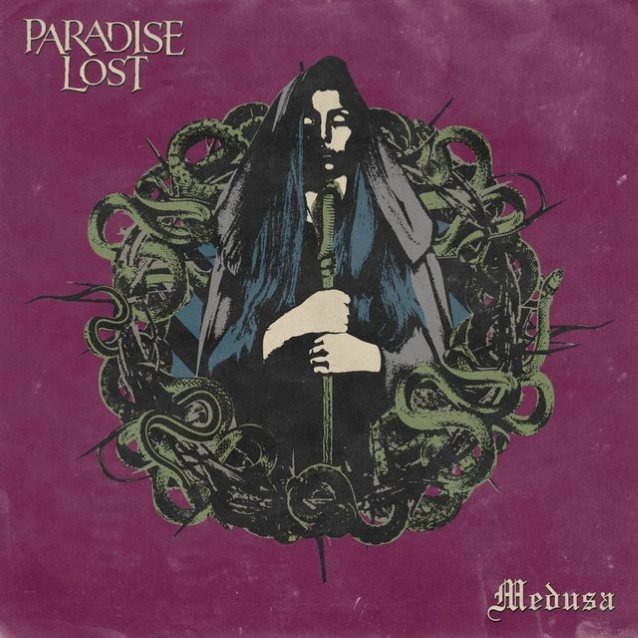
That progenitors of gothic metal Paradise Lost are still here to launch the fifteenth album of their career is impressive by any standards. And while I’ve been aware of them for an eternity – as a Sisters of Mercy fan for an even longer eternity, it was their cover of ‘Walk Away which provided an introduction – I’ve never really spent any time getting acquainted with their back catalogue. Nevertheless, and despite their death / doom roots, the fact Medusa is strong and proper heavy is even more impressive, especially given their forays into Depeche Mode-style synthpop and electronica and a stint on EMI which saw them move further into more commercial territories.

As the press release notes, ‘most people will know Medusa as the Gorgon from Greek mythology; she is the infamous beast with venomous snakes for hair who will turn anyone that dares to look into her eyes to stone. It is this hideous creature who Paradise Lost have chosen to be the figureheard for their 15th studio album, as, from a philosophical perspective, she is more than simply a monster.’

It’s the epic, doomy trudge of ‘Fearless Sky’ which grinds out for over eight and a half minutes which gets the album off to a dark and suitably intense start and demonstrates they’ve still got the high-art bombast which defines their sound, and of the poem which gave them their name in the first place. It was hearing segments of Milton’s immensely epic poem read aloud by one of my university’s more eccentric but enthusiastic professors which turned me on to his work, and in context, it all fits together. Medusa is an immense and ambitious album, and it’s also as heavy as hell.

The thunderous tribal drumming which propels the low-end focused sludge riffery of ‘Gods of Ancient’ leads the album deeper into darkness before the snarling desolation of ‘From the Gallows.’ ‘The Longest Winter’ is perhaps more accessible with its processed, dry and altogether more melodic vocals, but the guitars are still are thick and overdriven as you like. As for the title track, it brings the sense of immense portent with its groaningly heavy guitars and noodling lead, paired with a sense of gothic theatricality which lends it a kind of poeticism.

This is an album that trudges, dark and heavy, for the duration, and any comparisons to other bands from either the goth or metal sides of the equation are essentially redundant because it was this band who effectively spawned the hybrid which Medusa so perfectly epitomises anyway.

What makes Medusa a great album is that while it is heavy, it’s heavily gothy and it’s ultra metally in the snarling, guttural sense, and it’s also got immense range. As such, it doesn’t ever feel formulaic or dull, and ultimately, Medusa is a strong album which stands up in the Paradise Lost catalogue.

paradiselostmedusacd

Gizeh Records – GZH73 – 1st September 2017

Christopher Nosnibor

Because this is a Gizeh release, it’s beautifully presented, housed as it is in tri-fold card sleeve with subtle, minimal artwork. While the front cover is difficult to be certain about, the interior tryptic shows a panoramic landscape of a wide glacial valley somewhere in Britain. Observing the division of the fields draws the attention to the relationship between physical and human geography, and this all feels somehow fitting in the framing of Through the Sparkle.

And because this is a Gizeh release, the music it contains is delicate, haunting, sparse yet rich and contemplative. Through the Sparkle sees French ensemble Astrïd collaborate with American pianist and composer Rachel Grimes to spin seven contemporary classical compositions which massage the senses almost with the softest of touches.

Through the Sparkle is not an ersatz pastoral suite, but does keenly conjure a certain, if indefinable, natural spirit. The piano work is exquisite in its subtlety, rippling gently beneath tapering woodwind on ‘The Theme’, while on ‘Mossgrove & Seaweed’ notes lap evenly and lightly to create an air of lightness, of rapid yet serene movement, natural and fluid. It’s a flickering, shimmering sonic tension that shifts and changes shape over its duration,

Nothing about these pieces feels forced or intrusive. They’re the sonic evocations of dappled shade through leaves on a sultry, sunny August afternoon, a light breeze and the full spectrum of verdant hues – albeit with the shades muted by the distance of fading memory. There’s nothing about Through the Sparkle which feels overtly or calculatedly centred around a sense of nostalgia, but a sad, aching beauty – intangible but distinct – will inevitably evoke a certain wistfulness. And so it is that a degree of melancholy drapes itself around the hushed, rarefied atmosphere of the compositions on Through the Sparkle.

A sombre tone overarches the slow march of ‘The Herald en Masse’, which slowly breaks into an uplifting wash of rhythmic sound. It may not have quite the intensity of Swans, but it’s in the same sphere as it rises toward an almost transcendental sway.

Hesitant notes hover at the start of ‘M5’ and the rich, resonant and loamy tones call to mind latter-day Earth. Its sparse arrangement conjures a spacious atmosphere and pulls the listener’s attention into the details of the tone, texture, reverb and a sense of the individual notes breathing in the space around them.

‘Hollis’ brings a graceful melody that’s sad because it’s beautiful, while ‘M1’, the second-half counterpart to ‘M5’ – feels very much about the space between the notes as brief notational sequences cascade from a softly picked acoustic guitar before silence follows. There’s something almost flamenco about the picking of the strings and the way the notes resonate against one another.

The mournful tones of the final track, ‘Le Petit Salon’ are haunting in their understated discord, as piano and strings drift in different directions over percussion which fade in and out. It’s all about progression and movement.

Through the Sparkle balances shimmering, softly shining upliftingless with shifting shadows. It’s an easy yet rich listening experience which brings with it a sense of the way in which music can enrich the soul.

https://i0.wp.com/www.gizehrecords.com/uploads/5/5/8/2/5582438/gzh73-digitalsleeve_orig.jpg