Archive for the ‘Albums’ Category

Gizeh Records – 2nd March 2018

Christopher Nosnibor

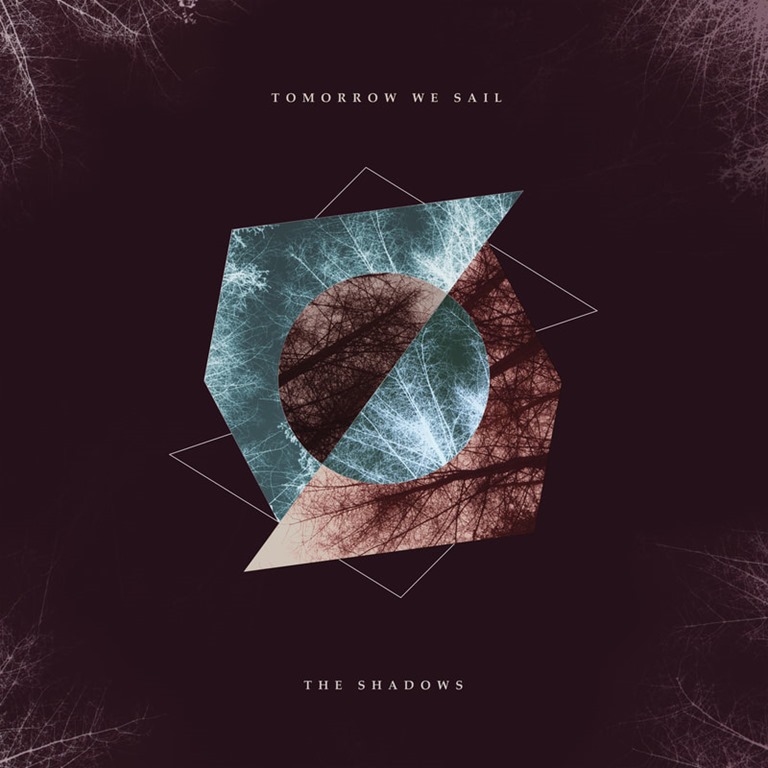
Tomorrow We Sail are a classic example of the kind of band who exist outside of their geography. Based in Leeds, the six-piece aren’t generally renowned as part of the local scene or prominent gig-wise, but have a reach that exists in the ether of the virtual world and into mainland Europe. Four years on from their debut, the collective have evolved their brand of folk-infused string-soaked post-rock into something even more unique.

Subdued, strolling beats and rolling piano provide the rhythmic backdrop to the nagging strings and aching vocals on the opening song, the six-minute ‘Side By Side’. It breaks into a sustained crescendo after just a couple of minutes, but it’s more a case of upping the volume and the intensity than hitting the soaring peaks which characterise so much ‘classic’ post-rock. And perhaps this is the key to the differentials which separate Tomorrow We Sail from their peers, and indeed, any other act. The Shadows is a careful and poised album which exploits the dynamic tropes of post-rock but in a contained fashion. There’s certainly nothing as expansive or sprawling as 2015’s ‘Saturn’, with its twenty-minute duration, or even the single ‘Rosa’ from the first album with its thirteen-minute running time. The Shadows is altogether more concise and all the more intense because of it. Moreover, the context feels different, the slant altered somewhat.

In some respects, the context is that this doesn’t feel like a ‘Leeds’ album. Even when the city was post-rock central a decade or so back, with iLiKETRAiNS (as they were then styled), Vessels and adopted Leeds friends Her Name is Calla all over everywhere, there was nothing this folksy or parameter-pushing as The Shadows, an album which expands the limits of post-rock. ‘The Ghost of John Maynard Keynes’ really pitches the folk aspect of the album to the fore, with a chorus of voices giving the almost shanty-like folk tune a lilting aspect.

There is unspeakable, throat-tightening beauty in the piano-led minimalism of ‘To Sleep’ which calls to mind the very best work of the now-defunct Glissando, and at the same time harks back to their debut.

The Shadows is a well-balanced collection: understated, delicate, melodic, it exists, as the title alludes, in the spaces between light and dark, exploring with deftness and sensitivity the infinite shades between.

AAA
tomorrow-we-sail-the-shadows-sleeve_1_orig

30th January 2018

Christopher Nosnibor

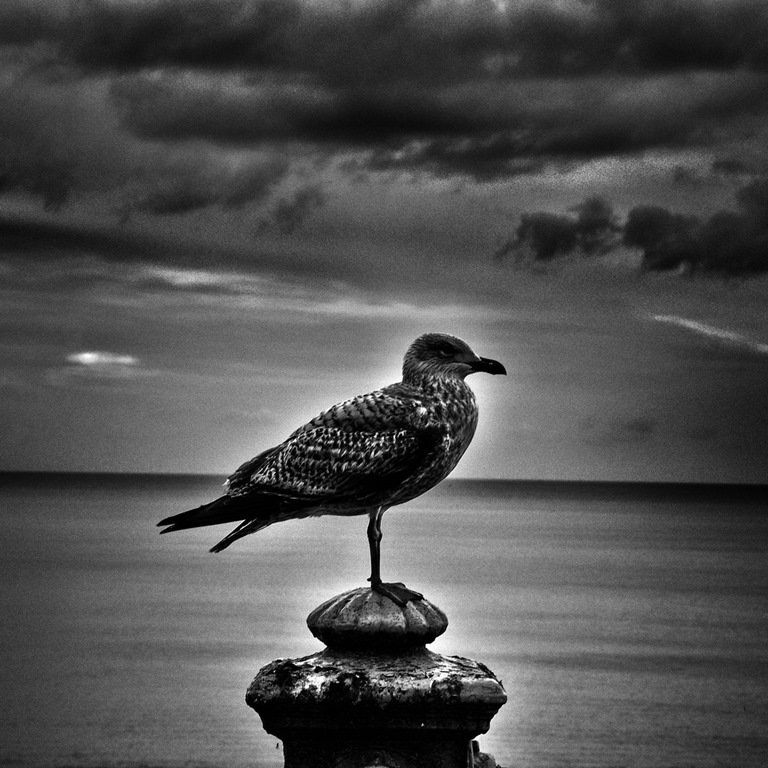
On the strength of the cover, with its sombre-looking black and white image of a fledgling gull (I think – I’m not David Attenborough) perched atop a post with the sea behind it, all the way to the horizon where it meets a brooding sky, you would expect The Earth Swan Sings Again to mark a turn towards serious, introspective and altogether less hectic approach to music-making. And in some respects, it is.

While still incorporating the wildly disparate elements of his recent previous albums – of which there are many, and then some (he’s put out a full dozen in the last decade) – The Earth Swan Sings Again feels less manic, more refined, but no less magpie-like in its amalgamation of a broad range of genres. And on this outing, Reaks has gone even further out on the jazz trip he embarked upon with Track Marks last year. This may seem strange for an artist who doesn’t really like jazz, but Reaks is an artist who doesn’t allow genre prejudice to contaminate his creative process. This is postmodern art at its intertextual best: everything is equal, and it’s all material. What counts is how that material is used, recycled, adapted. Etc.

This all makes for a more accessible set of material, but of course it’s all relative, and songs with titles like ‘I Stroked Her Like a Leper’, ‘Her Body Convulsed’ and ‘Today Hurts More than Mercy’ are never going to have the commercial appeal of the mediocre shit of Ed Sheeran or Bastille or whatever cal R1 is spinning on an endless brainwashing loop these days, and that’s before you even get to the music itself. ‘She stretches open like a parasite’s echo,’ Reaks sings by way of a refrain on ‘She Stretches Open (Like a Parasite’s Echo)’. It’s vaguely disturbing, and entirely surreal, but in keeping with his abstract / cut-up approach to the creation of art.

Bringing a more low-key vibe that’s dominated by a post-punk atmosphere, The Earth Swan Sings Again is darker and challenges in different ways from preceding efforts. The basslines are still dubby but less rampantly wild, and more about driving by stealth. The guitars are still choppy, but veering toward the picked and understated – apart from the immense and brain-meltingly OTT jazz/prog wigouts that splurge all over the place unexpectedly and incongruously – they’re altogether more subtle. Well, the guitars, maybe: the OTT jazz/prog wigouts are maybe less so, but they work, and there’s a sense that Reaks knows all of this. As one of the most singular artist practising at this moment in time, Reaks knows what he’s doing, and also knows that one chooses art of commercial success. And this is art.

The Earth Swan Sings Again is dark and stark, low-key yet eclectic, and at times inexplicable. Of course it is: it’s an Ashley Reaks album, and when it comes to walking the line between genius and madness, Reaks has forged a career by joyously straddling it and raising two fingers to convention of any kind. Outré creative talents like Reaks are few and far between, and while the mainstream grows ever safer, ever more diluted, ever more background and by-numbers, the need to artists who rub hard against the grain grows ever greater.

AA

Ashley Reaks – The Earth Swan Sings Again

Music Information Centre Lithuania – MICLCD097

Christopher Nosnibor

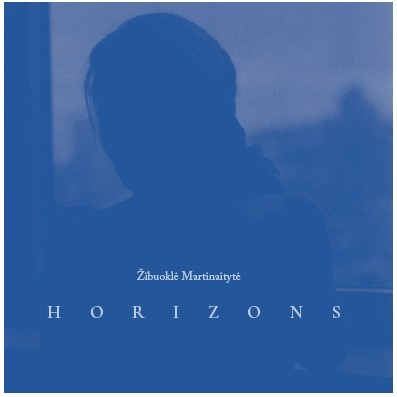
Horizons has been a long time in the making, and the artist has described it as a ‘Sisyphean process’, which, at the end, ‘only strengthened the joy of accomplishment’. The five compositions span from between 2006 and 2015. Martinaitytė’s biography is long and detailed, and covers the complex and challenging circumstances surrounding the composer’s journey to its completion. But an abridged rendering would focus on the fact that the pieces here are from what she terms the decade which represents the ‘blue’ period of her career, and that the album as a whole represents her explorations of ‘the dichotomies between proximity and distance, nearing and departing’.

It’s perhaps worth quoting from the accompanying notes at length, in order to demonstrate the full expanse of the album’s scope: ‘With this album and the individual works on it the author tells an absorbing emotional narrative. She begins with a larger picture – a multi-layered, timbrally rich sonic expression of the faraway landscapes (Horizons, 2013; The Blue of Distance, 2010); she then moves on towards her subjective relationship with the untouchable distance (Thousand Doors to the World, 2009; Completely Embraced by the Beauty of Emptiness, 2006); finally, she reaches the state of inner calm (Serenity Diptychs, 2015). Acoustically speaking, the concept of nearing is presented through instrumentation – she begins with larger orchestral and choral works, and finishes with a refined, chamber sound.’

The title track sets the album’s tone: ‘Horizons’ begins expansively, a vast, expansive sonic vista stretching for some seventeen and a half minutes and leading the listener through moments of grace and tranquillity punctuated by moments of drama and tension. The choral swell of ‘The Blue of Distance’ resonates deep and strikes a spiritual chord, albeit in a vague, abstract sense, touching as it does the corners of the subconscious. Bursts of vaporous ambience spar against distant echoes of notes. The drama surges and sweeps on ‘Thousand Doors’, a tempest of brass and strings mounting and enveloping the listener. While Martinaitytė is a master of the subtle and the delicate, her compositions equally demonstrate her capacity for the bold, with passages of grandeur and turbulence.

Contemporary classical seems to have been relegated to big-budget film scores, but Žibuoklė Martinaitytė is unquestionably an exponent of 21st century classical music. More to the point, Horizons is a powerful orchestral work which transcends genre boundaries and interacts on many levels.

AA

Žibuoklė Martinaitytė – Horizons

Hangman Ho Records

Christopher Nosnibor

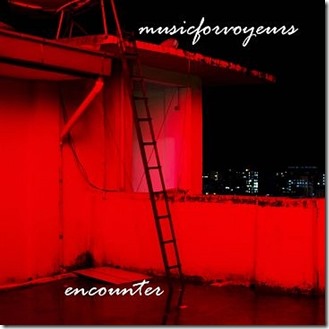
Rick Senley doesn’t do things by halves. Invariably, when I receive mail from him, it contains not one, but two CDs released in close proximity. His two solo musical vehicles, I Am A Man With a St Tropez Tan and musicforvoyeurs reflect quite different facets of his creative bent, and this has never been placed in sharper relief than on his two latest releases. I Am A Man With a St Tropez Tan’s The Tattooed Aunts and Mice on Speed is an abrasive, at times harrowing affair; its counterpart, musicforvoyeurs’ Encounter, which emerged off the back of a film project of the same name for which Senley created the soundtrack, is altogether lighter and softer, and as such, represents an almost polar contrast. That isn’t to say it’s a happy-clappy skip through summer meadows. Encounter explores the spaces between ranging depths of shade in a moving and thought-provoking way.

The eight tracks drift and flow into one another, as brooding strings forge cinematic sonic vistas over which samples pass, creating not so much a narrative, but a sense of meaning, however submerged or allusive. Death provides the primary focus of the snippets of dialogue, and while Encounter is a deeply melancholy work, its tone is ultimately reflective and contemplative rather than dark or depressing.

It begins softly, vaporous ambience washing beneath an extended sample. It concludes dramatically, with a flourish. In between, there is undulating movement and turns of atmosphere.

A humming, thrumming low-end buzz hangs heavy for a time on the second track, before majestic light and choral sweeps cascade forth. The frantic, agitated raised voice which cuts in toward the end changes the perspective and raises the tension, but Senley brings it down with a delicately picked guitar that’s dainty and soothing. Notes ripple and cascade in mellifluous glissandos. But burred edges and rumbling tones lurk just a little way beneath the surface. However pleasant and mellow any given segment of the album is, there is always a nagging reminder of an underlying tension, an insistent sense of doubt that refuses to dissipate or be shaken off. It’s this dynamic which renders Encounter such a compelling album.

musicforvoyeurs – Encounter

Click on the image to hear tracks from Encounter.

Kranky – 23rd February 2018

Christopher Nosnibor

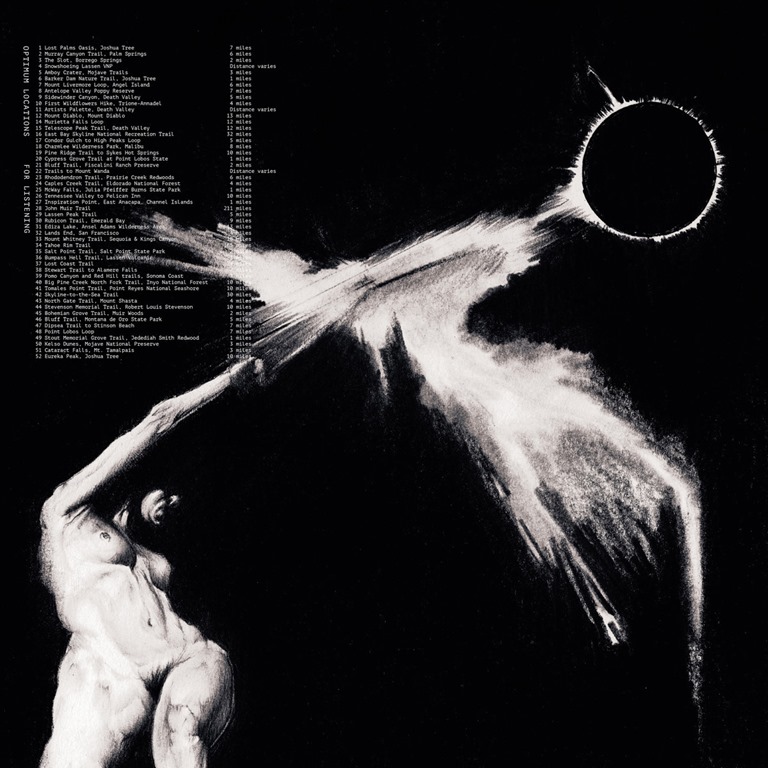
Tahoe is the second album from Northern California producer Fred Welton Warmsley III in his solo guise as Dedekind Cut. It’s named after the mountain lake town where he now resides, and it’s fitting that an album of such grandeur should relate to a vast expanse of natural beauty. For all the ruination mankind has inflicted on nature, however badly we as a species have damaged and decimated resources and scarred the landscape, hunted species to extinction and generally fucked everything up, the fact remains that nature will always win.

Over millennia, ice ages haves come and gone, mountains have emerged and heatwaves have created new deserts. We may have all the television, cars, space stations and satellites, but nothing man-made can protect against a volcanic eruption, flooding, landslides, mudslides, avalanches, blizzards, wild fires, earthquakes and tsunamis.

The eight compositions on Tahoe are centred round drifting, wafting drones and soft-edged, vaporous tones. It’s as ambient as the breeze, as the rippling of water in a slow-moving river. It’s the sound of drifting clouds, of tranquillity. Tahoe is an album of space, of distance, of earth and air.

It’s on the album’s three longer tracks, each of which extend beyond ten minutes that Tahoe reveals the full extent of Warmsley’s attention to detail and nous for texture ad layering. The second of these, ‘MMXIX’ picks up the pace and accentuates the dramatic tension, and it’s surge and swell arrives quite unexpectedly after the mellowness that is the title track. It’s overtly beaty – shuddering, juddering, thuds hammering dense and muddy through a bassy cyclone and booming low-end notes that hover into the abyss dominate – and the piece is just more up-front overall. Contrasts abound and the textures become more prominent as the track progresses, with skittering melodies and twittering notes flitting in all directions. The third, ‘Hollow Earth’ stretches our dark rumbles over turning air and a sense of foreboding over twelve and a half minutes, with interweaving lattices of aural contrails providing the core tone of the piece.

For all of its space, the exploratory sonic expanses conjured by soft, sweeping tones, and for its cinematic softness, Tahoe is not an ambient album. It is not background or wallpaper. It’s an engaging, detailed and in places gripping piece of work. It’s really quite something else.

AA

Dedekind Cut – Tahoe

5th February 2018

Christopher Nosnibor

Sidestepping any comparison of the title to Chocolate Starfish And The Hot Dog Flavored Water and perhaps clocking a nod to Cinema Cinema’s Manic Children and the Slow Aggression, The Tattooed Aunts and Mice on Speed stands not only as one of the most intriguing juxtaposed item album titles I can think of, but is probaby one of the best you’ll hear all year.

It’s been some time in coming, but Rick Senley’s fourth album under the I Am A Man with a St Tropez Tan guise. He has many, including musicforvoyeurs, alongside his work as a photographer, journalist, writer, teacher, actor and guitarist in a number of bands. I Am A Man With a St Tropez Tan is – according to Senley himself – ‘the sound of aggression borne of death, mental health struggles and addiction. It’s also a project centred around one man and his Dictaphone, a magpie-like approach to lifting and combining snippets of sound to create a nasty, messy and quite abrasive collage.

The biographical context to The Tattooed Aunts and Mice on Speed is genuinely harrowing, and I shall quote without abridgement: ‘After the death of his girlfriend and an accident left Rick housebound for months he channelled his rage and despair though electronic sounds and screams – a Chemical Brother nightmare put to sleep by Apex Twin’s downers, a bed-bath by Depeche Mode with Nine Inch Nails glaring through the keyhole and The Prodigy banging on the door.’

It’s a challenging mess of splintered noise, fragmented and disjointed, with pumping technoindustrial beats and dark club-orientated grooves pounding insistently beneath it all.

The whole thing has a nightmarish quality about it. Warped vocal samples taper in the way for a juddering beat and warping bass groove on the first track, ‘Killing Seals’, and thins become only more challenging from hereon in. the second Senley seems prepared to offer an inroad, an accessible structure centred around a solid rhythm and consistent bassline, he tears it to shreds and throws it all up in the air.

Senley pitches the album with the summary ‘Bursts of Burma, Thai ladyboys, Egyptian dogs and kittiwakes from Iceland join forces in equally disturbing measure.’ It’s perhaps a slanted perspective of the actual contents of The Tattooed Aunts, but it does give some indication of the wide-ranging sourcing of material Senley has engaged in in order to formulate this near-Burroughsian cut-up collage of sound. It’s disruptive, disturbing, a soundtrack of dissonance and dislocation. And it very much captures and conveys a mood of a difficult headspace, making for an album that’s at times tough, but ultimately rewarding.

AA

I Am A Man - Tattooed Aunts

Send The Wood – 28th January 2018

James Wells

Antagonism Of The Soul represents the culmination of five years of work or French metal act Insolvency (a name that’s more suggestive of a punk band, perhaps, although it’s clearly been no hindrance to their connecting with an audience on their home turf).

If the instrumental intro track, with its cinematic strings, rolling piano and brooding atmospherics, all woven together to form a mellifluous melody is a shade cliché, it sets a degree of expectation for the album as a whole.

Insolvency’s style is centred around contrast and juxtaposition and the uptempo. The clean / guttural vocal interactions which define the sound is matched by driving, distorted rhythm guitar chug and soaring, melodic and highly technical lead work. There’s a lot of technical proficiency on display here, as it happens: the rapidfire drumming is dynamic and intense, and there are tempo changes galore, meaning the songs feel as if they’re in constant transition. So, while the elements are commonplace, the execution and the delivery are far from it. Insolvency pack an awful lot into each of the five-minute segments, and these miniature epics are finely honed, and the production does them justice: it’s polished, but not so overly slick as to sand off the edges. It’s crisp, but still has bite, and balances aggression and emotional resonance.

There are hooks and some epic choruses, but they’re never overplayed, and for all of the heavy metal thunder, there are elements of prog and atmospheric post-rock in the mix. It all equates to an album with depth and range.

AA

Antagonism of The Soul Artwork

Headcheck Records – 17th February 2018

Christopher Nosnibor

It seems an age since we featured a review of Weekend Recovery’s single ‘Focus’ here at AA. It was, in fact, September 2016, when James Wells noted the band’s ambition and suggested they were probably ones to watch.

Here we are, a year and a quarter later, on the eve of the release of their debut album. They’ve relocated to Leeds, and have an extensive touring schedule and slots lined up at Camden Rocks and Rebellion Festival this year. And it feels good to be able to say ‘told you so.’

Weekend Recovery have certainly done it the hard way: sheer grit and determination, hard plugging, hard gigging and a succession of strong single and EP releases are how they’ve got here in a comparatively short time. It helps that they’re a cracking live act, but ultimately, it all comes down to having songs. And Weekend Recovery have songs.

Image 5_preview

They describe the songs on Get What You Came For as being ‘their most mature and personal tracks to date,’ and it’s telling that none of the material from previous releases is included here. As I said, they have songs, and plenty of them. So many bands knock out debut albums that collect their singles and EPs and augment them a clutch of new songs, and leave you wondering if they’ve shot their load before they even got as far as an album. Not so Weekend Recovery: Get What You Came For is a proper album, and it possesses a unity and cohesion. It also maintains the pace throughout, avoiding the all-too-common mid-album mid-tempo slump.

They bail in hard with blustering guitars on ‘Turn It Up’, a grungy / punk tune with a descending chord sequence and some nifty bass runs backing a vocal delivery that’s as much Debbie Harry as anything, and it’s a vintage punk pop vibe that radiates from ‘Oh Jenny’ (again, we’re talking more Blondie or Penetration than any contemporary Kerrang! Radio fodder by way of a comparison if you need one).

Oftentimes, when bands refer to their songwriting as having matured, it usually means they’ve gone safe, and are all about the craft, man. Chin-stroking introspection paired with layered-up acoustic-led laments, soulfulness, an emphasis on musicianship, and all that shit. There’s none of that shit on Get What You Came For: by maturity, they mean they’ve focussed and refined their approach, trimming any trace of fat to produce songs that are sharp and direct, powerful and punchy. Dull, overworked, overthought, it isn’t.

The Paramore / Katy Perry comparisons which applied to their previous works no longer hold here: it’s less pop and more punk, and there’s a hard edge and tangible fury which drives the songs here. Instead of prettying things up with an eye on the commercial, Weekend Recovery have tackled the turbulence of life head on and sculpted it into music you feel. Lead single ‘Why Don’t You Love Me’ is the most overtly commercial and poppy cut here, but the guitars are sharp and there’s a barb to the lyrical angle on dating sites and the inherent narcissism of social media.

When they do slow it down and strip it back on ‘Anyway’, it’s Courtney Love’s solo material that comes to mind. And while it’s not up there with the first two Hole albums, I’d take solo Courtney over the last two Hole albums any day. The title track is a gritty minor-chord crunch with some thumping percussion, singer Lauren snarls venomously, while at the same time displaying a certain sass, before ‘I Wanna Get Off’ wraps the album up with a full-throttle flurry of guitars.

There’s a real sense that Get What You Came For captures the real Weekend Recovery. They’ve broken loose from the mouldings of their early influences and found their true identity here. And, no longer concerned with confirming to a form, or even being so bothered about being liked, they’ve unleashed the rage, harnessed all the pain and the fury that drives that creative urge, and channelled it honestly. The end result is an album that’s driving, immediate, engaging – and exhilarating, exciting, energetic, and very good indeed.

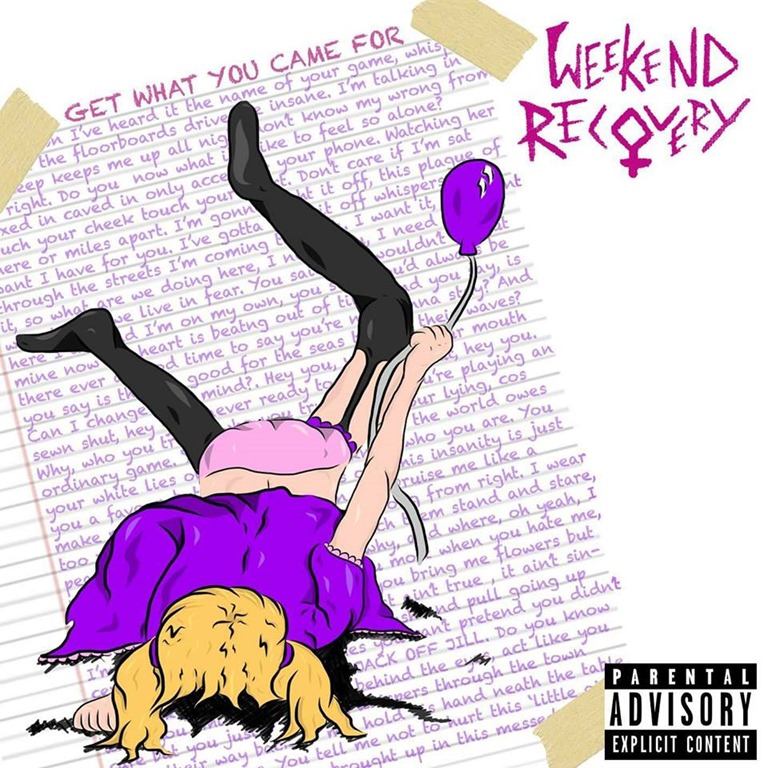
Weekend Recovery - Get What You Came For

Crónica 138 – 6th February 2018

Christopher Nosnibor

Mark E Smith has died. It shouldn’t come as a surprise. In fact, the surprise should be that he didn’t die sooner. But I can’t help but be shaken by the news. It doesn’t feel appropriate to post any music reviews: my social media streams are aclog with tributes to Smith, and it feels wrong even to add to the noise. Part of me feels I should revisit a slew of the old favourites, but they’re so engrained in my mind, I don’t really need to hear them, especially not now.

And so I immerse myself in Témoins, the latest offering from Mathias Delplanque, whose work I’ve previously enjoyed. The three sections of Témoins (including the digital bonus track ‘TU)’ are a world away from the ramshackle three-chord stomps and lyrical derangements of The Fall: these instrumental works – sound collages laid over difficult hums and drones – present a very different kind of abstraction. And it reminds me, vitally, that life goes on. Music goes on.

The sparse arrangements – often, they barely feel like arrangements – are as much about space and silence as sound. The sounds – the whirrs, the drones, he hums, the hisses – are interrupted, disrupted, broken – by seemingly random elements. Birdsong, lowing cattle, slamming doors, clatters and bangs, thumps and crackles. These are amidst the irregular extranea which form the fabric of the material of Témoins.

The atmosphere shifts and moods emerge most unexpectedly from seemingly innocuous sound pairings and juxtapositions. Late in the second piece, ‘Bruz’, thin, tentative notes hover long in the air, needling the senses while unexpected bumps and knocks at close proximity are enough to make you jump. Muffled conversation carries on all around. Here, Delplanque expertly recreates the conditions and sensations of the anxiety of agoraphobia. It grows chill, and it’s difficult to not feel tense are wary. On ‘TU’ – by far the shortest piece running for less than ten minutes – a ghostly piano drifts into the damp air while scraping footfalls combine to create an unsettling, spine-tingling atmosphere.

With Témoins, Mathias Delplanque delivers an hour of understated yet quietly compelling ambient dissonance.

AA

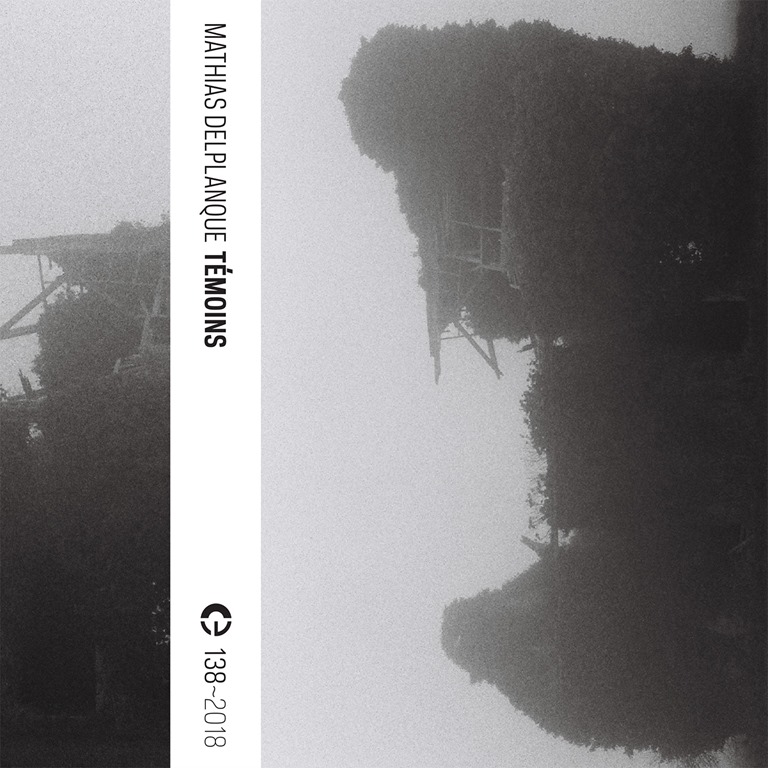
Crónica138_front

This is it Forever – 28th February 2018

Christopher Nosnibor

Capac are an electronic duo, currently based Athens and Bristol. But geography is a state of mind, and while details about the context and circumstance surrounding Through The Dread Waste are limited, the music stands for itself. Yes, it’s supposed to contain ‘ten interpretations of the coldest traditional winter music in the form of dark drone and atmospheric ambience’, but without a priori knowledge of the original versions, all that is left is drone and ambience.

The ‘dread’ ascribed to the ‘waste’ is entirely redundant: waste is surplus, unnecessary, for disposal. Why dread it? The sense of portent, of impending doom… Yes, in a world where there is no time to waste, no money to waste, we may rightly dread it. And yet. The waste: anything waste is unnecessary, and should be confronted, not dreaded or feared. And without value or purpose, anything is waste.

On the subject of disposal, the order page for the physical edition of the album is most telling, containing as it does the following: ‘The physical form and true embodiment of the concept behind Through The Dread Waste… You receive a fire log with a metal plate hidden deep inside. After burning the log, among the ashes you will find your metal plate revealing instructions to access the original constructions of the traditional pieces of music, prior to their deconstruction. Destruction, after all, is a form of creation.’ This echoes a classic and fundamental tenet of the avant-garde, namely the premise that one must destroy in order to create anew.

Postmodernism’s defeatism and acceptance of the death of originality is either the last gasp of the avant-garde, or the point at which is necessarily destroys itself to re-emerge, the creative equivalent of stubble-burning at the end of the cycle of growth and croppage. It would be easy to deride the ‘fire log with a metal plate’ but this is art, and there’s precious little the production and release of music by and large, especially in the mainstream. And this is art which is more than merely willing to be ephemeral, and actually invites its own destruction.

The album’s ten compositions are by no means indicative of a conventional, square set-up, as longer tracks are separated and segued by fragmental pieces. And over its duration, there is a lot of piano, and a lot of space. A lot of space. Through The Dread Waste is a sparse, ominously atmospheric set. This is music to stare into space to. At times, its presence is so sparse as to be beneath detection. The lilting piano, the endless resonant air between them, is captivating, yet so understated as s drift into the ether.

The overlaid and unintelligible snippets of voice on ‘Winter Morning’ call to mind the scratchy, pre-fade in discord of ‘Disintegration’ by The Cure. But here, there is no swampy tune riding in on oppressive drums to hammer it all home. Instead, it drifts into another space, and we consider valiant spaces and parallels. Elsewhere, monasterial voices hover in fogy darkness and drones crackle, from eternity.

As such as it’s a spiritual, transportative, and eventually an immediately accessible release (and not in the same sense of ‘accessible’ which is at the centre of the divisive and heated debate which is raging in the poetry sphere right now). Through The Dread Waste has infinite inroads, and is not abrasive or overtly difficult. Yet equally, it’s not dull or unchallenging. It has melody, and drifts in a way you can get lost in.

AA

Capac – Through The Dread Waste