Archive for the ‘Albums’ Category

Focused Silence – FOCUSED0065 – 7th June 2019

Christopher Nosnibor

Shrill. Treble. Not so much chiming as trilling, a sound between a rapid ringing bell and an alarm that drills into the cranium introduces ‘Colophon’, both the album and the title track on this release by ifitisn’t, a duo comprising Robinson & Kalnars – who both have musical pedigree. It’s the jangle of shattered glass and continues for what feels like an eternity, even though it’s only five minutes or so, before dissipating, dispersing into fragments amidst soft clouds of sound punctuated by near-subliminal bumps and scrapes.

According to the press release, ‘ifitisn’t is about the interruptive noise that exists between transmission and the intended reception of the message, the fragments of concrete experience that interrupt hegemony. it is the mapping of emotional and political territories. ifitisn’t is cartographer and rhetoricican’.

They probably realise that absolutely none of this ‘mapping of emotional and political territories’ actually translates through the work itself: the transmission conveys none of the intended reception. They’re probably more than aware that art’s capacity to ‘interrupt hegemony’ is limited at beast, especially in the current climate, especially when that art is obscure and inscrutable. The disparity between the medium and the message are immeasurable, and all that we have to process is ‘interruptive noise’. It’s quite conceivable that that’s the entire point. The fact they’ve gone ahead and done it anyway is what matters. Artistic statements count for less than pissing in the wind, but its through persistence and perseverance and a steadfast refusal to bow or quit that art will ultimately rise above its societal and cultural backdrop. And it’s art, in all of its myriad forms across all media, which makes life worth living.

I’m by no means saying that with Colophon, ifitisn’t are going to have any impact on my life praxis, or make any waves even within artistic circles. But that doesn’t matter.

Random sounds abound on the second piece, the eleven-minute ‘Denity’, which finds whistling digital feedback, dd snorts, disembodied voices and sounds of unidentifiable origin rifting in and out and intersecting with irregular chanking chimes and glooping ripples of analogue waves frothing impatiently. Nine minutes in, some gallic-sounding vibes enter the mix: it sounds at first like an accordion or concertina of some kind, but could equally be a melodica, but it’s soon washed away on a tide of fuzzy extraneous sound whatever it is.

And whatever it is, it’s worth hearing at least once.

AA

FOCUSED0065_front

Hydra Head – 7th June 2019

Christopher Nosnibor

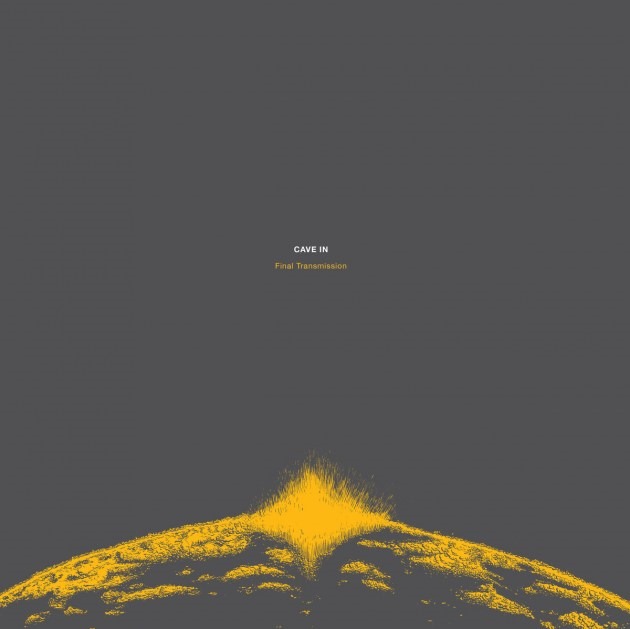
The backstory to the release of Final Transmission is a sad one. Having reconvened in February 2018 to begin work on a new album after being busy on myriad other projects, the meeting at their Boston rehearsal would be their last with bassist Caleb Schofield, who was killed in a road accident at the end of the following month.

The album’s opening track carries all the poignance and pain of this loss, featuring as it does a voice memo sent by Caleb to the band immediately after the rehearsal, containing a sketch for a new song, played on acoustic guitar. The melody is merely hummed. And yet it’s all here, and Schofield’s own final transmission forms the starting point of the bands own final transmission in its current format.

Final Transmission features all of the quintessential grunge tropes, dominated by driving guitars churning though three- and four-chord riffs which exploit the quiet/loud dynamic. A quarter of a century on and is still hasn’t grown tired, at least when well-executed, and it’s fair to say Cave In have got it nailed. There’s a definite 90s feel to it, but then, there are so many other elements subtly woven in: if ‘All Illusion’ has hints of Pearl Jam and Soundgarden, it’s also laced with dashes of prog and psych, and there’s a dreamy, expansive quality to many of the songs here. More than any other band, I’m rem

‘Lunar Day’ goes dingy, dirgy, grinding doomy prog, while hot its heels follows the uber-bombastic guitar extravaganza of ‘Winter Window’. Both tracks are short (the former is less than two and a half minutes, the latter four and a half) but structurally they’re sprawling and epic. ‘Lanterna’ gets a bit Metallica but we’ll let it pass since it grinds out hard and low with a surly bass. Closer ‘Led to the Wolves’ is a raging tempest that simply explodes in all directions in a blistering tumult of overdrive, the bass being absolutely gut-churning.

Where Cave In go from here, who knows? But from a deep, dark place, they’ve delivered something that’s also deep and dark, as well as powerful and engaging.

AA

cave-in-final-transmission

Cherry Red Records – 7th June 2019

Christopher Nosnibor

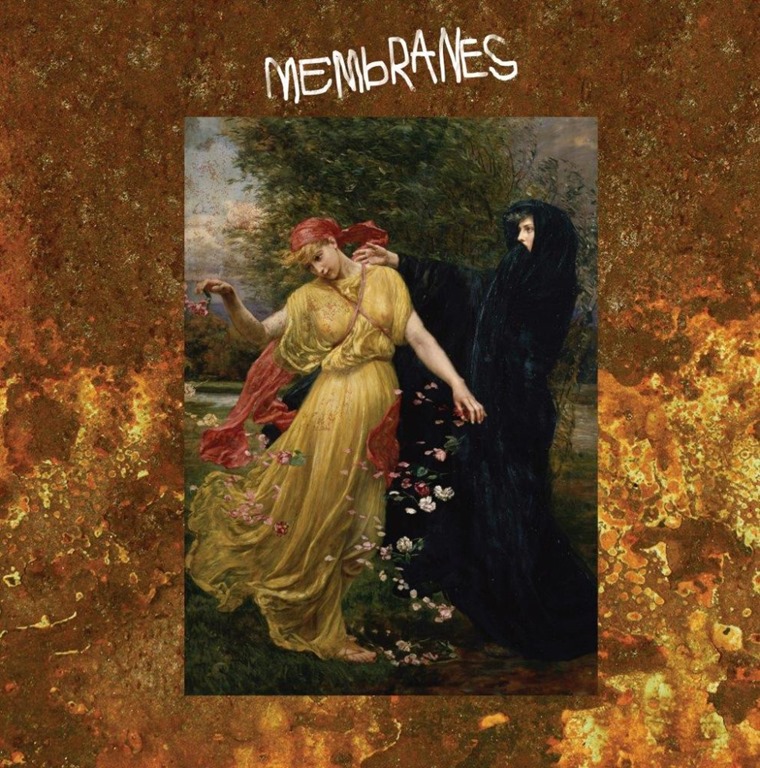
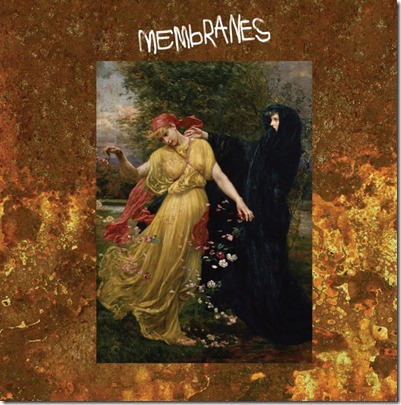
The Membranes’ very long and even more unusual career reaches a new landmark with the release of What Nature Gives… Nature Takes Away marks the release of their ninth album. Forming in 1977 and releasing their debut long-player in ’1980, it would be 26 years between To Slay The Rock Pig (1989) and Dark Matter/Dark Energy following the band’s return in 2009.

John Robb’s career fronting Goldblade from 1995 onwards, as well as a music journalist and Louder than War’s head honcho, with occasional TV ‘talking head’ appearances kept him occupied for much of the intervening time. The fact he’s sustained most of these activities since resuming activity with The Membranes is beyond staggering. How does he do it? The level of energy the man puts into a single gig would leave me crippled for a week (and I’m hardly a layabout).

Anyway. The new album. 16 new songs. While Dark Matter/Dark Energy was concerned with the enormity of cosmic existence, What Nature Gives… Nature Takes Away places its focus more closely on existence closer to home, exploring ‘the beauty and violence of nature’. Inevitably, there’s a human perspective on this: most creatures simply adapt or die in the face of nature’s force: only mankind marvels at nature, while at the same time believing it can harness, defy or otherwise conquer its unstoppable force. Yes, as a species, we’re smart, we’re highly evolved, but we’re completely deluded.

The press blurb pitches it as being ‘a game changer in the tradition of Manchester bands like Joy Division’ (can an album that forms a lengthy tradition be a gamechanger? Surely it must cut free from tradition in order to do this), and it features appearances from Kirk Brandon (Theatre of Hate, Spear of Destiny), and 84-year-old folk singer Shirley Collins, one of England’s premier folk singers of the ’60s revival. Chris Packham also contributes, as does the ‘legendary’ Jordan, who practically invented the punk look in 1975.

What Nature Gives… probably is justifiably a game-changer in that it reaches far beyond the parameters of post-punk and expands massively on The Membranes’ output since their return. Sonically, it’s an immensely expansive piece, featuring as it does the 20-pieceBIMM Choir, pitched against dark drones and heavy atmosphere – and of course, driving bass and choppy guitars. What were you expecting, some ambient/prog crossover effort?

It gets off to a strong start as ‘A Strange Perfume’ weaves a tripwire lead guitar over tribal drumming and a driving bass while choral vocal soar in and out before exploding into a grainy blast of distorted guitar. It’s a hell of a rush, and the production while full, is up-front and punchy.

Robb’s bass on the expansive title track is pure Peter Hook, while his vocal is stark, flat, metallic, calling to mind Ian Curtis. But the soaring lead guitar, strings, and layered backing vocals take it to another dimension. ‘A Murder of Crows’ offers something different again, a furious blues/funk attack that kicks like The Screaming Blue Messiahs at their most manic.

Steve Albini once said something about putting your best songs at the start of an album, and it may be the case that the initial force dissipates after this on What Nature Gives… as the band explore deeper, darker, more expansive territories. But this is considered, paced, and musically articulate. ‘Deep in the Forest Where the Memories Linger’ is evocative and forceful in equal measure, with ethereal choral sweeps swooping over thrusting guitars, before ‘Black is the Colour’ – a song about ‘the dark heart of winter’ and ‘the time when nature’s cycle in at its lowest ebb’ – is delivered in a style reminiscent of The Fall, sneering and spitting over a stocky, cyclical bassline. That this song features on the ‘Summer’ side of the vinyl’s seasonally-themed four sides is telling in terms of the mood: Winter is a recurrent theme here, and maybe I’m projecting my own feelings into the songs, but the urge to hibernate or hang myself are strongest during the bleak months of long, dark nights spent indoors brooding and reflecting on all shades of melancholy. ‘The Ghosts of Winter Stalk this Land’ and Winter (The Beauty and Violence of Nature) pursue the same theme, with the latter exploring synthy territory as a backdrop to Chris Packham’s spoken-word narrative.

‘A Murmuration of Starlings on Blackpool Pier’ continues the theme of ‘A Murder of Crows’. And builds the drama, with samples crackling in over brooding strings and tense, hushed vocals, while ‘The Magical and Mystical Properties of Flowers’ mines a classic loud/quiet grunge dynamic, blasting out with a storming three-chord riff.

It’s all there on ‘Nocturnal’ with a crackling synth-driven verse, thumping bass groove, choppy Gang of Four guitars, and a hook that references Joy Division’s ‘Transmission,’ and in context the press release makes more sense: this is an album which actually harks back to and connects with the touchstones which lie at its roots. It’s not derivative, but intertextual in construction. But the most important point of note is that it’s incredibly well-conceived, and the execution of an album that’s so ambitious in scope is outstanding, and What Nature Gives… sees The Membranes hit a new creative peak.
Membranes-Frt

Panurus Productions – 21st June 2019

Inspector Fogg is Newcastle filmmaker Wayne Lancaster, and his eponymous album threatens ‘ten tracks of warm synth-based stuff.’ For some reason, this makes me think about pissing down my own leg.

The slow, soft wash of sound that marks the album’s arrival in the form of ‘Fuyu’ isn’t nearly as embarrassing or as uncomfortable, the drones swelling and rising in and out of step to forge fluidly fluctuating rhythmic ebbs and flows. Although very much of the album is ambient to the point that structures are lost in the drift, each composition has a distinct identity and mood.

‘The View Across the River’ begins as a delicate strum before yielding to polyrthymic bleepery, while ‘Strange Tales’ is dark and vaguely sinister. If ‘ominous’ sounds like a similar descriptor, it’s different enough to mark the subtle shift in atmosphere as ‘A Year From Now’ casts reflective shadows between held breaths.

There’s more substance to ‘Lamb to the Slaughter’, an insistent beat and pulsating synth behind a rolling piano creating a groove that evokes an action sequence in a film. But its erratic stops and starts are jarring, and it’s almost an act of self-sabotage as the one piece that seems to be going somewhere is simply gone in just over two minutes.

The pieces become shorter and seemingly less evolved towards the end of the album, with ‘Oil on the Road’ and ‘Case Closed’ being sketches of around a minute each. The former is driven by a grimy, buzzing synth bass overlaid with 80s-sounding electronic keys that threatens to go all Harold Faltermeyer before an abrupt ending, while the latter is a piano-based outline that has infinite scope for expansion.

Assuming this gradual diminishment of development is all part of a plan of sorts, the logical analysis would be to attempt to unravel its purpose or meaning. But this is art, and art so often defies logic. And while the snippety pieces are vaguely frustrating, the album as a whole is satisfying in its balance of variety and cohesion, and its infinitely preferable to pissing down your own leg.

AA

Inspector Fogg

Bad Paintings – 28th June 2019

Christopher Nosnibor

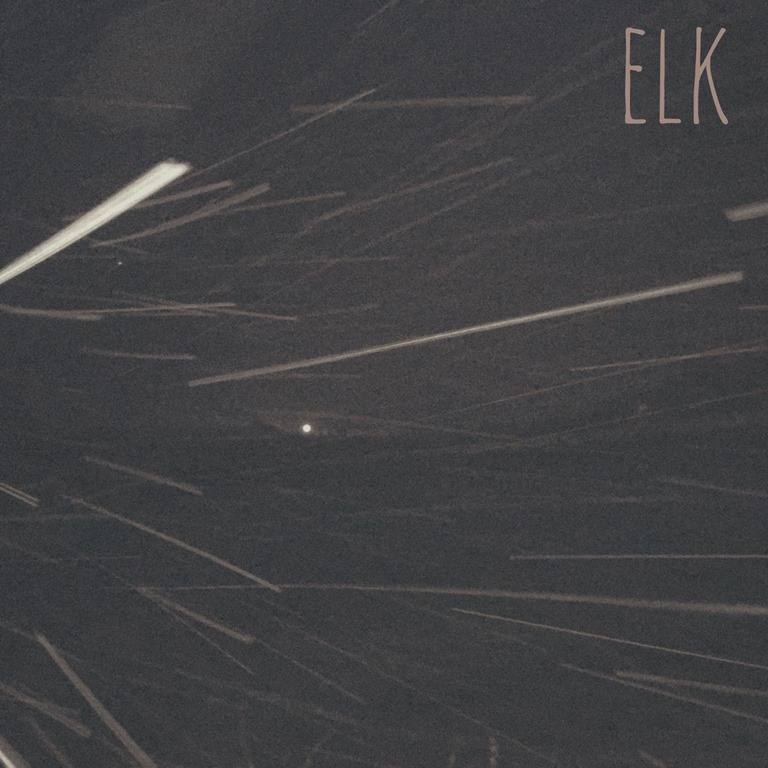
My introduction to Elk came a couple of months ago, when I accepted the invitation to see US touring artist Dylan Rodrigue and travelling companion Sie Sie Benhoff playing a few streets from my house. How could I refuse? I wasn’t disappointed by any of the acts, but that night, Elk were a revelation.

Elk is essentially the project of 21-year old Leeds based multi-instrumentalist Joey Donnelly. According to the accompanying text, his brooding and beguiling work on debut album Beech marries up the sound of Daudi Matsiko, Florist and Talons with the lyrical depth of Phoebe Bridgers. Being unfamiliar with any of these – and pardon my existence in a cultural vacuum – I’m judging Elk in isolation and on their own merit. This doesn’t seem such a terrible strategy. Elk’s music emerges from isolation, but also a place of otherness.

Live, Elk is Joey with his brother, Mikey, and it’s Mikey who’s the mouth and the presence, the chirp and the banter. Joey is practically mute, almost embarrassed. He’s the very epitome of shy and retiring. This comes through in his music, too. And such beautiful music it is, too. Words almost fail. In my review of that live show, I drew comparisons to Sigur Ros and commented on Elk’s ethereal post-rock leanings. They’re in evidence here, too, but it’s perhaps important to also note that Elk don’t share the twee, ersatz fable-like trappings of the Icelandic precursors. Yes, it’s fragile, folksy, post-rock, but it’s very much distinctive and affecting without being affected.

Beech contains just seven tracks, and is spare and concise in every way: the arrangements are minimal and uncluttered, with room to breathe in these inward-facing sonic spaces. These are songs that send shivers down the spine, and yet it’s incredibly difficult to articulate the precise source of their effect – which is of course precisely the key. The best music just creeps up on you, reaches in and touches the innermost parts by subliminal, subconscious routes. The fact the music of Elk is so understated is integral to its emotive power. ‘Stupid World’ begins as a simple acoustic composition, with Joey’s plaintive voice hinting at Neil Young and J Mascis, as much in its sad introspection as anything.

It’s quiet, hushed, the very definition of introspective. And it’s truly beautiful.

AA

Elk - Beech

Kranky – 7th June 2019

James Wells

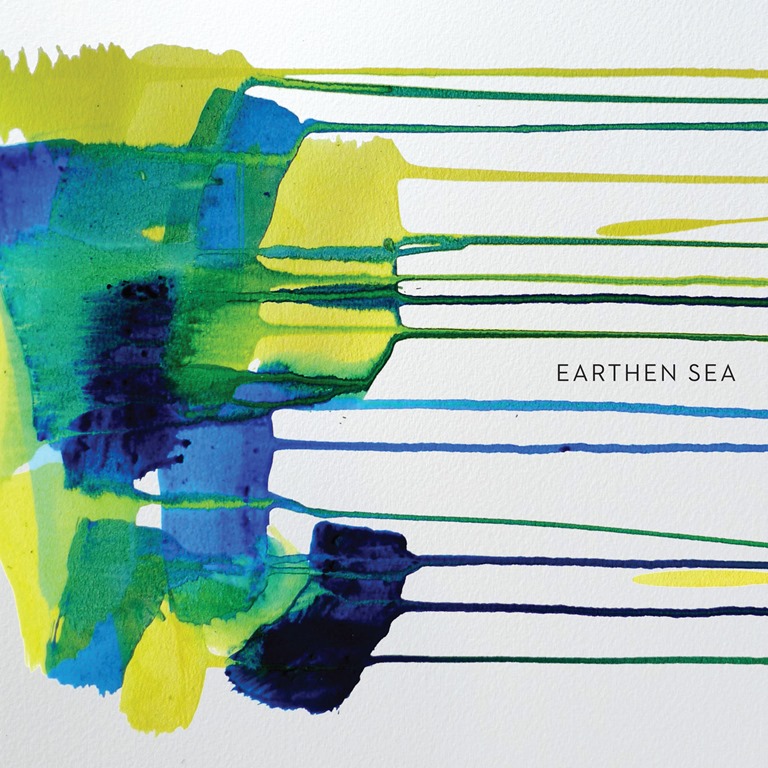
The press release informs us that ‘Jacob Long’s reductionist rhythmic ambient vessel, Earthen Sea, ebbs towards a more purely elemental state on his second excursion for Kranky, Grass and Trees’. But what does this mean?

Long’s approach to the album involved “simplifying things as much as possible,” and the result is an album that’s so simplified as to be almost intangible in its minimalism.

Rhythms are mere ripples, echoes of soft pulsations and clicking microtones. ‘Tidal’ as a descriptor carries connotations of immense, powerful surges and propulsive currents, but here, I’m referring more to the soft lapping of lazy foam on a soft, sandy shore on a still, warm day. The steady flow induces an almost hypnotic tranquillity as the sea remains still and the earth moves almost imperceptibly.

The track titles are less contradictory than self-negating and suggest a sense of uncertainty as their central premise: ‘Existing Closer or Deeper in Space’ and ‘Spatial Ambiguity’ are representative, and are also indicative of the sonic vagueness of Grass and Trees. For all of the pastoral imagery the title invokes, the music (and individual tracks) present more of a preoccupation with space: not just outer, but inner, the infinite space of the mind.

Its effect is to soothe the aching labyrinths of that inflamed infinite space with soft, organic tones, resulting in a work that feels like it’s been sculpted from nature. Not natural, but the natural world re-ordered to mirror the internal flows of the mind and body.

AA

Earthen Sea – Grass and Trees

Southern Lord – 14 June 2019

The press release describes Friendship’s second album as ‘merciless’. I’ve barely recovered from their 2017 debut, Hatred.

The one -word titles are indicative of the succinct brutality on offer here. Those titles are as nihilistic as they are stark: ‘Punishment’; ‘Lack’; ‘Abandon’; ‘Plague’; ‘Hatred’ – gruesome, dark, signifiers of absence rather then presence, or otherwise of something sitting at the negative end of the spectrum. And Undercurrent is indeed brutal. The tempo is frenetic, with the drumming a whirlwind of sticks on skins and thrashing, crashing cymbals and the guitars a blurred mess of distortion. As for the vocals… spluttering, spewing, splenetic, this is the sound of inarticulable fury and the tearing down of the strictures of cultural confines, a primal roar that decimates all niceties in favour of pure, visceral release.

With only one of the album’s ten tracks crossing the three-minute mark, and the majority clocking in at under two and a half, it’s a short album that prioritises intensity over duration. And after a mere 22 minutes, Undercurrent has more than left its mark and I’m scarred, bruised, and half-deaf.

There’s no space for conversation here, and critique feels futile in the face of obliteration on such an absolute level. This is the sound of the dirtiest metal, with no soft corners or moments of respite. The only mercy is its brevity, but even in this short time, it’s got more than enough force to inflict serious damage.

AA

Friendship – Undercurrent

Buzzhowl Records – 12th July 2019

Christopher Nosnibor

‘Dingy’ as a descriptor isn’t to be taken as a negative here: and it’s a dingy mess or murk that opens Damn Teeth’s second album, with the intro to the first track, ‘You’ll Only Make It Worse’ manifesting as extraneous noise before the beats and the bass kick in to drive a snaking electrogoth behemoth. It’s Depeche Mode with the pained twist of Nine Inch Nails and the abrasion and detachment of the classic Wax Trax! sound. It’s a development from their 2016 debut, but make no mistake, they’ve not mellowed any, instead utilising the same elements to present something more focused and harder-edged.

And so Real Men pounds and grinds, at times bordering on the psychotic, as grinding Suicide-inspired synths provide the backdrop to vocals that veer wildly from snarling angst to clinical robotix. I could sling all the quintessential electro-based industrial acts in here by way of touchstones, but I’d only be filling space, because the chances are you already get the gist. Bu it’s also way, way more than that: the helium-falsetto on ‘MRA Soundsystem’ is unexpectedly more reminiscent of the late Billy MacKenzie of fellow Scots act The Associates (who also had tendency for ‘busy’ arrangements).

‘Dominant Muscle’ may be manic, even shrill and frenzied, but musically, it’s pretty lightweight and calls to mind Sigue Sigue Sputnik’s ‘Love Missile F1-11’ crossed with the first Foetus album, in that it combines a relentlessly driving synth rhythm backing track with extraneous noise and deranged vocals. And this is really the shape of things: jolting, jarring, jerking all over, Real Men is an album that doesn’t sit comfortably, instead revelling in layers of anguish, pain, discomfort, with a substantial dose of self-loathing in the mix. But as much as it’s got masochism in its soul, so the sonic pain inflicted on the listener is a wilful act of Sadism.

‘Deserving Pest’ comes on like NIN on ‘Reptile’ – all the sleaze, all the S&M, and I can’t help but be reminded of Marc Almond’s early output: it’s groove, but it’s also got a strong current of self-punishment. ‘Pink Pitbull’ pursues new levels of annihilistic torture, a hybrid between Dead Kennedys and a Swans album played at 45rpm. It’s fucking horrible, and so, so, disorientating, but simultaneously so magnificently punishing it’s positively addictive.

‘The People vs The Real Men’ feels kind flimsy with its throwaway synth groove that’s equally retro and low-budget, but it’s redeemed by the distorted vocal barks that provide a grit that cuts against the mechanoid backdrop, and it culminates in crescendous multitude of screaming, maniacal vocals that penetrate and remind us that lo-fi electronica doesn’t correspond with tame.

Closer ‘Coasting on Genetics’ feels a shade derivative, but that’s by technoindustrial standards, and even then, it packs a punch as it whips extraneous noise into a whorl of noise.

Real Men is a challenge, and it’s unquestionably niche. But it’s a work of twisted genius that will repel the majority, while those who dig it are going to go absolutely nuts for it. and yes I’m going completely nuts.

AA

Damn Teeth - Real Men

Metropolis Records – 24th May 2019

Christopher Nosnibor

Dark, slithering atmospherics – the sound of a postindustrial, postapocalyptic, Bladerunner cityscape, with twitching broken cables fizzing sparks showering into anonymous alleyways – mark the opening of Nero Bellum’s solo debut. A low, gut-churning bass grinds in against hefty beats – not snare drums, but blasts of distorted noise, and as such, ‘Another Prayer to Lucifer’ sets the tone.

Representing two years’ work, with each piece being recorded live, ‘improvised, with no overdubs, and without the use of computers in the creative process’, NFRNº marks a clear departure from the industrial metal of Psyclon Nine.

It’s still got an industrial feel, but it’s about atmosphere rather than brutal attack. Everything is dank, murky, indistinct, and while many of the arrangements are sparse, there’s an oppressive density which permeates the album as a whole. Monotonous, hammering beats thud dolorously, pounding relentlessly against whirring electronics with serrated edges, and each piece bleeds into the next to forge a sprawling mass of discomfort. The album’s impact stems not from its range, but precisely from it’s lack, bludgeoning the senses with trudging repetition and tonal similarity. There is next to no light here, only varying shades of darkness and inhuman bleakness.

‘An Angel’s Offering’ hints at some sort of redemption, with blooping, skittering interloping synth lines that venture into (comparatively) accessible dance territory, before ‘The Beauty in Something Broken’ offers the first pang of melancholic yearning from amidst the relentless stream of emotionally-desensitised machine-made noise.

The reprieve is but brief, though, and ‘Stranded’ wavers back down the path toward darker territories, casting an air of uncertainty and trepidation with its quavering drones. The closing pairing of ‘A Candle Once Burned’, which is more the sound of hope being extinguished rather than light, and the onset of a purgatorial emptiness, and ‘Never Good Enough’ wanders in shadow, formless, with no sense of closure as it fades to nothing.

AA

Nero Bellum – NFRNº

20th May 2019

Christopher Nosnibor

5 guitars follows very quickly the eponymous debut by n, which is Nathan Lyons (concept, guitars) and Neil Physick (software, field recording, processing, arrangements, production, artwork). Its predecessor was the result of musical free association inspired by ‘random’ words: 5 Guitars is less determined by creative process and emerges from more of a conceptual space, in that, according to the accompanying text, it ‘explores the idea of the instruments having their own spirits, benign or malignant, and of a guitar maturing over time then slowly completing its natural life, remembering the past in distant tones’.

This is a work which is very much geared towards the evocative, the listener finding their own place within abstract works and finding the meaning. Only, the listener doesn’t so much find the meaning as project it from their own experience. Does the universal lie in the personal? Most definitely, although 5 guitars isn’t an album that has any grounding in the personal, as much as a space between.

The spirits of the different guitars float into the air, the concept not so much lost in translation as dissolving into vague sonic nebulousness.

Warm, distant drones define the first piece, ‘Red Kay’, which hovers and hums in a mid-range swell which ebbs and flows in a calm, natural way. It bleeds into ‘Effector’, which almost disappears at times, dissolving into the most vaporous, background of ambient.

The narrative and concept isn’t overtly discernible from the music itself: the tracks don’t demark a clear linear progression from mellow tones to decay.

Picked notes are discernible on ‘Tiesco’, but they’re carried in trembling washes that approximate chords but are much vaguer, less defined…. And definition dissipates to nothing amidst the undulating drones which surge beneath the tempered ripples of notes that drift gently over the indistinct, hazy backdrop.

5 guitars is vague, undefined, indirect and unfocused from a listening perspective. And that’s all fine. The concept may not be clear, but has no bearing on the listening experience, and certainly has no impact on the reception side of the project, which is a pleasurable wash of soft tones that more than fulfils its purpose in terms of background.

https://nsound.bandcamp.com/album/5-guitars

AA

n - 5 guitars