Archive for the ‘Albums’ Category

Christopher Nosnibor

CHUNK is a rehearsal space in Leeds which also puts on live shows. They’re the very epitome of DIY: it’s a couple of damp, crumbly rooms on an industrial estate some 40 minutes’ walk from the train station. They don’t have a license or a bar, so their gigs are BYOB, and they have a solid manifesto that stipulates ‘no bigots’. Divey as it may be, it’s a safe and accommodating space that’s crated its own scene, embracing the weird, the wild, the noisy, a hub for disparate outsiders. And I’ve seen a fair few decent gigs there, a fair few of which I’ve written about here, and in the company of decent people. Hell, I’ve even performed there: CHUNK facilitated my meeting with Paul, aka Foldhead, an event which would mark the arrival of a new musical entity in the form of …(something) ruined.

Spaces like this are rare these days. Everyone’s in it for the money, and no-one else has any. And so you have to love CHUNK for its commitment and integrity.

Sadly, commitment and integrity don’t pay bills, and this release is specifically pitched as a fundraiser for vital repairs. Less sadly, it’s a showcase of the acts who’ve emerged around CHUNK, and a celebration of the thriving underground scene in Leeds, which has recamped to CHUNK and Wharf Chambers now the Brudenell – ever-awesome as it is – has stepped up several notches from the student hangout it was a decade ago to a three-room venue of international standing. CHUNK have also expanded to a label branch – Voice of Chunk – to disseminate the works of the CHUNK community, and this release, on that label, captures the spirt of the scene perfectly.

This compilation reflects both the sense of community and the diversity of the scene centred around this space, and a fair few of the acts featured have been covered here at Aural Aggro.

The first track is a rough ‘n’ ready demo of a song Beige Place – whose debut live show I witnessed in this very venue – have been playing on their recent dates supporting Shellac. Yes, read and digest. Wonky, cronky, oddball, shouty no-image math-rock misfits from Leeds support Shellac on UK tour. And inexplicably divide Shellac fans. Kudos. This doesn’t actually need any more work, beyond perhaps mastering by Bob Weston. Its raw, ragged discomfort is everything it should be.

Cattle – who I’m elated to be featured on a bill alongside in February – bring a crashing swell of nihilistic nose with ‘Found in a Tract of Land’, and Cattle’s drummer Steve Myles also features on the contribution from Groak, who tossed ‘Lemnian Earth’ into the mix because they’re winding down and elected to support the venue instead of holding out hope of a new EP.

Elsewhere, M-G Dysfunction introduce an electronic element to the mix. Black Antlers impressed me when I caught their debut performance at CHUNK (where else?) in June, and the appearance of ‘Insomnia’ here marks their debut release, and showcases some brooding, shuddering electropop that comes on like a goth Goldfrapp or Zola Jesus without the operatics.

I’ve had the pleasure of bringing Territorial Gobbing to York, and as much of that pleasure was derived from observing the bewildered expression of many of the audience members. ‘Whose Big in the Karaoke Underground?’ is a disorientating mess of sounds, incongruous fragments, bleeps and bloops randomly spliced together, and Thank’s ‘Good Boy’ is noisy another highlight, although it sounds like it was recorded from the room next door. Meanwhile, Open’s ‘The Love Machine’ is an overloading, pounding psych racket, and Groak’s curtain closing ‘Lemnian Earth’ is s snarling, blackened assault that’s as raw as roadkill.

Having picked out some highlights, it’s worth pointing out that there isn’t really a duff or dull moment among the fourteen tracks here, and while not every act may be to everyone’s taste, that’s something to celebrate, being indicative of a scene that promotes diversity and where the most disparate acts perform side by side and support one another. Above all, this compilation shows – once again – how the Leeds alternative scene is thriving and continually producing new and exciting music by artists who dare to be different.

CHUNK is a rehearsal space in Leeds which also puts on live shows. They’re the very epitome of DIY: it’s a couple of damp, crumbly rooms on an industrial estate some 40 minutes’ walk from the train station. They don’t have a license or a bar, so their gigs are BYOB, and they have a solid manifesto that stipulates ‘no bigots’. Divey as it may be, it’s a safe and accommodating space that’s crated its own scene, embracing the weird, the wild, the noisy, a hub for disparate outsiders. And I’ve seen a fair few decent gigs there, a fair few of which I’ve written about here, and in the company of decent people. Hell, I’ve even performed there: CHUNK facilitated my meeting with Paul, aka Foldhead, an event which would mark the arrival of a new musical entity in the form of …(something) ruined.

Spaces like this are rare these days. Everyone’s in it for the money, and no-one else has any. And so you have to love CHUNK for its commitment and integrity.

Sadly, commitment and integrity don’t pay bills, and this release is specifically pitched as a fundraiser for vital repairs. Less sadly, it’s a showcase of the acts who’ve emerged around CHUNK, and a celebration of the thriving underground scene in Leeds, which has recamped to CHUNK and Wharf Chambers now the Brudenell – ever-awesome as it is – has stepped up several notches from the student hangout it was a decade ago to a three-room venue of international standing. CHUNK have also expanded to a label branch – Voice of Chunk – to disseminate the works of the CHUNK community, and this release, on that label, captures the spirt of the scene perfectly.

This compilation reflects both the sense of community and the diversity of the scene centred around this space, and a fair few of the acts featured have been covered here at Aural Aggro.

The first track is a rough ‘n’ ready demo of a song Beige Place – whose debut live show I witnessed in this very venue – have been playing on their recent dates supporting Shellac. Yes, read and digest. Wonky, cronky, oddball, shouty no-image math-rock misfits from Leeds support Shellac on UK tour. And inexplicably divide Shellac fans. Kudos. This doesn’t actually need any more work, beyond perhaps mastering by Bob Weston. Its raw, ragged discomfort is everything it should be.

Cattle – who I’m elated to be featured on a bill alongside in February – bring a crashing swell of nihilistic nose with ‘Found in a Tract of Land’, and Cattle’s drummer Steve Myles also features on the contribution from Groak, who tossed ‘Lemnian Earth’ into the mix because they’re winding down and elected to support the venue instead of holding out hope of a new EP.

Elsewhere, M-G Dysfunction introduce an electronic element to the mix. Black Antlers impressed me when I caught their debut performance at CHUNK (where else?) in June, and the appearance of ‘Insomnia’ here marks their debut release, and showcases some brooding, shuddering electropop that comes on like a goth Goldfrapp or Zola Jesus without the operatics.

I’ve had the pleasure of bringing Territorial Gobbing to York, and as much of that pleasure was derived from observing the bewildered expression of many of the audience members. ‘Whose Big in the Karaoke Underground?’ is a disorientating mess of sounds, incongruous fragments, bleeps and bloops randomly spliced together, and Thank’s ‘Good Boy’ is noisy another highlight, although it sounds like it was recorded from the room next door. Meanwhile, Open’s ‘The Love Machine’ is an overloading, pounding psych racket, and Groak’s curtain closing ‘Lemnian Earth’ is s snarling, blackened assault that’s as raw as roadkill.

Having picked out some highlights, it’s worth pointing out that there isn’t really a duff or dull moment among the fourteen tracks here, and while not every act may be to everyone’s taste, that’s something to celebrate, being indicative of a scene that promotes diversity and where the most disparate acts perform side by side and support one another. Above all, this compilation shows – once again – how the Leeds alternative scene is thriving and continually producing new and exciting music by artists who dare to be different. We need this space! Please support it.

AA
Sounds of CHUNK

Christopher Nosnibor

This one’s been languishing in the vaults for a while now, but one of the things about recording prolifically is that sometimes it takes time to catch up on the release schedule. And so Gintas K’s variations in a-moll for a granular synthesis gets to see the light of day in the middle of a solid and steady release schedule which has seen the release of one or two albums a year for the last three.

Of the six sequentially-numbered tracks, all but one are well over the ten-minute mark, and the shortest is over eight minutes in duration.

Not a lot happens, at least initially: repetitive synth stabs on a single note with varying levels of force shift into different notes. They begin to overlap, and a fuzz of distortion decays the edges. Gradually it slides into a mess of overloading noise: the synths crackle and burn among a billowing walls of darkness.

Across the album, scraping granularity and stuttering dominate the foreground. It difficult to settle to a constant flickering, a crackling distortion of interrupting signals, and the sensation is disorientating, dissonant, disruptive. By the third piece, the sounds has degraded to a rumbling crackle. This sonic disintegration could likely be taken as a metaphor for something. But for what? Well, from a reception theory perspective, you can insert your own metaphor as appropriate. To me, it feels like a sort of glitched-out panic attack, a mental collapse as a response to the crumbling culture at the tail-end of 2019. A decade slumping to its bitter end in an amorphous mass of fragmentation, with rhythms reduced to swampy surges back and forth, and fractal notes dance skittishly.

The fifth piece introduces some softer tones, an ambient wash that’s cracked and damaged, bur nevertheless hints at something mellow… and then it tears apart from the seams as a heavy fog of noise descends, and the final composition splinters and breaks, the shards bursting apart in slow-motion to leave rubble and dust.

AA

Gintas K – variations in a-moll for a granular synthesis

Rat Records/Werkplaats Walter – 29th November 2019

Christopher Nosnibor

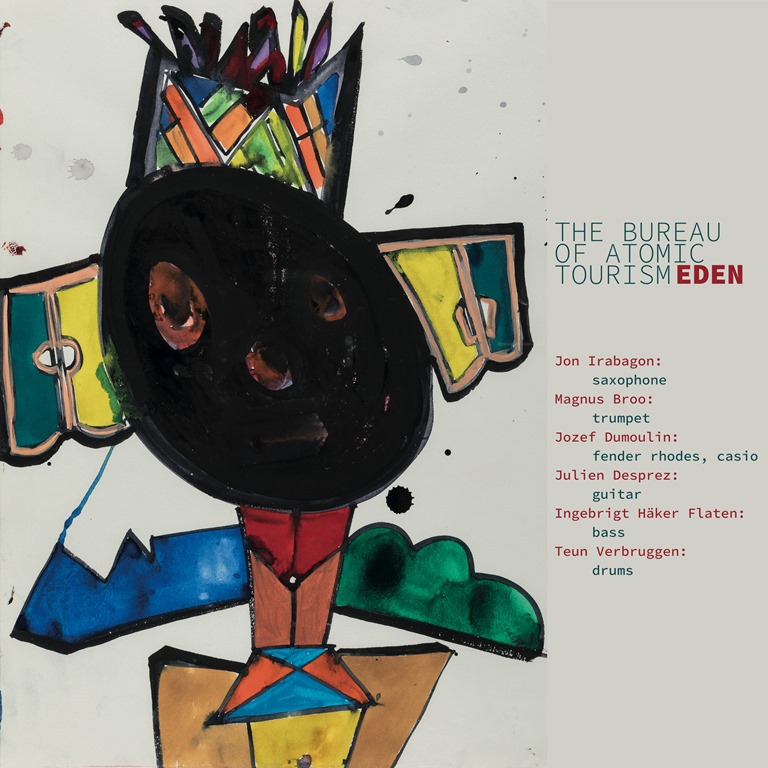
All these artists that have seemingly well-established cult fanbases… How do people discover them? Where do they hide out? It would seem that sextet The Bureau Of Atomic Tourism are ‘a considerable force in avant-garde jazz’, and while I’m not exactly 100% on the pulse when it comes to the genre, I do have numerous inroads into the musical milieu. But in a well-populated but spacious and divergent field, it’s perhaps not entirely shocking that The Bureau Of Atomic Tourism have slipped under my radar, especially considering the fact that their last long-player, Hapax Legomena, was four years ago.

If the title suggests a yearning for a return to innocence, the album’s fourteen compositions suggest otherwise, and the chaotic ruckus that heralds the album’s arrival in a discordant blast of horns, wandering bass and arrhythmic drumming lands like a series of slaps around the face.

The forms and structures are loose, to say the least, and it definitely requires a certain kind of musical attenuation to appreciate and enjoy pieces that sound like half a dozen people playing half a dozen tunes in different rooms simultaneously.

‘Two Part Oven in Thin Eleven’ is as abstract in its noise as in its naming, while ‘Passed Present’ is a tempestuous aural affray, a blitzkrieg of toots and trills that assault the cerebellum, and so no with no mercy.

‘Search End When Sharing Starts’ is something of an anomaly, straying into atmospheric post-rock territory with a solid and focussed rhythm section holding it all together with real proficiency. Elsewhere, ‘Video Interlude’ has an almost funk-inspired groove and it roll and strolls comfortably. It’s a contrast to the bulk of the album, which is discordant, disjointed, jarring and decidedly groove free, to the point of being disorientating, difficult, and decidedly messy.

In technical terms, Eden is remarkable, a wild blossoming of ideas. But it’s also an untamed sonic tangle of interweaving twines, matted into a sonic thicket that twists and spreads in all directions.

AAA

RAT042_front

Cruel Nature Records – 23rd November 2019

No release by a band called corpse tWitcHer was ever going to be pretty. But Bring Your Dead is next level.

The album contains only four tracks, the shortest of which, ‘Opening: The Bird’ is over eight minutes long and pitches some dark atmospherics with low, dank rumblings and mid-range scrapes that twist and taper into a soft fog of ambience with tempered chiming notes ringing out into the mist. It is but an opening, an extended introduction, which paves the way for the speaker-shredding, Sunn O)))-like devastation of ‘Of Bones & Head’ that lands the crushing low drone of guitars like a cement mixer on slow speed, blended with shrieking howl of feedback. This swirling mass of amorphous sound on sound surges and swells for a full eighteen minutes, and while its form is impossible to take a hold of as it shifts and twists, it’s a fully immersive experience. It’s possibly the closest thing to Earth 2 I’ve heard since, well, Earth 2. This is music that packs a suffocating density, and rattles the ribs as well. It vibrates the molecules while crushing the skull. It’s a painful joy, and a joyful pain.

‘A Thorough Necropsy’ grinds out a quarter of an hour of relentlessly heavy, percussion-free sludge that crawls from the speakers and wraps itself around not just your ears or body but your very soul, strangulating and suffocating with its tarry black mass. It’s in the territory whereby guitars melt into a grating morass of noise: struck chords don’t hit but instead billow into a cloud of noise so dense as to choke. There are some anguished, guttural vocals buried beneath it all, I think. It’s the sound of pain beyond words, a charred snarl from the underground. The tempest builds louder and darker around halfway through, and it’s around this point we slip off the face of the planet into another dimension. It’s bleak, but not like death or dying: this is transcendental and bleak and we’re floating in another sphere, buoyed by a sound denser than the Dead Sea.

The final cut, ‘Closing: Sutures’ sews it all up nicely with an expansive rumble of dark ambience that swirls and eddies and billows around in a formless morass of sonic fog. It rumbles around the bowels, the lungs, and the spleen. It sends shivers down the spine and a shudder over the skin. It resonates on a biological, physical level.

Bring Your Dead is heavy, intense, and unsettlingly dark, it doesn’t so much hit the mark as consume it in blackness.

AA

cover

Basement Corner Emissions – 28th June 2019

Christopher Nosnibor

For those outside Ukraine, and those who aren’t completely immersed in the most underground of underground scenes, few are probably aware of the fact there’s some seriously good noise shit emerging from Ukraine right now. And Portland, Oregon, US, too, on the strength of this release.

This split release between Vitauct and Crepuscular Entity is a monster, and one which demonstrates that there’s contrast and variety within the field.

The first piece is a seven-minute wall of noise courtesy of Crepuscular Entity. There may or may not be distorted vocals screaming low in the mix of a blistering white-noise assault. Noise doesn’t get much harsher than this, and everything is total overload. But there is texture, if you listen closely enough – if you can bear to. It’s not quite Harsh Noise wall, but it is a wall of harsh noise.

Vitauct’s ‘The Abominable Mechanism’ combines squelchy electronics with a thumping mechanical rhythm, the sound of a machine grinding and pumping away. Distortion and decay enter the equation at some point, upping the intensity. In context, however, Vitauct’s contributions are light relief against the relentlessly abrasive shards of pain served up by Crepuscular Entity: ‘Electrical Storm in an Electrical Storm’ is full-treble pain, an amorphous mass of blistering hiss with no discernible form, while Vitauct offers up something more overtly rhythmic. There is nothing accessible, or easy, or comfortable about any of this. It hurts, and it punishes and it fucks with your head. This is exactly what it should do and in the field of power electronics, it’s more sonically articulate than most.

The final track, ‘Madhouse’ is something else altogether: distorted vocals and maniacal laugher against a backdrop of fizzing electrodes and scraping noise. It’s deranged, and it hurts, but this is everything that’s good about it.

AA

Viatuct

2nd December 2019

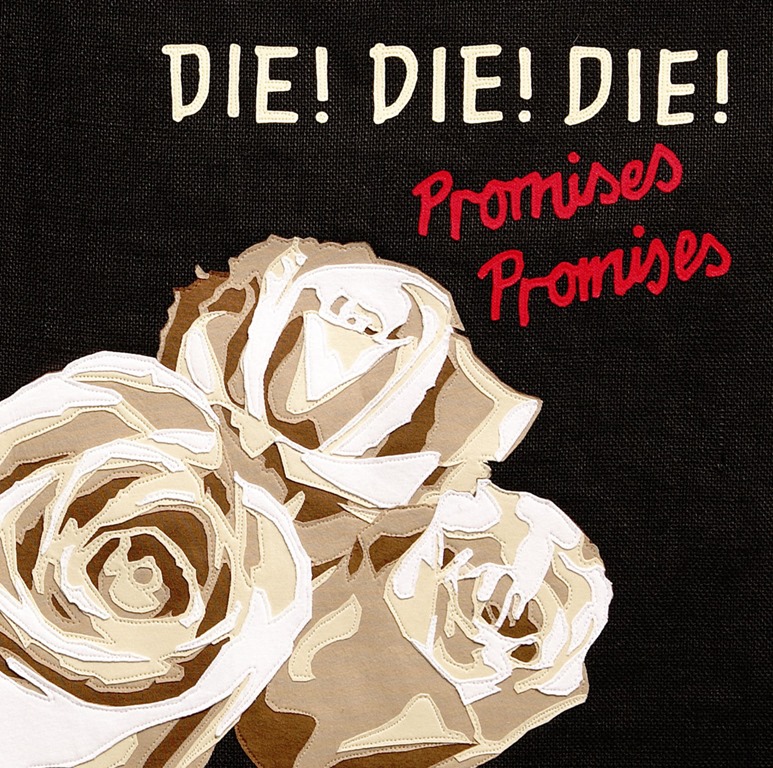
On its release in 2008, the second album by New Zealanders Die! Die! Die! received critical acclaim from the NME and The Guardian here in the UK. But the artwork wasn’t quite as intended, and, well, there’s always room for improvement with a remastering in hindsight. This version comes fully remastered courtesy of original engineer and co-producer Kevin McMahon (Swans, Fat White Family) and with the artwork restored to its full glory, and emerging just a few months after their new EP, it’s seems like Die! Die! Die! are at not so much at a crossroads, but a point of reappraisal while entering a renaissance period.

I reckon I have fair ears and am capable of a fairly obsessive attention to detail when it comes to it – although it’s easier to be obsessive when your listening is limited to a narrow range of bands and albums. Nowadays, I rarely get to listen to albums more than a couple of times, and having – shamefully – not heard the original release, I’m not in a position to explore the details that differentiate this from the original. But I do have ears, and am in a position to consider how a 12-year-old album stands up now.

As a set, in terms of production and mix, Promises Promises pitches the rhythm section very much to the fore, which apparently was ‘partly due to the influence of new bassist Lachlan Anderson, but also because a broken hand limited Wilson’s guitar-playing’ if Wikipedia is accurate. What this achieves is a real solidity of sound, and imbues the songs with a particular sturdiness.

The album is very much geared to uptempo, high octane punky, shouty thrashabouts that are dispensed in two or three frenetic minutes, but elsewhere, there are a number of more considered songs that show – beneath the fuzz and crashing cymbals – a degree of craft in the compositions, despite the fundamentally primitive arrangements.

‘Britomart Sunset’ nicks the bassline to Joy Division’s ‘Isolation’ and whacks up the tempo and steers it back into the driving dark punk territory of JD’s Warsaw years, and it’s killer. There is absolutely nothing more exhalating that a thumping bass groove placed front and centre. ‘Whitehorses’ is a standout with its mechanised, motoric drumming which thumps away as the rest of the band push away at a couple of chords with remarkable patience. The again, the title track lays sinewy guitars interweaving over a driving bass and powerhouse percussion, a collision of frenzied punk and icy new wave paranoia to create a perfect tension.

Promises Promises – reissued, remastered, whatever – is simply a corking album, and if its being remastered and reissued gives it a new lease of life, then it’s all to the good.

AA

DDD

Icarus Records i008 – 1st December 2019

Christopher Nosnibor

This is one of those albums, recorded live, that contains continuous sound. This makes sense in context: when improvising a set that’s determined by duration rather than compositions. There is necessarily an element of artifice and restriction around time-constrained ‘slots’. This isn’t necessarily the issue here: Icarus is a radio show, a concert organisation and a record label that focuses on experimental music, contemporary classical and electronica. For more than 10 years, this weekly radio show on Urgent.fm, a university radio station in Ghent, Belgium, invites artists to record live sessions on a monthly basis. Over the years, more than 60 Icarus Live Sessions have been recorded, and the library is still growing.

Five-piece instrumental collective BOW – who play a selection of cellos violins, and, as the name suggests, bowed instruments – played Icarus’ 59th live session in March 2019, and is the first to be released, as a cassette and download.

At times truly beautiful, at others dark and difficult, with manifold shades in between, many of which explore dissonant, challenging sonic spaces that test the listener’s capacity in a host of ways as things veer out of sumptuous classical territory and into dramatic discord, Bow lead the listener through succession of passages. The final minutes are laden with drama, transitioning from a soft jazz swing into a raging tempest of scraping string-bleeding trauma, a surging crescendo that assails the senses with a sustained intensity. This is improvisation at its best, where a collective can read one another and the immediate space around them to not only coalesce each segment and segue between them naturally and intuitively, but to form an overall structure from beginning to end that feels planned, arranged, co-ordinated.

There’s a bonus track on the cassette release: another half-hour of difficult, dissonant drones which begin as a brooding chamber orchestra work and evolves – or perhaps more accurately mutates -into something less graceful but altogether more powerful.

AA

i008_art

Cruel Nature Records – 17th November 2019

Christophe Nosnibor

Nathalie Stern made her solo debut with Firetales in 2010: almost a decade on, she delivers a follow-up in the form of Nerves and Skin. The album promises to ‘builds on the experimental folk traditions of her debut, awash with vocal harmonies, synth loops and drones but with the maturity of an artist who knows their craft and is top of their game’.

Although now resident in Newcastle, Stern’s roots are Swedish, and it’s traditional Swedish folk which informs her music. While I have precisely no knowledge or experience of Swedish folk music, the compositions here, as the title suggests, conjure a sense of the barest essence of human existence. Nerves and skin the components essential to the senses, especially touch, are here exposed and highly sensitive. As much as anything it’s the organic feel that permeates the album that renders it so subtly affecting as it drifts and melds to form a sort of biological symbiosis with the listener’s internal mechanisms while it plays.

Stern’s voice is the primary instrument here, and she builds layers of harmony, often by unconventional means, with breaths and short, wordless sounds looped to form cyclical motifs atop sparse synth drones

‘Luchdora’ brings low-impact, lurching beats that thud soft and there’s a heartbeat thump on ‘Then You Talk of War’, which delves into darker territories with moody bass oscillations over which layers of choral vocals build majestically.

‘Deep Sleep’ wheezes monotonously, a lugubrious drone: Nathalie’s vocal is barely a whisper, haunting, ethereal, the melody a sing-song lullaby with an uncanny, shadowy twist that may not exactly be Chuck Palahniuk, but is still moderately unsettling. ‘Moderately unsettling’ is a fair summary of the atmosphere that creeps across the compositions as the album unfolds. Although fear chords creep all over the gloomy ‘Stig in Lucia’, it’s not overtly dark, but the disembodied vocal echoes evoke a certain cognitive dissonance.

And for all its oddness and otherness, it’s on an instinctive, human level that you experience Nerves and Skin: you feel it, somehow, almost subliminally, and it touches parts rarely reached and in ways that are abstract and indefinably, but nevertheless real.

AA

cover

Bubblewrap Collective – 15th November 2019

Christopher Nosnibor

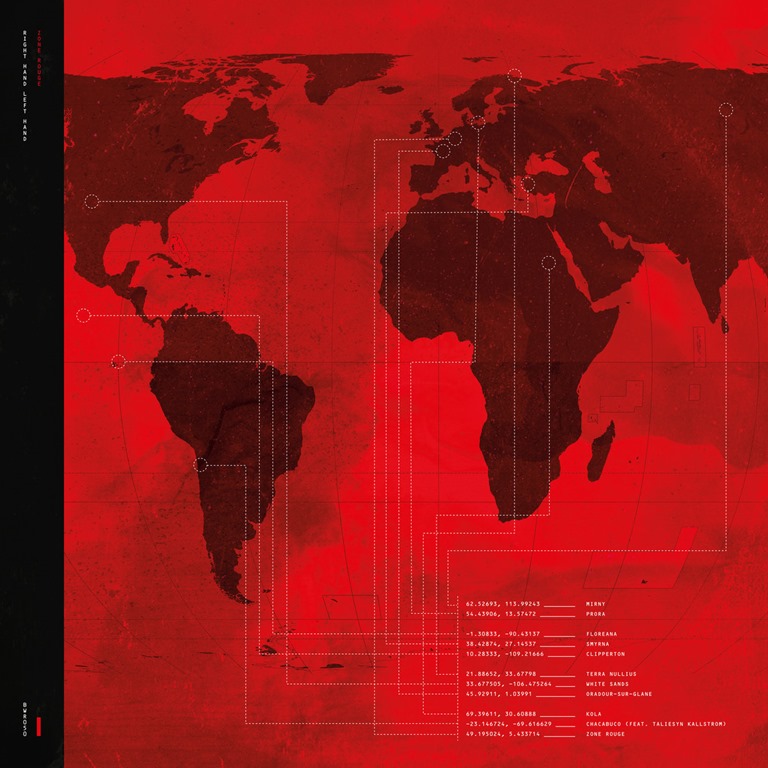
It’s 2019, but Right Hand Left Hand’s third album leaps us back to 2004. But let’s be clear: this is not a criticism. ‘Zone Rouge’ follows on from their self-titled, Welsh Music Prize-nominated second album, and, according to the press release, ‘tells the story of humanity’s contempt for the earth beneath us, the air above us and the people around us.’ The titles of the album’s 11 tracks each refer to ‘a location on Earth where something bad has happened: An act of corruption against the planet, an act of evil against fellow humans and occasionally both.’ Obviously, there’s scope for this to have been an album of infinite duration with a new track added every three seconds for all eternity, but there have to be limits.

Instead, what we have is a concise and urgent post-rock statement on the state of the planet. Being largely instrumental, the sentiment and intention isn’t immediately apparent or openly conveyed without some kind of preface, ‘Zone Rouge’ doesn’t scream ‘environmental crisis reaction!’ or ‘mass killing’ or ‘war’. A lot of this is pretty smooth, expansive, cinematic, with well-placed but ultimately controlled crescendos. The production is sensitive to the mood and the from, but ultimately, it’s clean, dynamic, textured.

There are departures: ‘Prora’ is a kind of choppy, post-punk funk effort with vocals, and it feels rather incongruous in the scheme of the hefty back-and-forth riffery and heavy atmospherics that pervade. ‘Chacabuco’, featuring Taliesyn Kallstrom of Cardiff’s ESTRONS feels particularly anomalous, being some kind of trippy indie / alt metal hybrid. For what it’s worth, it’s a belting tune and single-worthy in its own right, but stands out like a sore thumb in the context of the album.

At times, it feels like the Right Hand Left Hand doesn’t know exactly what the Right Hand Left Hand is doing, but for the most part, Zone Rouge is a solid post-rock album, pushing into an array of stylistic territories with rare aplomb.

AA

Right Hand Left Hand