Archive for the ‘Albums’ Category

Bearsuit Records – 20th March 2020

Because I like my shit weird, I’m always thrilled to receive new releases from Bearsuit Records, and Harold Nono’s latest is one of a brace of fresh releases – brimming with weird shit, of course.

The title We’re Almost Home suggests a relaxation, an easing into the home straight. Instead, what Nono delivers is a brain-bending sonic tempest, with ideas lifted from all corners of the planet.

Nono’s straight in with insistent stuttering rhythms that pound systematically over the point as the title intimates, against a jolting japandroid clash of fragmented robotix. Like all of Nono’s previous releases, it’s a whimsical culture clash, stop-start chillout dance grooves are juxtaposed with trilling synths, samples, scratchiness and warping

‘Shaking on an Iron Bed’ is a calamitous crash of wild jazz horns and cymbal bursts that give way to pulping disco with orchestral strikes, while the jazz tones keep on coming. All the ‘what the fuck?’, all the ‘why?’ and all the ‘no need!’ and yet, despite everything, it’s all the reasons Nono is worthy of you ear. It shouldn’t work, and on paper doesn’t work, and even at times in actuality is kind of off the mark, but the transitions are so rapid that it’s doing something else completely different before it’s even registered.

There are moments of Stereolab-like mellow doodling to be found in places, as on ‘Let the Light In (Prince of Darkness)’, heavy dark ambience, as on ‘Ron’s Mental Leap Coach’ and tripped out semi-ambient space electronica, as on ‘The Fall Reprise’. There is oddness and drama, and a whole bunch of abstract glitchiness, and it’s all characteristic of both Nono and Bearsuit. If you’re curious to take a walk on the weird side, then this comes recommended. If you’re not, then you need to expand your horizons, and this is still recommended.

AA

Harold Nono – We’re Almost Home

Ici d’ailleurs – 27th March 2020

Christopher Nosnibor

Matt Elliott’s solo work released under his own name is a world apart from his output under the Third Eye Foundation moniker. However, as the press release reminds us, he’s ben flying solo for a while now: The Calm Before, released four years ago, was his seventh solo effort. Farewell To All We Know is not the storm his previous album, The Calm Before alluded to, but nor is it an entirely mellow affair either. There are currents that run deep and perturbed in Farewell To All We Know, an album that leaks a certain sense of despondency which is often hard to define. It’s all in the mood.

The title track, which arrives after a brief instrumental introductory piece, is representative of the album as a whole: sparse acoustic guitar is the primary accompaniment to Elliott’s Leonard Cohen-esque growling drone. He sings low and mumbles his lyrics, but there’s something appealing about this gruff unintelligibility. Oftentimes, the vocals are emitted in monosyllabic breaths, breaking the words down to simple sounds, at which point they become less about linguistic meaning than the conveyance of a feeling, a mood, an emotion.

Flamenco favours and understated piano colour the instrumental slant of the album, giving it an almost continental hue. The soft, vaguely romantic – but bleak – stylings of the compositions are charming, sedate but with an undertow from currents that run dark and deep.

‘Can’t Find Undo’ is dark, stark, and brings a rumbling ambience as a prelude to the almost nursery-rhyme sing-song melodies of ‘Aboulia’ and the scale-driven ‘Crisis Apparition’ is easy on the ear but still drags on the soul.

Farewell To All We Know is a lugubrious and at times slow to the point of dragging effort, but one feels that’s the intention: this is not a pop album. Or a rock album. Farewell To All We Know is bleak and harrowing, but also charming and enjoyable in a dark, dark, dark folksy way.

AA

IDA141_front

Ipecac Recordings – 13th March 2020

Christopher Nosnibor

It’s inevitable that a city the size of New York would throw up a large quantity of bands. Big cities tend to simply by virtue of the fact it’s more likely there’ll be likeminded individuals to collaborate with, as well as an audience who’ll appreciate even the nichest of styles. But as a city, New York is a place of extremely, of polarities, and so is all things. A cultural melting pot, a city of dreams a disappointment, a lifemaker and a lifebreaker.

The 80s No Wave threw up a host of bands who captured the gritty realities of living in a city where the pace of life is relentless, and conveyed the drudgery of life at the bottom of the pile, for who, life isn’t about swanky parties in oft apartments, but 12-hour shifts in low-paid jobs that rely on tips just to cover the rent for a grimy, cockroach-infested one-bed hellhole. Bands like Swans, Unsane, and Cop Shoot Cop soundtracked the grim realities of the everyday: not so much the seedy underbelly, as the day-to-day reality of the masses.

As the press release notes, ‘Human Impact’s first recordings are a dark mirror held up to the band’s collective pre-history – the sound and story of Unsane, Swans, Cop Shoot Cop, and New York City itself. It’s sound is cinematic post-industrial filth rock, a dozen run down subway stops away from recognizable civilisation, as futuristic as it is grounded in its sordid heritage. The result is a potent, hard-boiled distillation of this sonic ethos’. It’s a fair summary, and the album is every bit as hard-hitting as the parts and the sum intimate

Released as the first single (although what actually constitutes a single these days seems to be increasingly vague), the six-minute ‘November’ stood as a statement of the band’s intent, and serves the same purpose in opening the album: it’s a grainy-mid-tempo grindout built around a nagging, woozy bass that has hints of broken jazz chords and it loops around itself and weaves through jagged shards of twisted guitar. Second advance release, ‘E605’ (a highly toxic insecticide) crashes in immediately after, making for twin-pronged attack by way of an opening salvo: it’s slower, steelier, bringing the grey monotone nihilism of Unsane and blending it with the relentlessness of Swans. The result is paranoid and claustrophobic.

While pinning itself into a dingy, piss-spattered, litter-strewn corer of a back alley in a cityscape dominated by surveillance and oppressive government, there’s a fair range of texture, tone, and tempo across the album as a whole, if not necessarily much by way of levity. ‘Protester’ has the swagger and swing of Unsane at their best, but brings with it a melody and a synth doodle that brings some kind of levity, at least in comparative terms and in context, and the result is vaguely reminiscent of another New York-based act, Girls Against Boys.

‘Respirator’ gets a bit Killing Joke (certainly no bad thing), while ‘Cause’ is almost poppy, in a throbbing industrial goth sense of the word, like Ministry covering The Cure, darkly brooding, bleak, brimming with a sense of apocalypse.

Human Impact’s sound isn’t heavy in most common musical sense, and certainly not in the metal sense; the guitars aren’t absolutely raging with distortion, it’s not sludgy or doomy, and nor is it overtly industrial for the most part. Nor is it heavy in the 34BPM thud of early 80s Swans. And yet, as a listening experience, Human Impact is a heavy one, It’s the relentless bleakness which has a cumulative and harrowing effect, articulating the emptiness of a sustained level of defeat, fury, and resentment at the injustices of the world. These are dark, difficult, and unpleasant times, and Human Impact capture it in the most unsparing detail.

AA

047689

ZEHRA – 6th March 2020

Christopher Nosnibor

There’s always some impending doom or looming crisis facing us. As a species, we seemingly need some end of days narrative and a horizon shaded with the colours of oblivion in order to function – or maintain order. Collectively, we thrive on the drama. Given the state of the planet and of western democracy, it’s something of a shame that we’re still here, that we’ve not obliterated ourselves in a nuclear holocaust, that the earth hasn’t been swallowed by a black hole or supernova, that the millennium didn’t bring about the collapse of civilisation, that Ah Pook failed to materialise in 2012.

I’m listening to the mystical, timeless sounds of The Master Musicians of Jajouka, as captured on the colossal double album Apocalypse Across The Sky while being inundated with updates on the ever-accelerating spread of COVID-9: my office have emailed telling me that having pulled international travel a couple of weeks ago, there’s no travel between UK offices, including those within the same city, and that I’m to be prepared for enforced home-working. Could it be that where SARS and Bird Flu failed, we finally have the 21st century’s answer to bubonic plague? Time will tell, but it very much does feel as if there is indeed Apocalypse Across The Sky. Bring out your dead!

Having first come into being in 1950 and been introduced to a wider audience via the conduit of polyartist and William Burroughs collaborator Brion Gysin, The Master Musicians of Jajouka really broke into western consciousness in the late 60s, after Gysin took Rolling Stone Brian Jones to the village in Morocco – although there are now two groups purporting to be the ‘real’ Master Musicians: the one on this album, which ‘features’ Bachir Attar is the one Brian Jones encountered on his visit, when Attir’s father was at the helm. It’s ironic, as this is music that transcends all boundaries.

Apocalypse Across The Sky doesn’t sound especially apocalyptic, or radically different from any of the other recordings of the Master Musicians (in either iteration) I’ve heard that were captured since Brian Jones’ 1971 Pipes of Pan album, via the snippets captured in 1973 which appeared on the Burroughs album Break Through in Grey Room (my first encounter, and one which, with murky recordings sandwiched between various tape experiments, encapsulated the cut-up experience in a most singular way), the performances of various Joujouka musicians who performed at Gysin’s 1001 café in the mid-50s, released on One Night @ 1001 in the 90s, and on to more recent recordings.

Perhaps it’s my untrained ear: perhaps it’s that like many strains of dance and trance, which are very much dependent on the effects of repetition on both the mind and body, that much Sufi trance music sounds similar by design. But then again, when I described this music as timeless, I meant that the expectations of progression and evolution which are part and parcel of contemporary genre tropes simply do not apply here: folk music is steeped in tradition, and this is folk music in the truest sense, and therefore its very purpose is to remain unchanged and to preserve the past.

That isn’t to say all the pieces sound the same: some place considerably greater emphasis on the trilling pipes, while others are dominated by the complex polyrhythms, and Apocalypse Across The Sky does its thing and does it nicely, again capturing the experience of The Master Musicians of Jajouka. It’s hypnotic, captivating, resonant on a subliminal, psychological level.

AA

The Master Musicians of Jajouka feat Bachir Attar – Apocalypse Across The Sky

Panurus Productions – 31st March 2020

Christopher Nosnibor

It’s always a pleasure to receive a new release from Panurus Productions, although that perhaps says as much about my perverse tastes as anything, since this cassette-only microlabel specialises in weird, obscure, dark and resolutely underground music. And this one’s a double cassette. So perhaps my pleasure is in torturing the self-loathing facet of my psyche, or perhaps it’s just that I’m wired to appreciate the way sound – and not necessarily songs, and not necessarily conventional melodies and structures – can convey meaning and be imbed with a subconscious resonance that taps into emotions by an alternative means. That’s the kind of pleasure I get from receiving a new release from Panurus: a pleasure that sets a certain churn in the pit of the stomach in anticipation of the dark delights it will offer up.

It’s also something of a pleasure to read the accompanying press releases, which are more or less reviews in themselves, brimming with descriptions not only of the sound, but the sensation. Here, we’re promised a work on which ‘pneumatic pulses crunch over electronic drones, as bestial grunts and gurgles wallow in the synthetic murk. Wordless siren calls weave through the textures, shifting between forlorn and beckoning. The vocal sounds of Möbius and electronics 1727 at times distinct and at others indistinguishable, giving us a sonic insight into something we are not meant to see. This is the soundtrack to grainy footage of cult activity – to newspaper clippings of strange happenings and missing persons.’ I feel as if my work is done, even though it’s only just beginning. It’s a challenge: where do you go from there?

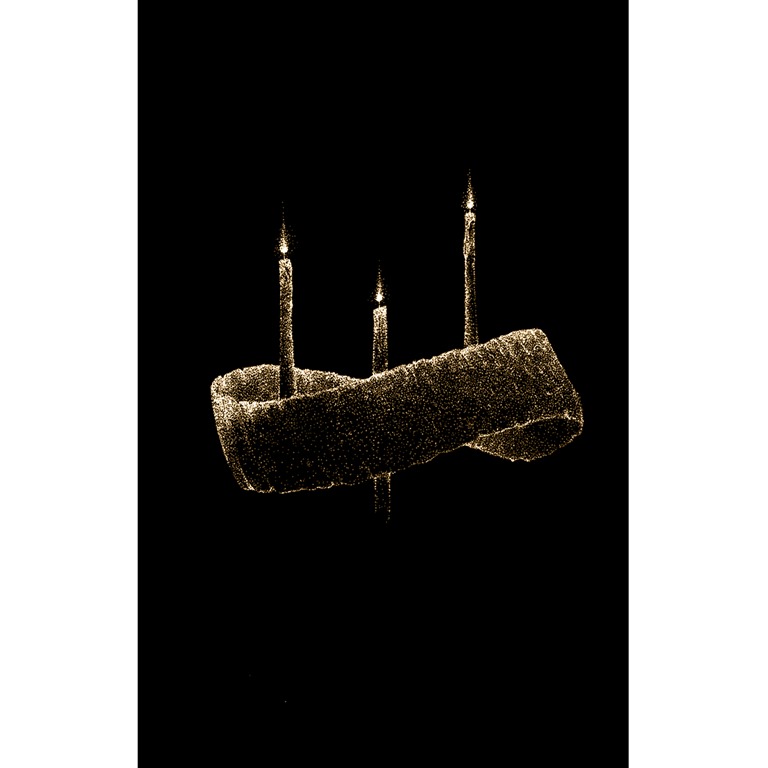
Down, is the answer on this occasion. Down. And further down. Burning the Black Candles is a journey deep underground, and begins with a rapid descent into darkness, and a cold, paranoid space. You can no longer trust your senses: the very air will prod you and whisper painful truths and lies as you flinch and question your mind.

The title track leads the listener deep underground to a dark, dank place. Subterranean earthworks grind, slow-moving, tectonic resonance shuddering. Haunting, disembodied voices echo through distant caverns, echoes of lost souls enacting obscure rituals. It drones, groans, moans and grumbles on for a full twenty-three minutes.

‘A Censer Hanging from Chains’ continues in the same vein: so much so that the tracks bleed not one another in a seeping morass of swirling murk. Dank air gusts thick and heavy through shafts and tunnels, a purgatorial labyrinth.

It’s a low, slow, bowel-churning rumble of a drone that forges the fabric of ‘Smoke Slowly Filling the Chamber’: the title is evocative and the sound dense and suffocating. There’s a noise, far away, echoes of shouting, possibly torture, but it soon vanishes, and all that’s left is the buzzing low-frequency flutter. It’s an oppressive, chest-tightening experience, and by the end of its twenty-minutes, it’s slowed to a shuddering crackle, like a failing heartbeat. Then stops.

The final piece, ‘GinruB’, which isn’t quite ‘burning’ backwards is so barely there ambient it’s practically subliminal. And yet it radiates a dark presence that over the course of twenty-five minutes burrows deeper down, and into the listener’s psyche to unsettling effect. It rumbles, it crackles. It burns. Monastic voices and mournful drones rise and reverberate a way off, but the ceremony feels like a lament, a funeral ode, as the end draws closer. And closer. And then… nothing.

cover

This is it Forever – 14th February 2020

Christopher Nosnibor

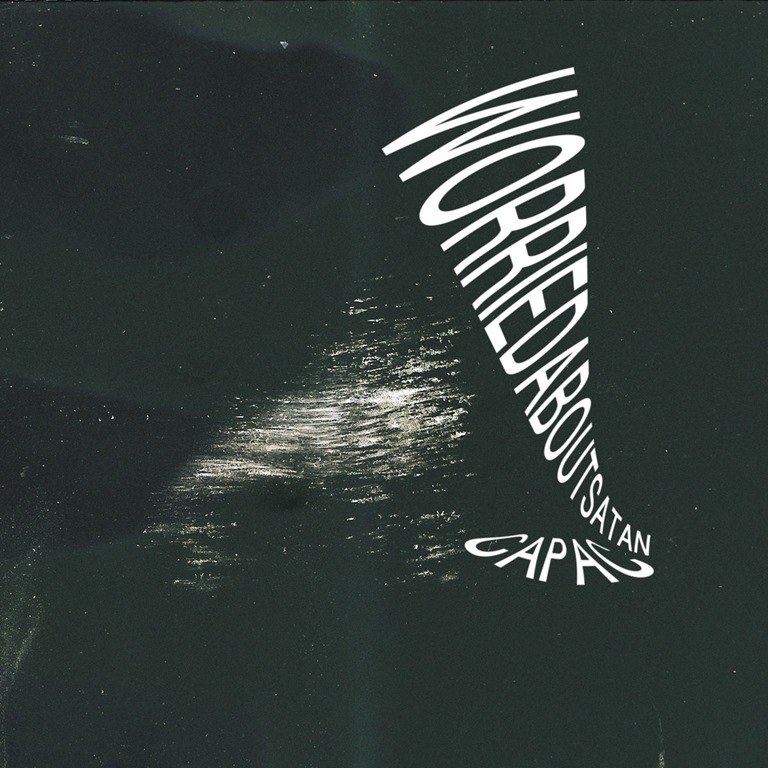
Since whittling down to just Gavin Miller, worriedaboutsatan’s outut has positively exploded, with the latest offering, which Miller describes as ‘quite an experimental little thing’ sees him share a tape – a side each – with Capac.

‘Orion’ is indeed quite experimental, and marks something of a departure for Miller, transitioning through a sequence of passages that rupture forth unexpectedly. At its heart, the piece is appropriately spacey, with squelchy quirts of analogue phase illuminating the smooth, slow-moving expanse of soft drones. It’s dense and atmospheric, and distant rumbles of thunder register like planets colliding way off in other solar systems before heraldic horns and full galactic marching band parades it way through. Gunned down in a blitzkrieg of lasers and noise, leaving an expanse of desolation, a near-emptiness.

Capac’s ‘A Well-Turned Suite’ is altogether darker, an eerie discord creating an ominous atmosphere. The four-piece describe themselves as creators of ‘sonic explorations of the murkier spaces in and between “new music”, and there’s certainly an exploratory quality to this fourteen-minute aural ambulation. At first there is calm, sustained notes that hover and hum for an age, stretching time itself. Gradually, cracks and fissures begin to appear in the smooth surface, and wheezing organ notes begin to twist and disconnect, and over time, the tension rises as atonality takes over. Muffled beats stutter and thump anxiously, and the sloe fade leaves only the whisper of the breeze.

It’s an intriguing release, and the two pieces are unusual and more than contrasting enough to sustain the interest for the duration.

AA

WAS and Capac

Cruel Nature Records – 9th March 2020

Christopher Nosnibor

Cruel Nature clearly aren’t going for a major cash-in with this release, a 12-years-after-the-fact album containing the final recordings of a band who, while building a cult national following during their existence between 2002 and 2008, were predominantly a local phenomenon in their stomping grounds around Gateshead. Which means you may be forgiven for not being entirely au fait with Marzuraan and their work, of if you haven’t been o the edge of your seat and dripping with anticipation for this limited-to-75-copes cassette compendium.

For those not up to speed (and I’ll include myself here), the potted history of Marzuraan is that they started out as the duo of Pete Burn (guitar) and Lee Stokoe (Culver) (bass) before evolving into a full band with the introduction of Rob Woodcock (drums) and Stu Ellen (voice). ‘Taking their cue from bands such as Melvins; Black Flag; Harvey Milk; Earth; Godflesh and Loop, they soon cemented themselves as a pivotal band in the North East’s burgeoning Drone-rock / Trudge-core scene. Revered locally with a strong cult following nationally, they released 3 studio albums, appeared on countless compilations and split records influencing bands such as Bong and Pigs Pigs Pigs Pigs Pigs Pigs Pigs, before disbanding in 2008’. The title, therefore, is on point and self-aware to the max. But t’s never too late, right?

The recordings here – apart from two tracks which featured on an obscure compilation and split 7” back in the day – represent their final cuts, dating back to 2005 and 2006, and they’ve lain neglected in the proverbial vaults ever since.

But if anything, the timing couldn’t be better: what goes around comes around, and heavy music is very much enjoying a renaissance right now, and the north-east scene is also thriving thanks to various acts associated with microlabels represented by Cruel nature and Panurus Recordings.

It’s the seven-minute ‘Morphine Waterfall’ from the Mare Nero compilation that introduces the release, and it’s a dislocated, angular dirge of a tune that plods and trudges disconsolately through barren territory that alludes to early Swans and 90s Touch and Go, along with peer obscuritants like Oil Seed Rape and Zoopsia: it’s grunge distilled and chilled to sub-zero and as it builds toward the end, the guitars become increasingly discordant, while the snarling, rapping vocal becomes increasingly desperate.

It’s Tar and Girls Against Boys that come to mind through the low-end murk of the chunky riff grind of ‘Golden Roman’, and everything is there for a killer tune but the recording, despite having been remastered last year prior to release. It’s as muddy as hell. It doesn’t actually detract, for what I’s worth, and in many ways is integral to the gritty, lo-fi charm.

It very much sets the level: ‘Muckbucket’ and ‘Blowin’ Cool Breeze’ are built around thumping, repetitive riffs, but the guitars are trebly and skew off at divergent angles.

The final track, ‘Moneybox’, which previously featured on a record split with SINK is a doomy trudge that pushes the influence of early Melvins to the fore as it crawls in a sea of howling feedback and a 23bpm percussive trudge that’s paired with a gut-quiveringly downtuned bass. It’s ace. If you can cope with infinite suspense between drum beats and the striking of a single chord, that is.

Ten Years Too Late shows that Marzuraan were both a band of their time, and a band ahead of their time, sounding utterly contemporary now. Maybe it’s time for a reunion…

AA

bandcamp

Hallow Ground – HG2001 – 28th February 2020

Christopher Nosnibor

Electric Sewer Age began as a collaborative project between Peter ‘Sleazy’ Christopherson (of Throbbing Gristle, Psychic TV, and Coil) and Danny Hyde, who continued the project together with John Deek, who subsequently passed away in 2013. It’s perhaps only natural that a sense of bleakness, of darkness, of a certain sense of grief permeates Electric Sewer Age, as a project strewn with loss.

Contemplating Nothingness is the third release by Electric Sewer Age, and the second one that Hyde finished alone, following on from Bad White Corpuscle, originally released in 2014, and re-released in 2016.

Contemplating Nothingness is pitched as ‘a lysergic tapestry culled from the deep end of the collective pop cultural unconscious’. It begins with some spaced-out trippy, doodly interweaving drones and some disorientating analogue latticeworks and shuffling electronic judderings providing the backdrop to some reverby, echoic vocals before transitioning into woozy dance territory, a stammering heartbeat bass beat fluttering beneath shifting layers of disquiet which collide with elliptical elisions to dance tropes.

‘Got some bad news this morning / which in turn made my day’, Hyde wheezes in a distorted Al Jourgensen-style vocal on ‘Whose Gonna Save my Soul’. I try not to wince too hard and the grammatical error and instead focus on the dark atmospherics the song conjured. Moreover, this single line encapsulates the contradictions which stand at the very foundations of this album, and the track itself delves into swampy dark ambience, dominated by a rhythmic wash, with Eastern motifs twisting in and out sporadically amidst a lower-end washing ebb and flow while the vocal, half-buried, is detached, distant.

Like its predecessor, Contemplating Nothingness is dark and difficult. Slow beats that land somewhere between heavy hip-hop, trip-hop and industrial drive ‘Chebo’, a delirious drag of chimes and electronic ululations. ‘Surrender to the Crags’ plunges into dark, dank, murkiness, but retains that eastern vibe that calls to mind both The Master Musicians of Joujouka and the otherness of the Tangiers scene in the 50s and 60s as depicted by William Burroughs.

‘Self Doubting Trip’ brings a dark intensity that will likely resonate for many: it’s claustrophobic and uncomfortable, and stands as something of a highlight in the way it attacks the psyche. You hate yourself enough already, but there’s a slight comfort in knowing your self-flagellation is not unique as you chastise yourself for simply living.

It makes the last track, ‘Dekotour’, feel like an electropop breeze by comparison, the chiming synth tones more early Depeche Mode than anything, but they bend, warp, twist and weave across one another to create a difficult knot of noise, with a thick, gloopy bass rising into the increasingly tangled textures.

There’s a certain nihilism at the heart of Contemplating Nothingness, which extends beyond merely the title and its implications of introverted emptiness, but it’s paired with a less certain and altogether less tangible levity which lifts it above dark ambience and into a space that’s given to contemplation and awakening. While ultimately minimal, there is variety and depth on display here, making for an album that deserves absorption and deliberation.

AA

Electric Sewer Age – Contemplating Nothingness

Mille Plateaux – 6th February 2020

Christopher Nosnibor

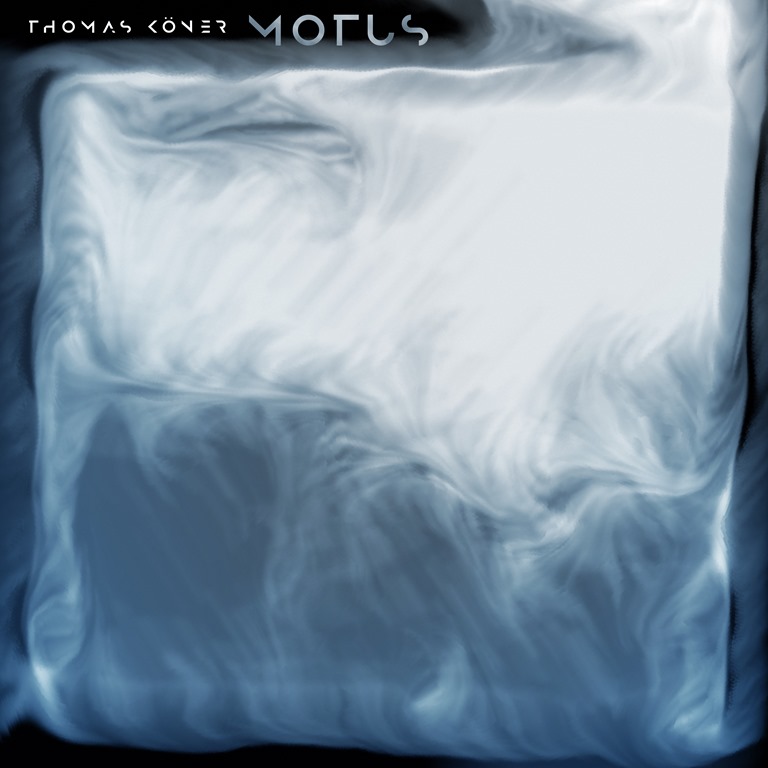
Motus is one of those albums that spreads eight pieces across four sides of vinyl. Most of these pieces are around seven minutes in duration, and manifest as grumbling, low-end analogue electronic instrumentals. Indulgent? Depends on your position, maybe. Audiophile quality? Vinyl addiction? While the pieces which make up Motus don’t immediately intimate a need for attention to detail and there’s no scope for the listener to bask in hearing the rich production values optimally through the medium of vinyl, the frequencies and tones that Köner explores probably do benefit from that full-spectrum vinyl sound, the audio uncompressed and benefitting from the full dynamic range, particularly those low-end sounds, some of which are so low as to almost disappear beneath the average listener’s hearing range.

Motus is steeped in theory, which is fitting given its release on Mille Plateaux, which takes t name – and also its ideologies from radical theorists Gilles Deleuze and Félix Guattari, after whose 1980 text Achim Szepanski’s Frankfurt label devoted to minimal techno, glitch, and other various other experimental electronic forms takes its name.

Köner says of the album that ‘Motus is more (to me) than just music made with analogue synthesizers, it is about attitude, a way of relating to sound and the (e)motion it affects. A lifestyle, where movement, being moved and moving become one. My practice is vibrational, about the skin, touch and surfaces and the gaseous medium in between.

Vibrational it is: these pieces tremble and quiver and grate and grind and shudder and shake and judder and growl.

The first piece, ‘EXTENSION (Attack)’ is a low, glutinous throb, a gelatinous bellyache of a pulsation, rent with crackling, grating treble spurs that scrape at the walls of the cerebellum and scratch the lining of the gut. It’s unsettling, and marks the start of the album’s trajectory, which is unexpectedly linear, and follows a slow descent towards sluggish sludge that’s barely a muddy bubble by the end.

Along the way, ‘SUBSTRATE (Binaural)’ is a low, oscillating throb that expands and resonates over seven brain-bending minutes: there’s something about the more subtle of variations having the most torturous effect, especially when there’s a metronomic pulsing beat lurking beneath, while ‘OSCILLATOR (Luminous)’ reduces everything to an ambulating low-end slip and slide, a muddy melt of trudging bumps. The final cut, ‘SYNTHESIS (Carnal)’, takes things lower and slower still, to the point of near subliminality, slowly winding and grinding into the ground.

Motus is an odd one, an album that undermines itself as it evolves, reducing itself to a lesser sonic amount with each piece. And yet, as the sounds shrinks to little more than a gloopy brown puddle, the effect grows.

AA

MP6_front