Archive for December, 2024

Cruel Nature Records – 6th December 2024

Christopher Nosnibor

The ever-prolific Aidan Baker has been a frequent and recurrent feature on the pages of Aural Aggravation since its inception in 2016, and I’ve been listening to, and covering, his works since a fair few years earlier. He’s an artist who never fails to intrigue, and his manifold collaborations see him revealing new aspects to his creativity.

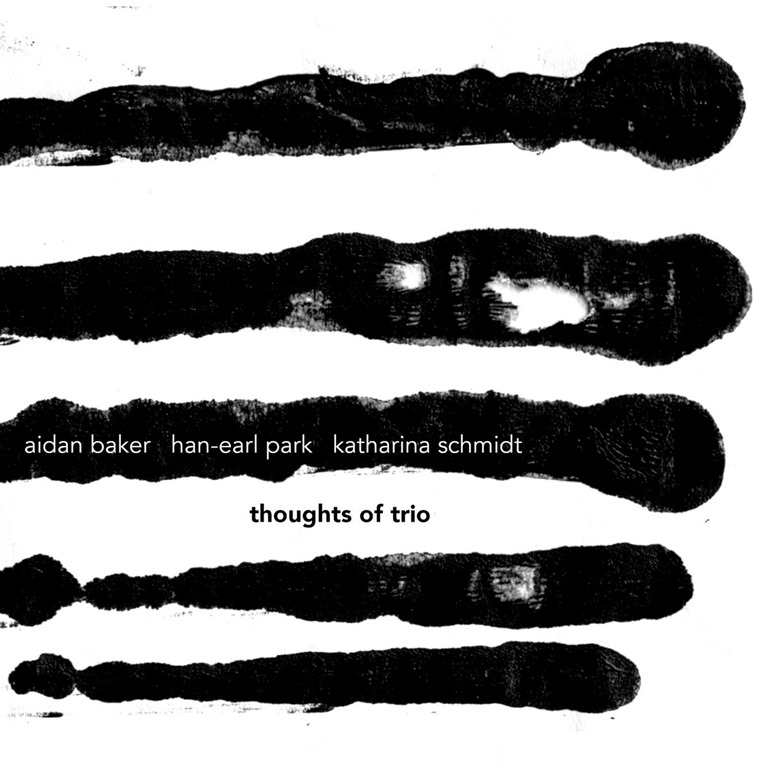
This three-way collaboration was, according to the accompanying notes, ‘recorded live at Morphine Raum in Berlin, Germany on February 21, 2024 by Canadian guitarist Aidan Baker, Korean-American guitarist Han-earl Park, & German drummer/percussionist Katharina Schmidt. The group brings together their respective, disparate musical backgrounds to explore the intersections of ambient music, improvisational (free) jazz, and musique-concrète.’

It’s worth noting just how many live releases of collaborations there seem to have been released recently: in fact, only yesterday I was delving into the dynamics of the latest offering by CEL. This may be a ‘cost-of-living’ matter, in part: economic circumstances really aren’t favouring anyone who isn’t two-homes-and-at-least-one-cruise-a-year rich, and this is a global issue, whereby post-pandemic the disparity between the wealthy and the rest has increased exponentially (a word I’m mindful of tossing about being aware of its actual meaning), and it’s never been a tougher time to be a musician, unless you’re Taylor Swift, or Ed Shearan or Elton John or Coldplay… you get the idea. And it’s certainly not (only) because of the shit streaming revenues paid (or not) by Spotify. Studio time is expensive: getting together for intercontinental collaborations is expensive… and when it comes to it, it’s not always easy, or even possible, to recreate the energy, the frisson, the immediacy of a live performance in the studio.

And so here was have Thoughts Of Trio, which captures a set from the start of the year, mastered as eight segments, simply titled sequentially ‘TOTone’ to ‘TOTeight’. The arrangements are often sparse, and combine nagging, regular repetitions with erratic irreglularities: ‘TOTone’ sounds like a pulsating wave or a slow alarm simultaneous with a game of ping-pong and some urban foxes foraging through bin bags. I mean, it doesn’t really sound quite like that, but the different elements belong to different places, and while it does work, it does not feel like a composition in any conventional sense. And this is very much the form of the album: there are no overt structures, there is no sense of cohesion or linearity.

But where Thoughts Of Trio evades the pitfall of being a discordant disaster is in just how they somehow keep things together, with an absorbing, if loose, sense of rhythm, which is both absorbing and bewildering, but, however subtly, ever-present. ‘TOTthree’ features springing guitar twangs and lurching grumbles, but a distinct sense of almost abstract rhythm. Clanking rattles and slow-bending, woozy drones hover and slowly wilt, with scrapes and subterranean bumps and nudges unpredictably rising and falling.

There’s no obvious shape to any of this, but amidst a set of pieces which are five or six minutes long, the eighteen-and-a-half-minute ‘TOTseven’ stands out a dominant track on the album, although one suspects that for those who were actually there, it was difficult to differentiate the pieces, which tend to bleed into one another. It rumbles and hums, tense and dense, simmering, without ever breaking through the tension that holds down the surface.

There’s little to no audience noise, no applause in the interludes or intersections, which works well in terms of the overall listening experience, but means that this doesn’t sound or feel like a live album. That’s by no means a criticism, and again illustrates how live recordings can replace studio recordings for so artists. This simply doesn’t sound or feel like a live recording, and that’s not only due to the lack of audience noise, but the way everything flows.

For all of the discord, the twists and knots and disparities, Thoughts Of Trio comes together somehow. While it’s is by no means overtly, jazz, Thoughts Of Trio sits between jazz and ambient, with an experimental / avant-garde. Ultimately, it does its own thing.

AA

AA
a4098448952_10

Gagarin Records – 6th December 2024

Christopher Nosnibor

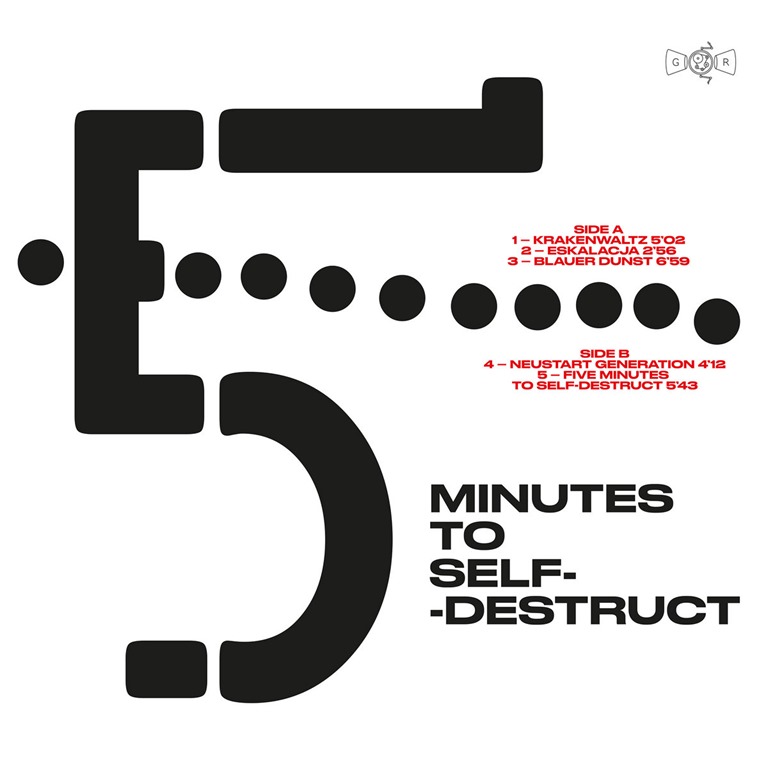
You might be hard-pressed to call CEL a supergroup, but Felix Kubin has been creating sound here, there, and everywhere for a long time now, and Five minutes to self-destruct is definitely a coming together of established creative forces, containing as it does five recordings of live tracks performed by longstanding Kubin and longstanding collaborator Hubert Zemler, remixed by Warsaw sound engineer Jan Wroński.

And the thing about creative collaborations is that they often rely on spontaneity, immediacy, the frisson between the individuals in proximity, feeding off one another in the moment. And so it is here, as the accompanying notes set out: ‘The expressiveness of these recordings is evident not only in their unbridled live energy, which can hardly be reproduced in the studio, but also in a musical nervousness that sets itself apart from the current wellness folklore of the modular community. The pieces gather in their DNA the paranoid plasma of cultural unease, chaos and upheaval.’

To make a small sidestep, we hear endless decrees that employees need to return to the office in order to foster the spirit of collaboration and all the rest. We know that this is bollocks, and is simply about working the instruments of control. Collaboration and the coalescence of energy for creative ends is not something which cannot be forced, and it happens, regardless of distance, time, and space, given the right connection and chemistry. Hearing the performances on Five minutes to self-destruct, it’s immediately apparent that this is not something that could ever be created by desire or will alone.

As the accompanying bio notes, ‘The expressiveness of these recordings is evident not only in their unbridled live energy, which can hardly be reproduced in the studio, but also in a musical nervousness that sets itself apart from the current wellness folklore of the modular community. The pieces gather in their DNA the paranoid plasma of cultural unease, chaos and upheaval.’

The title track ‘Five minutes to self-destruct’ is a quote from Michael Crichton’s sci-fi classic The Andromeda Strain, which describes a research team’s fight for survival against an accidentally triggered self-destruct mechanism, underpinned by trigger impulses and increasing panic.

My own experience of the modular community may not be on quite the same scale or the same higher circles as theirs, but it does feel primarily the domain of the middle-class, middle-aged white male these days, and there’s a certain air of ease and the satisfaction of hobbyism about it. Needless to say, not so here. There’s a tension that runs throughout the entirety of the release. ‘Krakenwaltz’ cartwheels and loops in jittery circles, head-spinning rhythmic cycles with no small degree of attack, with some sharp, aggressive snare sounds and a frenetic, frantic undercurrent which grows increasingly disorientating over its near-six-minute duration.

‘Eskalacja’ is dominated by hectic percussion and a whirl of fairground bleeps and toots running in ever-tighter concentric circles. It some respects, it calls to mind the frenzied looping and wild, vaguely manic excesses of early Foetus 12” singles, seeing just how far they can push the concept, and themselves in the creation of hyperactive sound.

The seven-minute ‘Blauer Dunst’ which sits as the album’s centrepiece marks a distinct shift in tone and texture, a rumbling dark ambient piece that invites comparisons to some of the more abstract works of Throbbing Gristle. It predates the rest of the set by almost four years, having been recorded in October 2020.

It’s back to more upbeat, stomping percussion-led synth work on the DAF-like ‘Neustart Generation’ – but don’t mistake upbeat for uplifting: it clatters and bangs with a clipped, regimented, Germanic feel, and the grooves are taut and tense, and it’s simmering tension which crackles beneath the lumping, shuffling, organic rhythms which underpin the sparse, tetchy title track. A couple of minutes in, a loping percussive cycle breaks out and the repetition of this and the dominant synth motif, amidst a swell of extraneous sounds – samples, sirens – makes this one of those tracks where you can feel your blood pressure increasing as it progresses and the pace quickens to a blur. It ends before reaching the point of inducing an aneurysm, and the assurance to the applauding audience, “We’re still alive, it’s ok,” at the fae injects some unexpected humour to proceedings.

AA

a1852422406_10

After three albums, the pieces of the puzzle fit, and Havukruunu, the favourite band of the sensitive and sorrowful returns with a vengeance to blur the line between the real and unreal. The sorrowful guitars of Stefa and Bootleg-Henkka draw threatening dark shadows on the wall, Kostajainen’s drumming bombardment pulses like embers of a dying fire in the hearth. All the while, Humö’s bass guitar is clanking and wailing like the icy wind rattling windows and banging walls, as Stefa roars and channels messages from the netherworld or preaches wisdom of ancient days, backed by a choir.

Lords of Hell smile approving as the flames of hatred and cunning of their beloved sons drowns a dying old world, and heart of the earth trembles the birth of new and weird. Havukruunu is the spirit of freedom, harbinger of oblivion, and it tells you: FLY, YOU FOOLS!

Witness Havukruunu’s majestic new video for the first single and title track of the upcoming album Tavastland on Svart’s YouTube channel now:

Havukruunu’s new album TAVASTLAND tells the story of a small, strange people.

TAVASTLAND tells how in 1237 the Tavastians rose in a rebellion against the church of Christ and drove the popes naked into the frost to die. TAVASTLAND reveals our fathers’ centuries old sins and lies of consolation. TAVASTLAND speaks of him, who has become a prisoner of his home, alienated from the land of the forest and is now afraid of the dark with all lights on, surrounded by his smart devices. TAVASTLAND tells about the freedom we lost. TAVASTLAND haunts its listener to the grave, and I will personally open that grave one bleak night and steal the fading light of your sempiternal soul.”, says Stefa.

8RbbSQKw

Photo: Heidi Kosenius

Christopher Nosnibor

‘Do your research’ has become an admonition in recent years, mostly since the advent of COVID, and it’s probably sound advice when it comes to picking gigs. But a mate who had tickets alerted me to this one, and as it was pitched as a night of hardcore and the poster was bristling with illegible spiky writing, I thought it would be worth a punt. It’s healthy to be exposed to the unknown, to new artists and acts which may exist beyond the domain of your comfort zone. If you don’t like them, what have you really lost? I elected to do precisely no research in advance, and to take the bands as they came, with no expectations.

In the event, none of the acts were hardcore in any sense I’ve come to understand the term, and we’ll come to this – in particular Street Soldier – presently, but first, there were five other acts on this packed lineup.

With it being an insanely early start, arriving at 6:40, I only caught the last couple of songs by Idle Eyes. They presented a quite technical sound, with a sort of progressive instrumental metal feel. They announced the end of their set that they’re on the lookout for a singer. I’m not entirely convinced they need one, but it would likely broaden their audience potential.

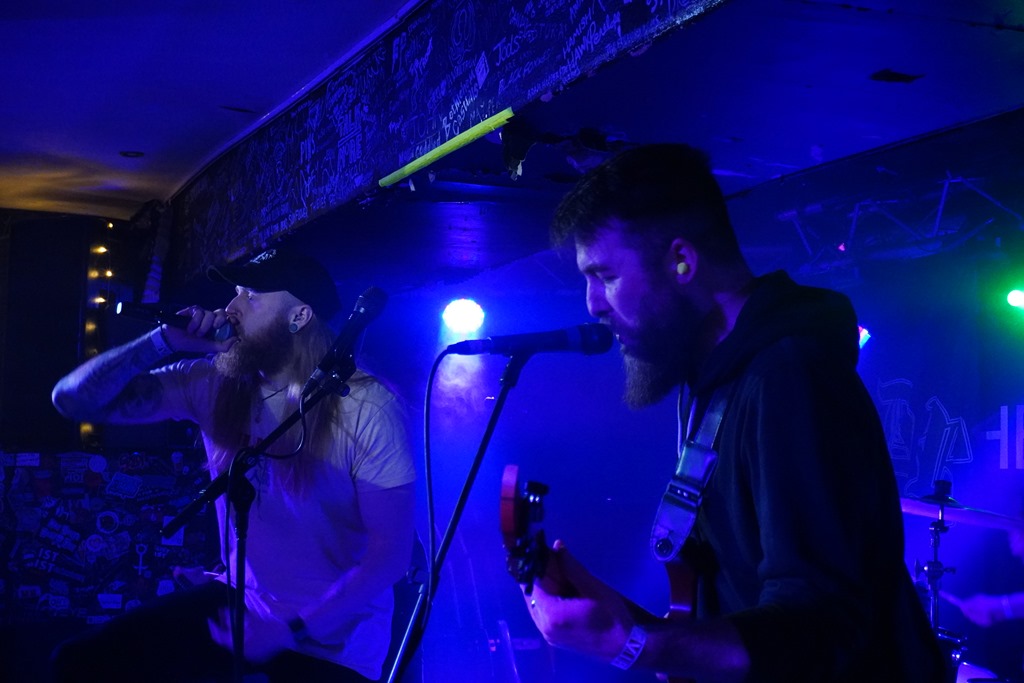
Next up, Theseus opened with samples and atmosphere… And then went heavy and the headbanging and moshing – or solo slam dancing – started. With 5-string bass and two 7-string guitars, they bring some chug and churn. The songs have a fair amount of attack, but their sound is fairly commonplace metalcore, the look being regulation beards and baseball caps. Fine if you dig it, but it’s all much of a muchness.

DSC00697

Theseus

Miško Boba stand out, being the only female-fronted band – and indeed, the only act to feature a woman in their lineup – and also the only black metal band of the night. My mate shrugged and said that he simply didn’t ‘get’ black metal or its appeal, and it’s easy enough to see his point: as a genre it has a tendency to be pretty impenetrable. Misko Boba only accentuate the impenetrability with lyrics in Lithuanian, and they’re dark, the songs propelled by double pedal kick drum. But while black metal conventionally shuns any kind of studio production values, Misko Boba sound crisp and sharp through the PA, and are straight in, hard and fast, with raging guitars and demonic vocals. Epic blackness, and relentlessly fierce, and above the reasons mentioned previously, they’re a standout of the night for quality.

DSC00702DSC00717

Miško Boba

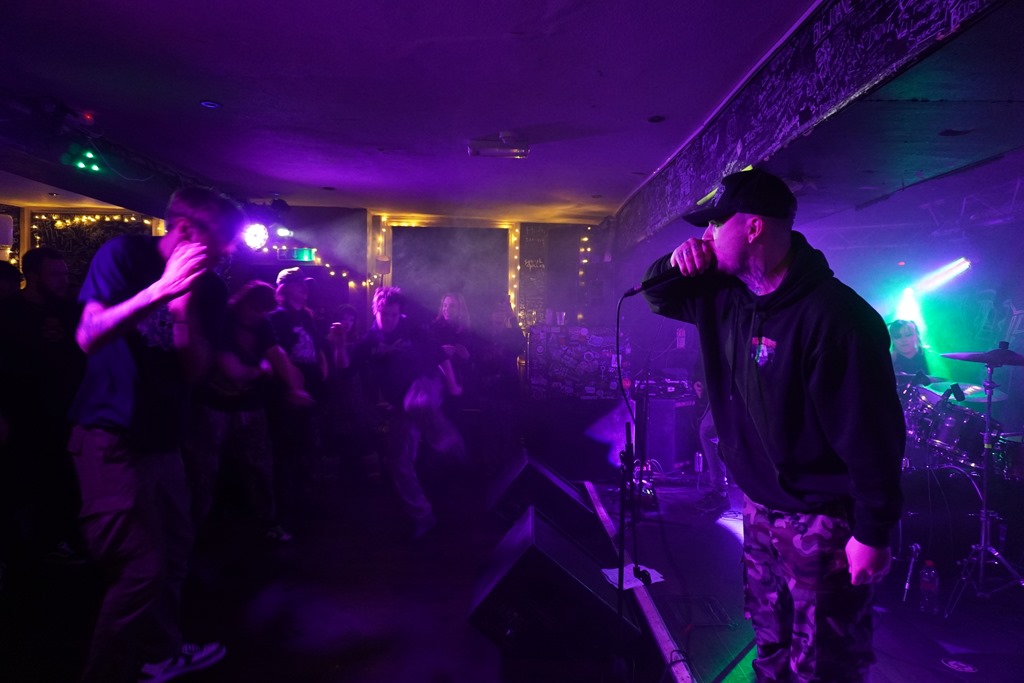
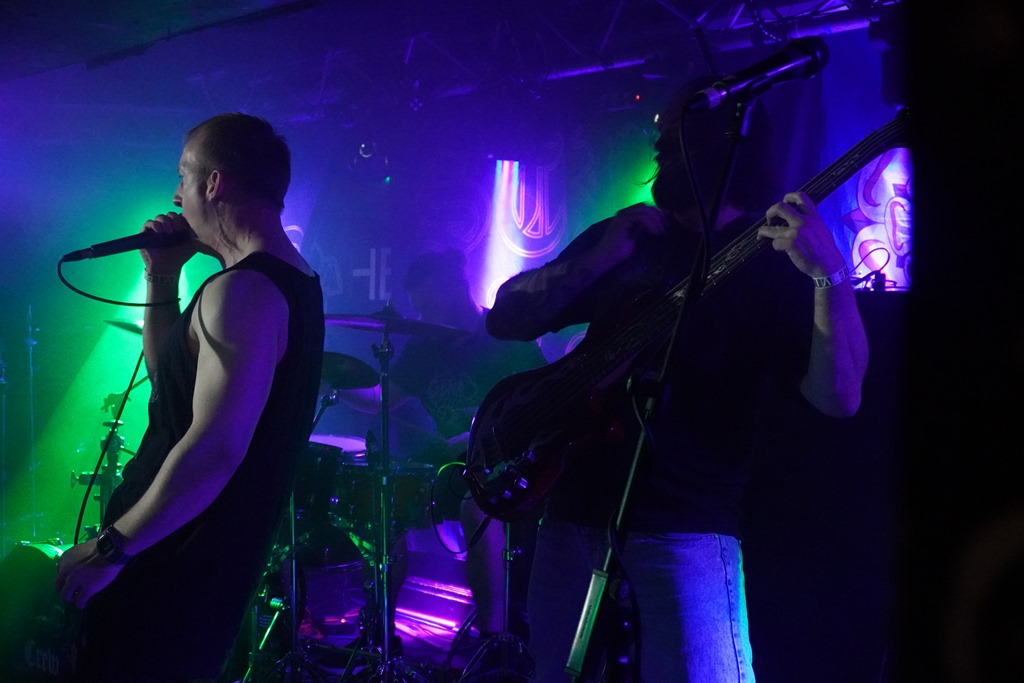
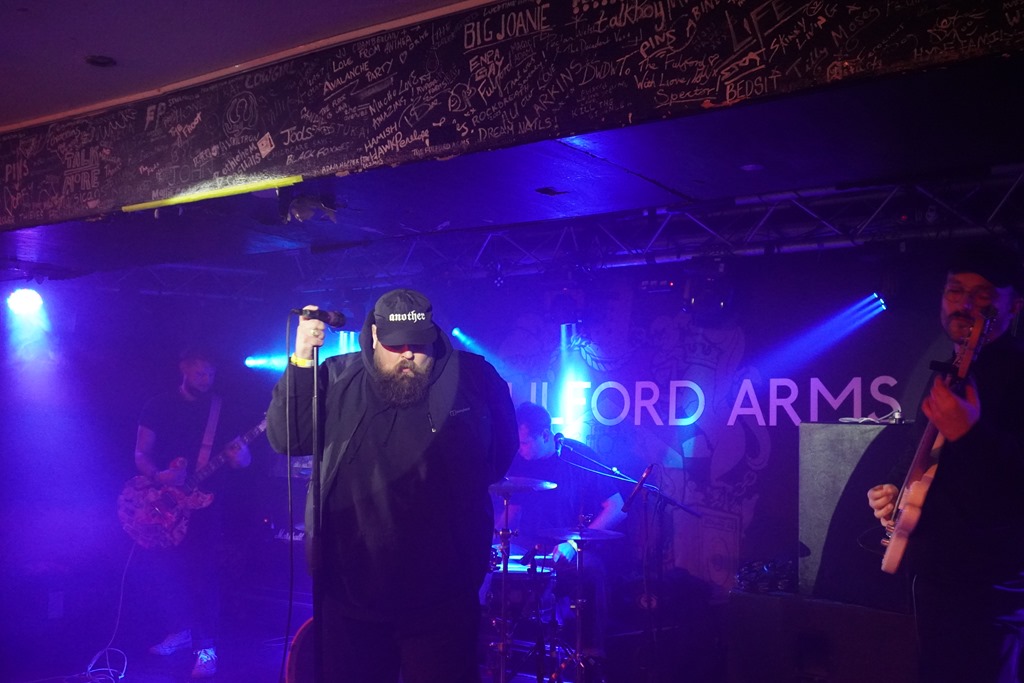
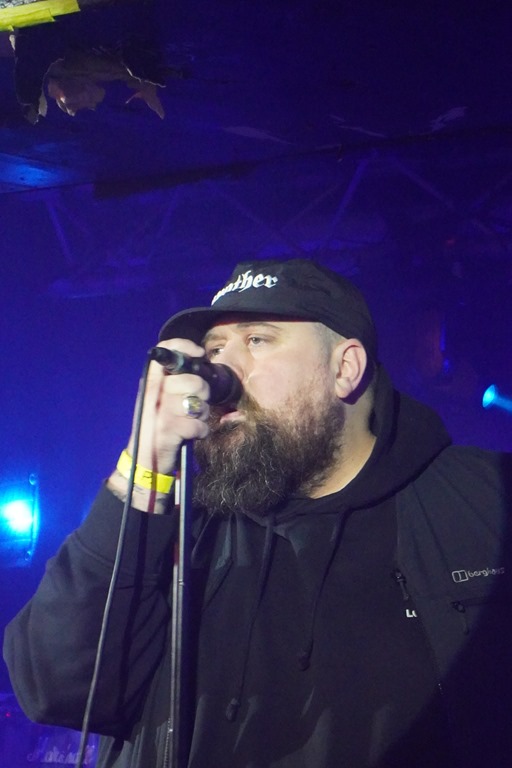
Final Words’ bassist has a hint of Derek Smalls about him, but with a 6-string bass and the biggest earlobe holes I’ve ever seen. The audience member who looks like he’s here for East 17 and keeps busting moves which are more like bad street dancing is bouncing around while they’re still setting up. They may have the grimy industrial hefty of early Pitch Shifter, but ‘motherfucker’ seems to account for sixty percent of the lyrics, and in terms of fanbase, they’re less industrial and more tracksuit and camos wearing, kick-the-crap out of one another metal and it’s carnage in the crowd. By now, the place is rammed, but there’s a good ten feet between the stage and the first row proper, with people staying back to avoid risk of harm from the increasingly wild scrummage down the front.

DSC00734

Final Words

It may have been after their set that the bar staff were out mopping the floor after what I had assumed was beer spillage, but transpired to have been the result of a couple of punters standing on a radiator to get a better view, resulting in the radiator coming off the wall and water from the broken pipes soaking the floor. And then of course, they legged it. It would be this story which would eclipse the night on social media and even make local press. It’s always sad when the actions of a small minority eclipse the representation of the majority. I don’t want to dwell on this, but by now the space near the stage was a high-risk area, and anyone with a camera was cowering in the small safe zone either side of the stage – which meant pretty much shoulder and ear to the PA stack.

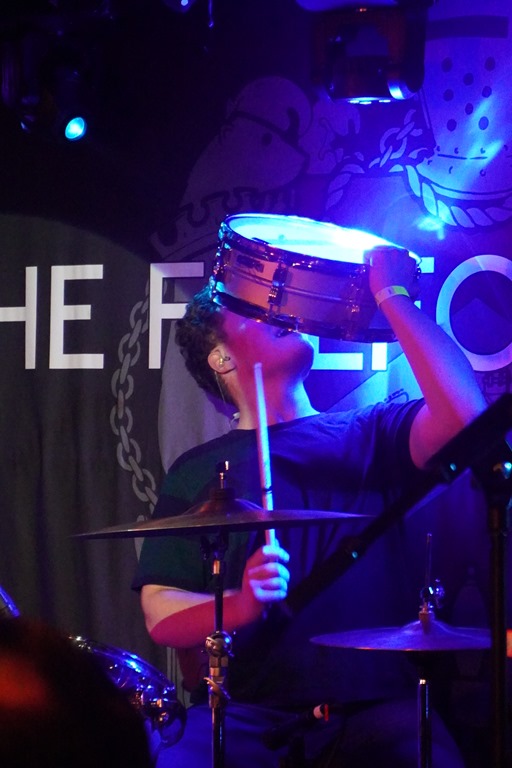
Colpoclesis soundcheck the vocals with a handful of guttural grunts. They’re still setting up the drum kit ten minutes after they’re due to have started. Proportional to the stage, the kit is immense. It’s a lot of kit to sound like the click and rattle of a knitting machine. But they are, indisputably heavy, and sound nothing like the vocalist looks, blasting out brutal grindcore. Between songs, they sound like affable Scousers, then announce the songs in a raw-throated roar. There’s something amusing about this, in that stepping into the song they suddenly switch into ‘hard guy’ mode. Inflatable clubs suddenly proliferate around the venue and comedy violence ensues, followed by a circle pit.

DSC00760

Colpoclesis

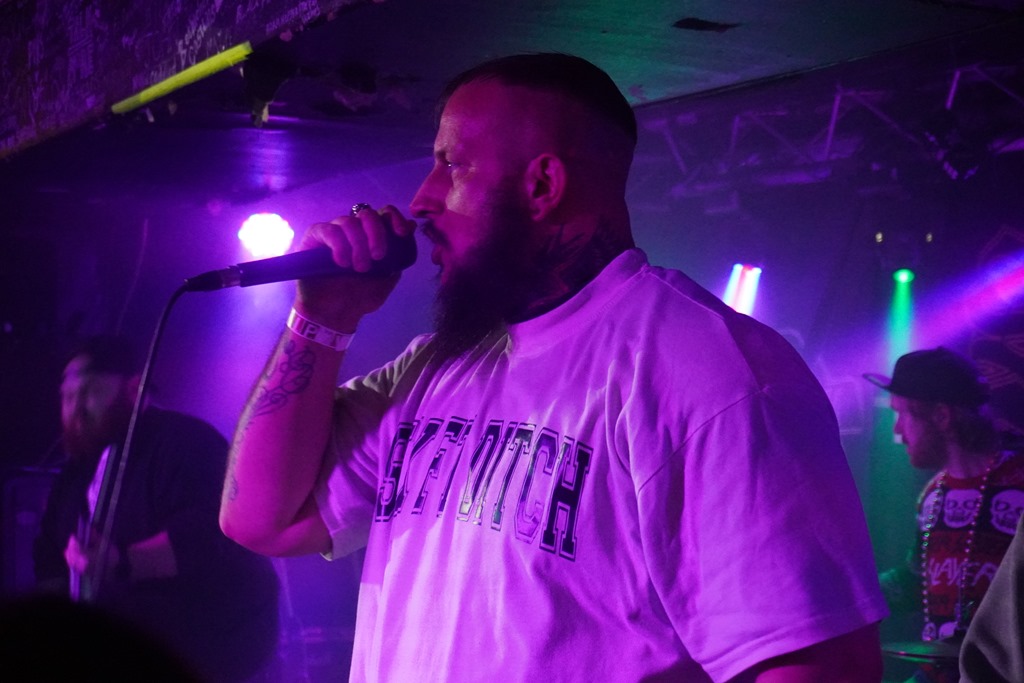
Street Soldier, I soon learn, are exponents of a new – at least to me – kind of hardcore. Alternating between quick fire tap and guttural metal, they whip up absolute carnage. A scan online suggests there is no such thing as tracksuit metal, but perhaps there should be, and defined as ‘grunty metal by people in vests and trakky bottoms and baseball caps shouting “c’mon, motherfuckers” a lot while people windmill and karate kick the crap out of each other with Nike trainers’. “I wanna see violence, I wanna see blood!” they exhort, pumping the crowd into a frenzy.

DSC00769DSC00787

Street Soldier

It’s difficult to put a finger on precisely why this doesn’t feel comfortable, but having recently extolled to a friend how metal gigs often felt like the safest of places, where people were ultra-considerate and kind to one another, united in their outsiderdom and sense of society being wrong. Sure, as with other moshpits, the fallen got picked up, but not before a few punches and blows, and however playful, I felt an undercurrent of senseless brutality, the tang of a lust for violence intermingled with the smell of sweat, and there was something dystopian, Ballardian about the spectacle. Having given up on fighting the man, Street Soldier,– as their Facebook page puts it, in ‘SPITTIN SHIT MADE STRAIGHT FOR THA PIT’ have adopted the self-aggrandising tropes of rap, and with cuts like ‘Middle Fingaz’, ‘Nonce Killaz’ and ‘Nah Nah Fuck You’, they appear to espouse anti-societal nihilism, but in a form that’s more aligned to rap than metal, while encouraging crowd behaviour which is more akin to blood lust and a reimagining of Fight Club than unity. Given the current state of things, it’s not that difficult to comprehend their appeal, especially to the under twenty-fives: smashing the living shit out of themselves and one another is probably far more appealing than whatever dismal prospects the future offers. But this is a bleak and nihilistic entertainment, and it sort of feels like torture dressed as fun.

’I Choose Violence’ is the first single from a forthcoming new album by the cult US act Psyclon Nine. Melding elements of Industrial Rock, Metal, Deathcore, Ambient and Trap, band mastermind Nero Bellum states: “I specifically set out to break as many genre limitations as possible with this song, while staying true to the concepts and imagery that Psyclon Nine evokes. Lyrically, it’s a reflection of the world we live in. An anthem for the unseen and unheard.”

Listen here:

AA

cf4e8f026fc2406d552a95233cddf22a6a256b0a

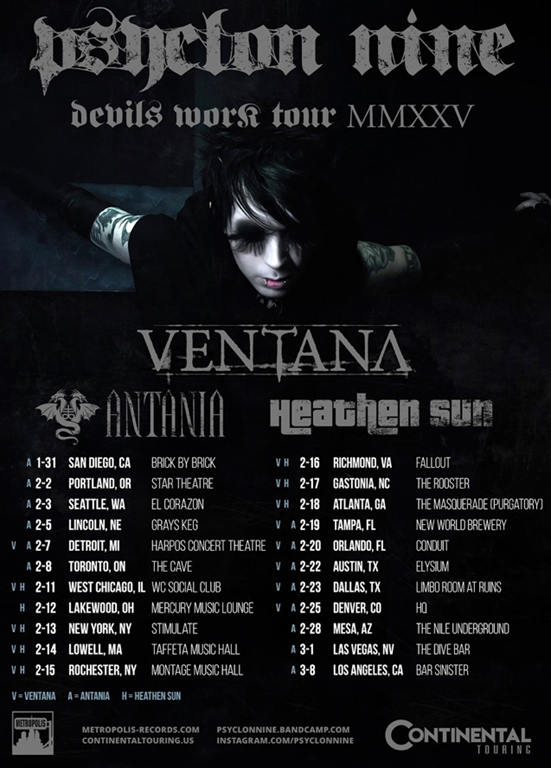
Psyclon Nine will headline a 22 date North American ‘Devils Work’ tour commencing on 31st January 2025, while there are plans to tour Europe later in the year.

AA

7e3efa0bcc4c6382544d10fa29386054eadb6d6b

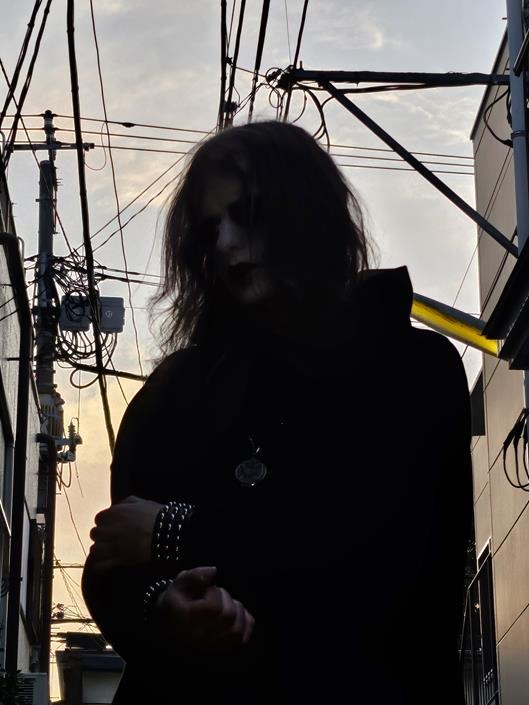
‘Dröm Sång’ emerges as a poignant ballad from Këkht Aräkh, blending melancholic melodies with an introspective narrative. Rooted in a draft originally conceived during the Pale Swordsman sessions in 2021, the song carries a familiar resonance, particularly reminiscent of the track "Swordsman" from the same album. However, its creation followed an unconventional path, with recording taking place under spontaneous, often cramped conditions across Berlin, Germany, and Tokyo, Japan.

The accompanying music video was shot entirely in Tokyo and features scenes filmed by Nick from the electronic duo IC3PEAK and additional footage self-recorded by Dmitry, all using a handheld camcorder to create a raw, personal aesthetic.

Dmitry explains:

“There’s a deeper reason behind choosing Tokyo as the location for the music video, beyond my admiration for Japan. This particular place is often idealized by people around the world who have never lived there, making it a perfect fit for the song’s escapist theme. The song reflects on life, with all its hardships and evils, as nothing more than a dream from which you’ll eventually wake into a peaceful world.”

AA

ka_drom-sang21-9903cf045103cf3c

Photo credit: Nick Kostylev (IC3PEAK)

Christopher Nosnibor

My review of JUKU’s debut, at a Sunday matinee show last summer, continues to receive significant hits, and while they have played only a limited number of shows in the interim, it seems their reputation has been growing without their needing to take to the stage. It does mean that, personally, I’m keen to see them whenever the rare opportunity arises, and April seems like a long time ago.

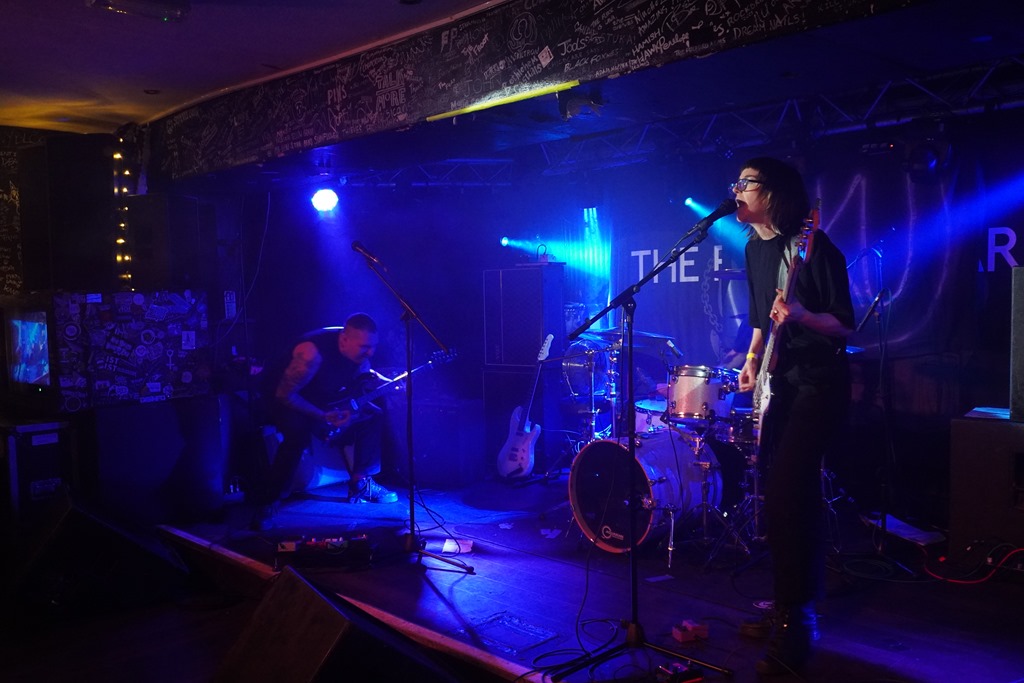
They don’t disappoint: this is one tight, loud, band, and they pack the songs in back to back, no chat, no pissing about tuning up, no stalling to mop brows or regain breath. There isn’t a weak song in their half-hour set, but there are some standouts: ‘Pressure’ has the gritty drive of Motorhead and ‘No Fun’ is, actually, much fun. The set packs riffs and hooks like The Ramones on steroids… the lead guitarist is understated, focused, while on the other side of the stage, Dan is going ballistic, stomping and thrashing every ounce from his guitar like a man possessed. Sonically, they create contrast, too, with crisp, twangy tones cut through the huge, distorted roar blasting from Dan’s amp. They’re practically faultless, and the set ends in a ragged howl of feedback.

DSC00599DSC00606

JUKU

When the opening act is this strong, it’s a guaranteed good night either way: the rest of the acts are going to have to be bloody good to top them, in which case you’ve got a run of belters, or if they don’t match up, you can go home early knowing you’ve seen the best band of the night by getting down early. Tonight proves to be a bit of both.

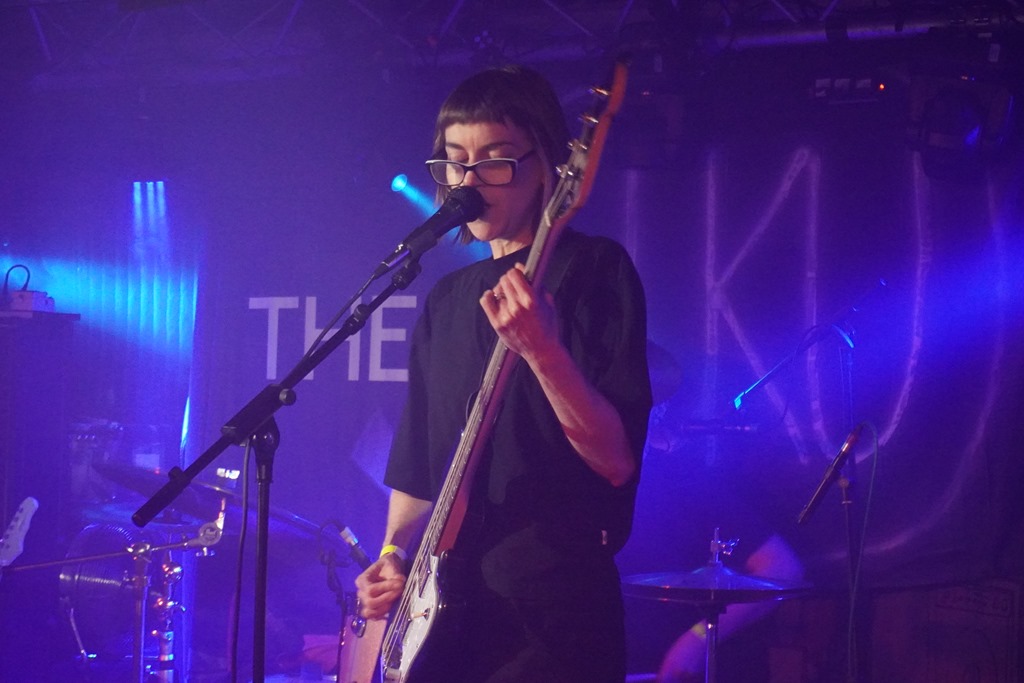
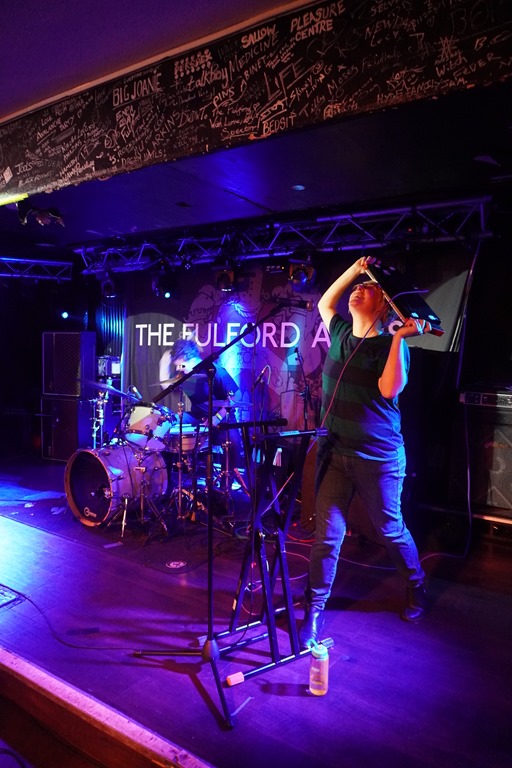
New England trio Perennial – comprising guitar, synth, and drums, with dual vocals, are here on their first UK tour in support their third album, Art History, released over here by York-based label Safe Suburban Home Records. Sporting matching striped tops, they look vaguely nerdy, and unless you’ve heard or seen them before, nothing can quite prepare you for their wild stage act. Chelsea (keyboards, vocals) windmills and bounces all over, hyper as hell, and Chad Jewett, who’s a big fella, is a blur of movement, jumping and lurching and hurling himself and his guitar around, almost toppling his cabs just a couple of songs in. They positively crackle with energy, and are clearly absolutely loving every second of what is a remarkably well-conceived and structured set. They play US punk rock – or ‘modernist punk’ as they call it – with wit, and a keen sense of humour, delivering entertainment amped to the max. They clearly had a fair few fans in, and there was some exuberant dancing down the front. Definitely one of those bands that, if you get the chance, you should see.

DSC00661DSC00654DSC00650

Perennial

Moose Knuckle showcase a solid sound, and some swagger, but the bar has been set incredibly high. They don’t have nearly as much energy as either of the two previous acts (although more every than Perennial would probably cause a power cut across the entire city), and they’re simply not quite loud enough or otherwise sonically powerful to get away with such a static performance. On another night, or had the bill been reversed, they’d have been decent enough, but they’re very much a meat and two veg rendition of punk, with most of the songs’ lyrics involving the repetition of a single line about forty times. And they’re not exactly inspired lines, either: ‘I need my dope, dope, dope, dope, dope,’ and ‘Dead! Beat! Daddy!’ is about the level of lyrical quality, the level of the lyrical quality, the level of the lyrical quality, the level of the lyrical quality.

DSC00669DSC00679

Moose Knuckle

Starting the set by calling everyone forward, only for them to all have to step back again to make way for the videographer prowling back and forth the full width of the stage a t least twice every song kinda backfired a bit, too.

Ultimately, there was nothing really ban about their set, it just lacked inspiration and energy in contrast to the previous acts.

The format of the night worked well, though: three bands, half an hour each, fifteen-minute interludes, 10:20 finish. Bish, bash, bosh. Perfect for midweek, and y’know, two outta three ain’t bad.

Mortality Tables – 22nd November 2024

Christopher Nosnibor

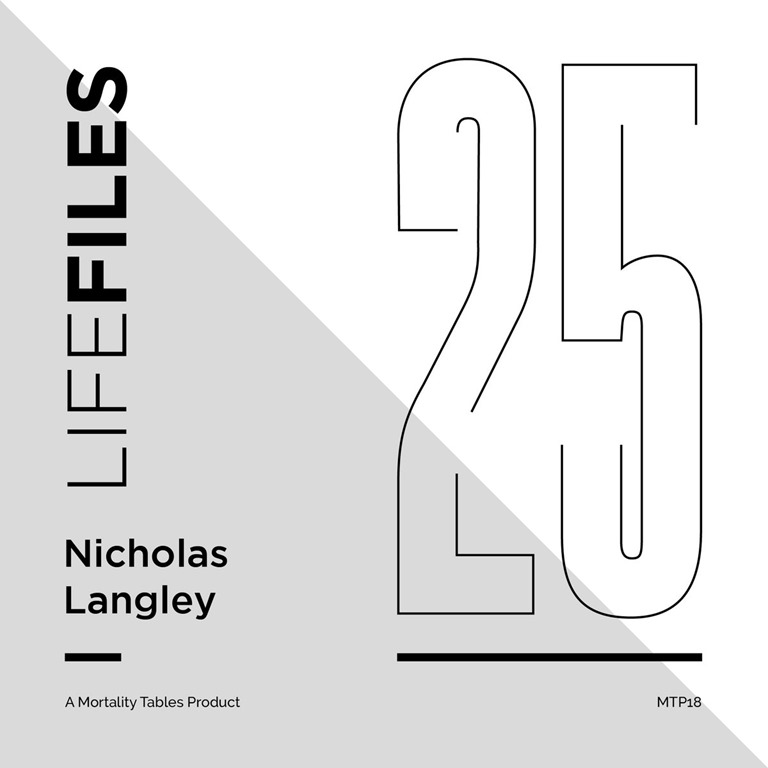
Matthew’s Hand by Nicholas Langley is the twenty-fifth instalment in Mortality Tables’ LIFEFILES series, now in its third season. The principles of this ongoing project are simple: ‘Recordings of places, people, objects, moments in time, environments and quotidian events are shared with a range of artists working across different disciplines. Those artists are free to respond to the recordings in any way they like.’

Simple principles, but in actuality, giving free reign to the artist to respond to the source material offers near-infinite possibilities. And so it is that Nicholas Langley presents to six-minute pieces in the form of ‘Milton Keynes University Hospital, 3 April 2024’ and ‘Milton Keynes University Hospital, 17 April 2024’.

Label head Mat Smith provides the following context for the source material for this release: ‘On 2 April 2024, I fell over while walking near Smithfield Market on my way to work, and broke my hand. The two recordings used by Nicholas were both made at Milton Keynes University Hospital – the first while waiting for an x-ray that confirmed the fracture the following day, and then two weeks later while in the waiting room for the cast to be removed.’

I’ll spare the tale of the time I fell and broke my ribs and shredded my hand one night, but shall move to the point that for some of us, the reaction to an event which contains an element of shock and even mild trauma is to document it. Having photographed my bleeding palm, and recorded the horrendous roar of the oxygen machines which were installed in our living room for the final nights my wife was with us, I can only conclude that recording these things creates a separation which enables us to process them as being ‘media’, for wont of a better term, rather than the painful reality of our actual lives. I certainly prefer this rationale to the idea that it’s a sociopathic impulse to revel in experiences of trauma and pain.

‘Matthew’s Hand’ captures the ambient chatter and clatter of a waiting room, at least initially, before this fades out to be replaced with something that one might describe as echo-soaked abstract synth jazz. Langley applies the principles of dub reggae, but without the percussion. The sonic experience is in some ways like the lived experience of the waiting room, as the chatter dims into the distance and your head slowly swims in a sea of overwhelmed strangeness as you wish you were elsewhere.

Someone recounts the grim tale of someone who was close to a mortar explosion at the beginning of ‘A Mortar Went Off Near Him’, before heavy elongated, humming drones enter the mix, and Langley builds a dense soundscape of whistles, hums, and whooshes which owes as much to early 80s industrial as it does to more contemporary dark ambience. A monotonous throb emerges, and it’s overlaid with scrawls of feedback and sharp, needling treble. Ultimately, little happens over the course of its seven-minute duration but somehow, you feel the effect.

Taken together, the two tracks have an impact which somehow extends beyond their sound alone.

AA

a1808514016_10

10th December 2024

Christopher Nosnibor

Less than a fortnight after Yorkshire-based collective Papillon de Nuit unveiled their first track, ‘Scarlet’, they present to the world the second fruits of their recent recording sessions, mastered by none other than Tom Woodhead, formerly of ¡Forward Russia! at Hippocratic Mastering. While ‘Amber’ continues the colour-themed song titles, they promised something different, and, indeed, that’s precisely what they’ve given us.

‘Scarlet’ was a somewhat folk-infused tune with a rolling rhythm: in contrast, ‘Amber’ sits more in neoclassical territory, in terms of composition and arrangement, with a lone piano providing the primary instrumentation; around the sung segments are spoken-word poetical passages. Again, Stephen Kennedy leads, but there is a counterpoint in words composed and spoken by Edinburgh-based polyartist Monica Wolfe, and the interaction between the voices and modes of delivery is engaging. This is not rock, or pop, or folk, but unashamedly music as art, and as compelling as it is beautiful.

AA

a1612744261_10