Archive for November, 2024

German Synth pop trio BEBORN BETON unveil the video single ‘Ticket to the Moon’, which is a cover track from the ELECTRIC LIGHT ORCHESTRA album Time and taken from the forthcoming new EP To the Stars. The EP has been slated for release on November 22, 2024.

AA

BEBORN BETON comment: “The song ‘Ticket to the Moon’ was originally released by the British rock band Electric Light Orchestra on their 1981 album Time, which is one of our favourite records from that era”, vocalist Stefan Netschio writes on behalf of the trio. “We have been thinking about recording a track from that album for quite some time. Given the context of the EP, we felt that the appropriate moment had finally arrived. Alain De Grox aka Synth Heaven once again supported us in the creation of the video. He uitilised amazing excerpts from the CGI Animated Short ‘Ad Astra’ with kind permission of these ArtFX School students: Lauric Bonnemort, Clementin Massin, Pierre Vallerich, and Florian Coquaz. We would like to express our sincere gratitude to everyone who made this project happen.”

AA

1e7eee24-ddc3-1466-b181-4047f9cee0e6

Christopher Nosnibor

It’s easy to become complacent about the stream of bad news of endless pub and music venue closures, until it happens on your back door, in a way that directly impacts your social life. It’s been a really bad couple of weeks when it comes to establishments in York: first, we learned that the property owners of The Victoria Vaults have decided to close a pub of 130 years standing in order to flog it off, presumably to be converted into flats, and The Maltings, a city centre pub of national renown, is to be converted to an Irish Bar following the retirement of the previous owners who had run it for over thirty years. This follows on the heels of the revelations that The Roman Bath, another city-centre pub popular for live music, is to be rebranded as a sports bar. And on top of all this, there’s the result of the American election to digest. Right now, I can’t really contemplate, let alone dwell on, this.

We all have our ways of dealing with bad news. Me, I like to immerse myself in the experience of live music. For some, uplifting tunes in the form of buoyant pop or something singalong and anthemic is the remedy. Personally, I simply find joy in the experience, immersing myself in the moment and revelling in music that’s good. The Bricks being dependable, as I’ve reported an almost embarrassing number of times in the last couple of years, meets that criteria.

The fact that tonight’s show is being hosted at Lendal Cellars is also encouraging in the face of the aforementioned bad news about venues. It’s an interesting venue – a remarkable space, really, a city centre pub that’s by the river – and prone to issues with the toilets due to the frequent flooding in York – in a series of fairly low-ceilinged vaulted rooms – cellars, as the name suggests. I used to frequent it often in my early office days, back in the late 90s, but haven’t been in over twenty years, and I’ve never once I attended a gig here. There are reasons for this, one being that I don’t recall the place hosting bands, and another one being that in recent years I’ve been avoiding Greene King establishments on account of their business model when it comes to buying up breweries and shutting them down. I’ve also tended to avoid venturing into the city centre on weekend nights – especially racedays – because as a magnet for stag and hen parties and twats in general, not to mention recent reports of gangs of youths harassing and even attacking random strangers, York city centre has become less appealing as a destination for me. But this is a source of optimism, in that there may be potential for another pub venue, albeit of incredibly limited capacity, to step up and plug a gap.

“It’s very Cavern in here,” says the bleach-blonde with sunbed orange skin and sports gear on her lower half and a red crop-top on her upper, who’s celebrating her birthday and inviting random strangers to guess her age, to her mum as they quaff prosecco during the soundcheck. I suppose it is, and it’s also very incongruous – to the extent that I’m reminded of the night I saw Sunn O))) at The Sage in Gateshead, and was queuing to enter the venue, on the same night an X-Factor performer was performing in the lobby.

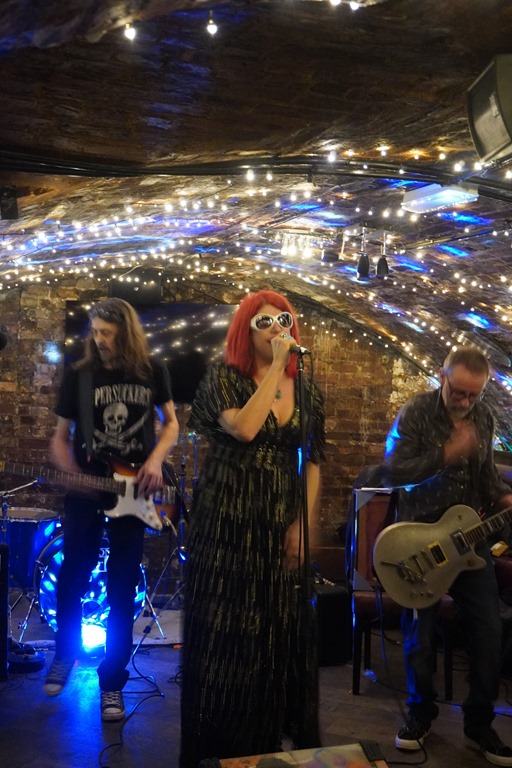
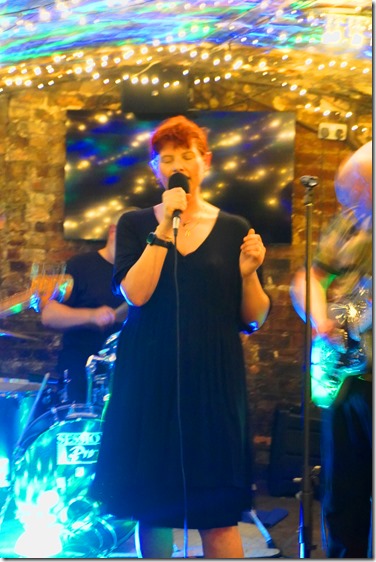
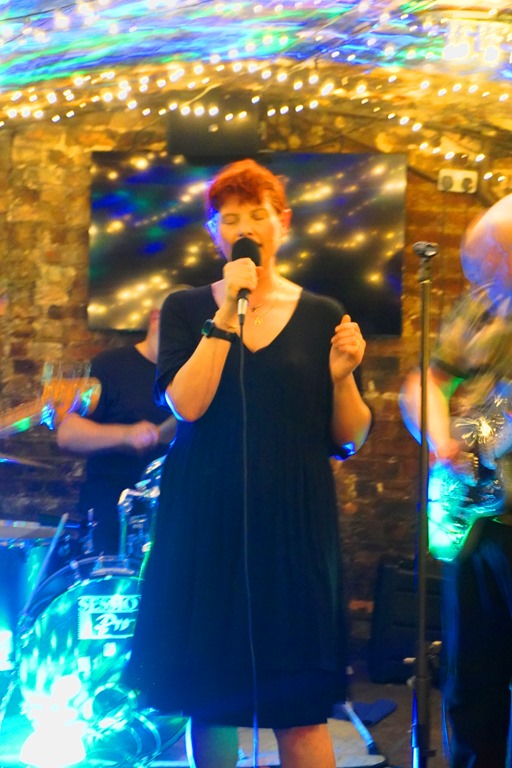
I’m here first and foremost for The Bricks. I’m not ashamed to say I absolutely bloody love this band because they’re absolutely brilliant. Having seen them in gig venues on abundant occasions, it’s a test of their mettle to be placed in this setting, and for those out for a regular Saturday bevvy with their mates, decked out in their nicely-ironed shirts and fancy dresses, hearing them is likely to come as a shock. Perhaps not as loud, or, initially, as assured on some previous outings, they’re still solid and hit like a spiky post-punk punch in the face. The band as a whole, are powerful, but Gemma, when she’s singing, at least, is absolutely fucking terrifying. Between songs and offstage, she’s meek, self-effacing, even apologetic, but when she steps onto the songs there’s a switch that flicks and she blasts out every line like a woman possessed. The slower, bluesy stroll of ‘Snake’ afforded the weekenders the opportunity to scurry for the exit without the full assault of the PA on the way out. There are a few sound issues early on, particularly with the mic feeding back and not being loud enough, but by the last couple of songs they really are firing on all cylinders.
DSC00330.HUE

The Bricks

This leaves me pondering between sets over the crisis facing live music at a grassroots level, startup acts and even those who have been going a while but are very much pub and small-venue circuit acts. As the number of dedicated grassroots venues diminishes, perhaps this is the future: to put live music right there in people’s unsuspecting faces. A lot will shit themselves and leave, but perhaps enough, after a few drinks, will come to appreciate hearing – and seeing – something different.

My contemplations are curtailed by the arrival of DDK Soundsystem. If The Bricks revived the spirit of the early 80s, DDK’s take on dance rock is unapologetically rooted in the 90s. They are, ultimately, a covers band, but they’re a lot of fun.
DSC00339

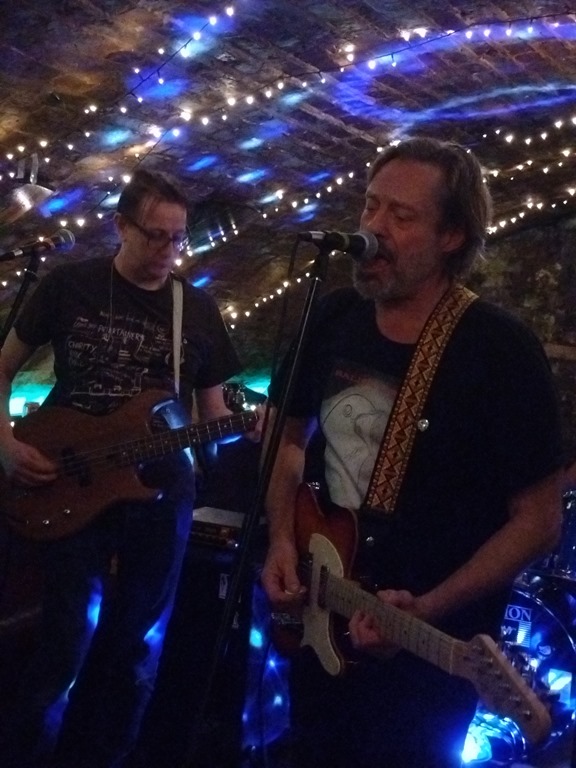
DDK Soundsystem

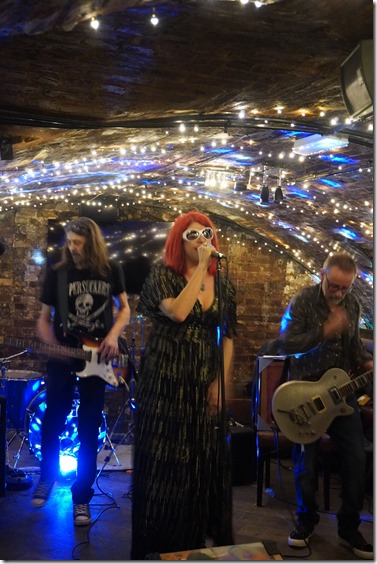
They kick off with a stomping rendition of ‘Open Your Mind’ by U.S.U.R.A., and in some respects, the treatment isn’t a million miles off Utah Saints, in that they present as much as a rock act as a dance act, and fuse the elements together: there are live vocals and guitar and bass, samples and backing tracks and sequenced drums all firing in synchronicity. Sure, there’s an element of middle-aged men doing rock posturing to dance tunes and some mum-disco 90s dance vibes, but they’re clearly enjoying themselves, and it is all well done.

Mid-set they really rock out, sending more lanky bozos with bumfluff moustaches and fake eyesh-sporting girls scurrying for the door. It’s at this point the gig hits proper volume, too. There’s no chatting idly over this. Overdriven, flanged guitars – and it’s been too long since I heard such epic swirling flange – blast out on a storming cover of Kylie’s ‘Can’t Get You Out of My Head’, before they drop ‘Encore d’un Fois’, a song I’d forgotten about, but an undeniable banger, and ‘Hey Boy, Hey Girl’ also lands near the end of the set. While one could readily contend that it’s corny and cheesier than a bowl of nachos, it’s also massive fun.

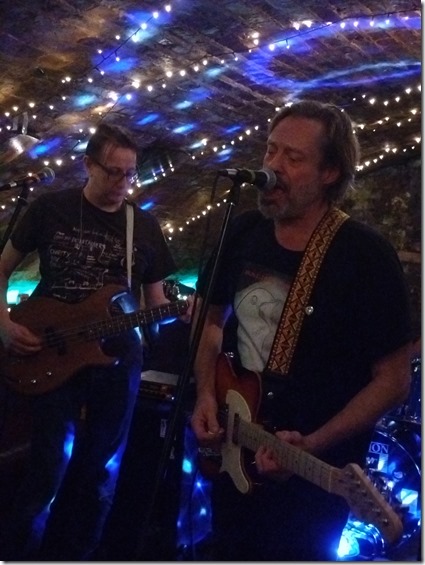
Saliva Birds were solid when I caught them low on the bill at an all-dayer back in April last year, and they’re solid again on this outing, turning out a set of sturdy, kick-ass US-style rock ‘n’ roll. The guitarist, in baseball cap, plaid flannel shirt, and faded blue jeans encapsulates their sound visually. It’s hard to get really excited about them, given that there have been band around sounding like this for at least the last thirty years, and they don’t really bring anything new, but to describe them as ‘workmanlike’ is by no means a criticism. They’re good at what they do, and they didn’t clear the room.

AA
IMG_20241109_223257

Saliva Birds

And if an eclectic lineup like this can keep enough punters unaccustomed to live music that isn’t straight covers or tribute acts, then perhaps there’s some mileage in shows like this. It seems like a back-to-basics approach, like how in the 70s and 80s bands used to play working men’s clubs and club nights to audiences who weren’t fussed at best, and were more into playing pool and getting booze down their necks than anything else. But given the choice between jostling with baffled townies slopping their lager and cocktails to see bands, and not seeing bands because there are no bands playing anywhere, I know what I’d pick every time.
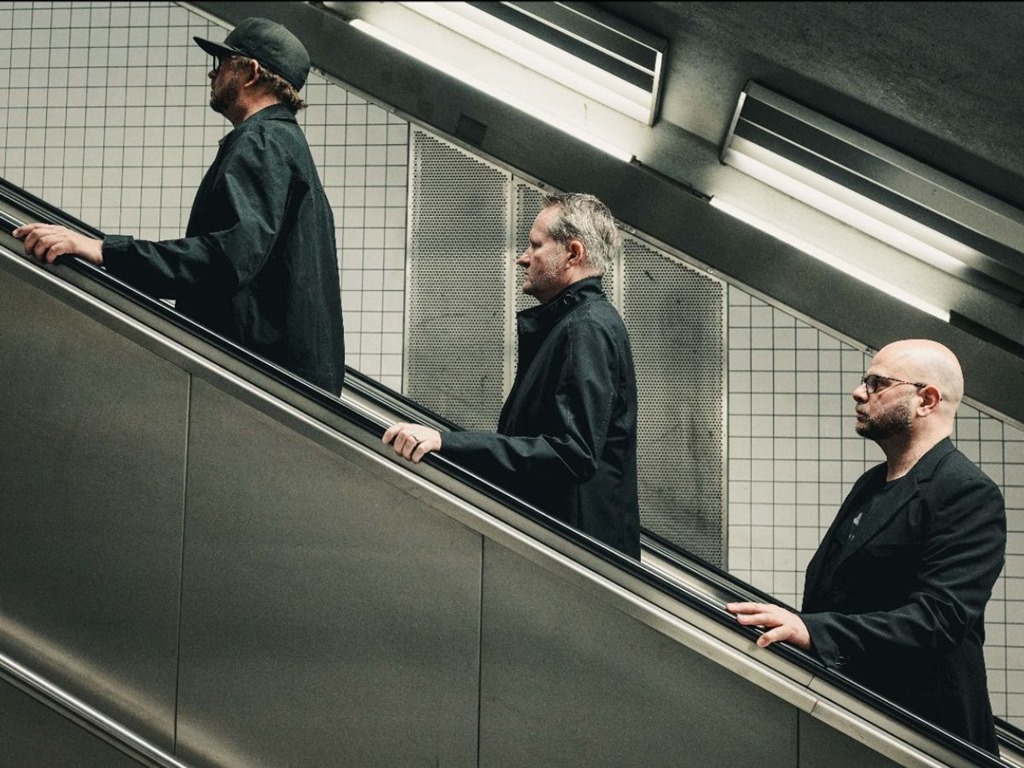
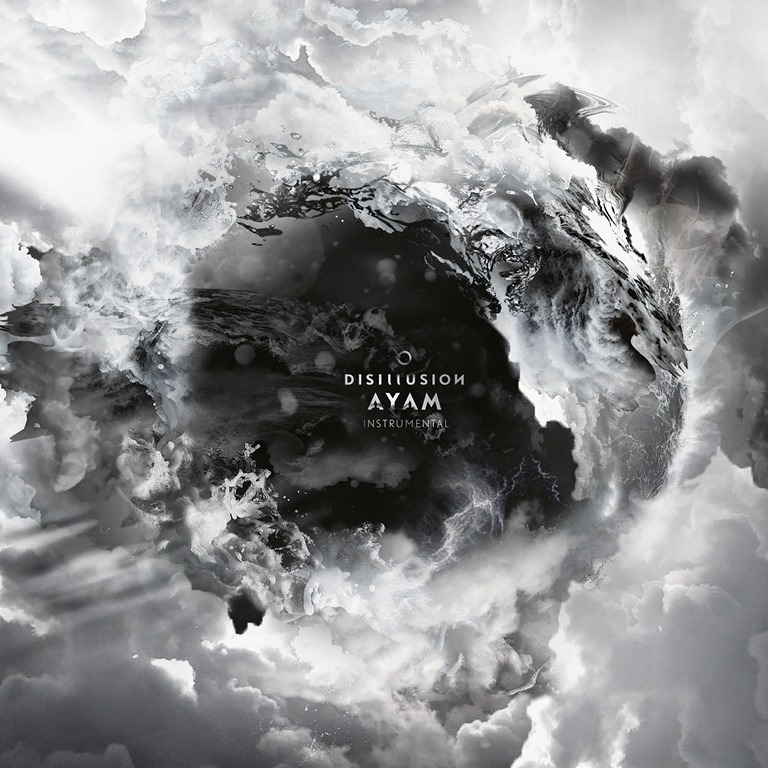
German avant-garde metal pioneers DISILLUSION release and stream the limited instrumental edition of their acclaimed current album Ayam released on November 8, 2024.

DISILLUSION commented: “We are stoked that our first instrumental album ever is finally seeing the light of day”, singer and guitarist Andy Schmidt wrote. “The idea for this concept already came up during the recording of Ayam. We wanted to metaphorically let the music do all the talking. An abundance of details and intricacies within the tracks have now shifted to the foreground. This allows a quite different perspective on the album and illuminates previously hidden facets. Hopefully, you will find this as exciting as we do. Enjoy!”

AA

Two years after the release of Ayam, the fourth DISILLUSION full-length will have spun on record and CD players, and also been streamed countless times. Every melody, rhythm pattern, and note will have been listened to again and again. And yet, there are still many musical ‘secrets’ waiting to be uncovered and treasures to be found. 
With Ayam (Instrumental), DISILLUSION offer their most dedicated followers a beautiful map to find some of the hidden gems. Without the magnificent vocals, other aspects of the songs begin to shine, and new aspects of each track come to the fore. Nothing has been added from the original songs, only the vocals have been taken out of Ayam.

Who are we? Where do we go? These are the kind of existential questions that have arisen for many of us during these last years and that have also been haunting DISILLUSION during the creation of "Ayam". Without a chance to perform live and their personal lives also being affected by many restrictions the focus of the German avant-gardists shifted fully towards their band and the creation of new songs as well as recording. The effect is audible: Ayam sounds richer, even more multi-layered, and fully matured compared to the already highly praised previous releases. Yet the intricacies of their music are never just a means to an end, but more than anything all the complexity is subjugated to serve the inner feeling and cinematic aspect of each song itself. 

The thematic questions and multi-dimensional layers of the songs are also reflected in the album title Ayam. The word derives from Sanskrit and means "This One". Pronounced in English it sounds like "I am", while reading it backwards turns it into "Maya", which is neither an accident nor explained by the band that obviously likes to offer riddles.

While DISILLUSION stuck closer together, they were also searching their hearts whether it was time to change old habits and try out something new. This led to the excellent decision to leave the mix of the album to different ears than the bands’ for the first time. Their choice could not have been better as renowned producer Jens Bogren (OPETH, KATATONIA, MOONSPELL) once again worked his exciting magic and enhanced their already unique sound by shining a sonic spotlight to the most important aspects such as the vocals.   

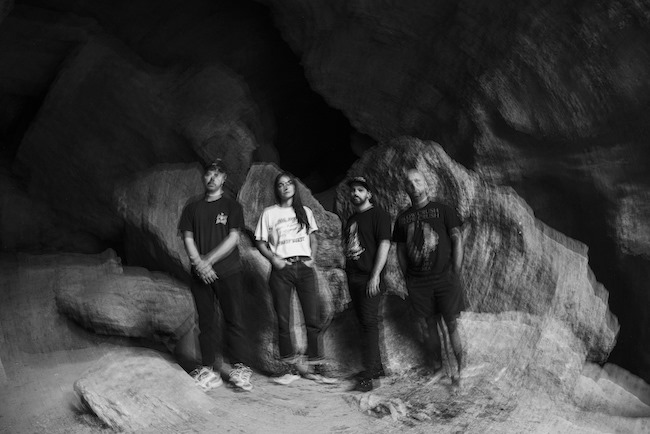
Founded around singer and guitarist Andy Schmidt in the East Germany city of Zwickau in 1994, DISILLUSION pulled the rare trick of already becoming a staple in the field of avant-garde melodic death metal with the release of their full-length debut Back to Times of Splendor in 2004. The Germans have always been driven to seek new challenges and find new ways to evolve their music, which was exemplified by the following album Gloria that took radical musical steps in several directions at the same time. Gloria was far ahead of its time in terms of composition and sound, which becomes apparent when compared to GOJIRA’s masterpiece Magma for example that came out a decade later.

Despite their early success, DISILLUSION took a creative hiatus until suddenly returning in 2016 with the single ‘Alea’ and a new line-up that had changed in several positions. Quite likely even to the band’s surprise, a large and loyal fan base had formed during the decade of their absence, which showed in sold out shows and a highly successful crowdfunding campaign to realise a new album, which the Germans repeated for Ayam.

When The Liberation was released in 2019, critics described the album as a logical continuation of Back to Times of Splendor. Its songs reflected 15 years of additional experience in the musical development of Andy Schmidt. The Liberation turbo-charged all of DISILLUSION’s best qualities: the perfect interplay of massive metal with moments of pure euphoria and quiet introspection that create a sonic rollercoaster ride of passionate emotions.

With Ayam, DISILLUSION again sail among the stars to new stellar constellations of heavy sounds. While staying true to their general course, the German avant-garde pioneers also continue dropping anchor to explore new planets sparkling in space with a multitude of radiant sounds. Ayam offers exciting evolution rather than radical revolution, and DISILLUSION’s new musical forms and means are most beautiful and astonishing to behold. This album is a golden ticket to join the extraordinary journey of a life-time. Please feel free to check-in anytime you like. And with Ayam (Instrumental) you can even take the scenic route!

AA

8c5cc4b8-6f1a-e4e5-3f21-c16dc9e49308

Shoegaze band Mondaze will release their second album Linger on 22 November via Bronson Recordings.

The opening track, ‘Lines of You’, showcases the recurring tension between presence and absence, reflecting how this internal struggle is ever-present in daily life. Haunted by lingering ghosts and memories that refuse to fade, Mondaze’s melancholy isn’t merely a stylistic element—it’s a deep exploration of the collective labyrinths faced by a generation longing for connection. It sounds as powerful as it is necessary in our times. There’s a strength that stems from reflection and observation.

The video was directed by Clement Pelo, and it stars Yannis Beck and Benedicte Bonpunt.

Watch it here:

AA

The band have previously released two singles: album title track ‘Linger’, a song that explores memory and nostalgia. and ‘Son of the Rambling Dawn’, a track that creates an immersive experience with intricate layers, smoothly blending different influences to convey a modern sensibility.

Since forming in 2018, Italy-based Mondaze have defined themselves as “heavy shoegaze”, taking inspiration from bands like genre-giants Swervedriver and Ride, but also contemporary bands pushing through the limits of the genre like Nothing and Ringo Deathstarr. With Linger, they aim to amplify the melancholy tones of their frustration and rage. These sonic characteristics drove them to work with Chris Fullard (Idles and Boris) on mixing, and Maurizio Baggio (The Soft Moon, Boy Harsher) for mastering. The result is an album with roots, yet distinctly modern featuring arrangements that skilfully blend contemporary styles with dreamy and eerie atmospheres.

AA

5tqs_7copy

Photo Credit: Andrea Fiumana

27th September 2024

Christopher Nosnibor

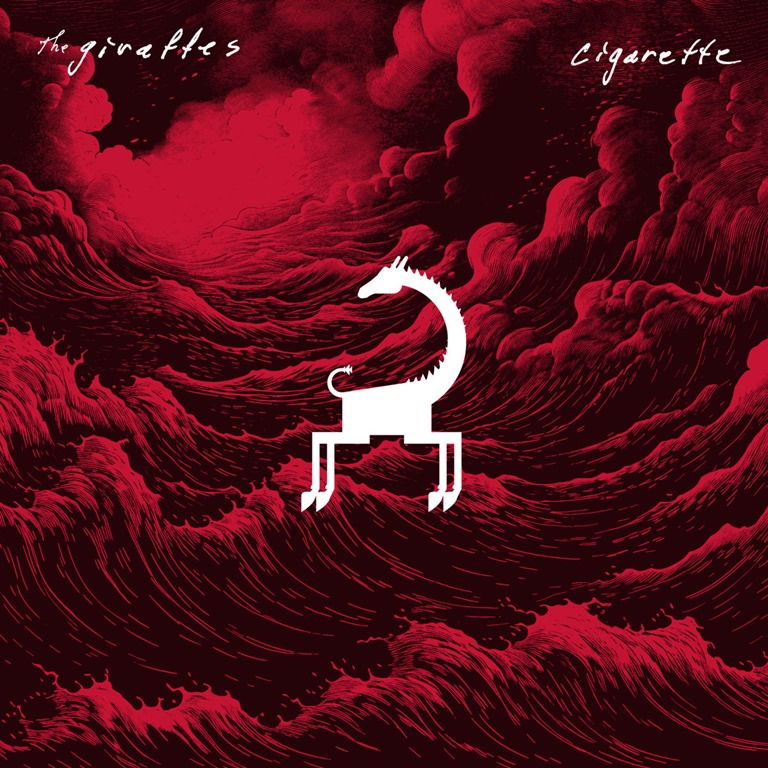
They’re pitched as being for fans of, among others, the Jesus Lizard, QOTSA, Earthless, King Gizzard and Lizard Wizard, Fu Manchu, Daughters, and Beak, and their influences are listed as Dick Dale, Black Sabbath, Queens of the Stone Age, David Bowie, Ennio Morricone, Scott Walker, Pink Floyd, Fear, Erkin Koray, and Minute Men. And for those familiar with the band, the fact that Cigarette is their first album in five years is likely to be a cause of excitement.

Citing Daughters has become somewhat tarnished lately, in the wake of allegations against singer Alexis Marshall, which saw the band halting activity and him dropped by this label., but then, there likely a lot of people who aren’t aware of this, and moreover, it seems that even convictions and out of court settlements are no obstacle to becoming president of the United States, so perhaps a lot of people aren’t especially concerned by such things.

I’m not sure what The Giraffes have been up to for the last five years, or how they’ve managed to avoid my radar for the entirety of their career – after all, they formed back in the 90s, and released their debut album in ’98, with Cigarette being their eighth. But this is something that happens a lot: there are simply so many acts out there, it’s impossible to be aware of all of them. But we’re here now.

Some may say that five years is a long time to cook up just seven songs, but quality beats quantity, and Cigarette is solid and consistent in the quality stakes. There’s an abundance of drawling, stoner swagger. If ‘baby Pictures’ makes for a gentle start, they slam on the gas and go pedal-to-the-metal on the riffarola of ‘Pipes’, before ‘Limping Horse’ goes all out on the blues-driven scuzzy rock ‘n’ roll.

‘Dead Bird’ brings the requisite slow-tempo acoustic mid-album breather, and in doing so brings an almost folksy aspect to proceedings, while also strongly reminiscent of Alice in Chains in the harmonies.

Revisiting politically-charged single cut ‘Million Year Old Song’ in context of the album, and realising grimly how much can change in just a few weeks, it clicks that I’m reminded a little of Rollins Band with its sinewy lead guitar work and rant blasting over a low-slung groove.

It closes off with aa couple of six-minute epic sluggers, with ‘The Shot’ starting out with a delicate slow-burn but builds, snaking, smoking, and spun with a dash of flamenco and a swirl of drama into a writing monster of a track, before ‘Lazarus’ provides a worthy finale, with its atmospheric, almost post-rock epic intro that leads into a sultry strut that underlies a contemplation on death delivered in a gritty, Mark Lanegan-esque growl.

There’s a solid, vintage feel to Cigarette – which is to say it’s by no means ground-breaking, but while bands like this were ubiquitous in the ‘90s, now, they’re not so much. It’s not only nostalgia that means I miss them; there’s a place for this kind of chunky, dependable rock ‘n’ roll with a whiff of attitude and the perspiration of graft, and Cigarette is ultimately satisfying.

AA

a1929281707_10

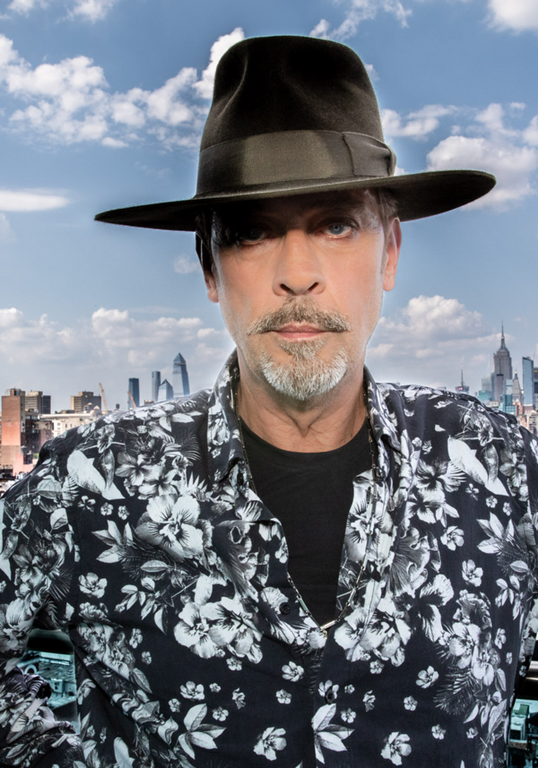
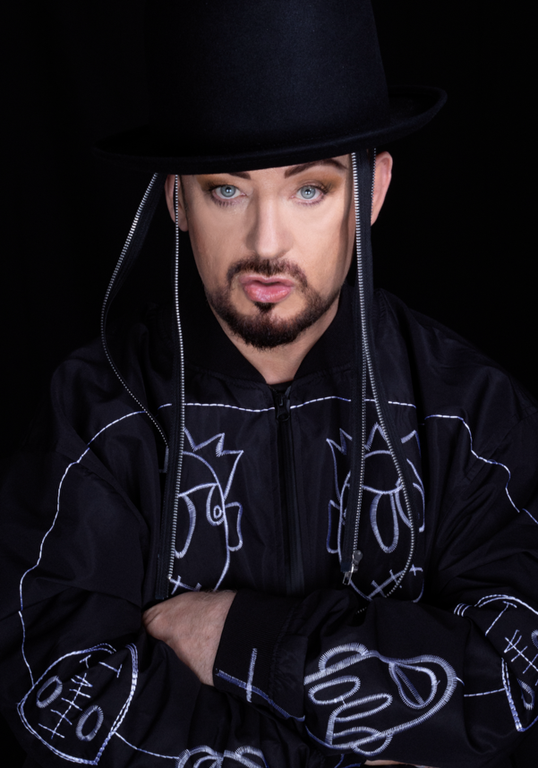
Legendary artists Peter Murphy and Boy George have combined forces for a gorgeously majestic new single entitled ‘Let The Flowers Grow’. Produced and co-written by Youth, their duet on what is a profoundly emotional orchestral masterpiece is available from today on Metropolis Records.
Murphy recalls: “I was recording my new album in Spain with Youth and, while listening to a playback of a song, I heard another piece of music coming from his mobile phone. It caught my ear for its melodic beauty as well as a Roy Orbison-like voice that was singing it.” Upon learning that it was an unfinished demo written by Boy George, he was intrigued and asked Youth if he could work on the partial song. “In a matter of twenty minutes, we had ‘Flowers…’ finished.”

“When I heard the mix, I was satiated in every way,” beams Boy George. “I have always loved Pete’s voice and his writing on this adds a beautiful darkness. The production feels very epic, like Scott Walker.”

Check it here:

AA

‘Let The Flowers Grow’ carries an air of elegance, the iconic voices of both singers delivering a message of hope and tolerance. Originally written by Boy George, its initial message was one of personal acceptance about being gay. As the song developed, it took on a more expansive and universal scope, its lyrics extending beyond sexuality and embracing race, gender, creed and religion. “With everything going on in the world about identity, it feels very powerful,” he explains.

The mutual adoration between the duo has spanned decades. “I first met Boy George when he asked to be allowed backstage to meet Howard Devoto when Bauhaus were supporting Magazine,” recalls Murphy. “He struck me as a super-original, self-styled 17th Century fop. The second time I met him was when we walked into the BBC to do ‘Ziggy Stardust’ on Top of the Pops where Culture Club were also making their debut on the show. George greeted me very warmly and I discovered he was a Bauhaus fan.”
With the single unveiled, Boy George adds:“It makes me dizzy and proud,” while Murphy concludes: “Boy George loves it and I’m so glad.”

ffef40caabb67931b45349413f908104c7dd3a0b20e548081ff71a0021808434db2a81f3e3fc8597

PETER MURPHY : photo by Jolene Siana  |  BOY GEORGE : photo by Dean Stockings

Mamka Records – 15th November 2015

Christopher Nosnibor

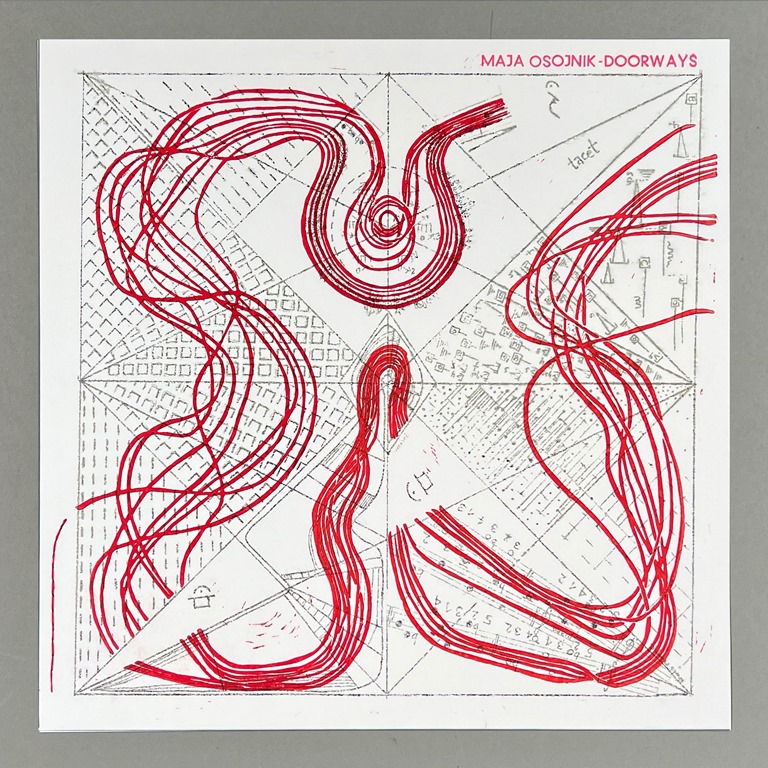
It feels like a while since we heard from Maja Osojnik – and, I suppose it has: her debut solo album, Let Them Grow, comprising work composed and recorded between 2013 and 2015, was released in early 2016: we’re now near the end of 2024, and a lot has happened in the last eight years.

Life… and we’ll spare another retread of the pandemic ‘lost years’. Along the way, Maja has founded her own record label, created and exhibited visual artworks, and produced some collaborative audio works, notably DRUCK with Anthony Pateras.

But the time between Let Them Grow and Doorways is significant in terms of the album’s inspiration and purpose. We learn that ‘Doorways was born from a longing to escape the city and everyday life – and the problematically fast pace thereof, a pace of production that accelerates the erosion of attention. In seeking to arrive in a quiet place, to linger there with an observational unprejudiced eros, to become completely aware of being alive. In line with Pauline Oliveros’ practice of deep listening, Maja Osojnik’s album explores the involuntary nature of hearing and the conscious nature of listening. It raises the question: How attentively do we perceive, recognise and internalise the ever-changing (aural) environment?’

It’s a question few likely ponder, although one that I have found myself contemplating in recent years. It began with the first lockdown. I used to travel to work – a twenty-five minute walk, followed by a further half-hour bus journey – with my earphones firmly wedged in my ears, desperate to ensure the noise of everything and everyone was blocked out by music, and I craved my own space. But then, suddenly, I felt the need on my daily hour’s walk, to hear nature – and it’s true, my paranoia peaked to a level that meant I felt the need to have my eyes and ears open and be aware of anyone in the vicinity, when people were much scarcer in the street. But this reconnecting with the sounds of birds, the wind in the trees became more than simply a lockdown hobby. And while, it seems, ‘The Great Pause’ – something only some got to experience or enjoy – gave way to ‘The Great Return’ and ‘The Great Acceleration’ Maja Osojnik has been motivated to seek peace and space, and instead of yielding to any pressures – real or perceived – to produce endlessly, she has chosen to explore time, and space, and allow herself to draw long, slow breaths, and to absorb the details of her surroundings. And it is this different focus which has informed Doorways.

While essentially consisting of two compositions – ‘Doorways #9’ and ‘Blende #1’ – each with a running time of over twenty minutes, and corresponding with a side of an LP, for digital release purposes, each piece has been segmented into five movements or fragmentary length. This may seem to run contra to the idea of reclaiming headspace from the current climate of the truncated attention span endemic in Westers society, but it does reflect the collaging approach to sound Osojnik has taken in assembling a broad range of field recordings, along with the input of woodwind and strings. As the accompanying notes point out, ‘It’s about active listening – what the artist Maja Osojnik calls cinema for the ears – an interactive game with one’s own self. The compositions invite the listener to hear them deeply; they function like a rotary dial, bringing extremely sensitive changes into focus. By constantly readjusting the focal point, they create new relationships between the electronically generated sounds, instruments and field recordings.’

And yes, it’s a timely and necessary reminder not only about the way we close ourselves off to the world, but how music is often something which simply floats around in the background while you’re doing other stuff, and how listening habits have changed: the majority now listen to an endless shuffle stream on Spotify. Simply typing that sentence plunges me into a state of despair.

In its collaging approach to composition, Doorways has, in a sense, inbuilt the shuffle into its structure – but at the same time, it is best experienced as an album, as intended. Doorways is not a bunch of songs, penned as singles, lobbed together to make an ‘album’: Doorways is very much an album album. It’s also a very good one.

‘Doorways #9’ bring with haunting disquiet and glitches and trips, backward surges and traced of feedback. It’s meant to be skin-crawlingly uncomfortable, and it is, as insectoid scrapes and scuttles.

The first five minutes of ‘Doorways #9’, in its cave-dripping tension, builds anxiety, and it’s only when birdsong develops that there evolves a sense of levity. But the tone grows increasingly dark, and there are increasing obtrusive spikes in jarring organ, and a sense of menace hangs heavy in the atmosphere. ‘Doorways #9’ is in some respects a dark ambient work, in that it’s unsettling, uncomfortable and free of percussion, and as such drifts from one moody, uncomfortable segment to the next. Suddenly, unexpectedly, in the last three minutes, things plunge deeper into darkness, as there’s a churning noise and a sense of falling… down… things take on a nightmarish quality, and the experience is dizzying, gut-churning and it would work well as a piece off a horror soundtrack. Perhaps one day it will be incorporated in one.

‘Blende #1’ grinds, scrapes, and skitters through an array of tones and textures. And it goes on… and one, twisting, turning, droning, scraping, and churning. There’s some avant-jazz in the distance. It’s pleasant, but mournful.

This is not an easy, or immediate, album. We all need time, and to take and make time. Along way, Osojnik leaves us haunted an incurring . It’s a spacious, and low—key but cheering experience.

Maja Osojnik has created an album that’s dark, and difficult, but which creates space for slow contemplation and reflection and it’s no vague criticism to report that Doorways is ‘nice’. It’s much more besides: intriguing, it draws you in, and pulls you in different direction. It’s an album, alright.

AA

MAM08 front

BAIKAL is excited to announce the release of their new music video for the track ‘Rorschach,’ the first single from their upcoming project. At the origins of BAIKAL are guitarist Jérôme Colombelli (formerly of Uneven Structure and Cult Of Occult) and singer Matthieu Romarin (from Psykup and Uneven Structure). The project was initiated by Jérôme, who began crafting the first compositions in 2020.

Amid the global pandemic and a time characterized by confinement, the duo, along with other contributing musicians like bassist Julien Turrin, combined their diverse influences and backgrounds. This collaboration resulted in a unique sound that blends dark trip-hop atmospheres with powerful post-metal guitars driven by Sunn amplifiers, accented by electro-industrial elements and hints of post-black metal. In 2022, the band officially took on the name BAIKAL and made their live debut in Lyon, performing alongside Céleste.

The video created for ‘Rorschach’ vividly illustrates the imagery present in the lyrics and develops the aesthetic BAIKAL aims to present. Jérôme adds, “For us, music is inseparable from visuals. When I listen to music, images always come to mind, and when I watch a film, I need music that truly complements what I see to fully immerse myself in it.”

Watch it here:

AA

21dc8934-d0b2-df7e-57d1-798ebf90a3cd

1st November 2024

Christopher Nosnibor

Imagine having your album release scheduled many months in advance only to find the release date crashed by The Cure’s first album in sixteen years. Imagine you’re not only an act likely to appeal to Cure fans, but your act features a former long-serving member of The Cure. This is the true story of Vamberator, the duo consisting of Jem Tayle, formerly of Shelleyan Orphan, and Boris Williams, Cure drummer from 1984 to 1994, and sometime contributor also to Shelleyan Orphan.

The album’s title is telling and possesses a certain resonance. Much has already been written on the contradictory impact of social media, and the idea that while we’ve never been more connected, we’ve never felt more isolated. Scrolling through endless snaps of people’s holidays, parties, nights out is a hollowing experience, and one that’s anything but inclusive. Of course, you want to be pleased and happy for these people sharing their experiences as they live their best lives, as is the parlance, but inside, you’re being eaten away as you’re confronted with your own mundane, grey existence.

If anything, the pandemic heightened the agony for many: half the population was basking in being work-free, spending days baking bread and discovering new hobbies and bingeing on Netflix, while the other half was battling their way into work, or juggling work and home schooling, or simply trapped indoors on their own – or worse. Virtual drinks via webcam and group WhatsApps and streaming gigs were poor substitutes for the real thing.

And now we’re supposedly back to normal, but it feels as if something has been lost, and possibly lost forever. Our lives have become more distant, more disparate. In my own experience, it simply seems harder to co-ordinate meeting with people, and while some people seem to be so busy with their social lives it’s a wonder they can remember what the interiors of their own homes look like, their busyness leaves some off us at home, disconnected for weeks at a time. I am not alone in being alone: for many, the creeping sense if isolation and loneliness weighs heavier than ever before. This is truly The Age of Loneliness.

I’ve begin with the digression in order to contextualise the point at which I arrive at this album, having spent the last few days – like a lot of people – immersed in the melancholia of the new Cure album, having not seen proper daylight for the best part of a week and struggling against the urge to hibernate.

The single release ‘Sleep the Giant of Sleeps’, which came out in the summer, showcased an energetic embracing of myriad firms, and I myself described it as ‘a mega-hybrid of alt-rock, post-punk, and psyche.’ It set a level of expectation for the album and despite being born from a place of comparative darkness, the spark of experimentation and joy of creating illuminates the recesses of Age of Loneliness.

‘I Used to be Lou Reed’ kicks the album off in a flurry of strings and takes flight with a quite poppy flavour. It’s got horns and string and synths bursting all over, and there’s a slick funk groove which emerges after a minute or so… but despite being there, there, and everywhere, from James Bond to crooning 90s indie all in the space of five minutes, nothing feels forced or corny. Wish-era Cure meets Pulp might not sound like the ultimate pitch, but prepare to be pleasantly surprised.

Shades of negativity colour songs with titles like ‘I Need Contact’ and the title track, as well as ‘I Don’t Want to Cut the Grass’, a paean to lethargy which drifts and lilts like a Kraftwerk piece, but with the drollness of late Sparks. ‘Pilgrim’ brings tints of Beatles-esque twanging and some Eastern shades alongside elements of psychedelia. With loping rhythms and layered instrumentation, the title track slips into a groove worthy of late 80s Wax Trax releases then swerves unexpectedly. ‘I Need Contact’ is a sparse piano-led ballad, and its simplicity in itself is affecting. ‘Creature in My House’ begins haunting and ominous, before swinging into an electropop glam stomp which shouldn’t work, but does. This is true of much of Age of Loneliness.

Being predictable is not an accusation one could level at Vamberator: Age of Loneliness is ambitious, and bold. Sometimes it goes over the top, but it’s forgivable, because instead of playing it safe, as musicians of their experience often do, Tayle and Williams have tested their limits here, and they’ve emerged victorious.

AA

AA

a0433341087_10

25th October 2024

Christopher Nosnibor

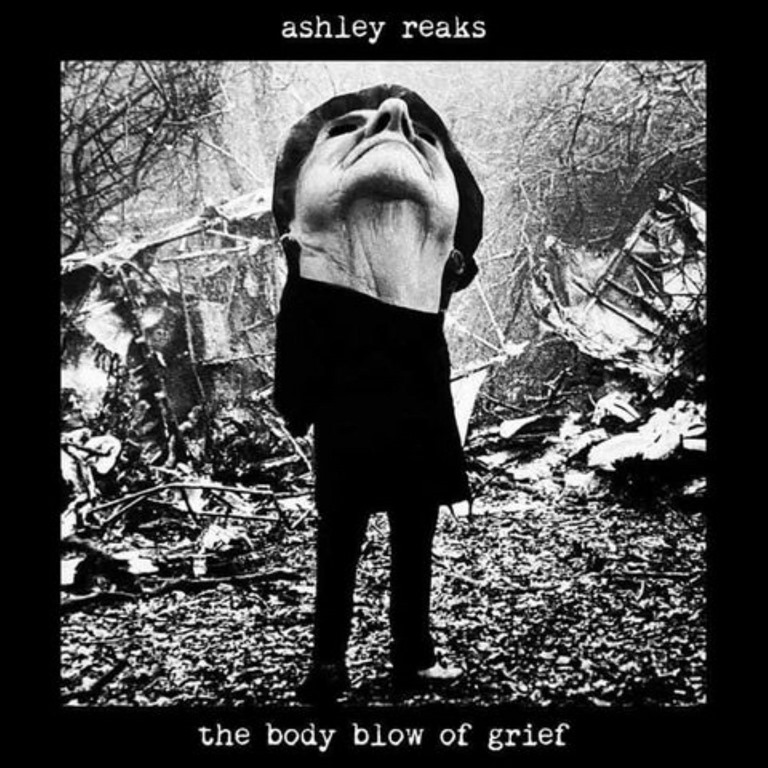
As is the case with his collage artworks, there is a sense of physicality about Ashley Reaks’ recorded work. His album titles tend to be brief but evocative, visually or otherwise: Compassion Fatigue; Track Marks; Growth Spurts; Winter Crawls… these are titles which evoke a sensory response – a shudder, a shiver, a skin crawl. The Body Blow Of Grief – Reaks’ fourteenth solo album – lands with an impact before you even arrive at the music itself.

I suppose – as is often the case when it comes to any music – there’s a personal element to my response here, and I make no apology for this. As I have touched on elsewhere, art is personal, in that it elicits a response which is unique based on a multitude of factors, ranging from life experience to emotional state and the mood of the moment. But the very phrase, The Body Blow Of Grief, lands like a punch in the stomach, and I’m aware that, while recently bereaved, having lost my partner of twenty-two years and adjusting to life as a single parent to a twelve-year-old, I am acutely sensitive to things which many others wouldn’t be. And yes, grief hits like a body blow. It knocks you, hard, socks the air out of your lungs and leaves you feeling weak, dazed.

Reaks’ music very much sounds like his artwork looks: a collage, a collision of styles, disjointed elements overlayed unapologetically; instead of smoothing over the joints, Reaks revels in the ruptures. Because this is where the vitality of life is found.

‘Home is Where the Hurt is’ may be a fairly obvious piece of wordplay, but the album’s opener digs deep into this seem, one which is a rich source of material in Reeks’ exploitation of trauma and its effects. ‘I can’t really feel what’s real’, he confesses against a backdrop of dubby bass and honking horns, before a shuffling beat settles into a tidy groove. It’s a bit Interpol meets Madness before lurching into post—rock territory and tapering out in a rippling tingle of layered guitar.

While the topics may be heavy, The Body Blow Of Grief is remarkable for its levity, its musicality, it’s easy tunefulness. I don’t mean necessarily that it’s all air and light – because it really isn’t.

There’s some quite tight, choppy, indie guitar on ‘No Place In The Nature Of Things’, a song that squirms and twists its way through almost seven-and-a-quarter minutes.

‘Somewhere To Hide Among The Swarm’ takes the bold step out into the swarm to offer some-full-on progressive rock flavours.

Across the course of the album’s eight tracks, Reaks walks through the familiar territory of previous albums with leaning toward dub and post-punk, but ventures into altogether newer territories with some spaced-out prog-inspired explorations, and ‘Hobbling Like A Refugee’ has an eighties feel that unexpectedly delves into electropop and AOR. It’s not polished to the levels of the 80s rolled-up jacket sleeve bands, but it alludes to the slickness of the era, but the dark lyrics are a stark and uncomfortable contrast. ‘Mongrel Nation’ is a slice of chunky post-punk laced with the bombastic excesses of Muse and a few jazzy twists.

The last track, the eight-minute epic ‘I’m Not a Fossil’ is a multi-faceted, multi-headed monster propelled by some strong technical dtrumming.

As always, Reaks presents us with an album that’s complex and layered, but The Body Blow Of Grief feels like a step up in the ways it opens horizons to new levels of boldness and ambitious sonic vistas.

AA

a1473578772_10