Archive for October, 2023

6th October 2023

Christopher Nosnibor

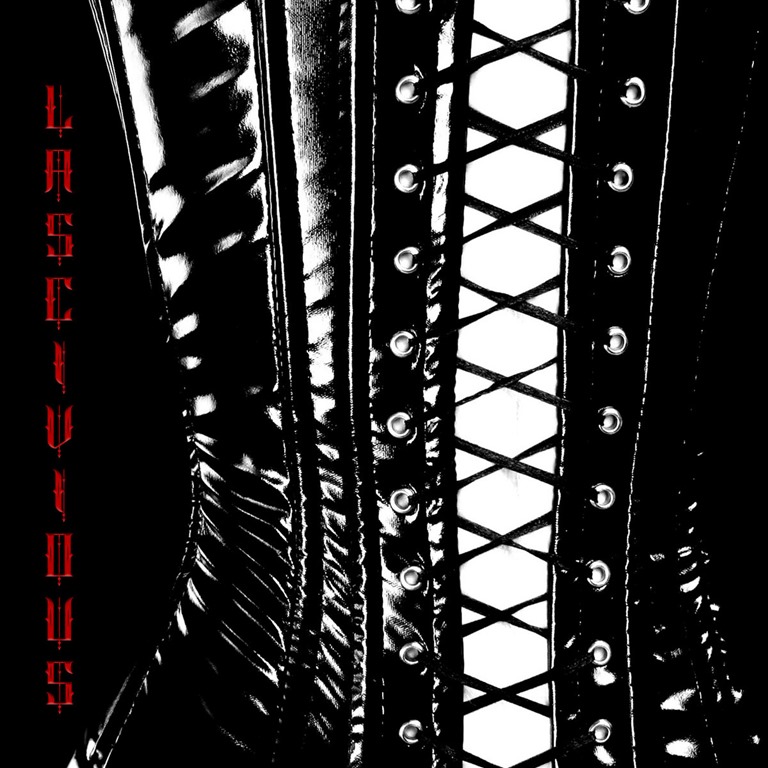
Lascivious is Black Angel’s fifth album, which promises the band’s ‘hybrid Gothic Rock sound and taking flavors from their 80’s predecessors while adding new tones… retaining the essential gothic elements that drive his inspiration as originally provided by the likes of Siouxsie and the Banshees, Bauhaus, The Cult & Sisters of Mercy.’

Certainly, Lascivious is steeped in the stylistic tropes of the 80s, not least of all the thick four-four bass grooves and smashing snare drum which both dominates and defines the sound. But the first thing that strikes me, as a longstanding fan of that golden era in the 80s (I was too young for the start of it all but when The Sisters and The Mission started breaking the Top 40 singles charts between 86 and 88, it was a revelation which set me on a lifelong journey) is that the ‘new tones’ very much involve contemporary production. That is to say, it’s just that much cleaner and fuller, more polished than the true ‘vintage’ sound.

Ah, but they know the features of yesteryear. It’s been a while since I’ve heard a fadeout, but that’s just what happens on the album’s first track, ‘Killer’ – and it’s not the last time on the album they employ it either.

The drum intro on ‘Black Velvet Amphetamine’ is an on-point lift of the snare sound of the Sisters’ cover of ‘Gimme Shelter’, and many of the sounds can be pinpointed as having a certain root or origin. In fact, five seconds into the title track, it’s clear that the drums are lifted from ‘Heartland’, although it also leans on the Sisters’ cover of ‘Emma’ by Hot Chocolate, and it’s clear they’ve been raiding the early Sisters back catalogue – and fair play. The Sisters achieved some incredible sounds with minimal means, with ‘Temple of Love’ marking their first step up from an eight-track ‘studio’ in the run-down northern seaside town of Bridlington.

But if the drums and guitar work make big nods to The Sisters, Corey Landis’ croon is closer to that of Wayne Hussey than the cavernous baritone of Andrew Eldritch. One of the divisions between fan-camps when Hussey and Adams went and formed The Mission – and a source of tension when Hussey began offering songs with lyrics. I write as a fan of the Mission when I say that while they work in the songs, Hussey’s lyrics are more cliché patchworks than literary masterpieces (Eldritch played with and perverted cliché and did so poetically), and one problem with bands who followed in the wake (excuse the pun) of both The Sisters and The Mission is that they’ve had a tendency to ape the lyrical substance without really adding anything creatively unique

‘She’s My Suicide’ slips into more generic rock with a gothy edge, and makes me think of the bands who emerged following the cult but had more of a hair rock leaning, reminding me why despite all my teen goth credentials, I was pretty picky but then, right at the end, they pull out a really gritty, spindly guitar break that’s magnificent, reminding me of The March Violets. And this is a fair summary of the album as a whole: some really good bits, some solid songs, but some rather weak and generic aspects which hold it back in the bracket of ‘decent’ rather than ‘awesome’.

‘Bite It’ bristles with spiky guitars and a low-slung groove, and is perhaps the first song that seems to really fit with the sleaze implied by the album’s title, and ‘Want’ also achieves this, but suffers from trying too hard to be ‘More’. It’s a fair stab at bombast, but it’s hard to compete with the Sisters, especially when they’ve got Jim Steinman on hand, plus a whole host of backing singers and a monster budget for state of the art studio time. I’m sorry I’m not more undemanding. Halfway through ‘Dirty Little Secret’, I realise its chords are based on Motörhead’s ‘Ace of Spades’, and afford myself a small chuckle.

The slower, ‘Ticking of the Clock’ is driven by a crunchy, flangy bass that’s pure early Cure, and is one of the album’s real standouts, by daring to deviate from any obvious formula, and in fairness, the title track is low-slung, sleazy, and grinds out a dark seduction with style.

Sonically, Lascivious is more than solid, and Black Angel clearly know what their doing: there’s no question they have their sound and style absolutely nailed – and consequently, with this set of solid songs, the album will go down well with existing fans and a huge chunk of the goth crowd, and deservedly so.

AA
a3733231510_10

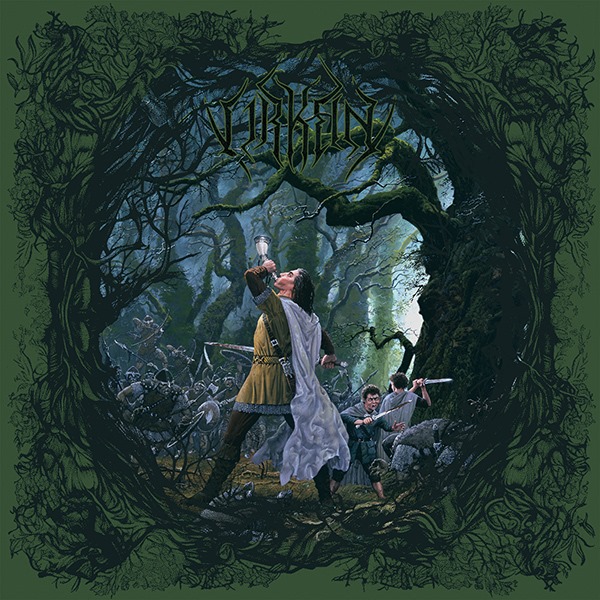
Cirkeln, the black-metal project of the Stockholm-based underground musician known as Våndarr recently unveiled another from track his third album The Primitive Covenant, which is set to be released on November 3rd via True Cult Records.

“Writing this song was probably the most fun I’ve ever had writing for Cirkeln”, says Våndarr. “Usually, the process is quite laborious and takes a long time. There´s rarely a spark of inspiration that then flow naturally into the recording process. But, with the Witch Bell I knew I wanted to take a rawer approach to writing and recording. At that point I knew the mission of the record was to strip away and get down to the basics. I set up the recording as close to a live scenario as I possibly could in my living room-based studio. This meant that the drums were laid down first and then I tracked all the guitars and all the bass in one take for each instrument. There was no editing or refining of the recordings after the fact. There were rarely even second takes. I think this gives the song a sense of unapologetic ugliness and momentum. There was no click track, so the pace of the instruments is entirely dictated by listening to the drums. It’s not the tightest Cirkeln track – but to me it’s the one that sounds the most alive. I also wanted to experiment with incorporating a different vocal technique and style on this album – and the Witch Bell is one of the best examples of this. To me, this is the point where Cirkeln doesn´t allow itself to be confined by one idea of what Black Metal is. There’s more than one shade to darkness.”

On the follow-up to his critically second album A Song To Sorrow, Våndarr is once paying homage to the forefathers of black-metal, yet this time The Primitive Covenant sees the Swedish musician incorporating more elements of old-school thrash-metal, primeval death-metal and even punk.

AA

495aa846-642c-705b-6365-1a4eb637e1d3

Ipecac Recordings – 13 October 2023

Christopher Nosnibor

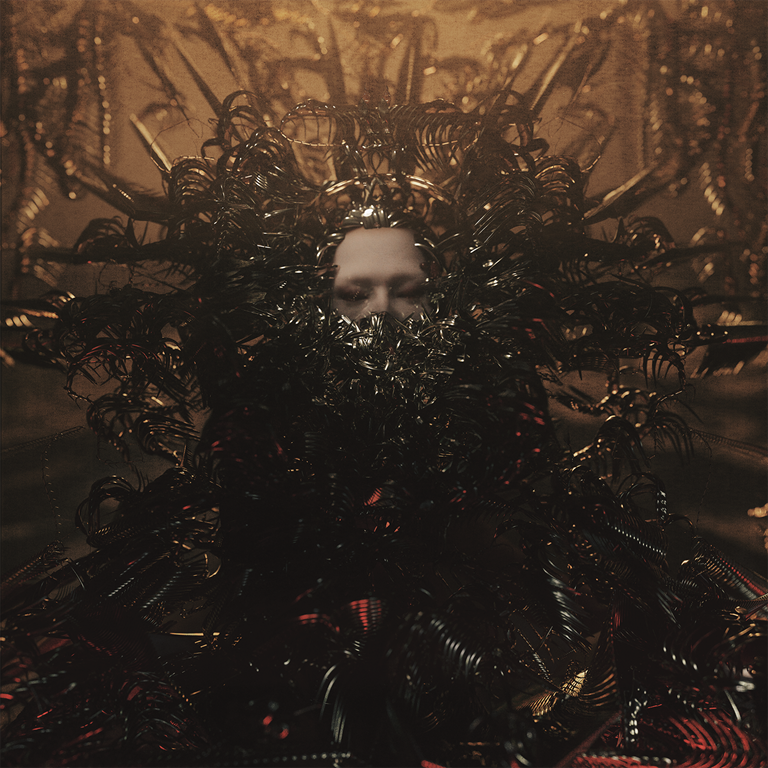
Having recently aired the video for the last single cut from Venera’s eponymous debut, in the form of ‘Ochre’ featuring HEALTH, I was feeling energised to explore their eponymous debut.

As their bio outlines, “Venera enigmatically launched their debut single ‘Swarm’ in July. No information, no pre-sale, simply the three-minute single released in tandem with a mysterious screed and a pulsating black-and-white video directed by EFFIXX.”

Some of the excitement is dulled by the unveiling which followed, as the band subsequently revealed themselves as James Shaffer (Korn) and Atlanta-based composer/filmmaker, Chris Hunt. Why? Not because I’m down on Korn: they’re an act I’ve never really felt any gravitation towards. Wrong place, wrong time. But essentially Venera are another supergroup / side project for a major act, which means they’ve already got a head start which places them head, shoulders, and torso above pretty much any other ‘new’ band. What’s more, several guests join Hunt and Shaffer on Venera. Drummer Deantoni Parks (Mars Volta, John Cale) plays on ‘Erosion’ and ‘Disintegration,’ HEALTH’s Jacob Duzsik contributes vocals on ‘Ochre’ and Alain Johannes lends his voice to ‘Triangle.’ The album was self-produced.

Should it matter? Probably not: I judge any music on its own merits, but I am aware that music doesn’t necessarily reach an audience or receive exposure based on the same criteria.

But here we are, and on merit alone, Venera is a strong album: dark, atmospheric, electronic and often beat-driven, but with layers of noise. It couldn’t be much further from Korn, stylistically. The album has range, too: ‘Erosion’ is like minimalist drum ‘n’ bass contrasts powerfully with the surging, enigmatic ethereality of ‘Ochre’. ‘Triangles’ finds Alain Johannes deliver a magnificent vocal that sits somewhere between Scott walker and David Bowie, crooning and emoting over a slow, dense backing of thick but dispassionate 80s synths reminiscent of The Sisters of Mercy’s Floodland. Clocking in at under four minutes, it feels as if it’s only just beginning to take form – not so much unfinished, but it just could do with there being… More.

‘Disintegration’ transitions between bombastic doom and frenzied blasts of noise, an enigmatic pancultural implosion that hints at Eastern influences, but also melts in droning sonorous low-end synths, and percussion that sounds like a brutal attack. In the context of this week’s world news, it simply makes me feel tense, but it’s but a brief passage before it shifts to clattering jazz-inspired energy rattling around amongst the drift. ‘Holograms’, featuring VOWWS is perhaps the album’s biggest surprise: a slow-burning ethereal and dreamy trip-hop song with a vaguely industrial / gothic edge, it’s supremely well-realised and has immense radio potential.

As a critic, declaring something to be ‘good’ or ‘not good’ feels somewhat redundant, like a teacher leaving comments on a piece of homework. Technically, this is good. Sonically, it’s good. The songs – where there are songs – are good: atmospheric, evocative, haunting – while the same is true of the instrumental passages. Venera succeeds sonically, and as a significant departure for its contributors. And perhaps, over time, I shall come to appreciate it more personally. But first impressions are conflicted: I like it, I like what it does, but I simply don’t feel an emotional connection, there’s nothing that elicits a physical pull in my chest or in my gut.

AA

746105

LASTER celebrate today’s release on Friday, October 13 of the their new album Andermans Mijne with a video clip for the title track. The stunning new full-length from the Dutch avant-garde metal trio is now also streaming in full on all relevant platforms.

Watch the video here:

AA

LASTER commented on the title track: “With our new single ‘Andermans Mijne’ we seek to reaffirm our love for twists and turns”, drummer Wessel explained on behalf of the trio and went on to state: “The title track sets a densely layered, hypnotic tone for what is to come. Both halves of the song teasingly object against the listener’s expectation. Expressions of cross-cultural lifestyles in late modernity, adultery, playful innuendos, and the self-other relation per se are deemed as central themes of the music’s dissonance, which become laid bare on this track.”

Stream the album in full here:

AA

Laster_000_album_cover_Andermans_Mijne

Kranky – 13th October 2023

Christopher Nosnibor

One thing I’ve learned as I’ve grown older (apart from the fact you never grow younger, despite the fact that I was amused to recently stumble upon the ‘people also ask’ Google question prompt ‘Is Benjamin Button a true story?’), is that a diversified appreciation of music is particularly useful as you come to recognise the diversified nuances of mood. Adherents to a single genre: how do they deal? How do they find the right soundtrack?

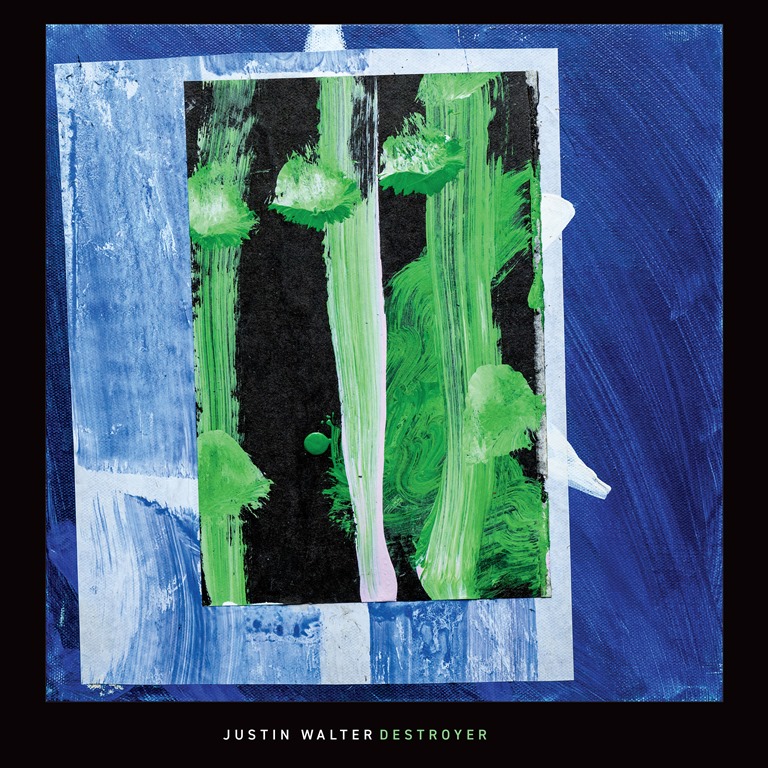
I’m not previously familiar with the music of Justin Walter, but the accompanying notes inform me that it ‘veers between nebulous and numinous, coaxed from the translucent tonalities of his signature instrument, the EVI (Electronic Valve Instrument)’ and that ‘Destroyer, his latest, and third for Kranky, marks his most multifaceted work yet. Inspired by minimalistic urges (evading grandiosity, condensing scope, embracing spatial restraint) tempered with the drama of triptychs (becoming, destruction, aftermath), the album’s 11 tracks thread.’

If the album’s title implies aggression and obliteration, it’s overtly organic analogue synth vibes are quite the opposite. That isn’t to say it’s all shades of mellowness, because Walter weaves in extraneous noise and all sorts and messes with the dials to render soft tones bent and broken, twisted and warped to create a less than silky-smooth air of tranquillity at times. But at others, there are some simply magnificent passages where you feel calm and at ease. The title track is exemplary: it’s an ambient work at heart, soft, supple, gentle, but with serrated edges and spiny burrs that occasionally break through the surface.

Walter obviously has a clear sense of flow. The eleven pieces on Destroyer flow seamlessly from one to the next, and as a consequence, Destroyer feels like an album, despite the contrasts which present themselves across the work. The flow begins with an instant attention-grab in the wibbly shape of ‘For Us’, which blasts in with a blaring drone over which phasey noodles tangle over in ever-increasing layers with adrenalizing effect. While the majority of the album is rather softer, a defining feature of the composition is the exploration of interplay between tones and timbres and the notes their timings gradually shift to create the subtlest of tensions. This is particularly noticeable duribg the second half of the album, which feels slower, softer, and more soporific than the first half. Close your eyes, exhale slowly, and you really start to absorb Destroyer. And you have every reason to do that.

‘Cliff the Cloudcatcher’ is a gentle, bubbling synth piece, while the eight-minute ‘Inner Voices’ is a mellifluous movement in many directions simultaneously, which pulls together to take form, becoming graceful, and in places the sounds mimic woodwind, but sculpted into something otherly… backwards, perhaps, and the sounds bend and push and pull – gently, but they do – before a darker turn around two minutes in brings shade, clouds thickening and becoming denser.

Destroyer distinguishes itself from so many other ambient-orientated works by virtue of its dynamics. There are some thick, tones and dense blankets of noise which present themselves, often emerging from cloud-like drifts of near-nothing. But these moments of rising tension resolve to easy washes and ripples of sound, to cloud-like softness.

And this is the album’s real accomplishment, in that is balances many shades, many tones, many textures. Those darker passages serve to remind that life isn’t all easy or plain sailing, and that plans can go wrong. You can set the controls for plain sailing, but there will always be disturbance, disruption. Whatever you plan or expect, there will always be deviation.

AA

114931

As a final preview from Venera’s self-titled debut album, the duo have shared the track and video ‘Ochre’ (featuring HEALTH). The darkly surreal Venera is out tomorrow via Ipecac Recordings.

About the track; “’Ochre came early on in the recording process of the album. For me, it recalls a beast stealthily moving through a dark space, or a strange ritual unfolding in moonlight.” – Chris Hunt

Jake Duzsik from HEALTH adds, "It was refreshing to contribute to a track that is focused on creating atmosphere and feeling rather than simply capitulating to the endless regurgitation of standard verse/chorus structure.  It is grounding to reconnect to the building blocks of music making that are elemental and emotional, and I wish I got to do it more often.”

Watch the video here:

AA

Ven   HEALTH

Photo credit: Rizz

Neurot Recordings – 13 October 2023

Christopher Nosnibor

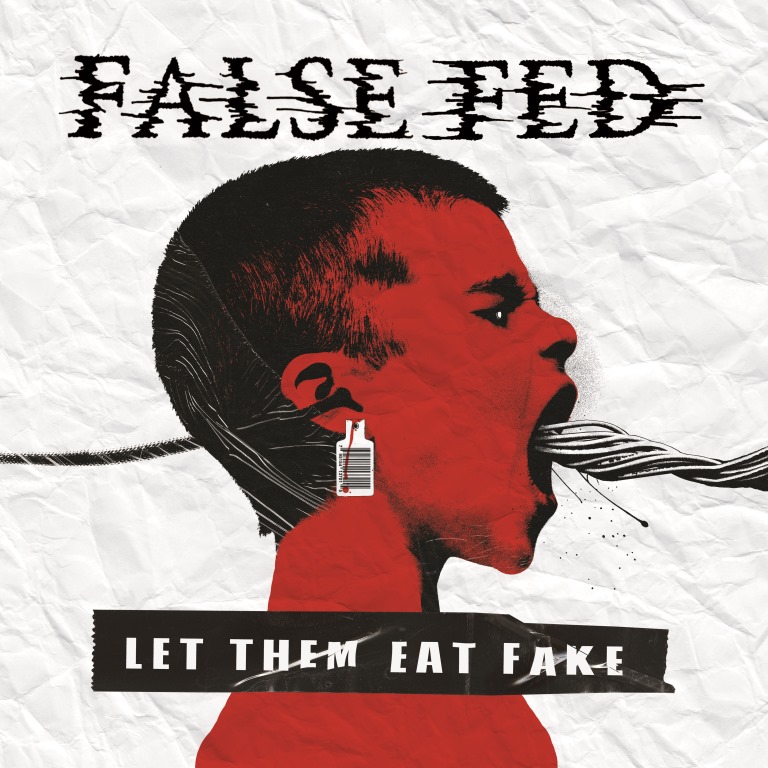
Let Them Eat Fake may be False Fed’s debut, but the members have between them a substantial catalogue of releases. The band comprises Discharge frontman Jeff Janiak, Amebix guitarist Stig C. Miller, Nausea, Ministry and Amebix drummer Roy Mayorga, and JP Parsons, and collectively, we’re told that this album sees them ‘all stepping outside their musical comfort zones to present an album of discomfort and rage in the face of reality’.

The solid, throbbing bass, glacial synth and squirming guitar that mark the album’s opening with ‘Superficial’ may come as something of a surprise given this preface: we’re deep in dark post-punk territory here, and it’s a huge shift from the hard, attacking pace of either Discharge or Ministry, as well as an immense stylistic departure. Janiak’s vocals, too, aren’t hardcore hollering, but a resonant baritone, at least unto he breaks our roaring and raging toward the end. The vibe is more UK goth circa ’86 than anything else, but this is fitting, given the many parallels between now and then. Yes, so much for progress: we’re right back to the 80s in a climate of fear and a new cold war… and not just a cold war. Instead of coming together to make some kind of effort to address the self-made catastrophe of climate crisis, we seem hell-bent on destroying one another.

‘The Tyrant Dies’ is more what you’d expect from this bunch: industrial-strength hardcore punk with a metal edge: the blasting punk fury of Discharge with the gritty heft of Ministry… but then the bridge slows things and we’re back in goth territory – well, goth as filtered through a strain of Rammstein – and the portentous refrain of ‘we will rise’ feels like a call to arms while at the same time calling on the ‘undead, undead, undead’ refrain of ‘Bela Lugosi’s Dead’: it’s time for a resurrection.

This album hits harder as it progresses: the guitars drive harder, the drums roll heavier, and goth, punk, and metal tropes melt together to forge something devastatingly intense. I haven’t heard anything that amalgamates these elements – and so successfully – since Alaric’s End of Mirrors, released in 2016 – also on Neurot.

‘The Big Sleep’ is all driving fury, hell-for-leather drums, chunky, chugging metal guitars, and high-pomp vocals echoing from the chest. Meanwhile, ‘Dreadful Necessities’ comes on like Killing Joke with its taut compressed guitar sound and driving beat. It’s dense, and probably more accurately described as steely grey than dark, since it brings a strong, melodic chorus.

The title – Let Them Eat Fake – may be light-hearted on the surface – but obviously has darker undertones in terms of its reference to class division, and that’s one of the major factors behind the album’s anger. And this is an angry album. Let Them Eat Fake is also an album that has a clear trajectory, and it builds as it progresses, becoming louder, faster, harsher, more angry with each song. By the end, it’s positively incendiary, a full-on roar of fury driven with guitars that burn. And ultimately, it makes sense as an articulation of ‘discomfort and rage in the face of reality’. We’re all feeling it. Reality is pain. Let Them Eat Fake tells is like it is.

AA

589049

Rocket Recordings – 6th October 2023

Christopher Nosnibor

Time was when I found a certain excitement and even a solace in a good dystopian novel. There’s always the question of nature vs nurture when it comes to the development of a child to adulthood, and my tendency to gravitate to the darker aspects is likely at odds with my incredibly mundane middle-class upbringing in the rural backwater of Lincolnshire. Or perhaps that was precisely its origin. What may present superficially as an idyll proves under scrutiny to be an inbred place with a smalltown mentality and has been a longstanding Tory stronghold. Being primarily agricultural, the county had the largest Polish population on account of the seasonal harvesting work. But the locals don’t like these foreigners coming over and stealing the jobs we won’t do, so… It’s probably best to start with the digression rather than veer off course later, and the purpose of the digression was to respond to the context of Teeth of the Sea’s latest effort, their sixth, and by their own claims, ‘most outlandish’ album.

To expand the detail of the context, it’s worth quoting from the accompanying blurbage rather than attempting to paraphrase it: ‘In Frank Herbert’s 1973 novel Hellstrom’s Hive, the Dune writer tells of a sinister narrative surrounding the maverick scientist Nils Hellstrom, who has created a meticulously constructed Hive underneath his Oregon farmhouse. Therein, he oversees a subterranean order of 50,000 insect-human hybrid life-forms. Ultimately his plan being for the inhabitants of the Hive to usurp humanity and take over the world. The decade thus far may not have seen anything quite so daunting, but it’s provided more than its fair share of challenges. Yet in such dystopian environments, Teeth Of The Sea flourish. This band has created a kaleidoscopic inner world all its own in Hive, their sixth and most outlandish album.

I spend the entirety of the first track, ‘Artemis’ being frustrated by my inability to place the origin of the nagging motif which is central to the tune, to the extent I stomp my feet and roar at the ceiling, neither of which helps. But things move on swiftly with the space-age stomp of ‘Get With the Program’, the vocals low in the mix beneath a conglomeration of a bubbling repetition and some gyrating dives, dominated by a sturdy four-four bass drum beat.

If ‘Butterfly House’ is overtly in the style of commercial dance circa 2005, it’s equally classic electro, reminiscent of Ladytron, but with frenzied fretwork dominating the midsection. Nevertheless, it’s dreamy, mellow – and quite the contrast from the quasi-industrial percussion-based attack of ‘Liminal Kin’.

No-one could accuse Teath of the Sea being predictable or derivate here, and the diversity of Hive spans post-rock ambience and progressive rock, and the nine-and-a-bit minute behemoth ‘Megaframa’ goes full Chris ‘n’ Cosey electro-driven dance. It’s beaty, it’s groovy, but it’s got weirdness woven through its fabric.

The final two tracks, ‘Powerhorse’ and ‘Apollo’ are both mellow, but once again couldn’t be more different, with the former bringing an ambient drift before the later fades into the sunset with melancholic picked guitar and unexpected but emotive trumpet. On paper, this probably bears the making of an incoherent mess, but nothing could be further from the truth: the contrasts are complimentary, and there’s a flow which brings the album together. It’s not mere crafting or composition, but a work of sonic alchemy.

AA

630014

1st September 2023

Christopher Nosnibor

Details around Scottish black metal act Euchridian and sketchy. They’re a trio, and the drums were recorded at a different studio from the rest of the instruments. And this is to the good. I don’t need to know, and ultimately, probably don’t want to know. What does it matter when they formed, where they live, what gigs they’ve done? The lack of social media presence is admirable: in the absence of corny posed photos and candid snaps and videos of them gurning away at their instruments, I have nothing to judge them on but the music and the enigmatic cover art. And a little enigma goes a long way.

The advent of social media has not been a great thing for many artists. Before social media, it was possible for the music and the record sleeves to represent, and promotion didn’t have to involve endless posts about pointless shit like pictures of the band’s takeaway delivery before a rehearsal. Social media says that bands now need to build a rapport with their fans, to interact, to engage, and frequently to keep them engaged. But acts like Sunn O))) and Khanate prove it’s possible to not do that and build an immense fanbase. Likewise, you won’t see JK Broadrick doing rounds of inane interviews, spouting pointless opinions on pointless subjects to flog a few more Godflesh albums, or GYBE raffling off drum skins and offering personalised hand-written lyric sheets for £75 or whatever.

Musicians by nature tend not to be as extrovert as the act of making and performing music may suggest – and there’s a world of difference from being a pop act with aspirations to performing arenas, to murky metal which channels all the pain and anguish of existence and is much less about reaching an audience than it is about having an outlet for all that shit.

Philia is, according to my light research, one of the four ancient Greek words for love, and compared to agape and eros, it’s perhaps the most obscure. This may in part be a reason for the choice for the EP’s title, but philia is usually translated as ‘friendship’ or affection, and this is what carries into the first track, the nine-and-a-half minute ‘Sweetness’.

Sweetness and black metal may seem unusual pairings, and sure enough, this absolute monster of a track. The guitar sound is quite bright, and it’s a solo riff that opens what starts a crunching slow-burner. The drums crash in slowly next, before Matt Davies’ manic mangled rasp of a strangled snake spitting venom enters the fray. There is a sense of pomp, a sense of ceremony, but above all, this feels maniacal, murderous, deranged and fucked up. The temp shifts here and there, and there’s the obligatory monster guitar solo, but it’s the driving riff that blossoms into something truly epic.

And on the subject of the truly epic, the second track, ‘The Rule Of Three’ is an absolute monster, clocking in at over thirteen-and-a-half minutes and built around a slow, trudging riff. The guitar may be bright, but it’s mangled as fuck and squirms in an agonised tandem with the raw, ruined vocals. Around the mid-point, it switches focus and embarks on a break that s beyond epic – but it’s not corny, either. It is, however, one of those chord sequences played in a way that makes you feel. And the it goes really dark.

Overall, Philia is properly nasty: this is the sound of a band fully committed to plunging the deepest depths of darkness, and ‘Philia’ doesn’t punch you in the guts, but pulls your guts out and squeezes them. Philia is full-on intensity, and hits where it hurts.

AA

a1811233614_10

‘Panic’ is the new single from DC goth rockers The Neuro Farm. The song is inspired by a childhood episode of fevered delirium, and it will be featured on their next album planned for 2024.

The Neuro Farm is a darkwave gothic rock band based in Washington DC. Combining vocal harmony with soaring violin melodies, driving rhythm guitar, and ethereal sonic textures, their music has been described as hauntingly beautiful. The Neuro Farm draws on influences such as Joy Division, Radiohead, Nine Inch Nails, Siouxsie and the Banshees, Sigur Ros, Chelsea Wolfe, Portishead, and Rammstein.

Listen here:

AA

a3842352669_10

AA

489859