Archive for November, 2021

DRET Skivor // Bad Tapes – 5th November 2021

Christopher Nosnibor

There’s niche, and then there’s microniche. Swedish cassette label Dret Skivor, this time in collaboration with Bad Tapes, present a split release that on paper doubles the audience, meaning they could probably shift a larger run. So is the run of just twelve copies of the cassette an act of wilful obscurantism? Or is it simply an awareness of market reach for what is, by all accounts, an obscure and difficult release?

Housed in some particularly (out of character) tranquil fine art depicting a rustic scene worthy of Turner, created by the ubiquitous one-man noise scene that is Theo Gowans, this collaborative effort was recorded to celebrate the midsummer of 2021 – released, appropriately just days after the end of British summertime, and also coincidental with November’s Bandcamp Friday.

Side A is occupied by ‘midsommar’, a celebration Scandinavian style. It’s not exactly a celebration in the sense of a carnival atmosphere, but it is a celebration of a momentary pause, the point at which the year hangs at its apex before its gradual retreat back towards darkness and autumn.

It manifests as fourteen minutes of ominously hovering drone during which almost precisely nothing happens. It’s ominous, and its power lies in its commitment. That is to say, it’s the Waiting for Godot of drones. Practically nothing happens. There is no discernible variation. There’s not even much to listen to for change; the texture is flat, the tone is flat. So many releases are referred to as exponents of drone, but this, this is the definition of drone. It’s not doomy, it’s not dark: it’s almost completely blank. Not so much sound pouring into a sonic void, but fourteen minutes whereby sound creates a sonic void.

Flipside ‘midsummer’ is typically Gowans; midsummer English style – some chatter over the setting up of mics and the loke, some field recording ambience, birdsong and a small choir starts things off gently if there’s a lot going on at once, and then a barrage of feedback and churning noise that obliterates everything. It gradually slides into a morass of interweaving drones that undulate and twist, with all sorts of extraneous fizzes and scrapes intersecting throughout. If ‘midsommar’ is a smooth drone, an endless stretch to a clear horizon ‘midsummer’ is an unsettled and unsettling experience dominated by disruption, there is discord and discontinuity, and a pervading air of discomfort.

Taken together, the two pieces provide contrasting perspectives which illustrate that experience is not fixed, but something which comes from perception.

AA

a1635961788_10

COP International – 5th November 2021

Christopher Nosnibor

This is a blast from the past. Ungod was one of those albums that really grabbed hard when I encountered it on release back in 94. They were exciting times, and even the most cursory scan of album charts or any lists of albums released in 94 evidence what an incredible year it was. But that was simply the time, that brief spell in the early 90s where a whole host of new alternative styles emerged and broke through.

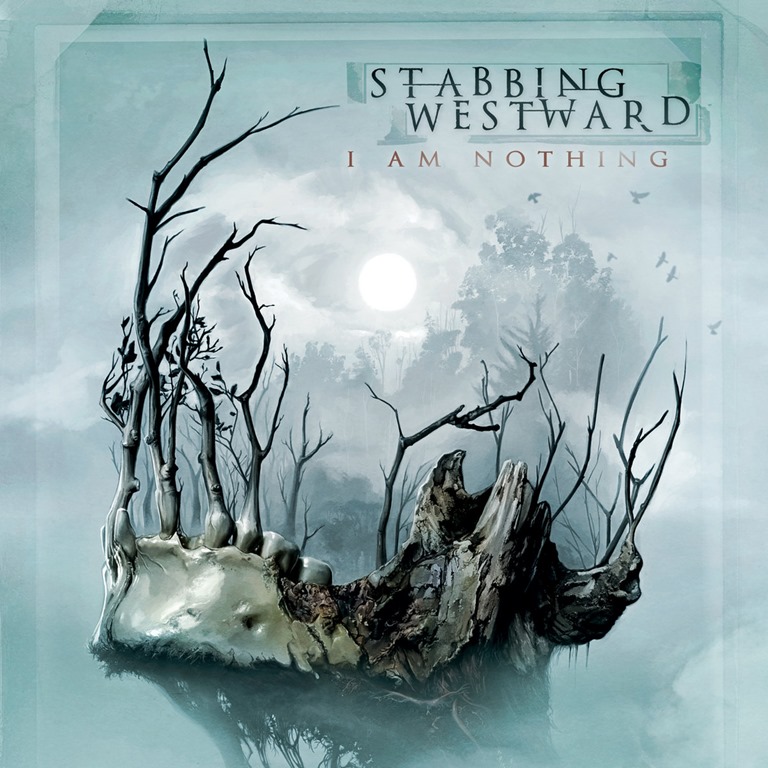
With three versions of ‘I Am Nothing’, this EP very much has the feel of CD single releases from the 90s – something I can’t help but feel ambivalent about. Major labels were particularly guilty of this, keen to eke out as many formats and releases from material as possible (preferring to release a second album than an album’s worth of B-sides across singles and EPs).

‘I am Nothing’ in its original album form is a full-gritted beast of a tune, driven by a dense, snarling bass rattle and a phat, sludged-out guitar riff. With a strong chorus – dare I even say anthemic – it’s vintage Stabbing Westward (and the choice of John Fryer, who produced their first 2 records, may have contrinbuted to this).

Chris Hall’s ‘Replicant 2021’ remix goes all-out on the industrial disco groove, and while it’s got that dancefloor-friendly rush about it, it strips out much of the power of the original in favour of making it something to bounce along to. Go Fight’s ‘Taiko Sludge Remix’ is slower, more paired back yet more detailed, and also moodier-sounding, making it the more interesting of the two mixes by some margin.

The three versions are wrapped up with a ‘2021’ remake of ‘Slipping Away’, the final track from their 1996 sophomore album, Wither Blister Burn & Peel. A minute shorter than the original, it places the emphasis very much on the synths aspect of the sound; if the original was reminiscent of Downward Spiral ­era Nine Inch Nails, this reworking is more Pretty Hate Machine. Propelled by a stomping beat, it’s got no shortage of attack, and it will be interesting to hear the direction of the forthcoming album, Chasing Ghosts.

AA

a3252577958_10

5th November 2021

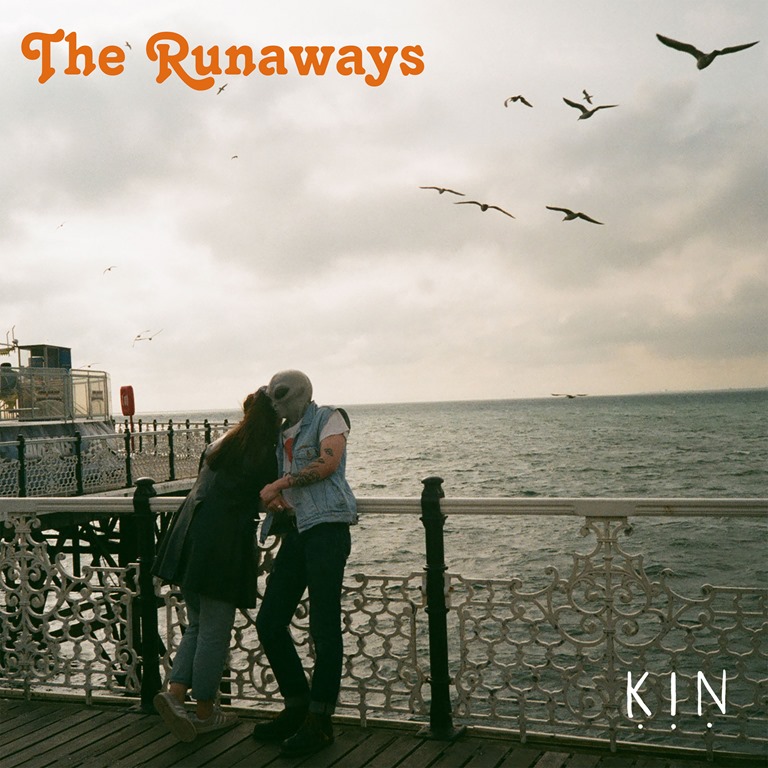
Remember, remember the fifth of November… because it’s not only BandCamp Friday, but the day KIN release their first new material in a year, following up on ‘Wander & Lost’, which found favour with us here at Aural Aggro with their fourth single that happens to also broadly coincide with their return to the live platform.

‘The Runaways’ continues the trajectory of its predecessor, dominated by careful, melodic, chorus-soaked guitars and pursues a dreamy, melodic flow. It’s very much a pop-tune, albeit a mellow, mid-paced one, with a truly immense production that calls to mind 80s Fleetwood Mac and also 80s Kate Bush, not to mention hints of Cindy Lauper’s ‘Time After Time’, while softy blending in shades of more recent acts like The XX. No, it’s not the female vocals, but the overall sound, the vibe, the feel.

It’s this sound, vibe, and feel that have a transportative quality that corresponds with the theme of the song which charts life transitions, new people, new places, and the wonder and trepidation that accompanies such changes. Even running to something feels like running away from something else as you leave your old life behind, an experience that’s at once scary and exhilarating. The song itself is simply exhilarating, the musical equivalent of throwing open the window on a glorious Spring morning, inhaling the fresh air and soaking in a perfect view while flushed with the potentials of a new day in a new life.

AA

Kin artwork

Tanto. so much. too much.

Lucrecia Dalt and I have shared much music with one another, and over the course of the many years of knowing each other and sharing stages, we decided to collaborate on the track ‘Tanto’ for Qalaq. We discussed a few ideas and wanted to keep it minimal, but maintain the form of a ‘duet’. We exchanged some music and she came up with a beautiful tape loop for the backbone of the track, through which we were able to find our vocal identities. It was a haunting, eerie, out-of-time tape loop, which she proposed after I had sent her the (Arabic) lyrics and a translation of them—and most importantly, their intention. The song is meant to evoke the feeling of ‘envy’ familiar to many people in developing nations.

Legs in an Eastern sewage, eyes in a Western fictitious paradise.

Erin Weisgerber and I decided to make a small film for this song. I had wanted to work with the incredible Stacey Desilier as a choreographer and dancer. We exchanged some ideas and I sent everyone some film references, to which everyone echoed back others, and from there we settled on a setting and imagery and actions and shot this film in the forests north of Tiohtia:ke / Montréal.

–  Radwan Ghazi Moumneh –

Watch the video here:

2fe0a1b6-49ad-0734-6bbe-372530dca1ae

Qalaq album cover
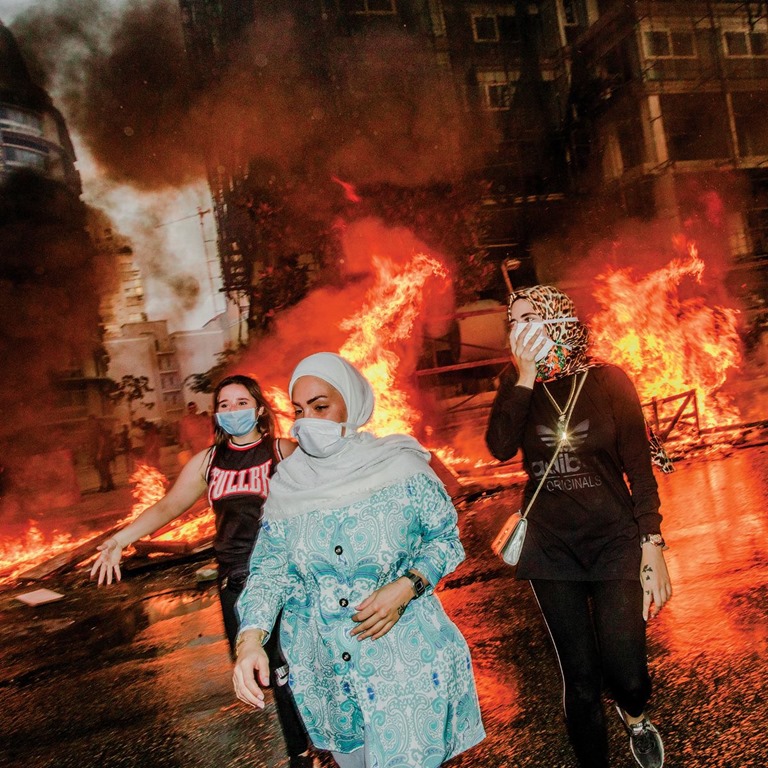
Photo of the 2019 Beirut October Revolution by Myriam Boulous

Christopher Nosnibor

Over recent months – and more – we’ve unravelled the series of releases by experimental oddballs Kröter, via their affiliation with the king of quirk, Mr Vast, formerly of cack pop maestros Wevie Stonder, aka Wevie De Crepon. You can never have too many side-projects, offshoots, and affiliated acts, and so it is that Kröter-associated Hunger give us Wollufos. (Hunger is Christoph Rothmeier & Jörg Hochapfel; Rothmeier is the other half of Kröter along with Henry Sargeant, aka Mr Vast). This is their eighth self-distributed album, and their first on vinyl.

Have you managed to keep up so far? Good, because it’s only going to get more complex and convoluted, because these guys are a prolific, self-contained community cranking out endless oddities, and Wollufos is no exception. They pitch it as ‘mixing fake folk acoustic instrumentation like banjos and open tuning guitars with Harry Partch-style homemade devices’. Fake folk?

From the springy sproingy lo-fi shuffling synth whackout of the brief intro piece that is ‘Zwergenfieber’, it’s immediately apparent that this is going to be a substantial serving of quirky, off-the-wall music that doesn’t conform to any conventions, even their own. The Berlin-based duo work across time signatures and genres at the same time, with some woozy, warpy synths and picked guitars existing in the same space but seemingly playing different songs. Then there’s the leaning towards titling their quirky, heavily rhythm-orientated instrumental ditties in French.

‘Mambo Momie’ is an exercise in bleepy motoric minimalism, and the album is brimming with minimal beats and squelchy synths, as is nowhere more apparent than on the strolling ‘Sunset Sling’. When it comes to making music with all the bells and whistles, Hunger take this quite literally: download bonus cut ‘Schuhe aus Brot’ sees them pull out all the stops to create something that borders on the overwhelming, with additional droning horn sounds and blasts of noise on top of the stuttering, clamorous percussion, before winding down to trickling chimes.

There’s some kind of half-baked wonky country / space crossover on ‘Chariot de Pipi’, and the atonal, off-key pickings of ‘Macramée Cramée’ are truly brain-bending. And then there’s the twelve-minute ‘Hundenebel’, a quivering proggy space-rock workout that makes optimal use of space and distance and of Daniel Glatzel’s clarinet to forge a vast sonic vista. Great, yawning siren wails rub against bubbling synth swells, and there are so many contrasts, to may layers, so many juxtapositions.

Why do we find discord so difficult to process? Even while I enjoy it, I find that numerous things that are seemingly disconnected or otherwise independent create something of a sensory overload that isn’t always entirely pleasurable, and can at times prove quite disorientating and uncomfortable. It messes with our orientation and equilibrium, trips our sense of balance and spins us off centre. Wollufos will leave you dizzy. At times it’s quite bewildering, but it’s never dull or lacking in inspiration.

AA

a2004897443_10

Christopher Nosnibor

That there is a shortage of grass-roots venues is a widely-reported fact, and the last year and a half has only exacerbated what is, put bluntly, a crisis in the music industry. At the heart of it all, the problem is is that we exist under capitalism. Art and capitalism simply aren’t compatible. We therefore have a model whereby venues need to book acts who will bring punters who will pay for tickets and spend money over the bar. But how do acts who simply don’t have an established audience, or are unlikely to ever attain that kind of audience reach whatever audience they may have? How do acts who need the exposure get the exposure in the first place? The system is flawed. However, recent years have seen the emergence of a different kind of venue, with rehearsal rooms doubling as gig spaces. They maybe small, but that’s for the better – gigs with an audience of maybe 20 people don’t need a lot of space. Unlicensed, BYOB means no overheads or costs there, and because these spaces make their money by other means, any takings from gigs are simply a bonus. They also tend to benefit from being on industrial estates, meaning there’s less risk of neighbours complaining about noise, meaning the only downside is that they’re not so often in prime city centre locations. But how many small venues are these days?

Places like CHUNK and Mabgate Bleach in Leeds and Hatch in Sheffield have led the way, and now Tower Studios in Stone, a little way out of Stoke-on-Trent, presents a ‘proper’ gig following one shot for online streaming as part of the last FEAST event (with FEAST being very much something born out of lockdown with a series of streaming events).

For a place a bit off the beaten track, it’s stunning. Scratch that: by any standards, it’s stunning. A rehearsal space with a stage and meticulously maintained, it’s something else. The PA speakers are halfway down the room in the main room and face the stage, doubling as monitors, meaning the band get to hear the ‘out front’ mix instead of the monitor mix. There is a second, smaller room, but we’re in the main room tonight for a lineup of noise and experimentalism, and if the audience isn’t huge, at least they’re receptive.

Omnibael open with an ear-bleeding blast of space rock feedback with industrial percussion worthy of Godflesh. Jase plays pedalboard predominantly. Brief moments swerve into black metal, but it’s mostly just a relentless barrage of noise. The third track goes a bit Sunn O))), with big hefty power chords paving the way for more raging metal noise. The duo’s experimental explorations may yet to have found a firm stylistic footing but this outing is perhaps their most focussed and most intense live workout yet as they continue to evolve.

DSC_0831

OMNIBAEL

The second act, Vile Plumage, make like performance art, but struggle to keep straight faces, like they know this is audacious and preposterous. The gloved hands over faces cover grins disguised as menacing smirks. Stop start blasts of noise judder and thud. A rattling bean tin. We got given pebbles to toss into a bowl, and it was all quite bizarre and confusing, but entertaining in a strange and ritualistic way.

DSC_0832

Vile Plumage

I must have zoned out or blanked out for the next twenty minutes. Something about some guy cranking out electronic noise reminiscent of early Whitehouse while shouting torrents of vitriol and profanity through squalls of feedback, I don’t know much and I can’t comment on whether or not it was any good. But I think it happened.

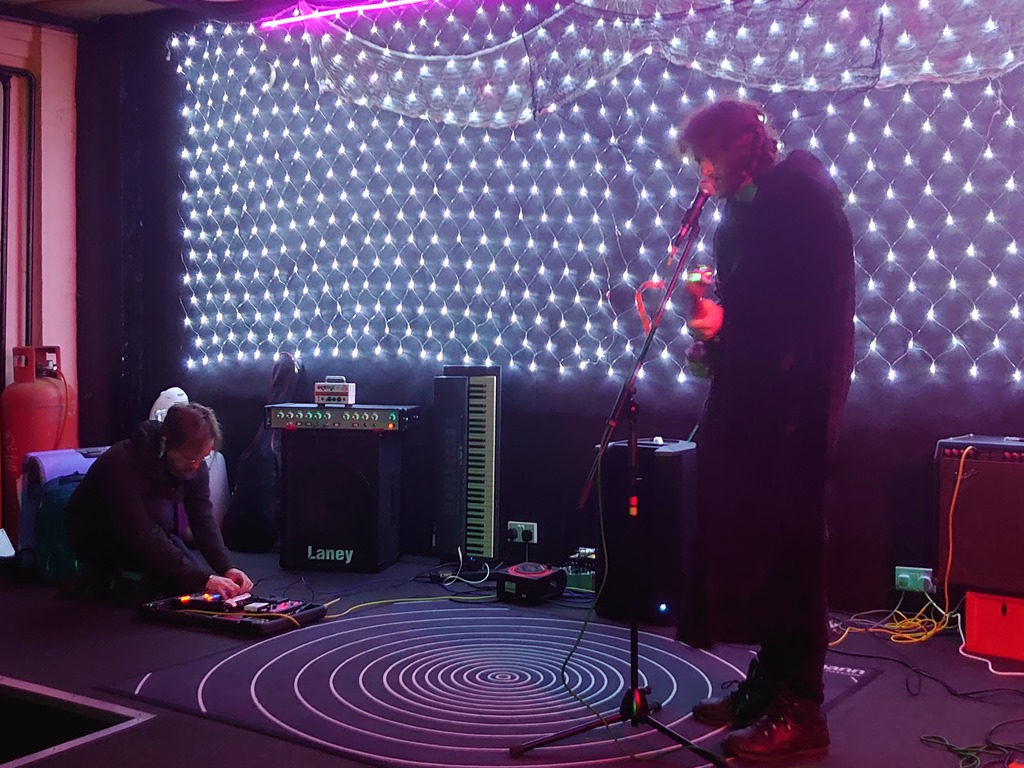
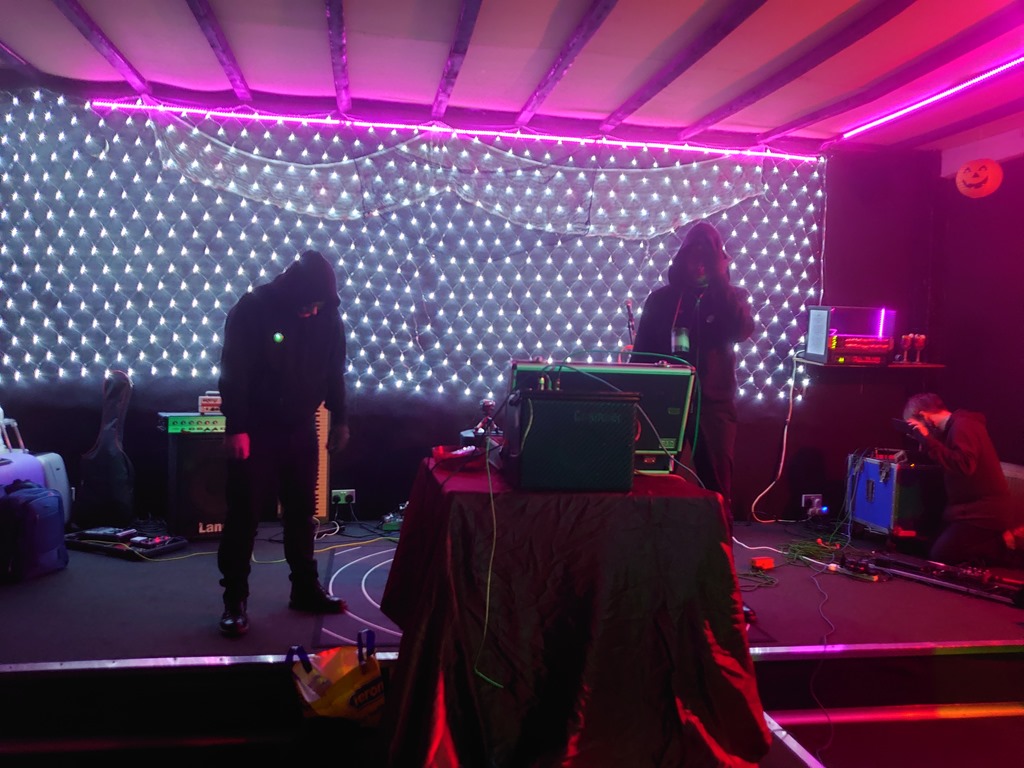
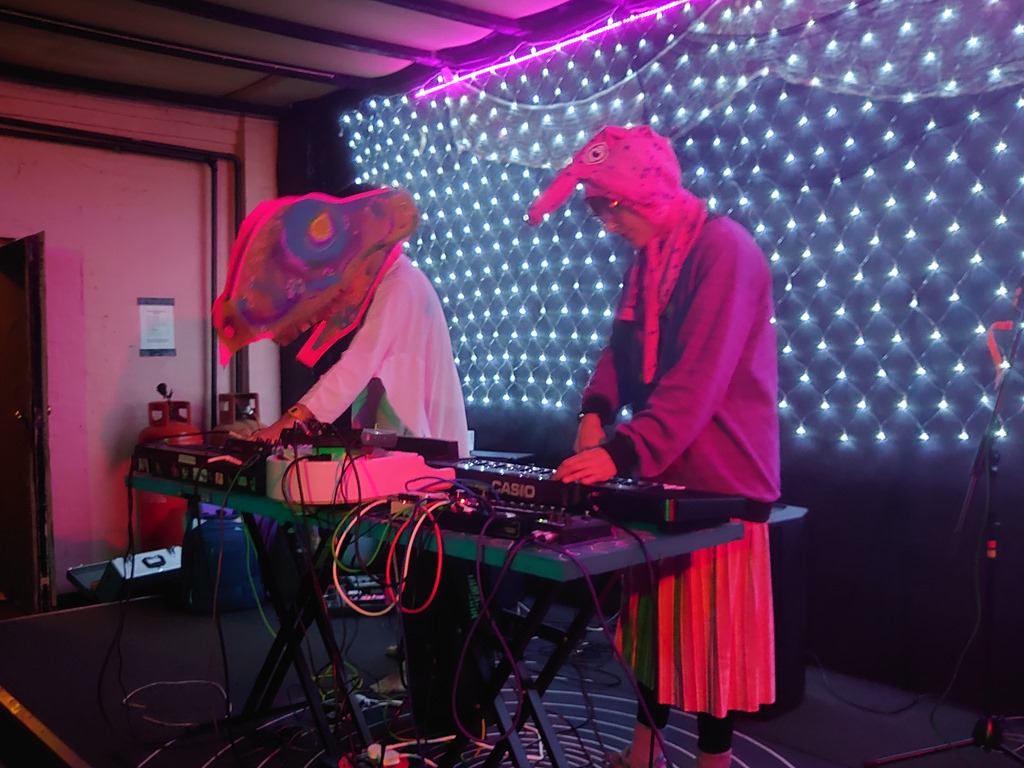
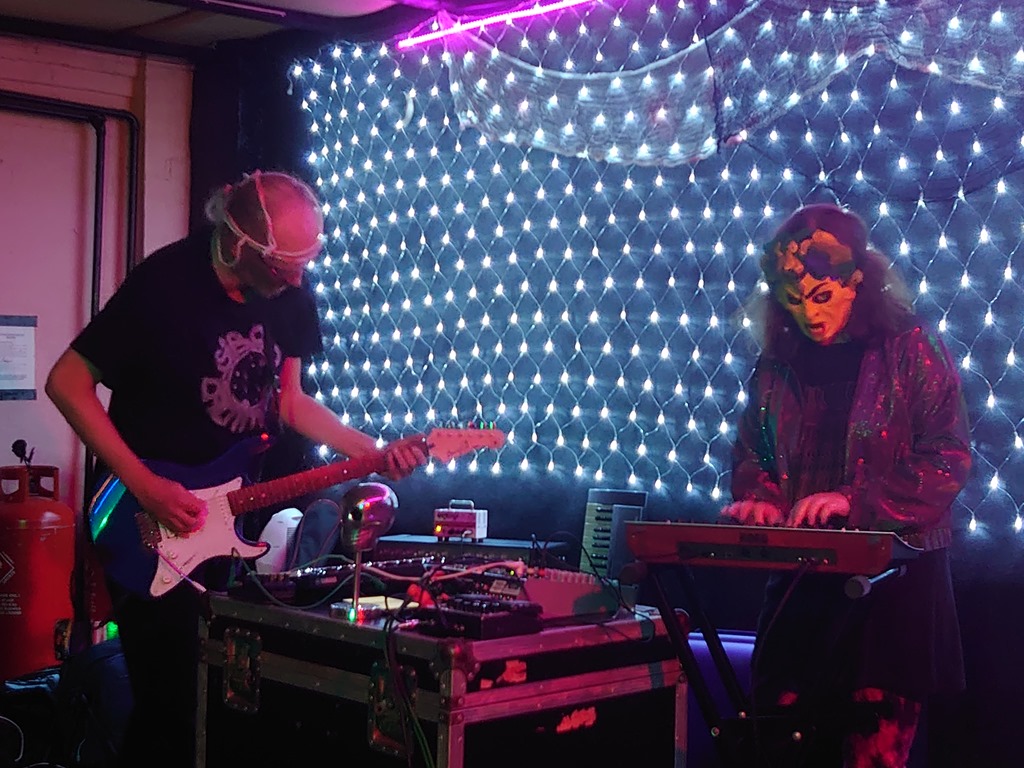
Garbage Pail Kids is an experimental duo which features Theo Gowans, aka Territorial Gobbing – meaning that anyone familiar with the scene will have an idea what to expect –namely anything as long as its experimental, noisy, and improvised – and Basic Switches, the experimental side project of Leeds indie act Cowtown. Weirdy drones and feedback strongly reminiscent of Throbbing Gristle dominate the set. There’s echoed vocal oddness and endless pulsations with phasers set to warp and stun. Crazy headgear is of course a signature, and the headgear is particularly crazy here. The ‘anything goes’ oddity is nonstop, and at one point we find Theo playing keyboard barefoot while ululating wildly. It’s a complete headfuck, but a brilliant one.

DSC_0836

Garbage Pail Kids

Final act Ashtray Navigations are far easier on the ear. Predominantly dominated by dark, ambient sounds and gentle ripplings, although these are ruptured by dense synth bass and crushing beats. They venture deep into prog and space rock with vintage drum machine sounds: the snare is pure Roland 606. The set builds with some bumping bass that’s more akin to Chris & Cosey’s Trance era works. After a guitar string change that does slow the momentum just a little, the last piece combines the throb of Suicide with extravagant prog guitaring. It works primarily because of the blistering volume that’s utterly gut-trembling.

DSC_0847

Ashtray Navigations

It makes for a great end to a great night, offering a selection of sounds that have enough in common to be complimentary, but different enough so as to snag the attention. With any luck, this will become the blueprint for nights to come.

29th October 2021

Christopher Nosnibor

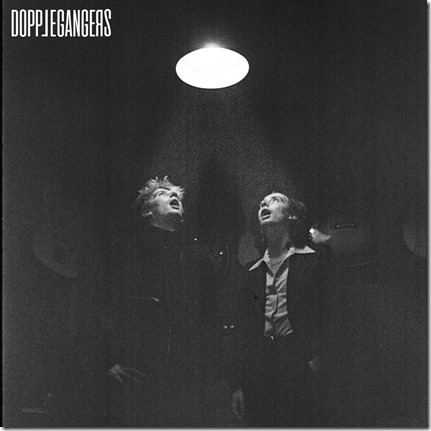
It seems that everyone has a doppelganger. As someone who’s prone to wearing a hat and dark glasses, to be told I’ve been seen in places I’ve not been in a city the size of York is pretty unnerving. But there it is: life unravels by strange and unexpected means.

‘Three Steps South’ is both strange and unexpected, and presents an interesting hybrid. It’s got that nagging repetitive cyclical, sequenced electro element and a noodly synth line that bubbles away and mines a deep seam while drums and guitars crunch away…there’s something about it that reminds of Placebo’s ‘Taste in Men’ to the main riff, but then it’s a slice of swanky, swaggersome indie rock at heart. To add to the eclecticism, the mid-section goes all spacious with a reverby western desert twang.

Most surprising of all is the fact that it not only all first together and works, but that it’s a catchy bugger of a tune.

Dopplegangers_3 Steps South Artwork

(click image to play)

Christopher Nosnibor

The clue’s in the name: Bdrmm started out as a bedroom-based solo project for Ryan Smith in 2017, but soon transitioned to being a proper gigging band. Like so many bands, their progress was severely hampered by more than eighteen months of no live activity, something that seems to have hit bands in the early stages of their careers the hardest, since they rely on performing in grassroots venues and supporting larger bands to build their fanbase.

This was one of many shows that got booked, rescheduled, and rescheduled over the course of the last eighteen months, during which time they’ve maintained a steady flow of releases, including their debut album and an attendant set of remixes and a number of singles, which have clearly done no harm to their profile, garnering glowing reviews from across the spectrum from NME to MOJO via Line of Best Fit. The Fulford Arms, then – sold out, although still operating at reduced capacity for ticket sales – is pretty busy even early doors.

It’s an interesting demographic, too, probably around a 60/40 split of twenty-somethings and forty-somethings – which isn’t entire surprising given Bdrmm’s referencing of the music that the older fans were listening to when they were around the age of the younger ones.

Having just two bands on the bill works well – not only allowing time to ventilate the room between acts – but to give the punters and their ears a rest, time to recharge glasses without a crush at the bar, and an early finish. After so much time out, it might take some time to rebuild the stamina for late nights for a few of us, and for those slightly further afield, public transport isn’t what it was a couple of years ago (or more).

Manchester’s crush – another band who, having formed in 2018 have a lot of early-days ground to recover – are on first. I was pretty sure there have been other bands called Crush, and it was only later I recalled Donna Air and Jayni Hoy’s short-lived pop career and the early 90s project featuring John Valentine Carruthers (formerly of Siouxsie and the Banshees) and Killing Joke drummer Paul Ferguson . The young four-piece are nothing like either. The set makes a shuddering launch into mid-tempo post-rock shoegaze with two guitars. Their sound is reminiscent of melodic 90s indie with a dreamy style, but still some drive too. There’s lots of texture and occasional bursts of noise. They may be lacking that slickness that playing often develops, but they can really play, and the closer comes on like Dinosaur Jr being covered by Slowdive, and it’s ace.

DSC_0793

crush

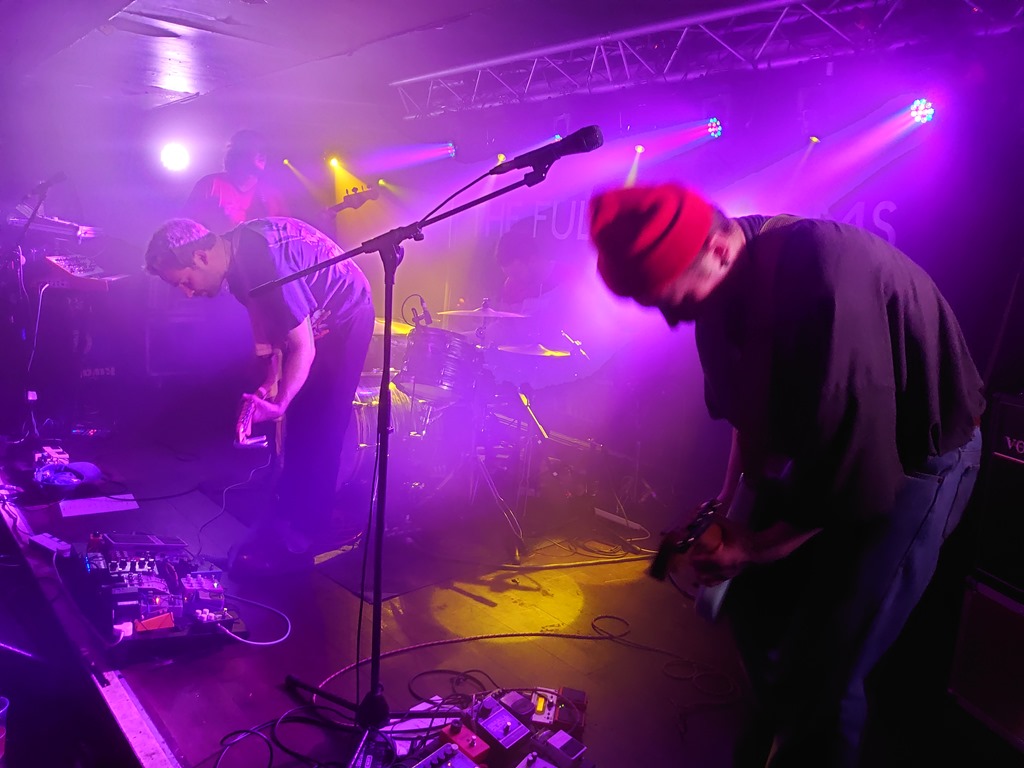
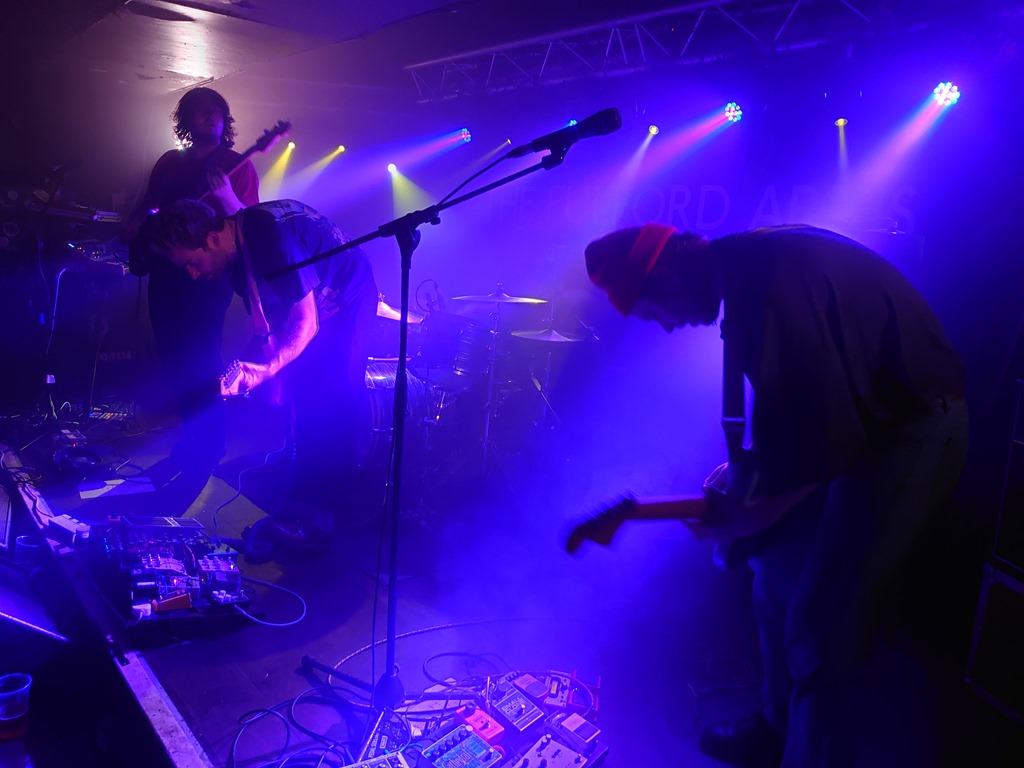
Crackling distortion yields to a driving motorik riff to announce the arrival of Bdrmm, and it’s immediately apparent that they’re a cut above, and that any hyp is entirely justified. The sound is immense. The drums are half-submerged beneath a heft wash of guitar. It’s a dense, throbbing, shimmering wall of sound. The percussion is a mix of traditional and electronic drum pads, and everything comes together magnificently. New single ‘Port’ drops early as the third song and it’s a brooding synth-driven beast, part My Bloody Valentine, but probably more A Place to Bury Strangers. There’s all the reverb, and all the volume: in fact the sound is great, and sound man Chris Tuke gets a deserved shoutout from the stage during the set. Because while it’s nice on record, and all the comparisons to Slowdive and early Ride are entirely appropriate, live, it really needs to be heard – and felt – at organ-trembling volume.

DSC_0812DSC_0813

Bdrmm

‘Happy, is a synthy swirl meshed with a gritty bass, and as the set progresses, we see the band peeling off blistering sheets of noise. Bent over, guitars practically scraping the floor, they don’t only do shoegaze but they also properly rock out. Near the end of the set they treat us to an immense, slow-building crescendo climax worthy of I Like Trains.

DSC_0796

Bdrmm

They leave us overheated, breathless, and stunned by the sheer power of the blistering noise of the guitars that howl and melt. No way should we have been able to experience this in a venue with a capacity of around 130, and I rather doubt we will again. Bdrmm are a Brudenell band at the very least: they have not only the songs, but that indefinable ‘fuck yeah!’ quality that comes from the wild exhilaration of seeing a band who simply blow you away.