Archive for June, 2020

Gizeh Records – GZH99 26th June 2020 (Digital) / 25th September 2020 (LP/CD)

Christopher Nosnibor

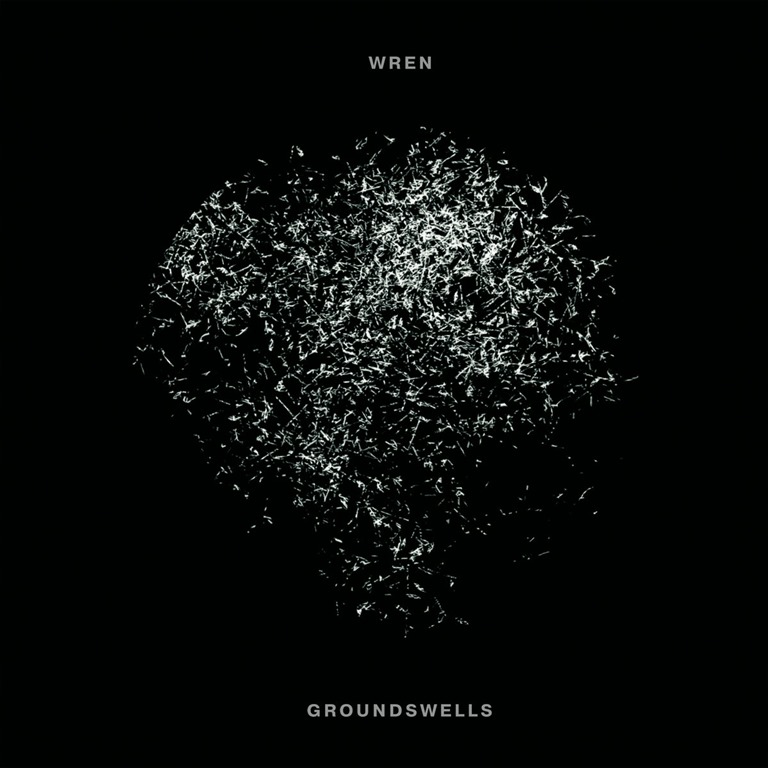
Wren’s third album – or ‘third chapter in Wren’s seasonal lore exploration’ as the press release puts it – is their first on Gizeh, and promises ‘six melancholy-shrouded sonic ruminations [which] swell between intimate performances devoid of adornment, and evolving soundscapes of auditory ruin’. And pitched as being of interest to fans of Godflesh, ISIS, Kowloon Walled City, Neurosis, it does the job of bringing slow-burning slow-trudging metal with an emotionally-articulate aspect and certain musical nuance.

The first megalithic sonic slab to assail the listener is the nine-minute ‘Chromed’, an epic battery of guitar and anguished vocal, and it piledrives in with a repetitive chord sequence, there are heavy hints of Amenra, and it’s the grainy, earthy quality that’s most reminiscent of Neurosis. There’s a lot of space here between the crushingly weighty power chords that drive, hard, low, and slow, less like a battering ram and more like a tank driving against a wall: slow, deliberate, and completely devastating.

There is detail, there is texture, and there is space within the broad parameters of this ambitious work, giving moments of respite and pauses for reflection between the raging infernos of fury that flare upwards toward the skies from the troughs of gloom. And yes, Groundswells is gloomy, dark, lugubrious, the soundtrack to motional trauma and swings from anguished introspection to annihilative rage.

If the album’s entirety could be encapsulated on a single track, it would be the dynamically-flexible ‘Subterranean Messiah’, which stretches out beyond ten minutes as it works it was way though a series of peaks and troughs, venturing into a range or mood-spaces and sonic terrains to forge a compelling sonic journey that’s utterly immersive. Jo Quail adds layers of subtlety and not to mention sonic depth with her cello work on the track also.

The final song, ‘The Throes’ is a grinding dirge, Godflesh played at the pace of Swans’ Cop. But amidst the torture, punishment, and the anguish – those excoriating vocals and that shrieking lead guitar that battles against the dense, slow chug and grind coalesce to form a perfect prism of pain, the psychological expressed through the physical.

If the band’s name suggests something soft, delicate, melodic, then Groundswells tears those expectations to shreds in the most obliterative way. It’s simultaneously harrowing and beautiful, and an all-consuming experience.

AA
a3321068616_10

11th June 2020

Christopher Nosnibor

Stoke on Trent’s pottery industry may not be what it once was, and apart from Robbie Williams, who’s not a good advertisement for any city, it’s not exactly renowned for its music. But then, underground artists tend not to be renowned generally, existing as more of a loose-knit and divergent community. It was through this community that I first heard the sounds of Plan Pony, although I’ve known the man behind the project – again, through the community – for some time.

Single release ‘Martyr’, backed with ‘Martyr II’ (and accompanied by a third track, ‘Hipster Soufflé’ on the ultra-limited CD-R edition) is a dank, muffled, chunk of raw experimental noise layering that combines elements of gnarly punk, early industrial, and no-wave.

Created using sampler, delay pedals, voice, loops, guitar and found sounds all recorded to tape, it’s primitive, raw, and the epitome of DIY in the best possible sense: this is the sound of an artist making art out of a need to make art, without having even the peripheral vision of one eye on any kind of audience.

‘Martyr’ thuds in with a muddy sequenced drum that sounds like a wet pair of balled socks being slapped around inside a cardboard box. The guitar sparks like the jack lead’s been plugged directly into the mains, and the shouty vocals are all the echo and utterly impenetrable. The result is an angular, abrasive noise that sounds how I expect some of Uniform’s demos to sound.

‘Martyr II’ is very much a contrast: the same production values and tonal range this time provide the context for a slice of brooding dark ambience, an instrumental (de)composition that creeps and spreads like mildew.

These are dark times, which are evidently inspiring some dark shit: and this is some dark shit right here.

AA

a3432590618_10

7th June 2020

Christopher Nosnibor

I suppose I’m fortunate to move in the circles I do. In both the real and virtual world, I’m surrounded by some remarkably talented creatives, working in all fields. Many seem to have found new outlets for their creative leanings under lockdown, in many cases probably for the sake of their sanity.

The emergence of a brand new act, VVolves, proved as welcome as is was unexpected, because the duo’s debut, a blend of shoegaze and cool synth pop, is a belter.

‘Momentum’ is a brilliantly kinetic, driving tune that kicks in solidly after a gentle, spacious intro. I’m a sucker for a song that locks into a groove and feels like it’s surging forwards because of, not despite, the repetition, and ‘Momentum’ absolutely does that: a repetitive chord motif, overlaid with chilly synth stabs and a propulsive drum track which contrasts with the ethereal vocal delivery. In combination, it’s an exhilarating rush.

We need more of this, please.

AA

a1325238669_10

Jam Records/343Records

Christopher Nosnibor

Misophonia is the third solo outing for Third Of Never guitarist/founder Jon Dawson, and it’s certainly quite a departure from his main musical vehicle. Instead of mining a seem of driving rock with clear ‘classic’ roots in the vintage greats, Misophonia is an exercise in dreamy floaty, droney electronica, punctuated with some magnificently mellow, understated guitar work.

Everything is drenched in infinite reverb, and has an aura of ethereal otherness and distance. On ‘Lighter Fluid’, a child’s voice cries out amidst crunches and crackles of static, while ‘Coffee From a Stranger’ is a sliver of whimsical country slide that chimes and tinkles and fades in and out of focus. There are dark undertones and dank rumblings to be found on ‘David Lynch Owes Me Money’ as well as distant instrumentation and a rising tension.

Birdsong, glitches and extranea feature heavily across the album’s fifteen short segments which segue into one another to form a near-continuous abstract drift, and the story behind the album’s development during the recording of Third of Never’s last album, Austerity, as told by Dawson himself, is interesting and useful in proving some context:

“I started the Misophonia project during the sessions for the Third Of Never album Austerity, which turned out to be a real bruiser,” Dawson said. “As a way to cleanse the palette between sessions, I started scoring the events of the day using drones, soundscapes, and piano. Listening back to it now, it seems as if the proceedings had taken a tense tone.”

It resonates: while taking isolated walks, like many, I have noticed birdsong more. Perhaps not because there are more birds or more songs, but because the roar of traffic and planes and general noise is diminished. Then, against the backdrop of such quiet, distant engines and other sounds stand out more. I’ve heard fewer sirens, but suspect that’s because ambulances and other emergency vehicles have no traffic to clear, not because of a lack of emergencies. Context counts, and it makes sense to clear the mind with something completely unstructured and soft while bashing out hefty riffs by way of a dayjob.

‘Someone is Walking Toward the House’ is filmic, but also captivatingly haunting, as a picked guitar motif drifts across a low-end grumble, while the final piece, ‘The Age of Anxiety’ pins a rarefied atmosphere to a sad, lonely piano that echoes into emptiness. And it hits home: we are all there, surrounded by nothing, just sound in space and we cling to whatever we can. This is indeed not only the age of anxiety, but the specific point where life threatens to overwhelm us.

What Misophonia offers is the opportunity to step back, reflect, and create much-needed mental space.

AA

AA

su4683-A_Late_Night_Stroll

Front & Follow

Christopher Nosnibor

The demise of the label Front & Follow was a sad one, for many reasons. I mean, it was understandable: a one-man enterprise, the degree of effort required to curate, release, and promote music – especially obscure, niche music – is astounding. It’s always going to be a labour of love, but all the love in the world doesn’t pay the bills.

This does mean that the return of F&F, however brief, with a view to issuing a series of lockdown / isolation compilations is extremely welcome, simply in principle. Not only because it’s a reminder of a time before what’s rapidly looking like a collapse of civilisation, not only because it’s a reminder of what a great label it was, but also because despite the tidal wave of lockdown releases that are flooding the virtual world right now, we still need more music like this: music from the fringes, music that coveys the intense cognitive dissonance of the current situation in non-lyrical terms.

To unpack this: the title summarises the situation as it stands for many in the most succinct form. Whether or not you’re officially ‘isolating’, we’re all still isolated for the most part, either alone or with the rest of out household. But it seems that however ‘together’ we are, however connected, however well we communicate, everyone’s individual experience is different, and in many was incommunicable: we’re all islands, isolating inside our own heads. Words get in the way, and impose the experience of others on our own private thoughts, so the fact that this collection is largely instrumental is welcome, and where there are vocals, they tend to be absorbed into the fabric of the sonic experience.

With twenty contributions from a host of artists. Many of whom I’m unfamiliar with, there’s a theoretical pot-luck element to this compilation, but F&F have always been strong on curatorial skills, and while the contribution from Kemper Norton (arguably one of the bigger ‘names’ on the release) is surprisingly brief, it’s positioned in a prominent position opening proceedings, and sets the tone with its tonally-balanced ambience.

Grey Frequency’s ‘Dissolve’ which follows is more what you might expect: almost seven minutes of mellifluous mellowness, but with crackling snippets of static and shadowy undercurrents that run dark and deep.

Picking standout tracks is difficult and also rather to undermine the project, although

‘Basic Design’s ‘Dream Archipelago’ does stand out by virtue of having vocals first and foremost, but also for it’s woozy, fugue-like qualities, something echoed by the ethereal ‘Dining with Phineus’ by Carya Amara.

AZAK BROMIDE bring a more power electronics / industrial slant to the dark ambient party, but it’s the seventeen-minute behemoth that is Boobs of Doom’s ‘Scumbellina’ that really is the ineffable centrepiece here: a towering monolith of a track it’s all the experimental electronica distilled into a single movement of analogue oddness.

Elsewhere, Ekoplex capture the essence of early cabaret Voltaire on the dubby ‘Rejected Replekz’, Thomas Ragsdale delivers some signature ambience with beats with ‘The Light Between’, and Elizabeth Joan Kelly’s ‘Waking Up With a Cat on My Face’ perfectly encapsulates that moment or panic, that abject spasm through a minute and three quarters of swampy discord and sonic confusion. Hibernation’s nine-minute ‘Fragile Times’ is a perfect summary of everything: so fragile and soft as to be barely-present, it’s a mist-like ambient piece that’s impossible to place your hands on it, much less pin it down, and that wisp-like intangibility, that vague ephemerality is the essence of the collective mind right now. However you may think about think about it, whatever your beliefs, pinning down the mood of the moment is nigh on impossible on the tumultuous psychological rollercoaster we find ourselves on.

Thankfully, soothing, spacious sonic wanderings like the album’s final contribution, TVO’s ‘A Wave as the Coast Disappears from View’ offer id to calm, even if the title reminds us we’re only barely afloat and only so far from drowning in an instant.

Isolation & Rejection Vol 1 is a magnificent collection at any time, but also serves as a contemplative soundtrack to strange and troubling times. It’s also classic F&F.

AA

a1782742595_10

When circumstances forced Wardruna to postpone the release of their upcoming album Kvitravn, it was clear to them that they still wanted to release new music. Music and art can potentially carry great meaning in times of uncertainty. They decided that now was not the time to stay silent and headed straight back into creative mode and the studio to write and record the song "Lyfjaberg".

The Old Norse word Lyfjaberg means Healing-hill or Healing-mountain and is known from Norse mythology and the Eddic poem Fjölsvinnsmál as a place of comfort and cure for the ‘sick and sore’ who manage to climb the mountain and bear offerings at the shrines there – a gift demands a gift in return.

The video for "Lyfjaberg" was mainly filmed in the mountains at Tustna in Norway. The band shot the video in early May, when all of a sudden winter decided to return with full strength and they ended up wading in half a metre of snow for three days and nights. On many levels, the process of making this video reflected the meaning of the song itself. They all had to climb a few of their inner mountains to get it done.

AA

Wardruna

Bearsuit Records – 26th June 2020

Christopher Nosnibor

The latest Bearsuit offering is a single by The Original Magnetic Light Parade, which is a collaboration between Belgian musician, Alexander Stordiau and Edinburgh man, and Bearsuit favourite, Harold Nono.

‘Confusion Reigns’ is surprisingly unweird, at least to begin with, exploring a sort of cinematic synthwave trajectory, a sparse machine drum low in the mix. Then it breaks into something massively bombastic, and it’s faux-epic in tone, sounding as much like someone fiddling with the voice settings on a keyboard, before finally settling on a piano sound and rolling into a space-rock explosion. With about half a dozen passages in all packed into its five-and-a-half minutes, it feels more like a collection of ideas for longer pieces than a single composition. Confusion does indeed reign.

It’s a fitting summary of the now: everything is confused and confusing, especially in the UK, especially in England. I still don’t know under what circumstances I’m supposed to stay at home or meet people, what’s essential or non-essential, and the logic behind any explanations of the changes that seem to be announced by the day seems deeply flawed and downright contradictory, even for the things I think I do know.

Nothing is as it seems and you can’t trust even trusted sources, and counterpart ‘Smoke and Mirrors’ very much hints at this global obfuscation in its title. Who can you trust? What can you trust? Certainly not statistics.

Instrumentally, it brings together acoustic guitar and smoky synths. The transitions are less frequent, resulting in a piece that twists and turns, but flows rather more smoothly. It’s still odd, and angular, just not as brain-bendingly difficult to follow.

And as a set, it’s all good. Just don’t come here looking to make sense of insane times.

AA

a2598448979_10

Internationally acclaimed composer and virtuoso cellist Jo Quail has today released, ‘The Parodos Cairn’ to raise money for the ‘Save Our Venues’ crowd funder. This new composition is comprised entirely of 167 audio samples sent to her over the first few weeks of lockdown during the Covid-19 crisis. Jo comments,

‘I was of course disappointed following the necessary and inevitable cancellation and postponement of all concerts and tours, but primarily I felt an overwhelming urge to somehow connect with you in this time, to still symbolically meet with you and though without a concert hall and stage I felt sure we could still somehow unite, and create an inclusive, unifying experience.

I posted a video on social media outlining these thoughts and suggesting people record a note or a sound, then send these to me, and from these I would create a piece of music. I suggested using phones to record, as I wanted to make this creative outlet available to everybody, musician or not, with or without a recording facility.  At the outset of this project  I envisaged receiving perhaps 10 or 20 contributions, writing a piece of music for solo cello and then incorporating within this piece whatever samples I received. The incredible take up and enthusiasm from my initial video request meant I had to rethink my strategy! I never foresaw this reaction – I received all kinds of contributions, far beyond my expectations. We in fact have 124 musical contributors sending 167 samples, from 24 countries across the world – everything  from operatic soprano to shamans, pianos, printers, table thumps, singing bowls, amazing overdrives, percussion, hiphop beats, cows,  guitars, flutes, rattling keys, recorders, dulcimers, strings, and the list goes on!’

Watch the video now for ‘The Parodos Cairn’, directed and produced by Dorian Robinson, incorporating photographic and video contributions generously donated to the cause:

AA

thumbnail_f_kb0yx10a0

A 21-year wait and the first new music is a two-and-a-half minute cover version? Hell yeah! It was more than worth the wait, too.

Mr. Bungle roar back with their first recorded music since 1999, releasing a blistering cover of The Exploited’s politically-charged anthem, “USA” (available now on all digital platforms via Ipecac Recordings.

The Bay Area band, whose current incarnation features original members Trevor Dunn, Mike Patton and Trey Spruance with Scott Ian (Anthrax, S.O.D) and Dave Lombardo (Dead Cross, ex-Slayer, Suicidal Tendencies), is donating 100% of the proceeds from both the song and a limited edition t-shirt to the MusiCares’ COVID-19 Relief Fund, through the 4th of July. The shirt, which will only be offered through Independence Day, is available exclusively via Mr. Bungle’s webstore (https://kontraband.shop/collections/mr-bungle). MusiCares’ COVID-19 Relief Fund was created by The Recording Academy® to help those within the music community who have been affected by the Coronavirus pandemic.

"Doesn’t matter what part of the political spectrum you are on, everyone at some point has said ‘Fuck the USA’. The closest thing we have to a universal sentiment," says Spruance.

“This is a song that resonates and speaks to the country that Ipecac calls home,” adds Ipecac Recordings Co-owner Greg Werckman, who will also be donating the label’s proceeds from the single. “Over 100,000 US citizens are dead from the pandemic. At the same time protective masks have turned into a political football and no one has a grasp on testing. Racism continues to rear its ugly head. Police brutality spikes, unemployment spikes, depression spikes and ‘our’ ego driven elected officials don’t seem to care. We need to do a better job of looking out for each other. MusiCares looks after all of us in the music community.”

Listen to and download ‘America’ here:

AA

a2529480697_10

Christopher Nosnibor

Having declared Evi Vine’s last album ‘a masterpiece’ and vowed to watch her and her band live whenever the opportunity presented, this live stream seemed like the best opportunity I’d get for a while. Lockdown may be loosening, but the prospect of proper gigs seems a way off yet.

While a lot of live streams have simply been solo bedroom shows, or bands playing from separate Zoom screens, have had a certain novelty, I’ve simply found them uninteresting and not even a remove substitute for an actual concert. It begins with a stream of something ambient and an empty space: yes, actual build-up and anticipation.

What’s more, Evi performs with bandmember Steven Hill providing additional guitar, heavily layered in spectral shoegaze effects as a backdrop to her hypnotic Dylan Carlson-esque picking, creating a much fuller sound that’s a closer approximation to an actual show.

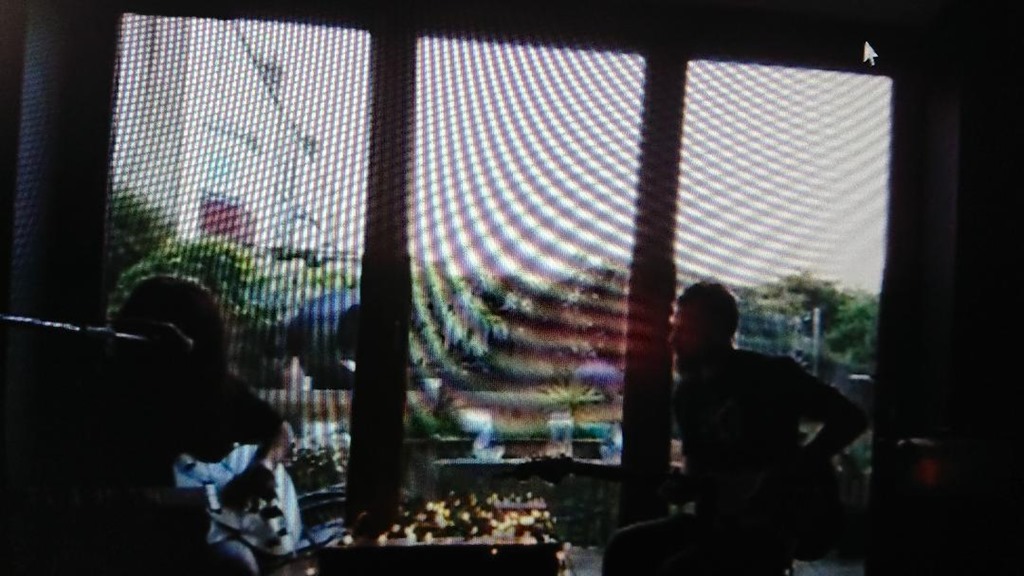
Playing in a bay window facing out onto a luscious garden, the sun descending behind and casting the duo in silhouette, and with white fairy lights drapes thick on her amp head, the appearance is somewhere between a conventional stage and a garden party.

The nature of the songs – here, often rearranged – means they’re well suited to this more minimal kind of performances, sans percussion, and Evi’s voice is always the focal point anyway and it drifts in washes of reverb-soaked guitar as if in a dream. Sound and volume to matter, and they’ve turned things up. Consequently, I actually find myself feeling something, something other than simply watching music on telly.

If the accompaniment of Loki the dog’s barking and my buffering broadband (which means I miss out on minutes at a time, even causing me to miss ‘Sabbath’ in its entirety…. ) are impendences of varying levels to the experience, then the slightly blurry camera and the fact Evi’s dialogue between songs is difficult to make out really aren’t, and remind of common real-life gig issues.

It’s a captivating set, and ‘In this Moment’ is truly magnificent as sculpted contrails quaver and taper like smoke. They even manage some lighting action for a solo instrumental from Steve, which is immense, and after a haunting, elegiac close, there’s an abstract ambient track playing while they retrieve the dogs from the garden and pack up. It’s an alternative version of stage-clearing while the audience thins and people mill about finishing their pints, but it’s somehow a fitting end to the show.

Vine