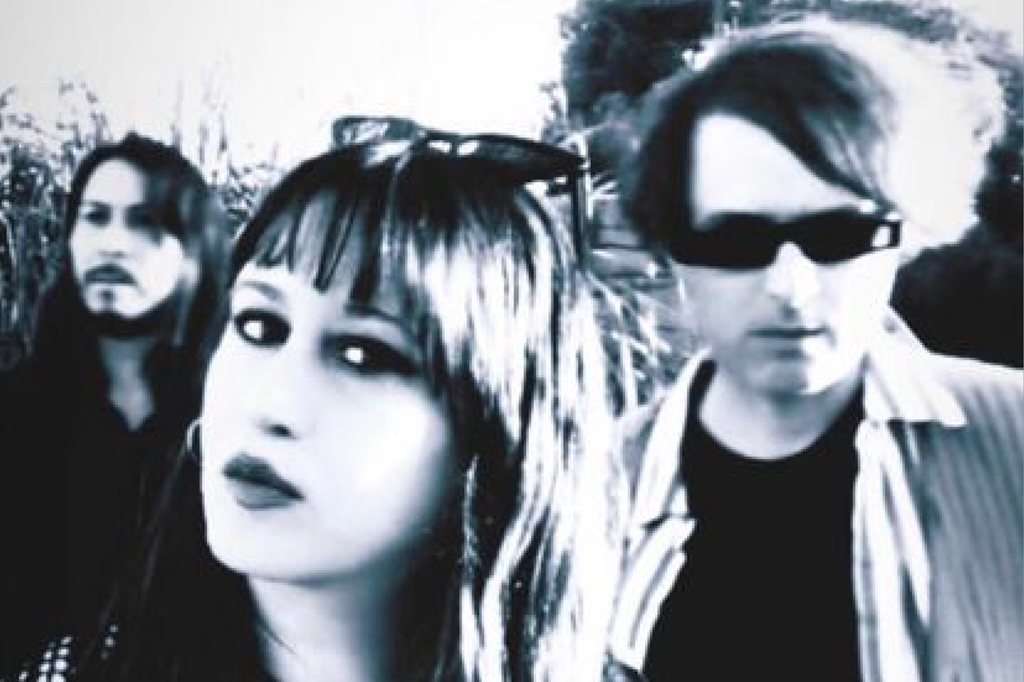
Ahead of the release of their new album, Burn Me Once, cult Yorkshire goth act Westenra have released ‘Time’ as a single.
Blending the feel of Siouxsie and the Banshees with arena-sized production values, it’s an instant classic.
AA

Ahead of the release of their new album, Burn Me Once, cult Yorkshire goth act Westenra have released ‘Time’ as a single.
Blending the feel of Siouxsie and the Banshees with arena-sized production values, it’s an instant classic.
AA
Mamka Records – 15th November 2015
Christopher Nosnibor
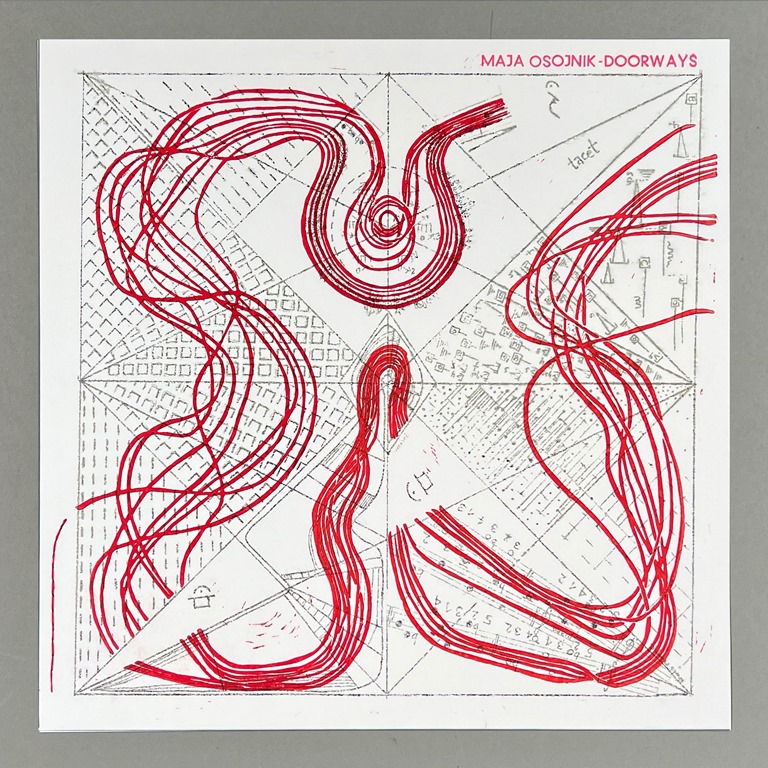
It feels like a while since we heard from Maja Osojnik – and, I suppose it has: her debut solo album, Let Them Grow, comprising work composed and recorded between 2013 and 2015, was released in early 2016: we’re now near the end of 2024, and a lot has happened in the last eight years.
Life… and we’ll spare another retread of the pandemic ‘lost years’. Along the way, Maja has founded her own record label, created and exhibited visual artworks, and produced some collaborative audio works, notably DRUCK with Anthony Pateras.
But the time between Let Them Grow and Doorways is significant in terms of the album’s inspiration and purpose. We learn that ‘Doorways was born from a longing to escape the city and everyday life – and the problematically fast pace thereof, a pace of production that accelerates the erosion of attention. In seeking to arrive in a quiet place, to linger there with an observational unprejudiced eros, to become completely aware of being alive. In line with Pauline Oliveros’ practice of deep listening, Maja Osojnik’s album explores the involuntary nature of hearing and the conscious nature of listening. It raises the question: How attentively do we perceive, recognise and internalise the ever-changing (aural) environment?’
It’s a question few likely ponder, although one that I have found myself contemplating in recent years. It began with the first lockdown. I used to travel to work – a twenty-five minute walk, followed by a further half-hour bus journey – with my earphones firmly wedged in my ears, desperate to ensure the noise of everything and everyone was blocked out by music, and I craved my own space. But then, suddenly, I felt the need on my daily hour’s walk, to hear nature – and it’s true, my paranoia peaked to a level that meant I felt the need to have my eyes and ears open and be aware of anyone in the vicinity, when people were much scarcer in the street. But this reconnecting with the sounds of birds, the wind in the trees became more than simply a lockdown hobby. And while, it seems, ‘The Great Pause’ – something only some got to experience or enjoy – gave way to ‘The Great Return’ and ‘The Great Acceleration’ Maja Osojnik has been motivated to seek peace and space, and instead of yielding to any pressures – real or perceived – to produce endlessly, she has chosen to explore time, and space, and allow herself to draw long, slow breaths, and to absorb the details of her surroundings. And it is this different focus which has informed Doorways.
While essentially consisting of two compositions – ‘Doorways #9’ and ‘Blende #1’ – each with a running time of over twenty minutes, and corresponding with a side of an LP, for digital release purposes, each piece has been segmented into five movements or fragmentary length. This may seem to run contra to the idea of reclaiming headspace from the current climate of the truncated attention span endemic in Westers society, but it does reflect the collaging approach to sound Osojnik has taken in assembling a broad range of field recordings, along with the input of woodwind and strings. As the accompanying notes point out, ‘It’s about active listening – what the artist Maja Osojnik calls cinema for the ears – an interactive game with one’s own self. The compositions invite the listener to hear them deeply; they function like a rotary dial, bringing extremely sensitive changes into focus. By constantly readjusting the focal point, they create new relationships between the electronically generated sounds, instruments and field recordings.’
And yes, it’s a timely and necessary reminder not only about the way we close ourselves off to the world, but how music is often something which simply floats around in the background while you’re doing other stuff, and how listening habits have changed: the majority now listen to an endless shuffle stream on Spotify. Simply typing that sentence plunges me into a state of despair.
In its collaging approach to composition, Doorways has, in a sense, inbuilt the shuffle into its structure – but at the same time, it is best experienced as an album, as intended. Doorways is not a bunch of songs, penned as singles, lobbed together to make an ‘album’: Doorways is very much an album album. It’s also a very good one.
‘Doorways #9’ bring with haunting disquiet and glitches and trips, backward surges and traced of feedback. It’s meant to be skin-crawlingly uncomfortable, and it is, as insectoid scrapes and scuttles.
The first five minutes of ‘Doorways #9’, in its cave-dripping tension, builds anxiety, and it’s only when birdsong develops that there evolves a sense of levity. But the tone grows increasingly dark, and there are increasing obtrusive spikes in jarring organ, and a sense of menace hangs heavy in the atmosphere. ‘Doorways #9’ is in some respects a dark ambient work, in that it’s unsettling, uncomfortable and free of percussion, and as such drifts from one moody, uncomfortable segment to the next. Suddenly, unexpectedly, in the last three minutes, things plunge deeper into darkness, as there’s a churning noise and a sense of falling… down… things take on a nightmarish quality, and the experience is dizzying, gut-churning and it would work well as a piece off a horror soundtrack. Perhaps one day it will be incorporated in one.
‘Blende #1’ grinds, scrapes, and skitters through an array of tones and textures. And it goes on… and one, twisting, turning, droning, scraping, and churning. There’s some avant-jazz in the distance. It’s pleasant, but mournful.
This is not an easy, or immediate, album. We all need time, and to take and make time. Along way, Osojnik leaves us haunted an incurring . It’s a spacious, and low—key but cheering experience.
Maja Osojnik has created an album that’s dark, and difficult, but which creates space for slow contemplation and reflection and it’s no vague criticism to report that Doorways is ‘nice’. It’s much more besides: intriguing, it draws you in, and pulls you in different direction. It’s an album, alright.
AA
Mortality Tables – 16th June 2024
Sometimes, personal events drive creative work in a way which runs away from the artist. It ceases being first and foremost about ‘art’, and the need to expunge, to offload, to outpour takes precedent. It’s not a conscious thing, something planned: the fact is that creativity leads the way, and art is not something one necessarily can direct or determine – at least, not true art. Art happens in response to things, and oftentimes, the most powerful art is born from exploring the deepest, most intensely personal scenarios. Such explorations may not reveal a great universal truth, but then again, they may present something that’s unexpectedly relatable. And this is where we find ourselves with The Engineer.
Mat Smith has no ambitions of leading the country, and nor does his musical output seek to obfuscate his journey or his reality. The Engineer documents this reality, and I shall quote, quite comfortably, the press release which provides vital context here:
‘In 2012, writer and Mortality Tables founder Mat Smith (Electronic Sound, Clash, Further. wrote a short story, ‘The Engineer’. A work of fiction, the story was loosely based on his father, Jim Smith, a skilled mechanical engineer who had spent most of his adult life working in a factory in Stratford-upon-Avon. The Engineer represented Mat’s thoughts, feelings and fears about his father’s retirement.
‘The story was later narrated by author, producer, playwright and poet Barney Ashton-Bullock. 29 artists, working in the fields of sound art, electronic, experimental and contemporary jazz music, were then approached to provide a sound response to a thirty-second extract of Barney’s narration. The order in which they agreed to be involved determined which section of narration they would be asked to respond to.
‘The collated 29 responses were curated and recorded over the next two-and-a-half years and assembled into a single, 14-minute collage by James Edward Armstrong. Its sprawling, disjointed presentation of short, rapidly-replaced ideas is intended to evoke the devastating confusion of Alzheimer’s, which Mat’s father was diagnosed with in 2018.’
This is about as intense and personal as it gets, and I’d like to think that this well-crafted work makes for a fitting homage. The sleeve image depicts a teenage Jim Smith on Margate’s Promenade in the 1950s, and the narrative tells the story based on his life against a shifting sonic backdrop.
On the surface, it’s a quite charming work. But it’s also sad, a tale of the way the ageing process is one of decline. And as the story progresses, a different kind of decline becomes the focus. It’s also a narrative of the way work has a way of stealing life away, especially for the manual worker. It also speaks of the difficulty of relationships, emotional disconnection, and ultimately faces the issue of mortality in the most real and matter-of-fact way. Time passes, and it passes far too fast. When you reach a certain age, every birthday gives pause for thought, and every picture gives rise to a pang of sadness. Even the passage of a year or two… how do you compute? How do you deal?
It seems that many simply don’t: I often hear or read people remark how people dying – and they die, they don’t pass, although hardly anyone ever says or writes it – people dying in their 60s or even early 70s is ‘no age’ or how they were ‘taken too soon’. I struggle with this. People have a finite time, and I speak from painful personal experience when I write that I feel that it’s quality of time which counts most. To witness a slow degeneration tends to be far more painful for those around the person experiencing it. Alzheimer’s is a cruel disease, and all profits from this release are going to the Alzheimer’s Society. This is to be applauded, of course, but not simply for its charitability, but because of its art.
The Engineer may only be fourteen minutes in duration but represents twelve years in the making, and the input of more than thirty people in various capacities. In short, it’s an immense project, and the amount of time and energy poured into such a complex, detailed work is immeasurable.
The narrator starts out feeling vaguely AI, but in no time, we come to feel a connection with poet Barney Ashton-Bullock’s delivery. It’s crisp and clear, and in some respects has BBC documentary commentary. Its power derives from its simplicity: the narrative itself is straightforward and linear. Its sonic backdrop is not, and it’s disorientating, and at times uncomfortable, incongruous, at odds with the point of the narrative with which it’s paired. The sounds behind the narrative range from grinding, churning industrial din to woozy blooping electronica and shuffling disco and is altogether less linear, mutating over the course of the piece. It will leave you feeling disorientated, it will leave you feeling harrowed, possibly even stunned, and drained. But this is as it should be. The Engineer is ambitious, and a quite remarkable work.
AA

Dedestrange Records – 2nd June 2023
Christopher Nosnibor
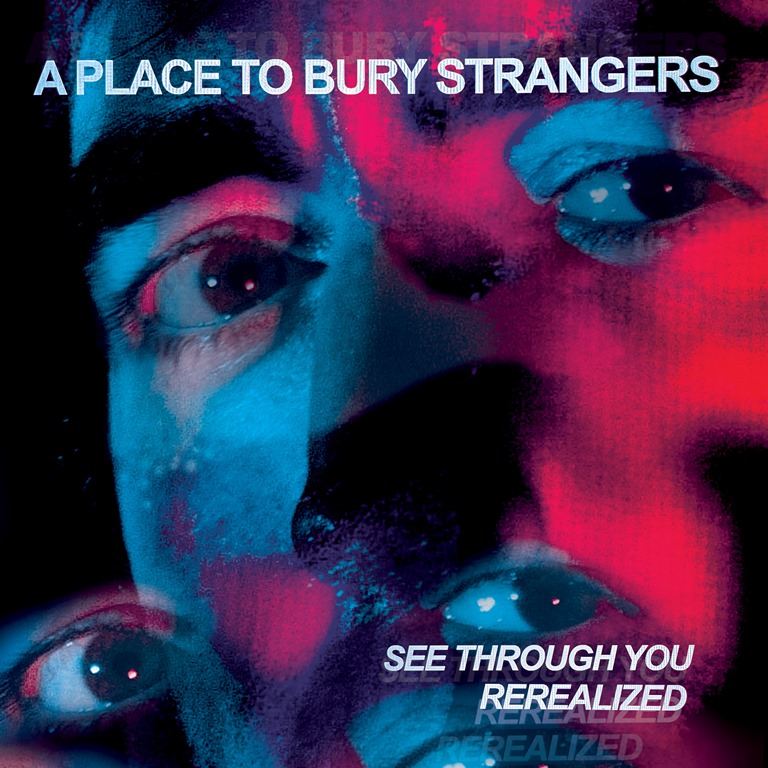
Initially released on vinyl for record store day, for the rest of the world who don’t own a record player or otherwise have spare cash to splash on records that cost as much as a week’s groceries, See Through You: Rerealized – containing twenty-one remixes of the songs from last year’s See Through You – is now getting a digital release.
Given just how twisted and fucked-up A Place to Bury Strangers’ records have got over the last few releases (Pinned notwithstanding), the prospect of the mangled messes that make up See Through You being remixed was a source of both curiosity and trepidation. Curious, because exactly what can you do with material this brain-bendingly off the wall, with so much noise and unconventional structures and production? And trepidation because just how fucked up is this going to be? After all, if you’ve ever witnessed A Place to Bury Strangers live, the chances are probably still haven’t recovered, and you know that things can get pretty insane without external help or interference.
There’s also the eternal question of just how many reworkings of any given song you want or need. There are no more than four versions off any one song on here, and the diversity of the remixers’ approaches means there doesn’t really feel like there’s significant duplication.
Trentmøller’s remix of ‘I’m Hurt’, which opens the album brings a glammy swagger to the song, and it feels cleaner, quite different from the original, and while the album version of ‘Love Reaches Out’ sounds like a demo version of a reimagined take on New Order’s ‘Ceremony’, in the hands of GIFT it becomes a winsome indie tune, at least to begin with, and the theme overall seems to be, contra to what normally happens with remixes, is that many of the remixers have straightened out and unfucked the songs to render them crisper, cleaner, more overtly ‘songy’. There are always exceptions, of course: Data Animal twists ‘Broken’ into a twisted dark synth effort, and as for Xiu Xiu and their take on ‘Love Reaches Out’, well. You’d expect nothing less, mind you. Ceremony East Coast revel in the racket with their murky electronic post-punk mangling of ‘So Low’, and it works well as a celebration of reverb and sonic fog.
Also notable and noteworthy are the reworkings by bdrmm and Sonic Boom: the former’s contribution, a ‘I Don’t Know How You Do It’ is a work with a sparse, minimal skeleton and misty layers overlaid to conjure a dreamy yet energetic cut that fades into rippling piano, while the latter’s immense ten-and-a-half-minute megalith is, well, a lot. It preserves the New Order vibe and polishes it up a bit, and seems to simply loop it forever. Indulgent? Well, yes, but then, it’s fitting.
It’s not until Lunacy’s ‘My Head Is Lunacy’ that were plunged into swampy hypnotic semi-ambient terrain, and it immediately precedes a reworking of ‘I’m Hurt’ this time by Ride’s Andy Bell under the Glok moniker, which is – rather unexpectedly – a work of dark, stark trance, with a thudding beat and a chunked-up bass.
‘Rerealized’ is the key to understanding this album, really. The songs find themselves not so much remixed or reimaged, but restore, to a state before all of the mess and noise and twisting and screwing and scrunching and all the rest. Despite its length, it works well. Does it improve on the original songs? No, but it definitely places them in an array of different lights.
AA
A Place to Bury Strangers will bring their legendary live shows – a shamanistic experience that bathes listeners in glorious sound, crazed left turns, transcendent vibrations, real-time experiments, and brilliant breakthroughs – to the UK and Europe in May and June 2023 for the second leg of their Destroy Into The Future Tour. See full dates below:
DESTROY INTO THE FUTURE TOUR – TICKETS
19 May – Foul Weather Festival – Le Havre, France
20 May – Patterns – Brighton, UK *
21 May – The Lanes – Bristol, UK *
22 May – Furure Yard – Birkenhead, UK *
23 May – The White Hotel – Manchester, UK *
24 May – Belgrave Music Hall – Leeds, UK *
25 May – Broadcast – Glasgow, UK *
26 May – The Star and Shadow – Newcastle, UK *
27 May – Wide Awake Festival – London, UK
29 May – Wave Gotik Treffen – Leipzig, Germany
30 May – Futurum Music Bar – Prague, Czech #
31 May – Fluc – Wien, Austria #
01 Jun – Storm – Munich, Germany #
02 Jun – Vinile – Bassano del Grappa, Italy #
03 Jun – Freakout – Bologna, Italy #
04 Jun – Grabenhalle – St. Gallen, Switzerland *
05 Jun – L’Usine – Geneva, Switzerland *#
06 Jun – La Marché Gare – Lyon, France *#
07 Jun – Rockschool Barbey – Bourdeaux, France #
08 Jun – Festival Aucard De Tours – Tours, France
09 Jun – La Laiterie – Strasbourg, France #
10 Jun – Reklektor – Liege, Belgium #
* with Camilla Sparksss
# with Lunacy
Magic Wands is a US dark pop outfit originally formed in Nashville by guitarists & vocalists Chris and Dexy Valentine, but now based in Los Angeles where they have been joined by drummer Pablo Amador. Their name stems from the gift of a wand from Chris to Dexy when they first started making music together while still living on opposite sides of the country.
The group have released three albums over the last decade on which they have refined a shimmering and cosmic dream-pop sound that incorporates elements of shoegaze, post-punk and goth. Textured guitars, droning synths and delicate, ethereal vocals combine to create an otherworldly atmosphere.
Armed with songs that have often been praised on both sides of the Atlantic for their euphoric quality, especially in live performance, the trio themselves have remained dedicated to creating music that is both imaginative and emotionally engaging. They have developed a loyal fanbase drawn to their ability to create a sense of mysticism and wonder through their music.
Magic Wands have shared stages with the likes of Radiohead, Slowdive, Jesus & Mary Chain, The Horrors, Deerhunter, The Kills and The Black Keys. They also played their own headlining tours of the UK and mainland Europe in 2017-18.
Having released a single in late March entitled ‘Joy’, the group have now followed it with ‘Time’. Complemented with a pair of remixes apiece, both are also included on Switch, a brand new album set for release on 12th May by Metropolis Records.
Listen to ‘Time’ here:
AA
Constellation – 26th August 2022
Christopher Nosnibor
One’s perception of time changes with its passage. As you get older, it seems different, and passes differently too. In childhood, there’s the sense that summers are long and sunny, school holidays stretch out in front of you like a playing field the size of Wembley Stadium, whereas in adulthood, six weeks is no time, and the summer means it’s nearly time to start considering Christmas. But even in adulthood, while there’s a keen and pressing awareness of the rapid passing of time, it’s easy – and perhaps it’s how we’re psychologically wired – to ignore the overall narrative span while focusing on the rapid cycle of existing in the present. You get caught up in the infinite and swift cycle of the working week, thee routine, you complain about how time flies as New Year becomes Easter becomes Hallowe’en becomes Christmas, even how every birthday marks the passing of another year. But for all the talk of making the most of life and living every day or week like it could be your last, that’s what it is – talk. Because it’s almost impossible to comprehend there being an end, not just of life, but of anything. It’s simply human nature to take things for granted, that the sun will always rise, that you will always be able to buy the same bread and crisps and whatever in the supermarket.
And then they stop making a certain brand of crisps or chocolate and there are mutters of discontent, and then, twenty years later, online forums are oozing nostalgia for these things. These things of no consequence.
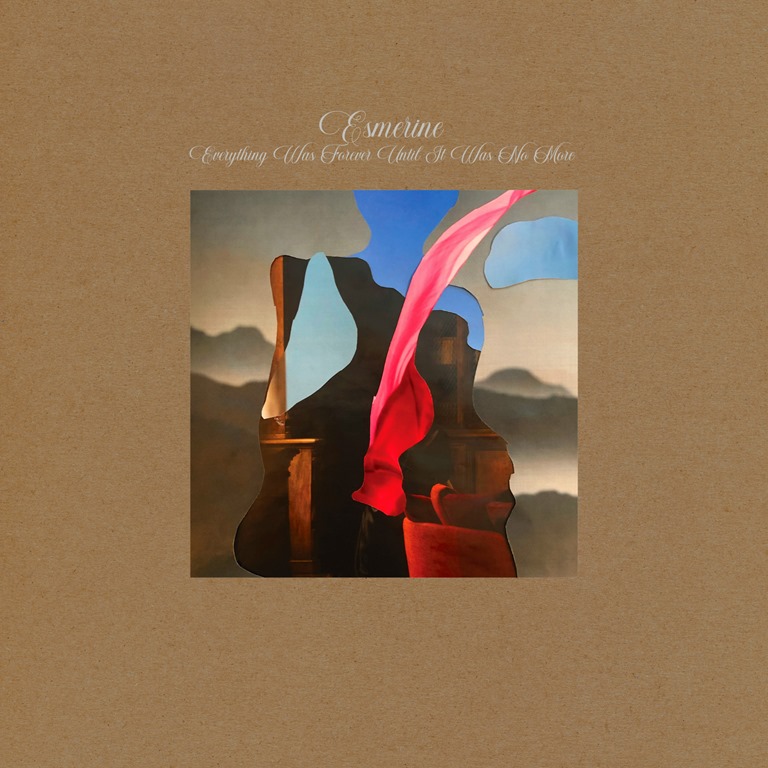
Over the course of seven previous album since 2001, Canadian quintet Esmerine, co-founded by percussionist Bruce Cawdron (Godspeed You! Black Emperor) and cellist Rebecca Foon (Thee Silver Mt. Zion, Saltland) have, as their bio notes, straddled the boundaries of ‘contemporary classical and late 20th century Minimalism’ and ‘more visceral and lyrical sonic terrain born from post-rock, folk and global.’
Such a broad palette is the perfect base from which to paint scenes of shifting perspectives that explore the theme of the title.
Time stalls during the nine-minute ‘Entropy: Incantation – Radiance – The Wild Sea’ – a piece which transitions through numerous parts and brings a range of atmospheres, from quietly brooding piano solo to soaring, majestic post-rock, trickling into the brass-orientated ‘Entropy: Acquiescence’ which evokes that sepia toned Hovis advert kind of nostalgia. And so it’s here I discover that that isn’t an exclusively English thing, but still – there is a cultural heritage of a nostalgia for a golden age of simplicity and innocence. It is, of course, a fallacy: past times were difficult, flawed. It’s easy to hanker for a rose-tinted rendition of a past you never knew, and ‘Imaginary Pasts’ seems to acknowledge this, wordlessly, via the medium of slow drones and rippling piano.
And so it is that Everything Was Forever Until It Was No More mines a golden post-rock seem of evocativeness, conveyed by means of slow-burning epics, interspersed with fragmentary pieces, which, while under three minutes in duration, give the album a certain sense of pace amidst the spic sprawlers, which culminate in the seven-and-a-half minute ‘Number Stations’. The brooding ‘Wakesleep’ is tense and eerie, with a sense of foreboding, that paves the way for the dolorous funeral chimes that herald the arrival of the closer.
There’s a sadness to it, and it’s this sadness which permeates the album as a whole. It’s a sadness that speaks of lost time and fading pasts. And when they’re gone, they’re gone. And yet there are soft hints of redemption, that nothing is entirely finite. Nothing is forever, but memories linger longer than life.
AA
Room40 – RM4130 – 13th August 2021
Christopher Nosnibor
I’m still recovering from the last Celer release I covered – the four-disc Future Predictions, released only last summer. It wasn’t harsh or sonically challenging: it was just really, really long. This one, however, is rather shorter, comprising twelve tracks with a running time of just twenty-nine minutes.
It is, notably a departure. As the press notes detail, with In Light Of Blues, ‘[Will] Long pivots away from long-form works to create a series of vignettes that capture the essence of his aesthetics interests. The record condenses and refines his compositional methodologies forming each piece as an acoustic miniature speckled in hazy harmony and evocative tonality’.
As such, as much as In Light Of Blues is a departure, it is also very much a continuation of his previous work, while concentrating it down to shorter snippets – but with no loss of power or depth. Long’s comments on the reason for this departure are illuminating:
‘It was months ago, but it could have been weeks, days, or even hours since then. I stopped wanting to hear loops, I wanted to stop it. I added brass; trumpets, trombones, and more horns. I cut it out like words from a book, and sewed it back together. Burroughs. These movements are merely to stay alive, to stay moving.’
In citing [William] Burroughs, Long’s observation that ‘You wake up from a truck horn passing in the early morning hours on the nearby freeway, or from a dream that you can’t tell was a nightmare or a loving memory… Someone walks by on the street wearing the same perfume. I drew out each place, each scene, and put the story there. It might have been with you, or without you. All I know is that you were there somehow the whole time, even if you weren’t’ marks a striking parallel with some of Burroughs’ statements on the way the cut-up technique was an attempt to being art closer to life: “every time you walk down the street, your stream of consciousness is cut by random factors… take a walk down a city street… you have seen half a person cut in two by a car, bits and pieces of street signs and advertisements, reflections from shop windows – a montage of fragments”.
While the pieces on In Light Of Blues are composed from a montage of fragments, instead of jarring against one another and crossing over one another to replicate the blizzard of simultaneity that is life, they blur together to create a slow-creeping sonic mist. The details are obscured, the edges indistinct, the definition vague to almost absent. Some of the pieces are fragments in themselves: the second of the three ‘Melancholy Movement’ compositions is only fractionally over a minute long, and there are a number of pieces of similarly brief duration.
Time appears to be something of a leading preoccupation on In Light Of Blues, as titles including ‘Days Before the Change’, ‘In the Intimate Hours’, ‘After All Time’, and ‘Precious Past Hours’ indicate. The titles suggest a certain urgency, an anxiety, even, over the passing of time that’s not necessarily apparent in the music itself. But as is so often the case, with ambient / abstract musical forms, the music conveys only some aspects of the full meaning or intention, and beneath comparatively tranquil surfaces often lie more trouble currents, and there are numerous billows of darker, denser sound which rumble and stir, evoking brewing storms amidst the soft layers of the pieces here.
Perhaps this is the real pleasure – and perhaps also the purpose – of In Light Of Blues. It’s an album that can simply be allowed to drift along in the background, the darker clouds occasionally tugging the attention while, in the main, it may pass largely without the demand for focus. But closer attention yields greater rewards, in the sonic depths and subtle textures that reveal themselves through that engagement, and to seek the space beneath the surface, to explore its context and origins and consider what it may mean beyond the surface yields more still.
AA

ROOM40 – 5th April 2018
Christopher Nosnibor
A single, repetitive beat rings out for what feels like an eternity. With nothing else to focus on, the mind begins to conjure deceptions: is it entirely consistent in tempo and timbre? Or are some beats vaguely out of step by an infinitesimal fraction of second? Are some strikes harder or softer than others? A sparse chord rises up, slowly, then stops abruptly. The beat goes on. Another chord swells…. Repeats, disappearing the same way as the first. Then just as something threatens to build, the beat stops. The notes drift, without form, direction, or guidance. Eventually, just as tension and a certain confusion begins to mount, everything comes together: the rhythmic thud, the strings, the soft ambience and the faint strains feedback, combine to create a resolution. Unsteady, somehow incomplete, but a resolution. And so it is that ‘Neither Flesh not Fleshless’ sets the tone for At the Still Point of the Turning World.
The album takes its title from T.S. Eliot’s ‘Burnt Norton’, the first of his Four Quartets sequence:
IV
Time and the bell have buried the day,
The black cloud carries the sun away.
Will the sunflower turn to us, will the clematis
Stray down, bend to us; tendril and spray
Clutch and cling?
Chill
Fingers of yew be curled
Down on us? After the kingfisher’s wing
Has answered light to light, and is silent, the light is still
At the still point of the turning world.
This collaborative work is preoccupied with time and how we experience it, and the accompanying blurb observes how the two artists were very much working both with and against one another in the creative process – which seems an apt analogy for the human relationship with time itself. On the one hand, it’s simply a concept, and an intangible: and yet we see and feel it, in the short and long terms: there is no escaping time, and no-one ever fought time and emerged triumphant. The still point is but the blink of an eye, and the turning is endless despite its invisibility. These are the irreconcilable and dichotomous tensions which inform the sonic push-and-pull Gama and Fernandes explore and exploit in these compositions, which are simultaneously smooth but turbulent.
‘The Patterns is Movement’ is a slow swell and glide of sombre strings pitched against a desolate but mournfully graceful piano: the form is vague, but there is something rather post-rock about the brooding disquiet. It segues into unsettling, rumbling industrial clanking way off at a distance. The haunting clangs of metal are cold, without comfort. I’m pulled back into the mindset of the worker: the ghosts of heavy labour still haunt the structures of the tertiary industries which now dominate the western world. The final coupling of the sparse and altogether lighter ‘Lucid Stillness’ and ‘Shaft of Sunlight’ pitch the album to a calmer, more redemptive close.
While much of the movement within the compositions on this album is slow, and often somewhat non-linear and marks a trajectory that’s divergent, indirect and non-evolutionary, there is, nevertheless, an indisputable sense of movement that’s perpetual.
AA
Von Archives – VON 023
Christopher Nosnibor
The idea behind the Cordiox from which Ariel Guzik’s album takes its name is a machine which was conceived by the inventor of the radio, Gugliemo Marconi, in a dream just weeks before his death in 1937. He had theorised that sound never dies, but instead emanates and radiates eternally. As such, he believed that every sound ever made still existed in the ether, and that it was theoretically possible to tune into the recordings of every moment in history. The machine Marconi visualised would confirm this theory. Guzik’s Cordiox was conceived as an instrument which crosses portals of time and bridge infinite space, and this album very much encapsulates the enormity of that concept and ambition.
‘Cordiox is a machine, an instrument that communicates through time, vibrates and resonates to its surroundings, creating a response to it, communicating with it. Rather than making an unlistenable riot of noise, Guzik’s recordings here are as much concerned with the enormity of time and space, and the way everything blurs, slows and distorts, reduced to a low hum as its ends move further and further apart.
Creating a slow-motion soundscape of almost incomprehensible enormity, chimes burst like terrestrial gongs, rippling vibrations into the cosmos. The first track is an otherworldly cloud of drifting, turning sound in which time stands still.
Long, low, languorous notes are hang in space for aeons; time stalls as the notes turn imperceptibly for eternity after eternity. The second track continues in the same vein, but works from a broader sonic palette, with elongated drones rising and drifting over the interminable sonic mass. Long, low undulations ripple slowly beneath long, tapering trumpets of fluid tonality. An eerie sonic ooze which hangs in suspension between time and space, it’s the sound of all sound, singing out across infinity.

 Aural Aggravation