Posts Tagged ‘Throbbing Gristle’

Dret Skivor – 2nd February 2024

Christopher Nosnibor

Nostalgia sucks. On so many levels, nostalgia sucks. It’s something which looms a longer, darker shadow over life with ever years that passes, as every memory recedes further into the past until eventually it tips over the horizon, beyond sight, to a distance whereby its very happening takes on a dream-like quality and you begin to question if the even was real or imaginary, a myth which has grown from the creeping spores of hazy recollection.

I was probably ahead of the curve when I began feeling pangs of nostalgia on moving to secondary school in 1987. Nostalgia wasn’t big business then, and didn’t even strike me as something that so many people felt deep pangs of back then, although perhaps shows like The Golden Oldie Picture Show which I would often watch with my parents after coming home from Cubs should have given me a clue as to how adults mire themselves in their past. It was on reaching my thirties when I began to separate from my peers who constantly bemoaned the state of music, now there was no good new music, how it had all turned to shit since they left school.

Today, I took myself for a quiet pint, only to find myself eavesdropping inadvertently on a couple of old bastards complaining how there’s no proper music anymore, how it’s all 70s and 80s bands which headline Glastonbury and it’s all rap like 10-bit and one began spouting on how he saw Dave Grohl’s band, Metallica, on TV and wasn’t into it. Then they raved about Pink Floyd and The Eagles and now awesome they are, and how their songs are ‘minutes, minutes long… And then there’s a guitar solo. And Dire Straits… and how Blondie’s career ended with Parallel Lines, but they did this comeback song, like Duran Duran. I wished I was deaf, and congratulated myself for not being so painfully moored to the past – or so ill-informed.

But for all of this, I feel a pang of sadness on the arrival of a new Legion of Swine release. I miss Dave Procter’s presence in the UK for a start, surely one of Brexit’s biggest losses, at least on the underground music scene. I miss his crazy noise shows, particularly back when he would don a latex pig’s head and lab coat to crank out harsh noise. I have a particularly fond memory of our two collaborations, but especially the room-clearing effort where I yelled like a maniac as he ambulated the venue with a portable speaker emitting screeds of feedback in the middle of the afternoon.

Beyond this particularly personal context, of course, the latest offering from Legion of Swine is by no means a nostalgic work, although it does explore wibbly analogue synth and lasery sounds which hark back to the early 80s, when primitive synths were becoming widely available. But then, it equally passes nods to early Tangerine Dream, and to the bubbling pink noise and synthy waves of Throbbing Gristle early Whitehouse. But, on balance, the listening experience alone does not evoke nostalgia. What the hovering hums do evoke is a sense of awkwardness, if difficulty.

Legion of Swine’s output has never been about commercial success, but noise for the sake of simply making. Art as it should be. It it’s for the benefit of Legion of Swine first and foremost, for whom it’s entertainment. It’s for the benefit of an audience as a secondary concern, and the number of people who are likely to be entertained by this is few. But it’s a storming album, which really explores tones and texture. Consisting of a tow longform tracks each with a running time around twenty minutes, it’s an evolutionary piece, and within each continuous composition, the various segments flow from one to the next.

It reminds us of the fundamental difference between albums made up of ‘songs’ and shorter pieces and longform works, in that the former can contain ideas and concepts in a compartmentalised way, with no necessary correspondence between them, while the latter is a journey, and requires an altogether different level of focus and concentration in order for it to work as such. Gloopy alien soundscapes and long, low, ominous drones are rent with laser blasts and trickling ominous electronics worthy of some vintage sci-fi works, and ‘jag hör röster’ is a lot less overtly noise-orientated than previous Legion of Swine releases and live outings, sitting very much within the domain of dark ambience rather than abrasive noise. But it’s well-executed and with occasional blasts of overloading, needles-into-the-red distorting drone, it’s not as mellow as all that, with skronking feedback and earwax-vibrating buzzing and an array of organ-vibrating oscillations pouring their way into your ears. ‘hör du röster?’ is absolutely head-melting thick, buzzing noise abrasion all the way, a monstrous wall of distorted drone amped up to the absolute max, with surging, sloshing swells of dense analogue noise, and a relentless barrage at that.

Uncomfortable as always, under ytan ligger nåt is one hell of a racket. All hail the Swine!

AA

a3325660179_10

Cruel Nature Recordings – 24th November 2023

Christopher Nosnibor

Spanish electronic musician Julio Tornero has been producing minimal techno, IDM and experimental music since 2015. He’s one of those people who has a million different projects and as many different pseudonyms, also recording as Dark Tibet, Oceanic Alpha Axis, Sequences Binaires, with his work published by a multitude of labels including Fmur, Intellitronic Bubble, Detriti, Phantasma Disques.

I never cease to be amazed by artists who simply effuse and froth with creative output: how do they do it? How do they have the time, let alone the headspace? Given the economics of art in the 21st century, the likelihood of a life on the further recesses of obscurity in the most obscure of genres could provide a living seems improbable, but then to have the capacity to produce art after the slog of a day-job seems almost superhuman. And this, this is not just some easy, off-the-cuff, going-through-the-motions half-arsed toss-off.

Tierra de Silencio is pitched as ‘A homage to the formative years and evolution of electronic music’, with nods to Nurse With Wound and other progenitors of that nascent industrial sound, which was born primarily out of a spirit of experimentalism, and a desire to be different, facilitated as it was by emerging technology.

It’s perhaps hard to really assimilate now how the late 70s and early 80s witnessed a technology explosion, which not only witnessed the advent of new synths and drum machines, but saw them become available on a low-budget, mass-market basis. But while many bought them up and started making synth pop, some oddballs did what oddballs always to and decided to push the kit as hard as they could. And some of the results were utterly deranged. Tape loops and all kinds of messing yielded results with varying degrees of listenability, from Throbbing Gristle to NWW to Foetus and Cabaret Voltaire.

With only four tracks, this is one of those albums which would lend itself to an extravagant 2×12” release, with a track per side, since these are very much longform works, with ‘Duermevela’ stretching out beyond seventeen minutes, and the title track lasting more than a quarter of an hour. But if the expectation is for a set of compositions which are primitive, difficult, and in some way steeped in nostalgia for that early 80s noise, this isn’t that album. Despite the analogue feel, Tierra de Silencio finds Tornero exploring the spirit of the period, rather than striving to recreate the sound.

The first track, ‘Metamorph’ splashes in at the dancier end of the spectrum with some hard groove vibes. Fast, urgent, flickery, and glittery, it’s a shimmering curtain of electronica which ripples over a driving, dynamic beat that doesn’t let up. It’s got heavy hints of DAF, but it’s still not without a taste of Yello or Chris and Cosey. And it keeps on going for eleven and a half minutes. In time, the beat peters out and we’re left in a whirlpool of fizzing electronics.

The aforementioned ‘Duermevela,’ the album’s second track, draws on 70s electronica, with endless bubbling, rippling synths and incursions of altogether harsher sounds. Blasts of dark noise deluge over the bleak explosions of dankness. The beats are busy, and also metrononomic, and the effect is mesmerising.

Something dazzles for a moment. Then the lights flicker. What is this? This is likely panic. Negatividad Absoluta binks, bonks, bleeps and tweets, and the atmosphere is 70s sci-fi, something on the cusp of strangeness, jarring, alien, robotic. There are crunches and fizzes, crackles of distortion, and top-end tones ping back and forth like ping-pong.

Tierra de Silencio is very much an album which pushes an experimental vibe, while maxing out on what feels now like more contemporary dance tropes, largely on account of the rippling synths and glooping repetition. But it also incorporates elements of Kraftwerk and early Human League in its deployment of those vintage synth sounds and layerings. It’s an intriguing and entertaining work, and it passes hypnotically in what feels like no time at all.

AA

AA

a0904785816_10

ant-zen – 16th September 2023

Christopher Nosnbor

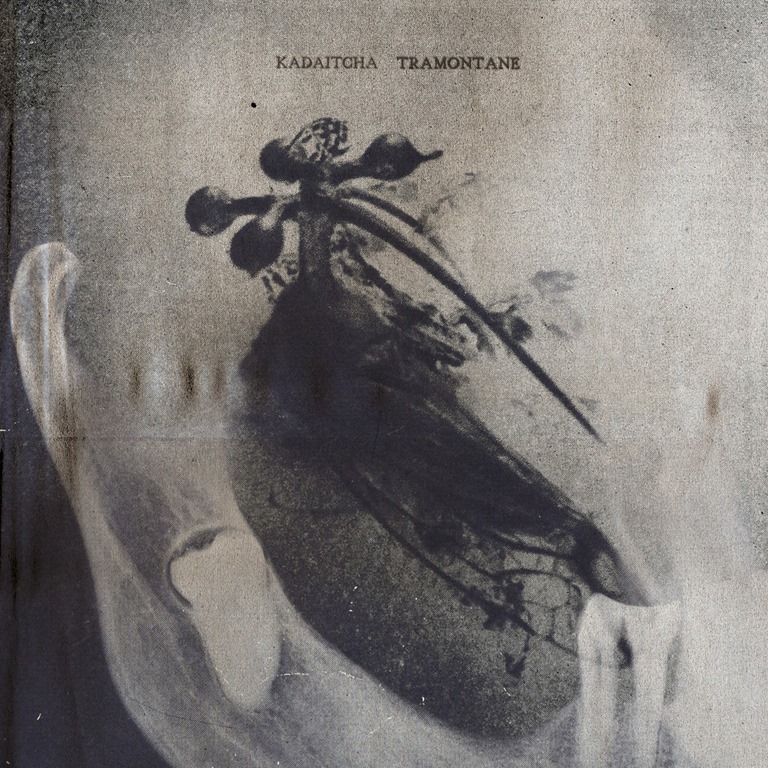
Four years on from Tar, Ukrainian industrial duo Kadaitcha, consisting of Andrii Kozhukhar and Yurii Samson, have overcome many, many challenges to deliver album number five, in the form of Tramontane.

The tracks which appeared on their limited lathe-cut single last year do not appear here, and this is admirable: singles so often tend to be used as launchpads for albums, and it was particularly common in the 80s and 90s that albums would sell on the basis of a couple of singles, but would have next to no other decent tracks. In the days before streaming, this was something that was easy to get away with, since the only way of hearing the album was by buying it, which you would do based on the singles. But then, the risk could be reduced by taking punts using your half price or free options through Britanna Music, or similar. The advent of streaming hasn’t really improved things, though, because now, at least in mainstream circles, the album is essentially obsolete.

But outside the mainstream, the album is thriving, and artists are pushing the format now that the constraints and limitations of physical formats aren’t necessarily dictatorial in determining duration, and there are infinite options for exploration. The single wasn’t so much of a stop-gap release as a standalone document of a period in time. But the key point here is that Tramontane is very much an album, and a work to be approached as such. The notes which accompany the release are almost hallucinatory – not quite Burroughs cut-ups, but fragmented, non-linear, and they serve to articulate the essence of the music contained here. Stylistically, it’s tight and cogent, and there’s a flow to it, too, which begins with the appropriately-titled ‘Intro’, which is precisely that – a short instrumental intro piece which paves the way for the ten heavyweight cuts which follow. But within that coherence, what Tramontane offers is a work which really goes all-out to disrupt and unsettle.

‘Niello’ draws primarily on the sound and style of earlier industrial music, the electronic pioneers of the late 70s and early 80s, the likes of DAF and Cabaret Voltaire, but with its distorted, menacing vocals, there’s an element of the later evolutions of industrial which emerged in the mid 80s. It seems to be that there are very different understandings of industrial, and while Al Jourgensen may be a huge fan of William Burroughs and the music that formed the body of the first wave of Industrial music, namely Throbbing Gristle and also the wild tape loop works of Foetus and the heavy percussion of Test Dept, it’s industrial metal and harsh post-NIN electronica which have come to become synonymous with industrial latterly.

On Tramontane, Kadaitcha have brought the two forms, old and new, together, and the result is discordant, noisy, difficult. And these are its selling points. It feels like a guided tour through the most challenging aspects of Industrial music through its evolution and history.

‘Knife’ is a sparse, oppressive low-end throb pinned down by a dull, thudding, muffled-sounding beat, over which twitching electrical streams flash and flow while monotone vocals are unsettlingly detached. The percussion really dominates on the tempestuous ‘Liars’ and any and all references to Einstürzende Neubauten are entirely appropriate. It’s a thunderous, dense racket where the low end really stands to the fore, but it’s tame in comparison to the dark ‘Offering’: even when it drives out as a heavy and insistent bass riff, it feels unfinished, undercomposed. Yet therein lies its success: it feels organic, and nothing is overdone.

The mangled noise and droning distorted vocal on ‘Fossil’ is pure Throbbing Gristle, a barrelling barrage of blitzkrieg laser synth bleeps and a whole mess of midrange and lower end distortion and dirt, churning, discordant, the monotone vocals almost buried in the tempest of overloading unpleasantness, and ‘Seeds’ is similarly unpleasant and uncomfortable, everything going all out on overdrive.

It all comes together on ‘Insight’: beginning as a gentle, spacious, mellow post-rock guitar-led piece, it soon erupts into a mess of overload akin to Metal Machine Music, only with drums and sinister vocals. It’s got the lot, and as the album enters its final stages, it seems to consolidate the elements of the previous tracks to punch even harder, with the percussion harder, the grinding morass denser and darker.

Perhaps a reflection of the circumstances in which it was created, perhaps a reflection of the times in the world at large, Tramontane is heavy and at times harrowing. The lyrics may not be decipherable for the most part, but the mood requires no translation or interpretation, and Tramontane will crush your soul.

AA

a3600121745_10

Felte FLT-089 – 14th July 2023

Christopher Nosnibor

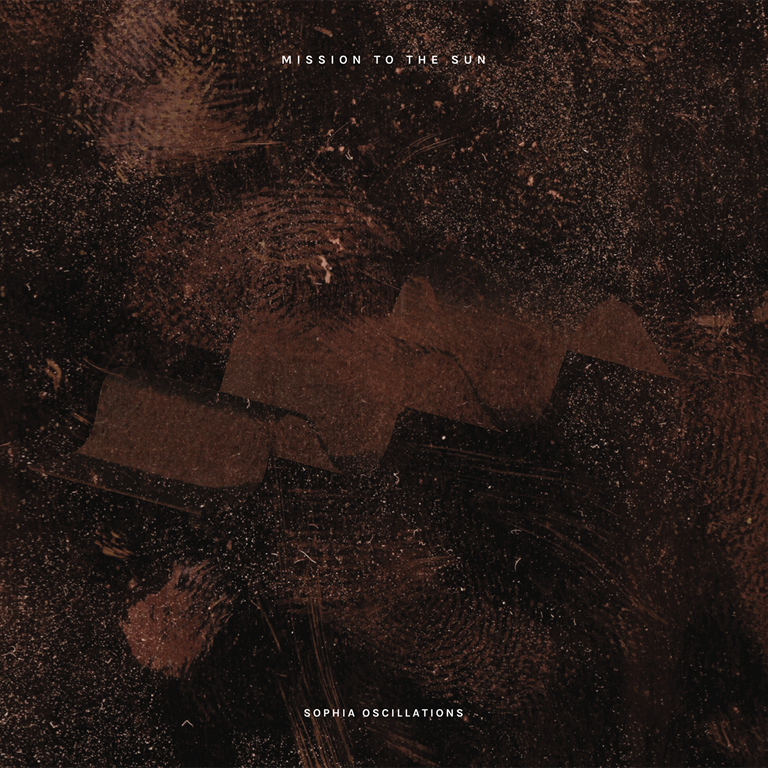
Mission to the Sun is Chris Samuels of Ritual Howls fame (synths, samples, programming) and Kirill Slavin (vocals/lyrics), and comes recommended for fans of Wolf Eyes, Moin, Throbbing Gristle, Coil, The Legendary Pink Dots, Drew McDowall, Suicide, Cabaret Voltaire, etc.

Sophia Oscillations is their second album, and it pitched as ‘an immersive journey through the dark corners of post-industrial music’, whereby ‘The Detroit based duo continues the sonic exploration started on their debut album Cleansed by Fire, while delving deeper into themes of isolation and lost communication. Christopher Samuels’ synths, samples and rhythmic programming is accented by Kirill Slavin’s haunting vocal delivery as the listener receives intersperse audio recordings from the outer reaches of inner space.’ This may seem an unusual angle of approach given their chosen moniker, but the one place hotter than the sun or the earth’s core is the core of what it is to be human. We still understand space better than we understand the deep sea, and the deep sea better than we understand the human mind. There is much scope for exploration in every sphere.

William Burroughs famously described ‘Scottish Beat’ writer Alexander Trocchi as a ‘cosmonaut of inner space’, although he also applied the label to himself, stating ‘In my writing I am acting as a map maker, an explorer of psychic areas, a cosmonaut of inner space, and I see no point in exploring areas that have already been thoroughly surveyed.’

This is an appropriate context for the eight compositions which make up Sophia Oscillations, which are essentislly beatless but strongly rhythmic in form. If they belong to the lineage of the avant-garde and the industrial music of the late 70s, it equally draws on a host of other, more contemporary threads in order to forge something quite different and ultimately new.

‘Drowning’ surges and pulses, rippling waves washing over a slow-treading bassline which wanders up and down, stepping somewhere between DAF and The Cure’s Carnage Visors while the vocals whisper and wheeze low in the mix, a stealthy monotone that’s both tense and detached. Whistles of feedback strain from the speakers and wrap themselves around the whole drifting expanse. Things take a turn for the abrasive on the title track, with machine-gun blasts of noise cutting through grainy swathes of bleak ambience, gradually fracturing and fragmenting quite uncomfortably.

There are hints of medievalism and classical on ‘Censor Sickness’, but they’re melted into a dark murk of muttered voices and unsettling atmospherics, and the combination is quite unsettling and far from comfortable: if anything, it’s queasy, and the minimal yet noisy ‘Unborn’ pushes this to another level: stark, metallic, robotic electronica, it has an 80s dystopian feel which again calls to mind DAF and Cabaret Voltaire. The late 70s and early 80s were exciting because musicians with limited means – and ability – were finding ways of using emerging, and increasingly affordable – technology to make music which represented the world in which they found themselves. As such, the emergence of experimental electronic music and industrial music was born out of a collision of multiple factors, none of which will ever recur, and for this reason can never be recreated.

Mission to the Sun aren’t attempting to recreate history here, but instead, Sophia Oscillations finds them processing history through their own filters. ‘Attrition’ brings together post-rock and crunching industrial electronica with a dash of Gary Numan and more detached spoken-word vocals, and it’s a hybrid that isn’t easy to process, because it all feels so alienating. But then, articulating alienation always does.

The churning grind of ‘Cornerstone’ sounds like the intro to something by Big Black, but instead of Roland kicking in, alongside a relentless bass, it just grinds on and on, and it’s dark and messy. Once again, Slavin’s voice is half-buried in the mix: it’s difficult to decipher the words, and his voice hovers, blank, flat, vaguely Dalek-like, in the vein of Dr Mix, but less harsh.

Sophia Oscillations is a challenging album. Yes, it’s unsettling, bleak, stark sparse, but the hardest part is the fact it doesn’t confirm to any one genre, it doesn’t follow any obvious or specific form, and it’s not the fact that it’s unsettling and difficult to find a place for it that’s the issue, but the fact it keeps you tense and on edge for its duration. But, perhaps even more than that is the fact it feels removed from anything human. But it’s not so far removed as to be alien. The brain simply isn’t equipped to process the inhuman– or the near-human-but-not-quite, the uncanny, the unheimlich. Because we recognise it, and yet we don’t. Sophia Oscillations brings the challenge right in front of your face. Sit back, draw breath, process. This isn’t an easy ride.

AA

FLT089_front

Unseen Worlds – 4th August 2023

Christopher Nosnibor

Having failed to make it to Carl Stone’s show in Leeds the other week – in the same way I’ve failed to make pretty much any shows this year and am largely tied to engaging with music in recorded forms for the foreseeable future, it feels only right that I should compensate in some small way with a review of his upcoming compilation album, a monster career-spanning triple album.

And when it comes to his career, the title sets out the immense landmark it represents. Not just the fact that this release is a summary of a career spanning half a century, but the broader context that there has been electronic music for so long. Village Voice have called him “the king of sampling”. Being born in 1975, I only became aware of sampling in the late 80s, and while Tangerine Dream and Kraftwerk and Throbbing Gristle are legendary as pioneers of electronic music, you probably don’t generally think of there being many other artists breaking ground and experimenting as far back as 1972.

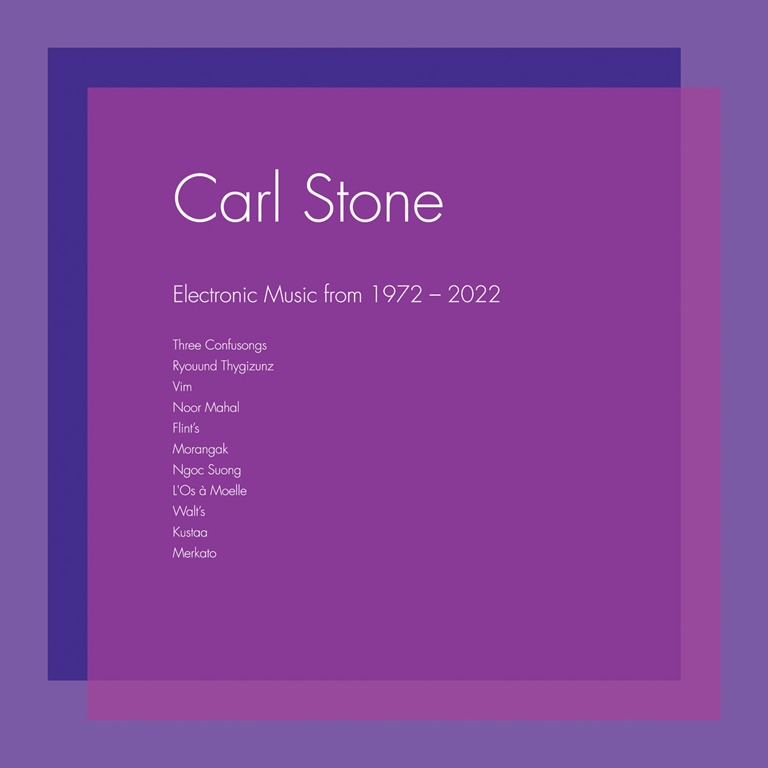
The accompanying notes provide an outline that’s easier to quote than to summarise: ‘Electronic Music from 1972-2022 seeks to frame fifty years of Carl Stone’s compositional activity, starting with Stone’s earliest professionally presented compositions from 1972 (‘Three Confusongs’ and ‘Ryound Thygizunz’, featuring the voice and poetry of Stefan Weiser – later known as Z’EV) up to the present. This collection is not meant as a definitive history but rather as a supplement to be used alongside the previous two archival releases. It is simultaneously an archival release marking Carl Stone’s evergreen 70th birthday and a document of archival art. In the spirit of disorienting repetition and layering, call it an archive of archiving.’

This, then, is by no means a retrospective in the conventional sense, but it does clearly trace a trajectory of the evolution of Stone’s work. The album doesn’t spread the tracks evenly, being weighted heavily to certain years, with each year effectively representing an era.

The 1972 material, which occupies side A and represents the early years, is very much a cacophony of loops and echoes, reminiscent of William Burroughs and Brion Gysin’s tape experiments of the later 60s, and foreshadowing the first releases by Foetus and Cabaret Voltaire, as well as the disturbing drones and processed vocals off Throbbing Gristle, and clearly very much ahead of its time and venturing into the realms of dark ambient before it was even given a label.

Side B leaps forward fifteen years to 1987, with a brace of scraping, discordant pieces, both of which extend beyond the ten-minute mark. The production of these more structure, beat-orientated collage pieces is quite eye-opening: how times and technology change! ‘Vim’, which sounds like a cut-up of The Beach Boys is very much a cut-and-paste assemblage of loops, but the sound is crisp and marks an evolution more of light years than actual years. At ten and a half minutes, it feels it goes beyond proving its point, but then again, perhaps that is a point in itself. It also reminds us of the changing musi8cal landscape: 1987, the year the Justified Ancients of Mu Mu released the sample-riot 1987: What the Fuck is Going On. This is significantly more sophisticated than the JAMMs, and takes a less confrontational approach to the application of the emerging technologies. In contrast, the other 1987 track, ‘Noor Mahal’ combines tribal drumming and hypnotic folktronica, prefacing the airy new age folk crossover forms that would bubble up in Enya’s ‘Orinoco Flow’ and The Beloved’s The Sun Rising’ a year or two later.

And this is what ultimately threads Stones’ work together. He’s astute enough to be aware that evolving technologies are in themselves the soundtrack of the times, and it’s clear listening to this in sequence that experimental music invites chicken-and-egg discussion as to whether the music evolves because of the way technology facilitates it, or of the technology encourages those who are so inclined to push it to its furthest ends.

There’s just one nineties cut, with the jaunty ‘Flint’s’ from 1999, before the millennium brings a selection of dark jerky pieces (‘Morangak’ (2005) is a particularly gnarly Dalek-like mess of a loop) with two absolute beasts in the form of ‘Ngoc Suong’ (2003) and ‘L’Os à Moelle’ (2007), which both sit around the twenty-three minute mark and occupy a side of vinyl apiece, proving particularly disorientating. The former is also particularly testing, an experience akin to water torture, while the latter is… different by its sameness. Like listening to The Eagles on a three-hour car journey. I woke up with a jolt, my face on my keyboard, realising my review was incomplete and it was fifteen minutes later than it had been, and this track feels like a comment on the time in which it was created. It gets weirder as it progresses, of course.

Cut forward to 2022, with three much shorter pieces occupying side F, and ‘Walt’s’ presents a different kind of surprise, being bright, crisp, with technicolour energy and it’s almost game-showy. Spinning folksiness with cornball AI –sounding blooping, and also whipping in some Bollywood bang and an 80s synth-pop vibe, it’s dizzying, and these elements are present in varying levels on ‘Kustaa’ and ‘Merkato’ which are overtly ‘world’ music inspired wile spreading in all directions at once. And this, ultimately, is what Electronic Music from 1972-2022 tells us: Carl Stone has spent five decades ahead of and / or capturing the zeitgeist, distilling the essence of the contemporary into a headspinning whirl. This may be a swift tour, but at the same time it’s comprehensive, and well worth exploring.

AA

AA

a3301642996_10

Christopher Nosnibor

The third – or fourth, depending on your source – album by electronic duo Akustikkoppler, is a work of starkness, of austerity, and a collision of vintage and contemporary, and quite the contrasting experience.

The cover looks like a photo I may have taken from my daily wanderings. I’m not saying it’s a good cover or a bad cover, this is merely an observation. The duo would likely say the same about the cover itself. It’s a snapshot that speaks for itself of the nature off people in our all-waste capitalist society.

I feel an almost inevitable shiver of nostalgia listening to this, despite the fact that the album’s style and sound predate my musical awareness. Instead, it makes me feel a nostalgic tug for my teens, when I was introduced to all of the weird and wonderful, experimental and starkly harsh music that had emerged in the late 70s and early 80s, to which Alles Muß Raus demonstrates a clear lineage.

As the blurb explains, ‘Inspired by the rough commercial industrial surroundings of Schusters Studio back then in Hamburg, Alles Muß Raus was produced on vintage and modern equipment. The two artists combine past and future to a sparkling, shimmering darkness.’ And industrial it is – not in the Ministry sense, but in the spirit of the early innovators utilising primitive synths, drum machines, and tape loops. And it ignites a spark of excitement, in that even now, this kind of music doesn’t sit comfortably with anything in the sphere of ‘normal’ music. The nostalgia, then, is in remembering how hearing TG, Test Department, DAF, et al for the first time completely changed my world, and my concept of what ‘music’ could be.

The analogue drum machines, mixed to recreate the sound of the late 70s and early 80s with a dominant synthetic snare is a defining feature. The first track, ‘Entrümpelung’ is a head-cracking, gut-smashing sub-bass groove that’s anything but vintage and pulls you in before the bass-driven churn of ‘Mitnahmequalität’ steps boldly into grinding, bass-led Throbbing Gristle-influenced industrial. In contrast, ‘Mittenmang’ is almost playful, with tempo changes and some d‘n’b rapidfire drumming bouncing alongside some busy, bloopy electronica. One of the shorter tracks, ‘Horses And Carriages Burn’ hints in the direction of The Cure’s ‘Carnage Visors’ while recreating the spirit of ‘Pornography’.

Entirely instrumental and assimilating so many disparate elements, despite some insistent grooves and accessible, melodic ,moments, Alles Muß Raus certainly isn’t a pop album, but contains many elements of electropop, even if the shade is turned down to twelve. While Kraftwerk may be an obvious touchstone, the vibe that radiates from Alles Muß Raus is much more DAF, with insistent, snare-driven beats driving relentlessly to define the sound and structure of a varied and meticulously arranged set.

AA

a1894982188_10

Bearsuit Records – 31st August 2022

Christopher Nosnibor

I may have mentioned it before, but I always get a buzz when I see a jiffy marked with an Edinburgh post stamp land on my doormat mat and I realise it’s the latest offering from Bearsuit records. Because while whatever music it contains is assured to be leftfield and at least a six on the weirdness spectrum, I never really know what to expect. That lack of predictability is genuinely exciting. Labels – especially micro labels which cater to a super-niche audience tend to very much know their market, and while that’s clearly true of Bearsuit, they’re willing to test their base’s boundaries in ways many others don’t dare.

Andrei Rikichi’s Caged Birds Think Flying is a Sickness is most definitely an album that belongs on Bearsuit. It doesn’t know what it is, because it’s everything all at once: glitchy beats, bubbling electronica, frothy screeds of analogue extranea, mangled samples and twisted loops and all kinds of noise. As the majority of the pieces – all instrumental – are less than a couple of minutes long, none of them has time to settle or present any sense of a structure: these are fragmentary experimental pieces that conjure fleeting images and flashbacks, real or imagined.

‘They Don’t See the Maelstrom’ is a blast of orchestral bombast and fucked-up fractured noise that calls to mind JG Thirlwell’s more cinematic works, and the same is true of the bombastic ‘This is Where it Started’, a riot of rumbling thunder and eye-poppingly audacious orchestral strikes. Its counterpart and companion piece, ‘This is Where it Ends’ which closes the album is expensive and cinematic, and also strange in its operatic leanings – whether or not it’s a human voice is simply a manipulation is immaterial at a time when AI—generated art is quite simply all over, and you begin to wonder just how possible is it to distinguish reality from that which has been generated, created artificially.

Meanwhile ‘At Home I Hammer Ceramic Golfing Dogs’ is overtly strange, a kind of proto-industrial collage piece. ‘What Happened to Whitey Wallace’ is a brief blast of churning cement-mixer noise that churns at both the gut and the cerebellum. Listening, you feel dazed, and disorientated, unsettled in the stomach and bewildered in the brain. There is simply so much going on, keeping up to speed with it all is difficult. That’s no criticism: the audience should never dictate the art, and it’s not for the artist to dumb things down to the listeners’ pace, but for the listener to catch up, absorb, and assimilate.

‘Player Name: The Syracuse Apostle’ slings together some ominous atmospherics, a swampy dance beat and some off-kilter eastern vibes for maximum bewilderment, and you wonder what this record will throw at you next.

In many respects, it feels like a contemporary take on the audio cut-up experiments conducted by William Burroughs and Brion Gysin in the late 50s and early 60s, and the titles only seem to further correspond with this apparent assimilation of thee random. I suppose in an extension of that embracing of extranea, the album also continues the work of those early adopters of sampling and tape looping from that incredibly fertile and exciting period from the late 70s to the mid-80s as exemplified by the work of Throbbing Gristle, Cabaret Voltaire, Test Dept, Foetus. These artists broke boundaries with the realisation that all sound is material, and that music is in the ear of the beholder. This strain of postmodernism / avant-gardism also follows the thread of Surrealism, where we’re tasked with facing the strange and reconciling the outer strange with the far stranger within. Caged Birds Think Flying is a Sickness is an album of ideas, a pulsating riot of different concepts and, by design in its inspiration of different groups and ideas, it becomes something for the listener to unravel, to interpret, to project meaning upon.

Caged Birds Think Flying is a Sickness leaves you feeling addled and in a spin. It’s uncanny because it’s familiar, but it isn’t, as the different elements and layers intersect. It’s the sonic representation of the way in which life and perception differ as they collide.

AA

a3019257531_10

On leaving the seminal is supremely underground Third Door From The Left in 1981, which emerged from the early Industrial scene as represented by Cabaret Voltaire and Throbbing Gristle, Canadian Kevin Thorne began recording as We Be Echo, before halting abruptly in the mid-80s. After some time out, and some time spent working as LivingWithanAngel, Thorne resurrected We Be Echo, since when there’s been no looking back.

The pandemic proved to be a fertile time for Thorne, knocking out three albums and an EP in 2021. 2022 got off to a strong start with E-volution. With another album in the pipeline, John Wisniewski was fortunate to get some time to pitch some questions to Kevin Thorne about his remarkable recent output and reflect on his extensive catalogue and 40+ year career.

JW: What is it like recording your latest We Be Echo 2022 release, No Truth, No Lie? You have been recording for about 40 years now. What has kept you going?

KT: I sold off all my gear in England (in the early 90’s I believe, as my last release was ‘I Dance In Circles’ on LiveEvil’s A Conclusion Of Unrestrained Philosophy compilation CD in 1989), and stopped doing anything musically. It was a dark time for me. In 1998 I moved to Canada, and once settled I started experimenting with music again, this time digitally. It wasn’t until the pandemic started and I bought a bass guitar that I did so in earnest. Music flowed out of me almost faster than I could get it recorded. I released Darkness Is Home, The Misanthrope and Isolation in 2021, followed by E-volution in 2022. I’m over halfway through my second album this year, No Truth, No Lie, which has a somewhat different feel to it than the previous releases, and I’m immensely proud of the tracks on it so far. I have several other tracks recorded and finished that I feel are good but just don’t make the cut for this album.

I record because I enjoy it. Especially this past two years, when it’s been my therapy. Since Gen dropped her body, it’s also been my way to keep communication open. When a track comes together particularly well I feel Gen’s presence. I still get a thrill producing a song that I love, and I will continue recording until that stops.

After I release a new album I tend to go through a mini depression. Because I love the album so much, and out so much into it, when I release it into the world and it gets virtually no response, it is upsetting. But after a couple of weeks, I get the urge to record again.

Any trends that you have seen come and go?

I’m not a trend watcher.

Where do you find inspiration to compose?

I think that the way I create music is quite unusual in that I don’t know where the song will take me, I have almost no control in the matter. It evolves from a bass and drum beginning (occasionally guitar and drum), then goes where it wants to, it feels like it has almost nothing to do with me. If I try to create something in a particular way, it generally moves itself the way it wants to. I still work full time, so I mostly record on weekends. I get up around 8am, go grab breakfast then relax for a bit and if I feel like it I go into the studio and record. Often nothing happens, occasionally a track comes together really fast. Sometimes it takes a few listens before I can appreciate what it could become. I usually record drums/bass (often several tracks of bass), then listen to that and wait for the lyrics to arrive… sometimes that’s easy and sometimes not. Then I flesh it out with more guitar or bass. I record the vocals in the basement when I’m alone (I’m still stupidly shy about singing), Listening to the track on an old iPhone with headphones while using my iPhone to record. On two of the songs on the upcoming album I started with lyric thoughts and recorded using them – the lyrics and vocals were recorded in one take with no editing, giving it a more “live” feel.

Any favorite electronic and industrial music artists?

Major Influences are TG, PTV, Cabs, but I listen to a lot of different kinds of music. Not much electronic or industrial these days though.

image3

Image provided by artist

You worked with Raye Coluori in your early days. What was that like?

Raye was great to create with, and we still chat and record on occasion. I was sick with Covid when he was in Toronto recently so missed out on a physical catch-up which was upsetting.

Recording with TDFTL was fun, our music was created in a similar way to we be echo, we started with drum and bass (me), and Raye (guitar or keyboard) and often some pre-recorded speech, then built it up from there. We recorded everything in case something worked. I think Raye still has the rehearsal tapes. I have one somewhere. His confidence really helped me boost mine. We played two binaurally recorded gigs, that we released on tape. For one track on our “Face The Firing Squad” cassette, we used a drum track sent to me by Mal (Cabs), and made good use of the Roland Chorus Space Echo I bought from TG’s Chris Carter. I still feel this album stands up, even after 40 years!

We have recorded and released one track together since I moved to Canada, and hope to do more, always seems I’m busy when he’s not and vice versa.

Later you recorded Ceva Evi. What was that experience like?

Recording on my own meant I could record what I wanted when I wanted which was very freeing. I loved the idea of using Gen’s Tibetan Thighbone trumpet on a track but couldn’t get it organized for the regular edition release, however Dave Farmer (iham) sorted it out for the special edition and he and Gen both play on the track ‘Inside Life’s Wire’.

Any future plans and projects?

I recorded a track with Iham that he will be releasing as a 12” single, and we are working on a new track now. The music we record leans more toward industrial than mine does.

I just finished a collab as Dream Duchess with Marcy Angeles that’s available on her bandcamp. I also sent out bass and drum stems of a track to a few people to see what they would do with it and have had some pretty amazing responses, but not enough to make it a release yet.

I’m also working, when time permits, on another album of old music (“Forgotten Beats”) that hasn’t seen a release yet, or was released in a very obscure manner originally.

Is there anyone that you would really like to collaborate with?

I’m open to collabs. There are many people it would be an honour to work with.

AA

a1280685993_10

Many artists are referred to as legendary, but only few deservingly so. As a member of the wreckers of civilisation, Throbbing Gristle, Chris Carter’s status is not only legendary, but notorious and seminal – everything you could wish for from a groundbreaking artist. Throbbing Gristle boke so much new ground it’s almost impossible to quantify their influence – and Carter broke yet more ground with his first post-TG output as Chris and Cosey, with Cosey Fanni Tutti: the pair practically invested trance music (as their 1981 LP, Trance evidences).

Carter’s never been content to bask in his previous achievements, and has sustained a career in the pursuit of continual evolution, with a steady stream of releases, not least of all the trilogy of albums with Carter Tutti Void, a collaboration between him and Cosey with industrial revivalists Factory Floor.

With a new range of modular and other musical gear recently launched and a reissue programme in full swing, John Wisniewski caught up with Chris to talk about projects past, present, and future.

JW: What are you currently working at,  Chris?

CC: Right now I’ve had to break off from a couple of ongoing projects to refit and rewire our studio. Last year we decided to rationalise our recording setup, sell off some equipment and scale back on gear we no longer or rarely used any more. So I’m busy boxing up things to send off to new owners, in-between crawling around under desks plugging cables into sockets and whatnot.

Can we talk about Throbbing Gristle. How Did you meet the other members of the group?

We met through our mutual friend the artist John Lacey, at one of my solo performances back in the mid 1970s. John’s father Bruce Lacey (who was a well known performance artist) was also the caretaker at the building where Cosey and Genesis had an art workspace in East London, and one thing led to another.

What was it like being in Throbbing gristle?

Well really you should read Cosey’s autobiography Art Sex Music for the full story on what it was like in TG. It was exhilarating, fun and exciting while also being at times truly awful, emotionally draining and a lot of bloody hard work. But it was where I met Cosey and we fell in love so I wouldn’t change any of that for the world.

What was the audience reaction to the music?

The audience reaction usually began with confusion which then often quickly turned to hostility. But it was an unusual time back then, in that we were almost impossible to categorise. We weren’t electronic or prog, or rock and punks hated us and our sound, which is ironic because the press continually referred to us as a punk band. Actually that was part of the problem because punks would turn up expecting to see a typical four piece band with a drummer and what they got was nothing like that, visually or aurally. Cue bottles being thrown and fights with the audience.

How did you meet Cosey to form Chris And Cosey?

As I said, we met when we formed TG. When TG imploded in 1981 we decided to go our own way with a completely new sound, as Chris & Cosey. Actually we could see the writing on the wall way before TG actually split-up and we’d begun writing and recording Chris & Cosey songs months before TG parted ways. In fact we got a C&C record deal with Rough Trade within weeks of the TG split and had our first album Heartbeat released before the year ended.

Any favorite music groups? Who do you like in electronic music?

Wow that’s one of those impossible questions. I’ve been listening to all kinds of music for 60 years and I’ve come to realise that my music tastes subtly changes from decade to decade. Partly because I’m hearing new things all the time, which take me off in different directions of discovery. Last year I was listening to a lot of Electrofolk but at the moment I’m revisiting and appreciating the finer points of Afrofuturism.

Any future plans and projects, Chris?

Yes, lots of future plans, a few are top secret but some I can mention. I’m slowly putting together a followup to my Chemistry Lessons Volume 1 LP,  the new album has the unusual title of Chemistry Lessons Volume 2… it’s sounding good. I’m compiling parts for a few TG albums and reissues for Mute and we are remastering some of the early Chris & Cosey back catalogue for rerelease next year.

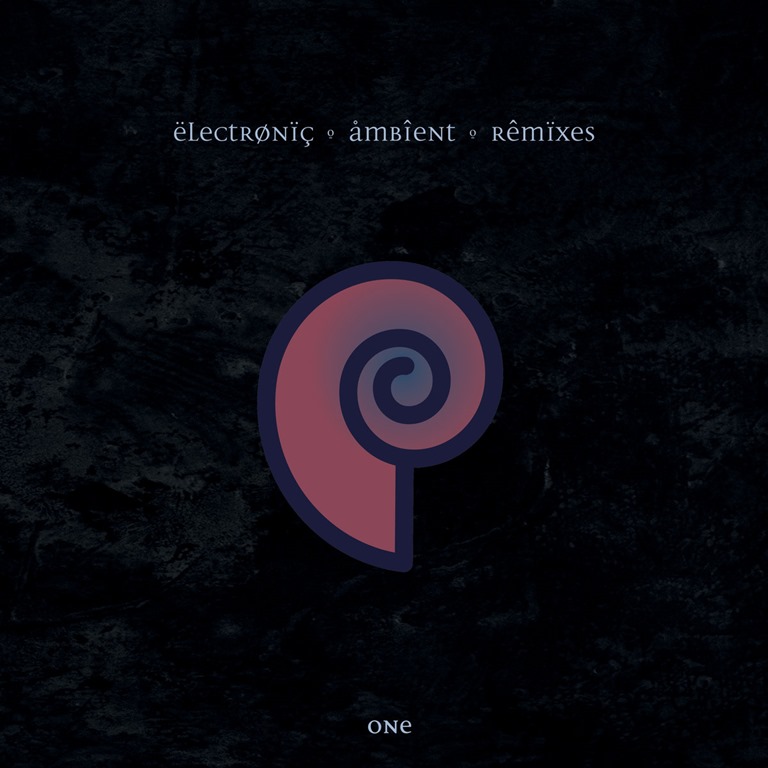
Electronic Ambient Remixes 1 & 3 are out on vinyl on 31 July 2021.

AA

a1974239782_10

More at Chris Carter’s website.

Cold Spring – 23rd October 2020

The reverence for Coil amongst their fanbase – which if anything has expanded in recent years, and particularly following the death of Peter Christopherson – is quite remarkable. Emerging in 1982 following the demise of Throbbing Gristle, Coil became the primary vehicle for Christopherson and partner John Balance after contributing to the early Psychic TV releases. And perhaps one of the reasons Coil are held in higher esteem than PTV is that their output, while still substantial, was less in volume but subject to a higher quality control, as well as pursuing esoteric experimentalism while largely managing to avoid cringe-inducing indulgence. That, and the fact they pushed so many musical boundaries without being massive tossers in a musical field crowded with individuals whose creative genius was tempered by tendencies toward major-league assholism: P-Orridge should require no real qualification now, and similarly, the shady characters of the industrial and neofolk scenes, not least of all Boyd Rice and Douglas Pearce have long been exposed. And the fact that both members suffered premature deaths only compounds the way their work resonates with fans, who can only contemplate what cuold have been

Everything around the rights to the Coil catalogue is spectacularly complex, and the origins of this compilation aren’t even entirely straightforward, having originally released by Russian label FEELEE, featuring tracks from all their major albums (barring The Ape of Naples which was released after Balance’s untimely death). They were hand-picked by Coil to represent their best work and originally released to mark their first performance in Moscow in 2001.

Subsequently out of print on CD for almost two decades, this edition courtesy of Cold Spring spans Coil’s entire living career, with A Guide For Beginners – The Voice Of Silver and A Guide For Finishers – A Hair Of Gold being made available together in one deluxe set.

As Nick Soulsby observed of Balance and Christopherson, writing for thevinylfactory.com, ‘As Coil they had embarked on a wild ride from industrial origins originating in the post-Throbbing Gristle outfit Psychic TV, through a spell as dancefloor-channelling experimentalists, onward to their destination as the respected priesthood of pagan rite electronica’. And with a career spanning three decades and eighteen studio albums, it can be daunting to know quite how best to make inroads, so a ‘Best of’ makes sense.

Disc one (A Guide for Beginners) spans their later career, while disc two (A Guide for Finishers) delves deeper towards their origins, and together, in a slightly mixed-up reverse chronology, we’re able to trade their development, and what’s most interesting and apparent is their range and their willingness to explore.

Singling out tracks from a collection that spans twenty tracks and a monster running time, but emerging from the swathe of brooding dark ambience and esotericism, ‘Ostia (The Death of Pasolini)’ stalks brooding neofolk territory, dark, stark, and portentous, but without any of the nationalistic bullshit that often typifies the genre, while ‘Where Are You’ is the soundtrack to psychosis, an eerily minimal backing creeping uncomfortably behind a monotone monologue that’s unsettling and uncomfortable.

Brooding piano and shrieking woodwind and horns forge haunting soundscapes while elsewhere, minimal two-note organ and trilling electronic extranea provide the backdrop to mesmerising spoken-word narratives. Cut-up samples and fragments drift in and out (no surprise for a band photographed with William Burroughs, who had an album released on Industrial Records in 1981) and the thing that really comes across most powerfully from this compilation is that while so any ‘experimental’ and ‘industrial’ acts were – and are – pretty dull, Coil were consistently engaging, focuses on tone and resonance, and ever-evolving.

It would be hard to improve on a selection picked by the artists in terms of what can be considered the best representation of their output, and bias aside, this is hard to fault by way of an introduction.

AA

COIL A Guide For Beginners - A Guide For Finishers - Lo res album cover for web