Posts Tagged ‘Throbbing Gristle’

Artoffact Records – 5th December 2025

Christopher Nosnibor

In the last few years, CD box sets have become quite a thing. And I for one am a real fan. It’s not just about ‘fuck Spotify’ or the realisation that stuff has a tendency to disappear from streaming services at no notice – something true of Netflix and other TV streaming services, too. But, it is a fact that if you don’t have something physically, in some form or another, even if it’s only a digital file, you don’t have it, and you certainly don’t own it. But not all CD box sets are equal, and not all serve the same purpose. Much as I’ve come to appreciate the ’five albums’ sets and the like as instant collection fillers when it comes to acts I’ve previously managed to skip for whatever reason, they’re beyond stingy on bonus material. When it comes to releases for fans, releases like the monster boxes with all B-sides and bonuses galore, such as those by Fields of the Nephilim and The March Violets have been far more exciting.

Industrial Overture: Studio & Live Recordings 1982-1985 is definitely exciting. It’s no simple repackage of the albums, and the chances are most people – even the staunchest fans of Test Dept – don’t own the majority of the material on this one, consisting as it does primarily of scarce material, outtakes, and Peel Sessions.

Industrial Overture: Studio & Live Recordings 1982-1985 consists of 42 tracks across 4 CDs and also available digitally. It’s a document of their earliest, most abrasive period – not that they exactly mellowed in the years after, as perhaps their most commercially successful album, The Unacceptable Face of Freedom (1986) attests, and includes a first ever reissue of the group’s 1983 cassette-only debut album Strength Of Metal In Motion, the classic Ecstasy Under Duress and Atonal & Hamburg albums (both unavailable for over three decades), plus a disc of hitherto unreleased studio recordings that incorporate two sessions recorded for the John Peel show on BBC Radio 1.

As the notes inform, ‘In total, 26 tracks are new to CD and digital formats, of which 12 have never been previously available at all. All contents have been compiled by Test Dept and are newly remastered by Paul Lavigne (Kontrast Mastering)’.

Disc one gives us Strength Of Metal In Motion – a collection of raw live recordings. The first five were recorded at Albany Empire, Deptford, in August ’82, and it’s fucking brutal. Even remastered, it has something of a bootleg sound quality about it, that muddiness that’s particular to 80s recordings. In many respects, this adds to the appeal here. It opens with the dissonant blasts of harping faux-brass blasts of ‘Last Rites’ – heraldic, but askew – before giving way to the pummelling percussion and shouting of ‘Shockwork / Workshock’, which is brief but brutal. ‘Prokofiev’s Dream’ is a full-on assault of clanking percussions with occasional horns, before ‘Drum and Body’ drops a shard of industrial punk noise, with rabid vocals-riding a wave of the most relentlessly aggressive beats. The dark ambience of ‘Death of God’ is nothing short of purgatorial, and showcases a different side of the band. Four more of the thirteen tracks were recorded at Temperance Hall, Newbury, four months earlier, and with samples, synths, and drum machines flashing in all directions, their debt to Cabaret Voltaire is clear there – as is the sense of their future direction. That said, ‘Kindergarten’ is pure Throbbing Gristle, laced with heavy hints of Suicide and the bibbling synths of Whitehouse. But the wayward experimental jazz elements are also strong. Overall, this is the sound of punk in a head-on collision with Throbbing Gristle and drumming that sounds like they’re battering the shit out of sheet metal. Unless you were actually there, one can only imagine what it must have been like to witness any of these early shows.

Ecstacy Under Duress was initially released in 1984 and is another (largely) live compilation consisting of recordings which again were captured in ’82 an ‘83, although this time featuring future debut single ‘Compulsion’. The compositions feel more evolved, and perhaps as a consequence, more honed in their attack. ‘Hunger’ builds to a punishing climax and sets the tone. The aforementioned ‘Compulsion’ is relentless. Samples and crashing percussion dominate the stark industrial landscape, and the intensity of these performances translates well despite the separation of time and medium. I suppose it’s here we can really identify the point at which Test Dept carved a path which departed from their industrial predecessors and peers in their pursuit of the most punishing percussion. Only Einstürzende Neubauten really compare, but even they’re not quite as up-front with the hammering beats, despite their love of sledgehammers and metallic objects. The twelve-minute ‘Efficiency’ takes the percussive assault to a whole other level, leaving the listener feeling pounded, pummelled, bewildered.

The third disc offers some respite by virtue of being studio-based and therefore not having that muffled 80s live sound to the recording – although it’s marginal. ‘Blood and Sweat’ – one of three demos from 1982 – is primitive and raw and very, very drum-orientated: the vocals are relegated to the back of the mix, anguished shouting buried in a barrage of noise. It’s cruel and it’s harsh and it’s heavy, and the demo version of ‘Shockwork’, recorded during the same session is similarly hard on the ear, with its combination of machine-gun drumming and squalling avant-jazz tones.

The two Peel Sessions, recorded in ’82 and ’85 shows a honing of the sound: between the two sessions, they would release their debut album proper, Beating the Retreat, which included contributions from F M Einheit and Genesis P. Orridge, as well as Shoulder to Shoulder, with the striking miners choir, and which would finally see the release of an official studio version of ‘Shockwork’ – another version of which featured in the 1983 Peel Session, which comes on as heavy and mercilessly brutal as Swans on Filth – which was released the same year and channels the pain of life enduring the crushing slog of capitalism.

AA

Of the four discs, this perhaps has the greatest impact, and not just sonically. Atonal, anguished-sounding vocals reverberate vast sonic swamps dominated by the ever-present barrage of industrial-strength percussion. It’s relentless in intensity, and the effect is cumulative. Between the pulverizing six-and-three quarter minute ‘Efficiency’ (which feels in some way to be their answer to Throbbing Gristle’s ‘Discipline’), and the six-and-a-half-minute ‘Red Herrings’ version of ‘Gdansk’, with the disorientating mutter of ‘State of Affairs’ in between, this is a sustained assault that hammers blows from every direction.

AA

Disc four, which contains the Atonal & Hamburg album – released in 1992, but documenting two live performances from 1985 marks a significant shift from the earlier live shows. Containing material drawn predominantly from Beating the Retreat and The Unacceptable Face of Freedom, the punishing volume translates well, and the force is more controlled. There is structure, too, building from dirge-like crawls – again comparable with Swans around this time – quickening the pace and the all-encompassing ferocity of the percussion.

Those familiar will likely already know, but in addition to providing a truly magnificent document of Test Dept at their most uncompromising early best, Industrial Overture shows how they were right at the heart of an emerging zeitgeist spawned in the wake of Throbbing Gristle, as represented by the likes of Neubauten, Cabaret Voltaire, Swans… this was not a scene or a movement, but a disparate array of artists channelling frustration at the dark underside of a time when the charts were dominated by the likes of Duran Duran and Culture Club. In pop culture, the early 80s is presented and remembered as being glitzy, aspirational, fun. But that was not the lived reality of many. Test Dept may have been underground not least of all because their racket was largely unpalatable to the majority. But as Industrial Overture evidences, they were providing the soundtrack of the grim realities of working life, drudgery and trudgery. Essential listening.

AA

AA

3fa9f627305a21e10fbc1f2455628c4f1a429e6e

22nd November 2025

Christopher Nosnibor

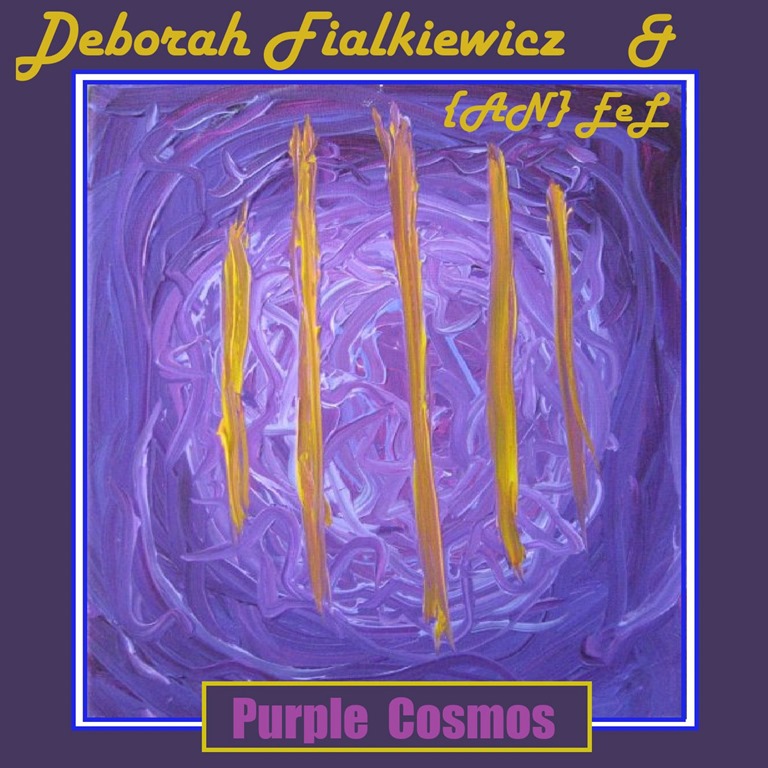
The second collaborative release of the year by Deborah Fialkiewicz & {AN} EeL (aka Neal D. Redke) lands amidst a blizzard of output from two musicians who are both insanely prolific – by which I mean prolific on a scale which isn’t far off Merzbow or Kenji Siratori: they each release more frequently than the average person has time to listen to it. I don’t in any way consider myself to be an average person – and we’ll not go there – but writing about music means that having something play in the background while I do other stuff, like changing the cat litter or whatever, isn’t always something I fancy, and certainly isn’t my way of hearing a release for the first time. Ok, so this is not how, say, my daughter, who’s fourteen, or her generation, or even some of my peers take in new music, but my formative experience of new music involved sitting down and setting a new album to spin and giving to my undivided attention for its entire duration. Sometimes twice in succession, or more on a weekend.

Attention, in 2025, is, it would seem, in short supply. And yet, flying in the face of this, albums with long tracks seem to be becoming increasingly more common. Perhaps it’s a sign of artistic rebellion. Perhaps it’s that artists feel a need to reclaim the focus and concentration associated with longer works. Whatever the reason, it’s welcome, and Purple Cosmos contains three compositions spanning a solid half an hour.

This is a thoughtful, delicate trilogy of compositions, which build from hush to tumultuous tempests of sound incorporating powerful space rock and progressive elements within their protracted ambient forms.

‘The Floating Monk’ is centred primarily around a thick, earthy drone that has the texture of soil, and it’s enmeshed with dark layers of serrated tones and thunderous rumblings. It’s dark and it’s dense, and it’s uncomfortable. The rest of the album doesn’t offer much by way of light relief.

Yes, the title track strays more toward bleepy electronic experimentalism –a different kind of space rock, if you will – and the final track combines wailing synth overload with some persistent beats… but first and foremost this is an unashamedly experimental work.

Purple Cosmos is a work which reflects a rare attention to detail, and it possesses a certain persuasive relentless in its marrying of dark noise, analogue undulations, and insistent beats. There’s more than a hint of Throbbing Gristle about it, and perhaps a dash of Factory Floor. It gets inside your head, and at the same time enwraps your entire being with its otherworldliness. It sure is a far-out groove.

AA

a2147012585_10

Dret Skivor – 3rd October 2023

Christopher Nosnibor

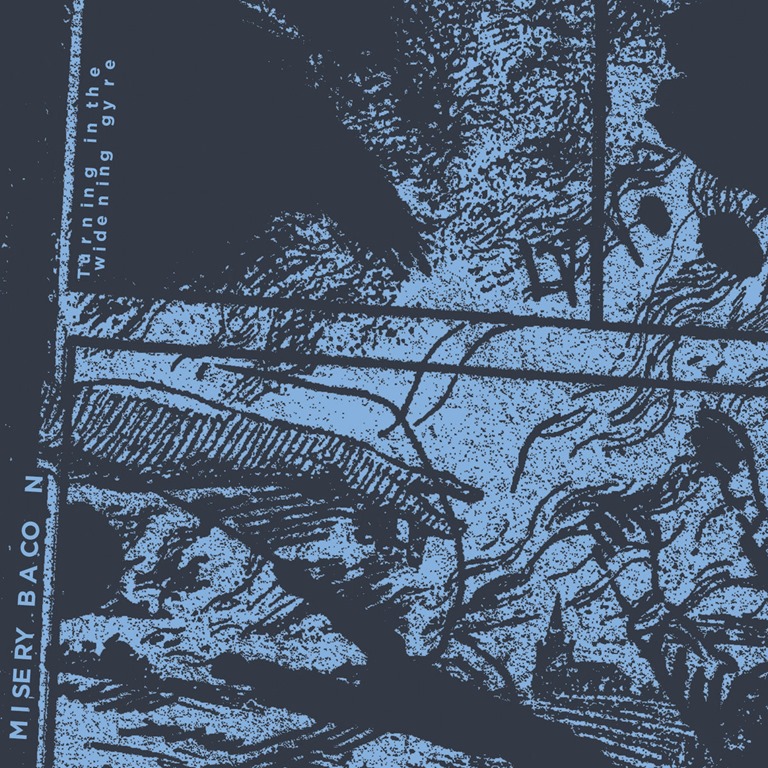
This is proving to be a particularly good week in the world of noise, what with Foldhead’s Paris Braille and this being released on the same day. There’s more information given about this release than most to slip out from Swedish underground label Dret Skivor – in that there is actually some. We learn that the work was ‘Recorded and assembled on residency at Bergen Centre for Electronic Arts, Leveld AIR and Gallery ASK, Norway 2025’, and that the ‘Album and song titles taken from / inspired by WB Yeats ‘The Second Coming’’. We also learn that Misery Bacon is the vehicle of Bergen’s Luke Drozd. It’s not clear if this is one of those monikers that’s amusing because translation, or if it’s a case of humour that doesn’t translate geographically, like Die Toten Hosen. I’m sure dead trousers are a massive wheeze in Germany, but here it’s vaguely surreal but mostly a bit odd. Then again, ‘Misery bacon’ makes me think of all the moaning gammons we have here in the UK, red-faced and chuntering into their Carling about ‘immagrunts’ and how everything’s ‘bloody woke’ nowadays.

It contains two longform pieces, each filling a side of the cassette release – of which there are just six copies – ‘Every finger double crossed as things fall apart’, and ‘Shambling onwards in the shadows of indignant birds’, and neither literary allusions or social commentary are apparent in the work itself.

‘Every finger double crossed as things fall apart’ starts with some sampled dialogue and an array of pops, clicks, whirrs and glops, a swampy collage of seemingly random elements layered across one another. It’s atmospheric, but also difficult to get a handle on any idea of where it’s headed, if there’s any theme or concept that connects the diverse sources. But soon, serrated drones and distortion build to a sustained whorl of noise atop a quivering bass judder. Five minutes in, and it’s an all-out assault worthy of Merzbow or Kevin Drumm. It’s noise, and it’s harsh, but it’s an ever-shifting, seething mass of tinnitus-inducing tones and textures, at time fizzing and crackling in such a way as to give the impression that the sound is actually inside your own head, rather than reaching the brain from an external source. There’s a niggling crackle of static that sounds like there might be a problem withy your equipment. This is most pronounced and unsettling during a quieter spell of jangling metal which sounds like a light metallic object being rattled against a metal fence, or the clattering of cutlery. It’s a piece that slides and slithers hither and thither, and sits well against Throbbing Gristle’s most experimental, abstract works. Towards the end, it does feel like it could be the soundtrack to the collapse of everything. Listening to it while the US government is in shutdown, Israel seemingly continues to level Gaza despite a supposed ceasefire, hundreds of people are arrested in London and other cities for protesting against genocide, and Russia continues to expand its campaign of interference across Europe, it’s hard to feel much positivity.

On a personal level, the present feels overwhelming. The world is at war. The world is on fire, and at the same time that we have drought, we have flooding. But instead of coming together collectively to address this global crisis, as a species, we’d rather bomb the fuck out of one another. And with shootings, mass knife attacks and all manner of savagery taking place daily, it really does feel as if humanity has descended into a spiral of insanity and self-destruction. And there are really no words to articulate the panic and anguish of all of this. Music and literature may provide a certain comfort and distraction, but it’s in sound alone – more specifically, sense-shattering noise – that I find something which articulates the experience of living in these torturous times.

And so it is that ‘Shambling onwards in the shadows of indignant birds’ returns to the sampled dialogue which opens ‘Every finger double crossed as things fall apart’, before plunging into a mess of static cackles and hiss. It’s a Bladerunner world of rust and robotics gone wrong. It’s murky and it’s unsettling. A blast like the roar of a jet engine momentarily hampers the hearing, and we sit, dazed, in the comparative quiet of crackles and pops. There’s a mid-track lull, which feels uncomfortable as whistles of feedback and laser bleeps criss-cross before collapsing into a broken wall of noise on noise.

Turning in the widening gyre is harsh, heavy, bursting with uncomfortable frequencies. The final minutes are nothing short of punishing. And yet, at the same time, that punishment offers vital release. This is where you get to let go. At last.

AA

a2298054435_10

3rd October 2025

Christopher Nosnibor

Foldhead has been quiet on the output front of late, after something of a purple patch around lockdown, there was a lull, broken by Mirfield Pads in 2022, with only the ‘Single’ release with …(something) ruined since, and a live outing or two. This is the only kind of quiet you’ll get from Foldhead, mind you: the Yorkshire maker of mangled noise likes to turn it up and blast the frequencies – and tones.

If Mirfield Pads ventured towards mellower, more Tangerine Dream-like electronica, Paris Braille sees a return to the harsher territories more frequently wandered by Foldhead.

Paris Braille – the title likely a reference to two cut-up novels by the late Carl Weissner (who not only appeared in some collaborative / split works with Burroughs, including the seminal pamphlet So Who Owns Death TV?, but translated many of his novels for the German market), namely The Braille Film and Death in Paris – is a typically abrasive affair, with the title track being a nine-minute loop of noise which captures of the essence of the ‘derangement of the senses’ Brion Gysin strove to achieve with his multi-sensory performance pieces which extended the concept of the cut-ups to its logical extreme. The thunderous beat, when surrounded by and endless loop, becomes almost trance-like and strangely euphoric. It’s difficult to discern precisely what’s in the mix here: there may be voices, or it may simply be a tricky of the human ear – my human ear – in its quest to seek recognisable forms amidst the formless sonic churn, in the same way one finds the shapes of animals and faces in clouds. In the right context, say, as a remix on a Cabaret Voltaire EP (where it would be right at home, and the William Burroughs / cut-up connection is again relevant here), this would be hailed as an industrial dancefloor stomper – largely because that’s what it is. Intense, hypnotic, relentless, it’s a pulsating, shifting noise beast that slowly spins off its axis and out of control in a swelling surge of sound.

‘CW Loop’ unashamedly harks back to the tape experiments of Burroughs and Gysin from the late 50s and early 60s, which in turn were a huge influence in Throbbing Gristle, and in particular Genesis P-Orridge, who released a selection of archival recordings on the Nothing Here Now But the Recordings LP on Industrial Records in 1980. It is, quite simply, short vocal sample, heavily bathed in echo, looped, and overlayed with a churn of undulating noise.

The third and final track, ‘Film Death’ – the title echoing and mirroring that of the first – round the set off with a return to the thunderous, beat-driven sound of ‘Paris Braille’, this time with a squall of shrill feedback and full-spectrum static. The result is akin to Throbbing Gristle covering Matal Machine Music. In the world of Foldhead, this is absolutely mission accomplished.

AA

a3884873763_10

The Helen Scarsdale Agency – 8th August 2025

Christopher Nosnibor

When the accompanying notes and press release which replicates them describes a release as ‘dire’, you know you’re in for an uncomfortable ride. In the world of noise, such a choice of adjective doesn’t carry quite the same negative connotations as is the majority of musical spheres. When it comes to noise, and certain strains of metal, the objective is to make it as unpleasant as possible. It will alienate most people, and that’s precisely the objective: those who can withstand the torture are the right people.

And so it is that Mutual Consuming is described as ‘a dire piece of isolationist thrum, spectral caterwaul, and heavy gloom through an oblique and abstracted coupling of electronics, noise, and ominous field recordings.’

To quote further from the accompanying notes, Roxann and Rachal Spikula, the twins who make up Relay for Death’, offered the consideration that “Mutual Consuming comes from a concept in the philosophies that underpin traditional Chinese medicine theory, where the two opposing states (yin and yang) are 2 states on a continuum and their interactions produce an infinite possible number of states of aggregation. Within this interplay, there is a dynamic balance that is maintained by a constant adjustment of their relative levels. So an excess of yin consumes yang and vice versa.” We asked if this has anything to do with the concept of the Ouroboros, to which they responded, “We hadn’t thought about Ouroboros, but the eternal cycle of things makes sense too. The gorge fest of existence.” Does this relate to previous works? The twins concisely respond to that question in a rare interview in Untitled, “No.”

The album features but two pieces, each clocking in around the seventeen minute mark. An awkward length, but plenty of time to make for an uncomfortable, unsettling, and even torturous experience. And it is.

‘intone the morph orb’ is a darkly unsettling expanse of dark ambient, the sounds of thunder and cavernous growls from the pits of hell are collaged with scrawling metallic drones. Distant detonations reverberate, like volcanic eruptions beyond the horizon, as wispy ominousness lingers in the air. Very little tangible takes place, but the tension grows. There is a dark thriller / horror aspect to this: the hairs on the back of your neck prickle and you fear whatever may lie around the corner. The second half of the track is less precipitous, given to a protracted mid-to-high-end drones that swirls and eddies, cut through with occasional whistles of feedback.

There’s something vaguely Ballardian about the title ‘terminal ice wind’, and it is, indeed, a cold atmosphere which runs forth from the speakers, churning an ever denser sonic murk as the first few minute pass. It’s a seeping morass of dark discordance which takes cues from Throbbing Gristle. Three minutes in, thunderous explosions register, and all is noise, albeit for a brief time. In time, dissonant drones, thrumming reverberations and low rumbles emerge and come to dominate the mix in what is an ever-shifting soundscape, where light is in limited supply. This is, indeed, dark, and oppressive.

Everything about Mutual Consuming is as it should be. A collage of challenging sound on sound, any underlying concept fades to insignificance as the sounds assail the ears without apology. Mutual Consuming is not harsh, and on the noise spectrum, it’s fairly gentle, but it’s by no means accessible or easy on the ear.

AA

AA

RFD Promo

Cold Spring Records – 23rd June 2025

Christopher Nosnibor

It may be a heretical stance, particularly as a big fan of Throbbing Gristle, but Psychic TV never really did it for me. They felt a bit meandering, wanky folky, in the same way as a lot of David Tibet’s stuff does. This may be to my detriment, and I may be missing the joys and benefits of a huge catalogue, but… I can shrug it off, and I will live.

TG and seminal filmmaker Derek Jarman were kindred spirits, provocative, avant-garde, and testament of their reciprocal artistic respect is cemented in their 1980 collaboration, where TG soundtracked Jarman’s movie Under the Shadow of the Sun (with the soundtrack being released some four years later).

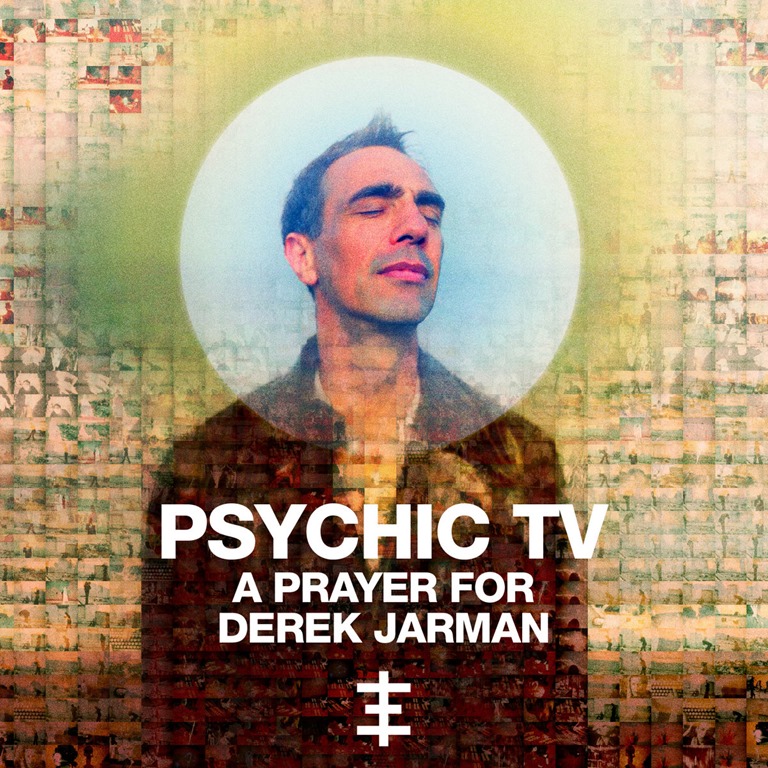
A Prayer For Derek Jarman was recorded later, on LP in 1985 by Temple Records and subsequently reissued as an extended CD version by Cold Spring in 1997. As the accompanying text explains, ‘Unavailable for almost three decades, this collection from the Cold Spring archive has been repackaged and remastered with new artwork. A documentation of the soundtrack work created by Psychic TV for the film-maker and artist Derek Jarman, it serves as a demonstration of why PTV were one of the most important groups in the underground scene of the 1980s and 1990s.’ The material on this disc was – as far as I can discern – last available in 2011 as part of the Themes six-CD box set, also released via Cold Spring, and this represents a solo release of disc two.

There’s no mistaking that both Jarman an PTV were important, although I would personally rank the former above the latter – that may be a rather subjective position to take, though, and there is no denying the immense shadow Genesis P Orridge would cast over the scene for many a year and perhaps an eternity.

The titular ‘Prayer For Derek’ is intended as an invocationary prayer and is based on Tibetan rituals; a collage of sounds including field recordings of the lulling waves running aground on the shingle beach opposite Jarman’s Prospect Cottage in Dungeness, Kent, home of some of the UK’s best preserved ‘sound mirrors’ – alongside bird song, crying babies and massed ritualised chants to aid the late director in his after-life journeys. It follows the seventeen-minute churning abstract noise whorl that is ‘The Loops Of Mystical Union’ – and which is, on balance, as good as any of Throbbing Gristle’s expansive dark noise works, and ‘Mylar Breeze (Parts 1 & 2) on which the promo for the album is predominantly pitched, and the ‘Mylar Breeze (Part 3)’. These compositions are piano-led and border on neoclassical. Dainty, charming, and musically eloquent, they certainly mark a departure from the work more commonly associated with Orridge or PTV, as well as evidencing the reasons why they are such a difficult act to pin down, or even distinguish the ‘good’ and ‘not so good’ works in their immense and wide-ranging – and variable – catalogue. With its echoed, looped vocal layers redolent of Gregorian chants, it’s not so hard to determine why ‘Mylar Breeze (Part 3)’ is not mentioned in the promo, although it’s entirely captivating.

As the accompanying text observes, ‘Other tracks feature elongated drones, washes of dissonance, melancholic guitar chime, evocative piano scoring, Burroughs cut-ups, gothic chants and snarling dogs.’ ‘Rites of Reversal’ marks a clear contrasts from the delicate piano-led compositions, diving in with some hard-edged grinding oscillations, which, again, lean more toward the kind of dark noise that was the TG trademark.

A Prayer For Derek Jarman is broad in scope and mood, and this is as appropriate is it is likely deliberate. It certainly presents the more experimental aspects of Psychic TV, and as varied as it is, the quality is also there.

AA

AA

a2838757322_10

11th June 2025

Christopher Nosnibor

Some artists thrive on collaboration. Deborah Fialkiewicz is one of those. While she’s prolific as a solo artist, the volume of collaborative works in her discography is also noteworthy: when she’s not working as part of SPORE, she’s part of the ever-rotating lineup of BLOOM – and that’s before we touch on the frequent collaborations with (AN) EeL, the most recent of which was only released three weeks ago.

The Improvisation Sessions was recorded live May of this year, with a lineup of Dan Dolby, Deborah Fialkiewicz, and John Koser, marking an expansion from the duo which recorded the trilogy of Parallel Minor, Besides, and Hybrid in 2020. Fialkiewicz is without doubt an artist with range, but one who favours the dark end of the ambient spectrum more often than not, and this is very much the case here.

The Improvisation Sessions features two longform tracks which would quite nicely align with a vinyl release.

‘Chameleon Soul’, which spans a colossal continuous twenty minutes, begins with low, rumbling ominous drones, but soon escalates to a busy, buzzy criss-cross of sounds, interweaving and interlacing, leaving one’s head in a spin as if after trying to trace several flies flitting about the kitchen on a hot summer’s day for any period of time. It’s a morass of warping tones overlaying a ballast of churning noise, and any comparisons to Hull luminaries Throbbing Gristle or Merzbow are entirely justified.

The layers of distortion only grow denser and gnarlier as the track progresses, crashing waves of white noise blast in from one side and then the other as they really push to test the stamina. And then you realise we’re only six minutes in. This is a positive: plenty more left to enjoy… Enjoyment is of course subjective, and enjoyment of this requires being appreciative of a dizzying, disorientating assault simultaneous with a full-on white noise blizzard.

The momentary lulls, the spells where they pull back from the precipice of all-out aural obliteration, are far from mellow, as serrated spurs of hard-edged drones, wails of feedback and brain-melting extraneous noise conglomerate to seismic effect. There are some nasty high-end frequencies knocking about in the mix, moments were one has to check if the whistle is coming from the speakers of if it’s that troublesome tinnitus nagging again, and said frequencies rise from a battery of ugly distortion, bone-shattering blasts of which simple explode around the twelve-minute mark, and from hereon in, things only grow harsher, more corrupted, more intense, more difficult to withstand. We’d be inching into polythene bags on heads territory were it not for the variation, but the last three minutes or so are fractured, damaged, and agonizing – part power electronics, part circuit meltdown.

As the world becomes evermore and increasingly fucked up, I find words fail me more by the day. It’s harder to articulate, and this is where I’ve found that sound has come into its own. Sound as the capacity to convey something beyond words, something that lies in the most innermost parts, giving voice to the subconscious, even. On The Improvisation Sessions, BLOOM convey anxiety, gloom, pessimism.

‘The Dark Room’ is indeed dark, constructed primarily around a fixed but thick, distorted hum. Oscillators whine and whistle, and something about it calls to mind Whitehouse around the time of Never Forget Death, when they discovered low-end frequencies and restraint, the impact of a low undulating wave and subtle tweaks of reverb.

It rumbles and drones on, eddying and bouncing around in a shrilling mesh of dissonance. There isn’t a moment where this is an easy listen, and so often, it sounds as if the equipment is faulty, whether it’s a stuck loop or generating unexpected noise.

This set hangs on the edge of ambience, but be warned, it’s dark, and noisy at times, to the extend that it may shred your brain. For me personally, that’s my idea of fun, so it gets a two thumbs up, but for the more sensitive, this is a release to approach with caution.

AA

a3419622385_10

Ant-Zen – 7th April 2025

Christopher Nosnibor

Kadaitcha’s Urban Somnambulistics was originally released on cassette in 2017, and was lauded for its dark atmospherics and rumbling narrative, spoken in Russian. A lot has happened since then, and the Ukrainian duo have, against all odds, remained active, releasing Tramontane in September 21023, and now a new version of Urban Somnambulistics, with the vocals in English. It’s not only the urban landscape of Ukraine which has changed since the album’s initial release, but the cultural landscape also, and the decision to re-record the lyrics in English was in some ways a reaction to the cultural and political context which has evolved, with Andrii explaining to me that, for him, Russian has become ‘a language of occupancy’.

There had been a shift following the annexation of Crimea in 2024, with some people switching from speaking Russian to Ukrainian, something which became more prevalent following Russia’s invasion in February 2022.

It’s hard to really grasp, from a position of comfort and safety, what it truly means to be an artist in a country which is not only at war, but has now been so for more than three years. The idea of making art under such circumstances seems completely wild, but at the same time, something we’ve learned from the long history of war – and indeed, history as a long thread, riven with tribulation – is that art has always been something we’ve made. It seems as if it’s almost a part of our survival mechanism, and that in difficult times, it’s a compulsion within the human psyche that there’s an absolute necessity to document, to create.

Urban Somnambulistics is dark and intense, and while it’s devoid of beats, it’s far too noisy and gnarly and bears the hallmarks of Throbbing Gristle at their darkest, most experimental best, abrasive, and anything but ‘very friendly’. The vocal on ‘hiding the angel’, while clean but reverby on the original version, is thick with distortion this time around, and significantly darker and more menacing in tone. ‘bushmeat’ is nine minutes of blown-out distortion and fizzing electronics, snapped cables and firing sparks, and it’s not only tense, but intense, not to mention unsettling. It’s a messy noise drift that would work as part of a soundtrack to Threads, a post-apocalyptic drone with the whistle of a bleak wind cutting across a desolate landscape. There is shredding noise, too, metallic devastation: you can almost picture ruined farm buildings hanging on their frames beside cropless fields.

Things really step up with ‘symbiote’, five minutes of oppressively dark industrial grind, before the rather more airy expanse of ‘paninsecta’, a piece that groans and drones, clanks and clatters, cut through with snarls and burrs, distorted vocal utterances just beneath the level of audibility adding an unsettling layer of discomfort. The eleven-minute title track provides the finale, and again, it’s very much in the vein of Throbbing Gristle’s more experimental works – menacing, uncomfortable, unpredictable, and noisy, collaged overlays enmeshing with crunching metal, melting circuitry, harsh drones rising up, a surging sonic tempest.

It’s remarkable that this is an album which was recorded before life in Ukraine changed beyond all recognition, because Urban Somnambulistics appears to convey all the tension and all the devastation of conflict in its presentation of sonic extremities, and its embracing of noise that hits like… like… It has significant impact, and that’s a fact.

AA

cover

Cruel Nature Records – 4th April 2025

Christopher Nosnibor

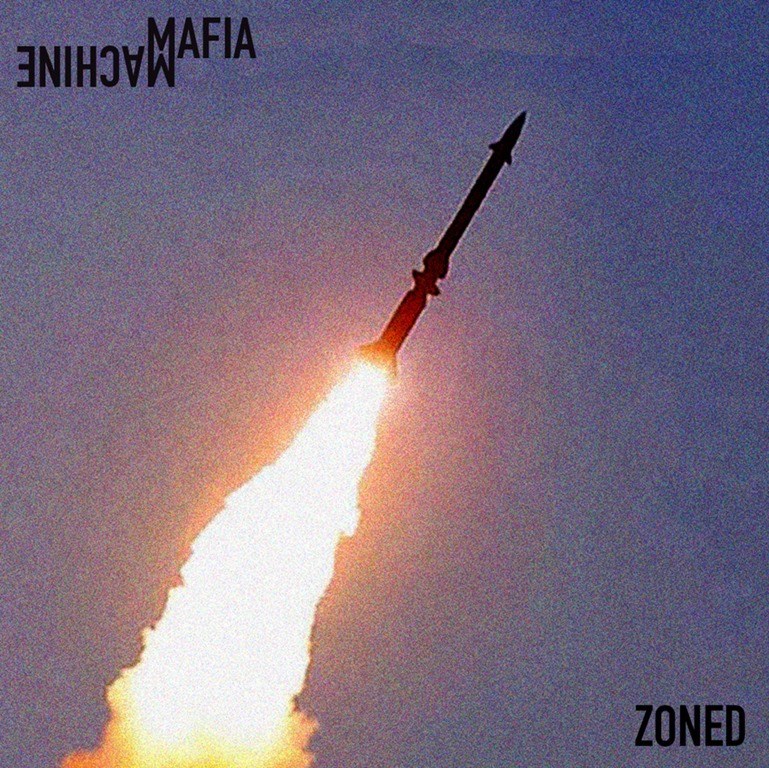
Machine Mafia may be largely unknown, but the duo’s members have some pedigree, being Adam Stone of Pound Land and Jase Kester (Omnibadger/Omnibael/Don’t Try/Plan Pony), all regulars at Aural Aggravation. Jase joined Pound Land’s ever-shifting lineup as the (then) sixth member in 2023 for a handful of live shows, and contributing additional noise to Mugged (because it needed more noise). Deciding to collaborate in early 2024, they slipped out a couple of self-released EPs, which as the notes which accompany Zoned observe, ‘more or less went under the radar at the time’ – which is why they’re getting a second go here, with Zoned being a compilation of those EPs plus four new tracks, or a new EP packaged with the previous ones, depending on your perspective. The tracks aren’t in their original order of release, and have bene resequenced, presumably for the purpose of creating a flow that’s sonic rather than chronological. And so it is that the album starts with ‘Killzones’, arguably the most overtly Pound land-like track on the album, which eases fans of Pound Land into the world of Machine Mafia nicely, or will otherwise alienate pretty much everyone else, unless they’re on the market for something that sounds like Sleaford Mods in collaboration with PiL while monged on Ketamine.

They describe themselves as ‘a voice/electronics duo in the grand tradition of Suicide, Silver Apples, Soft Cell, Pet Shop Boys etc.’ And it is indeed a grand tradition, to which one would reasonably add Sparks, Air, and Erasure, and even the final incarnation of Whitehouse, although what this list ultimately achieves is to demonstrate just how wide-ranging the electronic duo format stretches in terms of style. I very much doubt you’d find these guys donning big hats or flamboyant costumes and kicking out a set of brassy dancefloor-friendly pop bangers, at least on the evidence of the thirteen tracks on offer here. They recount that their first gig was ‘in a small craft ale bar in the Staffordshire town of Leek, receiving a ban for high decibel levels and foul language’. This sets the bar of expectation, and in this context, Zoned does not disappoint.

As I suggested in my write-up of the Killzones EP, the electronic duo they share the most common ground with is Cabaret Voltaire in their early years, mashing up samples and noise in a Burroughsian cut-up style, and churning out gnarly noise that sits between Suicide and Throbbing Gristle. This is particularly true of the collage chaos of ‘Lecture 0.3B’,

But then, ‘F.O.S’, is a blast of uptempo, lo-fi, bass driven drum-machine propelled hardcore punk strewn with feedback and snarling aggression, and ‘Where’s The Money Gone?’, from the Money Gone EP is a filthy racket with massive blasting beats which lands in the space between The Fall and Big Black, powering away at a motorik groove for the best part of six minutes while Stone hollers thickly and ever-more desperately ‘where’s the money gone?’ Well, we know it’s not gone into public services, but there some mega-rich cunts swanning around and jetting into space. And has anyone seen Michelle Mone since she sailed off on her multi-million quid yacht?

‘England’, originally released on Industrial Coast’s ‘Rock Against Racism’ compilation is very Throbbing Gristle, in the (pulsating) vein of ‘Very Friendly’.

Of the four new cuts, ‘Crabclaw’ invites comparisons to Selfish Cunt’s ‘Britain is Shit’, and this may not be entirely accidental, a stinking snarling assault on culture and the senses, with an overloading gritty bass and vitriolic vocals ranting in a mess of distortion and reverb over the murky morass of a musical backing. It’s the sound of frustration, it’s the sound of anger mashed together with despair. ‘Jackpot’, meanwhile, is like John Cooper Clarke spouting over a segment of Metal Machine Music. All the while, a drum machine and throbbing bass pulse away relentlessly: this is Sleaford Mods for real punks. ‘Human Like’ revisits the dubby tendencies first explored with ‘Killzones’, and it’s a dark, sprawling cavernous hell of reverb atop an organ-shaking bass, again bringing together PiL (think ‘Theme’) and Throbbing Gristle (think ‘What a Day’). It’s meaty, and then some, and crunches and grinds away for a full six echo-soaked minutes. Closing with the eight-and-a-half-minute megalith that is ‘Outside My House’, they go full Whitehouse, with a booming bass that’s positively weapons-grade density, over which Stone delivers a rabid, drawling rant from the perspective of a crabby right-wing old-timer while electronic extranea bubble and eddy around. It’s utterly brutal, and completely uncomfortable, and this is the brilliance of Machine Mafia. Gnarly, nasty, uncompromising, Zoned is not friendly, and it will leave you feeling drained, harrowed, punished. Mission accomplished. You’re not supposed to like this.

AA

a2183471837_10

Crooked Acres – 29th March 2024

Christopher Nosnibor

Megalithic Transport Network is the vehicle – if you’ll excuse the necessary pun – of Martyn Stonehouse, and as his project’s moniker suggests, Stonehouse has quite a deep-seated interest in transport systems, as well as, more broadly, industrialisation, and what one might call the heritage of production and its progress, with previous works including Excavations On Harthill Moor, and other meditations on geographical / environmental events.

As the accompanying notes outline, ‘Drawing inspiration from the 18th and 19th century mining works at Alderley Edge in Cheshire, Engine Vein explores themes of our industrial past and the myths surrounding the historical site itself, which has been worked since the early Bronze Age up until the 1900s. As well as the mines themselves, the area is full of intriguing features and is steeped in folklore, including the story of The Wizard, The Golden Stone and a Holy Well.’

The tracks titles clearly are directly connected to specific locations, and mark the points at which human geography intersects with physical geography – quite specific instances of man-made interventions imposed upon the landscape, you might say: ‘Descent Assembly’; ‘The Hough Level’; ‘Engine Vein’; ‘West Incline’; Windmill Hollow’. Our relationship with mining has changed substantially over the long centuries. What began as a marvel of development has now become a defining feature of the destruction of the planet by human hands and machinery. But this is how our species is: we always go too far, beyond what’s necessary or sustainable. It’s small wonder there’s a collective nostalgia for bygone days and the deeper recesses of history.

Engine Vein, though, sits in a unique space, between two levels of nostalgia, and the present.

First, as for the method and practicality of its creation, Engine Vein was ‘written as live evolving pieces of electronic sound, each recorded using an AE Modular Synthesiser, Korg MS2000 and Yamaha R100 direct to tape, before being digitally transferred’.

And so it is with Engine Vein that MTN explores a tale of industrial with industrial sounds, and if not necessarily vintage equipment, at least using kit that evokes the spirit and sound of a different kind of industrial, namely that of the late 70s. Engine Vein doesn’t replicate the gnarliest noise of Throbbing Gristle, but the more proto-electro pulsations of cuts from 20 Jazz Funk Greats.

It is, as a listener, difficult to directly correlate the track to their associated locations, for two reasons: first and foremost, there’s no ‘field’ element to the compositions, nothing which is identifiably evocative, nothing which associates the sounds with time or space, period or location. But as much as this, there is the historical gap which sits unbridged – how post-millennial technology emulating the sounds of the late seventies and early eighties connects with the time frame which inspired it.

None of this is to say that Engine Vein is a bad listen: it’s simply better, perhaps, to listen to it separately from its context. It’s rare for a time / place inspired / orientated release to be so overtly beat-driven, and for all the dark shifting ambience which lurks and lingers in the further reaches of the many layers, Engine Vein is a throbbing, pulsating, and quite up-front, energy-strong set which draws as much on 90s dance tropes and rave as it does more primitive 80s forebears.

Of course, for the artist, the experience may be entirely different again: perhaps, for him, this is a listening experience which harks back, back, way back and back further. The title track, with its low, slow pulsations and layered facet, does perhaps speak on another level, and its low, dark throbbing certainly has a resonance which bothers the midriff if not one’s perception of history.

Engine Vein is constructed around a dense sonic haze, throbs and pulses. And at times it’s hard to separate the reality from the recordings, as well as the hazy memories. Dark heavy drones, gouging lines ploughing thick and deep churn the ground to a depth and drag the thick sods over one another. ‘Windmill Hollow’ draws the set to a slow, sludgy conclusion, and leaves you feeling dredged out, tired.

There are manifold depths and layers to explore here, making Engine Vein an album worth spending time with.

AA

a0735635442_10