Posts Tagged ‘The Necks’

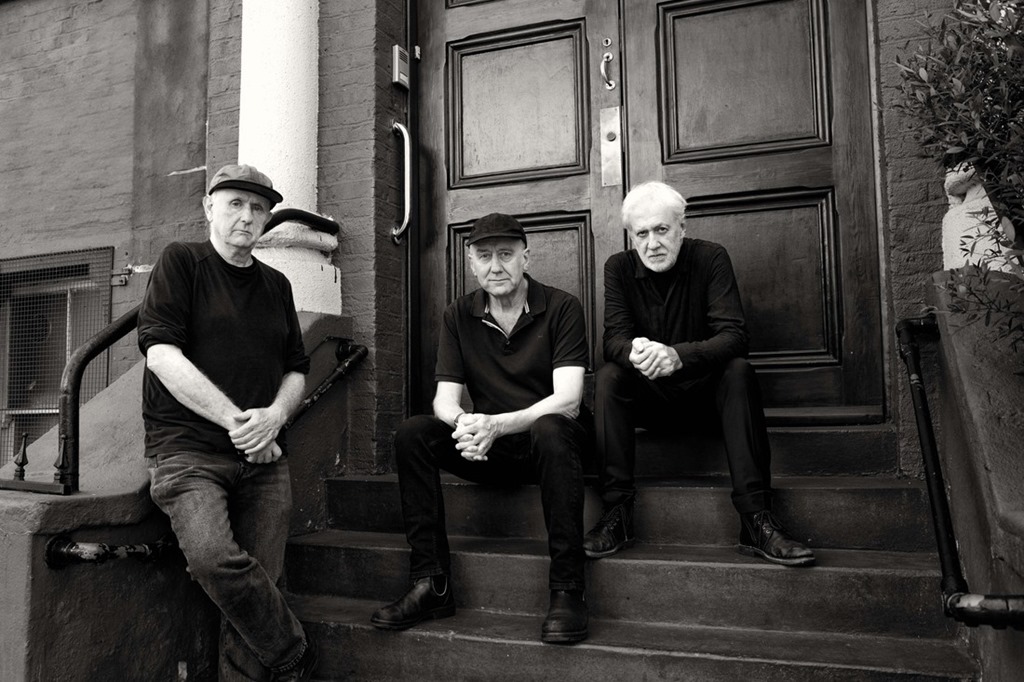
This October, the indefatigably enigmatic trio The Necks will release Disquiet, their 20th full-length release, a triple disc via Northern Spy. It’s an absolutely intoxicating listen, over three hours of incredible music.

The band has shared the mesmerizing 26-minute ‘Causeway,’ as a first listen. Hear it here:

AA

Necks

Photo credit: Dawid Laskowski

Room40 – 30th June 2023

Christopher Nosnibor

There is no quick way to consider this album. And for many reasons – the first being that it needs to be heard in its entirety before being able to summarise and pass critical comment. The second being that after hearing it, one needs to drag themselves from the wreckage of their psyche and process an experience that is likely akin to a week being subjected to psychological experiments at the hands of the CIA under MK Ultra. Brace yourself…

As his bio points out, ‘Tony Buck is no stranger to the realm of durational performance and composition. As a part of Australian unit The Necks he has been central to defining a reductive, but rich sound language that equally interrogates timbre and time…[and] with Environmental Studies he moves even further into these longitudinal pursuits.’

Longitudinal is one word to describe this album. It’s a single, continuous piece, some two hours in duration, and while there are a couple of five-minute excerpts designed to give potential listeners an indication of what it’s like, it’s simply impossible to convey the experience in snippets. The snippets are lifted from the album’s lighter moments: that doesn’t mean they’re mellow, melodic, but the multi-layered clattering percussion that’s evocative of some kind of space-jungle and brief segment of avant-jazz feedback is nothing in the wider context. And – as I always say – context counts.

While chart music – geared toward snappy three-minute cuts which are 90% chorus – and the inclusion of streams when compiling charts, has effectively killed the album in the mainstream, further afield (and to be fair, you can’t get much further afield than this), the album is still very much a cherished format for both artists and listeners alike. In fact, it’s interesting to observe the rise of the really long album. I will often harp on about Swans releases from the last decade, but they’re not isolated. Frank Rothkkaramm released an album as a 24-hour CD box set – which couldn’t be much more different from Throbbing Gristle’s 24 hours box – as he explored sounds which helped with his tinnitus. Numerous doom, drone, and ambient albums in recent years have really pushed the parameters of an album thanks to digital releases not being subject to the same limitations of physical formats – or the same production costs. Is the medium the message? Perhaps, at least to an extent.

The recorded medium was always an issue: even going back to the height of the classical era, once recording became possible, the media limited what could be released, meaning to hear a full performance of, say, Handel’s Messiah, you had to be there, since even a recording which required a box-set album release required truncation. It also, of course, required the turning of records and the segmentation of the work.

In its day, Earth’s groundbreaking Earth 2 challenged the conventional notion the ‘the album’ – more even than any monster prog releases like Yes’ eighty-one minute Tales from Topographic Oceans and the two-hour plus, sprawling triple YesSongs. Because what differentiates these is the fact that Yes was a lot of noodling wank, while Earth did something different, with a specific desired effect intended, and its duration was in fact integral to its cumulative effect, namely that of a sonic blanket of suffocation. Anyway: the point is that Environmental Studies is an absolutely immense album, and it’s a work that needs to be heard as an album. You may find yourself drifting in and out, but it feels as if this is part of the experience: better to drift than experience in fragments.

The accompanying notes describe Environmental Studies as ‘An incredibly dense matrix of interwoven voices and layers, each occupying and exploiting a unique space within the fabric of the sound-environment, co-existing to slowly reveal themselves in multiple interconnected relationships.’

Immediately from the start, the listener is assailed by a deluge of discord and dissonance and streams of noise. It gradually drifts through an ever-evolving, eternally-shifting journey, where mellow jazz piano and slow-melting notes emerge and drip slowly over cascading cymbals and an infinite array of extraneous sounds which wash in and out. There are passages of supple, strummed acoustic guitar – which get harder and more challenging at times but also explore mellow passages –– and gurgling extraneous nose, straining, clattering. There are sections which so tense, straining and submerged by noise that as feedback twists and turns and groans and hums, that the enormity of Environmental Studies finally hits.

There are infinite layers of percussion rattling shakes and clangerous curiousness, with errant twangs and all kinds of shades of strange, with dingy distortion crashing in heavy amidst the a maelstrom of noise that sounds like a hundred pianos being thrown down a hundred flights of stairs at the same time while someone in the top floor flat blasts a Sunn O))) album at wall-cracking volume and there’s a fire broken out in the basement and it’s rapidly escalating upwards.

An hour in, we’re in sonic purgatory – and it’s absolutely magnificent. The polytonal percussion builds and builds; industrial, tribal, everything all at once, with sonorous drones and crushing distortion and noise and wailing feedback whistling and screaming all the while, it’s a relentless barrage of sound – but not noise, and that’s an important distinction here. There are noises, and they’re collaged into something immense, with the rattling of cages and furious beating of skins.

When it does simmer down, some time further in, we find ourselves in an alien landscape, that’s strangely spacey and tense before the next round of percussion barrels in. Environmental Studies is big on beats, but not all of the beats are big: insectoid skittering and scratchy flickers are as integral to the complex interweaving as the thunderous floor toms and reverberating timpanis, and everything melts together to weave a thick sonic tapestry.

While there is nothing about Environmental Studies which is overtly heavy in the conventional sense, to immerse yourself in the album is an exhausting experience, both physically and mentally. But if art doesn’t challenge, what is it for? It’s merely entertainment. This is not entertainment. But it is an incredible work of art.

AA
a1038790420_10

Northern Spy – 24th February 2023

Christopher Nosnibor

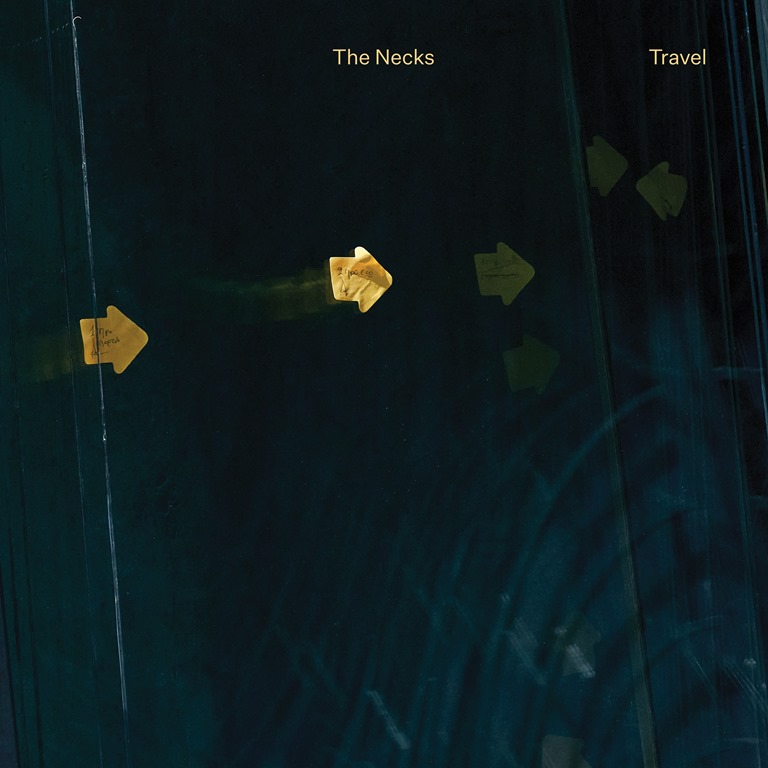
The Necks are never dull: an act that can be depended upon to deliver something different, which is no small feat for a band who’ve been going for more than thirty years. Travel sees them revisit the fundamental methodologies of Unfold, released in 2017 on Stephen O’Malley’s Ideologic Organ label. Admittedly, it’s not an album I’ve revisited all that many times since I wrote about it, but then, that’s true of many records I’ve appreciated. Some of it’s a time thing, but some of it’s an instrumental / jazz thing. I prefer to engage in the moment – and then the moment passes, and I too move on.

Where this album different from the majority of their others is that the format was integral to the form of the content, as the accompanying blurb points out, proving ‘four sub-20-minute pieces – instead of the typical 60+ minute arc for which the band is known – along with an obfuscated track list which leaves play order to the listener’s hand.’

Travel isn’t quite a straight live improv set, but does, they feel, come closest to recreating the live experience, and was recorded – save for some light overdubs and post- production – primarily live. And it’s very much oriented towards slow grooves and rhythmic repetitions. It’s hazy, mellow, almost sultry.

Side one is occupied by the twenty-one-minute ‘Signal’, built around a repetitive bass cycle and some rolling piano that brings with it a classical element, and, propelled by some busy hand drumming which transports the composition some way from what one would ordinarily expect off jazz-orientated works and into the realms of ‘world’ music (a term I try to avoid, with its connotations of western superiority and self-centredness, but sometimes short-cuts are necessary).

On side two, ‘Forming’, which again stretches languorously past the twenty-minute mark, is led by ripping piano, underpinned by some crunching bass stutters and rumbling groans. It’s jazzy in a psychedelic, Doorsy sort of a way. In this sense, it feels more like an extended mid-song workout than a piece in its own right, but it’s both pleasant and tense at the same time as it builds to a crescendo that never fully materialises.

‘Imprinting’, the album’s shortest cut at just over seventeen minutes, brings the multi-layered percussion to a more prominent position, and clanks and trembles along with almost hesitant-sounding keys and twanging strings drift in and out. It’s also perhaps the most overtly ‘jazz’ piece on the album, although it feels stretched out, the pieces pulled apart and as three instruments drift along together on a steady way, the sensation is quite hypnotic.

Organs always create a sense of grand scale and space, and the heavy drone and trill of ‘Bloodstream’ is utterly mesmerising. The piano is soft and ripples along atop the sustained mid-range drone as ethereal notes drift in and out. Part,

The album feels like a moment in time, somehow transient, and yet also something more. Travel may not really go anywhere, but it very much captures a mood – which is, for the most part, whatever mood you project onto it.

AA

Print

Miasmah Recordings – 16th April 2021

Christopher Nosnibor

It was the heavyweight score of his debut album, Hold, that provided my introduction to the work of James Welburn, and very much piqued my interest – because in some way, sonically at least, it seems I like to be published. Almost six years to the year on, Welburn delivers another immensely heavy set with Sleeper in the Void.

According to the accompanying blurb, the album ‘feels like a story in two parts, rising lethargically, but with gargantuan power. The second begins with the momentous In and out of Blue, where Juliana Venter’s disembodied, spectral dirge takes center stage among the furious drums and bassy riffs, reaching a full crescendo with seconds to go. Parallel marks a release – Hilde Marie Holsen’s nostalgic soundscapes, pristine as glass, meeting the distant thunder of Welburn’s strings on the horizon. And finally, Fast Moon ends the record in a most surprising way – a tribal industrialized banger, complete with vile distorted beats and every other spice in demand on a blackened dancefloor.’

It’s intense from the outset, and ‘Raze’ is anything but lethargic. It begins with a modestly middling dark ambient drone, but before long, pattering drums are hammering like machine-gun fire and whipping up a frenzy while all around the drones increase in volume and intensity until there’s a veritable cyclone of sound raging all about. The experience is dizzying, suffocating.

The percussion is again punishing on ‘Falling from Time’, but while the sound is still dense and murky, the thundering rhythm, is far more mechanised, more industrial, thudding in a furious frenzy amidst an impenetrable smog of sound. The tempo is fast, and it’s relentless: you could perhaps even dance to it, although that’s not so much my thing: instead, I found my pulse accelerating and a glow of perspiration as the tension grows. Finally, the synths break into a softer swirl, although there are ominous tones eddying around as the drums finally peter out and it’s finally possible to catch your breath and compose yourself. It’s but a brief respite before crushing percussion crashes in on the doomy dirge of the title track: stuttering, stop-start detonations cut through the shoegaze on ketamine crawl of the blurred blizzard of extraneous noise.

Julia Ventner’s vocal on ‘In and Out of Blue’ and ‘Fast Moon’ (the latter of which is a grating, bulbous bass-driven beast of a cut that loops and lunged in a trill of treble and a crackle of fizzing distortion) are haunting, ghostly, and pitched against the lurching cacophony of drums and juddering blasts of noise that hit like a taser to the abdomen, it’s not only a contrast and a change of atmosphere her presence brings, but a new level of trembling intensity.

Sleeper in the Void unquestionably makes an evolution for Welburn: while incorporating many of the same elements fundamentally, their application is quite different on Sleeper in the Void in comparison to its predecessor. The basslines are less overtly structured, and Sleeper in the Void sees Welburn move further from any loose conventions of ‘rock’ toward something more abstract. It may be less direct, less bludgeoning, less reminiscent of early Swans, but it’s certainly no less intense or powerful, and it’s still dense and percussion-driven. If anything, the greater sense of nuance and Welburn’s expanded palette only amplify its menacing resonance, making Sleeper in the Void an album that may be challenging, but achieves optimum impact.

AA

MIA050_front

Leaving Meaning is the fifteenth studio album for SWANS, the follow up to 2016’s The Glowing Man, and is due for release by Mute / Young God Records (N America) on 25th October 2019. Leaving Meaning will be released on double vinyl in a brown chipboard sleeve, double CD in a brown chipboard digipack and digitally.

Written and produced by Michael Gira, the album features contributions from recent and former Swans, members of Angels of Light as well as Guest Artists Anna and Maria von Hausswolff, Ben Frost, The Necks, Baby Dee, and a Hawk and a Hacksaw,

Michael Gira explains, “Leaving Meaning is the first Swans album to be released since I dissolved the lineup of musicians that constituted Swans from 2010 – 2017. Swans is now comprised of a revolving cast of musicians, selected for both their musical and personal character, chosen according to what I intuit best suits the atmosphere in which I’d like to see the songs I’ve written presented. In collaboration with me, the musicians, through their personality, skill and taste, contribute greatly to the arrangement of the material. They’re all people whose work I admire and whose company I personally enjoy”.

Listen to the first track from the album, ‘It’s Coming It’s Real’ here:

In autumn, Michael Gira will be touring select cities on a solo tour with Norman Westberg. Swans will tour in the spring of 2020.

11 Oct – Skanu Mezs Festival – Riga, Latvia

13 Oct – Saint Petersburg, Russia

15 Oct – Moskva, Russia

18 Oct – Athina, Greece

19 Oct – Thessaloniki, Greece

23 Oct – Ljubljana, Slovenia

25 Oct – Bucharest, Romania

26 Oct – Cluj-napoca, Romania

28 Oct – Warsaw, Poland

29 Oct – Warsaw, Poland

31 Oct – Kyiv, Ukraine

1 Nov – Vilnius, Lithuania

2 Nov – Helsinki, Finland

Room40 – 1st September 2017

Christopher Nosnibor

In certain circles at least, Tony Buck requires little to no introduction as the percussionist of longstanding Australia purveyors of avant-jazz trio The Necks.

Unearth is an immense departure in many respects, not least of all in that it not a percussion-led composition. His first solo work, recorded over a number of years, is an expansive, long-form piece spanning some fifty-one and a half minutes.

It’s a quiet, unsettling composition, with layered sounds building and overlapping, dark rumbles and drones juxtaposing with vague clattering incidentals, hisses, scrapes, hums, drips, plops and thuds.

Around the fifteen-minute mark, conventional instrumentation emerge, with ratting percussion, sonorous bass notes and picked guitar strings drifting across sampled voices and fragmented field recordings. However, it’s clear that the tension isn’t about to break any time soon, and nor is Buck about to unleash a square slice of rock tunage. Plinks, plonks and rattles shade across creaks and yawning ultra-low bass which hangs dense and heavy in the air.

There is a transitory moment of graceful musicality around the half-hour point, where chiming guitars and irregular, delicate percussion combine to create a subtle passage that’s ethereal, atmospheric and pure post-rock. And here comes the build: cymbals clatter and crash in a rising crescendo; gongs boom, and a tempest of sound rises as if from nowhere, as the treble of electronic bleeps cut through the evolving cacophony.

Things to settle into a less disturbing, less abrasive roll of swirling ambience thereafter, with chanks and chinks trembling over skittering sinews of sound stretched over weary, low-end drones which crawl and scratch.

Nothing about Unearth is easy or accessible, although Buck’s grasp on the slow-evolving dynamic of the longform composition is abundantly clear as the gradual transitions flow s effortlessly as to be unnoticeable.

A

Tony Buck -Unearth

Room40 – 17th February 2017

Christopher Nosnibor

The title carries an implicit connotation of juxtaposition. It’s also a direct reference to the 2011 text by Lauren Berlant, which explores power and the ‘cruel optimism that has prevailed since the 1980s, as the social-democratic promise of the postwar period in the United States and Europe has retracted’ and the collapse of the liberal-capitalist dream.

English explains the album’s context as follows: ‘Over the course of creating the record, we collectively bore witness to a new wave of humanitarian and refugee crisis (captured so succinctly in the photograph of Alan Kurdi’s tiny body motionless on the shore), the black lives matter movement, the widespread use of sonic weapons on civilians, increased drone strikes in Waziristan, Syria and elsewhere, and record low numbers of voting around Brexit and the US election cycle, suggesting a wider sense of disillusionment and powerlessness. Acutely for me and other Australians, we’ve faced dire intolerance concerning race and continued inequalities related to gender and sexuality. The storm has broken and feels utterly visceral. Cruel Optimism is a meditation on these challenges and an encouragement to press forward towards more profound futures.’

For Cruel Optimism, English has enlisted, amongst others, Swans contributors Norman Westberg and Thor Harris. As their recent excursions outside Swans demonstrate, they are both musicians capable of magnificently nuanced sound – a stark contrast to the shuddering power of Swans in full force. They bring subtle, understated performances to the pieces on which they feature here. Tony Buck and Chris Abrahams of The Necks are also featured, although again, their input is suitably muted and the line-up is far from overplayed in the promotional materials which accompany the album.

A sense of contrast and contradiction is woven into the fabric of the soundscapes which combine to form Cruel Optimism, as soft layers drift down over coarser, grainer sonic terrains beneath. There are moments of darkness, shadowy, vaguely unsettling but not overtly eeriy or horrific, tempered equally by moments of tranquillity and light ‘Hammering a Screw’, as its title suggests, is an awkward, jarring piece. Sinister chords jam and jolt abrasively, rupturing the soft tissue of sound which hangs almost invisibly in the air while fluttering heartbeats pulse erratically way down in the mix. ‘Negative Drone’ rumbles ominously, a formless, amorphous cloud of sound which bleeds into the must-like atmospherics of ‘The Somnambulist’. The album ends with the entwined drones of ‘Moribund Territories’, which offers a tone of bleakness which intimates the dissipation of optimism in the face of a chilling future.

Writing in October 2016, English described the album as an album of ‘protest against the immediate threat of abhorrent possible futures’. Depressingly, those futures have arrived, and we are now living in dark, dark times. But for all of the turbulence which motivated the compositions and the underlying anxiety poured into their realisation, Cruel Optimism is a beautifully calm album, in the main – or at least, it maintains a calm exterior. As such it’s a work of peaceful protest, which succeeds in making itself heard in a loud, violent, and ugly world.


RM470_Lawrence_English_Cruel_Optimism

Ideologic Organ – SOMA025 – 10th February 2017

Christopher Nosnibor

The accompanying press release is instructive and informative as to the premise of the latest offering from The Necks. Entering their thirtieth year of their existence, the trio continue to innovate and to create music which expands the parameters of jazz music:

The latest document from this long-running ensemble, Unfold, presents itself as a double LP, with four side-length tracks. A deliberate absence of numbered sides hands a substantial swatch of participation over to the listener, allowing her to navigate his own path through the soundscape at hand. The shorter length of the vinyl format, far from being a constraint upon the members of the ensemble, instead offers them a more compact horizon to contemplate, wherein the distance travelled is recalibrated to more immediate and dynamic textural concerns.

The title is appropriate, in that it gives a fitting indication of the nature of the compositions. Although the vinyl format is pitched as being a ‘shorter’ format, the fact that each track occupies a full side of this double album means that each piece still has a running time of between fifteen and twenty-one minutes. And unfold is what they do: gradual evolutions, slow unfurlings and near-imperceptible outspreadings which creep from sparse to near-overwhelming.

‘Blue Mountain’ begins with a delicate piano, but over time builds in depth, tension and pace to a sustained crescendo that never quite breaks. It simmers long and leisurely, cymbal crashes rising in intensity, resembling an intro to a track on a recent Swans album. I mean this as a compliment: it’s a lengthy piece, but there’s movement, there are dynamics, there’s a tangible sense of trajectory.

Noodling Hammond keys wander over a slow, pulsating undulation on ‘Overhear’, and it’s hypnotic and mellow. Perhaps the most overtly ‘jazz’ composition, it also encapsulates perfectly the wide-ranging elements The Necks incorporate within their music. Bongos bubble up jittery rhythms while the trilling organ notes meander and weave, intersecting time signature s forging an increasing sense of spatial disorientation over time.

The tribal rhythms which dominate ‘Ride’ slowly but surely increase in pace, raising the tension as the elongated, barely perceptible notes hang in slow suspense. Ultimately, the pace reaches a frenetic peak, before collapsing into arrhythmia , a conglomeration of discord and distempo, and the fourth track, ‘Timepiece’ is nothing short of a bewildering chaos of percussion, discord and orchestrated dissonance. Against the clattering rattle of drums and more, bass notes resonate and xylophone notes ring out in different directions, and over time, it becomes increasingly unsettling disorientating, difficult.

Unfold is by no means an easy album. It’s by no means a ‘jazz’ album in conventional terms. But in terms of an album which bounces off the wall in myriad unexpected directions freeforming and freewheeling as the musicians explore interpersonal musical boundaries, it’s the epitome of jazz. It’s also really rather good. Well, it is a Necks album, after all.

The Necks - Unfold

Vegetable Records – VEGE003

Christopher Nosnibor

As pianist with The Necks, Chris Abrahams has built not only a substantial body of work but also a reputation as part of a highly respected avant-jazz ensemble. As a solo artist, he’s also produced no fewer than ten albums, and this is his fifth piano work. The album’s seven compositions are notable for being, in any resects, conventional, graceful, elegant and essentially contemporary classical, rather than experimental works.

There’s a crispness and simplicity to the compositions which is beguiling, with rolling melodies making for a soothing listening experience. Abrahams’ musicianship is magnificent, but there’s nothing showy or extravagant about the works. Rippling glissandos and gentle, sedate arabesques define the album, but ‘Overlap’ is arranged around a looping motif played with increasing intensity and force to stirring effect, and the trundling scales of ‘Fern Scrapes’ are performed with a sturdy vigour, and demonstrate a certain playfulness.

Abrahams’ lightness of touch which holds particular appeal, and the album finishes with a light, uptempo flourish that leaves a joyful calmness in the air.


Chris Abrahams - Climb

SOFA551 – 22nd July 2016

Christopher Nosnibor

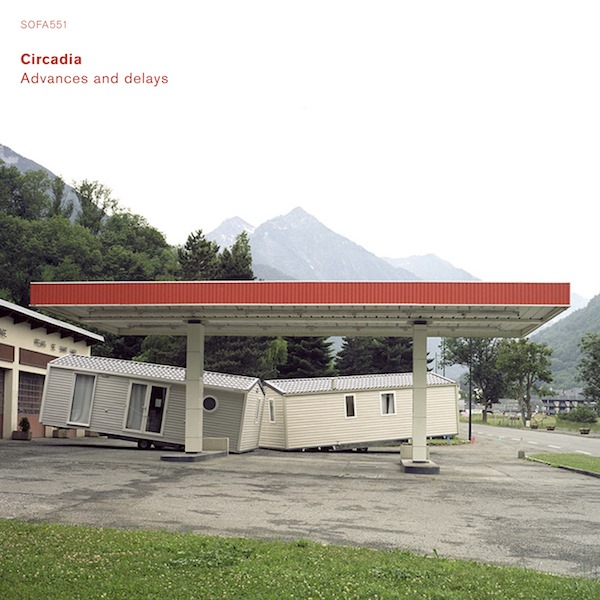
This two-track album by a collective who suggest they ‘might be your favourite new experimental psych-impro-folk band’ is housed in a spectacularly nondescript cover. Nondescript, yet also bizarre: a pair of cabins, on wheels as though for towing, at a garage in the middle of nowhere. Rugged mountains lie in the back. What does it mean? What is it saying? The absence of any people or any sense of movement is also a factor in what makes this image so striking in its plainness. There’s a sterility about it.

This is carried through into the title of both the album and the tracks. ‘The Animal Enters and Traverses the Light’ has an air of clinicality. The sounds themselves are more of nature, yet somehow in keeping: the jangling chimes and gently thrumming rhythms would sit comfortably on the soundtrack of a nature documentary. However, as the track progresses, picked guitar strings begin to build in volume and urgency, achieving a sustained multitonal throb by the twenty-four minute track’s mid-point which gradually gives way to deliberate low-end drone, beneath which crackling burrs rattle a twitchy percussion. The musicality of a strummed acoustic guitar, however irregular and however dissonant the chords, sounds almost incongruous against the rumble which slowly fades. The shifts are gradual but definite.

‘The Human Volunteers Were Kept in Isolation’ begins subtly, a single hum, before picked guitar notes and harmonics creep in by stealth. Gentle acoustic washes glide over supple, delicate percussion.  It’s pensive and understated, and creates an atmosphere that’s hard to define, and a sound more focused on texture and tone than rigid structures. There is melody, but it’s subtle, and there is movement, but it’s not necessarily overtly linear. But to return to the question posed earlier, what does it mean?  More interesting than the cover art is the fact that this superficially conventional line-up of two guitars, bass and drums, creates such unconventional music. But this is the work of David Stackenäs, Kim Myhr, Joe Williamson and Tony Buck of the widely-acclaimed The Necks. It was never going to be straightforward. And does there have to be an extrinsic meaning? Sometimes, the exploration of sound is enough.

Circadia – Advances and Delays