Posts Tagged ‘The Mission’

Unbound – 11th November 2021

Christopher Nosnibor

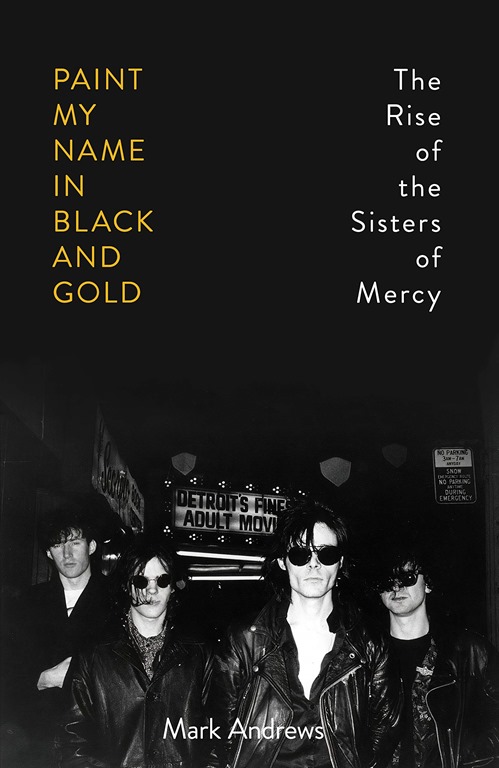
I may not have discovered The Sisters of Mercy until 1987 (being born in ‘75, I was simply too young to have been around in their first phase), like many, I have long been fascinated by those early years and their ascent from vaguely ramshackle indie act to the band who released the album which would essentially define the sound of ‘goth’ for decades to come. By ‘fascinated’, I really mean ‘obsessed’, particularly in my teens, but my love of The Sisters has endured. While the story of those first five years has been told, retold, fetishized and transformed into lore with elements of legend and myth blended in along the way (much of which having been perpetuated by Andrew Eldritch himself), it’s never been given truly detailed coverage, and for this reason, I joined many in pitching in for the crowdfunding of Mark Andrews’ biography. The wait felt like forever, and in the meantime, Trevor Ristow dropped Waiting for Another War (which I’m yet to pick up) on the same period. And so it is that Sisters bios are like proverbial busses, although that’s certainly no complaint: it simply indicates the impact and significance of a band who, despite having been in existence for over forty years and who haven’t released a record in the last thirty.

The book looks and feels like quality (although some have griped about the lack of capitalisation on the definite article both on the cover and throughout the text), but it’s on the contents that Andrews’ work should be judged. There is no two ways about it that Paint My Name in Black and Gold was worth the wait.

Two things immediately stand out: the quality and depth of the research, and the quality of the prose. The latter is particularly appreciated, and important: all the research in the world counts for little if not conveyed in a way that’s appealing. Put simply, Andrews writes nicely, and he writes well, accessibly but not pitched at those with a reading level of The Sun. Nor does he become so involved in trainspotting details of catalogue numbers or numbers of copies pressed or sold or takes in the studio. This is a very human biography, and the input from pretty much everyone involved with the band during the time (with the notable exception of Eldritch) not only brings it to life, but also gives it a real weight of credibility. Mark Pearman (Gary Marx) comes across particularly well, his reflections honest and considered, his position remarkably philosophical and even-handed.

The way in which Andrews places the development of the band in context makes for very interesting reading, with extensive coverage of the Leeds scene of the late 70s and early 80s, as well as the band’s strong links with York at the beginning (the Priestley’s signage remains at the top of Bootham, although it’s now a rather bourgeois homeware retailer). This alone makes for essential reading for anyone with an interest in the emerging post-punk scene, where writing about Leeds has been largely overshadowed by that on Manchester, and of course, London.

He moves things on at a steady but swift pace, but at the same time doesn’t skimp on detail, and pack the book with anecdotes and information about standout nights on particular tours and recording sessions, as well as various wild antics that seem so at odds with the seriousness of the music. Above all, Andrews captures the essence of the experience of existing in and around The Sisters during this time – the camaraderie and sense of community and even family, the buzz, the connection between the band, collectively and individually, with their fans. He also traces how the dynamic would shift and some of that proximity would diminish over time as the band got bigger. It’s also apparent that even in the early stages, the band dynamic and friendships thrived on the differences as much as the similarities of the members, and how much Eldritch was the driving force.

Andrews also presents an impressively balanced and objective perspective: while clearly a fan, there’s no idolisation of the band or any individual here, and his admiration for Eldritch – something that most of the interview subjects also express – is tempered by a realistic appraisal of his shortcomings and at times wilful stubbornness and perversity. That Eldritch is a stickler and prone to obsessive behaviour is widely known among fans, but Andrew really brings things to life when he writes of how Eldritch would literally spend long nights fiddling with EQ levels just to hear how they sound, and it requires no imagination whatsoever to comprehend the frustrations of band members and producers alike working alongside him. But more than even this, in Paint My Name, Andrews goes a long way to excavate the contradictions and complexities of the man who became Andrew Eldritch, how the nerdy, glam-obsessed Andrew Taylor would transmogrify into the beast that is Eldritch, and details the damage done to both himself – mentally and physically – and those around him along the way. The poverty and degradation are at times harrowing, and the long tours of ‘84 and ‘85 may have been among the band’s most memorable and seen them play to the largest numbers of fans of their career, but the way in which Andrews relays just how strung-out, fucked-up and fractured the band were behind the scenes renders their achievements all the more remarkable.

The epilogue provides a condensed overview of the years which would follow, but it’s clear that none of The Sisters’ subsequent history could come close to being quite as gripping as the first five years, whereby the rise of The Sisters would reverberate indefinitely.

The hardback is sold out, but the e-book edition is still available via Unbound.

81MD-vGPuqL

Chapter 22 Records – 4th of December 2021

Christopher Nosnibor

Dawn After Dark first emerged in the second wave of goth in the late 80s, at the point where goth intersected with indie and straight-ahead rock to create something altogether more digestible for the masses than the dark, shadowy stylings of the like of The Sisters of Mercy and The March Violets (and this isn’t the time for the goth / not goth debate here, and no-one needs to hear my position on it: I’m going for the short cuts to provide context, nothing more).

The Birmingham-based act were pretty active during this time, playing in the region of 150 UK shows as headliners and support to acts including Balaam And The Angel, Wolfsbane, Fields Of The Nephilim, and Living Colour, and releasing 3 12” singles on Chapter 22 (the label that also launched The Mission in ’86 and released their first two singles, ‘Serpent’s Kiss’ and ‘Garden of Delight’) before calling it a day in 1991. 30 years on, they’ve finally delivered their debut album, and as the title suggests, its emergence is something like a phoenix from the ashes, since they’ve lain dormant all this time save for a one-off show in their hometown in September 2019.

Those three singles – ‘Maximum Overdrive’, ‘Crystal High’, and ‘The Groove’ are all featured here, albeit rerecorded using post-millennium technology and mastering, slotting in nicely alongside seven previously unreleased songs. It’s ‘Maximum Overdrive; that kick-starts the 11-track collection and is pure Cult, which is no shock given the original as performed by a band who sported long hair, leather jackets and bandanas back in the day. This version is much more polished and much more dense than the original, and you get a sense that this was how they always wanted it to sound. It’s less manic, smoother, but it still basks in rock ‘n’ roll excess and wild solos flame all over.

I’ve always filed DAD alongside the likes of Rose of Avalanche, although it’s fair to say they’ve always had a rather harder edge, and this is pressed to the fore on their long-delayed debut album, to the point that on reflection they’re more ones to file alongside The Cult and Zodiac Mindwarp now (only without the preposterous excess of the Bradford hard rockers).

‘The Day the World and I Parted Company’ brings more gritty riffery, and sounds like Sonic Temple era Cult with a hint of The Mission thanks to the twisting guitar lines and all the hammer-on descending runs. It’s enhanced by some overloading chug in the rhythm department, although there’s an expansive psychedelic workout in the mid-section.

Apart from slower, more anthemic stabs like ‘When Will You Come Home to Me’, they focus on the bold rock riffing, and you can’t exactly criticise a late 80s rock band for sounding like a late 80s rock band – and yes, that is the sound of New Dawn Rising, a title that perfectly captures their history and belatedness of their debut. It’s like they’ve never been away, apart from the fact that they’re back sounding crisp, and dense and more 2021, in terms of production if not songs.

It’s a solid, ballsy, gut kicking debut that packs in back-to-back slabs of the kind of rock they supposedly don’t make any more… only, of course, they very much do.

AA

Dawn After Dark artwork 1

24th September 2021

Christopher Nosnibor

Pink Turns Blue have been around practically forever, having formed in 1985, and while they may not be widely regarded among the first wave of goth acts, they very much emerged from that milieu as a duo with a drum machine, and what they’ve achieved over so many of their peers while lingering on the peripheries is longevity. Having re-emerged in 2003 after an eight-year hiatus, they’ve continued to mine the classic post-punk seam that’s distinctively theirs, due in no small part to Mic Jogwer’s vocals. And of course, what goes around comes around. Their return in the early years of the new millennium was well-timed, coinciding with the point at which the post-punk renaissance bloomed with the likes of Editors and Interpol breaking through. There were of course countless also-rans, and bands who emerged but failed to fulfil their promise, but nevertheless, time has proven that the style has remained current, and the darker the times, the greater the craving for dark tunes, and this is where Pink Turns Blue really prove to be as contemporary and vital as ever.

Their eleventh album was written, recorded, mixed, and mastered during lockdown in their Berlin studio, and the first thing that strikes about Tainted is just how bleak it is. It’s achingly majestic, it’s magnificent, and possesses some wonderful hooks and choruses, but there’s an all-pervading atmosphere of sadness, of melancholy that’s draped over every beat and radiates from every note. Glimmers of positivity are dampened by an air of resignation, optimism doused with defeat. The next thing that soon becomes apparent is just how consistent the album is. It’s not only all killer, but had a remarkable cohesion. It’s true that that for cohesion you might interpret sameness, and they do operate with a fairly limited sonic palette. One suspect this is at least in part the result of the material being the product of three guys in a studio without any external input or interference.

But working within such limitations places the focus on the songwriting, on the tunes, on the delivery, instead of throwing in all sorts of fancy stuff.

The guitar to opener ‘Not Even Trying’ evokes the into to ‘Severina’ by ‘The Mission’, and it’s got that same solid four-four strike on every beat bassline that Craig Adams made his signature back in the early days of The Sisters of Mercy, and which has become something of a defining feature for so many gothy post-punk bands, and it makes the song an instant grab. ‘I’m not even trying’, Jowger admits blankly, as if admitting defeat from the outset, and setting the pessimistic tone that echoes through single cut ‘There Must Be So Much More’. It’s a song of yearning, of questing, and of determinism, and a song Editors would have likely killed to have penned for one of their first two albums.

This isn’t an album of depression, but the sound of downward-facing defeat, of staring at the ground and wondering where it all went wrong. ‘Never Give Up’ encapsulates the conflict, the inner turmoil of staring emptiness and defeat straight in the face and realising there are only two choices. But to never give up is not a positive thing, merely the stubbornness that comes from not knowing what else to do.

The bass and guitar are melded together in a tunnel of chorus and reverb, and tied to a relentless drum track, and it’s gripping and compelling. ‘Why Not Save the World’ has heavy echoes of mid-80s Depeche Mode and would sit comfortably on a She Wants Revenge album, while ‘I’m Gonna Hold You’ comes on like New Order as covered by A Place to Bury Strangers, with a nagging bass and brittle guitar that grips hard.

Just as Robert Smith can make a skippy pop song sound tear-jerkingly sad, so when Jowger sings of the joys of ‘a new day’, it’s with a wistful melancholy that aches deep and you feel something tug in your chest as you swallow it down, that inexplicable sadness. ‘Listen to the bumble bee’ he sings on ‘Summertime’, and it’s carried a way on a chiming jangle of guitars that are so wistful, while the tone is of deep nostalgia. A perfect sunny day can have its joy marred by the realisation that it isn’t quite as perfect as sunny days of a time gone by, happy, carefree times that will forever be trapped in the memory as magical, but now faded and never to be recreated.

The song structures are comparatively simple and straightforward, and built around repetitive chord sequences and guitar motifs, and there’s nothing fancy about any of the playing – which is absolutely key to the success.

Any fan of Interpol or Editors would do well to explore Tainted – but then again, so would any fan of not only post-punk, but anyone with ears and with a heart and soul. It’s a masterful work in music of the mood. The mood is low, the mood is sad, and this is an album of real depth that speaks and resonates beyond the immediate.

133936

21st June 2021

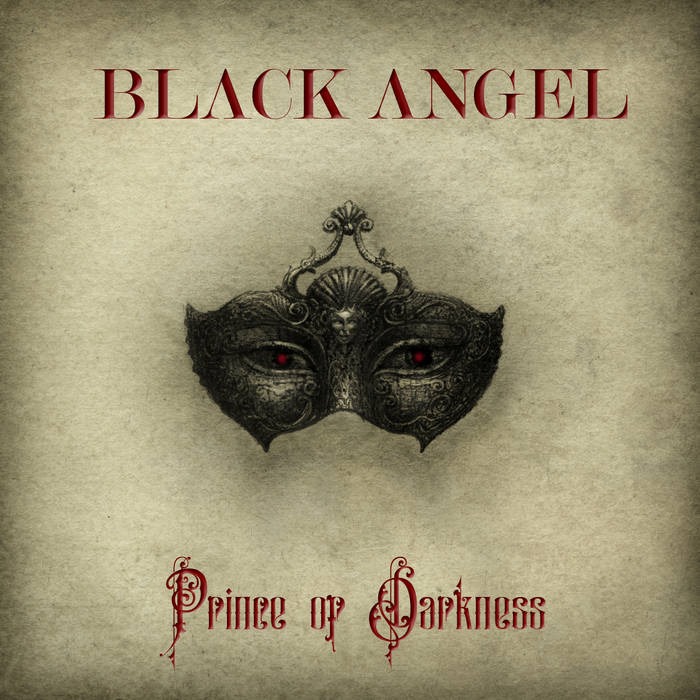
Black Angel emerged four years ago, and released Kiss of Death in July of last year – an album that brought together Matt Vowles’ years of experience from being in and around the goth scene to recreate the spirit of 1985.

This time, Vowles and co have come out with a concept album for their third outing, which is ‘inspired by cinematic classics such as ‘Dracula’ (Gary Oldman-1992) and ‘Interview with a Vampire’ with contemporary inspiration on tracks like "Alive" and "Give It To Me’" from the modern aristocratic sophisticated vampires in ‘Underworld’.

The album’s concept, the blurbage explains, is ‘to take you on a journey. The record starts out with an introduction to set the tone and to put you in 10th century England. As our protagonist embarks on his pillage through the town, we hear screams from the villagers as they run for their lives. He’s the Prince Of Darkness and causes chaos and mischief wherever he goes’.

There’s a fine line between artistry and pretence, theatre and corn, and despite the concept that veers towards an amalgamation of all the clichés of goth distilled into a dozen tracks, Prince of Darkness once again nails that vintage goth sound, with ‘Alive’ melding the energy of early Mission with the mechanised drumming of The Sisters to create a swirling cyclone of tripwire guitars and gloom with a glint of joy.

The energy is sustained across the bulk of the album, and the vibe is very much a muscle-flexing dominance, delivered with a big, ballsy swagger: there’s a hefty whiff of testosterone and a barrel load of rock god posturing going down here, but it’s delivered with a knowing nod ‘Live to Love’ is a proper old-school rock ‘n’ roll stomper with a smoky vocal growling and grizzled over a piston-pumping beat and a wonderfully insistent bassline that nags away at a repetitive motif. It’s got that level of grab that immediately makes you want to stick the whole album on repeat, especially after ‘Turn Around’, which pushes the quiet / loud dynamic with a searing guitar line that’s right in the vein of The March Violets – it’s that flangey reverby chorus thing.

Vowles has some depth, and range, too – on some tracks, like ’Call the Night Part II’ he showcases a grainy croon reminiscent of Mark Lanegan, and it’s heavy timbre is well-suited to such expansive epics, and then again, on ‘Secretly’ we see a more soulful, even tender side, and ‘My Love’ goes all out for the heart on sleeve grand gesture. It’s theatrical, but at the same times feels emotionally sincere, and while the melody bears similarities to ‘The Scientist’ by Coldplay, it sounds like it’s being sung by James Ray, and it’s quite moving in a brooding, gothy way.

Throughout, the songwriting is solid, with guitar hooks galore and a taut rhythm section that forges that classic goth groove. There’s a clear lineage from its predecessor in that Prince of Darkness is very much old-school goth delivered with a subtly contemporary twist, but it sounds and feels more confident, more ambitious, and not just on account of its embracing an overarching concept. Prince of Darkness is the sound of a band really hitting their stride, and achieves the perfect marriage of concept and execution.

AA

368330

12th February 2021

Christopher Nosnibor

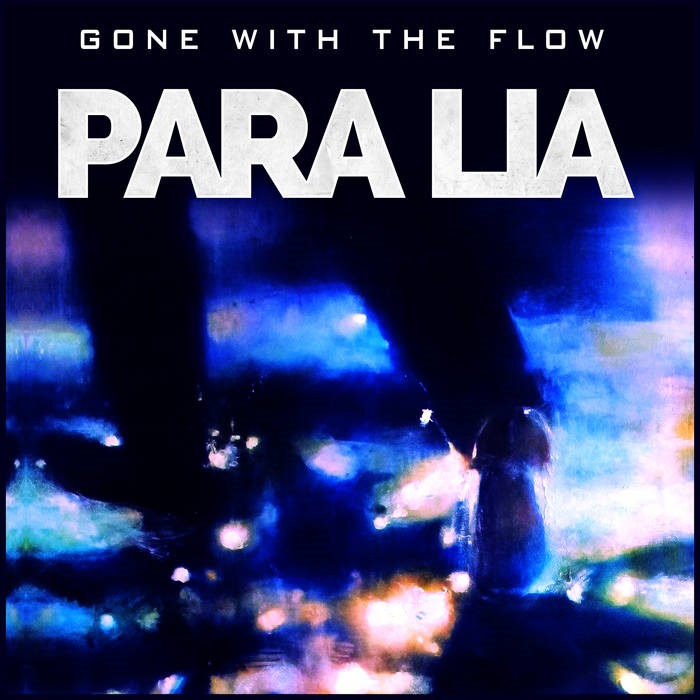
Released digitally last autumn, Para Lia’s Gone With The Flow gets a ‘proper’ physical release this month. The second album from the German duo, consisting of René and Cindy Methner, has already drawn comparisons to Dinosaur Jr, Arcade Fire, and The Mission, as well as referencing in the press release – the hearteningly specific – ‘early Editors’.

It all makes sense with the blistering opener, ‘My Muse’ – a post-punk influenced adrenaline shot that showcases some wild soloing that somehow manages not to sound wanky. See, I’m not one for guitar solos myself, but find that J Mascis’ best efforts are enough to reduce me to tears. ‘Kassandra’ hits that spot: it’s a cutty post-punk revival effort that’s got the pomp of The Mission, complete with the wordless backing vocals Julianne Reagan delivered to absolute perfection on songs like ‘Severina’, and topped with an absolutely melting solo that twists, turns and weeps all over it. I should probably be tired of this by now, but when presented with just the right blend of nostalgia and quality

They don’t always pull it off: ‘Riders on the Dike’ is more ramshackle punk-folk with a ragged vocal delivery reminiscent of Shane Macgowan that simply doesn’t quite sit, and ‘Time and Again’ follows a folksier bent that grates a shade, feeling slightly forces and off-track despite some soaring harmonies from Cindy.

But it’s more hit than miss, as the slow-burning ‘Fools’ brings swathes of mournful strings to the post-rock tempest that swells as the song progresses, and the tense jangle of ‘Fire’ evokes the spirit of 1985, not just instrumentally but with its thick production, where the bass and guitar clump together, cut through by a sharp-topped snare sound.

‘Kaleidoscope’ is every bit as shimmeringly layered as the title suggests, and notes of New Model Army and Red Lorry Yellow Lorry are present as they drive a forward trajectory with an insistent rhythm section and some choppy guitars pinned back in the mix. Last track, ‘No Time for Butterflies’ combines psych-hued 60s pop, folk, and 90s alternative to forge a pleasant and exhilarating finale, and if there’s little about Gone With The Flow that’s overtly ‘new’, it’s a unique combination of older forms rendered with real style and some solid songs.

AA

a1263001157_16

33.3 Music Collective – 27th January 2021

Christopher Nosnibor

Beauty in Chaos’ ever-shifting lineup sees more evolution for the fourth single of their latest album, Out of Chaos Comes… a set of remixes with even more guest artists contributing. Originally featured on The Storm Before the Calm in summer of 2020, the track, composed by Michael Ciravolo – who’s credited not as the core member but the curator of the Beauty in Chaos project – with The Mission’s Wayne Hussey.

The story goes that ‘Along with BIC producer Michael Rozon, Ciravolo set out to strip down the ominous tone of the original especially for this remix release. After hearing Wayne’s wife Cinthya’s rendition of The Smith’s ‘Everyday Is Like Sunday’, the idea emerged for her to sing this new version along with Wayne’. This is actually one of three versions of the song which feature on the album, and it very much does date the dark, brooding vibe out and replace it with something altogether more smoky and sultry.

And so we have six minutes of sedate – and sedated – seduction, stripped back and slowly blossoming into a melodic chorus. The accompanying video highlights the low-level lighting mod it evokes, and finds Mr and Mrs Hussey showing off some quality rugs as well as some nicely contrasting outfits.

Quippy comments aside, this is a subtle explorations of contrasts which also tips a nod to the lyrics, and very much highlights the light and dark and shadowy hues evoked by the song. Rendered as more of a pop ballad by the remixing, the chaos is very much calmed to emphasise the beauty, and it works well.

AA

Beauty in Chaos feat. Cinthya Hussey (single cover)

SPV Records – 2 October 2020

Christopher Nosnibor

It’s easy to forget just how absolutely massive The Mission were at their peak, packing out headline shows at Wembley Arena, Finsbury Park, and Reading Festival.

There was a time when Wayne Hussey looked like being the new Bono. Or something. And now he’s gone and done Band Aid for goths, with a rerecording of ‘Tower of Strength’ featuring a truly immense roll-call of luminaries from the gothier end of the alternative / post-punk scene to raise funds for covid charities around the world.

The press release reports that alongside Mission frontman Hussey, the project involves Andy Rourke (The Smiths), Billy Duffy (The Cult), Evi Vine, Budgie (Siouxsie and The Banshees), Gary Numan, James Alexander Graham (The Twilight Sad), Julianne Regan (All About Eve), Kevin Haskins (Bauhaus, Love & Rockets), Kirk Brandon (Theatre of Hate, Spear of Destiny), Lol Tolhurst (The Cure), Martin Gore (Depeche Mode), Michael Aston (Gene Loves Jezebel), Michael Ciravolo (Beauty in Chaos), Midge Ure (Ultravox), Miles Hunt (The Wonder Stuff), Rachel Goswell (Slowdive, The Soft Cavalry), Richard Fortus (Guns N’ Roses, The Psychedelic Furs, Love Spit Love), Robin Finck (Nine Inch Nails, Gary Numan, Guns N’ Roses), Jay Aston (Gene Loves Jezebel), Steve Clarke (The Soft Cavalry), Tim Palmer and Trentemøller, the latter of whom has provided a remix of the new recording.

Having properly got into The Mission by hearing ‘Tower of Strength’ during the weekly top 40 (I was 11 and my exposure to ‘alternative’ music had been quite limited at that point), the song has a certain special place on a personal level, and the likelihood is that it’s the same for many fans. Reworking a classic is risky, potentially an act of desecration or sacrilege (referential word-choice half-intended).

The EP contains four 2020 versions in total, with the regular single version, a radio edit, and three remixes.

In term of the instrumental backing tracking track, the single-version sound very like the original, only with some additional extraneous details and the meat where the bass and extra layers kick in stripped out. Meaning it’s ok, but while one of the major criticisms of The Mission has ben that they lean toward the bloated and bombastic, the fact is that was always a part of the appeal. But overall, it’s nicely done: the guest contributions, both instrumental and musical weave into one another pretty seamlessly, and there are no instances of any one person stealing the limelight with their overstepping delivery of a line. There’s no ‘tonight thank God it’s them instead of yoooouuuu’ moment, and this feels very much like a collective, collaborative, egalitarian effort, and I almost feel as if I could give it a virtual hug for that.

The nine-and-a-bit ‘Beholden to the Front Line Workers of the World’ mix comes closest to the basking, expansive glory of the original. It’s a song that’s meant to just keep going, and this version does just that.

Trentemøller goes technoambient with his reworking, and kudos for breaking the mould, and double for the fact that it works. It’s all in the strings, of course. The Albie Mischenzingerzen remix is drummy but doesn’t seem to bring quite as much to the party.

It might not quite pack the power of the original, but it’s not far off: the people playing on it are worth hearing, and it would be churlish to criticise a release made with such positive intentions. In bleak times, Hussey and his pals aren’t only a tower of strength, but a beacon of humanity, and it’s a powerful thing.

AA

ReMission International (cover artwork)

31st July 2020

Christopher Nosnibor

Matt Vowles is the first to admit that he’s a little out of step with musical trends and ‘late to the party’ in forming a goth band in 2018.

Unlike some of us, he was around the music in clubs in the mis 80s, but spent over 30 ears doing other things, before, as he explains, ‘in 2017 I rediscovered my passion for this genre. I started listening again to those goth bands from the eighties. I was totally reinvigorated. So I put down all of my keyboards, picked up my guitars and started MY goth band, BLACK ANGEL. Now here we are: two albums later. People say BLACK ANGEL captures that sound and feeling from 1985. I love the process which is what is most important. This is what I do now. And as they say, the rest is history…..I guess I was just a little late to the party.’

Kiss of Death does very much capture the essence of the school of goth from the mid-to-late 80s, and the album’s pitch as being for fans of The Sisters of Mercy, The Cult, and Bauhaus is pretty much on the money, although to my ear Kiss of Death is more Mission than Bauhaus, favouring as it does that grand arena-filling reverb and a layered but polished sound defined by a sturdy rhythm section and chorus-heavy guitars that spindle and twist their way. Then again, the album’s last song, ‘Black Angel’ lifts its bassline from ‘Bella Lugosi’s Dead’ and features a classic stony-voiced horror narrative segment, so maybe it’s a fair summary after all.

After a grand intro that echoes and swirls, the title track is in with a hard four-square thud of a drum machine, and welded it is a Craig Adams-style bass groove: nothing fancy, just that classic, metronomic strike-on-every-beat low-end. The lead vocals are menacing and low in the mix, and in the choruses it’s the female backing vocals that dominate and carry the melody. Incorporating the Sisters’ rhythm section circa ‘85, the Sisters’ bombast circa ‘87 and the melodical leanings of The Mission, it equally calls to mind contemporaries like Mayflower Madame. It’s quite telling that much of the album’s sound bypasses the 90s ‘second wave’ sound and instead hones in more on the chuggier, rockier side of the first wave – think The Cult’s Sonic Temple and The Sisters’ Vision Thing: and while there are synths present, they’re more augmentation to the guitars than to the fore.

‘Animal’ is Black Angel’s ‘More’, with a megalithic chorus propelled again by a relentless mechanised beat and a rush of layered backing vocals that border on the choral, but the synth elements hint at Depeche Mode, while ‘Alchemy’ comes on like The Sisters’ cover of ‘Ghostrider’ with its nagging bassline and blistering guitars, but laced with chilly synths.

‘Hurricane’ is more a cross between The Cult and Rose of Avalanche, while ‘Put Your Lips…’ is conspicuously ungoth, more a glam-goth rock ‘n’ roll stomp – again, more 90s Mission with a nod to James Ray’s cover of ‘My Coo-Ca-Choo’.

Lyrically, much as it’s an album about love, it’s a goth album about love, and as such all the familiar tropes about demons, goddesses and all the rest are present in abundance: it would be unduly harsh to criticise on this score, and Kiss Of Death is a truly solid contemporary trad-goth album.

AA

a0863276264_10

Metropolis Records – 22 March 2019

So often, less is more. All we know if muet is that ‘muet is the sound of American noir. Sonically defiant art rock sung under the shadow of a long brim hat. Deliberate dissonance and heartbreaking melody are stitched together beneath sodium light with tales of the tragic, the romantic, and the bizarre. The band features Steven Seibold, Daniel Evans and Vince Mcaley, who have all enjoyed moderate success in various post-industrial and punk bands. based out of Chicago’.

I may have mentioned before that I broke free of mainstream music by route of 80s goth, so I have something of an appreciation of hats. Actually, that’s something of an understatement, as I’ve been an avid hat-wearer for large portions of the last 27 years. Muet is the sound of doomed romanticism and hat-wearing, a meshing of the gothier end of the post-punk spectrum with more contemporary takes on the same: because for all of the referencing and influence, the likes of Interpol and She Wants Revenge very much filter the past through a post-millennial lens.

The album’s first chord is a single, echoing strike that could almost be a sample of the opening note on ‘Marian’ by The Sisters of Mercy, and then a mechanoid drum and solid , square bass groove rumbles in, holding down that c.85 Sisters vibe… but the nagging, trebly guitar that chops in is more Gang of 4 via Radio 4 ‘Leather Jacket Perfume.’

There’s a heavy sleaze vibe that permeates every aspect of the album, with song titles like the aforementioned ‘Leather Jacket Perfume’, ‘Weirdest Sex’, ‘Her Dad’s Car’, and ‘Muscle’, but there’s equally a considerable amount of brooding and melancholy, conveyed by atmospheric, echo-drenched, minor-key guitars picked and spun.

‘Reach out and Murder’ features some wild, bending post-punk guitar and a thunderous rhythm section and kicks out a riff reminiscent of Department S’ ‘Is Vic There?’, whole the chorus has something of a Cooper Temple Clause feel. ‘on2u’ combines swagger and groove with a dash of early 90s Mission wrapped in a haze of psychedelia

One thing that comes across strongly is the emotional depth ploughed into each of the songs. Yes, there’s an element of stylisation which is part and parcel of the genre form, but there’s a conviction that resonates and it’s unmistakeably genuine. Moreover, muet has range, and doesn’t focus excessively on any one theme or mood, while maintaining a stylistic cohesion. It’s a proper album, and a damn fine one at that.

AA

muet

Christopher Nosnibor

No bones: Santa Sangre was one of the standout albums to land with me last year. The perfect amalgamation of dark-edged 80s synth-pop which took its cues from Depeche Mode and A-Ha, and gritty guitar-driven post-punk, it felt contemporary while also joyously retro. Having found myself in the late 80s (circa ‘87/’88), when the goth of the early/mid 80s was finally cracking the top 40, and could be heard on R1 on a Sunday night and even on Top of the Pops. At a time when pop was altogether darker anyway (I recall, aged 8, seeing Killing Joke perform Love Like Blood’ on TOTP and being rapt), I find myself right at home with this.

For the recording of their third album, the Italian quartet made the journey to Leeds, the heartland of the 80s post-punk / goth scene and equally a hotbed for its postmillennial revival, to work with Matt Peel, perhaps best known for producing Kaiser Chiefs and Eagulls, at The Nave Studios. And all of this shows, and the band have very much continued to embrace their influences to deliver an album that’s both taut and atmospheric.

KI perhaps lacks the immediacy of its predecessor, but that’s no bad thing. This means that instead of kicking in with lasers set to stun at the opening, ‘Dance for You’ makes for a fairly low-key entrance, a thrumming sequenced synth bass and Curesque sweeps overlaid in misty layers, the vocals low in the mix and twisting together wistfulness and melancholic desperation.

It isn’t until the second song, ‘Empire’, that Ki really hits its stride and immediately expands the band’s sonic palette: a yawning shoegaze blur that’s part Ride, part Curve, but filtered through a Jesus and Mary Chain mess of treble noise and driven by a thudding four-square bass, it’s a mid-pace squall of density – and it’s this that really kicks through the driving ‘Fury’, which combines drifting, fractal guitars with a pulsating bass, driving drum track and darkly desperate vocal. It’s the Sister’s circa 84, it’s early Mission, it’s brilliantly crafted, capturing the spirit of the retro zeitgeist.

‘Kanagawa-oki Nai-ura’ broods like all the brooding over droning organs and glacial synths underpinned by a murky funeral rhythm section, replete with dolorous bass before a crunching guitar glides in and

‘Mishima’ slips into dream-pop territory, again taking obvious cues from The Cure – which is no criticism. Is it wrong to chuck in references to early Interpol and Editors? I’ll say no: this is music cut from the same post-millennial post-punk cloth. It’s no longer about uniqueness, but how well influences are assimilated, and here, Japan Suicide show enough capacity for crafting a tune that their stylistic appropriations are more than acceptable.

‘One Day the Black Will Swallow the Red’, which lifts its lyrics from a piece of writing by artist Mark Rothko , with its thumping beat and chunky bass underpinning a wash of hazy guitars, and moody but driving ‘The Devil They Know’ make for a strong finale to a solid album that has ‘grower’ written all over it.

AA

Japan Suicidie - KI - copertina WEB