Posts Tagged ‘Techno’

Clicks are now releasing a video clip for the track ‘Dropdead’, which once again stresses the sharp ironic humour of the Polish electro project. ‘Dropdead’ is the third single taken from the forthcoming new full-length "G.O.T.H.", which has been scheduled for release on April 16.

Watch the video here:

AA

CLICKS_00_album_cover

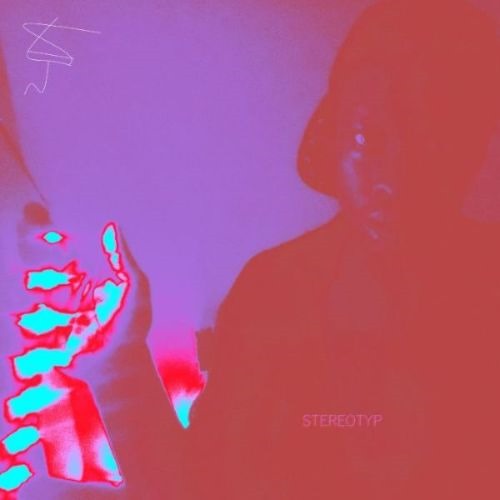
Canadian DJ & Multi-Instrumentalist JHNN has unleashed his highly-anticipated new album, StereoTYP.

StereoTYP is a personal dark album redefining the definition of what it means to be a walking "StereoTYP" who enjoys different kinds of music.

As a taster, he’s unveiled the video for ‘Heroin’: check it here:

AA

JHNN says regarding the album, "Basically the album was made from 2016 – 2020 and it’s about my biggest pet peeve of society which is the existence of StereoTYPs. It only scratched the surface of what I like to talk about; what it means to be a black man who just likes, is not afraid of experimenting, and making synth pop without being too expressive. I wanted to have fun as well and I wanted to get the point across. I also wanted to show all my sides of trying to cope like in the song "Darkness Will Always Be There", the fact that all the people in power won’t matter; "Children Are The Future", dealing with being anxious "The Warning/Warfare" and some views on religion "Greatest Lie."

AA

cbf714bd-3f3b-4d3f-858b-fe2ad3380b90

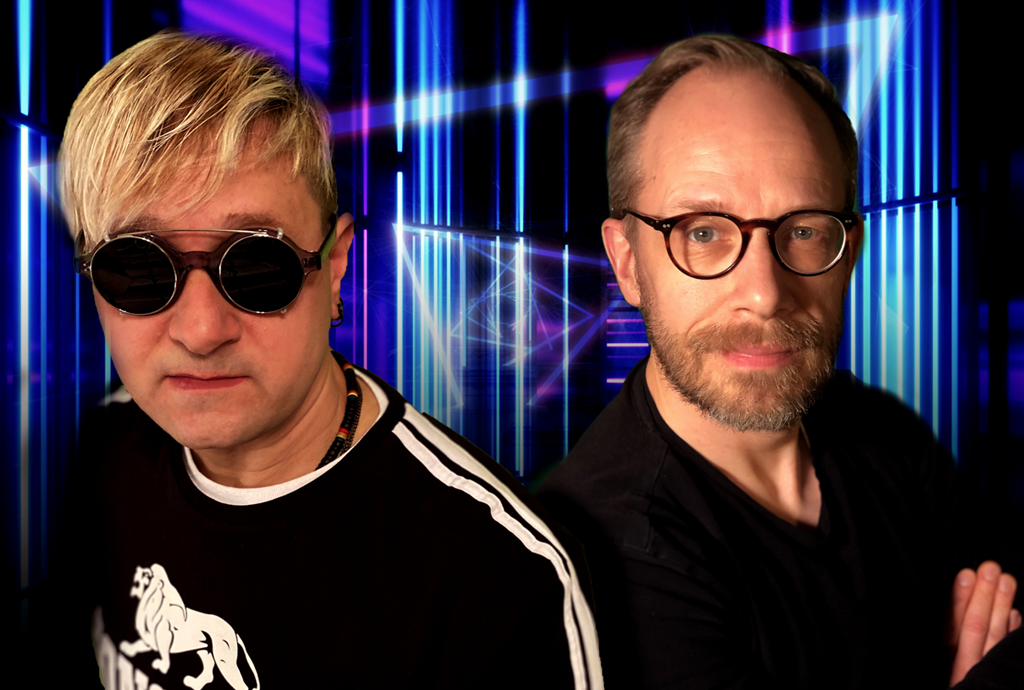
‘Perpetual Sequence’ is the ninth full-length album by Croc Shop, an electronic based act featuring long time members Mick Hale and vMarkus. With a post-electro, pop and synth-rock approach over the duration of its eleven captivating songs, the duo also make occasional nods to their post-punk goth and electro-industrial origins.

Originally formed as Crocodile Shop in a flat above a record store in West Berlin, the band released their debut album, ‘Lullaby’, in 1988. Produced by Dave Fielding of The Chameleons, the record displayed dark goth-rock influences that only hinted at what was to come. They subsequently transitioned towards an electronic-industrial sound as they began replacing band members with machines, releasing ‘Celebrate the Enemy’ in 1993.

In 1995 they signed to Metropolis Records and issued the albums ‘Beneath’, ‘Pain’, ‘Everything Is Dead And Gone’, ‘Order + Joy’ and ‘World’. The last of these was a nifty fusion of EBM and synth pop that arrived in 2002 and their first album under the shortened name Croc Shop. 2004 saw the release of ‘SEA’ (Self Extracting Archive), which was a double CD ‘Best Of’ the band’s musical output. Pursuing other musical interests, group mainstays Hale and vMarkus then took a longer than expected break from recording together.

Fifteen years later, with the ‘election’ of and chaos caused by Trump, the band’s creative and political fires were rekindled and they began to work on new material that resulted in the blistering ‘Resist!’, a nine song digital album released in 2020, followed by ‘(TRiP): The Rest In Pieces’, a thirty track ‘Rest Of’ Croc Shop that featured tracks not included on ‘SEA’ as well as a number of remixes.

Croc Shop have toured heavily across North America and Europe throughout their career and have garnered loyal fans the world over. They have shared stages with acts such as Rammstein, Front 242, The Damned, Nitzer Ebb, Project Pitchfork, Xymox, Switchblade Symphony and Numb. Their live show has been described as an “audio-visual-assault”, with multimedia video projections, bold lighting and an energetic stage presence.

Ahead of the album ,they’ve unveiled a video for second single, ‘Secrets’: what it here:

AA

a3b606bf1449e01997a50ef83db5cb4d623576a6

ant-zen – 18th February 2021

Christopher Nosnibor

Dotla finds ‘accidental one-man project’ kojoohar reunited with purveyors of experimental hip-hop ködzid goo to deliver a follow-up to their 2019 collaborative EP, ‘Дотла’.

The blurb promises ‘heavy lyrics spiked with solemn images and numerous literary references’; and a work of ‘dark, dystopic angst pop with deep aesthetic lyrics and unrelenting vocals… delivered in a blank monotone.’

Now, I’ve long maintained that how and why we respond the way we do to certain music is subconscious, subliminal, psychologically or even genetically embedded. I’ve never found myself able to connect with disco or funk, but music that’s chillingly bleak and inhuman resonates to my very core. And shit, is this bleak and inhuman.

My inability to even vaguely comprehend the actual lyrics is completely immaterial: the characteristically hard-edged Slavic consonants lend themselves perfectly to that detached, monotone delivery, in a similar way to that in which Germanic languages do, and that harshness is much of the appeal of bands like DAF and X-Mal Deutschland (bit not Rammstein, because they always sound like a parody of that Germanic strain of industrial to my ears. I’m not saying I need my Industrial to be po-faced, far from it, but one should be able to take serious music seriously – and kojoohar × ködzid goo are seriously serious, in the best possible way).

Dotla is all the monotone, all the monochrome, thudding industrial beats hammer slow and hard through murky sonic wastelands. It’s unforgiving, relentless: there’s not much light or variation in mood here, and that’s the beauty of it: this is not an album designed to entertain. By the fourth track, the mangled droning trudge of ‘burelom’, you already feel the walls closing in and the light growing dim.

Whereas there’s a popular perception that the heaviest, most oppressive music exists within the domain of metal, electronic music at its darkest, sparsest and most monotonous is, if anything, more intensely claustrophobic.

The production on dotla is also a factor: there’s a lot of low end, rumbling, droney bass, but more than that, there’s a lot of murk. Dotla applies the values of black metal to industrial hip-hop. The drums and vocals are muffled, and there’s, a thick haze that hangs over the whole thing, and cumulatively, it’s almost suffocating. There’s no space or air between the instruments or the notes: everything condenses to form a thick, noxious cloud and a sound so thick and impenetrable it’s nigh on impossible to penetrate and separate the component parts.

The result is like the suction or air from the lungs, the endless battering of blunt objects, and the slow, wading through sludge trudge of ‘typh’ is exemplary. It’s not pleasurable – in fact it slowly grinds the life out of you – but successfully articulates in sonic from every last ounce of the life-sapping oppression of the drudgery of corporate conditioning and governmental oppression, of life. ‘plot’ is the sound of defeat, of self-loathing, of emptiness, of dehumanisation. Feel the pain. Immerse yourself in it. You deserve it.

AA

a0292046476_10

Christopher Nosnibor

Recorded live at The Fulford Arms and streamed post-production as part of the venue’s seventh anniversary celebrations, Petrol Hoers’ performance was always going to be a must-see, and while there’s no way there can ever be a substitute for witnessing the spectacle first-hand, if ever a band was capable of conveying the eye-popping ‘wtf’ factor of their live shows via a recorded medium it was always going to be Hoers.

An overtly novelty band whose cover art – which invariably featured cartoon depictions of pumped-up horses with crudely-drawn phalluses – summed up the target level fairly accurately, it was a shock to none more than them for their last album Oh I Don’t Know, Just Horse Stuff, I Guess to be picked up by BBC 6Music. In the blink of a weeping third eye, they had a song about wanking being blasted out over the national airwaves.

The set opens with a massive slow-build, as crushing metal powerchords and epic synchs build up before powering into frenetic hardcore technothrash that rips the top off our skull.

‘Music! Is serious business!!’ yells the burly, hairy, horse-headed man wearing nothing else but tattoos and a pair of tight yellow trunks by way of an opening line. He’s right, of course, but how seriously can we take this? How seriously is he taking it? He – Dan Buckley, aka Danny Carnage is accompanied by a dude in a Mexican wrestling mask, accompanied by sheer vest and a pair of Y-fronts, and behind the synths and other electronic kit that generates the music, a third dude wearing a zebra mask.

‘I say petrol you say hoers!’ they chant shortly after. They’re masters of the slogan, and kings of the corn, and because of the masks, it’s impossible to tell if they’re actually managing to do this with straight faces or not. They clearly know that the whole thing is absurd, and are revelling in it, as they crank out a relentless barrage of HI-NRG pun-riven rave-metal insanity.

‘Help Me I Am in Hoers’ is another ear-bashing genre straddling grindcore/techno explosion, machine-gun drumming and wild (sampled / sequenced) guitar noise hammering in at a thousand miles an hour. ‘Only Fuels and Horses’ switches back and forth between bulbous trance and head-shredding industrial grind, while they list all the trials and tribulations of the physical limitations of equine existence om the stomper ‘#horseproblems’: ‘Have you ever tried to play a blastbeat with hooves?’ Well, have you?

Hoers live was always a brain-bending and mildly traumatic experience, but beamed into the homes of viewers in a blitzkreik of strobes and crazy fast-paced camera edits that are like early 90s TOTP on speed, this is something else. Credit to both the band and the Fulford Arms for really doing something different and something special here: it’s one thing to stream a live performance online, but entirely another to render it in such a fashion with such production – and to add to that, the sound production was absolutely fucking brilliant.

Having found online gigs something of a disappointment over the last ten months or so, it’s a joy to report that finally, I feel like I’ve attended a real event. And I’m going to have one hell of a hangover in the morning.

thumbnail

4th December 2020

Christopher Nosnibor

Woooh, shit, trigger warning! Aggressive electronic music which may trigger feelings of anxiety and n increased heart rate paired with themes of death and suicide! Biomechanimal should be plastered with red flags and probably quarantined. Wait, we’re all quarantined, and it should go without saying there’s some heavy sarcasm there.

Personally, my tigger is the ‘triggers’ crowd: unless either billed as family entertainment or the content is particularly disturbing, art shouldn’t require a warning: the very function of art is to challenge, and to present audiences with real emotions and concepts that are uncomfortable. Art is a window – or a mirror – on the world, and one that provides a conduit to explore the places we don’t necessarily venture in everyday conversation.

‘End Your Life’, which features Nysrok Infernalien is pitched as ‘a brutal, filthy expression of electronic music,’ and an ‘aggressive collaboration [which] brings together elements of industrial, extreme metal’.

If, in combining the crazed attack of the likes of KMFDM with the persistent but gnarly groove of early Ministry and stitching it together with a gauze of heady trancey cybergoth, anyone could possibly expect anything that wasn’t full on and in-your-face intense and designed with absolute precision to punch buttons – while at the same time geared up to make you move – is living on a different planet. Sonically, ‘End Your Life’ is very much rooted within genre context, but it’s actually an uplifting tune, a rush of hi-nrg beats and hyper synths, while lyrically, it’s hard to decipher, and it may be a threat or a promise or neither. But it’s more likely you’ll be too busy bouncing around to want to be slitting your wrists.

The five accompanying mixes mangle the tune to varying degrees, each accentuating a different aspect of this snarling beast of a tune, with the harsh metallic guitars often pitching to the fore, propelled by pounding beats that pump so, so hard. Die Sektor strip it back and slow it down a bit, and get a bit Nine Inch Nails in the process. Overall, there’s more than enough variety in the mixes to keep it interesting, and they compliment the original version well.

AA

a0539954098_10

29th August 2020

Christopher Nosnibor

True to form, details of the theory or process behind Gintas K’s third release of 2020 are sparse: ‘Played & recorded live by Gintas K 2019. Recorded live at once, without any overdub; using computer, midi keyboard & controller assigned to vst plugins’.

What he presents here are three longform compositions, between fifteen and twenty-one minutes apiece, each accompanied by an ‘extension’ piece, of around five minutes or so, which tacks on to the end. The pieces are untitled, beyond ‘Track One’ and the date and what I assume to be the end time of recording.

K works from a palette of synapse-popping digital froth, tiny bleeping tones that fly around in all directions like amoeba in a cellular explosion, which builds to some neurone-blasting crescendos of whirring electronics and fizzing bursts of static and sparks. Amidst a swampy swirl of squelchiness rises a hum of interference, like an FM radio when a mobile phone’ been left next to it. ‘track one’ dissolves into a mass of amorphous midrange; its counterpart ‘extension’ reprises the glitching wow and flutter, ping and springs of the majority of the preceding twenty minutes, and follows a similar structural trajectory, only over a quarter of the time-frame.

‘track two’, recorded the following day in November of 2019 is, ostensibly, more of the same, with birdlike tweets and twitters fluttering around random clunks and thuds. Here, initially, there is more restraint, fewer fireworks, and more space between the sonic somersaults, until, briefly but intensely, about five minutes in, when a fierce blast of static cuts the babbling bleeps, washing away the sound to silence. Granular notes trickle in a minuscule but rapid flow which hurries keenly toward the conclusion, only to return for the extension piece, sounding rather like the tape being rewound.

Bloops, glops, tweets and twangs abound once more on ‘track three’, and if the pieces on Extensions are given to a certain sameness, it’s testament to Kraptavičius’ focus and dedication that he explores such a small sonic area in such intensely obsessive detail. Gintas K creates intensely insular music, which picks through the details of its own creation in a microscopic level, and if his spheres of reference seem suffocatingly introverted and inwardly-focused, then that’s precisely because they are, and it’s welcome. Instead of eternally reflecting on his emotions, like so many musicians, his work emerges from an infinite loop of self-reflectivity concerning its own content, and as such exists in a space that is free of such emotional self-indulgence. If this is indulgent – and perhaps it is – it’s equally scientific and detached, which very much paces it in a different bracket. And as Gintas K continues to pursue a most singular journey, it’s most educational to be able to tag along.

AA

a1507230848_10

4th May 2020

Christopher Nosnibor

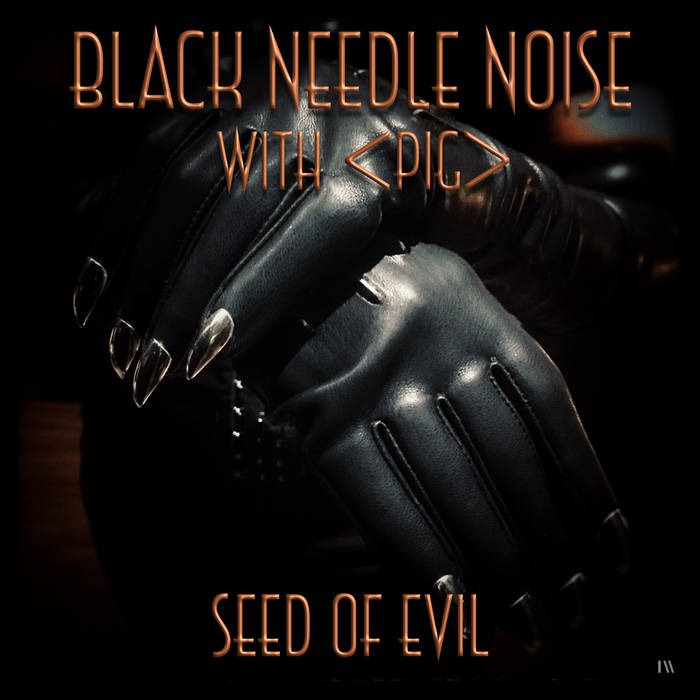
Having just completed a major tour with 3Teeth, which found Raymond Watts and co performing live in the UK for only the third time in their 30+ year career, PIG announced a new EP for release in June. And then, seemingly from out of nowhere, this landed at zero notice – a collaboration with John Fryer, who the press release reminds us is a ‘legendary producer and artist in his own right’ (and there is no escaping the fact his resumé is beyond incredible), the form of ‘the latest offering from his Black Needle Noise project.’

When it comes to both BNN and PIG, ‘industrial’ feels too limiting a term for artists who’ve expanded the territory with a rare imagination, not to mention a sense of grandeur, equally matched by a certain postmodern knowingness, humour even, particularly in the case of PIG.

For all the US and mainland European leaning of the genre, it’s perhaps the Englishness of these two artists which sets them apart and makes them stand out. It’s difficult to pinpoint, but it’s a factor.

‘Seed of Evil’ is a proper technoindustrial banger that’s reminiscent of Nine Inch Nails circa ‘92 and, er, PIG from around the same – the time when they toured supporting NIN on their Downward Spiral tour. It’s all in that distorted digital snare sound that sound like ‘Reptile’, the bubbling bass synth, the, cyclical repetition.

Even its very title revels in cliché and its seedy to the core, as Watts delivers a quintessentially grimy vocal, part gasp and part growl, over a gut-trembling synth bass, and it all explodes into a stomping chorus. In short, it’s got the lot. Get down.

AA

AA

a2272207802_16

Distortion Records DIST15 – 30th August 2019

Christopher Nosnibor

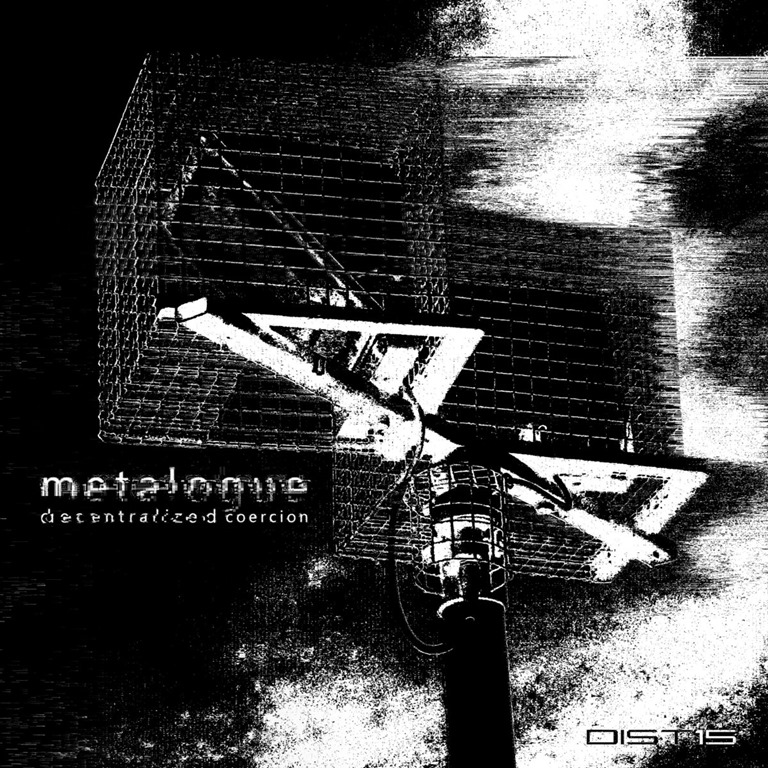
The blurb: ‘Beatmatching Metalogue’s cinematic industrial with the dark sci-fi visions of d&b/neurofunk, Decentralized Coercion deals in the threats of mass surveillance, decentralized social control, totalitarian manipulations of trust, runaway artificial intelligence and the addictive mechanisms of the attention economy. The resulting sound is that of Big Data multiplying exponentially, sucking us down in digital whirlpool.’

As well known for their remixing as their own output, and having been featured on a fair few compilations, Metalogue – the vehicle for electronic musician, programmer, and sound designer Robin Fencott – has amassed quite a substantial catalogue in a short time, with an approach to performing that lends itself well to live recordings, of which they’ve released several EPs.

However, the studio work is perhaps the medium through which the details are most discernible, with skittering synths and hectic cymbal stutters providing layers to the stark soundscapes shaped by thumping techno beats. The album’s first track, ‘New Era of Trust’ begins with sonorous atmospherics and a slow, jittery beat, before a woozy bass rolls in. It evokes Bladerunner-esqe images, conjures monochrome city scenes, dark alleys and rusted fire escapes, and 80s sci-fi. It has a certain Nine Inch Nails vibe, but the sounds are crisper, cleaner, and therefore somehow more inhuman and more detached.

Stepping up the tempo and the attack, ‘Spectral Froth Annealment’ clatters and clanks and pounds hard while whirring electronics fizz and grate to forge a bleak, paranoid space, and bleeds into the nine-minute ‘Shadow Text’, which maintains the pace. It’s not the subtle shifts in emphasis that are where these pieces appeal: it’s their relentlessness, their consistency, their clinical sharpness. The treble on the snare sound, the metallic edges, all imbue the album with a coldness that somehow reflects the zeitgeist: we’re surrounded my machines, we’re assaulted by information 24/7, and despite mankind’s unwavering belief in its superiority and capacity to control its environment, it feels increasingly s if that control is being relinquished and handed over to automation. I’m not talking about the way the industrial revolution brought us mechanisation, but that more insidious encroachment whereby Alexa is listening in and Facebook throws adverts having decided what you want to buy based on a conversation or status update from the other day, and your FitBit tells you how far you’ve walked and how many more steps you need to walk in order to burn off the packet of crisps you had mid-morning. We think we own our lives, but that sense of control is illusory. Your employer knows how long you’ve been away from your desk for the toilet, and with cameras every 30 yards (I personally pass no fewer than 13 CCTV cameras on my 23-minute walk to the bus stop on the way to work each morning, and the busses are installed with cameras as well), there is nowhere that’s private, and there is no hiding from the machines. You’re bot paranoid: you really are having your every movement watched or tracked.

Decentralized Coercion is a soundtrack to this harrowing but inescapable fact.

‘Extraction Imperative’ is bleaker, more stripped-back still, the stuttering drum ‘n’ bass rhythms twitchy and tense, and there’s little levity in the trajectory towards the album’s close, ending with the pumping yet magnificently empty ‘Behavioural Surplus’. The beats are whiplash-fast and hard as, but everything else is backed off, distant, creating a distinctly disquieting sensation.

By the finish, I’m left drained, punished, pounded, and pulverized. It’s a microcosm of life. Decentralized Coercion boils it down to a succinct sonic statement that encapsulates that life. It’s harsh, but it’s real.

AA

Metalogue

Music is serious business and you have to be willing to power through on your journey to worldwide success, and Petrol Hoers (with all his Horse Problems and Cross Word Puzzles), is here to guide you.

Of the record, Hoers neighs: "I HOPE YOU ENJOY MY ALBOM PLEASE PRETEND YOU DID NOT HEAR THE BUCKFAST PUN I WOULD LIKE TO USE THAT IN ANOTHER SONG…"

Mixing elements of comedy, industrial, grindcore, gabba and punk music, Hoers is your real alternative in 2019.

Not much is known about this hefty equine phenom, but he does really like Squats, and believes that its very important while you give his new album, ‘I Don’t Know, Just Horse Stuff, I Guess’ (released on August 31) a listen, that you do some too.

Why the long face?

Listen to ‘Music is Serious Business’ here: