10th July 2025
Christopher Nosnibor
The band’s Bandcamp page describe it as ‘the final chapter of a legendary journey’. David Wolfenden, who joined on guitar in 1982 after the release of their first single expands on this, writing that ‘40 years on and the guitars still try to strangle each other, the words still struggle to make sense of chaos and the rhythms drive us to a glorious destination.’
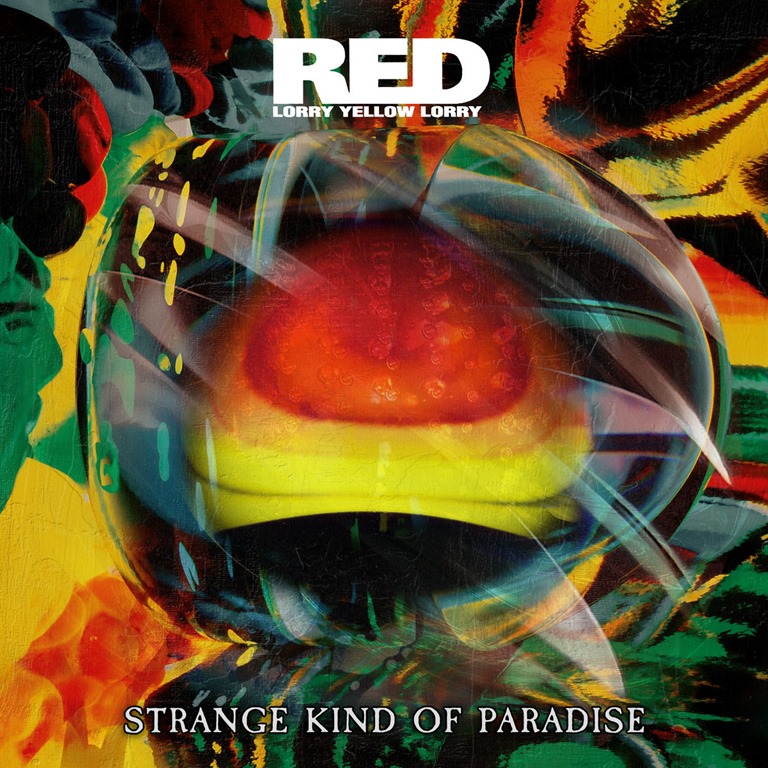
To describe Strange Kind of Paradise as ‘long-awaited’ would be an understatement: it’s an album practically no-one expected. Emerging that the murky milieu of the Leeds scene which was the spawning ground for all things dark and post-punk (and long before ‘goth was even a thing), Red Lorry Yellow Lorry’s early releases soundtracked the grim North in Thatcher’s Britain. They weren’t overtly political but they were clearly pissed off, and along with The Sisters of Mercy, Skeletal Family, and The March Violets (among others), they followed Gang of Four in capturing the zeitgeist.
During the 80s, they put out a solid string of albums and remained firm favourites on the alternative scene, and while they may have mellowed a shade over that time, with Blow (1989) being notable for making a departure towards more melodic territories, there was always a fire that burned through everything they did, and seeing them in 2015 at The Brudenell in Leeds reminded me on a personal level that the dark, brooding currents ran as strong as when I’d seen The Lorries play the Off The Streets benefit alongside the likes of The Mission and La Costa Rasa (and Utah Saints, where Andrew Eldritch joined them for a couple of songs) in August 1993, and they sounded exactly as they had in all the video footage I’d seen before and since.
It had looked for all the world that Blasting Off (1992) would be their final statement, and while the 2015 shows had seen the sale of limited CDs which mentioned the ‘forthcoming album’ Strange Kind of Paradise, almost twenty years on with no further movement, it seemed to be more of a mythical projection than a reality, as likely as a new Sisters album.
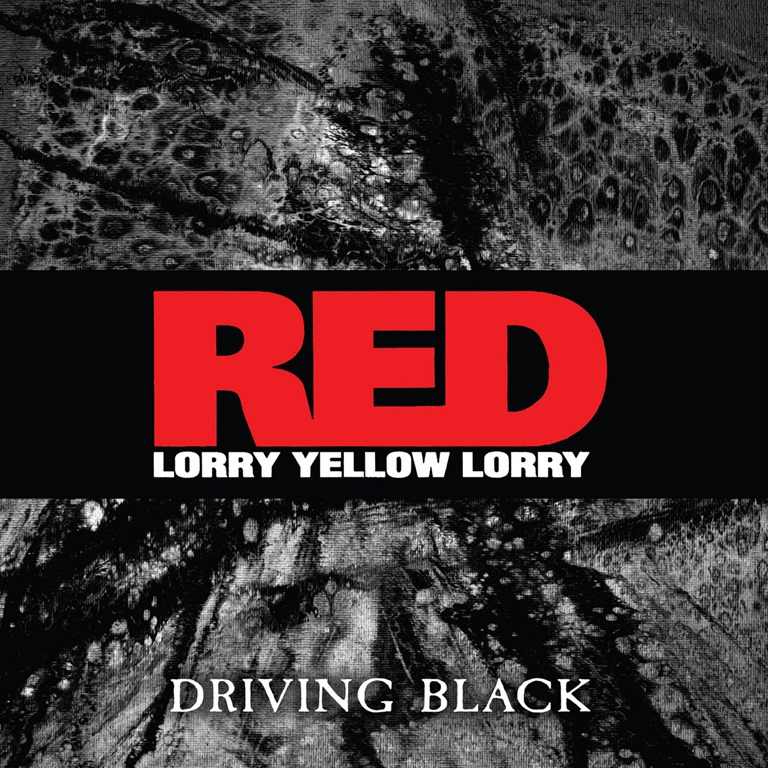
But last autumn, all that changed with the arrival of the Driving Black EP and the announcement that the album would follow shortly. And at long last, here it is. And yes, it was worth the wait.
The title track opens the album with the driving guitar and solid bass/drum pairing that is quintessential Lorries, the sound and mix reminiscent of Blasting Off – in particular ‘This is Energy’, but with the pace and determination stepped up several notches. Reed’s vocal is strong – in fact, it sounds the same as it did 30 years ago, although perhaps now, there are additional levels of nuance to his delivery, and it suits the songs well.
‘Chicken Feed’ (a mix of which appeared on the EP) is more melodic, even a shade groovy in a sort of 90s indie sense, the guitars chiming over layers of vocal harmony, and providing a hint of the diversity and expansion of songwriting which sets Strange Kind of Paradise apart from anything in their catalogue.
The acoustic-led ‘As Long as We’re Breathing’ is perhaps one of the most ‘different’ songs not only on the album, but in the entirety of their career, revealing an altogether softer, mellower side, while at the same time hinting at country and desert rock, Reed’s gravelly baritone reminiscent of Mark Lanegan. It’s a beautiful moment, and a truly moving song. ‘Nothing seems quite right / I’ve got a feeling we’re over the hill, but I don’t know because my chest is pretty tight / As long as we’re still breathing’, Reed sings with a palpable air of melancholy.
Then again, ‘Walking on Air’ brings a glammy swagger, but played almost in the rockabilly style of The Fall, marking another unexpected departure from the steely grey confines usually constructed by The Lorries. The same is true of the post-grunge ‘Killing Time,’ which again, is strong on melody, and big on emotional ache, riven with pining, yearning, sadness.
Side two opens with ‘Driving Black’, which, as I outlined in my review of the EP, is vintage Lorries all the way. Driving black, and driving hard. Easing off the gas a bit, ‘Shooting Stars Only’ returns to the vibe of Blasting Off, before ‘Many Trapped Tears’ goes for mid-tempo anthemic, with a solid riff. To clarify, we’re talking more Iggy Pop than Oasis in execution here. ‘The Only Language’ takes the tempo right up again, and is one of the most forceful sonic expressions they’ve made in a long time (even by their standards). Everything is firing on all cylinders as Reed snarls with total conviction ‘The only language I speak is the truth’. It’s one of those songs that gets you really pumped up, and the message has never felt more relevant.
And so it is that as this band – true stalwarts of the 80s alternative scene – finally sign off, we can reflect on how much we have to be grateful for. And as a final document, Strange Kind of Paradise sees them go off with a bang. It’s not a tired rehash, a limp collection of offcuts or unfinished works in progress, but an album that stands out as being quality all the way.
AA

 Aural Aggravation