Posts Tagged ‘Space’

Futura Resistenza –16th June 2025

Christopher Nosnibor

Much of Felix Kubin’s work since the turn of the millennium has involved radio, although film and theatre and other soundtrack works have also been a feature. Der Tanz Aller is one such soundtrack work, which was ‘created for the performance of the same title by the experimental arts collective LIGNA. The group specialized in site-specific, participatory works. Der Tanz Aller is based on Rudolf von Laban’s radical 1920s concept of ‘Bewegungschöre’ (movement choirs), collective dances in public space that aimed to reimagine social order through shared movement.’

The context and objective behind the composition are particularly useful to be aware of when listening to this album in isolation, as Kubin sets out: ‘When the performance group LIGNA approached me in 2012 to compose music for a play based on Rudolf von Laban’s revolutionary kinetic theories and so-called ‘Bewegungschöre’ (movement choirs), I thought of a soundtrack that would be both rhythmically engaging, abstract and mechanical. I knew there would be pre-recorded voices talking about his philosophy and guiding the audience via headphones. So, I had to leave some “air” in the arrangements, allowing the visitors to concentrate on the spoken words, while simultaneously becoming dancers. In LIGNA’s conceptual works – just like Laban’s idea of the movement choirs – the audience members become the performers.’

I shan’t dwell too long on the conceptual aspects here, beyond noting that this predates John Cage’s 4’33” by more than two decades, and while Cage’s silent work was on many levels a quite different proposition, the way in which any sound made by the audience – be it a cough or the shuffling of feet or the creaking of a chair – immediately becomes part of the performance indicates clear common ground. Likewise, William Burroughs’ cut-ups, which invited ‘creative reading’ whereby the engagement of the reader and their experience and perception was integral to their success, arrived some thirty years later. As such, ‘Bewegungschöre’ represent the cutting edge of avant-gardism, belonging to the era which brought us Duchamps’ readymades and – perhaps more pertinently – Tristan Tzara’s directions to make a Dadaist poem.

For the most part, the ‘air’ in the arrangements is apparent: there is space, separation, and while we can only imagine the prerecorded voices talking about Laban’s philosophy through headphones, it’s possible to get a sense of how it would work. But then, occasionally, Kubin’s compositions get father more busy, as on ‘Dämonen der Zerstreuung’, with big band percussion and noodlesome orchestration that’s of a strong jazz persuasion, but has a whole lot happening, and often simultaneously. There’s drama with orchestral strikes, and creeping, urgent glockenspiels that bring a noirish, detective movie feel – not a chase scene, but a cat-and-mouse scenario.

There are some spoken-word passages, in German, as on ‘Raumstunde Vera Skoronel’, accompanied by evolving sonic backdrops, the likes of which I find hard to imagine inspire dancing, but spasmodic twitching and erratic lurching, while the title track is a slice of jerky, and quite insular and intense, Kraftwerkian synth bleepery, and ‘Rotes Lied’ is a perfect exemplar of sparse, spaced-out, glooping, blooping, reverby weirdery with occasional chimes and stuttering shot of snare. There is plenty of air here, as you sit and wonder what exactly is going on?

Who knows? And does it even matter at this point? The percussion builds from all sides, and the nagging away – until suddenly it doesn’t.

The unpredictability of Raumstunde Vera Skoronel is its strength. It is weird, unexplained in many respects, beyond simply the initial onboarding awkwardness. We should probably celebrate this weirdness, this sense of separation. Raumstunde Vera Skoronel is never dull, but always strange and alien – and these are reasons to appreciate it.

AA

AA

RESLP040 front

Dragon’s Eye Recordings – 7th June 2024

Christopher Nosnibor

There isn’t really anything funny about Yorkshire Modular Society, conceptually or otherwise. But one never really fully appreciates one’s own locale, especially not when it’s in the north of England, a region renowned for its pithy, gritty nature rather than its glamour. People will tell you that Yorkshire folk are welcoming and friendly – and tight – and as a non-native whose lived in Yorkshire the majority of my life now, it’s probably a fair summary. The county boasts some of the most magnificent countryside, and I only need to walk ten minutes from my house to be in woodland or fields – not bad considering I live twenty minutes from the centre of a cathedral city, not to mention twenty minutes from the train station, which will land me in Leeds in under half an hour. But for all that, and despite the huge number of outstanding bands to have emerged from Leeds over the years, mention Yorkshire and people will probably think of brass bands, cobbles, and Hovis, flat caps and equally flat brown beer. People tend not to think ‘Yorkshire, the county of experimental electronica’. They’re missing something significant.

There is a thriving modular / electronic scene in Yorkshire, notably with electronic music open mic (EMOM) nights in Leeds, York, and Halifax, all giving platforms to acts who aren’t necessarily on the main gig circuit, although venues like Wharf Chambers in Leeds and The Fulford Arms in York will often feature weird and wonky stuff from across the electronic spectrum.

Like many electronic experimenters, the YMS BandCamp page presents a prodigious self-released output, so if you’re wondering where to start, a release selected by a label seems like a fair point.

Of this continuous hour-long ambient work, Yorkshire Modular Society says, “As the cityscape pulses with electric fervor, oscillations emerge like whispers in the rain-soaked streets. LFOs, like elusive shadows, guide the listener through a maze of sonic intrigue, each modulation a glimpse into a world of mystery. Within the depths of digital tape modules, time unravels and reconstitutes, casting a veil of uncertainty over the sonic landscape. Reverb and delay wash over the senses like urban decay, adding depth to the sonic architecture that surrounds.”

Fiery the Angels Fell is a lot calmer, more soothing, and less apocalyptic than its cover art suggests.

As is often the case with ambient works, I find my mind – like the music – drifting, and my contemplations following divergent trajectories. Here, I found myself wondering what the end would – or will – really look like. Growing up in the 80s, I envisaged the white light of nuclear annihilation, but on recently watching Threads, came to realise that this may not be the spectacular moment of silence prefacing perfect oblivion my younger self had fantasized. But no part of me ever envisaged an globe, or an egg, colliding and splitting in half with molten flames as something I may witness. The cover art, then, harks back to pure 60s / 70s sci-fi vintage. The artwork propagates tension. The sound soothes it.

While there are some billowing clouds along the journey that is Fiery the Angels Fell, this is a delicate, graceful work dominated by organ-like drones and soft sounds which ebb and flow. If this is the soundtrack to the end, I will likely sleep through it, and awake pure nothingness.

AA

de6063_art

Riot Season Records – 23rd June 2023

Christopher Nosnibor

Having had something of a chuckle at Henge for their pseudo-space mythology and psychedelic psilliness, I find myself squaring up to purveyors of genre-straddling experimental doom, Codex Serafani. Their biography explains: ‘Their journey started a long time ago, some say on Saturn, some say in the subconscious of the human psyche, coming out in different manners through the ages, channeled by mystics, witch doctors, shamans, free thinkers, free spirits. But we do know that what has become Codex Serafini travelled here from their home world on Enceladus in 2019 and crash landed into the music scene of Sussex.’ Of course they did.

But what are the chances that a I’m writing this review, an article from The Guardian pops up in my news feed reporting on how astronomers have spotted a six-thousand mile plume of water vapour blasting from Enceladus – a small moon belonging to Saturn believed to be one of the most promising places in the solar system to find life beyond Earth? As coincidences go, this was an usual one, and one which befits this band.

With a name which references Luigi Serafini’s Codex Seraphinianus, an illustrated encyclopaedia of an imaginary world, written in an imaginary language, it’s clear these guys have a keen interest in the realms of fantasy and mythology, to state it lightly.

I suppose that the concept piece whereby the concept includes the artist as much as, if not more than, the album goes back to Bowie – but back in 1972, this was new and novel, and moreover, Bowie was unique and an artist whom you could almost believe was from another planet. But even then, however much the concept became all-encompassing, it was also clear that the concept was a persona. But to base an entire career on a persona – not a media or public persona, but a far-fetched one which requires the suspension of disbelief – can be somewhat limiting. Where do you go when you’ve explored the concept to its logical limits?

In creating such a vast and multi-faceted alternative universe, Codex Serafini have ensured an abundance of time and space in which to explore and expand their concept, and rather than it being self-limiting, the challenge will be to test the capacity of their imagination, not only conceptually, but also musically.

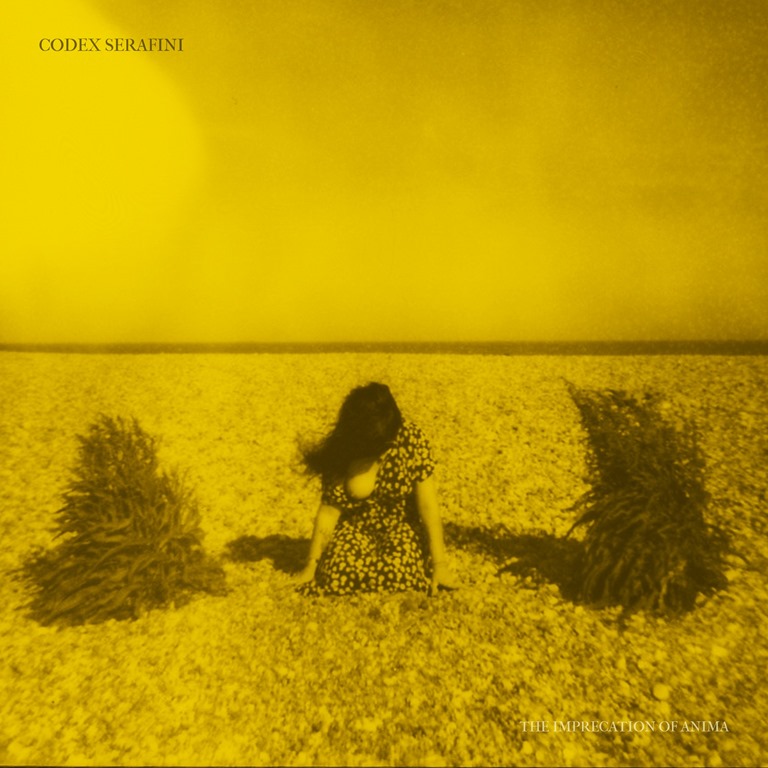
While the adage that you should never judge a book by its cover hold some merit, one can tell much about an album by the ratio of its duration to the number of tracks, and The Imprecation Of Anima has a running time in excess of forty-five minutes and contains just four tracks. We know we’re in ‘epic’ territory before hearing a note, and the first of the four compositions, ‘Manzarek’s Secret’ unfurls slowly with a long droning organ (which one suspects is no coincidental nod to The Doors) and chiming percussion. It’s not long before a thick, gritty bass and reverb-heavy vocal incantations are joined by some wild brass to burst into the first of numerous big, jazz-flavoured crescendos. At nine-and-a-half minutes long, it’s epic, but only an introduction ahead of the fifteen-minute swirling mystical monster that is ‘Mujer Espritu’, which brims with Eastern promise and sprawls in all directions at once.

Single release ‘I Am Sorrow, I Am Lust’ is perhaps the least representative song of the album as a whole: it’s snappy, exuberant, uptempo, jazzy, rocky, busy, climactic, and fairly structured – and clocking in at three minutes, it feels like a single when standing alone, but more like an aberrant interlude in context of the album ahead of the seventeen-and-a-quarter minute ‘Animus in Decay’. Now this is a wig-out! It’s heavily psychedelic and transitions through a succession of passages on the path to – what? Enlightenment? It’s certainly a journey, whichever angle you approach it from. It builds and grows in volume and tempo, then falls again and there are some expansive ponderous sections and shifts like sand dunes in a vast sonic expanse.

And so it may be that the concept is a little daft, but they deliver The Imprecation Of Anima – a work that’s as ambitious as it is immense – with absolute conviction, and the vast sound pulls you into Codex Serafini’s (other) world. Inventive and accomplished, it’s a truly mighty record.

AA

thumbnail_THE IMPRECATION OF ANIMA FRONT copy

Cosmic Dross – 26th May 2023

Christopher Nosnibor

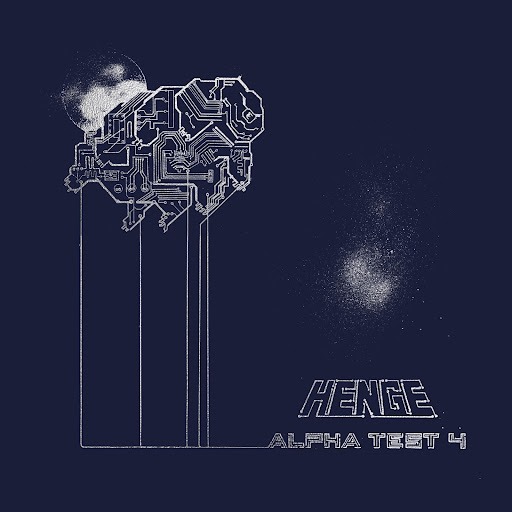
When it comes to spaced-out, trippy conceptual stuff, I can’t help but wonder if large quantities of drugs are involved, or of the creators are just a bit crackers. Their debut album Attention Earth! Featured a song called ‘Mushroom One’, which makes mee think drugs – or perhaps just the image they want to portray. The members of HENGE, Mancunian purveyors of self-styled ‘cosmic dross’ go by the names of Zpor, Goo, Grok and Nom, and Zpor, their ‘front-being’, explains of the new album: “Alpha Test 4 is our third Planet Earth LP release. With each record we have sought to fine tune our extraterrestrial sounds for human ears, optimising these alien frequencies in order to more effectively access the pleasure sensors in the Sapien brain…We believe that the wisest lifeforms are always open to new learning, and we have been conducting our own studies on the human beings that we’ve encountered on Earth so far. We have discovered that exposure to this alien music can have a profound effect on the human nervous system, and have recorded an average increase of 72% in the happiness levels of human specimens attending our experiments”.

If you’re going to do performance, you need to commit to it completely: there can be no half-measures, no stepping out of character off stage, and HENGE clearly live and breathe being HENGE, and one would like to think they’re entirely aware of the absurdity of it all, but happy with the trade of preserving the identities they enjoy at home and in their dayjobs or whatever. I’m going to at least hope that Zpor doesn’t insist that his wife and kids and colleagues address him as such.

Alpha Test 4 is noodly, doodly, silly fun that harks back to the 70s with its cheesy, wibbly synths and tinfoil futurism that was retro even at the time. It’s not so much prog in its primary inspirations, so much as ‘Where’s Captain Kirk?’

‘DNA’ brings stupid funk and daft robotix vocals and it’s probably fun if you’re into it, but mostly it’s annoying: their space-age daft Punk shtick just feels obvious, derivative, passé. And yes, everything is just recycling now: that was postmodernism, where we accepted that originality was dead and celebrated that the future was built on assimilations and permutations of the past. Progress lay in the innovations of new hybrids and how genres were intermingled, and we reached a point, I’m not quite sure when, where it all came down to the execution. It ain’t what you do, it’s the way that you do it… and HENGE do it, and with wild abandon and great enthusiasm.

But great energy does not make for a great record on its own. Alpha Test 4 is bursting with energy and brimming with bubby synths: ‘Ra’ is exemplary, an explosion of Lucozade and Red Bull-fuelled 8-bit twitchy pop that crosses XTC with D‘n’B, and spins in a dash of Eastern promise alongside a swirl of experimentation. The worst excesses of YES are tossed into the mix along with Jean Michele Jarre and Yello. It has its moments, but most of those moments are indulgent and rather corny. But HENGE likely know this and don’t care, because unless they are from another planet and spent their time hovering in space, they’re aware and self-aware, and grasp the absurdity of what they do with both hands before jettisoning the junk, and no doubts regardless of my views – and likely because of them since the chances are everything I dislike is everything fans love – Alpha Test 4 will go stratospheric.

AA

793f4928-efba-26d1-5287-6d6b5e45d6e7

21st October 2022

Christopher Nosnibor

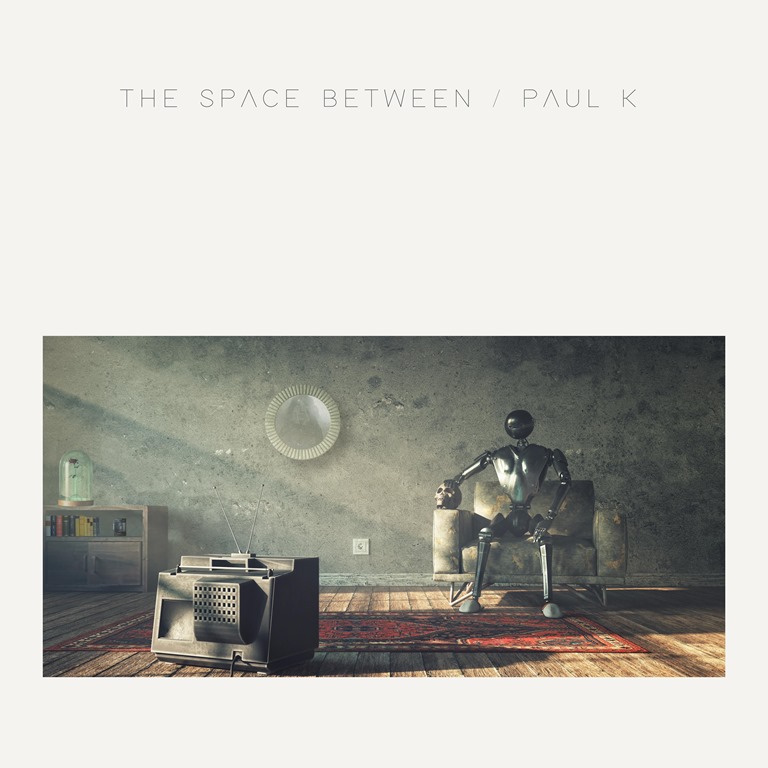
It’s been almost three years since Paul K delivered Reconstructed Memories. Listening to The Space Between, it becomes apparent why. Pandemic or nay, this is an ambitious and complex album which sees Paul return to the territory explored on 2018’s The Fermi Paradox and go the whole hog on devising and scoring a vast conceptual progressive work that’s heavily invested in narrative as it traces what he outlines as being a story ‘about an astronaut who has volunteered for a one way journey through space to pass through the Heliopause and is set maybe 30/50 years in the future.’

Space is both the backdrop and the story, in many ways, and the fascination it holds is something that transcends words or even rational explanation. Perhaps the fact that the sheer enormity and infiniteness of space is beyond our comprehension is a major factor in our space obsession. And however far and deep we probe, I suspect we will never truly be capable of assimilating the universe, especially as we, as a species, struggle to comprehend that we do not exist at its centre.

In classic sci-fi form and echoing 2001: A Space Odyssey, the concept behind the story is that the astronaut’s sole companion is an AI robot that becomes sentient during the journey, before the astronaut eventually dies and the robot continues the journey alone.

As Paul explains, ‘Each track plots the journey from liftoff looking back at the Earth (True Splendour) to the debilitating effect of years alone in space (Pareidolia) and is also related to the love and loss the astronaut has felt in his life’.

Understatement is the album’s defining feature. While it is unquestionably ambitious and incorporates cinematic arrangements, and notably choral-sounding vocals, the instrumentation is subtle and layered.

‘True Splendour’ makes for a gentle introduction and very much sets the tone. The Space Between keeps the drama and pomp to a minimum, and instead, the mood is contemplative, almost subdued, as strolling basslines wander sedately through soft washes of sound. Percussion is minimal, and low in the mix.

‘Sleep Within’ is perhaps the album’s most conventional ‘rock’ composition, but there’s a subdued, soporific overlay to its mid-pace melodic drift, although the reflective, wistful ‘Spektr’ has a certain solidity to it. In contrast, ‘Artifact’, the point at which the AI assumes autonomy, is almost vaporous, a soft piano reverberating among wispy sonic contrails.

The Space Between is an album that functions on numerous levels simultaneously, although they’re not all necessarily obvious. But it’s not imperative to follow the narrative to appreciate the detail; the album works in a way that not only creates space, but conveys space, the eternal distance, the vast emptiness… we are all lost and floating. But some are more lost than others. Welcome to The Space Between.

292588895_411372567443242_3679202510317740520_n

Nadja reveal another track "Starres" from their forthcoming album Luminous Rot, which shall be released on CD and DL formats via Southern Lord on 21st May, with the LP version arriving on 13th August. Luminous Rot pre-orders are live from today, and info can be found on the Southern Lord store, Southern Lord Europe store and via Bandcamp.

About the track and video Nadja comments, "Starres is about both inner- and outerspace, a conflation of the internal neural-network of the human brain with the external cosmos, and how the act of observation might alter those, both from the viewpoint of the observer and the one observed. The video attempts to replicate something of that feeling of cognitive dissonance in the observer, taking a mundane image of houses and warping them, both through reflective filming and digital effects."

Watch the video here:

AA

Nadja 2

(image by by Janina Gallert)

Opa Loka Records – OL2004

Christopher Nosnibor

Just over two years on from The Forcing Season: Further Acts of Severance, and Michael Page delivers another instalment of Sky Burial music.

According to the accompanying text, ‘Stations of the Sun was composed in the spring of 2020 after returning from travels through Europe, the Middle East, and North Africa’, and ‘the five tracks form a ritual soundtrack to a journey which became an inadvertent pilgrimage to view the rising and setting sun from ancient sites of historical significance’.

As is often the case with ambient works, while intended to be evocative, its evocations remain secret, hidden from the listener and locked inside the creator’s mind and separated by process. The sense of journey, the sense of location, isn’t particularly apparent here, and as is so common, to the genre where there’s a concept and an inspiration deriving from some specific experience or place, that sense of place, space, and inspiration is largely lost in vague mists. That said, there are some rich textures and nice tones here, and while the idea of ‘journey’ may not be readily conveyed, there is a definite trajectory and evolution across the album’s five tracks.

The expansive opener drifts and washes broad strokes, with little detail, but over its sixteen-minute duration becomes increasingly calm and soothing. As you let it wash over you, you become more attuned not to the location in Michael Page’s mind, but your own immediate surroundings. As ever, I’m in a small, tunnel-like rectilinear room, but at the same time, I am drifting beyond it in my mind due to the transportative effects of music on the mind.

‘Stations of the Sun 2’ is sparse, fleeting notes that glide in and out through tweets and trills of sounds that imitate birdsong without being actual birdsong, as n erratically-pulsing beat throbs and glitches at its heart, like a muted Kraftwerk, or an ultra-muted take on Throbbing Gristle’s ‘Discipline’. As the album progresses, distant samples and incidental interventions creep in, changing the tone, and the rhythms become more pronounced and the atmosphere grows darker, although by ‘Stations of the Sun 5’ – a sixteen-minute megalith to bookend the album with a counterpart to the opener, the beats have evaporated, replaced by random, clanks and scrapes that echo dolorously through eternal caverns of gloom. Whirs, bleeps and whooshes like shooting stars occasionally flicker and flash through the dense, dark space.

And so it ends more or less as it begins, and we find ourselves, having been led onwards and through a succession of sonic spaces, that the terminus resembles – at least in memory – the origin. So where have we been? For each of us, the answer will be different. From the comfort of our own spaces, Stations of the Sun leads the listener on a journey of the mind.

AA

OL2004_front

Kranky – 28th September 2018

Christopher Nosnibor

Total immersion. This is what I get from Tim Hecker, both recorded and live. Responding critically to such a sensation is a major challenge.

My first attempt to review Konoyo redefined ‘failure’, as I sat, vacant and staring for the duration without typing a word. Yes, other things happened around me: emails continued to ping into my inbox, text messages, Facebook notifications, and so on. So much peripheral shit. But while pushing all of this noise to the peripheries, I struggled – nay, found it impossible – to get a firm grasp on the drifting soundscapes of Hecker’s latest album. My second stab proved no different. I can no longer blame the distractions: I’m reminded of ‘seeing’ Hecker’s performance at the Belgrave Music Hall in Leeds a few years ag. Purple smoke filled the room. It was so dense I couldn’t see my friend standing next to me: I felt as if I was in an isolation tank or a sleeping bag. With my surroundings completely removed, I found myself alone with the music, and in an almost trance-like state, swaying on my feet, in my own world. When things like this happen, I immediately assume I must have drunk more than I should or that I’m tired or something. But music at its most potent is like a drug, and Hecker has the capacity to transform the mental state and one’s relationship with one’s surroundings. And this is certainly true of Konoyo.

Inspired by conversations with a recently-deceased friend about ‘negative space’ and the banal density of contemporary music, Konoyo was largely recorded in a temple on the outskirts of Tokyo with a view to creating something that has room to breathe, rather more cerebral than physical, drawing back from sonic force to invite a different kind of engagement.

The first composition, ‘This Life’ wails eerily, resonant low notes hanging ponderously beneath escalating layers of discord that bow and shriek, before oriental motifs chime a certain note of freshness and innocence… but the notes are bent, the underlying washes of sound begin to twist, scrapes of extraneous noise swell to shrieks of metallic feedback.

As is Hecker’s signature, Konoyo, is very much about shifting textures and juxtaposed tonalities, but more than anything, the incidentals, the way layers fade in and out, and extraneous knocks and clatters suddenly appear from nowhere, and then disappear just as quickly. There are murky pulsations and hazy echoes that resonate through spatial densities that range from the subaquatic to the zero-gravity. Hecker conjures space outside of space, spaces which transcend both time and space to exist in another realm entirely, suspending time in the process. It’s ambience with edge.

An abrupt halt in the soothe drones just 20 seconds into ‘Keyed Out’ provides the album’s first real indication of just how difficult Hecker can – and will – make this. Jolting discord and jarring dissonance rupture the smooth, vaporous backdrop as thigs become overtly challenging around three minutes into this ten-minute journey through dissonance and sonic difficulty, across which a lacey cloak of accessibility slowly settles. The fifteen-minute finale, ‘Across to Anoyo’ is a slow-evolving epic which mutates from quiet mellowness into a warped, woozy discord, which twists Japanese motifs into funnelling electronic abstractions.

Piano tones which should offer tranquillity and comfort are rendered with an edge of attack and amidst a metallic edge of reverb, and nothing is quite as it seems or should be on Konoyo. It bends the brain and pushes the listener to explore unexpected spatial experiences, challenging connections to concrete orientation. The physical world disappears, and time evaporates. Konoyo delivers a path to transcendence.

AA

Hecker

Christopher Nosnibor

Paul K first came to my attention with the release of Glitch Code’s debut album, Gifted_Damaged, a real standout release for 2016 in the sphere of dark electronic pop. Omertà saw Paul venture out as a solo artist last year, and revealed a very different musical aspect: instrumental, dramatic, and in places a bit proggy, it found him explore some expansive sonic territories with impressive results.

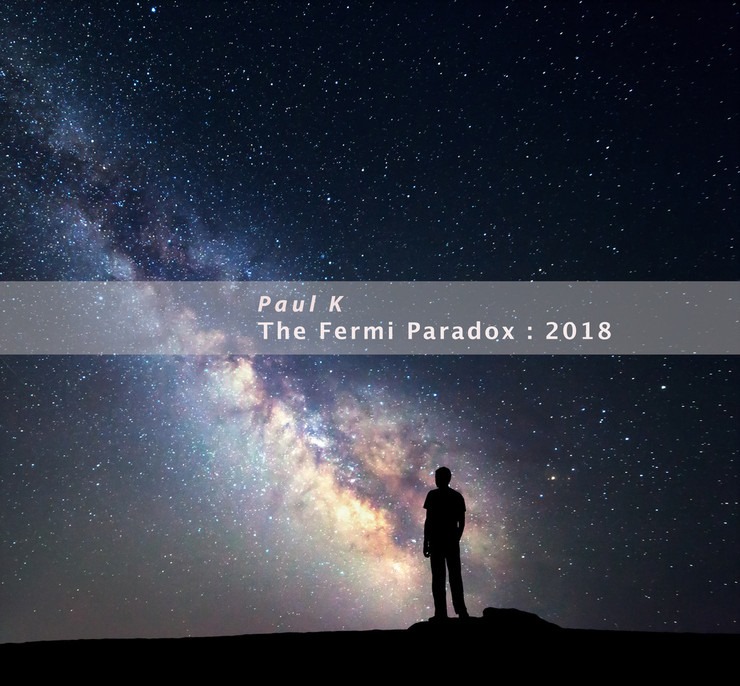
The Fermi Paradox sees Kirkpatrick expand on this – immensely. And expand is the word: this is expansive both conceptually and sonically, and he explained that ‘the album is about the theme of isolation, exploring our place in the universe and questions “are we alone?” to the perspective of social isolation through social media… It looks at the space race and the billions spent on wondering if we are alone in the universe vs. the juxtaposition of so many lonely people on our own planet.’

As such, The Fermi Paradox ranges from the macro to the micro, casting an eye to the farthest reaches to the most inner of anxieties. So while in terms of what it delivers, The Fermi Paradox isn’t a million miles from its predecessor, in terms of intent and focus, it’s a very different beast from Omertà.

Such isolation is something that’s immensely relatable: I’ve found myself in discussions with a surprising number of people, many with anxiety issues, conflicted over social media. It’s a different kind of paradox from the question of alien lifeforms the title refers to, but nevertheless, it’s a paradox. The dependence on the endless stream of posts and comments is countered by the despondency the belief that your own life is no match for others’, the sense that other people breeze through life, happy and carefree while your own life is fucked. Any sense of connection feels flimsy, secondary to a sense of disconnection and inadequacy. And what happens when, just for five r ten minutes, your phone goes silent: no texts, no notifications? The silence you’ve been craving is a howling void of emptiness.

It’s with ponderous piano and soothing strings that ‘Anomaly’ opens the album, and it’s mellow but twistedly poignant. It’s clear that Kirkpatrick knows how to tug at the emotions without words. The motif that runs through ‘Sagan’ makes me think of ‘Forever Autumn’ from ‘The War of the Worlds’ – surely one of the most heartbreaking songs ever committed to tape. Or maybe I’m just a sap. Nevertheless, regardless of whether this is about the music itself or my response to it based on, its drift into lilting piano and achingly sad strings is simply beautiful.

It’s on ‘Ecce Homo’ that Paul reaches into expansive territory, a cinematic, layered progressive-style piece with soaring chorals and supple rhythms, it drives, but also meanders. At times, as on the opening of ‘Exegesis’, Kirkpatrick slides into near-ambient territory, but for the most part, it’s about sedate, spacious soundscapes, defined by rolling, soft-edged bass. As the album progresses, the song titles suggest a shift from the more inward-looking to gazing out into the cosmos.

Are we alone? Always. Intensely. But with The Fermi Paradox, Paul K has produced a magnificently-crafted soundtrack to play into the void.

513298210

Les Albums Claus – 30th April 2018

Stuart Bateman

Ben Bertrand comes armed with a bass clarinet and a bunch of effects. Recorded live at les ateliers claus in October 2017, NGC 1999 doesn’t sound in any way live, and the five pieces feel very structured and are sequenced in a most cohesive fashion. While the number of singer-songwriters using loop pedals to fill out their sound seemed to explode about 12 years ago, to the point that it’s long been tedious and predictable to witness someone with an acoustic guitar and a little synth layering up the vocals and building simple three-chord strums up to epic choral dimensions.

Bertrand’s application of the equipment is both more subtle and more innovative. The repetitive motifs ripple and bounce against one another, and while there is layering, Bertrand’s restraint is noteworthy, keeping things sparse, low-key, minimal.

Taking its title from a dust-filled bright nebula in the constellation of Orion, 1,500 light years from earth – and distinctive for a black patch at its centre which is believed to be completely empty – the compositions are thematically-linked and contrive to convey a sense of floating in space.

Things to threaten to spiral out of control with shrill, electronic whistles sending the end of ‘V380 Orionis’ (a multiple star system at the centre of Orion and the primary source of light for NGC 1999) skyward. But thereafter it’s very much sparser and quieter. ‘Malkauns on Kitt Peak’ brings a change of tone for the album’s mid-point: a hushed, brooding expanse of elongated pulses which echo out into the darkness, it’s spacious yet strangely airless. For the first time on the album, the clarinet sounds like a clarinet as it meanders through a fizz of skittering treble that falls like shooting stars.

The pieces flow together and transition effortlessly as Bertrand bounces through the abyss with an assurance and tranquillity that’s soothing, but nevertheless strange.

AA

Ben Bertrand – NGC 1999