Posts Tagged ‘Single Review’

Fierce Panda Records – 20th August 2021

Christopher Nosnibor

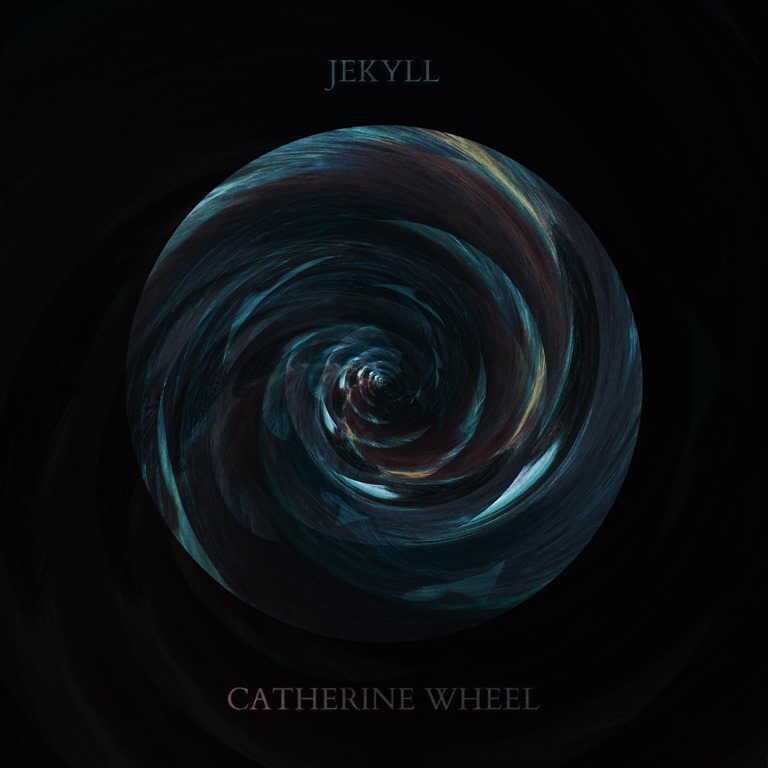
Just two months on from the release of ‘Tear Ourselves In Two’, Jekyll follow up with ‘Catherine Wheel’ to cement their reputation as a band with a knack for a bona fide indie pop classic.

This one is particularly relatable on a personal level. I felt as if I was living in a different world from most people during lockdown. While friends, family, and many people on social media were managing by revelling in the masses of free time they sound themselves with on their hands and blasting through books and Nexflix boxset binges and bakery galore, and articles in the media about how people were re-evaluating their lives and work/life balance during ‘the great pause’, I found my anxiety was finding new peaks not because I was scared of the virus or running out of pasta or loo roll, but because with working and home-schooling, and surrounded by the tornado of panic what was engulfing friends and colleagues, I had less than no time, less than no energy, and weeks would evaporate.

In the event, the best part of sixteen months evaporated. Nothing happened, nothing really got achieved, and everyone got older, at least those who made it. I’d been spinning, windmilling at a frantic pace just to stay still, and still am. What is there to show for it?

Lockdown – when it eventually did happen in the UK – hit hard and fast and everyone clenched. Emerging from lockdown has been long and slow, and still feel like a massive adjustment, as if rising to the surface could induce the psychological equivalent of the bends. But here we are.

Singer Joel describes ‘Catherine Wheel’ as being about ‘the disorientation and panic of feeling that your life is passing by faster than you can keep up with, before you’ve even figured out what you want from it or how to use the precious time you’ve got to its full potential.’ Because life is too short, and every day wasted is a day closer to death. Butthole Surfers nailed it with the line ‘it’s better to regret something you have done than to regret something you haven’t done’. To do nothing… well, you may as well already be dead. But being forced to do nothing – that’s hard to stomach.

‘Catherine Wheel’ is succinct but explosive, three-and-a-half minutes of pent-up energy finding its release. It starts off with a gentle acoustic guitar that conveys a wistful sort of feeling, and is vaguely reminiscent of early Mansun, then very swiftly piledrives into a soaring guitar melded to a thumping, busy drum beat – loping, rolling, urgent, a beat on every beat and bursting with energy, and there’s a lot going here, and not just deep layers of reverb. It’s got that vaguely psychedelic / goth hue of The Horrors, but Jekyll are very much their own band rather than being in thrall to anyone.

If Muse frustrate with their immense pomp, then on ‘Catherin Wheel’ Jekyll capture the positive elements without being so overblown, distilling the elements down to create something that possesses a palpable intensity and that head-squeezing claustrophobia while at the same time looking outwards to the possibilities. It’s got a dark new wave edge, but it’s a truly killer single and a song for the times.
Catherine Wheel

End Of The Trail Records – 13th August 2021

Christopher Nosnibor

In a world of intertext, whereby everything references something else, there’s something that goes beyond homage in referencing one’s influences in naming your band. Sure, it’s a nifty short-cut signpost indicating influences and origins, but Australian act Burning Jacobs Ladder – essentially the vehicle for Jake T Johnson – takes its name from a song by Mark Lanegan. This makes it cool practically by default, but it helps that BJL has got the songs to back it up.

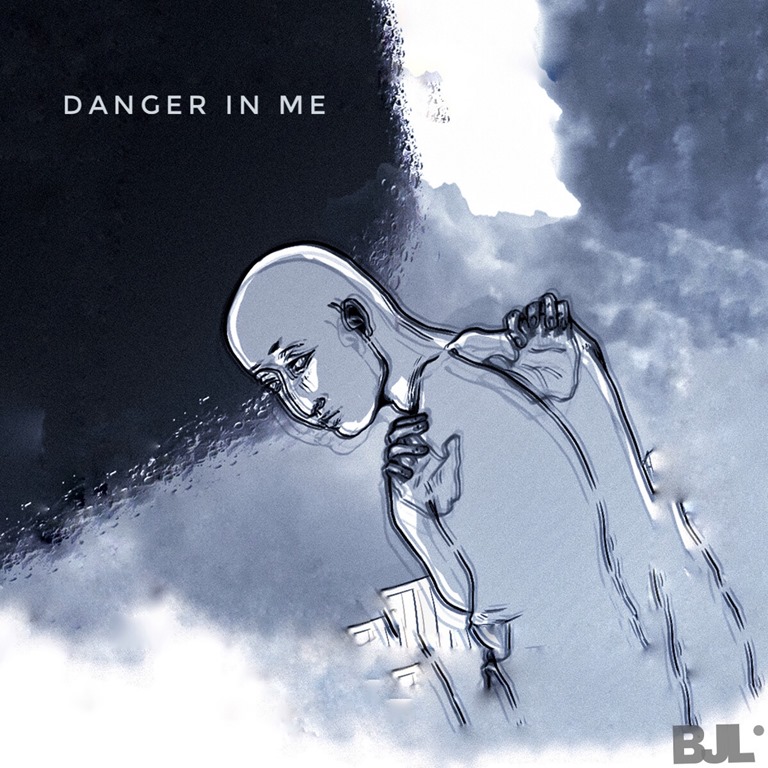
With ‘Danger in Me’ he’s brought together a classic post-punk vibe with an early 90s alternative swagger. There are hints of late Psychedelic Furs later Jesus and Mary Chain, delivered with the knowing coolness of Black Rebel Motorcycle Club. Also in the mix is a gothy element, that makes something of a nod to the bombast of The Mission, but equally worthy of comparisons to the more contemporary Mayflower Madame. If this seems like a lot of touchstones and reference points, it serves to highlight just how strong a handle Johnson has on the style and the sound, and it all comes together perfectly here.

‘Danger In Me’ has a darkness and density, and it’s propelled by a tight, crisp drum track, chugging rhythm guitar, and an insistent four-square bassline of the kind that thrums along at just the right pace to elevate the pulse just that little bit (and reminds me more than just a little bit of ‘More’ by The Sisters of Mercy, who were always the kings of that tight three- or four-chord sequence thudded out with a strike on each beat). And then there’s the reverb, pitched just so, and the lead guitar sizzles around Johnson’s vocals as he wrestles with internal conflict.

Disclosure: I’m an absolute sucker for this strain of groove-orientated post-punk – but this is one of the best examples I’ve heard in a while: truly top drawer.

30th July 2021

Christopher Nosnibor

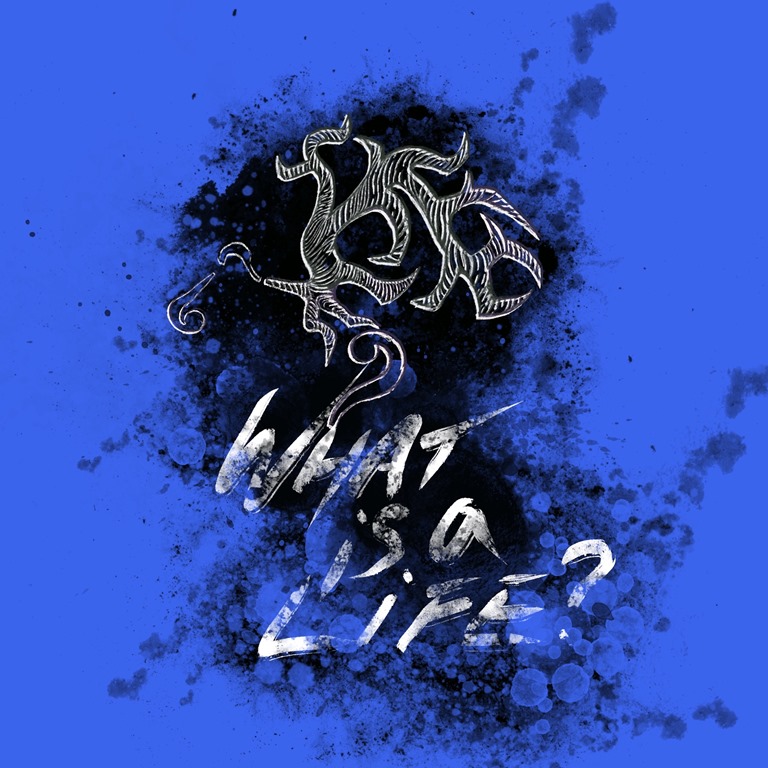
Third Lung are on fire in 2021, and it’s nothing to do with an inflammation caused by a respiratory disease. Too soon? Bad taste? Perhaps both, but usually, in dark times, humour has served as a vital means of staying sane and maintaining morale. So what’s happened? It isn’t that there’s no humour to be found in anything right now. The UK government should be a source of infinite amusement, but then again, satire seemingly died with irony, and moreover, people are scared – not just of the virus, but of other people. The governments has stoked a culture of division, of us and them, a culture whereby the government has given the green light to booing footballers in their own national team for taking the knee. Five minutes on Facebook reveals that we’re living through a war, not against an invisible enemy, as we’ve been repeatedly told, but a war against one another.

This isn’t all digression: Third Lung’s third single of the year already, which follows ‘I A Fire’ and ‘Hold the Line’ is a song that questions the impact of isolation, and while it reaches beyond the immediate pandemic situation, in asking ‘What is a life on your own?’, and, indeed, who are we when not guided and supported by the people around us we cherish and love, its relevance requires no qualification or explanation here.

Imploring the listener to ‘raise a fist to the sky’, ‘What is a Life?’ is a life-affirming anthem – and when I say anthem, I mean the sound and production is absolutely epiiiiiic. Sometimes, music goes beyond personal taste and simply the enormity of its appeal is just fact. There’s undoubtedly a strong 80s U2 parallel here (and even as someone who’s grown to loathe U2, it’s undeniable that The Joshua Tree was a defining moment in arena rock, which saw a band explode from ‘biggish’ to absolute global dominance.

There are dashes of Kings of Leon in the mix, too – again, another band who hit the stratosphere off the back of an album after plugging away for some time – and these guys are easily of the standard (and with way better lyrics than the crass scribblings of bloody ‘Sex on Fire’, which mostly wanted to be ‘Dancing in the Dark’ but with ‘sex’ in the title to give it a bit more sizzle appeal.

So what’s the verdict? Third Lung are better than Kings of Leon, and every bit as good as the best U2, and ‘What Is A Life?’ is an outstanding single.

AA

Third Lung Artwork

23rd July 2021

Christopher Nosnibor

Let’s get this covered off before I start: I’m a grumpy, curmudgeonly git, awkward and obtuse. I’m one of those people who hates Christmas – because festive cheer is false and everything’s just about oiling the cogs of capitalism – and I loathe summer because anything over eighteen degrees is too fucking hot, I can’t think straight while an uncomfortable mess of sweat, and people turn into absolute dicks. And by people, I mean practically everyone: it becomes the new norm once the mercury rises above twenty-one, and the level of dickness seems to increase incrementally with each degree. And to some, it may sound like a strange and perhaps petty niggle, but summer hits – songs specifically written to be played on the beach and at barbecues, in the park and in cars with the windows open evoke a unique level of ire and inspire a quite specific kind of fury.

Maybe it’s because as a teenage goth, I’d spend my summer holidays holed up in my room with the curtains drawn and trying not to die of hayfever while listening to The Sisters of Mercy and The Cure in semi-darkness while reading Stephen King novels that

I have no truck with this shit. Or maybe it’s just that people are generally insufferable.

But my job is to be objective, at least to a reasonable extent – ant prejudice shouldn’t colour a review, and certainly shouldn’t demolish a band – unless they’re Kasabian or Glass Caves, in which it’s entirely justified and why do these bands even have any fans in the first place?

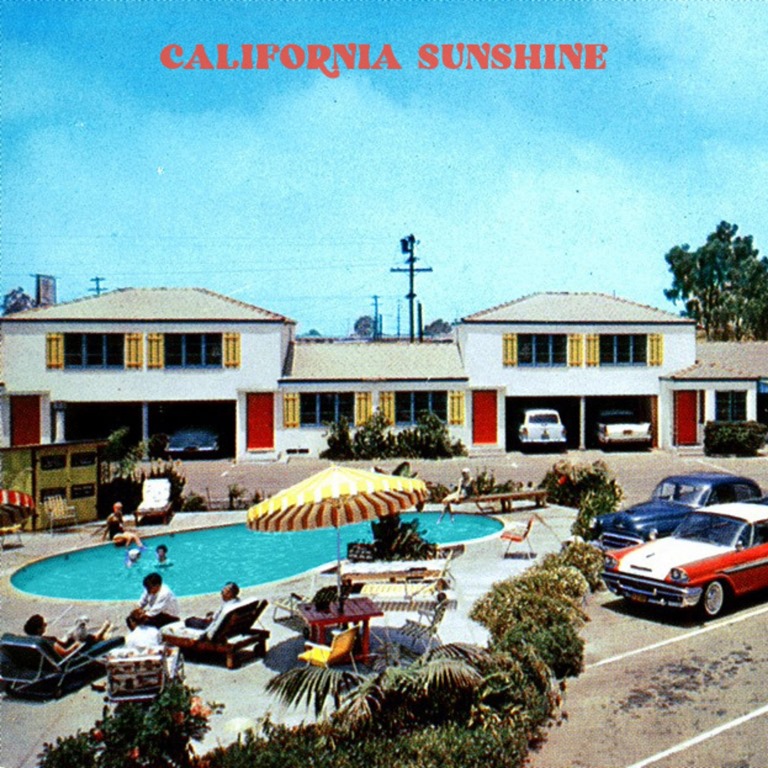
There’s something TV / movie aspirational about California, the so-called Golden State which is renowned for its beaches and of course, Hollywood. With so much media propagating this image of sunkissed perfection and carefree living and celebrity lifestyles – often soundtracked by breezy ‘summer’ tunes, it’s no wonder it’s acquired a status that’s almost mythological over and above the reality and that it’s a popular travel destination.

But it’s 29֠C in the shade in my back yard and anyone with aspirations of travel should simply step outside and feel the melt. And if you want to enhance that sunny, summery vibe that’s a cut above the bland-as-fuck Radio 1 wallpaper, then Family Jools’ ‘California Sunshine’ is a solid choice. It’s got some strong classic rock vibes with some strong lead guitar work, whipped together with a really nice strolling bass that hits a nagging groove without being too much funk. In fact, there’s not too much of anything, and Family Jools deliver easy without being corny, and without the technicality of their playing being an obstacle to delivering a good tune. Nice.

CALI SUN ART 2000x2000

20th July 2021

Christopher Nosnibor

More than I dislike talking politics or sport with colleagues and strangers, I feel most uncomfortable talking about music, because unless their leanings are, it’s almost guaranteed that we won’t hare similar tastes or knowledge. Usually, it’s a case of my hating everything they love, and their not having heard of anything I listen to. There’s no middle ground there: even if I feign an interest, nod and smile, where is there left to go?

And so I do often wonder about press releases, specifically the influences artists cite. In the more fringe fields of obscure metal, ambient, and electronica, esoteric reference points abound, perhaps because to an extent obscurantism carries a certain coolness and cachet. In more commercially-leaning circles, the opposite tends to be true. Artists aiming for a broad acceptance tend to cite artists who are well-known to the point that they’re essentially household names.

This isn’t to single out Jack Caine by any means, but his listed influences – Bob Dylan, The Beatles, Leonard Cohen, Tom Waits, Patti Smith, Arctic Monkeys, Joni Mitchell, The Smiths – feels incredibly ‘standard’. Are these really his influences? Maybe – it could really be that most people who make music listen to the same well-known artists. I also have a personal discomfort with citations of The Smiths, a band I loved with a deep passion in my teens, but have since struggled to relate to in my thirties and forties, and with their memory sullied by the colossal twat Morrissey has confirmed himself to be.

Of course, even music that is very much an evidential sum of its parts should be judged on its own merits, and while ‘derivative’ clearly bears heavily negative connotations, the assimilation of tropes and absorption of influences is, in itself, no bad thing per se. It’s all in the delivery, and for all this, ‘All in a Day’s Work’ is an accessible, melodic middling tune with hints of classic vintage indie and pop when pop wasn’t slick, manufactured, mechanised, digitised – and it’s well-executed. It has spirit, it has soul.

Building from a muted electric guitar played clean, over which Caine paints a kitchen sink scene, the bass begins to get twitchy and the muffled drumming begins to push things along and you just sense it’s going to break sooner or later… and then it spills. It’s a great single, with dynamics, energy, and emotion, and hooks.

su22432-Jake_Caine-All_In_A_Days_Work-Jake_caine_19

2nd July 2021

Christopher Nosnibor

Did I ever mention that I am absolutely fucking swamped, every single day, to the extent that while I’m working the dayjob, I’ll; see emails flowing via notifications on my phone, and by the time I actually get to check my emails on an evening, I just stare bewildered, wondering where to begin? And so often, I don’t even. It’s not a complaint, and the fact of the matter is, that while I barely even open 10% of my emails, the standard of music is such that daily, I’m probably missing out on at least half a dozen acts who could utterly blow me away.

It’s a good job I didn’t pass on Yammerer: I felt a certain urge to pass after a day of corporate backslapping being posted on the company’s Yammer community, but something drew me in. The words dystopian and existential in their write-up more than likely. That, and references to WIRE and The Dead Kennedys. It certainly makes for an intriguing cocktail, and despite it’s cumbersome title that hints at noodlesome post-rock, ‘Tell Me What the Ancient Astronaut Theorists Believe’ is a manic blast of energy, raucous and raw. It’s a giddy riot of off-key half sung, half spoken vocals amidst a blurred whirl of space rock guitars, a thunderous, strolling bass and relentless, motoric drums. It’s kinda chaotic, and reminds me of the swirling twelve-minute encore segues of ‘Ghostrider / Sister Ray’ the Sisters of Mercy used to kick out live circa 1984 – dark, murky, hypnotic, vaguely psychedelic, and utterly absorbing.

There is, however, one major shortcoming of this single: at three minutes and eleven seconds, it’s about twenty minutes too short.

Artwork3000x3000

CONFIRMED TOUR DATES 2021

29/08 – Alexanders Live / Chester

11/09 – Futurama Festival / Liverpool

24/09 – Smithdown Road Festival / Liverpool

07/10 – Focus Wales / Wrexham

06/11 – Hot Box Live / Chelmsford

19/12 – The Castle Hotel / Manchester

25th June 2021

Christopher Nosnibor

The older you get, the weirder things get. On the one hand, the generational gap widens by the day, but on the other, you see thing come full circle, and faster. Growing up in the 80s, the fact of the matter is that my parents had abysmal taste in music, both contemporary and of their era. My mum would groove to Phil Collins and Tina Turner and Paul Young Van Halen and the fucking Bee Gees while ironing, while my dad hadn’t bought a new LP since Steeleye Span’s ‘All Around My Hat’. Car journeys on family holidays were a real hoot, what with Leo Sayer and 80s Cliff Richard tapes alternating with Now That’s What I Call Music 1 and 2. Philip Larking was right: your parents fuck you up in ways they don’t even realise. However, the point is that increasingly, new bands are turning to their parents’ rather cooler collections and discovering the likes of Nirvana, Pavement, Weezer, Teenage Fanclub and Pixies – and Sweethearts are a case in point.

They’re pitched as standing at the forefront of the 90s resurgence, but for some of us, the 90s never ended, especially for many of those who were in their teens and early twenties at the time and are around 4 now. Midlife crisis? Maybe. But then, for many, music stops when they hit 30, and I’ve spent the last fifteen years listening to peers bemoaning the lack of any decent new music. They’re all wrong, of course: there has been innovative and exciting new music released every year since the beginning of music. It just happens that none of the music of interest has received any kind of mainstream attention for a long time. But it’s all out there if you know where to look.

You wouldn’t call ‘If I Could I Would’ innovative, but that isn’t the point: this is a classic example of a band drawing on their influences, which so happen to reach back a generation – and distilling them into a strong and potent mix. ‘If I Could I Would’ is a melodic grunge-leaning slice of college rock, but there are some obvious indie features spun into the composition, not least of all the lead guitar part that spins its way around the rhythm section like a tripwire.

Lyrically, the song explores the limitations of desire and capability, and the song’s hook is a neat piece of circular, self-negating logic: ‘If I could, I would, but I can’t so I couldn’t’. It’s not nihilistic, just more a slackerist ‘meh’, and with its nostalgia-inducing retro musical backing, it’s the perfect summary of the listlessness of the zeitgeist.

Sweethearts - Artwork

Bearsuit Records – 25th June 2021

Christopher Nosnibor

Home of all things odd from Edinburgh and Japan, Bearsuit Records, has a new signing, in the form of Edinburgh-based singer/songwriter Eamon the Destroyer. Eamon also records as Annie & The Station Orchestra, and is one half of Edinburgh purveyors of noise Ageing Children, both of whom have received mentions here. If his name has the hallmarks of a mythical war deity or some evil comic book character, his music is altogether less megalomaniacally threatening. The press blub describes it as ‘lo-fi miserablism with a side order of noise / mumbling & whispering – or something’ – and on hearing these two tracks, which serve as a lead-in to Eamon’s debut album, A Small Blue Car – this vagueness makes perfect sense. And, of course, like most Bearsuit releases, it’s about the only thing that does.

It’s rather welcome to see a release that resembles a conventional A-side / B-side single release in 2021, and what’s noteworthy about this one is that the two tracks are actually quite similar, sonically and stylistically, leaving no confusion as to what the Destroyer’s sound is.

Against a minimalist backdrop of quite country guitars, the Destroyer croaks flatly about, well, what, I’m not entirely sure – every line seems to turn on a contradiction or some bathetic construction, like ‘Nobody knows it / well nobody ought to’. Instrumentally, it’s sparse and scratchy, and the vocals sound like they’re coming from a CB radio that’s only just tuned to the edge of the channel. But in the mix there’s a scrape and chatter of extraneous background noise and some cronky feedback, and around the mid-point of ‘My Drive’ it takes a massive left turn into altogether louder territory.

The whole vibe is downbeat and melancholy, and driving emerges as a theme in ‘Silver Shadow’, alongside some vague but wistful images that drift around in a wash of sad, Cure-esque synth and a crashing tide of distortion. It’s more mood-affecting than you would likely expect, and while very much appreciating the unusual mix, it left me feeling downcast and slightly sad, which is a clear indication that either I’m heading for a mood slump, or there’s more craftsmanship to Eamon’s songs than the surface suggests.

AA

a2426643261_16

Fierce Panda Records – 2nd July 2021 

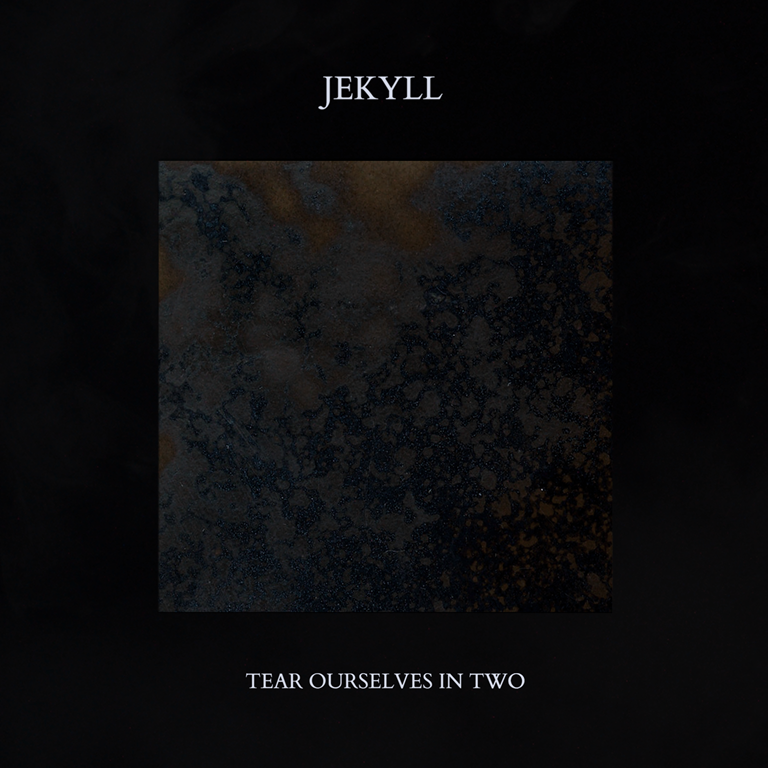
Blackpool’s Jekyll – like so many up-and-coming bands – have seen their momentum, largely driven by hard-gigging to build a grassroots fanbase, hit a brick wall since last March, but their first release of 2021 looks set to launch them on a huge leap forward, not least of all because it comes with the backing of cult indie label Fierce Panda.

On first listen, it seems like a palatable mid-pace indie-rock anthem, but even before the fade, it becomes apparent that there’s more to it than that.

The story goes that ‘Tear Ourselves in Two’ was initially conceived to counter-balance one of Jekyll’s earlier tracks ‘Mania’ (which comes on like the criminally underrated and much-missed The Cooper Temple Clause) and it’s hard to resist the urge to make some reference to them as a band with two sides to their musical personality, but that would be obvious and rather lame. Oops, I did it again.

As ‘The Wounds We’ve Ignored’ demonstrated, Jekyll don’t only dig Muse, but dig deep emotionally and touch some pretty uncomfortable spots, and this is no exception. The lyrically dark ‘Tear Ourselves In Two’ has hints of many other songs, all stitched seamlessly together to conjure a simultaneous sense of familiarity and familiarity and freshness – as you struggle and strive to dredge the depths of your memory to decipher what it is it reminds you of, you come to realise that ultimately it doesn’t matter. Then again, on maybe the third or fourth listen – and it’s that much of an earworm, it hits that it’s a bit Pulp meets Mansun meets The Cinematics – and that their knack for bold, string-swept audiography is immensely powerful.

‘Tear Ourselves In Two’ is, quite simply, a corking tune and one that just gets better with every play.

4th June 2021

James Wells

Pounding drums propel a driving, overdriven lead guitar and chunky riff on this rather interesting rock hybrid. On the one hand, it’s got the balls and bluster of QUOTSA and the contemporary stylings of Foo Fighters, but ‘Run’ is also strongly melodic and kinda jerks and jangles in a way that speaks to a more lineage of influence that goes back more toward 70s rock acts in the vein of Cheap Trick and even a dash of Tom Petty.

In drawing on so many comparisons, I’ve possibly failed to convey the band’s own style and sound, which is altogether more coherent than may first appear, and ‘Run’ packs a solid chorus and a strong sense of melody and punches it out with real energy. In short, it’s good stuff.