Posts Tagged ‘saxophone’

Sinners Music – 1st October 2025

Christopher Nosnibor

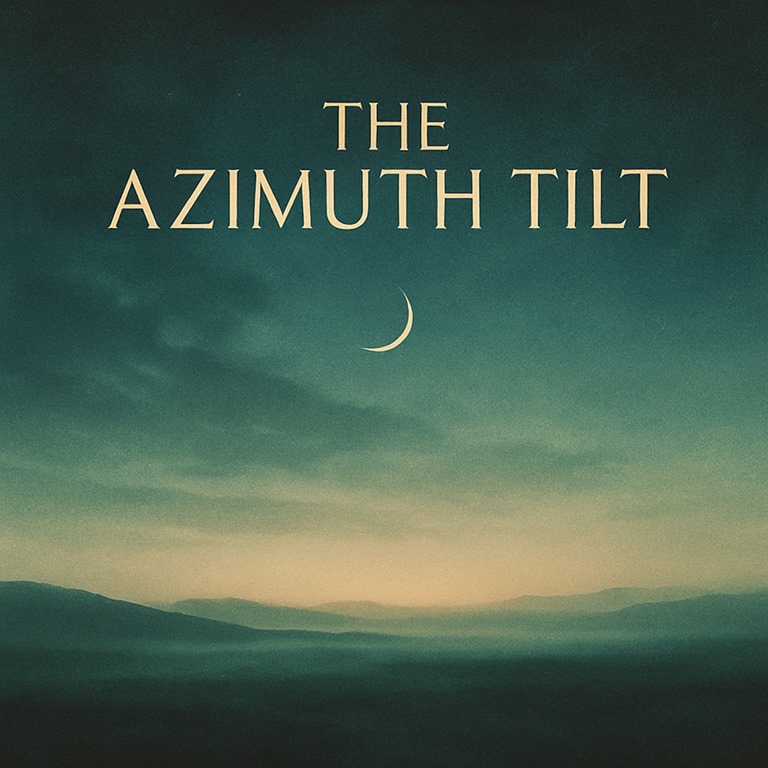
Sinners Music – the label established by electronic music maestro and one-time music shop owner, Ian J Cole, continues to offer up new music that’s interesting and unusual. There are some context where ‘interesting’ is somewhat dismissive, diminishing, and people of a certain age will remember snooker legend Steve Davis being given the nickname of Steve ‘Interesting’ Davis ironically… although the double irony emerged that he was genuinely interesting, as his work with The Utopia Strong abundantly attests. Here, my use of ‘interesting’ is neither ironic nor dismissive: it’s meant sincerely, as there is no specific ‘house’ style or overt genre specificity evident. This is one of the reasons why boutique microlabels can be worth following – you never know quite what you’re going to get from them, but you can guarantee if won’t be ordinary. And this release by no means ordinary.

As for The Azimuth Tilt, their bio informs us that this is the work of ‘a solo ambient electronic project exploring the liminal spaces between sound, memory, and landscape. With a name drawn from the alignment of a real to reel tape head, the project orients itself toward the unseen—subtle shifts in perception, emotional resonance, and the hidden geometries of the natural world… Blending atmospheric textures, glacial rhythms, and immersive sound design.’ There are no clues as to who this is the project of, but it matters not, and in fact, the less we know, the better. This is the joy of abstract ambient works: all you need is the sound, and all you need from the sound is to let it drift, to carry you away. And this is what Alignment does.

On a certain level, it does very little. On another, it is a quintessential deep ambient album. Alignment features just six compositions, but has a running time of some fifty-seven minutes. The soundscapes which define it are sonically rich, with soft, drifting, cloudlike contrails merging with lower drones and contrails. In combination, filling the entire sonic spectrum, Alignment does a lot.

From nowhere, halfway through ‘An Unqualified Person’, a raucous sax breaks out.

And the layers build. Against scrawling spacious drift, it’s quite a contrast. And then there’s some subtle piano intervention, and from hereon in, the piano and sax alternate in leading. It’s nice… and not in a turtle-neck top kind of way. It’s nice but… a little strange. But ‘The Exquisite Space’ crackles and swirls abstractedly, with some supple motifs rippling and intertwining with a mellow mood exploration which arrives at more sax. Always more sax.

This seems to be a dictum The Azimuth Tilt are happy to follow, although it’s melted into the echo-soaked atmospherics of the final track, ‘And the Band Played On’. Alignment is not a dark album, but it’s one which feels unsettled, uncomfortable, unsure of its destination – and whatever it may be, the journey is worth the exploration.

AA
a0054555481_10

Subsound Records – 18th April 2025

Christopher Nosnibor

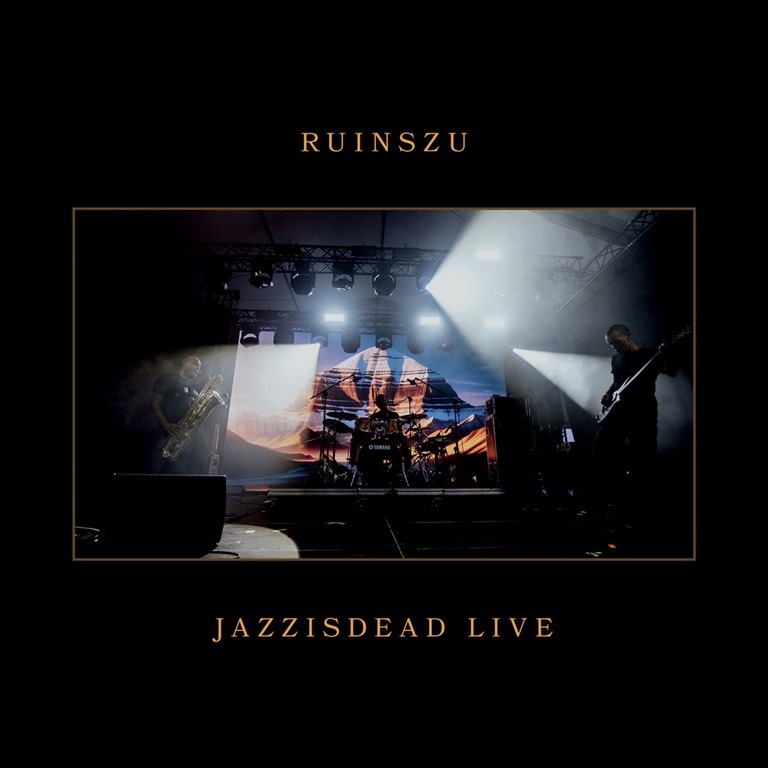
Twenty-eight years and fourteen albums into their career, Zu continue to confound, and to defy comfortable categorisation. Jazzisdead, their first release in six years, is their third live album. It’s most certainly not, however, a set comprising live renditions of greatest hits and fan favourites, and instead being a collaboration between Zu bassist Massimo Pupillo and saxophonist Luca T. Mai, with drummer Yoshida Tatsuya, founder of the Japanese band Ruins – and as such, the moniker follows in the vein of Zu93 (Zu with David Tibet of Current 93). The result, then, is a crazed hybrid of punk, sludge metal and jazz driven by some frenetic full-kit drumming.

‘Gravestone’ kicks it off with a thunderous riff and it’s a track that wouldn’t sound out of place on a Melvins album, while the frenzied ‘Speedball’ comes on like The Dead Kennedys but with some wild falsetto vocals and a blustering blast of sax. How is this even possible?

There are some more sedate passages, but they seemingly exist as tricks to convince you that they’re capable of delivering something more conventional: the introduction to ‘Asmodeo’ is gentle, atmospheric, and it’s almost soothing – but halfway through, it’s explodes in a riot of honks and parps, drums flying in all directions, and each composition slalems hither and thither: at times they’re tightly together, at others , the three instruments play across one another at wildly divergent angles, as if playing three completely different tunes – and yet somehow there’s a groove happening.

‘La Grande Madre Delle Bestie’ features some eye-popping machine-gun snare work before slithering to a swampy crawl, and the thing about Jazzisdead is that it’s simply impossible to second-guess what’s going to happen next. Repeat listens don’t render the work more familiar, but instead reveal entirely different albums. Elsewhere, ‘Hyderomastgroningen’ is a lumbering beast that brings a grungy swagger that brings hints of the Jesus Lizard. However, it’s perhaps Melt Banana who stand as the closes comparison to this in their crazed and irreverent approach to music-making, and this is nowhere more apparent than on ‘Memories Of Zworrisdeh’, the album’s longest track with a running time of five minutes, and which packs in an album’s worth of ideas into that time. ‘Muro Torto’ is another track of two halves, with long, groaning drones giving way to an almost ska-like bouncing thumpalong. Predictable, this is not.

There are several pieces which are but fragments, intersecting passages a minute or two in duration, and these only add to the experience of an album so packed with changes in tempo and key that it’s most discombobulating. It’s dizzying, jaw-dropping, impossible to keep up with, and the interplay between the players is remarkable. Ultimately, Jazzisdead makes for a hell of a listen – although you might need to lie down for a bit afterwards.

AA

a3703079166_10

Unsounds Records – 1st November 2022

Christopher Nosnibor

Andy Moor has been nothing if not prolific over the course of his career, which is now well into its fourth decade, and his collaborations are truly multitudinous. He’s one of those musicians who clearly thrives on this approach to working – as comfortable contributing as steering his own path.

I’ve covered a fair few of his efforts over the last decade and a bit, both here and elsewhere – with my belated introduction in 2011 arriving via his appearance on Anne-James Chaton’s ‘Transfer /2: Princess in a Car’ single release.

Moor’s style is by no means accessible or easy, and is as distant from mainstream as is possible, but it’s highly distinctive, and this is unquestionably a significant part of his appeal, both to listeners and fellow musicians.

For this work, the accompanying notes explain how ‘Christine Abdnelnour and Andy Moor have explored the notion of hypnagogia or ‘unprotected sleep’ to drive their process for this improvised album, delving in their own experience and memories. Unprotected sleep is commonly defined as an altered state of consciousness that occurs beyond the proper or intended time of waking up, not sleeping in your own safe bed, or even sleeping without a blanket. Being slightly out of phase, one is vulnerable, fragile, but the mind is at the same time very fluid, ultra-associative with an extraordinary memory. In their music making Abdelnour (saxophone) and Moor (guitar) explore the possibilities of real and hallucination sounds and ranges that might come with deep dreaming.’

I had never known that this was a term before, but that it exists speaks on multiple levels, and on a personal level. Sleep is one of the most vital of human functions, but also the most neglected. I’m writing this at 11:30 at night after starting work at 6:30 this morning; five hours of sleep disturbed by lengthy anxiety dreams and broken by the occasional nocturnal anxiety attack is standard. I’m by no means alone in my difficult and often antagonistic and troubled relationship with sleep.

On Unprotected Sleep, Christine Abdelnour and Andy Moor soundtrack the traumas of troubled sleep magnificently. Moor’s scratchy guitar is both metronomic and agitatingly atonal, forging an aural representation of the head-nodding fatigue that so often sweeps over while challenged by needling thoughts that prick a way to wakefulness, or otherwise nag at the psyche

The heavy, grating drone of ‘80db is Loud if You’re Snoring’ ret with scraping guitars and squawks and scrapes if feedback before surging amongst the clattering of cans and escalating to a peak that will inevitably collapse. It drones and groans, and ultimately fades out.

On ‘Compartment 5’, the drone reaches an oppressive level, and it’s enriched by a blank, drony thrum. The density grows, as does the intensity, and it reminds me of the hours spent turning over and over, unable to find that right position, unable to get comfortable, and unable to that headspace conducive to settle to rest: instead, everything is an awkward, uncomfortable churn, accompanied by an unsettling sense off impending doom. The ‘Exchanging Oversize Chrome Objects’ brings a head-pounding crashing beat and uncomfortable churn that’s deeply unsettling, and there’s an uneasiness that permeates the album as a whole.

For many, the experience, if not necessarily the specific sounds, will resonate. Unprotected Sleep is a far from relaxing or soothing sonic experience, built on drones and dissonance, lurching atonal wandering guitar parts and inconsistent tempos that butt against low-key but uncomfortable saxophone drones and honks. Enjoyable is not the word, but compelling most certainly is.

AA

74U_front

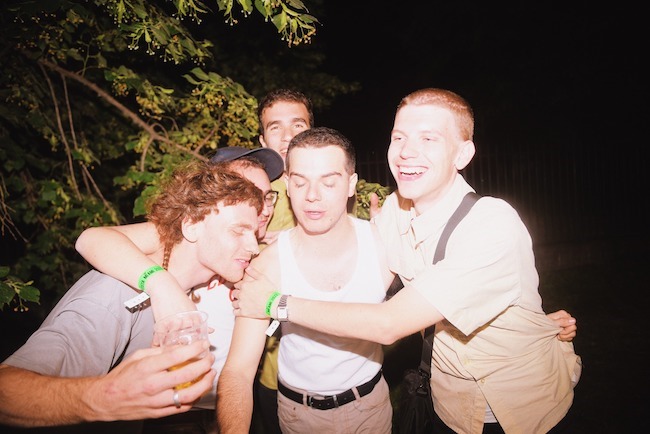
To coincide with the release of their debut album Fiesta, Leatherette have shared their latest single ‘Thin Ice’, a turmoiled love song about taking risks. They explain: “Musically, it’s a nervous mid-tempo post-punk-ska orchestral tune, sort of Talking Heads-esque. Lyrically, it is quite representative of our approach, both as people and as a band. An approach that can be summed up by the famous Winston Churchill’s quote: ‘If you’re going through hell, keep going’. We learnt, as musicians and young adults, that things tend not to work properly way more often than they do. But it’s not a big deal, It’s actually what makes life, love and art so special”.

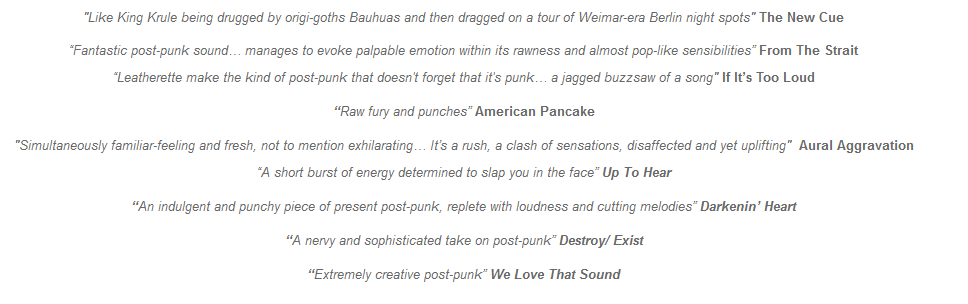
We loved previous single ‘Sunbathing’ so much we even made the press release for this one. Look at those quotes! They’re all on the money, too.

image

Listen to ‘Thin Ice’ here:

AA

5tqs_Leatherette650

Thanatosis – 7th May 2022

Christopher Nosnibor

Within Reach of Eventuality is the debut album by Swedish duo David Bennet & Vilhelm Bromander. Their notes on the album state that ‘Following a semi-open score, the duo is treating elements such as complex textures, non-pitched sounds, microtonality, beatings and intense pauses in an improvisatory and careful manner’.

I’m not entirely sure what that means, and I’m not certain of the meaning of the album’s title, either. It feels like it almost carries a sense of significant import, but then is equally so vague as to be almost abstract. And in a way, it’s representative of the four pieces on the album. There’s a grainy scratching flicker of extraneous noise running along in the background during ‘Part I’, like a waterfall in the distance, while in the foreground, elongated drones – atonal strings or wavering feedback – hover around the pitch of nails down a blackboard. Occasionally, more conventionally ‘orchestral’ sounds – emerge fleetingly – gentle, soberly-paced percussion, string strikes and soft woodwind, and it comes together to create a somewhat ominous atmosphere.

It’s a hushed, minimal ambience that fades out towards more sonorous drones that ebb and flow across ‘Part II’, and as the album progresses, the interplay between the tones – and indeed, atones – becomes more pronounced, and also more dissonant and consequently more challenging, as long, quivering, quavering drones rub against one another.

The structures – such as they are – become increasingly fragmented, stopping and starting, weaving and pausing. There is a sense of a certain musical intuition between the players, the rests coming at distances that have a sense of co-ordination, if only as much to confound expectation as to sit comfortably within it. In other words, Within Reach of Eventuality feels like a semi-organised chaos, and as it slowly slides towards the conclusion of the sixteen-minute fourth part, the sound thickens, the volume increases, and the atmosphere intensifies, become more uncomfortable in the process. And in this time, the meaning becomes clearer when it comes to understanding their approaching the sonic elements in a ‘careful manner’. There’s nothing remotely rushed about Within Reach of Eventuality. The notes are given space and separation, room to breathe. It all feels very considered, very restrained: it’s no improv free-for-all, there are no frenzied climaxes or blasting crescendos. Instead, they demonstrate a sharp focus on a fairly limited range of sounds and spaces, and the result is an album that has a strong cohesion.

AA

a4211091835_10

Gas Lit is the new album by the multidimensional duo Divide and Dissolve, incoming on Invada Records on 29th January, and produced by Ruban Neilson of Unknown Mortal Orchestra. The album is preceded today by the second single and powerful video “Denial” which encapsulates their message behind the music: to undermine and destroy the white supremacist colonial framework and to fight for Indigenous Sovereignty, Black and Indigenous Liberation, Water, Earth, and Indigenous land given back.

Divide and Dissolve’s mighty new single “Denial” is a potent blend of ominous and unsettling sax that blows wide open into colossal riffs for almost eight glorious minutes. The accompanying video was shot in Taupo, Aotearoa by notable indigenous music video director Amber Beaton at the end of the southern hemisphere’s winter.

The vibrant, unfolding colours and delicate personality of the flowers at the beginning of the film have the potential to be in contrast with the intro of the song, but it’s actually escorted by it perfectly. It’s further varied with the colossal boom signalling the arrival of the guitars and drums while visually we start to explore the thermal grumblings of the Taupo volcanic zone. We follow the Huka falls/Waikato awa (Waikato river) up stream to settle into Taupo-Nui-A-Tia moana (Lake Taupo) as the return of the sax lulls us gently after being nourished so generously by Divide and Dissolve’s signature gargantuan tone. Thanks are given to the local Iwi\tribe Ngāti Tūwharetoa, the rightful guardians of the whenua/land and to Rūaumoko the god of volcanoes, earthquakes and the seasons.

Watch ‘Denial’ here:

AA

thumbnail_DivideandDissolveimagebyBillyEyersloresforannounce

Divide and Dissolve image by Billy Eyers