Posts Tagged ‘Sacred Bones’

Sacred Bones – 23rd August 2024

Christopher Nosnibor

You know that when the bio for an album’s release is prefaced by a trigger warning, this is going to be some pretty powerful stuff. But this being a Uniform album, it almost goes without saying. Since their inception, they have gone all-out on every level, with the harshest noise providing the backdrop while Michael Berdan strips his skin to make the most brutal, unbridled, rawest expositions of the human condition, invariably born out of his own personal traumas.

I’ve often wheeled out the line that in the personal lies the universal, and even where there’s no direct correlation in terms of shared experience, the articulation of extreme emotions often provides a vessel whereby the outpouring of an individual’s catharsis offers a chalice into which others may pour the flow of their own emotional stigmata. If the metaphor seems a shade overwrought, bear with me.

Uniform is, unquestionably, a vehicle through which Berden vents endless pain and anguish. He’s a troubled person, and he’s open about this, to the extent that it’s more than just a but uncomfortable. But this isn’t some kind of trauma porn ride: the appeal of Uniform is this raw honesty, the absence of filter. You know – and feel – this is real. It’s not a case of manipulating the listener’s emotions, but an example of creativity as a vital outlet, a survival mechanism, even. It doesn’t exist for anyone’s entertainment. And with each release, Uniform, seem to find new heights of intensity, and new levels of sonic brutality, while dredging new emotional depths.

Shame felt like a gut-wrenching pinnacle which would be difficult, if not impossible, to surpass – but then, so did The Long Walk. In this context, it should come as only small surprise that American Standard goes even harder and harsher, but the simple fact is it would hardly seem possible. But here we are.

In the run-up to the release, Berden has spoken / written openly and in detail about his struggles with bulimia, and the fact that over many years of managing alcoholism and having come to a point whereby this is no longer a taboo topic, breaking down this particular wall has felt altogether harder.

Even the preceding singles, ‘Permanent Embrace’ and ‘This is Not a Prayer’, could not have provided anything like adequate forewarning of the intensity of the album as a whole.

I shall quote, while I take a moment and steel myself for this:

“The following songs are about a lifetime of making myself vomit,” Berdan writes in the personal essay that accompanies the album. His pain is so apparent, so immediate, that it feels like hearing someone scream for the very first time. “There’s meat on my face, that hangs off my face, sweats like I sweat, cries like I cry.” The music finally begins with those words, not in a glorious crash and clatter but in the tones of a gurgling drain. This is the sound of liquid moving through pipes that are full to the point of bursting with things usually hidden inside of stomachs and behind mental walls.

It all starts with an admission. Beneath the harrowing screams, there’s the pain of bulimia nervosa. There’s the pain of a sickness that is as physical as it is psychological. This is a kind of coming out. This is a kind of emergence. A far cry from edgy provocation or high school level transgression, this is something truly unacceptable.

As one might fear, this is just the beginning. As Don Delillo once wrote, “There are stories within stories.”

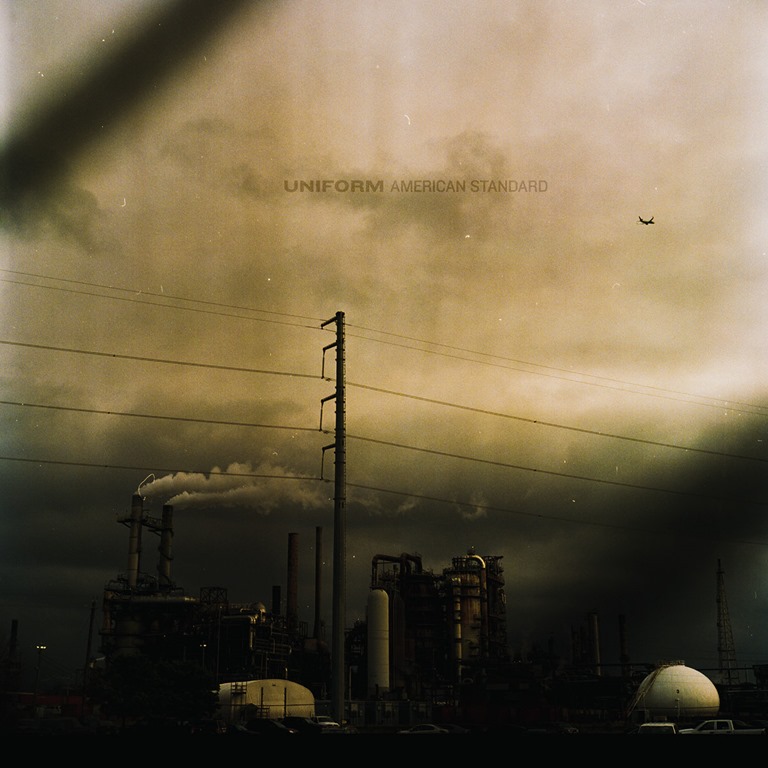
American Standard contains only four tracks, but the first, the title track, is fully twenty-one minutes long is the definition of harrowing. It’s a massive departure, in that with perhaps the exception of their 2015 debut, their compositions have conformed to the fairly defined structures, often with verse and chorus structures built around chord sequences and the arrangement of the percussion.

After an intro that can only be described as a scream of pain, ‘American Standard’ lurches into life as a churning throb of noise, and Berden’s bonne-rattling roar is only just audible amidst the pulverising fizz. When the power chords kick in, they’re like a full-on slam to the guts. Around the nine-minute mark, some keys enter the mix and there’s almost a redemptive tone, at least in the music, but Berden’s vocals continue to articulate the upper reaches of anguish. This is a different kind of purging from the subject matter – a flaying, emotional purging, a release of all of the years of torture and self-flagellation, distilled to the highest potency. It’s the barely human sound of breaking, breaking, emptying, over and over. The lyrics may not be easy to decipher, but the excruciating pain Berden articulates in their delivery is unmistakeable as he howls his larynx to bleeding shreds amidst a thunderous cacophony worthy of Swans live performances. If it’s not the heaviest shit you’ve heard all year… well. Just making it to the end of the title track is a thoroughly draining experience that leaves you feeling utterly spent.

The pounding machine-gun drumming, squalling, atonal synths and booming bass blasts of ‘This is Not a Prayer’ offer no respite, the layers of vocals, all screaming in pain, is beyond punishing: you feel your chest tightening and breath growing shorter with each intake, your throat clenching. The sheer physicality of the piece – which they sustain for a relentless six and a half minutes – is a panic attack in a can.

If the introduction to ‘Clemency’ swirls into ambience, it’s a bilious, nauseating brew of sulphur and fumes that festers just long enough to unsettle before the hardest percussion and the dirtiest guitars lurch in and everything becomes intensely claustrophobic. Again, there’s no oxygen, you’re constructed by the density and sheer relentlessness of it all. And it slams away like a lump hammer for almost eight minutes. The arrival of ‘Permanent Embrace’ feels like relief, of only for its brevity. There are some uplifting synths in the mix, but it’s the most savage finale they could have mustered.

The last time a record affected me this intensely in a physical way was over thirty years ago, when at the age of fifteen or thereabouts, having been introduced to Swans by way of Children of God, I picked up a copy of Cop at a record fair. I found it hard to conceive the record was actually revolving at 33rpm: it felt more like three, as time stood still and I felt my body being compressed by its crushing weight.

American Standard is certainly anything but standard. It goes beyond – way beyond – harrowing, or heavy, in any sense that words can easily convey. It’s the hardest listen. It simply hurts. But you know that this was the album they had to make. Forget your discomfort, and feel the pain.

AA
a2313479398_10

Sacred Bones – 31st May 2024

Christopher Nosnibor

‘This record is for the radicals, the crackpots, the exiles who have escaped the wasteland of capitulation. This record is for the militants and zealots refusing to surrender to comforts, to practicalities, to thirty pieces of silver. And this record is most especially for the weaklings and malingerers, burdened by capricious indulgence, hunched by the deep wounds of compromise, shuffling in limp approximation, desperately reaching back towards integrity and conviction.’

So Thou sell us their latest album, their first since Magus in 2018. And in this way they prepare us for a release which has no easy or comfortable positioning other than in the realms of outsiderdom. It was, of course, ever thus, their bio reminding us that ‘Thou transcends genre boundaries, drawing inspiration from a diverse array of influences spanning from ’90s proto-grunge icons like Nirvana, Alice in Chains, and Soundgarden (all of whom they’ve covered extensively) to the raw intensity of obscure ‘90s DIY hardcore punk found on labels like Ebullition, Vermiform, and Crimethinc.’

Coming into my mid-to-late teens in the early 90s, it’s hard to overstate the impact and importance of the advent of grunge, the breaking through of Nirvana, Alice in Chains, Soundgarden (who I wasn’t personally a fan of, but even at the time recognised their merits); this was a new wave of music which really spoke for us at that time, articulating the rage and disaffection. Put simply, grunge was our punk.

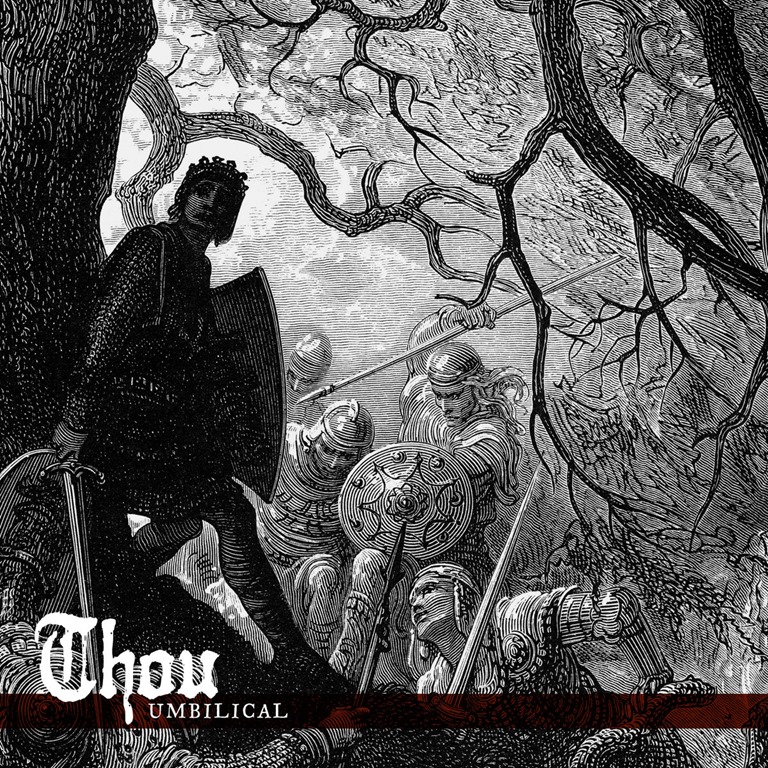
Times have changed, but by no means for the better: now, there is even more reason to be incendiary with nihilistic rage. And with Umbilical, Thou give voice to that rage. To say that they articulate it would be a stretch: the lyrics are completely unintelligible, a guttural howl spat with venom from the very pits of hell.

The titles are reflective of our times: ‘Narcissist’s Prayer’; ‘Emotional Terrorist’, ‘I Return and Chained and Bound to You’, ‘Panic Stricken, I Flee’ – these are all summaries of varying traumas, of deep psychological challenges. We’ve seemingly got better about discussing these things, bringing trauma out into the open and breaking down the walls of taboo, and in the process it’s become apparent that nearly everyone has suffered some trauma, but worse than that, the sheer extent to which Narcissism and abuse is rife is now beginning to emerge.

The guitars on ‘Lonely Vigil’; billow in blasts of nuclear detonation, the sound of sheer annihilation as the overloading wall of distortion decimates all before it. And then things step up even further with ‘House of Ideas’. Wails of feedback trace desolate trails amidst a landslide of the heaviest, most shredding deluge of sludge, and it feels like the idea that sits first and foremost is total destruction. Given the track record of major corporations and governments around the globe, this would seem a fair summary. Over the course of six-anfdf0three-quarter minutes, it scales heights of elevation paired with the deepest of trudging riffery.

‘I Feel Nothing When You Cry’, released as a single not so long ago, is the pinnacle of brutal nihilism, and ‘Unbidden Guest’, which follows immediately after plunges still deeper into the abyss. It’s a torturous experience that drags the listener to hell by the hair, and simply drops them there. ‘The Promise’ arrives as a surprise: a straight-up, no messing grunge metal stomper.

On Umbilical, Thou bring the riffs alright. By which I mean it’s fucking brutal. It’s not heavy: it’s hellish. It’s the sound of raw anguish, of unfiltered pain, and simultaneously an outpouring, a ceaseless spewing of untrammelled emotional tumult. There’s a purity to it which is powerful beyond words.

AA

a3170193588_10

Today, Thou share ‘Unbidden Guest’ from their upcoming album, Umbilical.

About the track, Bryan Funck comments, “Physical deterioration by way of psychological disarray. Retreading a well-worn path of self grievance. Othering mental illness and learned behaviour in order to crush them under the dominance of epistemic willpower. ‘The last time you cried, who’d you think was inside?’”

Listen to ‘Unbidden Guest’ here:

Thou has always been a force of raw energy and unapologetic dissent, defying easy categorisation and challenging listeners to confront the complexities of existence. Their forthcoming album, Umbilical, is their firmest nod to the raw intensity of obscure ’90s DIY hardcore punk. It’s a record filled with mosh-ready riffs, heavy breakdowns and scathing vocals. The band’s aesthetic and political impulses have always been punk and like anyone embroiled in the subculture Thou have been exploring what it means to exist within and without a rigid morality. That exploration takes thematic centre on Umbilical and their self-assessment is as harsh as that of the world around them.

Thou

Photo credit: Liam Neighbors

"They’ve called us anarchists, criminals, foreign meddlers, lunatics, dispossessed, relativists, utilitarians, egoists, passion maximizers, ascetics, negators of everything. Clearly, the "Thou" experiment is never going to appeal to audiences who demand that art rigorously enforce a coherent and righteous worldview.
And yet, are we not ourselves constrained by our own rigid morality? In those quiet moments of deep contemplation, when the bargains and concessions are thoroughly examined, when we yield before the Judging Eye–what is the summation of our choices? If the unspoiled self beyond the immensity of time were given voice, what pronouncements would be made? What would such an internal audit yield? What undeniable character would be revealed?

This record is for the radicals, the crackpots, the exiles who have escaped the wasteland of capitulation. This record is for the militants and zealots refusing to surrender to comforts, to practicalities, to thirty pieces of silver. And this record is most especially for the weaklings and malingerers, burdened by capricious indulgence, hunched by the deep wounds of compromise, shuffling in limp approximation, desperately reaching back towards integrity and conviction." – Thou

Thou has always been a force of raw energy and unapologetic dissent, defying easy categorisation and challenging listeners to confront the complexities of existence. Their forthcoming album, Umbilical, is their firmest nod to the raw intensity of obscure ’90s DIY hardcore punk. It’s a record filled with mosh-ready riffs, heavy breakdowns and scathing vocals. The band’s aesthetic and political impulses have always been punk and like anyone embroiled in the subculture Thou have been exploring what it means to exist within and without a rigid morality. That exploration takes thematic centre on Umbilical and their self-assessment is as harsh as that of the world around them.

Today Thou share their seething lead single and album centrepiece, “I Feel Nothing When You Cry” of which the band tell is “A throwaway mantra scraped from the necrotic skin of syndicated television. A lugubrious nod to our favourite commode-crooning diva, one of her most diabolically terse lines. With the sweet, sultry whispers of a legendary New Orleans faerie. This might be as close as we’ll get to a positive, youth crew anthem. ‘This song has nothing original or of value. It’s a steady beat for dancing feet. You got what you wanted, now say the words…’”

Listen to “I Feel Nothing When You Cry” here:

Thou Live Dates:

Apr 13: New Orleans, LA – Palestine Benefit at Fred Hampton Free Store
May 04: Providence, RI – AS220
Jul 28: New Orleans, LA – The Broadside (w/ The Body + Dis Fig and Nail Club)
Sep 13-15: Richmond, VA – Persistent Vision Fest
Aug 14: The Zoo – Brisbane, AU *
Aug 15: Mary’s Underground – Sydney, AU *
Aug 16: The Baso – Canberra, AU *
Aug 17: Stay Gold – Melbourne, AU *
Aug 18: Crown & Anchor – Adelaide, AU *
Aug 23: Rolling Stone – Christchurch, NZ *
Aug 24: Meow – Wellington, NZ *
Aug 25: Galatos – Auckland, NZ *

* w/ Full of Hell

Thou - Umbilical

Sacred Bones – 1st December 2023

Christopher Nosnibor

The unexpected and unannounced arrival of Khanate’s fifth album, some seventeen years after they declared that they were calling it a day, and fourteen years after the release of the posthumous Clean Hands Go Foul caused quite a stir in certain circles – predominantly those occupied by black-clad beard-strokers. Although this is very much a stereotype, I’m reminded of the time I went to see Sunn O))) at The Sage in Gateshead on the same night one of Cheryl Cole’s X-Factor protégé’s was performing in the foyer of the three-stage venue. Incongruous doesn’t come close, and suffice it to say, I wasn’t hard to tell who was there for the ultimate lords of drone-doom and who was there for the cheesy mass-market commercial cash-in shit. There were a lot of beards and leather coats.

The reason Khanate are such big news on the underground is that the band is comprised of James Plotkin, Stephen O’Malley, Alan Dubin and Tim Wyskida, and according to their bio, ‘Together, they make terrifying music.’ Between their formation in 2001 and separation in 2006, they managed to find time out from their main projects to record four monumental albums, and the release of To Be Cruel earlier this year came with the announcement of the reissue of all four, both digitally and physically. And so this brings us to the first of these, their eponymous debut.

The press release sets the expectation, for those unacquainted or unfamiliar, telling of how ‘The cramped corner of hell that Khanate takes the listener to, sonically and psychologically, has almost nothing in common with the doom bands that populate stoner-oriented music festivals across the globe. Khanate is doom as a foregone conclusion, as merciless atmospheric pressure, as a blunt object to crack you over the skull with, slowly, repeatedly, and forever.’

Having only released some demos and their debut ØØ Void, Sunn O))) had yet to really break by the time Khanate came out, and in some ways, they beat Sunn O))) to the mark on launching blasting longform drone to the masses, with an album that featured just five tracks spanning a fill hour. And their colossally expansive duration is matched every inch of the way by the sonic brutality.

The album arrives in a squall of feedback before intestine-crushing low-end chords crash in and grind hard, immediately unsettling the lower colon. Thew gnarliest, most demonic vocals shriek amidst the raging infernal wall of noise, dredged from the molten mantel of deep down below. ‘Pieces of Quiet’ is punishing in every way, but not least in that while its devastating, annihilative work is done after about five minutes, it pounds and grinds on well past the thirteen-minute mark.

In context, doom and drone had both crawled out of the depths a good few years before, and with Earth 2: Special Low Frequency Version in 1993, Earth had defined a new form of metal with what will likely stand for all eternity as the ultimate heavy drone work. And yet, these guys believed they could add something further to this – and they were right. Drums, for a start. And vocals.

‘Skin Coat’ is every bit as nasty as the serial killer enthusiast title implies, the guitars mangled to fuck, combining to optimal effect the snarling nastiness of the most blackened of black metal and the sludgiest, most gut-churning doom, with 23bpm drum crashes at the crawling pace of Cop-era Swans. It’s dark and its overtly unpleasant, snarling subterranean oozing tar-thick blackness which crawls like larva and destroys everything in its wake.

‘Torching Koroviev’ is simply a brief interlude which fleetingly opens a portal into hell, before the eighteen-minute ‘Under Rotting Sky’ brings what is arguably the definitive representation of Khanate, again, a squall of feedback prefacing a shredding wall of downtuned and overdriven guitar, billowing and thick with a sludge-like density. It is, of course, an absolute copy of the Sunn O))) model, but with demonic vocals echoing, anguished and wracked with eternal pain through the crushing mesh of noise. It’s fearsome, deranged, the crazed vocal screaming into the abyss. There is no rational or clear way of exploring this: it’s scary, and there is no other way to look. This is the final pulverisation, pacing the way for the album’s brutally dark last track. ‘No Joy’ is appropriately titled, and as heavy as it gets. I crawl, cracked, from the crushing drone experience and as long an hour as nature evaporates from my weary body Slowly the lack-hole darkness takes its grip and begins to crush the very life from my limbs.

This album is twenty-two years old. Yes: twenty-two years. And yet it hasn’t aged a day or even a second. While so much music – particularly rock and metal – has aged and sounds of its time, Khanate froze time when they came together, and the result was like nothing else – and still stands to this day.

AA

a0016720513_10

Sacred Bones – 30th October 2020

Christopher Nosnibor

This collaborative release is as interesting as it is unexpected. Coming from the heavier and of the guitar-driven spectrum, it isn’t that the coming together of Emma Right Rundle and Thou is entirely unfitting, but it is unquestionably intriguing. The coming together of two such powerful forces has, unsurprisingly, yielded a work that is yet more powerful still.

As the press release observes, ‘while Emma Ruth Rundle’s standard fare is a blend of post-rock-infused folk music, and Thou is typically known for its downtuned, doomy sludge, the conjoining of the two artists has created a record more in the vein of the early ‘90s Seattle sound and later ‘90s episodes of Alternative Nation.’

Needless to say, it’s pretty heavy in places, and not just sonically, although the guitars – more of which shortly – feel heavy enough to shatter rocks, and again, to refer to the liner notes is to reaffirm this as they note how ‘The lyrical content of the album is a marriage of mental trauma, existential crises, and the ecstatic tradition of the expressionist dance movement. “Excessive sorrow laughs. Excessive joy weeps.” Melodic, melancholic, heavy, visceral.’

The grunge influence in this album is apparent and significant, and it’s nearly all in the riffage – but this is an album with rang and depth as well as some serious heft.

‘Killing Floor’ sees the trudging guitar riff emerging from the swirling fog of an atmospheric instrumental intro that borders on shoegaze, Rundle’s voice rises majestically from the thickly distorted power chords and Earth-like picking, and never has she sounded more commanding, more subtly powerful, and never has she come closer to sounding like Chelsea Wolf. And yet, never has she sounded more unique: Bryan Funk’s strained guttural vocal snarls are utterly gut-ripping and contrast with her majestic, emotionally-rich intonation. It’s one of those songs that suck you straight in, and instantly, you’re drawn into the maelstrom.

The album’s shortest song, ‘Monolith’ is a raging beast of a tune a skull-crushing battering of overloading guitars that comes on like a grunge juggernaut, balancing melody with a density that you feel batter against your chest. ‘Ancestral Recall’ swings between brooding ethereality and raging metal, grace and abrasion, but for the most part, it’s little short of absolutely fucking terrifying, a banshee scream howling into a wall of churning guitar noise that’s utterly punishing.

In contrast to the full-on barrage, there are hints of the goth-folk of early All About Eve on the slower, more sedate ‘Magickal Cost’, and once again, the rich, lilting qualities of Emma’s voice comes to the fore. But when the levee breaks around the midpoint, all hell breaks loose, as multi-layered guitars swerve and bend through a tempest of raging noise and a deluge of percussion. The contrasts, cast simultaneously, are stunning and pack all the impact.

The album’s final cut, ‘The Valley’ is deep, a slow-builder with supple violins teetering hesitantly behind rolling drums and soft swell of clean, echo-soaked guitar. It’s by far the most conventional-sounding song on the album, with the folk-infused rock flavour of Fleetwood Mac being more to the fore than anything remotely alternative – but then the last minute and a half is unbridled sonic annihilation as all of the pent-up fury is unleased.

It’s a fitting final to an absolutely stunning album, an album which explores a broad sonic and emotional range to hit hard in the delivery.

AA

489981

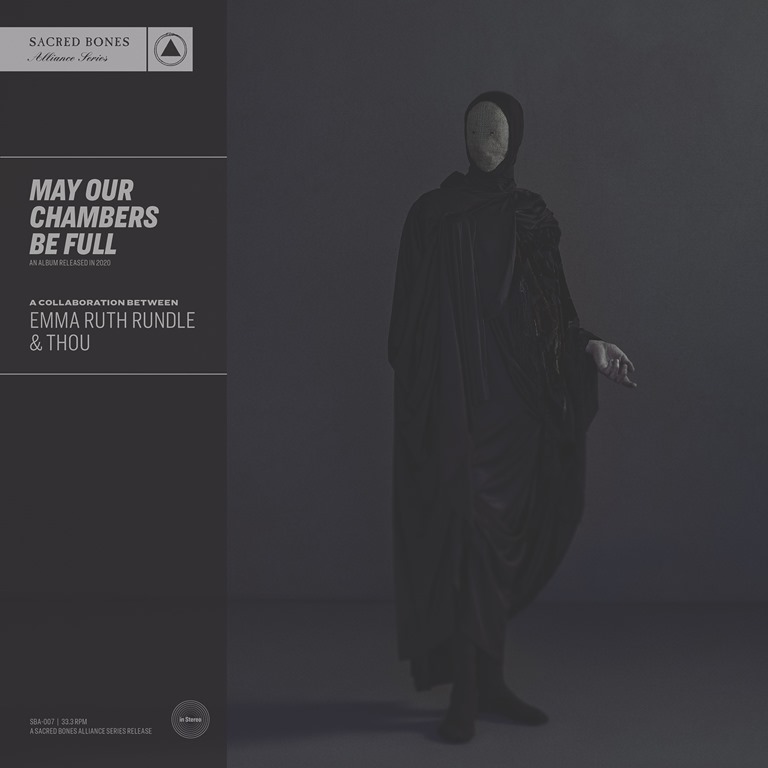
Emma Ruth Rundle (appearing courtesy of Sargent House) and Thou’s groundbreaking collaborative album, May Our Chambers Be Full sees its release October 30th via Sacred Bones. While their solo material seems on its face to be quite disparate, both prolific groups have spent their lauded careers lurking at the outer boundaries of heavy scenes, each having more in common with DIY punk and its spiritual successor, grunge.

The debut straddles a similar, very fine line both musically and thematically. While Emma’s standard fare is a blend of post-rock-infused folk music, and Thou is typically known for its downtuned, doomy sludge, the conjoining of the two artists has created a record more in the vein of the early ’90s Seattle sound and later ’90s episodes of Alternative Nation, while still retaining much of the artists’ core identities.

The visual art accompanying this work was created in collaboration with preeminent New Orleans photographer Craig Mulcahy. The faceless, genderless models are meant to emphasize this pervasive state of ambiguity and emotional vacillation, the images falling somewhere between modern high fashion and classical Renaissance.

Check the single here:

AA

thumbnail_sba007thouemmaLPr0lores

Album Artwork | Photo By Craig Mulcahy

NYC primal punks Uniform share another work of art, an astonishing new video (directed by A. F Cortes) for "Life In Remission" the latest single from their new album Shame, out today via Sacred Bones.

About the track Berdan comments, "The lyrics of Life In Remission deal with loss, guilt, and the facade of a stable life. It’s about the persistent voice in my head constantly telling me that I’m a fraud and urging me toward self destruction. It’s about becoming numb to tragedy. It’s about seeing those around me suffer and die and knowing all too well that it just as easily could have been me a million times over. It’s a song of equal parts anger, regret, and cold despondency.”

The video director A.F Cortes adds, "With this video, I wanted to use the body as a communication tool of chaos. A deconstruction story told through ritual and action. Two friends’ bond is gone wrong from a visceral and perverse perspective. Inspired by abstract expressionism, instead of playing opposites with the music, I wanted to match its intensity like a Jackson Pollock painting, a piece that feels filthy, messy, claustrophobic, yet beautiful and contained."

Watch the video here:

Sacred Bones – 11th September 2020

Christopher Nosnibor

Regular readers will likely have spotted Uniform featured on numerous occasions here at Aural Aggro, and in may ways, they encapsulate everything that inspired me to start this in the first place – namely that reviewing music that moves and affects me isn’t quite enough, because only half of it’s about the music, and the remainder is about that personal reaction, and that’s more of an essay than a review. To some this may seem indulgent, and maybe it is, but the intention is that in explaining my own personal response, there may be something relatable there for other readers – and also, potentially, something for the artist, namely an insight into how their music resonates with fans, what it means to them.

I’m not dismissing the merit of reviews that endeavour to quantify the quality of a release based on various merits and so on, but when confronted with music that exists to convey the most brutal emotions in a way that almost physically hurts, you just have to go deeper, and pick it apart properly, much as in the way you’re compelled to pick at an itchy, crusting scab until it’s weeping and raw and bleeding once more in some wrongheaded attempt to understand the nature of the wound.

The particular thing about Uniform is the way in which they balance unbridled rawness, a rage so explosive and nihilistic that words cannot even begin to convey even the outline of the sentiment, one so deeply enmeshed with a choking fury that renders words worthless, and a rare literacy.

“Thematically, the album is like a classic hard-boiled paperback novel without a case,” says front man Michael Berdan. “It focuses on the static state of an antihero as he mulls over his life in the interim between major events, just existing in the world. At the time we were making the record, I was reading books by Raymond Chandler, James Ellroy, and Dashiell Hammet and strangely found myself identifying with the internal dialogues of characters like Sam Spade and Philip Marlowe.”

These are all authors I have an immense admiration for, on account of the pace of their narrative, their economy, their capacity to deliver plot at pace, and their writing methods. Writing is one discipline. Writing to deadlines and producing quality and quantity quickly entirely another, and one I genuinely aspire to.

Uniform have demonstrated an impressive work ethic since their inception, and have been cranking out an album a year either on their own or in collaboration with The Body on an annual basis for the last few years. And never once has the quality or intensity dipped one iota, and Shame continues this unblemished record.

They have evolved over time, replaving the drum machine with a human drummer, but this hasn’t rendered them any more ‘ordinary’ and even without the harsh, pounding electronic battery of percussion, they’re still cranium-crushingly intense and head-shreddingly harsh.

Admittedly, I’ve had The Long Walk on heavy rotation for some two years now, with ‘The Walk’ not only defining that raw, aggro, nihilism that IS Uniform, but also being something of a soundtrack to life. Because life is short, cruel, and painful an there aren’t many acts who convey this as accurately as Uniform.

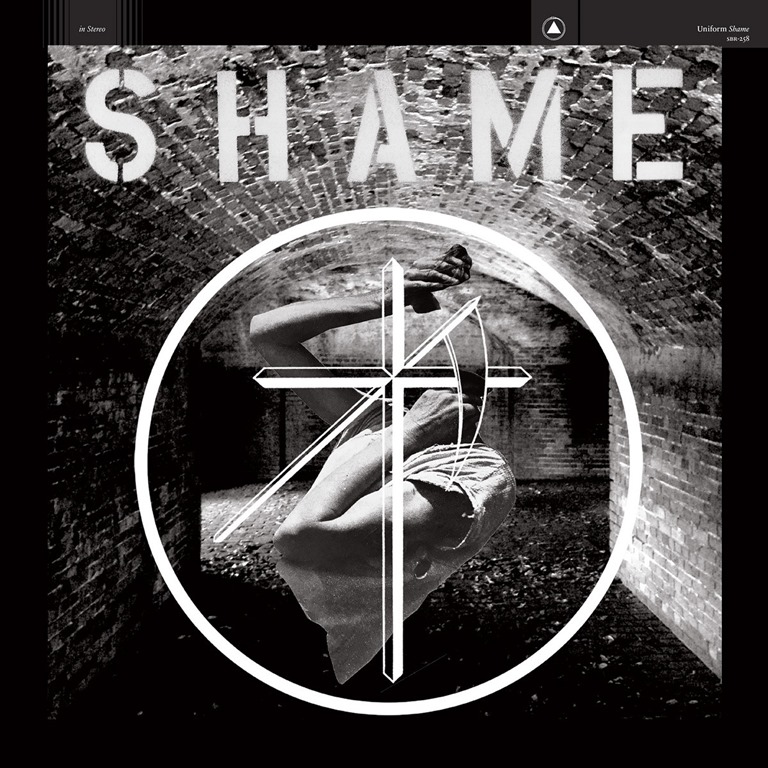
Shame explores all of the pains and anguish of shame and humiliation, the desire to bury one’s face or to disappear, and for all its harshness, all its abrasion, and all its brutality, Shame is an album that speaks on a deep emotional level. Shame hurts. It’s also harsh, abrasive, brutal, and as visceral an album as you’re likely to hear, and not just in clusterfuck 2020, but period.

The singles released online in advance of the album certainly give an idea of where it’s headed, but Shame needs to be heard in full – and at full volume of course – for maximum impact.

It crashes in with lead single ‘Delco’, possibly the most accessible of the ten cuts. It’s all relative, and by ‘accessible’ we’re looking at Ministry circa Psalm 69, with driving guitars dominating mangled vocals pegged low in the mix. The album swiftly descends into the depths of darkness, a murky blur of metal fury that combines the detached mechanisation of Ministry and Godflesh with the screeding impenetrable guitar noise.

The title track is tense, bleak, but there are hints of redemption at least in the intro before it turns dark and self-flagellatory. The refrain ‘That’s why I drink / That’s why I weep’ is another intertextual reference, this time made in homage to Rod Serling’s Twilight Zone episode ‘Night of the Meek’. But it distils a dark intensity that is the essence of an internal pain that can only be soothed by a chemical anaesthetic. It’s so succinct, and so absolutely magnificent, despite being painful and ugly. We’re all fucked up, and personally, I’m more wary of those who present themselves as happy and normal than anyone else. Who are they rely lying to?

‘Dispatches from the Gutter’ is a sub-two-minute blast of gnarly noise that is virtual onomatopoeia, while ‘This Won’t End Well’ is a slow-paced, industrial trudge, and closer ‘I Am the Cancer’ is just horrible, a mess of frantically-paced guitars, mangled to fuck, and vocals, distorted beyond impenetrability, all cranked out fast and hard. And this is how this album would always have to end. It would have to be painful. It would have to be like peeling flesh. It would have to be like murder.

Shame sees no sign of Uniform softening, Moreover, as they try to make sense of this ugly, violent world, their music more conveys the confusion and the pain of being alive. Embrace it or don’t, but with Shame, Uniform captures the spirit and the anguish of life right now.

AA

a2171488218_10

NYC industrial trail blazers Uniform reveal the title track from their forthcoming album due September 11th on Sacred Bones. “Shame is the song that sets the thematic tone for the rest of the record, which seems appropriate for a title track. It is a portrait of someone riddled with regret in the process of drinking themselves to death. Night after night they sit in dark reflection, pouring alcohol down their throat in order to become numb enough to fall asleep,” vocalist Michael Berdan explains.

“I took inspiration from a few stories of alcoholic implosion, namely Sam Peckinpah’s Bring Me the Head of Alfredo Garcia and John O’Brien’s Leaving Las Vegas. The line ‘That’s why I drink. That’s why I weep’ appears in homage to Rod Serling’s Twilight Zone episode ‘Night of the Meek.’”

Listen to ‘Shame’ here:

AA

20200217_SacredBones_Uniform_EbruYildiz_164-2

Photo By Ebru Yildiz