Road To Masochist – 18th July 2025
Christopher Nosnibor
Perhaps I’m simply more aware, but it feels as if black metal and adjacent subgenres are experiencing a significant moment. Sign of the times? Perhaps. There’s a new wave of all strains of metal, and it’s not simply loner misfit teenage boys and middle-aged blokes who still live at home, working entry-level jobs and playing Dungeons and Dragons on a weekend. In fact, it’s anything but, and the old stereotype no longer holds water here in 2025. Metal offers a number of things: catharsis through anger and abrasive noise is perhaps the most obvious. In case you hadn’t noticed, the world is a dark and dismal place. It’s also terrifying, and run by cunts. And people seem to be losing the plot. Social and moral boundaries aren’t so much collapsing and being torn apart from the top down. Metal offers an outlet that’s safe and harmless, by way of an alternative to embarking on killing sprees. Connected to this, there’s also a certain escapism offered in the domains of metal, which operates on a number of levels. Finally, there’s a sense of community within metal circles: something I’ve touched on a number of occasions is just how safe and accommodating metal gigs always feel. A room full of misfits together is some kind of utopia.
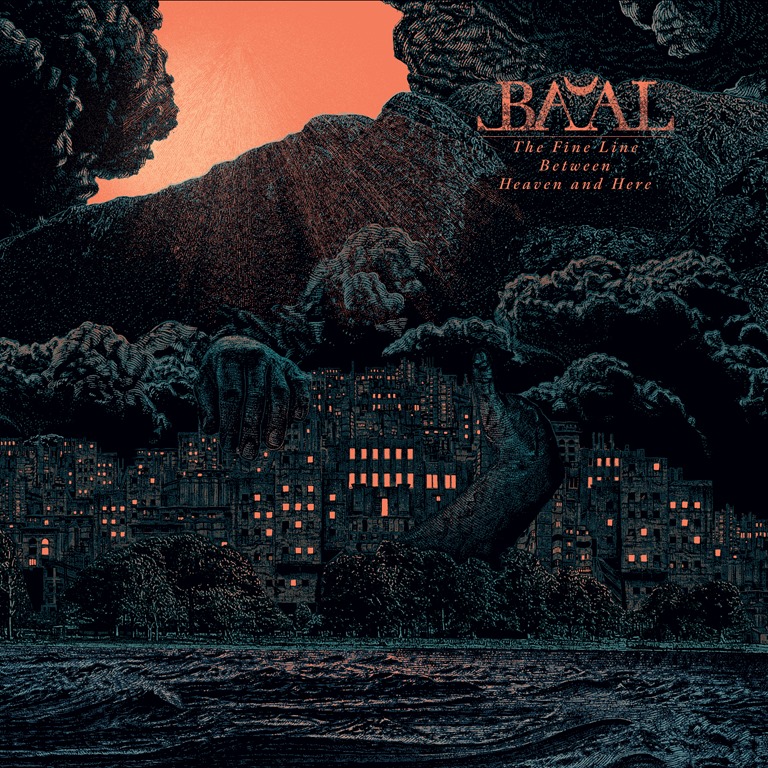
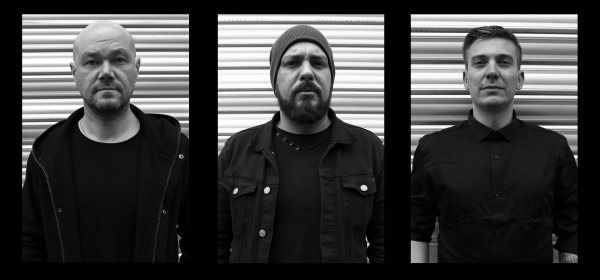
Of the current crop, Sheffield post-black metal quintet Ba’al stand out, and this, their second album, is billed as ‘their most ambitious work to date’. Of course: bands, labels, and PR always say that. But a thirteen-minute opener is nothing if not a clear statement of ambition. It begins with gentle piano, delicate, emotive, atmospheric, evoking the sound of 2004 post-rock, of Her Name Is Calla – and when the guitars crash in, it’s sweeping, cinematic, as much And So I Watch You From Afar as anything overtly metal. It’s not until over three minutes in that storm clouds gather – and blow in fast. In an instant, there is a flurry of blackness, frenzied fretwork blurring into a dense backdrop for scorched, demonic vocals. But after the tempest and turmoil die down, there’s a further segment that could almost be a song in its own right that combines elements of neofolk and shoegaze. It’s softer, more melodic, but somehow ragged… and then they deliver a monumental sustained climax that it nothing short of obliterative.
I’ve seen a few comments on social media dismissing reviews for not being objective, as if we respond to music based on its technical merits rather than on an emotional level. Those making such comments are clearly cretins, because Oasis are shite whichever way you slice it, but if you want objectivity, Ba’al deliver emotional heft with eye-popping technical prowess. Within these first thirteen minutes, they bring texture, tone, dynamics, detail. Where can they possibly go from here?
It transpires that they’re only just getting going. ‘Waxwork Gordon’ opens delicately on a drift of chiming guitar. Rolling drums join, and there’s an evocation of trees and dappled shade – for a moment, before the gates of hell open and molten lava flows forth. But again, there are passages which border on the edge of folk and prog here. Instead of diminishing the power of the black, chugging riffs, they enhance their potency. The eleven-minute ‘Well of Sorrows’ is, indeed, riven with melancholy, but also rays of hope beam through in the form of some deft playing, clean sounds and bright tones, which intersect with sustained thunderous blasts, while the album’s penultimate track, ‘The Ocean that Fills a Wound’ weighing in at thirteen and a half minutes is the very definition of epic. For the most part, it’s rolling, mellow, again more neofolk than metal. But when they slam on the distortion and go for the riffs, they go hard. Closer ‘Legasov’ arrives in a squall of feedback and forges a molten course to the album’s conclusion.
The band’s willingness – nay, urge – to embrace more than metal tropes, and to offer a remarkably broad sonic palette is integral to their appeal. These are songs which expand the parameters of metal in myriad directions. There’s a lot to assimilate here. Joe Stamps’ versatility as a vocalist is a real asset, but collectively, Ba’al’s capacity to swing seamlessly between forms is remarkable.
There will be some for whom their range is simply too much. That’s their loss. The simple fact is that The Fine Line Between Heaven and Here is an incredibly bold, and wide-ranging work, that defies narrow categorisation. It’s a hell of a lot more than metal, that’s for sure. It’s immense. It will open your eyes. And it will probably blow you away.
AA
AA
 Aural Aggravation