Posts Tagged ‘personal’

4th July 2025

Christopher Nosnibor

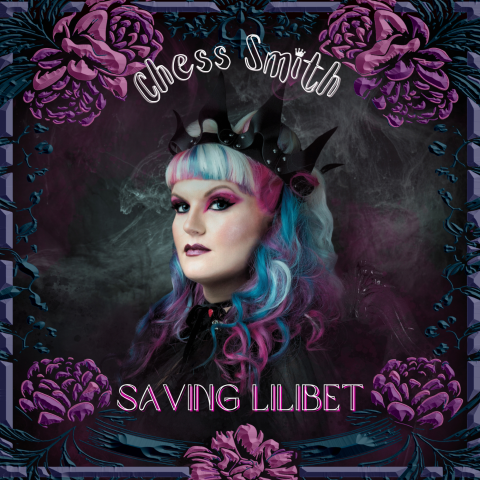
It may be coincidental that Chess Smith threw down Saving Lilibet on 4th July, but it’s certainly appropriate. This is a release that is all about fighting spirit, taking things back, and claiming a state of independence.

Her bio for this release is nothing if not direct:

Chess Smith has been a commanding presence on the Kent music scene for over a decade, both as a solo artist and a frontwoman, most recently as critically acclaimed power vocalist for Salvation Jayne… until 2020, when an abuser tried to take her power, dull her shine, and break her spirit. But they didn’t succeed.

Despite enduring a devastating nervous breakdown at the time, Chess has come back fighting in spectacular style with Saving Lilibet, her most personal, and relatable, work to date. She has made it her mission to provide a voice for those who have experienced abuse and toxicity, and to show the world that you can not only heal after these experiences – you can thrive.

As the saying goes, what doesn’t kill you makes you stronger, and simply telling her story, getting up and putting this out there, with no holds barred, demonstrates phenomenal strength. And for all that, Saving Lilibet is not remotely sad or self-pitying, but a set of songs which is uplifting, and very much focused on empowerment and positivity.

The intro, ‘Saving Lilibet’ is a weirdy, atmospheric little piece, on which Smith’s voice echoes from left and right, ‘save, save’. One gets the impression that this is the voice in her head, her internal monologue speaking to her, pulling her out of her torpor. And that’s exactly what she does, with some pristine pop tunes.

Lead single, ‘Bounce Back’ in many ways speaks for itself. When I covered it back in February, I noted how it was both ‘slick and soulful’, but I don’t think I fully appreciated just how strong the production was: it’s got the groove of Thriller-era Michael Jackson backing up a really crisp pop song, propelled by a thumping retro beat and showcasing a bold vocal performance, which, paired with her heartfelt lyrics hollers ‘taking no shit’.

Second single, ‘Drama King’ is up next, and once again, it’s tight, and light, but by no means flimsy in content or delivery’, and it so happens that the singles are entirely representative of the collection as a whole. The vibe is very much 80s pop played through a post-millennium filter – something which is nowhere more apparent than on the slower ‘Alexa’, while ‘Dissociate’ blends hints of Madonna with some Hi-NRG dance pop and moments of introspection.

‘All My Love’ is a big, anthemic slower song, and clocking in at almost six and a half minutes, it’s epic in every way. And once again, it’s realised with absolute precision and try dynamic is remarkable.

Saving Lilibet is a triumph on every level, and Chess Smith proves she’s not just a survivor, but an artist – and human being – who is determined to thrive. It’s inspiring stuff.
 

Chess Smith Artwork

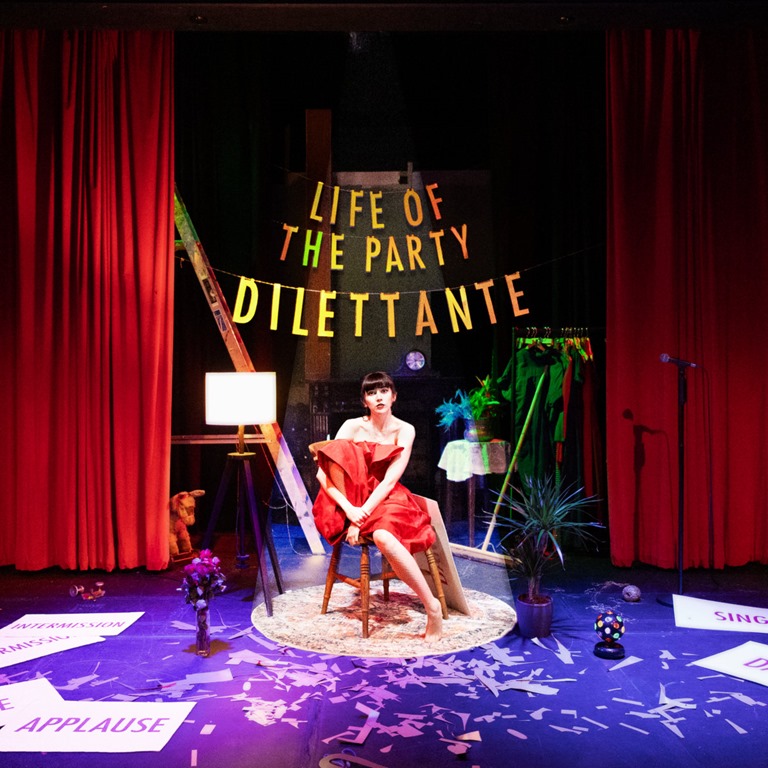
Dilettante return with their second album Life of the Party, Pidgeon’s first totally self-produced record and her most personal one yet. Made in the confines of a converted freight container, the album is an outpouring of frustration towards societal pressures and the acceptance of realising she sees the world differently to others. “I went to see Poor Things and I really felt like Emma Stone’s character made sense to me,” explains Francesca. “She’s really literal and sort of just looks at the way polite society always does things and says, ‘why are we doing that? That doesn’t make sense, let’s do it this way’.”

Life Of The Party covers a range of topics, from turning thirty and feeling the pressure to start a family, to feeling constrained within monogamous relationships as well as the more weighty matter of speaking out about sexual assault and dealing with the associated repercussions.

Sonically, the album maintains Dilettante’s signature art pop sound and impressive loop pedal skills whilst also diving into a more synth heavy realm. In parts, the record also sees Pidgeon exploring a gentler sound, reverting back to a more traditional and raw songwriting “I’d been listening to Andy Shauf and Harry Nilsson a lot and I was trying to actually write from the piano”. Life of the Party sees Dilettante continue to push boundaries, “This record is, at times, the weirdest stuff I’ve ever put out and at times the poppiest,” she adds.

To coincide with the release, Dilettante have released a video for the title track. Watch it here:

AA

a3699144988_10

Blaggers Records – 30th June 2023

Christopher Nosnibor

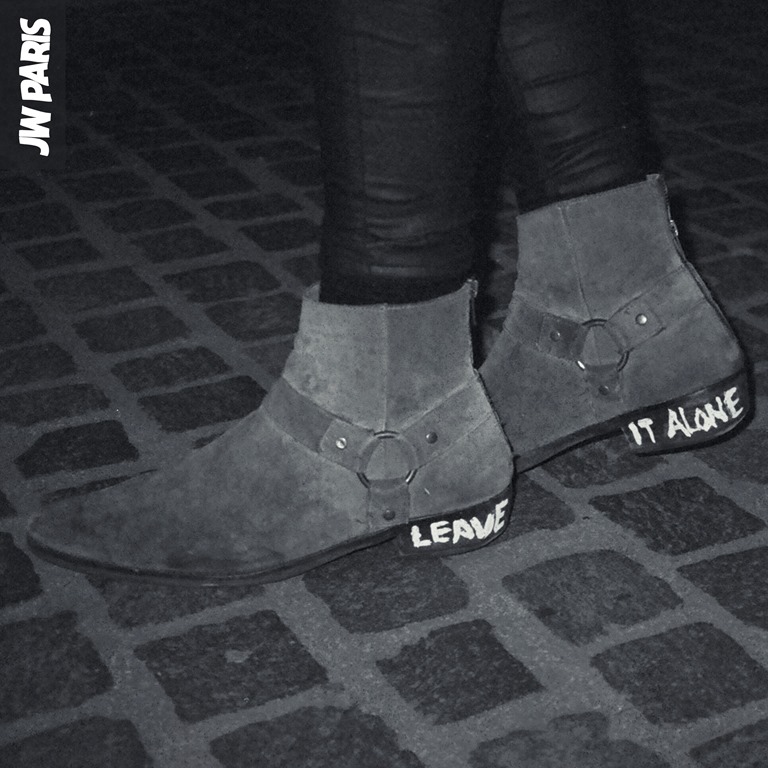
Earlier this year, JW Paris were the millionth act to cover Chris Isaak’s ‘Wicked Game’ – a song that bombed on initial release in 1989 and only started getting attention when it was featured on the soundtrack to David Lynch’s Wild at Heart, and becoming a hit in 1991. What was interesting about JW Paris’ version is that it was different. It didn’t pussyfoot around being nice and delicate – not that it was insensitive or trashed the original, it just had the guts to be different instead of a predictably, safe, straight copy. And I suppose this sums the band up, really. They do their own thing – and it so happens to be good.

‘Leave It Alone’ is three-and-a-half minutes of choppy post punk with bite – not to mention a yawning guitarline that evokes the essence of Nirvana and The Pixies, straddling a magnificent strolling bassline and exploiting that classic quiet / loud dynamic – but keeping the overdrive in check in favour of a cleaner guitar sound – but with a chorus that’s eminently moshable.

Yes, of course it all pulls me back to the early 90s – no one song or band or anything specific, but that vague, aching haze of what it was like to be there in my late teens and early twenties. There’s some recycled gag about the 60s now being applied to the 90s along the lines of if you can remember the decade, you weren’t there, and there’s an element of truth on a personal level with it being the time I got into beer (and vodka) and live music, but there’s that other key element, namely the passage of time. It’s not even about memory fading: when you’re living life and simply in the midst of things, you don’t stop to take stock or pin a marker on your memory that any given moment in time was something to remember as special. It’s only in hindsight – even if that hindsight is developed in relative proximity to the event – that you often come to appreciate things for what they were. This is, of course, the nature of nostalgia, and why people in their thirties become fixated on the ‘golden age’ of music, movies, and TV, which almost invariably coincides with their late teens and early twenties before the weight of adulthood and the crushing tedium of work and shit took over. But I say this because the further a time recedes into history, the vaguer and more nebulous the recollections become.

It’s not that I can’t pinpoint where bands have leaned on Nirvana or The Pixies for inspiration, but the bigger – and vaguer – picture is that TV and radio and gigs were awash with acts which represented the zeitgeist: it’s impossible to remember all of the little bands who maybe released one single or nothing at all, who played in upstairs rooms in poky pubs, but the period overall is indelibly etched into my memory banks. And this is important, because JW Paris don’t sound like they’ve studied key albums of the time and appropriated accordingly, but have, instead, soaked up the spirit and distilled it into a sweet and powerful shot.

There are layers to this: ‘Take a look at me, am I the person that you wanna be?’ becomes ‘am I who you want to see?’ How much is projection, perception? And not just perception of others, but self-perception. Look in the mirror: are you who you want to see? And how much does that change over time? It’s not always easy to make peace with your former selves.

Speaking on the single, the band say “‘Leave It Alone’ is a deeply personal song that reflects our own inner journey of self-discovery and acceptance… With honest lyrics and a haunting melody, it invites our audience and listeners on an introspective exploration of identity and the longing for inner peace”.

And I guess that’s what the preceding five-hundred-word contemplation is: it’s my introspective exploration, as inspired by the song. A good song does so much more than fill a few minutes with sound: it enters you and takes you places. ‘Leave It Alone’ is a fucking good song.

AA

923819

11th March 2022

Christopher Nosnibor

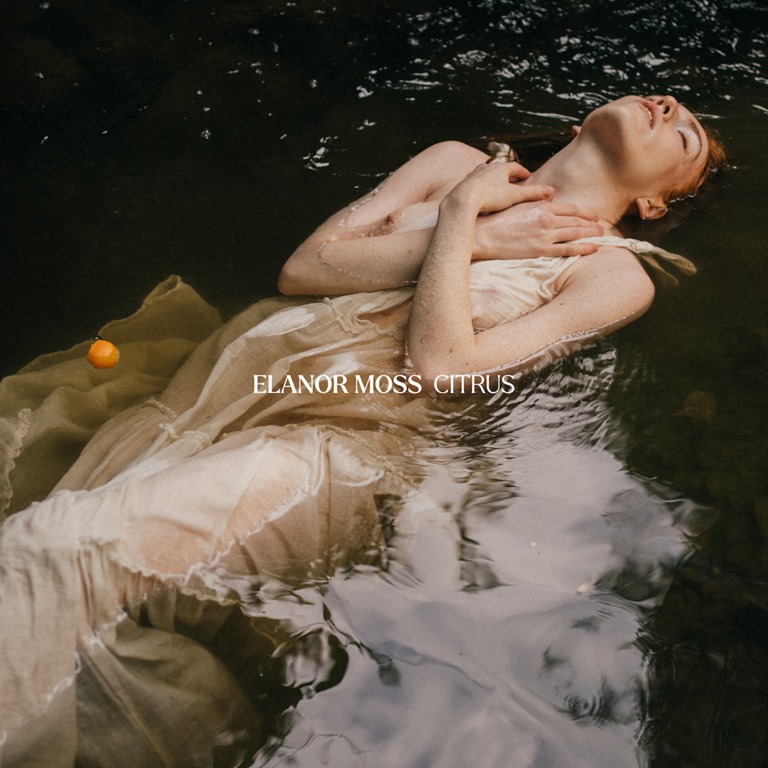
Elanor Moss seems to be drawn to water, but not necessarily in the most soothing of ways. You’re more likely to find her gradually sinking than floating on the crest of a wave of soaking in the soothing ebb and flow of a coastal tide. Her debut release, the five-track Citrus EP finds the York-based artist reimagining Millais’ ‘Ophelia’ for the twenty-first century on the cover art, while the video for ‘Soundings’ finds her awash and adrift in a bathtub, water threatening to plunge into her mouth as she sings of her ‘Drowning / the sound of my heart / As I’m sounding / the depths of this whisky jar’.

If the metaphor is obvious, it’s also highly effective. The sensation is relatable. When things become too much, and you start to feel overwhelmed… drowning is the closest simile in the common vocabulary. While few of us have actually experienced drowning, there’s an innate sense within all of us of what it would be like – struggling for air, to stay afloat. Most of us have felt that way at some point, and the beauty of Moss’ art is articulating it so succinctly.

According to the bio, ‘The Citrus EP is a collection that addresses the tension that arises within yourself when you need to muster the courage to will yourself well again. The protagonist in this collection of tracks is someone teetering on the edge of pulling themselves out of a hard time, resisting ‘getting better’ with force. You go with her through a series of unfortunate events; each one she knows full well what is happening but does anyway. But this is not a hopeless record, not at all. Their reflections from the other side and recorded from a place of empathy, strength and kindness towards a bruised past self.’

I’m not about to press the alignment of art and artist, and knowing nothing of Moss beyond her art, I’m in no position to comment on whether or not her life informs her art, but it very much feels like she’s speaking and articulating and assimilating her experiences through her songs, where certain themes recur, subtly, but undeniably. ‘I want to drink ‘till I’m too drunk to think’, she sings on ‘Sober’, while on ‘Soundings’, she croons that ‘this whisky is burning’. ‘His breath was like a heart attack / the whisky stung me like a slap’ she recounts on ‘Citrus’. But not to dwell on this unduly, the songs are ultimately positive, empowering, and the realisation of the songs is magnificent, balancing sparseness and directness with multiple layers of vocal harmony and reverb. It’s a slick production, but one that doesn’t impinge on the intimacy of the songs and their delivery, essentially centred around acoustic guitar and voice. Only a fraction below the layers and reverb is a collection of acoustic folk-flavoured songs that are raw, sincere, and relatable. Citrus is bittersweet, and-pretty special.

AA

AA

a1090927083_10

6th August 2021

Christopher Nosnibor

It’s not always easy to remember – what you’ve said to whom, what you’ve written before, if you’ve really experienced something or simply dreamed it. You’d think it would have become easier with not really going anywhere or speaking to anyone for a year and a half, but in my experience, the opposite is true. Everything blurs. So if I’ve mentioned any off this before, if I’ve touched on how electrogoth releases often clump together, or how genre tropes can so often be so much meh, then I apologise, but only a little. Reviews are, after all, personal, a personal response to musical release, and objectivity only cuts so far., meaning that this personal response, well, it’s all spilling from a review-a-day brain, dayjob and parenting and the confusion of every day melting into the next. It’s been a relentless barrage of bad news in the media, as well as from friends and relatives. By no means has all of the anguish and suffering been attributable to the virus – more often than not it’s been collateral resulting from lockdowns and a sustained sense of panic. We’re biologically designed to experience fear in short bursts. Fight or flight. To be trapped, immobile, powerless, is beyond comprehension, and there is no space to process grief and trauma in a normal way.

It’s against this backdrop that Eric Kristoffer developed the new unitcode:machine album, Themes For A Collapsing Empire. It’s very much an example off utilising a creative outlet as a form of therapy, with the blurbage describing Themes For A Collapsing Empire as ‘a journey through the mind of Eric Kristoffer after a series of tragic events that 2020 brought. It explores a path of loss and regret, and struggling to cope with such stressful personal events while also trying to endure a global pandemic’.

Electro-industrial isn’t a genre one immediately associates with emotional resonance, but with Themes For A Collapsing Empire, unitcode:machine really strike a level that balances thumping beats and melodies that convey the human aspect of the lyrical content. That said, the stark, mechanised percussion and cold synths highlight the bleakness of it all – and by it all, I do mean it all. Step back and survey the scene: August 2021 versus two years ago. It’s a different world, and so many have lost so much – not just loves ones, but connections, livelihoods, sense of self and place in the world. Where is it all heading? Where will it end? Will it end? With climate change an inescapable backdrop to societies which have never been more divided, how do we return from here? Do we? Can we? It’s not just an empire that’s collapsing, but – not to be overly dramatic – human civilisation itself. Themes For A Collapsing Empire feels like an essential soundtrack to this existential anxiety. Stark and dark, it’s reflective, paranoid, gloomy, and it’s very much song-orientated, with kicking choruses being a defining feature.

‘Falling Down’ is a clear standout, but there are plenty of strong tracks and easy single selections alongside it: Themes For A Collapsing Empire packs in the hooks and solid choruses, but without being remotely lame or overtly commercial – and that’s a real skill. Everything just flows, while at the same time punching you in the face.

With nine tightly-structured songs all clocking in under four-and-a-half minutes, Themes For A Collapsing Empire feels like a concise statement, and an album with strongly-defined parameters and an intense focus, with the end result being all killer.

AA

035223