Posts Tagged ‘Nick Cave’

Intro: Christopher Nosnibor

Interview: John Wisniewski

Images: individually credited, via Foetus.org

It’s been over forty-five years since Melbourne-born James George Thirlwell washed up on English shores, and having played some keyboards on the album No Cowboys by post-punk act PragVec in 1980, he embarked on what would become a truly remarkable and lifelong musical journey of his own.

Along the way, he’s released no fewer than eleven studio albums under an array of variants of the Foetus moniker, not to mention quite literally dozens of other musical vehicles from big band (Steroid Maximus) to more experimental instrumental work (Manorexia) and almost everything in between, not to mention powerful collaborations with Marc Almond (Flesh Volcano), Jim Coleman (Baby Zizane), Lydia Lunch (Stinkfist), and the late Roli Mosimann (Wiseblood), to name but three of many. And then there are the numerous scores… and yet whatever he turns his hand to, his work has a certain distinctive style, a sense of drama.

Foetus may have been on hiatus since 2013, but at the age of sixty-four, Thirlwell is showing no signs of slowing down. John Wisniewski managed to catch a window in the man’s relentless schedule to ask about his myriad projects past, present, and future…

JW: Did you formally study music, JG?

JGT: I briefly learned cello and percussion when I was a kid. But I was very slow with sight reading.

Later I just taught myself everything from instruments to recording, programming, scoring etc.

Tell us about your first music project, Foetus. What did you want to present?

The initial catalyst for Foetus was to create something totally by myself, where I played wrote and produced everything, as a reaction to the democracy of playing with other people. I wanted to make the music in my head and the music I wanted to hear. I also wanted to create artifacts, a work of art as a multiple where everyone owned an original. It took me a long time to be able to fully realize what was in my head. I’m still not always successful with that transfer process.

How did the Lydia Lunch collaboration come about?

I knew Lydia’s work and was introduced to her when she moved to London in about 1982 through the Birthday Party. At first she asked me to write her a press bio as I had been writing fanciful bios for the Birthday Party! First I played sax with one of her projects which we toured with in Sweden. Then we started writing songs for something called The Hard Diamond Drill, which was never realized. Then we created Stinkfist and went on to make Immaculate Consumptive. We became involved romantically and moved to NYC together. I was with her until about 1989 / 1990.

Any favorite music artists?

Many favorite artists, it changes daily. I become obsessed with someone for an afternoon. I like to hear new things all the time. I am a cultural sponge. I publish a monthly playlist on my Tumblr blog. https://jgthirlwell.tumblr.com/

What inspires you to create?

Everything. I have so many ideas, it is an infinite renewable resource. I also have a hungry legacy and I have to make sacrifices to its insatiable maw.

Another legendary early collaboration was with Nick Cave. How did that one come about?

The Birthday Party broke up. Nick was looking to work with other people and we were friends. We wrote the music for one song together, which was Wings Off Flies on the first Bad Seeds album. When he came to record that album I went to some sessions, but drifted away as I was in the midst of a big bout of recording of Foetus material, the sessions that became the Hole album. A bit later we had the Immaculate Consumptive project – Oct 1983.

Do you like collaborating with other artists?

I have gotten better at it.
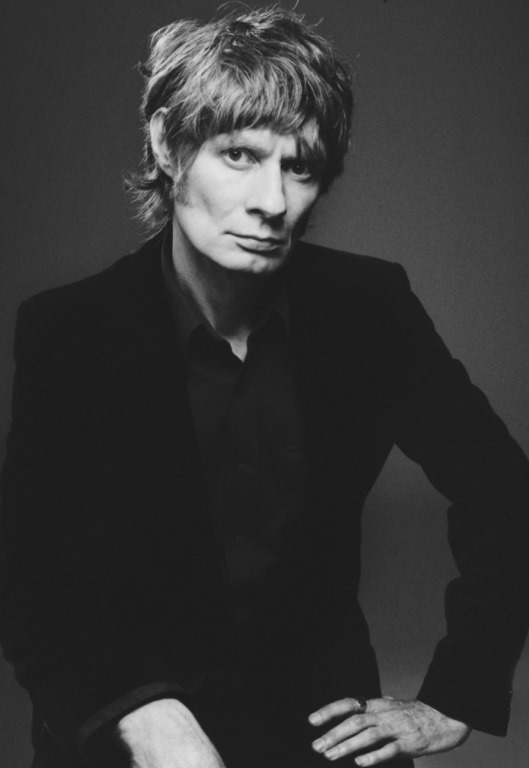
tumblr_lqecdl1bnu1r26hzho1_1280

Photo by Marylene May

What was the experience like working with Marc Almond and Trent Reznor’s material?

Marc is very open minded and works very fast and is excited by music that challenges him and stretches the boundaries of what he has done. So that is stimulating. For Trent I remixed two of his songs, “Wish" and "Mr Self Destruct". I did my work on it, mutating the original material. he wasn’t involved. He liked what I did.

Do you like to work within different genres of music?

You may have noticed one of the hallmarks in my music, is that I combine multiple styles often within one song.

What are you working on now?

New Xordox album Terraform, Venture Bros Volume 3 and Foetus HALT should all be out in 2025.

Also under way are two albums of symphonies for chamber orchestra, and album of soundtracks I have written for Ken Jacobs. An EP with Laura Wolf, a triple box of music I created for sound and art installations. Hopefully another Archer soundtrack album. And much more.

Why do you have so many projects on the go (and how do you manage it)?
I like to work in a lot of styles and on a lot of projects in different forms – solo pieces, ensemble pieces, multi channel, electronic, acoustic, vocal, instrumental. Concert works, classic songs, scoring. I have a lot of ideas to get out of my system. There’s no one project that can harvest everything. There are things that I get out of my system with Foetus which are totally different to the place I am in when I create a sound installation, or a soundtrack,

My projects are usually staggered, which is to say a lot of projects in different states of completion. So I shunt them all along and they get completed in different paces. Then new ones sprout up. I couldn’t just work on one thing.

AA
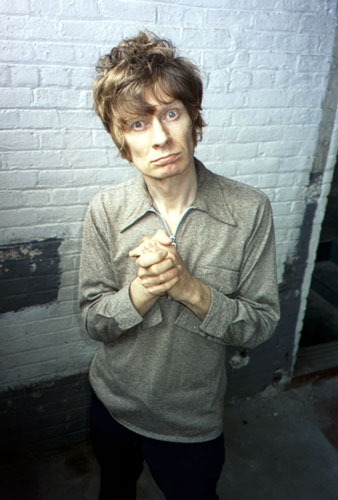
2009-jgthirlwell-circa-2

Do you ever take time out and what do you do to unwind?
Yes I stop to watch movies, see art and travel. But my work is perpetual motion, I don’t need to unwind from it. I believe in being creative every day. That’s also manifested on ideas I have for visual art, photography etc
>
I’ve read elsewhere that the upcoming Foetus album, as the title alludes, is slated to be your last. What can we expect from it?
Tying up forty five years of Foetus is no mean feat and I have been working on it for seven years. There are parts that make it seem like a continuum and other parts that have never been done in the Foetus context. It’s going to be epic.

AA

Catch up on JG Thirlwell’s output on his Bandcamp page.
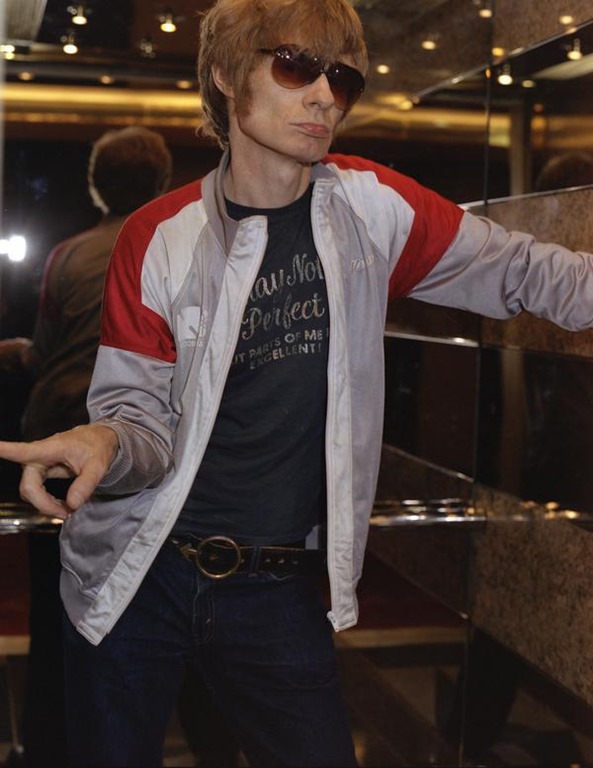
2010-jgthirlwell-circa-2

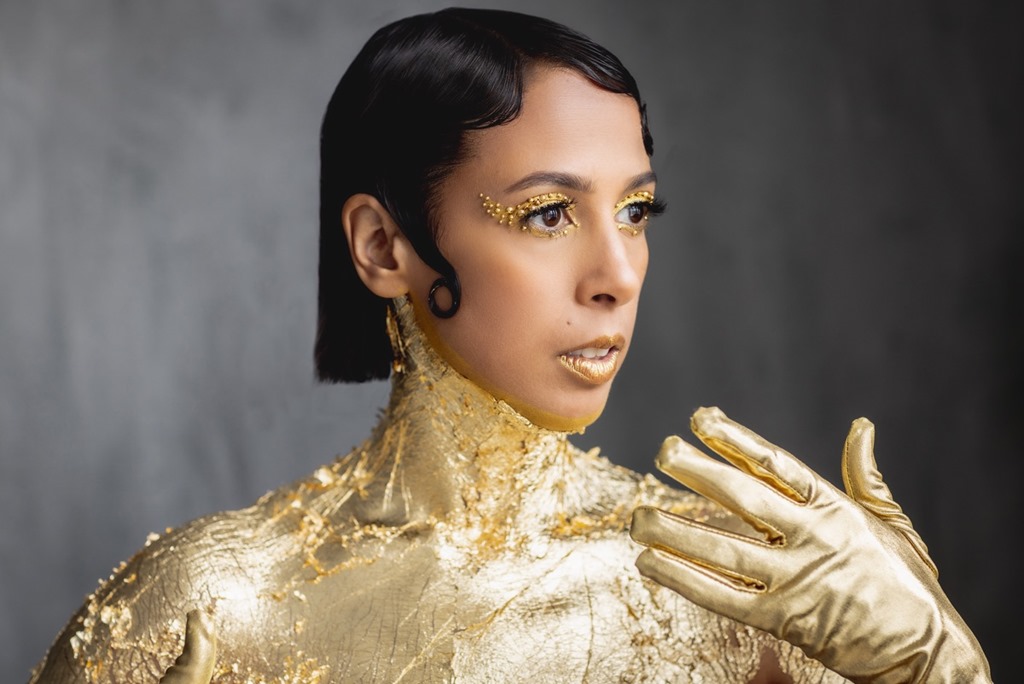
Captivating, glamorous and bold, Belle Scar is a distinctive singer-songwriter, producer and artistic director originally from Montreal but now based in London. Described by the New York Times as “a creature from another dimension, she’s phenomenal,” her dramatic, cinematic music is at times redolent of a Tim Burton film score and at others of a mash-up between Nick Cave, Björk and Portishead.

Scar’s new single, ‘I’ve Been Here Before’, is about the acknowledgement and acceptance of the ‘black dog’ of melancholy. A moody slow-burner, it develops into a superbly arranged epic replete with sumptuous strings and an angelic choir that recalls John Barry and Jean-Claude Vannier. The video for it captures the magic of London at night, with Scar playing the lead role of a wanderer and actor JD Haymer representing her shadow, the clip culminating in a symbolic face-to-face meeting.

Watch the video here:

AA

62a7329535422c57288a9fe5e62507b33dc8fbc8

BELLE SCAR | photo by Ben Wilkin

Trisol Music Group – 18th January 2019

Christopher Nosnibor

For some, I’m retreading old ground here and will likely sound like the proverbial stuck record, but recent developments render this relevant, timely, and appropriate. Over the last 30 years or so, the neofolk scene has been the haunt of some extremely shady characters, with Death in June’s Douglas Pearce and Tony Wakeford (Sol Invictus, formerly of Death in June) having some particularly dodgy connections including Boyd Rice (and not forgetting that Wakeford was at one time a member of the British National Front and contributed a track to a BNF benefit album alongside Skrewdriver and Brutal Attack). As such, even accepting the protestations of the purveyors of some of the most turgid tunes ever committed to tape that they’re simply flirting with fascist imagery to provoke thought and challenge the audience and so s in the name of ‘art’, recent revelations by harsherreality via Tumbr that Pearce was photographed as recently as 2012 with notorious and now-jailed neo-nazi Claudia Patatas and her former partner, who was the band’s driver, and Tony Wakeford can also be seen to be connected with her via Facebook highlights undesirable elements run through the scene like veins of fat in a cheap cut of meat. In her capacity as a freelance photographer, Patatas provided cover imagery for the Death in June albums Black Angel – Live, Abandon Tracks, and The Rule Of Thirds.

As respected blogger John Eden Tweeted a few weeks back, ‘This raises a number of awkward questions for the dwindling number of Death In June fans who still insist that the group is not political, and is just fascist cosplay for people who want to wank off about the “darker side of humanity”.’

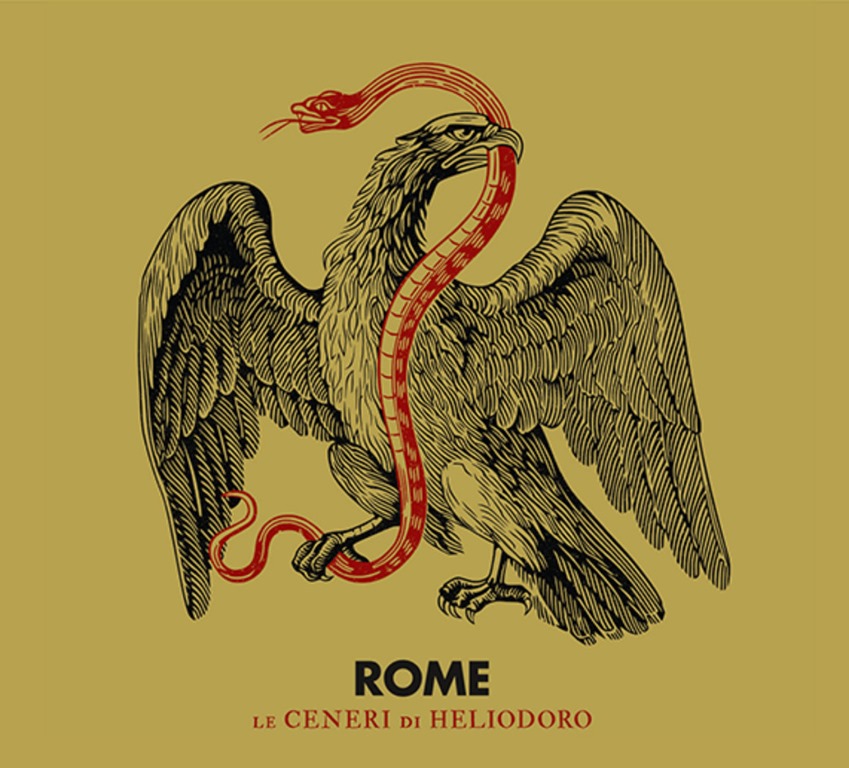
None of this is to remotely suggest that Rome have any sympathises or even connections with anything neo-nazi, but to contextualise why any mention of neofolk rings alarm bells and puts me on edge, and why I’ll inevitably approach an album by a band pitched being ‘one of the most important figures in the neofolk genre’ with extreme trepidation – especially on reading that ‘The music unites American folklore with Chanson and the angst-ridden tristesse of English Post Punk – ‘Chanson Noir’, as leading man and sole permanent member Jerome Reuter once called it.’ Why? Because Tony Wakeford describes his supposed post-punk/fok crossover act Sol Invictus’ work not as neofolk, but ‘folk noir’. There’s also the pitch that on Rome’s thirteenth album Le Ceneri Di Heliodoro (‘The ashes of Heliodoro’), ‘Reuter does not shy away from the provocative and ambiguous and thus tackles new terrain and touchy subject matters such as Europe’s dissolving unity, or its relations to the US and the fragile fraternity of its nations.’ So far, so vague.

‘Provocative and ambiguous’ is the shield worn by the shadiest of neofolk’s exponents. But here, it seems credible that Rome are approaching things from a rather different angle, citing ‘a long tradition of lonesome guitar heroes, outcasts moving about restlessly, pursued by their dreams and demons, dedicated to a life beyond the pale. Reuter takes musical nods from Jacques Brel, Johnny Cash, Townes Van Zandt, Tom Waits, Leonard Cohen, Michael Gira, Nick Cave – architects of melancholy.’ Moreover, Reuter has identified repeatedly as left-wing, and renounced any nazi element of his fanbase, remarking in an interview with Reflections of Darkness (for whom I used to scribe occasionally) that ‘people are stupid’. And he’s right: in many cases, one can only be responsible for one’s own actions, and no artist chooses their fans, least of all the misguided ones who misunderstand and misrepresent them.

So, given the artist’s efforts to distance himself from the bad elements, should I be concerned that this album is being released on a label which has also released albums by Boyd Rice, Death in June, and Above the Ruins, another Tony Wakeford project? Probably not, unless we’re also going to place KMFDM, Godflesh, Nitzer Ebb and Lydia Lunch in the ‘problematic by choice of label’ bracket. I’m questioning the label’s choices here, not the artists.

‘Sacra Entrata’ opens the album with discordant chimes, droning organ, and thumping martial drums providing the backdrop a portentous spoken word piece about revolution and uprising, while building tension, ‘A New Unfolding’ presents an acoustic strum and more march-time drumming while Reuter sings about how a ‘new world is calling’. The Germanic backing vocals being a mystery to me, but I’ll assume they don’t connote the militaristic rally cries they sound like. Assuming they’re ‘safe’, it’s a bold, brooding epic of a song that stirs something deep inside. Perhaps this is what Reuter means by ‘provocative and ambiguous’.

‘Who Only Europe Knows’ fades out with the refrain ‘we’re building ghettos’, and asks ‘will there be rivers of blood?’ – evoking renowned and divisive 1968 ‘Birmingham Speech’ which criticised mass immigration, and a pro-unity, pro-European stance appears to be a central focus of Le Ceneri Di Heliodoro. Elsewhere, the orchestrally-enhanced ‘Fliegen wie Vögel (Fly Like a Bird’) and ‘One Lion’s Roar’ boast epic production behind Reuter’s gravelly vocals.

Le Ceneri Di Heliodoro is a lengthy and bold album, rich in atmosphere and heavy allusions. It boasts some moments of substantial power and almost subliminal resonance. Again, at times it feels incredibly pedestrian and po-faced, and takes sincerity to a point beyond the palatable. There’s grand, and there’s grandiose, and it’s a line not trodden too carefully here. But equally, everything is carefully executed, and Rome demonstrate a sense of scale here, and an appreciation of the gravity of the turbulent times in which we find ourselves.

Rome – Le Ceneri Di Heliodoro

Cold Spring – CD 3rd August 2018 / LP 10th September 2018

Christopher Nosnibor

There are so many moments lost in the annals of history. This particular one has been languishing, unheard and unreleased for some 35 years. As collaborations go, this one is particularly special, and captures the spirit of the underground scene in the early 80s, with the original Coil lineup of John Balance and Peter Christopherson joined by John Gosling and Marc Almond. Although renowned as a pop singer, both solo and with Soft Cell, Almond has a raft of interesting collaborations to his credit: his work with JG Thirlwell as Flesh Volcano is a persona favourite, the pair amping up the sleaze and grime to deliver something quite dank and slimy. Better still, their live rendition of ‘Ghostrider’ for the BBC. And, lest we forget, undocumented save for some (painfully) ropey bootlegs, The Immaculate Consumptive, a short-lived live project (just three shows in three days in October / November ‘83) which featured Almond, Thirlwell, Nick Cave, and Lydia Lunch.

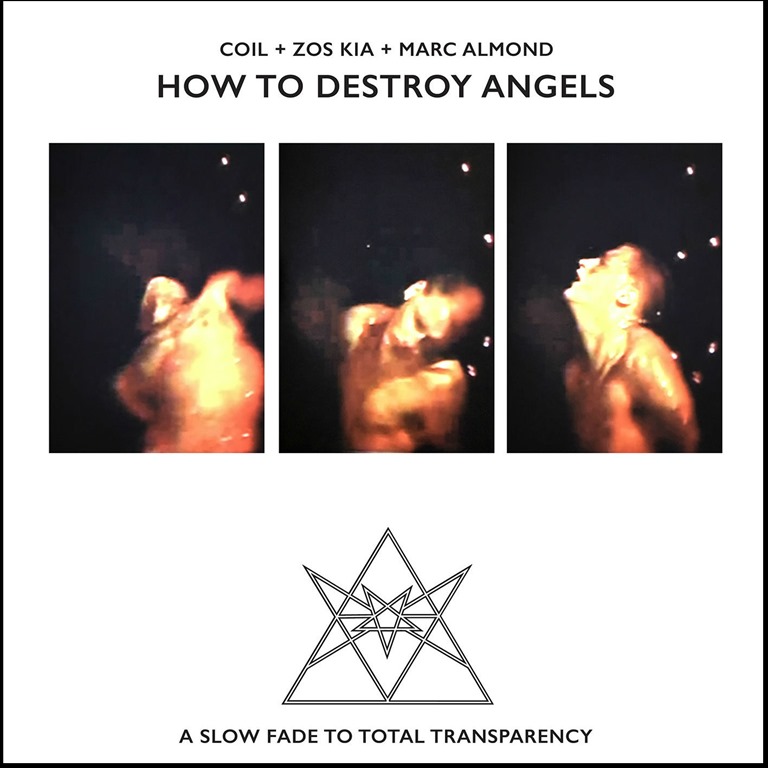
‘How to Destroy Angels’ was recorded shortly before The Immaculate Consumptive broke Brian Eno’s piano, on 24th August 1983, at the Air Gallery in London. And the recording has languished ever since, until now, emerging cleaned up and consumable. Although it’s still pretty raw, and if truth be told, sounds little better than some of the recordings of my own spoken word performances recorded on my phone. Of course, this has rather more cultural significance and wider interest.

As the liner notes observe, ‘the music bears only scant resemblance to the ‘How To Destroy Angels’ 12” that Coil would release as their debut vinyl the following year.’ And so the performance which would preface Coil’s studio debut was very much an experimental effort, a collaborative piece born of happenstance and a coalescence of creative fermentation that was bubbling around the time.

It’s Lunch’s influence that seems strongest on Almond’s contribution here: his narrative – a bitter tirade against an ex-lover – is full of bile and expletives as he spits the words quickly and abrasively against an eerie, unsettling dark ambient backdrop. Challenging is the word – but then, that’s entirely the point.

The Kos Kia remix of ‘How To Destroy Angels’, which whittles 23 minutes of audio to just over eight, feels a little redundant here. It’s not bad by any stretch: in fact, as weirdy ambient remixes go, it’s pretty good. It’s just a question of fit.

‘Baptism of Fire’ is an unreleased recording of Zos Kia and Coil at Recession Studios, London: dating from 12th October 1983, it’s contemporaneous with ‘How to Destroy Angels’. It’s the shortest piece here, and concludes the set with four and a half minutes of battering percussion, howling ululations and clanking, clattering noise that’s very Throbbing Gristle and very uncomfortable indeed.

While so many archival recordings and onus cuts on anniversary reissues – often of bands who were only of limited merit in the first place – feel like sloppy cash-ins, digging out second-rate demons , acoustic versions, remixes outtakes and live recordings of well-known studio tracks, this is a real rarity, which sheds new light on the origins of band whose effect has been significant and enduring. Moreover, it’s not only vastly illuminating in context of the nascent Coil sound, but a document which joints a number of dots in the wider context: and for that, this is an essential release.

AA

COIL ZOS KIA MARC ALMOND - Lo res album cover for web

Front & Follow – F&F046 – 1st September 2017

Christopher Nosnibor

Having followed Mark Kluzek’s Doomed Bird of Providence for some time now, I was keen to hear the latest instalment. Over the last six years, he and his collaborators have produced a series of concept albums centred around Australian history, all using the medium of dark folk with heavy echoes of Nick Cave. Burrowed into the Soft Sky is very much an album devised as being suited to a vinyl release, and is perhaps the most challenging Doomed Bird release yet, consisting as it does of just two tracks each with a duration of some twenty minutes. While still pursuing what the bio refers to as ‘Kluzek’s obsessive and singular foray into early colonial history’, Burrowed into the Soft Sky discards the vocal element, meaning the narrative, such as it is, is purely musical.

To understand the objective and the context of the album and the individual tracks, it’s beneficial to quote liberally from the accompanying press release.

‘The underlying themes for each track are contrasting yet tie together via their historical context; a period where indigenous Australian belief systems and day-to-day lives were irrevocably assaulted. The song Burrowed into the Soft Sky is based on a passage from Patrick White’s novel Voss. The book is very loosely based on the final (and fatal) journey through the northern regions of Australia by German explorer Ludwig Leichardt. Kluzek took a passage from the book where a comet passes over and Voss, his team and a tribe of Australian Aboriginals engage with and interpret the experience until it is ‘burrowed into the soft sky’.’

How this manifests is in a piece which exits as a sequence of gradually-shifting transitions, sparse and haunting woodwind drifting across an urgent acoustic thrum, while percussion builds, and then draws back again. Around the mid-point it bursts into a sustained crescendo, with sweeping strings cascading over an insistent, energetic beat, but for the most part, it’s less about overt drama and more about the brooding. The closing segment is a dolorous fanfare, with nostalgia-evoking horns sounding out over a slow march that finally tapers to a twinkling glockenspiel that does evoke something approximating a soft sky.

Mark Kluzek- The Doomed Bird of Providence8

The press release provides the following explication for the track which occupies side B: ‘The Blood Dimmed Tide is Loosed takes a significantly darker turn shining a light on a pattern of atrocity that took place in the north east of Australia at a time where a dynamic of back and forth, invariably initiated by colonists, took place and culminating in a “dispersal” of a tribe, “by shooting them down – men, women and children, the object being to destroy as many as possible.” This is based on accounts of such events in the book Exclusion, exploitation and extermination: race relations in colonial Queensland (Raymond Evans, Kay Saunders, Kathryn Cronin). Attacks of this nature on tribes were commonplace.’

As indicated, the track immediately plunged into darker territory, uncomfortable, tense tones forging a claustrophobic atmosphere. Strings scrape like nails down a blackboard over ominous fear chords before a militaristic imperial march emerges from a tempest of percussion and screeding feedback. This in turn coalesces into a repetitious throb, imposing and intense, which bludgeons the listener’s senses as cymbals crash violently, and by the mid-point it’s collapsed into a wash of hums and drones, interrupted by clattering flickers and subterranean moans and skitters. The closing section again builds an oppressive mood, the thudding percussion partially submerged by a swell of ever-thickening noise.

A priori knowledge of the context is by no means essential to the appreciation of Burrowed into the Soft Sky. It does of course benefit the listener to have a sense of placement, but given that the correspondence between the tracks and their inspiration / meaning is far from obvious in any case, it’s an album which can readily be heard – if not necessarily ‘enjoyed’ – on its own merits. As a work which wanders through a number of instrumental musical territories, Burrowed into the Soft Sky is interesting and rewarding.

DBOP_coverFINAL

1st March 2017

Christopher Nosnibor

Lusterlit are a duo comprising Charlie Nieland and Susan Hwang. The pair are part of Bushwick Book Club, in Brooklyn, a rotating group of songwriters and performers put who on regular shows featuring new music, art and snacks inspired by a chosen work of literature.

Concept and eclecticism are evidently very much core to their ethos: they promise ‘a mix of styles ranging from indie to soul to shades of shoegaze, reminiscent of PJ Harvey, Nick Cave, U2 and more,’ and, unusually, draw their lyrical inspiration entirely from the literary world. As someone who often bemoans the dumbing down of rock music, while running around shouting about how literature is the new rock ‘n’ roll because literature is the original rock ‘n’ roll and rock ‘n’ roll is dead, this appeals, at least if one perhaps overlooks the mention of U2.

List of Equipment somehow sounds like something Steve Albini would call an album or an EP, and it follow on from their previous releases, Hopeful Monsters and Everything is Sateen: Five Songs Inspired by Vonegut.

The first track, ‘Ceremony (Inspired by Blood Meridian)’ may not be a New Order cover, but does create a slow-building, claustrophobic atmosphere. But with some mournful guitars sliding beneath Hwang’s vocal, which in turn calls to mind the spirit and sound of Portishead’s Beth Gibbons, its haunting darkness is still infinitely more accessible than Cormac McCarthy’s text. The song builds to a swirling climax of breaking tension, the drums rumbling like thunder in the distance.

In keeping with the eclectic sourcing of material, the title track draws its inspiration from Mastering the Art of French Cooking by Julia Child. ‘We’re all gonna die,’ Hwang rasps against a nagging, insistent stomp. The gentle middle eight drops into a more baking-friendly zone before all hell breaks loose with frenzied pianos and percussive detonations that punches an angry hole in the coffee table fodder of a book listed on Amazon a ‘a statement, not of culinary intent, but of aspiration.’

The inspiration for the murky The Day of the Triffids – a work I first encountered as a child via the 1970s BBC adaptation – requires no explanation here, and with clattering, minimal beats and a woozy, squirming synth, Lusterlit convey the creeping fear of John Wyndham’s classic novel with disturbing adeptness.

The swing into funk-tinged soul for ‘Fight’, the first of a diptych of songs inspired by Johnathan Letham’s The Fortress of Solitude (a book I’ll admit that I haven’t read) marks a significant stylistic shift, and while it’s not my musical bag, it’s slickly executed, and demonstrates the wide-ranging versatility of Lusterlit’s musical skills, with Nieland’s dextrous picking having as natural a flow as Hwang’s soulful vocals. Its counterpart song, ‘Genius of Love’ lays down a late-night groove with a shuffling drum and over the course of its six minutes, channels a dreamy atmosphere, rounding off a set of songs that are intelligent, articulate and appealing, without any offputting airs of intellectual snobbery.


Lusterlit - List of Equiptment Cover

Hallow Ground – HG1606 – 28th October 2016

Christopher Nosnibor

Reiner Van Houdt presents an interesting proposition: a classically-trained pianist who’s worked with John Cage and Luc Ferrari, he also plays in Current 93 and has worked in collaboration with Nick Cave, John Zorn and Antony Hegarty. The fact this release is on the Hallow Ground label should perhaps give an indication that this is no soft neoclassical effort – although I’m in no way criticising neoclassical music here: I’m simply saying that this dos not sit within the field, and is harder, harsher, heavier, at least in places. There are no neat melodic structures to be found on Paths of the Errant Gaze, and no instrumentation which sits within the classical bracket: this is very much an electronic album.

On the face of it, there isn’t much to this. Paths of the Errant Gaze is an album which is extremely quiet, sparse, minimal, and the detail – and the quantity of source material involved in its creation – are not immediately apparent. Just as Burroughs and Gysin theorised on the power of ‘The Third Mind’ through the act of collaboration, so Van Houdt believes the act of recording creates a ‘third ear’. And so it is that Van Houdt built Paths of the Errant Gaze from myriad recordings gathered from a near-infinite array of locations.

‘The Fabric of Loss’ creeps ominously, scraping strings like creaking doors echo in the still air as dust motes descend silently, ‘Orphic Asylum’ introduces the first semblance of rhythms, murky, clanking, developing to extended bursts of bass-end noise and a thumping, trudging beat which plots treacherously through an unnervingly dark sonic labyrinth. Even when near-silence encroaches, there remains a dark, oppressive atmosphere in the air. Sparse piano notes and a Scott Walker-esque vocal emerge briefly from the dense sonic fog on TR 5, but neither does much to orientate or ground the listener.

There is no indication of the sounds captured by Van Houdt being your common or garden field recordings – in fact, the ‘everyday objects, situations and moments’ which Van Houdt records obsessively are all but lost amidst the process of forming a sonic melange. Nor does Van Houdt utilise these soundpieces in a conventional way: one does not get a sense of Paths of the Errant Gaze existing as a collage work. Paths of the Errant Gaze is not a work which is encumbered by a sense of pretence, and nor does its theoretical or conceptual framework impinge unduly on the end product.

The ten-minute ‘Transfinite Spectre’ is an all-out sonic assault worthy of Merzbow, as laser-guided blasts crackle and fizz, top-end treble drilling directly into the brain through the ear to create maximum discomfort.


Reinier Van Houdt - Paths of the Errant Gaze