Posts Tagged ‘Neurot Recordings’

Neurot Recordings – 15th September 2023

Christopher Nosnibor

Once upon a time, way back, I’m confident I read an interview with the artist Francis Bacon which contained the phrase ‘life is pain’. It certainly sounds like one of his brutally bleak and precisely pithy lines, encapsulating his eternally dark world view, but I can’t for the life of me find it anywhere, at least not attributed to Bacon. It’s a phrase which seems to have acquired an online ubiquity to the point that it’s simply something people say now. People say all kinds of nonsense, though. I had a work colleague who would often wheel out the line that ‘pain is weakness leaving the body.’ He was an imbecile, and that’s not how it works or I’d be Hercules by now.

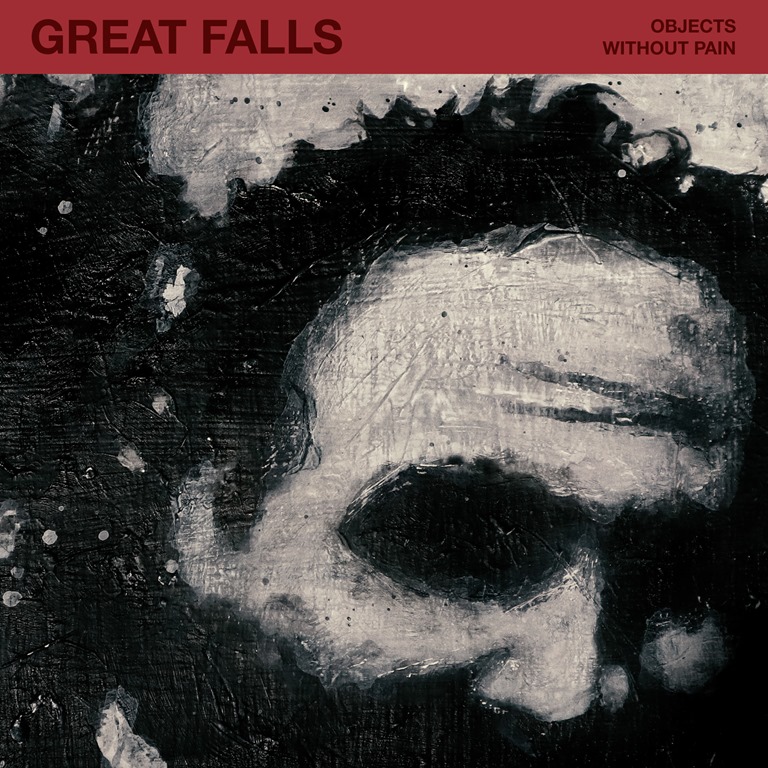
In this context, the concept of objects without pain is almost inconceivable. No pain? Oh, to be inanimate… But as the accompanying notes soon render apparent, Great Falls’ fourth album is a work which plunders a whole world of pain: ‘Objects Without Pain takes us on a bleak, purgative journey through a separation – a snapshot of the turmoil and indecision that occurs after the initial realization of someone’s misery, and before the ultimate decision to end a decades-long partnership. From the foreboding intro riffs of ‘Dragged Home Alive’ to the end of the 13-minute closer ‘Thrown Against The Waves,’ its eight tracks explore the thoughts that come up when a person is staring down the barrel of blowing up their life: How did this happen? Is it too late for a new life? Will the kid be OK? What will make me happier: familiar torment or unknown freedom?’

This is dark, alright. And it’s weighty, but not always in the most obvious sense. Indeed, the nine-minute opener, ‘Dragged Home Alive’ begins with nothing but a clean guitar, strummed scratchily. But then the vocals, a pure howl of anguish, tell us this is not some mellow folksy effort, and from there it builds, and when the bass and drums kick in, it’s nothing short of explosive. The drums are fast, nuanced, dynamic, almost jazzy, while the bass is thick and squirmy, it’s the sound of a snake wrestling to escape the hold of a human, and everything comes together with such fiery force you feel dizzy, whiplashed, battered from every angle – then the second half is almost another song; still slow, still heavy, but with a very different sound and level of energy, and it fucking pummels. This is powerful stuff.

They keep the riffs coming thereafter, too, as they deliver obliterative volume and endless anguish and emotional torment of a failed relationship and its fallout. It’s not pretty or poetic, but the internal monologue and the conflict laid out straight in real-time, churning through questions of blame and sifting through belongings, bald vignettes and depictions of packing, moving.

I spend my day

Searching homes

And I can be

Alone for real

I spend my day

Searching towns

And I can be

Searching alone

And I can be

Searching alone

I can’t do this

It hits hard because it’s so, so raw, so real, so much a real voice, unfiltered and rendered overtly lyrical. And because of this, rather than in spite of, the lyrics are true poetry. The pain is real, and you feel it.

‘Born as an Argument’ is considered, slow, dolorous, but also raw and ragey, and with its double-pedal drumming, it’s heavy-hitting. Even winding down to soft, almost folky vocals to fade, the heavy mood lingers, and then ‘Old Words Worn Thin’ crashes in with lumbering bass and vocals screaming anguish. The bass that crunches is at bowel-level on ‘Ceilings Inch Closer’ is the definition of energy, channelling all of the negativity and conflicting emotions into something so sonically solid the impact is physical.

As a label, Neurot has a knack for finding bands which are ‘like’ Neurosis but different, with Kowloon Walled City recent standouts for their brand of stark, bleak, nihilistic heft, and, on the same pile, Great Falls. Only, while sharing that heavy nihilism and the roaring rage of Unsane, they stand apart from so much of the label roister by virtue of their sheer force and absence of breathing spaces. Breathing is for wimps. Suck it up and plough on. Bathe in the brutality of Great Falls. Absorb the pain, and grow stronger for it.

AA
779849

Neurot Recordings – 30th September 2022

Christopher Nosnibor

Tension Span’s debut is quite a departure from the majority of Neurot releases and Neurosis offshoots, of which there are now many. Comprising Noah Landis (Neurosis, Christ On Parade), Geoff Evans (Asunder), and Matt Parrillo (Dystopia, Kicker), the blurb hails the arrival of an album that uses ‘the musical language of their past, the dark punk of their early bands… that infuses classic elements of punk and post-punk, and sounds both urgent and personal, speaking truth to the bleak realities of today’s socio-political collapse, and the angst and identity crisis it brings’.

And The Future Died Yesterday delivers on that, in spades. It’s spiky, jagged, angular, the guitars brittle yet driving and everything is driven by an agitated, twitchy bass that hits on every bear of the relentless four-square rhythms. It’s pitched as for being for fans of Killing Joke, New Model Army, Conflict, and Rudimentary Peni, among others, and there’s a keen sense that Tension Span are drawing on elements of classic anarchist, anti-authoritarian, anti—capitalist punk and post-punk as a means of channelling their ire. It’s the spirit of the early eighties, condensed into an adrenaline-fuelled package that makes perfect sense in 2022. What goes around comes around, but this time around it’s harder and more dysfunctional and powered by the Internet.

It’s harder because it’s difficult to differentiate fact from fiction, and because no-one has any time anymore. Everything is pressure, and everything is relentless. Everyone seems to spend every hour chasing their tails, chasing pay, or otherwise struggling to keep up with life. Even leisure time is competitive as people battle to keep abreast of the latest Netflix binges and post their viewing on social media, from simple posts on what they’re watching to full-blown critiques… and seriously, fuck the fucking lot of it and get a grip! As a society, we really don’t help ourselves.

Not so long ago, the press was all over employees regaining control of their work / life balance, embracing hybrid working that involved more time at home and less in the office, and there are endless column inches devoted to ‘the great resignation’ and ‘quiet quitting’ (aka doing the job you’re paid for instead of doing your manager’s job for your own pay) or whatever. It’s all bullshit, and it’s all manipulation from the controllers of capital, designed to keep workers in check and maximise productivity. But who benefits from productivity? Not the productive worker.

The trouble is, so many are simply too preoccupied or busy to notice, let alone complain. ‘Climbing up the ladder when they’re on a fucking treadmill,’ a line from ‘Crate Song’ (a snarling blast that combines the vintage punk of The Sex Pistols with the snarling contemporary nihilism of Uniform sums it all up perfectly. Society says that careers are imperative; the government certainly does. But why? And why does the majority blindly accept this? Because they need the money – and the enhanced benefits of a career climbing the corporate ladder – to keep up.

Tension Span articulate the fury at this false societal construct which exists primarily as a tool oof oppression. The title brings home the bleakness of view: there is no future now. We’re doomed, fucked. This was the mood that permeated the late 70s and early 80s.

The shadow of early PiL looms large over The Future Died Yesterday, and is nowhere more apparent on the bass-led bleakness of the six-minute ‘Filaments’ with its motoric Krautrock vibe, where The Cure and Killing Joke collide in an ocean of reverb. ‘Trepidation’ is built around a thudding flange-coated bass that’s pure Cure, but the vocal is more metal, and this is heavy, oppressive stuff.

Instead of breathing life, ‘Ventilator’ is a furious assault that requires no explanation in the context of the last couple of years, and the second half of the album picks up the pace to deliver a succession of sonic assaults on the shitshow that is America. But it’s not just America: this is the world right now, and it’s fucked, as ‘Human Scrapyard’ attests most succinctly: ‘Out with the old, in with the new…’

The Future Died Yesterday is a dark album – but these are dark times, making this a perfect soundtrack.

Neurot Recordings – 6th May 2022

Christopher Nosnibor

There’s something about Neurot: as a label, it certainly has a distinct ‘house style’, and if it does seem to be predominantly in the vein of Neurosis, then Ufomammut’s latest offering, Fenice,  is simultaneously definitive and a departure, in that it’s clearly metal in persuasion, and given to long, slow, and expansive workouts, with the majority of the album’s six pieces running (well) past the seven-minute mark. It’s delicately-paced, too: it’s not all a crawl, but the crescendos land a fair way apart and the build-ups are long and deliberate.

Opener ‘Duat’ is an absolute monster, clocking in past ten and a half minutes, and beginning with ominous dark ambience and slow to a crawl electronics, before a surging techno bass grind cuts through and pulses away. It’s three and a half minutes before the guitars pile in, and when they do, everything comes together to forge a piledriving industrial blast: for a moment, I’m reminded of Nine Inch Nails’ ‘March of the Pigs’, but then things switch again with a tempo change, slowing to a lumbering thud. It builds from there, and the final minute hits that sweet spot of pulverizing riffery that is pure joy. Ufomammut may be a ‘doom’ band by designation, but this is some of the most dynamic progressive metal you’ll hear.

Having set the bar so high so early, the challenge is, can they sustain it? ‘Kepherer’ is a dank, semi-ambient interlude that provides some much-needed breathing space. ‘Psychostasia’ starts off gently, but again, builds into a really slugger, the riff hard and repetitive, the vocals half-buried amidst overdrive and reverb, and it’s so, so exhilarating.

It takes an eternity of a slow, nagging cyclical motif, rich in chorus and reverb, before ‘Metamprphoenix’ breaks, and segues immediately into the throbbing behemoth that is ‘Pyramind’, where things do, finally, hit all-out doom grind with the heaviest, most crushing power chords. The bass goes so low that it practically burrows underground, while the guitars soar skyward. Closer ‘Empyros’ is the album’s shortest track, and it’s three minutes of punishing guitars that pick up precisely where ‘Pyramind’ leaves off and just drives and drives and drives, churning, hard, heavy.

If you’re seeking instant gratification, Fenice isn’t the album you want, but that doesn’t mean that it by any means feels drawn-out or like there’s much waiting involved: despite the lengthy songs, and the slow-builds, the textures and atmospheres are remarkable. I have a friend who loves his slow-burning metal and math-rock, but hates Amenra because he finds them insufferably tedious. Personally, I’m a fan, but I get the impatience, and it is largely around this kind of slow, earthy metal where time stalls and aeons pass between events, and the builds take several lifetimes to come to any kind of fruition – but this most certainly isn’t an issue for Ufomammut on Fenice. The compositions twist and turn and continue to not only hold the attention but to tug at the senses, keeping the listener on edge, poised, tense, expectant. And they always deliver on those expectations.

There is a clear and definitely trajectory here, too, building over the last three pieces to a point where the riffs are dominant – megalithic grinds that hit hard. Fenice makes you feel a broad range of things: boredom or disappointment aren’t among them. It does require some work, but it’s amply rewarded.

AA

465952

As Italian masters of heavy psychedelia Ufomammut prepare to release their ninth full-length album, Fenice, through Neurot Recordings in early May, they have just shared a video for ‘Pyramind’.

For more than two decades, Ufomammut has combined the heaviness and majesty of dynamic riff worship with a nuanced understanding of psychedelic tradition and history in music, creating a cosmic, futuristic, and technicolour sound destined for absolute immersion. Fenice, “phoenix” in Italian, represents endless rebirth and the ability to start again after everything seems doomed. The album is the first recording with new drummer Levre joining Poia and Urlo, marking a new chapter in the band’s history and unveiling a more intimate, free sound for the group.

The second single from Fenice, ‘Pyramind’ is delivered through a visualiser filmed in a scenic rural setting in Italy. Guitarist Poia reveals, “To choose a single track from Fenice isn’t easy, because the songs are long and linked together, and the flow results are incomplete. But we think that ‘Pyramind’ represents in a very clear way Ufomammut’s two-souls attitude: the heaviness melted down with psychedelia.”

Watch the video here:

AA

LIVE DATES:

07.05.22 – Alessandria (IT), Laboratorio Sociale – Album release party
14.05.22 – Mezzago (IT), Bloom
24.05.22 – Vienna (AT), Arena
25.05.22 – Karlsruhe (DE), Dudefest
26.05.22 – Bremen (DE), Tower
27.05.22 – Ghent (BE), Dunk!festival
28.05.22 – Groningen (NL), Vera
29.05.22 – Berlin (DE), Desertfest
30.05.22 – Dresden (DE), Chemiefabrik
31.05.22 – Salzburg (AT), Rockhouse
10.06.22 – Munich (DE), 17 Years Sound of Liberation Festival
11.06.22 – Piacenza (IT), Desert Fox Festival
24.06.22 – Wiesbaden (DE), 17 Years Sound of Liberation – Official Festival Warmup
26.06.22 – Clisson (FR), Hellfest
18.08.22 – Pescara (IT), Frantic Festival

AA

Ufomammut_1-9900000000079e3c

Photo by Francesca De Franceschi Manzoni.

On May 6th Italian alchemists and power trio Ufomammut return with their ninth studio album, Fenice via Neurot Recordings and Supernatural Cat, but not as we’ve heard them before, now “more intimate, more free.”

For over 20 years, the band has combined the heaviness and majesty of dynamic riff worship with a nuanced understanding of psychedelic tradition and history in music, creating a cosmic, futuristic, and technicolor sound destined for absolute immersion.

Fenice (meaning Phoenix in Italian) symbolically represents endless rebirth and the ability to start again after everything seems doomed. The album is the first recording with new drummer Levre, and truly marks a new chapter in Ufomammut history.

“I think we lost our spontaneity, album after album,” says Urlo. “We tried to make more complicated songs and albums, but I think at some point we just ended up repeating ourselves. With Fenice, we were ready to start from zero, we had no past anymore – so we just wanted to be reborn and rise from the ashes..”

Whilst the band are well-known for their psychedelic travels into the far reaches of the cosmos, Fenice is a much more introspective listening experience. Fenice was conceived as a single concept track, divided in six facets of this inward-facing focus. Sonic experimentations abound in the exploration of this central theme; synths and experimental vocal effects are featured more prominently than ever before as the band push themselves ever further into the uncharted territory of their very identity.

Check out the video for ‘Psychostasia’ here:

AA

Uff

Neurot Recordings / Gilead Media – 8th October 2021

Christopher Nosnibor

Less is more. This is something that few bands appreciate or understand half as well as Kowloon Walled City. And less doesn’t have to mean less intense: if anything, it’s a major factor in the ‘more’ element of the equation. Instead of hitting the listener with hard volume, relentless drumming, and gnarly distortion, Kowloon Walled City distil emotional pain into something simple and direct, and in doing so achieve optimal impact.

Their last album’s crushing weight derived not from its pace or even its volume, but its sense of space. Instead of filling the air with big noise, each chord crashed down hard and rang out into silence. In that space, Singer/guitarist Scott Evans’ vocals conducted pure anguish and blank nihilism. No throaty metal stylisation or posturing, just a kind of shouting – a shout of pain, of psychological torture – the torture of existence.

It’s the space between the sound that they’ve explored in the evolution of their fourth album, Piecework – their first output in six years. Make no mistake: Piecework is fucking heavy. It packs some utterly gut-punching, seismic riffs that drive hard, and when they hit, they’re utterly pummelling. But it’s the bleakness, and the blankness, that’s most affecting, that really hits the hardest. In the first instance, it’s simply so raw, so unprocessed. With the vocals clean and up-front, it’s the humanity that’s at the fore.

Not that there was any fat on Grievances, but with Piecework they pare it right down to the bone, and then scrape away a little more. Whereas most of the songs of its predecessor sat around the five or even six-minute-plus mark, Piecework packs seven songs into around half an hour. In cutting back so hard, the effect if heightened as the grey walls close in tighter, faster, more likely to bring a crushing end. The effect is cumulative, and there are no clear standouts on Piecework, only a sustained slug driven by a low, lumbering bass. It’s a bass that really churns the gut, and it has a physical force.

The production captures this dark, dense force perfectly, conveying a sound that feels live, that feels real. Wish you were there? Hell yes: we all need a bit of fortune, and Piecework is both beautiful and harsh. When they bring it down to nothing but a single note hanging in the ear, I’m reminded of latter-day Earth, and it’s clear that space and time matter.

As the press notes tell us, ‘Evans was dealing with the loss of his father during the writing of the album. He found strength in the women in his life, especially his maternal grandmother, who worked at a shirt factory in Kentucky for 40 years while raising five kids. The album name (and title track) is a nod to her line of work—and her quiet resilience.’ The lyrics are at once abstract and packed with images. There are no specifics, only scenes, and they’re bleak ones, of claustrophobic confined spaces, of deathbeds.

And it’s no criticism that this feels like an album of graft: the rhythm section ploughs on, and on, relentlessly, as if their duty is pure graft, digging, digging, digging. In the same way that early Swans was the sound of punishment, so Piecework is a soundtrack to the brutal reality of production-line capitalism.

The album’s predominantly slow pace is not the sound of rapid mechanisation, but of soul-sapping drudgery, the crushing weight of negative progress. There is no respite, no detours to bathe in moments of human kindness, the idea that for everything, there are glimmers of light and optimism. No, Piecework is an album with no let-up, in the way that Unsane are unrepentant, unremittingly grey in their outlook and execution. It hammers and bludgeons away at the senses and prods hard at the frayed nerve endings, the space and dead air speaking to the emptiness that hits us when the noise stops. Life is short and life is cruel, and Piecework is the perfectly merciless reminder of that.

065653

Oakland post-metal greats Kowloon Walled City have released a new track, ‘Oxygen Tent’.

Since their formation the band has been in a continuous cycle of refinement, gradually peeling away layers of grit and distortion to forge a singular vision of heavy music — yielding a pair of critically acclaimed albums along the way; Container Ships and Grievances.

The new song, their first in six years, distils things even further as the band continues into a new era of their career.  Listen to ‘Oxygen Tent’ below and stay tuned for more news soon.

AA

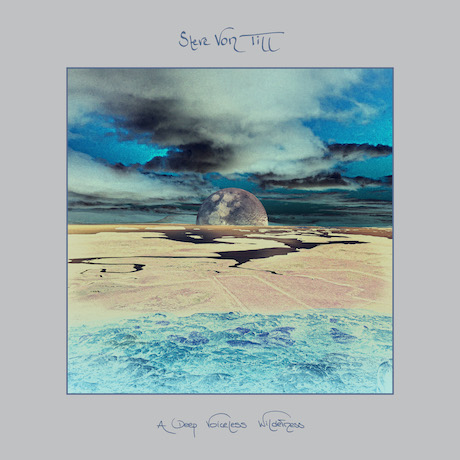
a2955954001_10

Steve Von Till shares another piece from his forthcoming ambient album A Deep Voiceless Wilderness approaching on 30th April via Neurot Recordings. "Called From The Wind" arrives by way of an elegant video from Chariot Of Black Moth, which can be viewed below. The track is also available on all the main streaming sites. About the video Steve comments, "Jakub Moth hints at the emotion behind a timeless story about humanity and landscape without saying too much, without limiting the universal scope of the sound. As I have removed the verbal language from the ambient version, he has added visual poetry to accompany it."

Watch the video here:

AA

index

Neurot Recordings – 7th August 2020

Christopher Nosnibor

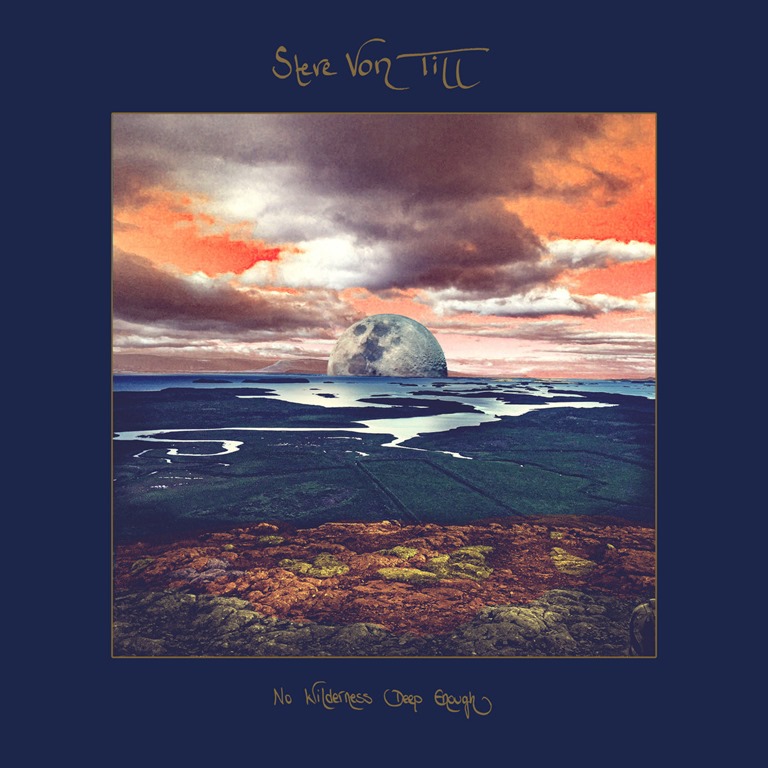
Stepping out from the Neurosis fold once more to deliver a fifth solo album since the turn of the millennium, Steve Von Till brings more grizzles bleakness across six lengthy songs. These are still very much songs in the conventional sense, structured, organised, focused, centred around melody and instrument and voice. And as the title suggests, No Wilderness Deep Enough finds Von Till wandering some dark, barren territories.

As is a defining feature of the Neurosis sound, there’s a richly organic feel to the music here. Brooding strings provide the core for the sparse but dark orchestral arrangements which dominate this bleak, acoustic-led album that places Von Till’s grizzled, growling vocals to the fore.

A sparse piano motif – which is almost a direct replication of Glissando’s ‘Floods’ plays out the outro on ‘Dreams of Trees’, the album’s first song, which is a low-key, percussion-free post-rock effort that tugs at emotional levels that have lain dormant for an eternity – or at least since we’ve all been clenched in the spasm of lockdown. It taps into a different and deeper psychological space.

It’s all remarkably low-key, so does actually require some attention to fully absorb, but some quiet time and contemplation soundtracked by No Wilderness Deep Enough makes for a quite moving experience.

Oddly, much of No Wilderness Deep Enough sounds more like I Like Trains fronted by Mark Lanegan, and the dark introspection of single release ‘Indifferent Eyes’ carries the same brooding, mood, and a sense of a cracked emotional state – ground down, world-weary, harrowed, and bereft, embattled, bloodied, but still standing. Von Till conveys all of this with a heavy-timbred creaking sigh, a ravaged, Leonard Cohen growl delivered with magnificent poise. You feel this: every note, every word.

AA

a3678735570_10

Steve Von Till reveals his new single and video ‘Indifferent Eyes’ from his forthcoming album, No Wilderness Deep Enough. The record’s six pieces of music shape a hallucinatory landscape of sound that plumbs the depths of the natural world’s mysteries and uncertainties—questions that have vexed humanity since the dawn of time asked anew amidst a backdrop that’s as haunting as it is holistic.

About the track and video Steve remarks "Indifferent Eyes is perhaps the best example of how the process of creating No Wilderness Deep Enough pulled something very different out of me vocally;  something more expressive, more out on a limb and adventurous, and definitely outside my previous comfort zone. I am grateful at this stage in my artistic life to still have opportunities to challenge myself and grow. This past winter, photographer / videographer Bobby Cochran travelled up to our property in North Idaho to shoot this video.  I love any excuse to get outside and stay outside in the winter time.  We hiked, built fires, and shared many hours of great conversation about what is important in this life.  I think that energy comes through in this video albeit in a simple and understated manner."

It’s music to lose yourself in and unlike anything you’ve heard from Von Till. An album that’s devastatingly beautiful and overwhelming in its scope, reminiscent of the tragic ecstasy of Nick Cave and the Bad Seeds’ recent work as well as the borderless ambient music pioneered by Brian Eno, late composer Jóhann Jóhannsson’s glacial compositions, and the electronic mutations of Coil.

Watch the video for ‘Indifferent Eyes’ here:

AA

SVT

Photo credit: Bobby Cochran