Posts Tagged ‘Mortality Tables’

Mortality Tables – 17th October 2025

Christopher Nosnibor

Among their ever-expanding catalogue, Mortality Tables have put out a number of releases which are essentially singles or EPs, with this being one of them: with a running time of just over eleven and a half minutes, this single longform composition is only marginally longer than its title, but its creator, Michael Evill, has condensed a considerable amount of material and experience into this space.

As he writes, ‘I have created a movement which includes the last breaths of my beloved dog Watson. It also includes the last time I recorded with my most talented and wonderful best friend Gustaf in 2001, which I have slowed down so I (and you) can spend more time with him. There are the sounds of new stars being born – my own interpretation and ones ripped off from NASA through this modern internet connection we all have. Surely we own the stars still?

‘We have Aztecs having fun with drums. These were recorded live in Mexico, sadly not from the 14th century before we invaded. We have the hourglass from our kitchen, which Mat inspired me to sample. This was the first idea of this piece and everything else fell in to place very quickly as it’s been swimming in the back of my mind for a while.’

Clearly, some of these elements have deep emotional significance for Michael, but this isn’t conveyed – at least not overtly or explicitly – in the work itself. It’s a collage-type sonic stew, where all of the myriad elements bubble and roil together to form a dense soup, in which none of the flavours are distinct, but in combination, what he serves up is unique, and provided much to chew on. That this protracted food-orientated metaphor may not be entirely coherent is apposite, but should by no means be considered a criticism.

As Evill goes on to write, ‘this was the beginning, and I didn’t spend much time thinking about it and just coalesced those ideas.’ Sometimes, when seeking to articulate life experience, it doesn’t serve to overthink it. Life rarely happens that way: life is what happens when you’re busy thinking and planning. And just as our experiences aren’t strictly linear, neither are our thoughts and recollections. Indeed, our thoughts and memories trip over one another in an endless jumble of perpetual confusion, and the more life we live, the more time we spend accumulating experience – and absorbing books, films, TV, online media, overheard conversations and dreams, the more everything becomes intertwined, overlayed, building to a constant mental babble.

William Burrroughs utilised the cut-up technique specifically to bring writing closer to real life, contending that ‘life is a cut-up… every time you walk down the street, your stream of consciousness is cut by random factors… take a walk down a city street… you have seen half a person cut in two by a car, bits and pieces of street signs and advertisements, reflections from shop windows – a montage of fragments.’

This encapsulates the artist’s quest: to create something which conveys the thoughts in one’s head, to recreate in some tangible form the intangible nebulous inner life, if only to help to make sense of it for oneself.

‘Even Though It Was The Blink Of An Eye’ is a woozy, disorientating churn of noise, which is, at times, dizzying, unsettling, nausea-inducing. But then again, at other times, it’s gentle, even melodic, reflective, contemplative. There are some passages where it’s all of these things all at once. It very much does feel like a scan of the artist’s memory banks, the human brain equivalent of skipping through the RAM files and pulling items seemingly at random. It does feel somewhat strange, even awkward, being granted access in such a way, but at the same time, it feels like ‘Even Though It Was The Blink Of An Eye’ is more than an insight into the mind of one individual, but an exploration of the human psyche.

AA

a0518044244_10

Mortality Tables – 25th September 2025

Bryan Alka’s brief post on Facebook sharing the news of his new release, is revelatory: ‘Today we release my 5th full length on Mortality Tables. After a series of breakdowns… The Magnitude Weighs Heavy.’

The Magnitude Weighs Heavy is the third and final instalment of a of dark and brooding albums, the first two parts of which – The Colour Of Terrible Crystal and Regarding The Auguries – were released by Vince Clarke’s VeryRecords. Alka, and particularly Bryan Michael, has no small back story: ‘a Philadelphia-area artist who has collaborated with Vince Clarke (Depeche Mode / Erasure / Yazoo), Roger O’Donnell (The Cure), Christian Savill (Slowdive / Monster Movie) and Michael Textbeak (Cleopatra Records). alka was formed around 2000 as a return to his bedroom producing days, and as a cleansing of his disappointing experience within the Philadelphia indie rock scene.’

This thirteen-track album is epic, grand, expansive. It’s also an exercise is taut electropop with a decidedly early 80s bent. Because what goes around comes around, the whipcrack snare and noodly electronic drift which defines many of the tracks, despite being pure 1989, have a contemporary feel, too.

‘Soliloquiy’ drifts into dreamy electro shoegaze, mellow and atmospheric, rippling, and soaked with a certain sadness, however sturdy the beats remain. Elsewhere, as on ‘Creeps; its clearly an attempt to lock things down with pinging robotic beats

This feels like quite departure for Mortality Tables, given their learning toward abstraction an ambience, but they’ve always leaned toward the different, and this is a work which is unashamedly different. ‘Unravel’ is exemplary here: it’s got groove, and is ostensibly a bopping dance cut, and a far cry from the implications of the album title. But everyone deals with trauma, grief, and distress differently, and we all articulate our internal strifes by different means. ‘enchanté’ locks into a hypnotic groove, the likes of which I haven’t been so immersed in since I discovered The Dancing Wu Li Masters by 25 Men back in 2008.

For all that, there are large, ambient expanses, passages of stuttering electro which draw together elements of industrial alongside the layered dance beats. The ten-minute ‘an attempt to conjure quiet’ feels like it’s quite willing to delve deeper into noise, the very opposite of the quiet it claims to seek, and the duration of this album feels like a teetering on edge. I’m reminded of how my late wife would hassle an and harangue over details, over chores, and the tense, jittery tone which leads n this album at times tales me there. But if the dark mutter of ‘thee individual visions ov jhonn’ is dark with resonating melancholia, The Magnitude Weighs Heavy brings things back to the light. ‘Whatever Will Become’ is a hybrid of pop and bubbling electronica, busy but mesmerising in its concentric circles of sound, its abrupt ending jolting the listener back to the moment.

The magnitude may weigh heavy, but this album has a remarkable lightness, delivered with a deftness of touch.

AA

a2561728450_10

Mortality Tables – 1st August 2025

Christopher Nosnibor

The latest instalment of the ambitious and wide-ranging Impermanence Project curated by Mortality Tables is a document, as the artist explains, simply and succinctly: ‘This is the sound of my footsteps. I walk through some woods every lunchtime when I’m at work. I try to take a different route every day. The recording starts and ends at the office door. There are two gates which separate a lake – one of several – from the woods.’

This simple premise of recording a walk – a few seconds short of seventeen minutes in duration speaks on a number of levels: the first, in context of the project’s premise, is also the context of the walk itself – the lunch break at work. A brief window in which to seek separation from the work and the workplace. Too few workers really use this time as their own, with many scoffing a sandwich as their desk, or nipping to a canteen or a supermarket for a prepackaged meal deal, instead of something more beneficial to both physical and mental health. I must stress that I’m not judging, and it’s not easy, but as a walker myself, when I was office-based, I would make a point of getting out on a lunch-break, and now home-based, divide my day with a walk. This time out from work is but brief, but affords an opportunity to decompress, to recalibrate.

The fact the artist reports trying to take a different route every day is interesting. Treading new ground, or even walking a known route in the opposite direction, or otherwise questing for variety keeps things fresh, and opens one’s eyes to new sights. These things are often in the detail, but also change with the seasons, noting the changes in the colour of the leaves, a toadstool, hearing birdsong. The world is ever changing, and while work can all too often manifest as a groundhog day of ‘same shit, different day’ which often feels like ‘same shit, same day again – and what day even is it?’ the outdoors paints a different picture. Even when the realisation hits that it only seemed as though Spring was beginning to break mere weeks ago and now summer has past and the air smells of Autumn, and that nagging sense of another year having evaporated and life slipping past settled awkwardly in the gut – a soft but palpable blow which serves as a reminder of how short life is, the outward signs of the passage of time are evidence of being alive.

Listening to 17 Minutes, we get to accompany Xqui on their walk in real-time. They keep a decent pace, too, and as one tunes the attention, changes in echo, background sounds, the metallic scrape of a gate hinges, the different terrains underfoot, all become significant. There is traffic. There are few people, at least speaking along the way. I abhor having to listen to people’s conversations as I walk. And yet I find I’ve been unable to listen to music while walking since lockdown, and simply have to hear everything.

Although documenting a walk through woods, the backdrop to 17 Minutes sounds somewhat urban, or at least overtly inhabited, a setting where human presence dominates nature. A couple of minutes from the end, a gate swings and clangs shut. Although we’re not yet back at the office door, it feels significant. I even feel myself slump a little inside, feeling that passing through this gate – which in the opposite direction represents the opening up of a path to freedom – signifies the end of this escape. And with this, comes the hard appreciation of the fact that nothing last forever, especially not a lunch break.

AA

a1847342772_10

Mortality Tables – 11th July 2025

Christopher Nosnibor

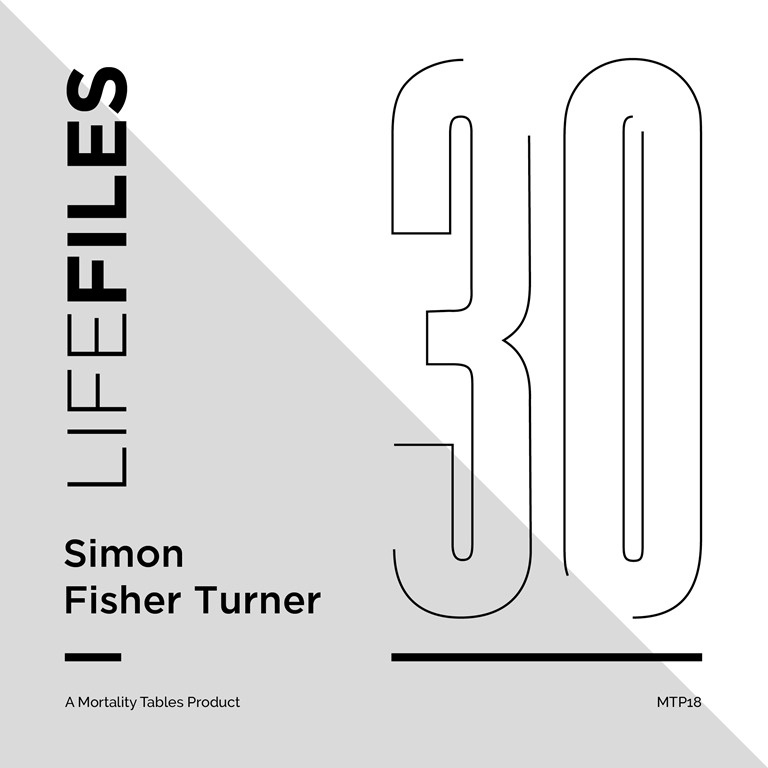
And so it is that the third season of Mortality Tables LIFEFILES series – and, indeed, LIFEFILES as a project, closes as it began just over two years ago, with its thirtieth instalment coming courtesy of Simon Fisher Turner. As such, this release is appropriately titled.

The premise of the series, which we’ve covered quite extensively here over the course of its running, is that curator and Mortality Tables label owner, Mat Smith, furnishes an artist with a field recording for them to more or less do as they please. Some of the reworkings and manipulations have been quite radical; others, less so. But what each has offered is a snapshot of a particular place at a specific time, reimagined and retold at distance by a third party. If this sounds rather absurd, it’s worth considering that this is essentially how history is formed – by the interpretation and re-presentation of primary source material to create a linear narrative. But how much can we trust the narrator? Even that primary source recording is just that – a recording. It is not the actual event. Therefore, with each revision, there is a move further away from the actual event. There evolves a certain historical layering, not so much akin to the degradation of a photocopy of a photocopy, but a drawing of a drawing, subject to ever-increasing distortions, deviations, corruptions.

As the accompanying notes inform us – quite factually – ‘The LIFEFILES series commenced in March 2023 with a piece by Simon Fisher Turner made using sounds recorded at an exhibition of works by the Memphis collective at Milton Keynes Gallery. The series concludes with a final piece from Fisher Turner, again using sounds recorded at Milton Keynes Gallery, this time at an Andy Warhol exhibition.’

This piece is only a little over eleven minutes long: a single or EP rather than an album – but Simon Fisher Turner packs a lot into that time. It begins with the slow-echoing of voices, a low mutter, the sound of voices, perhaps, chattering in a gallery – slowed and distorted, there’s a sense of discomfort, of the unheimlich, before a mid-range chimes in and hovers. So far, so ambient – but then some crushing percussion batters in and from nowhere things go a bit Test Dept. Trudging industrial beats slog away relentlessly, and they’re multi-layered and multitracked and hammer away from all angles in surround sound. There are some lulls, some drops in pitch and volume, occasional rests in tempo, even – but this is first and foremost a full-on beat assault. The speakers crunch and crackle and the beats thump and stomp.

Glitching, grinding bass enters the fray around the mid-point, albeit briefly, before swiftly vanishing, replaced instead by a subsonic sonar – and then things really get ugly. There’s a violence to this beat-driven blast, which even during the moments where it’s taken down a notch or three, there’s a sense of menace, something underlying that’s uncomfortable. The delicate chiming of a singing bowl or somesuch in the last couple of minutes, even when it yields to a quiet, low rumble, does little to dissipate the tension which has built – and built. But in the end, as is always the case, the ultimate end is silence. And so it is that the circle finally closes.

AA

AA

cover

Mortality Tables – 20th June 2025

Christopher Nosnibor

Lunar Forms is Rupert lally’s second release on Milton Keynes label Mortality Tables, following his Interzones album, released in November last year, and forms part of the latest ongoing project by the label, dubbed The Impermanence Project (which so happened to feature a tense but lugubrious ambient work by some guy called Nosnibor a short while ago).

Sometimes, while I try to work through my review pile in a broadly systematic way, I have to reshuffle my priorities according to mood. And right now, my mood is jittery, jumpy, tense, unfocused, meaning that what I need is something fairly gentle, somewhat abstract, if not necessarily ambient. But also something which feels relevant, in some adjacent fashion. And so here we are: bombs are dropping and missiles are flying, and it’s maybe easy to dismiss it as taking place at a safe enough distance away…. But is any distance truly safe enough?

And so, it’s necessary to seek solace in distraction, solace in abstraction, something that offers layers and textures that draw you in, captivate the attention… but at the some time, offers something more to reflect on while listening to the glitches and echoes, woozy, skitty fragments of analogue pull my attention in different directions.

Impermanence… as polyartist and the innovator of the cut-up method, Brion Gysin said, ‘we’re all here to go’. And we are. We fear it, but it’s impossible to escape the inevitable. It’s not a question of if, but when.

Lunar Forms transitions between stuttering, glitching minimal techno and slowcore EDM, and more expensive, cinematic instrumental sounds which are overtly ambient. Electronic fuzzed and buzzes spark over swirling soundscapes, and at times we’re led into Tangerine Dream territory, while at others, we find ourselves adrift. The fact that, including bonus tracks, Lunar Forms features eighteen pieces, and has a running time of some seventy-four minutes, is significant. It’s a vast and expansive work, and one which is easy to get lost in, since the tracks are distinguished only numerically, ad those numerical titles are not tagged sequentially.

There is a lot of dark atmosphere, a lot of rumbling. There is much haunting reverb, considerable space, a great deal of bubbling, blipping, hovering. The deeper it plunges into spacious, cloud-like disturbance, the more immersive and simultaneously the more the power of this work increases. Breathe deep… and feel everything this represents. ‘313’ May be sparse, but it also edges its way into the space between dance music and the BBC Radiophonic Workshop, while ‘325’ pitches jittery microtonal beats against sonorous strong-like sound. It’s simultaneously tense and introverted, and outward-facing through cloud. The beats of ‘303’ are like the dripping of a tap amidst synthesizer drones and swirls. And it goes on. As such, Lunar Forms is more than varied: it straddles boundaries in a way which renders it almost impossible to place.

AA

cover

Mortality Tables – 16th May 2025

Christopher Nosnibor

Just three weeks after the previous instalment in the extensive LIFEFILES project from Mortality Tables, now in its third season, comes what promises to be the final instalment for now. And all proceeds from this release will be paid to CALM – the Campaign Against Living Miserably. It seems fitting, given that life can often feel relentless, amped-up stress and bewilderment, and the LIFEFILES series has presented, over its duration, works which take the listener into audio representations of calmer environs. I write this as someone who has, in recent years, factored a daily walk into their routine, as much for the mental health benefits as for the physical exercise. A change of scenery, particularly in open spaces and away from crowds, can be a transformative experience.

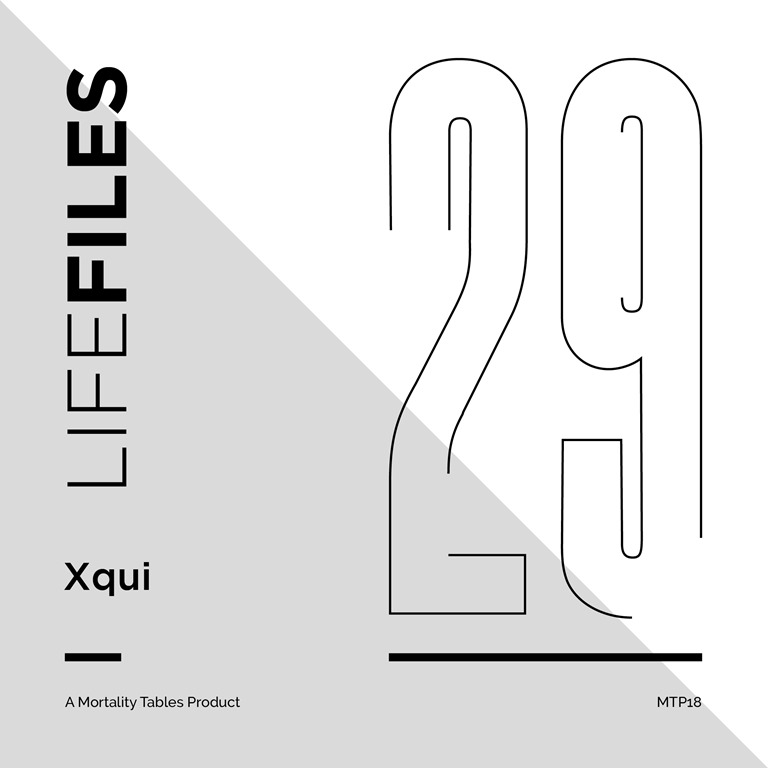
The premise of the series, for anyone who hasn’t seen any of my previous coverage, is that the artist is given a field recording, captured by Mat Smith, who runs the label, to respond to in any way they feel appropriate. For this release, the accompanying notes record that the two tracks have been constructed using ‘Source recordings made by Mat Smith at Charing Cross Underground Station on 27 November 2021, as part of a Hidden London tour of disused areas of the station and areas not normally accessible by the public.’

In addition, there’s an excerpt from Smith’s journal, from the same date, which reads as follows: “…walked around the old station section of the Jubilee Line that isn’t used any longer, went into a construction tunnel underneath Trafalgar Square which had a bend in it to avoid the foundations of Nelson’s Column, and then finished up in a ventilation shaft above the Northern Line platform…”

Xqui’s treatment of the recording is interesting, taking the form of the ‘classic’ experimental work, the likes of which you’ll find on labels like Editions Mego, with a single longform track occupying each side. The first, ‘Charing Cross Underground’, captures the voice of what may be a tour guide, spun out in reverb and glitching echo, while trans rumble in the distance, before slowly melting into ambient abstraction. It’s like hearing the ghosts of the underground, rising up through the disused tunnels, calling out to the present to remind us of the past beneath our feet. There are flickers of chatter, as if, here in the present, we continue to talk without ever stopping to listen. Voices warp, slow, slur, distort, and it makes for an unsettling fifteen minutes.

‘Reverb Underground’ goes slower, more spacious, more echoey. I had half-expected something resembling a dub version, but instead, Xqui slows and stretches everything beyond recognition, creating a slow-motion blur, a crawling ambient drone. The sound simply hangs, dense, suffocating. Time stalls, and you find yourself floating, in suspense, in a fugue state, as the sound lifts free of context and embraces pure abstraction.

What Xqui manages to convey on this release is a sense of history, of space, of time, and the way we’re so busy rushing about in our daily lives that we never pause to contemplate the echoes of the past which exist, and linger all about us.

AA

cover

Mortality Tables – 24th January 2025

Christopher Nosnibor

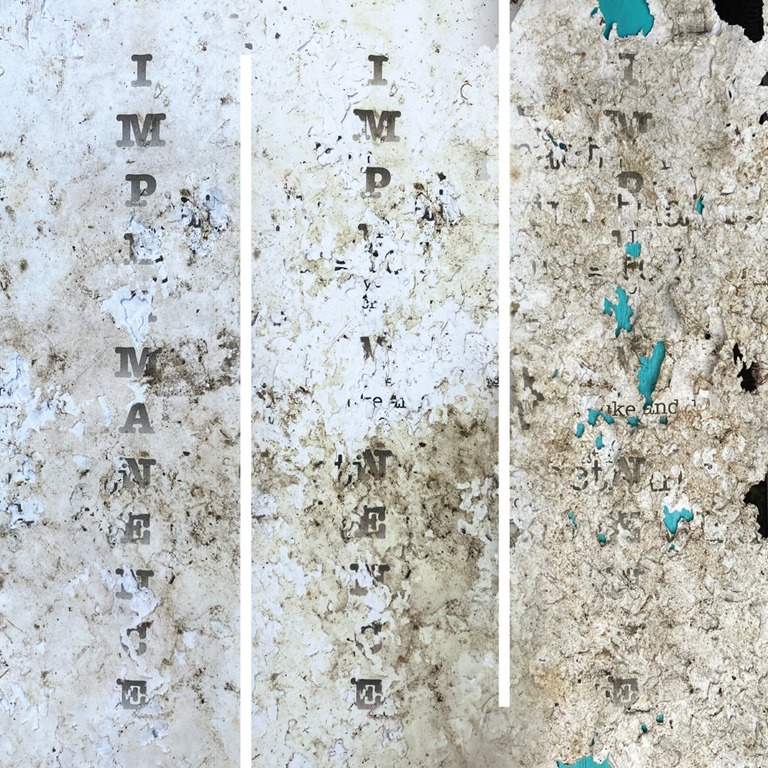
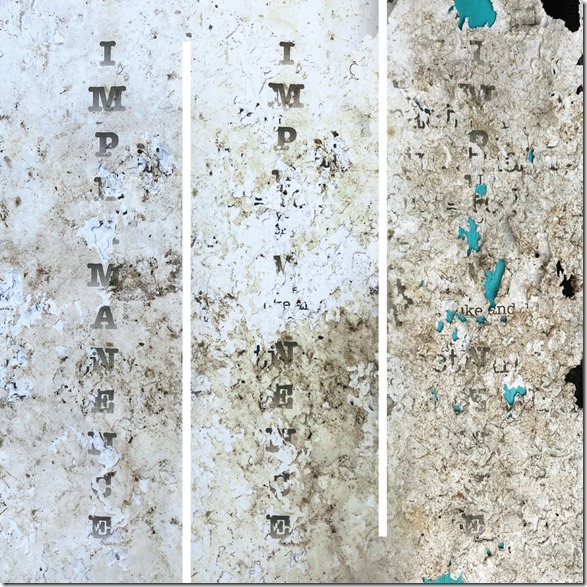
One might say that this release has been a long time in coming – but from old works, left languishing, emerge new ideas having steeped over time. Initially recorded for an event in 2001, and having languished for almost a quarter of a century, An Impermanence now spearheads the latest project to emerge from the ever-inventive Mortality Tables. The Impermanence Project is set to be ‘a large-scale, multi-disciplinary collaborative initiative that will run for the remainder of 2025 [whereby] each member of the Mortality Tables Collaborator Community will be invited to contribute a response to the word “impermanence”.’

The bar is set high for the project with this opening gambit, which is a spectacularly dramatic work, even by the label’s standards. I shall return to this presently, but shall, momentarily, step back and quote at greater length than usual in order to set out the concept and evolution:

An Impermanence was conceived as a total conceptual piece of audio art based around several field recordings made with a dictaphone. In the event, for An Impermanence, only one recording was used, a 25-minute recording of an evening maintenance visit to an open-plan bank’s rising security screen system. This recording consists of a variety of interesting sounds, ranging from confirmation noises of ATMs, the expulsion of air pressure from the screen equipment, to occasional conversations and typing at a keyboard. The random, inherent unpredictability of field recordings created the feelings of impermanence that gave the track its title.
The field recording was mastered ‘as is’ to CD twice to enable continuous playing across two CD players. To add to the queasy feeling of everything ultimately being temporary, the CDs were processed completely live through a sequence of effects units, creating an unpredictable sonic onslaught veering from quiet passages of calm introspection to blazing flurries of electronic feedback and onward to the sculpting or white noise into digitally-synthesised modulations, continuing long after the actual CDs had finished playing.

The whole 54-minute track was recorded entirely live in one take without overdubs or editing, and is presented in its complete, unprepared form.’

It’s hard to conceive that this whole, fifty-four-minute work was recorded in a single take. Having been recorded on a Dictaphone, there’s distortion, there’s interface, there’s crackle. It takes some listening. What sounds, initially, like crackling noise and a load of distortion and flange, is, on closer listening, a siren – probably. It’s certainly something, anyway.

Blasts of noise like avalanches, like bombs, assail the speakers: there are bursts of ear-piercing feedback, gut-shuddering grumbles like earthworks and slow tectonic collisions. There are protracted spells of shudders and sparks, crackles and fizzes, sounds like fireworks and the hum of traffic. It’s nigh on impossible to actually place most of the sounds, and for the most part, this immense track sounds like little more than the rush of wind and things breaking, the crackling sound of tension reverberating inside your skull. As much as there’s no placing the sounds, there’s no escape from the torment, either.

And yet… and yet. I used to walk around with earphones wedged firmly in my lugs as I traversed from my house to the bus, then sat on the bus for half an hour, before then walking a few hundred yards to the office, and then in the lift and finally arriving, an hour later, at my desk. With the arrival of lockdown, the onset of a new anxiety meant I felt no longer able to listen to music as I went places – but instead, I became attuned to my surroundings, at all times. And there is always sound: birdsong, the breeze in the trees, traffic, planes or helicopters overhead, water trickling down drains, the babble of conversation the whirr of bikes passing, the thud and pant of joggers who pass so close as to buffet you with their air movement, and dogs, dogs, dogs, so many fucking yapping, gasping, snapping, shitting dogs, running off lead and at will. There is no escaping sound, and while the sounds on An Impermanence feel amplified, intense, unpleasant, overloading, they do very much seem to recreate the outdoor experience of the hypersensitive.

Keep your ears open. Stay vigilant. The world is everywhere. If the rest of this series is even half as intense, it will be… an experience.

AA
a2246862507_10

Mortality Tables – 17th January 2025

Christopher Nosnibor

Given Mortality Tables’ liking for location-based field recordings, Circuits From Soft Frequencies makes for a comfortable fit in their rapidly-expanding catalogue.

As the liner notes explain, Circuits From Soft Frequencies originated ‘as a four-channel sound art installation developed using field recordings from sites around the South East of England.’

‘Drawing on soundtracks taken from 70s minimalist sci-fi films, both the samples used and the overall composition are based on different terrains encountered during Jamie’s field trips, describing huge shingle beaches, swamps and clifftops. The installation which was exhibited at MK Calling in Milton Keynes during the summer of 2024 also consisted of fabricated ‘cymbal speakers’, incorporating sensor-based technology to respond to changes in their environment.’

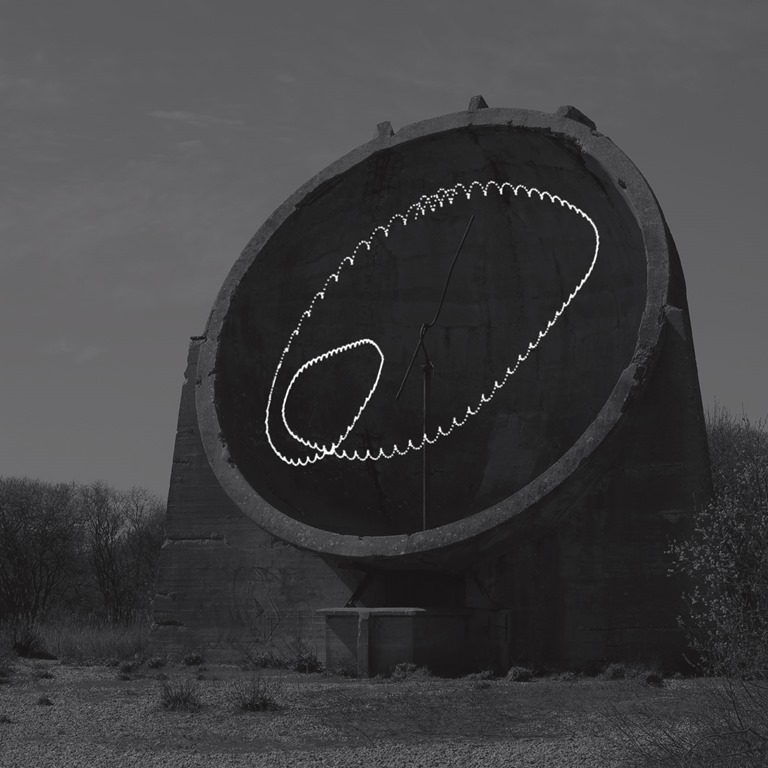
The cover art depicts one of the ‘sound mirrors’ which were constructed at various sites around the UK shortly between the world wars as an experimental early warning system, as a precursor to radar. While there are sound mirrors at two sites in Kent, those at Denge are the most renowned and best preserved, and it was here, one assumes, that the recordings of percussion, ‘incorporating cymbals, bells, gongs and clocks’, took place.

The installation, the notes go on to explain, ‘repurposes four cabinet speakers to transmit sounds collected during field trips to sites featuring [the] huge, concrete sound mirrors’.

This release contains a nineteen-and-a-half-minute recording of the installation, and highly atmospheric it is, too. Ther ticking watch not only keeps time, but gives a sense of tension and urgency which runs fast, in contrast to the long, low, reverby thuds and slow splashes of cymbals. That everything – apart from the watch – sounds somehow dulled, muffled – only adds to the atmosphere. It’s likely that this eerie, swampy echoiness is the product of the location, which features not only the thirty-foot concave ‘ear’ shown on the cover, but a two-hundred foot concrete wall. Images of the site stir the imagination, and one gets the impression to actually be in the presence of these strange-looking objects must be truly awe-inspiring. The sounds which emanate from the speakers while listening to Circuits From Soft Frequencies evoke the same sense of the alien, the otherworldly. Spurs of noise occasionally burst through, interjections of dissonance pulse through the building layers of sonic collage to unsettling effect.

It’s a reminder that often, the most alien and seemingly otherworldly creations are, in fact, man-made – and often connected in some way to war, and mankind’s destructive tendencies. I was struck, not so long ago, by the quite chilling experience of touring the cold war bunker in York – not a place of refuge, but a cramped and claustrophobic subterranean observatory which, in the event of the fulfilment of its purpose, would assure the deaths of its crew.

The sound swells and glitches, scratches and hums, and at times exudes a nightmarish quality that makes your muscles tense and your scalp tighten and crawl. It’s a remarkable piece of work, but one of those where the end comes as something of a relief.

AA

cover

Mortality Tables – 10th January 2025

Christopher Nosnibor

Ambient music is, in many ways, music for reflection. Or perhaps, music which provides the backdrop to reflection. Time was that I had very little interest in ambient music, but I have come to appreciate it has having quite significant functions, whether by the design of the artists or not. Reviewing requires a level of focus and attention that regular music listening does not, and when it comes to ambient works, a greater level of attention is necessary: I feel there is a requirement to tilt the ears and pluck out the details, the textures, to venture into the depths to extrapolate the moods and meanings. Sometimes, I fail, and find my mind wanders down different paths as space opens up through sonic suggestion, and random associations are triggered completely unexpectedly. Regardless, ambient music is generally best received in darkness, or by candlelight. Please… close your eyes and absorb without distraction.

As Oliver Richards – aka Please Close Your Eyes – writes, “Music for Floating is a document of transition. It collects pieces that were made over a three year period, nearly three years ago. They were all made before my last Mortality Tables release, ‘Nibiru’ / ‘Heaven On The Fourth Floor’…It’s a consciously-composed modern classical album. I have no classical training at all, but when I was making it, I set out with the intention of composing for the first time, consciously and intentionally. The music I made before under the name Goodparley was all created improvisationally and instinctively. With this I would step back and ask myself, ‘What am I actually going for here?’”

I ask myself this question often, and not just about creative endeavours, but life generally. How many of us really have any idea, about anything? Music for Floating, then, provides a magnificent soundtrack for contemplation and reflection, on the world, on life, and all things. But it’s not simply an ambient work: it’s a collection of pieces which span a broad sonic range, and while gentle and mellow throughout, there’s much more to it than drifting clouds and soothing sonic washes.

There’s something of an underwater, soft-edged soporificness about ‘The Moment Before We Sleep’, and it’s one of those pieces which lends itself to immersion and letting oneself cut adrift. In contrast, ‘The Hollow’ brings a busier, more bustling feel, not to mention something of a progressive vibe, as synth piano ripples and rolls with waves of energy. Augmented by synth strings and other elongated, organ-like sounds, the seven-minute ‘Piano for Floating’ is a standout, compositionally, structurally, and sonically. It’s subtle, layered, and casts the listener adrift on a rippling expanse of tranquil sound. Music like this has a profound effect that’s both physical and mental: you can feel your spine elongating, your muscles gradually becoming less knotted. I find myself yawning, not out of boredom, but through a rare relaxation.

At under three minutes, ‘Deeper Blue’ provides an interlude at what stands as the notional start of side two, before the six-minute ‘Heaven, Faced: or, The Fairies’ Parliament’, and the epic finale, the nine-minute ‘The Time Before the Last’. The former traces shimmering contrails through an azure sky; it’s the sound of slowly rippling aroura, of silent snowfall in a windless winter sky, of your mind spinning in amazement at the wonder of natural phenomena… while the latter brings slow abstract drifts which evoke the vastness of space, eternal in its expanse. It’s bewildering, but so, so calm… Time evaporates, and nothing matters. There is nothing.

AA

cover

Mortality Tables – 24 December 2024

Christopher Nosnibor

There’s something about Christmas that really does send people spiralling in one of two directions. The people who absolutely love it seem to love it just too much to be considered sane, and this year has been one of the worst I can remember for people actually buying chocolate and putting their trees up almost immediately after hallowe’en. Amusingly, I’m seeing them taking down their trees and decorations from Boxing Day, declaring that they’ve had enough now. Well, it’s hardly surprising after three months. I really for feel sorry for the kids of these deranged households: it must be quite confusing for them, not least of all seeing their parents troughing whole selection boxes to themselves in November as they effervesce about the Christmas spirit and plaster their hedges, bushes, trees, and house frontages with lights – which is as trashy as it is environmentally unsound (‘oh, we use green energy, it’s 90% nuclear now!’) – only to tear them down a whole tend days before twelfth night. But these are the kind of people who call what they do – things like going to work and parenting – ‘adulting’ and piss and moan about it on social media, while posting pics of their decorations at the start of November. And it’s cunts like these who make me loathe Christmas with a passion I didn’t even know I possessed. They spoil it for more moderate, more sane people – and people who just despise other people and herd mentality twattery in general.

And so I’m with Mat Smith, the main man behind Mortality Tables, and am one hundred percent into ‘Grouch Thoraces (II)’, pitched as ‘The festive sentiments of a misanthrope, processed into dark and enveloping ambient texture. An updated version of a release from 2023’. In fact, I consider this to be a release that stands alongside – in spirit, if not necessarily sonically – with my own Festive Fifty noisework, released on December 20th. Against the tidal wash of syrupy, saccharine Christmas tunes – shit covers or endless rereleases or just the same toss that’s been the staple of the airwaves since the 70s and even earlier – nothing says ‘fuck this commercial Christmas shit’ like some dark noise.

‘Grouch Thoraces’, released on Christmas Eve in 2023 was a dank, murky cut, presenting just shy of five minutes of the most rumbly dark ambience. This year – to use a phrase I despise almost as much as the cheery festivity fanatics who bounce around the office in Christmas jumpers and Deely boppers or reindeer antler headbands and start arranging secret Santa and team drinks and buffets from the middle of November – Smith has doubled down on his anti-festive sentiments with a reworked ‘Grouch Thoraces’: this time it’s even darker and danker and almost eight minutes in length. It’s a churning, disorientating mess of stuff thrown together, found sounds and elongates drones twisting together to forge a thick morass of unsettling, uncomfortable noise. According to the credits, there’s a vocal by Carroll Spinney, but it’s submerged in the slow-sinking swamp. There are chimes clattering in the dark whorl of purgatorial noise, but they sound like the ching of broken decorations swinging in a post-apocalyptic nuclear wind as the survivors crawl, blind, skin peeling, through the ruins of what little remains.

On its own merits, this is a strong dark ambient work with a certain edge: in context, it speaks. Fuck this festive shit, fuck this commercial shit, fuck the obligation to socialise: let’s celebrate stepping back from it all and just getting through it, without feeling the need to pretend that we love any of it. We misanthropes need to stand together.

AA

a0412538683_10