Posts Tagged ‘layered’

Upset The Rhythm – 27th June 2025

Christopher Nosnibor

It’s rare to be presented with something that has no immediate or obvious reference or context in terms of other music. But this is where I find myself with This Material Moment, the sixth album by Me Lost Me. And so it proves necessary to delve into the creative process for what Newcastle-based experimental artist Jayne Dent describes as “the most emotionally raw album I’ve ever made”. And so it is that for this release, she utilised ‘the automatic writing techniques she developed during a workshop with Julia Holter, and in the process has spun her music in different directions that draws on poetry, psalms and using mesostic poems and phonetic translations to generate words.’

And in this context, This Material Moment makes sense – at least in its own way. While automatic writing has a long history, dating back to the 16th century, it grew in cultural awareness via Dadaism, before becoming synonymous with Surrealism, and that fact that the results have yielded Dent’s ‘most emotionally raw album’ should not necessarily be a surprise – the theory is that that the process is dissociative, enabling a free passage between the subconscious and the page, with the mind freed from the constraints of self-censorship and linear thought. And This Material Moment very much seems to present an explosion of unfiltered, often free-flowing ideas, untethered by the conventions of form or structure.

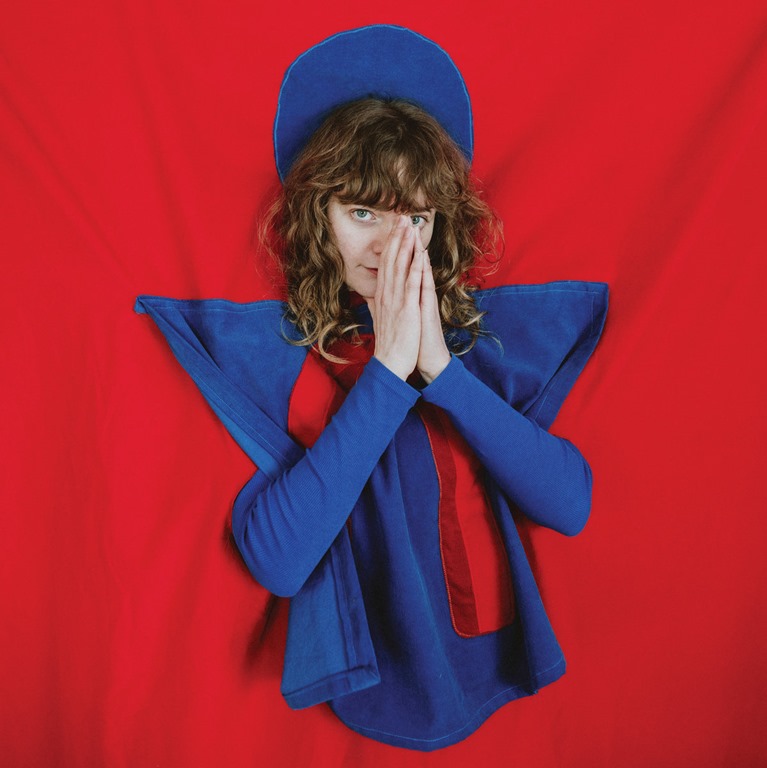
The cover art alludes to the album’s quirkiness, but in a way which rather too easy, a shade gimmicky, perhaps, failing to convey the level of nuance and complexity contained therein.

It’s on the second track, ‘Compromise!’ that the level of ‘otherness’ which defines the album. The drumming is weighty, serious, and Dent’s voice adopts an air of detachedness which is hard to define… there’s both a folksiness and elements of Eastern influence in the way it quavers against the dramatic, expanding backdrop which comes to resemble something of a mystically-hued, almost abstract, Burroughsian psychological interzone.

AA

AA

And so Me Lost Me leads the listener through a succession of dreamscapes which are often simultaneously idyllic and nightmarish. There’s a shanty-like tone to ‘Lasting, Not to Last’, but there are shrill, terrifying wails of strings or feedback which conjure images of dead souls trapped within this dimension. ‘A Painting of the Wind’ presents a sense of the unheimlich. It’s a lilting folk song… but something sits just to the left of centre, the instrumentation isn’t readily recognisable as anything, there are layer and something about is not of this plane. ‘I want to be carried away’, she intimates, and yes, perhaps so do I, I find myself thinking.

The clamour of church bells on ‘Still Life’ chimes a cord of an historical nature, evoking times past with a certain sepiatone sensation, but ‘A Souvenir’ strips everything back to an acapella – albeit multi-layered – delivery, with folk-influenced harmonies conjuring a sense of a bygone era which in many ways contrast with much of the album’s lyrical content.

I find myself flailing here: how to articulate the disconnections and disparities which are the very essence of this album? These disconnections and disparities are nowhere more highlighted than on ‘Ancient Summer’, where Steeleye Span style trad folk meets prog with a darker, almost goth vibe, with a dash of jazz and trip-hop thrown into the mix. ‘A Small Hand, Clamped’ may offer so many meanings in terms of its title: the words aren’t easy to decipher, but the atmosphere… Oh, the atmosphere. It billows and breezes, while a strolling bass… strolls.

Sometimes, albums which are ‘awkward’ to place are a turn-off in their ‘wrongness’, but This Material Moment is so absorbative, compelling, it’s impossible not to be dragged right into its very heart.

This is art which more accurately reflects our lived realities. No conversation really exists as a straightforward back-and-forth whereby each participant delivers a neat line of dialogue, and there isn’t a second in anyone’s life where their thoughts take for form of clear-cut, structurally-sound sentences. And so it is that Material Moment speaks not in a way we can readily pinpoint or identify, because it reaches us through deep, subconscious channels. It’s not an accessible album, and it’s certainly not an easy album to hail for its commercial potential. But it is an understated and yet immensely powerful album – beautiful, crafted, a folk album in many respects, but also an experimental work that seeks to explore dark psychological spaces.

AA

AA
a0524912561_10

Room40 – 9th August 2024

Christopher Nosnibor

Reinhold Friedl was one of the composers / musicians who provided an introduction to new musical forms to me when I started doing this ‘properly’ late in 2008. I’d done bits and bobs of reviewing in local and regional inkies in the mid- to late-nineties, but at that time, I was very much preoccupied with a fairly narrow spectrum, not that I realised at the time.

While I had got into the likes of Throbbing Gristle and Cabaret Voltaire at that point, it was while researching my PhD on William Burroughs’ cut-ups that I came to appreciate John Cage and the prepared piano, meaning that when I was introduced to the work of Reinhold Friedl, I was finally ready.

I certainly don’t want to perpetuate a sense of elitism around this kind of music or art; quite the opposite. I feel that comprehension grows from exposure, and that what’s needed is wider exposure to art which is considered niche. Anyone who has studied the avant-garde will have likely come to understand that much of what is mainstream has evolved from the avant-garde, the underground, before being repurposed, repackaged, commodified and marketed. This is the nature off the avant-garde; this is the nature of capitalism.

But like Burroughs, like Cage, Friedl has remained fringe, underground. The same is true of Gwennaëlle Roulleau, whose biographical details seem rather more obscure.

strata & spheres is a quintessentially experimental collaborative work, which brings together the elements of both contributors in equal measure, with squelchy, microtonal rivulets running through the channels which lay open between slow, ponderous chimes of almost piano notes. Surges and scrapes, like factory workings or excavations, rub against glitchery insectoid flickerings and harsh polar winds.

More often than not, albums such as this, even when released as a download, tend to feature compositions of a similar length, broadly corresponding with sides of vinyl, be it two or four. This seems to be something that many avant-gardists have ingrained in their creative psyche, a certain connection to physical formats – which is rather strange, when one considers the function of the avant-garde, and, simultaneously, the way in which physical formats are now inherently entwined with nostalgia. But strata & spheres is unevenly weighted, and conspicuously so, with ‘Papillon’ having a duration barely over five minutes after the ten-minute ‘Tectonique’, before the two ‘side two’ pieces each spanning a solid fifteen minutes.

In context, the discordant scrape, the buzzing discord, the rattle and crash of piano abuse and broken mic distortion of ‘Papillon’ feels like a mere interlude – albeit a chaotic, violent one. But then, the elongated drones and sighs of ‘Entre les vides’ and ‘Frottements’ are far from mellow; these are difficult, disjointed compositions, full of twangs and scrapes and sounds which simply set the teeth and lungs on edge, and you find yourself, on the edge of your seat, neck muscles tense. The former flits between doomy drones and hyperkinetic movements like liquid mercury rolling as if shaken around a maze.

Clattering, clanking, chiming, and slow liquid bubbling conclude the track before heavy drones and fracturing, snapping strings split apart the arrival of the woozy, droney, fragmented ‘Frottements’. Twangs and scratches pass through low hums and hovering feedback, creating a haunting, atmospheric effect.

While violence and chaos breaks out around the country, strata & spheres may be far from an exercise on calmness and blissful relaxation, but it is immersive and a work which offers a certain escape from reality and the every day. The fact that it’s sonically quite weird at times is welcome.

AA

a3688775077_10

British singer, songwriter, producer and prog pioneer Tim Bowness has shared his stunning new single ‘Idiots At Large’. The third single to be released from his forthcoming album Powder Dry (out 13thSeptember on Kscope), ‘Idiots At Large’ presents an intriguing combination of delicate atmospherics and dynamic explosions to tell the story of someone drifting away from their previously safe home life and mainstream views.

Mixed by Bowness’s partner in no-man, Steven Wilson, the new single is accompanied by a vibrant, atmospheric visualiser created by Matt Vickerstaff.

Check it here:

Tim Bowness says, ‘The song is partly about eco-apocalypse and partly about someone becoming detached from their family and friends as a result of their increasingly strong beliefs (beliefs reinforced by digging deeper down the internet rabbit hole). This isn’t a commentary on the rights or wrongs of anything, it’s an observation about how idealism can alter the course of a life.’

Featuring 16 pieces over its restless 40-minute duration, Tim Bowness’s eighth studio album Powder Dry represents a new beginning on a new label.

A collection of acute contrasts, the album is a vibrantly accessible and wildly experimental genre-blurring assault, embracing Industrial Rock, Electro Pop, singer-songwriter directness, haunted carnival soundscapes and more.

Entirely produced, performed and written by Bowness (a first), Powder Dry was mixed (in stereo and Surround Sound) by Bowness’s partner in no-man (and The Album Years podcast), Steven Wilson, who also acted as Bowness’s sounding board during the mixing process.

AA

Tim Bowness

Cruel Nature Recordings – 23rd February 2024

Christopher Nosnibor

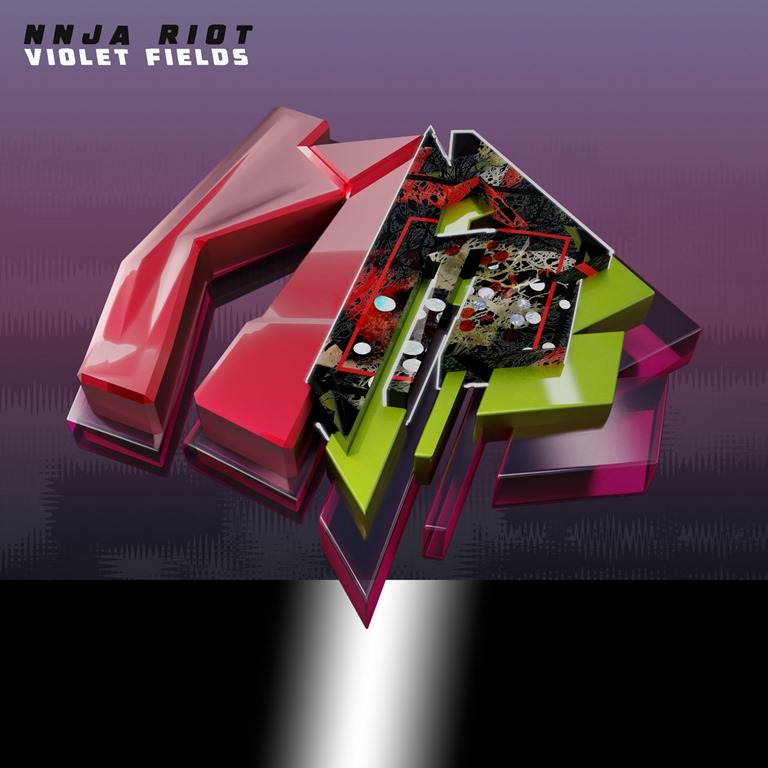
Nnja Riot is the solo project of Lisa McKendrick, who also happens to be one half of experimental electronic noise duo Isn’tses, with Tim Drage, who makes serious noise as Cementemental.

It’s a small world, especially in circles of noise and experimental electronics, and so it is that a few years ago, I paired with Tim for a one-off collaborative set in London at the bottom of a bill curated by Human Worth, with the mighty Modern Technology headlining. I lost my hearing in one ear before the set due to some congestion, and by the end, I’d lost my voice, too. Somewhere along the way, I’m convinced I’ve crossed paths with Isn’tses, too, but can’t find the evidence at this moment in time.

Anyway, my needless digression brings me to the point of observation that their individual projects are quite different from one another, and their collaborative output. This is ultimately a good thing, because while algorithms which have seemingly replaced the music press in making recommendations of the ‘if you liked listening to this, you’ll like this’ ilk, it ain’t necessarily so. Because algorithms don’t understand art, or the fact that an artist’s output may be widely varied.

And so it is that as Nnja Riot, Lisa takes a much more songwriterly approach to things, and Violet Fields contains seven songs which can be described broadly as stark industrial electropop. ‘Horror Heart’ brings all of the elements in together to raise the curtains on the album: understated verses, with a thumping heartbeat bass beneath a delicate vocal bathed in reverb, are suddenly blown away in a wave of noise and monotone robotics with whipcracking synthetic snares cutting through the murk with some harsh treble.

‘The Evolve’ is a low, slow, dark pulsating grind which swells to a blistering ruckus of bubbling, broiling eruption of glitching electronic froth, and things get mangled fast and hard. Nnja Riot is indeed an appropriate moniker: the noise grows and takes over by stealth, as if from nowhere: one minute things are pretty mellow, the next, it’s all going off and you’re being carried away on a sonic tidal wave.

The album’s longest track, ‘Dark Assassination’, stretches beyond the seven-minute mark, and with a stuttering, beat hammering like a palpating heart in a state of fibrillation against the ribcage, it’s creates a muscle-tightening tension which is uncomfortable. The vocals are disconcerting, sounding as they do detached, off-key, non-melodic. Desperate drones bend and warp in the background, adding layers of dissonance and discomfort.

Everywhere across Violet Fields, there are subtle but essential incidental details, little lines of melody which ripple and fade. The title track is hazy, sedated, spaced-out, with melodic elements juxtaposed with swerving sci-fi noise which threatens to drown out the erratic beats and she cuts loose to another level of intensity with the vocal delivery: fuzzed with distortion, there’s a outflowing from the innermost which pours into the swirling wash of multi-faceted noise.

Violet Fields crackles and fizzes, often promising structures which crumble and evaporate and leave the listener feeling a little lost, grasping for something uncertain and just beyond reach. It’s this sense of vagueness which remains after the grainy ‘Musical Fix’ and the ephemeral drift of ‘Slow Release’, a mere fragment of a song which carries a spiritual richness on a ritual drumbeat before fading. There’s a sense that hearing Violet Fields and fully grasping it are not one and the same, and it feels that however long one spends engaging with it, there will always be depths and layers of implicit meaning that exist beyond the realms of conception. You wave a feeble hand, desperate to clutch and cling, but it’s gone. It’s gone.

AA

a2182947288_10

15 December 2023

Christopher Nosnibor

Few artists can state that they’ve been developing their skills from the age of six, but Katie Arndt is very much a rare breed, and her bio lists her as a ‘prolific producer, vocalist, pianist, and composer.’

All of this is in evidence on her latest offering under the DataBass moniker – as project she’s operating while also, again according to her bio, ‘pursuing studies in classical and commercial voice, with a major in Music Media Production at Ball State University’.

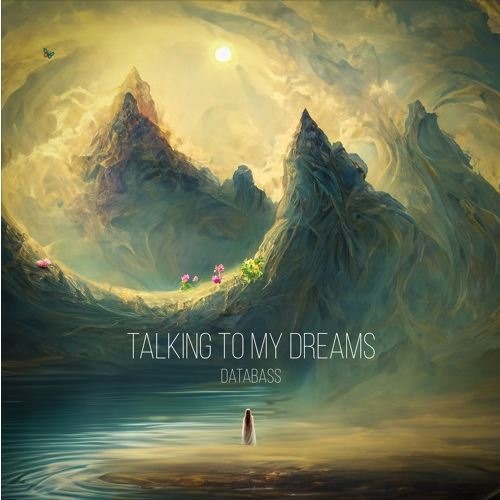
But more impressive than any of this is the quality of her material. ‘Talking To My Dreams’ is a truly captivating composition, and if it stands as rather a departure from most of the releases I cover here, it’s for two reasons: the first being that a bit of a breather is essential. Sure, I like heavy, I like really heavy, and I like really fucking bone-crushing heavy. But I also like tunes, and to drift in moments of tranquillity.

‘Talking To My Dreams’ is both a tune and a moment of tranquillity, as Arndt’s clear voice skips over a delicate piano. Her skills as a producer are in evidence with the inclusion of subtle incidentals, subtle layers of synth and so on, before the vocals are doubled, with backings and harmonies drifting in with the greatest of naturalness.

That the song is barely two and a half minutes long is noteworthy, too, as it seems to reflect something of a trend toward shorter songs, as we had back in the ‘50s and ‘60s. The reasons for such succinct singles may be different now, but it does mean that we’re hearing songs which aren’t stretched out or padded, and simply say what they have to say. ‘Talking To My Dreams’ is a work of great economy, and its brevity adds to its gentle impact.

29th July 2022

Christopher Nosnibor

There’s something quite unique about the Nordic / Scandinavian strain of contemporary post-punk. It’s not easy to pinpoint, nothing you can really put your finger on. But there’s something in that balancing of light and dark, and it’s something I probably became subconsciously attuned to at an early age, listening to A-Ha in the mid-80s when I was still in primary school. I would only later come to realise just how strong the currents of darkness and melancholy ran through their precise pop songs, and that this was what the enduring appeal was years later.

Sleep Kicks don’t sound like A-Ha, of course, although the same basic musical elements are there, not least of all something of an anthemic 80s feel (although that’s more In the vein of The Alarm or Simple Minds and bands with a more overtly mainstream ‘rock’ style). ‘No Chains’ picks up were they left off last year, and they’ve been honing the contrasting elements. The song is dark, but also light, with layers of guitar and a full production that gives it an expansive feel, but it is, also, without question, a killer pop tune with an immense chorus that’s bold and uplifting, with a sweeping choral backing, which makes for a big, fat, juicy earworm.

AA

296649923_435527541924827_3082798543878671684_n