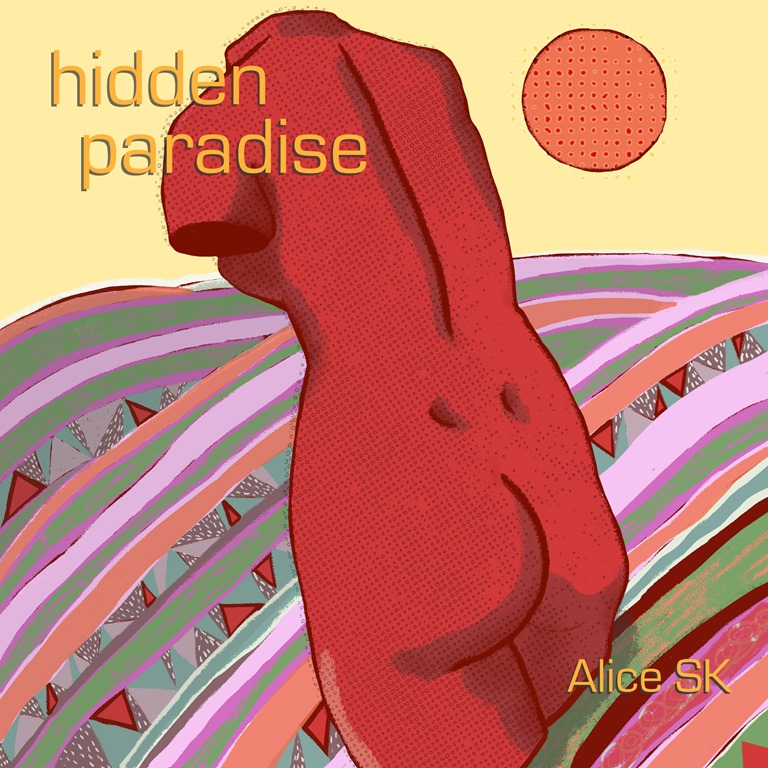
The follow-up to her debut, ‘Another Girl’s Man’, ‘Hidden Paradise’ finds Alice SK plundering a host of genres to forge something that’s breezy, undoubtedly poppy, with elements of indie, jazz, and even a hint of ska – in short, the kind of thing I’d normally not go for. But for every rule, there are necessarily exceptions: The Ruts drew heavily on dub reggae without losing sight of their punk roots; Blondie were a new wave and guitar pop in equal measure, and the fact is, pop is not a source of shame, or a cause for criticism or dismissal in itself.
‘Hidden Paradise; is nicely done: it’s got a downbeat undercurrent, but has a nice, catchy swing and some backed-off brass bolstering the breezy chorus. It has an immediacy, but, where it stands up against so much mainstream pop, it also has depth, both in terms of arrangement and lyrically, balancing the deeply personal with an uplifting delivery.
Alice is using her network to positive effect here, too: the track, which appears on her forthcoming EP Electric – scheduled for release early in 2022 – which was produced and co-written by Muca (Los Bitchos, L.A. Salami), and she’s definitely one to include in your ‘ones to watch’ list. She’s on ours.
Since their formation in 2002, Enablers have forged a career that has truly defied categorisation, and they’ve maintained a steady output, delivering eight albums – occasionally in flurries, sometimes with longer pauses between – each of which has pushed different directions and different boundaries.
But while their debut saw them showcase a sound that was different, it was their second album, released on Neurot in 2006, that really made a definitive statement that set Enablers in afield of their own creation. 2006 is now a whole terrifying fifteen years ago, and so, just as the time is right to reflect and reappraise the feat that is Output Negative Space, so the time is also right for a magnificent reissue courtesy of Human Worth. And being a Human Worth release, 10% of the proceeds plus Bandcamp cut going to charity – on this occasion, Sounds of Saving, who aim to improve mental health and reduce suicide rates by celebrating the power of human connection to music and directing people to the resources they need before it’s too late – in respect of drummer Joe Byrnes, with this release also marking the tenth anniversary of his passing.
The album features the lineup of Joe Byrnes (Drums), Pete Simonelli (Words ), Kevin Thomson (Guitar), and former Swans bassist Joe Goldring (Guitar & Hammond), and they really do cohere as a unit: the interplay between the four is outstanding; everything flows, so fluid, so natural, so intuitive. The chemistry and the electric vibe is immediate from the opening track, ‘Five O’Clock, Sundays’, which touches so many areas, crosses so many boundaries, and yet belongs to no one genre.
Simonelli’s delivery certainly isn’t rap, but then, it’s not singing either; it’s spoken word but with a sort of poetical, beat slant, with rhythm and a wonderful cadence that’s calm, even, but dynamic, too. The instrumentation is a bit jazz but it’s not jazz, it’s a bit mathy but doesn’t have quite that cutty, choppy, angularity, instead meandering and noodling, but without ever hinting at indulgence, and then there are crests and waves and low-level crescendos.
Most spoken word with backing feels very much like that – spoken word with fumbled instrumentation or otherwise awkward and juxtaposed. Not so Output Negative Space. This feels like a band, a complete collaboration, where each contributor is fully cognisant of the bigger picture, that their part is just that – a part of a whole, where nothing works unless everything works. And everything does work. There isn’t a second that doesn’t hit a sweet spot in terms of the performers coming together.
Output Negative Space is a stunning journey, and it’s wildly unpredictable. And yet it works.
There are moments when riffs break out and things get as almost conventionally rock; elsewhere, as on ‘Mediterranean’, everything happens all at once and comes in from all angles, and there really isn’t a moment that’s predictable – but at the same time, it’s not unduly jarring, and it doesn’t feel disorientating or chaotic. What it does feel is remarkably balanced; all of the elements combine to forge a real sonic synergy, and the music is so, so sympathetic and intuitive in the way it provides an understated backdrop to Simonelli’s nonchalant, world-weary vignettes, brimming with observations, details, and aa palpable sense of humanity.
Fifteen years on, it still sounds fresh, unique, and absolutely amazing.
With a small and selective roster and a keen focus on quality, Human Worth have done a super job, to, producing a limited edition run of heavyweight 180g vinyl, packaged in a gatefold sleeve which includes a hand numbered booklet featuring writings by vocalist Pete Simonelli and friends of the band remembering drummer Joey Byrnes 10 years after his passing, accompanied by rare tour photography by Owen Richards.
The lights that burn brightest tend to be the ones that burn briefest, and it’s something of a conflicting pull on the gut that surrounds reflections on this. The idea that acts who quit and artists who died leaving a small but impactful legacy are somehow unfulfilled and that we’ve been deprived of whatever they may have done is counterbalanced by the contention that perhaps curtailing a career at its peak or even still in its ascendency is the best way, and fans will be forever divided on this topic.
What if Ian Curtis had lived, and Joy Division had mutated into New Order? They would have been just another band whose longevity overshadowed that early career, another Manic Street Preachers. Simple Minds should have called it a day in about ’84, and Kasabian’s early promise was spent after just one album.
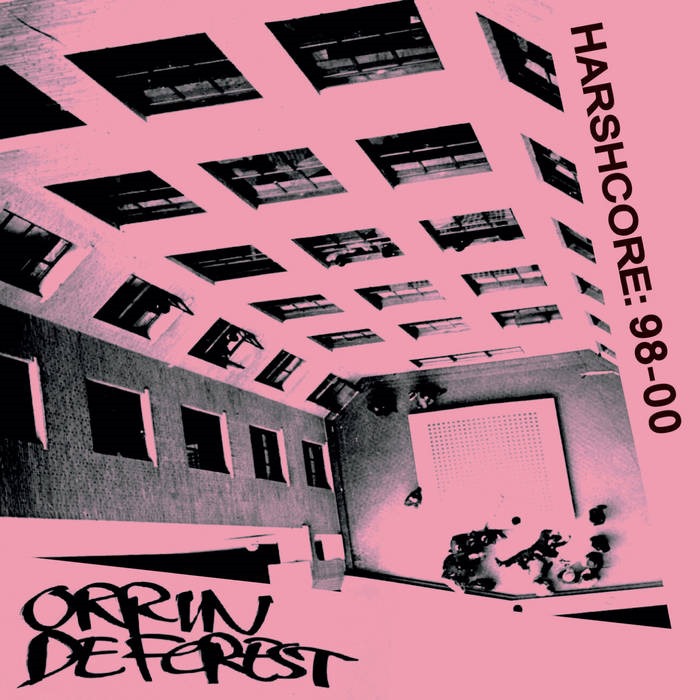
ODF never lasted long enough to really break out of the locality of Gateshead. As the liner notes to this retrospective observe, they ‘blasted onto the North East’s harshcore scene in 1998 and were gone in a flash three years later; their 2001 split album with Newcastle’s Jazzfinger the only remaining recorded output’. Everything leans toward the attainment of immortal cult status here, and the changes are infinitely more people have heard of the band, or otherwise heard them posthumously than ever did during that brief but explosive career.
This limited cassette, Harshcore 98-00, documents two live shows, both recorded in Gatehead, with the first seven tracks recorded June 2000 at the Floating Cup, Gateshead, and tracks 8-14 recorded June 1998 at the Soundroom, Route 26 Centre, Gateshead.
It’s pretty fucking brutal. Most of the songs in both sets are around the two-minute mark, and it’s as abrasive as hell. The vocals! Rob Woodcock (Marzuraan; Tide Of Iron; Fret!; Platemaker et al) sounds like a zombie from The Walking Dead on amphetamines, snarling and rasping with the most ravaged-sounding voicebox. There’s a lot going on here: ‘Calisthenics’ brings all kinds of jazz and math elements alongside the full-on, balls-out wild thrasher, and the fifty-five second ‘Aggressive Lowbrow’ brings everything all at once in a racket that suits the title.
Despite the close proximity of the sets, there’s a clear evolution here, so it’s a little frustrating that they’re presented in reverse chronology on the release. The ’98 set is less evolved, less detailed, less jazz, less multi-faceted, and more of its time – brimming with samples and songs that are little short of whirling explosions of whiplash-inducing racket, with ‘O.D.F. Will Kick Your Lame Ass Motherfucker!’ being exemplary, but also marking the band’s first forays into different terrains, with hints of swagger emerging amongst the frenzied racket. It’s gnarly, it’s intense, and it’s fucking punishing. And it really makes you wish you had been there.
Some bands claim to be eclectic, but fail to substantiate those claims in the music itself serving up middling mediocrity, usually of a fairly anaemic indie / rock persuasion. Of course, no act with a diverse range of influences is likely to incorporate all of those influences into a single song (while rendering anything listenable), but, y’know, claiming Bowie and Led Zep and coming on like Oasis just doesn’t cut it.
Helve (not the Leeds post-metal act, but the London indie group) intimate that they draw on an eclectic combination of jazz, folk, electronic and experimental music, influenced by an array of genres and artists spanning Aphex Twin, Radiohead, Slint, Pat Metheny, Nick Drake, Portishead & Bill Evans.
All rolled together at the same time, that lot would sound absolutely fucking awful, but ‘Cabin Fever’ is nuanced in its hybridity, a kind of jazzy, blues influenced stroller at first that gets a bit proggy further down the line.
Singer/songwriter Leon has one of those voices that’s got range – not just technically good vocals, but vocals capable of conveying emotional range and depth too. A bit Thom Yorke, you might say, but also entirely his own, haunting and evocative, and here he spins all the different aspects of isolation – the introspection, the reflection, the self-loathing, the confusion, it all there, and we’ve all been there. Originally penned and demod in 2019 (as a much longer, more post-rock orientated tune with samples and other stuff in the mix) and rerecorded for this, their debut release, it feels particularly salient.
‘Cabin Fever’ isn’t an instant grab; instead of big hooks and an attention-grabbing chorus, it’s more of an atmosphere-orientated mood tune. Jazzy without being Jamiroquai, it’s the sound of late-night basement bars, and while it’s very much a product of our immediate times, clearly betrays roots that reach back further.
Who would have thought in the middle of March 2020, we would be living in such different – and fucked-up – times a full sixteen months later? Many of us who work in offices left thinking we’d be back in a few weeks, and surely no-one predicted the decimation of so much retail and hospitality. While the most unprecedented thing about the pandemic in the UK was the overuse of the word unprecedented, it is true that this is the first time in history that the healthy have been quarantined en masse alongside the sick and the vulnerable.
In many respects, the vulnerable have been the hidden sufferers and forgotten people during this time. As the band write, ‘People with learning disabilities in England are eight times more likely to die from Covid than the general population, according to research that highlights a “hidden calamity” of the coronavirus crisis. At a time where arts centres are critically underfunded, and the disabled community will be the last to come out of lockdown, we want to offer solidarity and support to our artists and friends.’
The communal and collaborative element of Sly’s work is integral to their ethos: anyone who’s seen them live is as likely to have been implicated in the set as simply spectated, with the band among the audience, the audience becoming part of the band and banging drums… and this is no corny, manufactured communal clap, a contrivance to mask government bullshit, this is a real in-the-moment collectivism that’s life-affirming and enriches the soul. Their music may be murky and weird, but Sly and the Family Drone very much do use music for the power of good. And so of all the bands who would perform at the ICA with Jamaica!!, they were always the most likely candidates. Jamaica!! is less a band than a group musical session operating out of The Gate, an arts centre for adults with learning disabilities located in Shepherds Bush, London. The Gate write, ‘out of efforts to make the music sessions we facilitate there as inclusive as possible which we found by necessity entailed abandoning notions of what makes sense musically; an extension of the central ethos at the gate of reshaping the round hole to allow the square peg to fit rather than the unfair expectations of the inverse’. Their sessions are entirely improvised, and the band is whoever turns up on the night.
Jamaica!! Meets Sly and the Family Drone is a document of this particular night, and it’s being released as a special art edition with the aim of raising money for The Gate. It’s clear from the two expended workouts that occupy a side each of this c46 cassette that the two units readily come together as one in their improvisational stylings
Side one of Celebrating The End Together In The Good Time Swamp is an immense exploratory piece: twenty-one minutes of wild, percussion-heavy, industrial jazz noise. What, that’s not a thing? Yes, yes it is: it’s precisely Sly & The Family Drone’s thing, and the joy of their live work is that the only thing you can predict is that will be percussion-heavy industrial jazz noise.
It begins quiet and atmospheric, picked notes ringing out over a misty murk, drones and croaks of horns groan and yawn like a slumbering beast in dream, perhaps on the brink of awakening… You feel you should tread carefully. But clattering percussion swells unevenly, and there’s a building tension as well as a building volume. It sounds ominous.
And then, off-key notes ring from every whichway. Is it free jazz or is it simply chaos? Perhaps it’s both. Rising up momentarily, a big-band swinging beat that dives some kind of shape and spine to the seemingly formless sonic mass that’s swirling all around.
Ten minutes in, there are some indecipherable vocals shouting, while whizzes and whooshes enter the mix and it’s like a space rock rendition of a Throbbing Gristle performance. And then it gets really fucking drummy. It’s a full-on barrage, a solid wall of percussion. The final few minutes are truly cathartic, as the pace picks up and we hear the sound of ALL THE DRUMS. EVER. ALL AT ONCE. It’s beyond thunderous – it’s positively volcanic.
Side two is, in many respects, more of the same, only it’s slower, denser, more undulating, dronier. It’s a swirling, seething mass of sound, a glorious twenty-three minutes of mayhem, a surging hammering on of drums and drums and drums and drums, battering out a loping march while horns, kitchen sink and cement mixer churn out a heavy grind of weighty discord. There’s a lull around the mid-point, where it delves into an almost shuffling beat, and there’s even a brief paise while there’s some kind of bass break. Then the rhythm shifts again, and things are almost funky for a while – but mostly, it’s noisy and drummy. I mean, this lot are drummier than Boredoms, and they actually lock into a mean groove near the end. As the track powers onwards to its climax, the energy radiates from the speakers and it makes you feel good – because music really is always the best therapy.
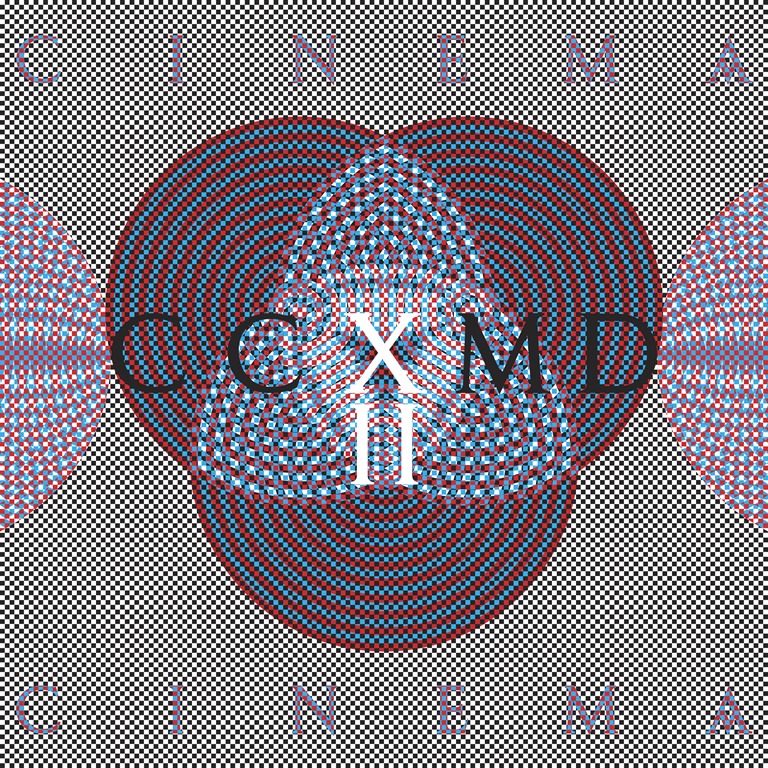
Less than two years after the release of the ambient avant-jazz oddity that was CCXMD (that’s not some random Roman numeralisation, but Cinema Cinema X Matt Darriau (The Klezmatics), the New York duo return for round two of their collaboration with the astutely-titled CCXMDII.
Let’s get the spoiler out of the way up front and early: they couldn’t have shifted further from their noise roots, and there really isn’t an overloading guitar riff in the whole album. If CCXMD was avant-jazzy and ambient, CCXMDII is avant-jazzier and more ambient. Having laid the foundations previously, it’s not so much of a shock, but anyone hoping for a return to their riffier roots will be disappointed by this weirdy, spaced-out experimental work.
It contains but seven tracks, although three of them are over ten minutes in duration, including the eighteen-minute opener ‘A Life of its Own’, which was unveiled as the album’s lead single a couple of weeks ago. And here, Cinema Cinema push further still than on their previous album, with those seven tracks bleeding together to forge one, vast continuous piece.
It begins tentatively, with tremulous, trilling woodwind and some scratchy strumming. Sounds echo and reverberate and voices mumble in a blurred, slowed, hallucinated state that’s most unsettling, and slowly transitions from some shilled, chiming new-age desert vibe into an increasingly bad trip as unintelligible jabbering spits and slurs angrily against the warping backdrop and swelling percussion – and that’s before the crazed jazz horns begin to bray and parp.
There are definite ebbs and flows, but not necessarily correspondent with the transitions between the tracks, and ponderous guitar and trepidatious woodwind teeter precariously through ‘Continued’, which is less of a piece in its own right than a bridge toward the nine-minute ‘Bratislava’. Guitars scrape and the drums stutter and test the waters and levels, and it actually sounds like a band checking their levels between songs during a live show than anything. There are some exploratory post-rock moments, but they’re fleeting, and even when the rhythm section finds a groove, it’s but for a short time and ultimately frustrating and unsatisfying, chopping and changing in a mathy fashion – which is fine in itself, but for the lack of a resolution, a crescendo, a finish. Instead, it peters out and squeaks and toots into the next piece.
The trilling woodwind – pan-pipes or similar – are all over the meandering piece and while the percussion rolls, the guitar is pegged back to providing mere texture, and there is no question that the band have shunned pretty much all ‘rock’ trappings here. The raspy, chthonic vocal whispering and manic hollering returns, before it trickles down into ‘Crack of Dawn’ with its stop / start arrhythmic percussion, hovering drones and eerie formlessness.
It’s not until the penultimate track that we get power chords. There is silence, briefly, before ‘Trigger’, which is unexpectedly led by a stop/start drum and hesitant bass groove that eventually emerges as a core motif. Imagine Shellac with brass instead of vocals, and you probably get the idea. It locks into a motoric krautrock groove – but that freewheeling wild horn action is something else. It brings chaos, it brings discord, riding wild all over some wild improv.
CCXMDII isn’t an easy album, and it’s not the punk or guitar-led set some may have expected. But it is a bold, daring work, one that sees a band who don’t give a fuck about conventions or expectations demonstrating that lack of fucks musically. Every band says they’re making music for themselves, but hardly any mean it. These guys do. CCXMDII is also a wonderfully odd abstract soundscapes that drifts and meanders and entertains and perplexes. CCXMDII is the work of a band in continual evolution, and long may that evolution continue.
Having announced details of their debut album Fragments and revealed the first single “Pavlov`s Dog Killed Schrodinger`s Cat”, Trifecta are premiere a new track and video for “Have You Seen What The Neighbors Are Doing”.
Nick Beggs explains how the track came about “The track, ‘Have You Seen What The Neighbors Are Doing’, was written after hearing a song by Ween titled ‘So Many People In The Neighbourhood.’ We liked the song so much we decided to construct a reply. “ the video he continues “was shot on location while on the planet of the prehistoric women. However the trip was fraught with problems after Craig and Adam both realised they had failed to pack a tooth brush. Luckily I was on hand to share mine with them.”
Watch the video here:
AA
Trifecta, features 3 of the contemporary music scene’s most lauded and revered musicians – bassist and songwriter Nick Beggs, keyboardist extraordinaire Adam Holzman and completing the line-up, Craig Blundell – one of the world’s most celebrated drummers.
Having performed together as part of Steven Wilson’s band, the three would jam together after soundchecks, forming what they referred to as “jazz club” and from these sessions the fledgling ideas for Fragments were born.
The record primarily leans toward a fusion of jazz rock, imaginatively described by Beggs as “Fission! It’s like Fusion but less efficient and more dangerous ..with fall out.” and being mainly instrumental with the exception of one track, the wonderfully titled and first single “Pavlov’s Dog Killed Schrodinger’s Cat”. The lyrics of which, Beggs states “are written from the perspective of a layman trying to understand quantum mechanics…and failing”. The track also features drum programming from Russell Holzman.
Each band member completed the recording and engineering of their own contributions in their various home studios which helped in bringing their individual production ideas to each track. Adam Holzman mixed the record at his New York home studio and the mastering was handled by Andy VanDette (Rush, David Bowie, Deep Purple, Porcupine Tree, Beastie Boys) in New York.
Fragments will be released on 20th August via Kscope on CD, black vinyl LP, ltd edition neon orange vinyl LP (exclusive to www.kscopemusic.com/store ) and digitally.
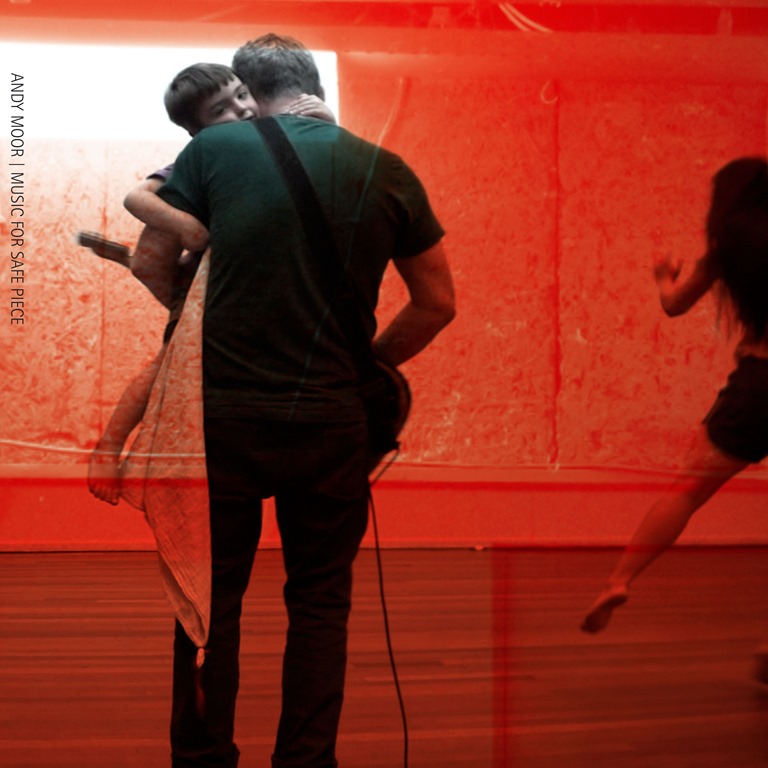
No-one plays guitar quite like Andy Moor. Renowned for his work with purveyors of expansive and exploratory avant-jazz The Ex, Moor’s solo work takes that guitar work from a collectivist, band setting, where it’s a part of a conglomeration of instruments, and places it directly under the spotlight.
As the liner notes explain, Safe Piece is an exploration of the question of parenting while maintaining an artistic practice. Choreographer Valentina Campora, who initiated the project, began testing the possibility of dancing onstage with her baby as an experiment. The project became a series of 8 performances where Campora performed with the baby for a small public. Andy Moor, father of the child and Campora’s partner, accompanied and gave a sonic context to this experiment. Each performance was filmed by visual artist Isabelle Vigier for the video Safe Piece (a film).
Tye tracks sequencing is segmented in a way that perhaps make more sense in context of the filmed pieces. There are three themed chapters, if you will, pieced together in chunks – but identifying any specific thematic unity that connects them is difficult. Moor moves between single-string pings and frenetic fretwork. But for the most part, this is sparse and lugubrious downturned fret buzzing notes slumping down like a machine winding down as the batteries run down or clockwork unwinds to a crawl. There’s some growling, gut-churning low-end that provides substantial contrast with the nagging of the picked top notes. There’s fret-buzz and warped, slashing chord chanking, stuttering stop/start shudders and jarring , jolting unmusic, that’s uncomfortable at times – not just a bit awkward, but fully squirm-inducing, setting the nerve-endings of the teeth on edge.
Across the album’s thirteen pieces, Moor’s minimal style that centres around scratching and scraping and all other kinds of angular guitar abrasions are front and centre. Discord and atonality are his signatures – but at the same time, he conjures myriad moments of fractured musicality. Hums and thrums and crunches crash through picked chord sequences and segments that sound like tuning up and down in frantic search of the note and not quite finding it.
Safety is paramount, but Music For Safe Piece brings a cognitive dissonance that’s difficult to process in places. But we know that comfort is overrated, and that art should proffer challenges, and Music For Safe Piece brings plenty.
Joe Cardamone (formerly of The Icarus Line) returns with his second solo offering: the soundtrack to his film series Quarentina. The album will be released physically on July 2nd via Sonic Ritual, and it’s available on DSP’s now.
Joe has now shared the video for new track ‘Baby Blue’. He says: "Crying on the dancefloor just to impress the woman that has already left the building. She’s checking her phone while you spill your heart out. Fuck it might as well put on a suit and sing your face off into the mirror".
So often, less is more. Ben Denny Mo’s latest single is simply acoustic guitar and vocal. As such, it’s certainly less in terms of arrangement, and with so few elements in the mix, it’s hard to go particularly OTT on the production too. This is what really makes this: there’s no multitracking, no gimmicks or studio trickery, no deception or other kind of alchemical wizardly to enhance the performance. What we have here is just a staggering wealth of musical talent and ability on display.
The Fakenham-based singer-songwriter has already become a firm favourite with BBC Introducing at home in Norfolk, having drawn comparisons to a wide range of singers from Jack Johnson, Dave Matthews, Michael Jackson, Sam Smith and John Martyn. It’s testament to his range and versatility, and there’s a lot going on, all packed into this concise little number. The guy’s got real soul, and she swoops, soars, leaps and bounds all over the song with unbridled energy, calling to mind Everything Everything’s Johnathan Higgs.
But with so much focus on ben’s voice, what about the musicianship, and what about the song? There’s a complexity of technique that belies the apparent simplicity of tapping a few chords, with some fast fretwork that blends classical and jazz with a dash of funk.
In cramming so much in and dazzling so brightly with it, it’s sometimes a little difficult to follow the song itself. The hooks are overshadowed by the performance itself, and I suppose ‘6am’ evokes the same kind of sensation as listening to Jamiroquai – which of course is subjective and divisive. The popular perspective is that it’s a groove, and there’s no question Ben’s got mass appeal, and ‘6am’ could yet prove to be the breakthrough.


 Aural Aggravation