Posts Tagged ‘Japanese’

A-Zap Records – 23rd August 2024

Christopher Nosnibor

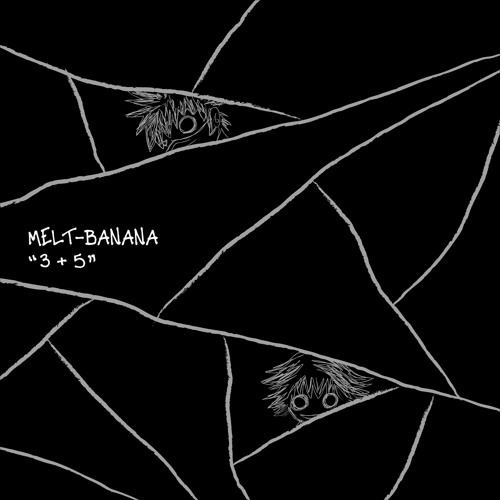
There is truly only one Melt-Banana. And Melt-Banana boldly encapsulate all of the craziness that makes Japanese music so peculiar and unlike the music to emerge from any other place. Here in the west, we can, in truth, only marvel at it – all of it. Because it makes no sense. It’s a country of extremes, with hyper-pop culture dominating, and a sense of plasticness and artifice defining the mainstream. But then, Japan is also the home of the most extreme noise – Merzbow, Masonna, for example. It’s not just extreme sonically, but beyond words in terms of performance.

The pitch for this, their eighth album, informs us that ‘3 + 5’ synthesizes elements of a variety of Extreme Musics, Hyper-Pop, classic Punk, vintage Metal, and Noise. It’s informed by Japanese culture in general, and the subcultures of gaming, anime and homegrown underground music in particular. The album’s nine tracks have been crafted to maximize the independent appeal of each song (since so many listeners will be streaming and playlisting these songs). Each selection boasts its own unique charm and ideas that beg for repeated listening.’

I had the good fortune to witness their live spectacle here in York not so long ago, and they were everything anyone even vaguely aware of their work would expect: intense, noisy, crazy, and wildly entertaining.

They create music that fits with the bizarre incongruity of their name – abstract, humorous, combining elements that don’t – or shouldn’t – really sit together – somewhat surreal, patently absurd, but also perhaps a shade Pop Art. Put another way, everything all at once, tossed in a blender and blitzed, the output being like a bubbling hot smoothie or something.

They do have a tendency to favour short and fast, as recent taster track ‘Flipside’ reminded us, clocking in at a minute and fifty-six. It does happen to be the album’s shortest track, but then, the longest is under three-and-a-half, and the majority of the nine songs are around the two-and-a-half minute mark. That means that with a running time of around twenty-seven minutes, the album would comfortably fit on a 10” record.

For a moment, ‘Code’ hints at something spacious, experimental and electronic to open the album – before seconds later, all kinds of sonic mayhem erupt and chipmunk yelping vocal squeak over something that resembles Metal Machine Music played at double speed, before it takes a turn into space rock territory, but again, at twice the pace, with some prog flourishes and a bunch or bleeps and widdly synths all criss-crossing over one another at two hundred miles an hour. For anyone for whom this is their introduction to Melt-Banana, they’ll likely find themselves dizzy and completely bewildered as to wat the fuck they’ve just heard. It is, unquestionably, utterly deranged, and at doesn’t get much more quintessentially Japanese than this.

‘Puzzle’ is kind of a high-octane rock tune, at least at first – but then someone hits the accelerator and in a blink you’re on ‘Rainbow Road’ on the N64 Mario Kart after eating three bags of Skittles and you’re totally wired.

Hyper doesn’t really cut it. Even the more expansive instrumental segments of ‘Case D’ happen at about 600bpm, and it’s like listening to a prog album at 45rpm.

As I listen, I find myself typing faster and faster, as if I’ve sunk six cans of Red Bull while chomping on a whole packet of Pro Plus. My fingers are pale blurs against my black illuminated keyboard, and they’ve seemingly run away from my brain and are just frothing out words in response to the frantic mania pouring into my ears – no, not pouring, but being injected by 10,000-volts of electrical current into my brain via my eardrums.

‘Scar’ slams big guitar rock and skittish melodic pop together like a banging of heads. It sounds like music from a computer game or an animated movie. It sounds like music made in a fictional context. Because in real life, music like this couldn’t exist. And in the main, it doesn’t. Only Melt-Banana are demented enough to actually make it.

Penultimate track ‘Whisperer’ goes big on dance / rock crossover and actually slows to a pace that doesn’t feel like a synaptic twitch or a seizure, before ‘Seeds’ closes the album with a two-and-a-half minute frenzy which chucks everything into the mix.

The whole experience leaves you feeling giddy, dazed, amazed. 3 + 5 may not bring anything radical, new, or revelatory to the Melt-Banana oeuvre, but stands as a classic example of what they do – and it’s as ace as it is nuts.

AA
MB 3 5

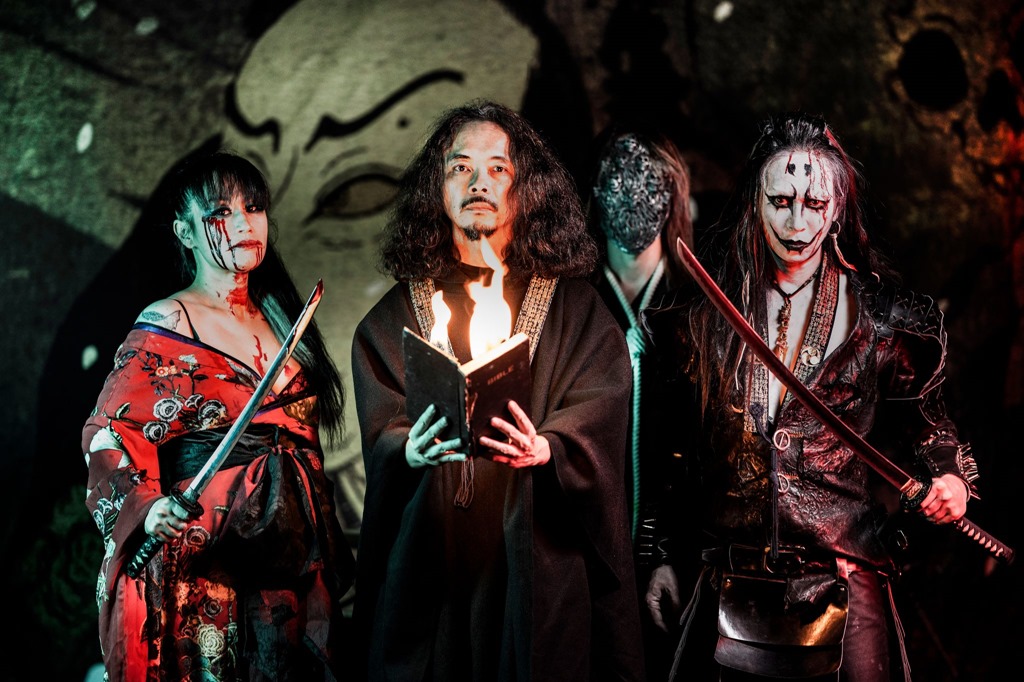
Following the announcement of the band’s new live album, ‘Live: Eastern Forces of Evil 2022’ and first single ‘Mayonaka no Kaii’. The band have unveiled their next track to come off the live album ‘A Victory of Dakini’.

The track is taken from the band’s visionary album ‘Scorn Defeat’, which the band will be performing in full, later this year at the UK’s Damnation Festival. The track, reminds us of the band’s beginnings and explores their more primitive style that would come to progressive into the fully fledged Sigh sound we know now.

The song details the story of a Japanese goddess ‘Dakini’ that rides on a white fox, according to Buddhist religion. Kujaku-Ou is a Japanese manga published around 1988 – 1991 and in it featured a lot of oriental occultism and were often the inspiration behind Sigh’s early material. Originally Dakiki is a goddess from India that would eat human flesh, however in Japan she is considered to be the goddess of sexual lust.

Mirai elaborates below:

‘A Victory of Dakini" is the opening track of our debut album "Scorn Defeat". I believe the first track of the first album is something special for most bands, and this is true to our case, too. Of course the song is way more primitive and simpler than what we are doing today, but obviously it’s got a magic feeling, which we will never ever recapture. "Dakini" is a goddess riding on a white fox in Buddhism. I wrote this song inspired by a Japanese manga, "Kujaku-ou".

‘A Victory of Dakini’ kicks off the live performance with ominous chanting before Sigh’s signature Death Metal crawl begins, conjuring all manner of otherworldly entities. The song itself is a masterful blend of Japanese culture with angular Death Metal precision, a style that has only been improved upon with each release right up until 2022’s ‘Shiki’.

Watch the video here:

AA

8K0cGLhg

Sigh by POKO

Cruel Nature Records – 27th August 2021

Christopher Nosnibor

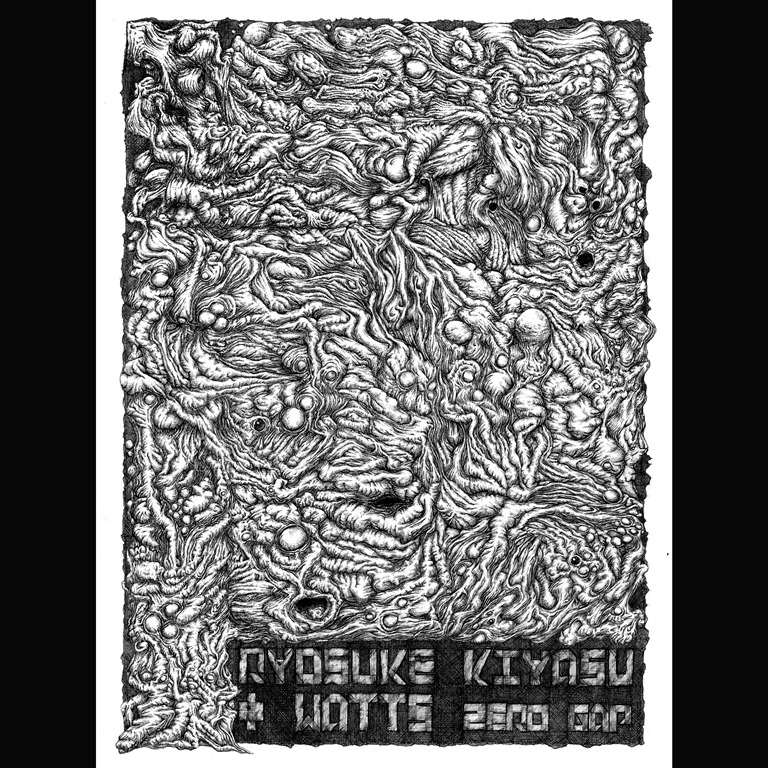
Zero Gap is a truly international collaboration between Ryosuke Kiyasu (SETE STAR SEPT, Fushitsusha, Shrimp, etc, aka ‘the Japanese guy with a snare drum’ and WATTS (Lump Hammer, Plague Rider, Lovely Wife, aka that beardy growly bloke) that proves that location is a state of mind. Recorded oceans and continents apart, there is zero gap between the two artists as they hammer out half an hour of sonic abrasion, created, as the accompanying notes explain, ‘entirely from one snare and one delay drenched throat’.

If on the surface the snare drum seems to have only limited potential, then Kiyasu doesn’t exactly disprove that, in that it sounds like snare drum throughout. But the guy finds every conceivable way of rendering that snare sound, from rapidfire hits and rolls and crashes through clattering blasts and builds, and the still finds ways beyond conception to conjure yet more dynamic range from the simplest of instruments.

Against this clattering, clanking, thunderous barrage of percussion, Watts delivers a vocal performance that quite simply doesn’t sound like a vocal performance for the majority of the time. From a whispering moan like a distant solar wind, to a gurgling drain to a chthonic babble, he’s got immense range. It might not quite be Mike Patton’s Adult Themes for Voice, but it’s still impressive – and I mean eye-poppingly wide-ranging and weird. Best of all, Watts grasps when less is more, at times uttering little more than barely audible grunts and burps at long intervals. Snarling and snapping like a zombie in The Walking Dead, one moment, to barking like a rabid dog the next, Watts is wildly unpredictable, and often quite simply doesn’t sound human. Perhaps he isn’t. At times unsettling, unnerving, others plein scary, he snarls, growl and gargles his way through the creation of some quite strange soundscapes.

Everything works well in context, too: at times, Kiyasu pulls back on the battery of beats to taper down to some barely-there hints of sound, and the two not only are incredibly egalitarian in the distribution of the prominence of their contributions, but they seems to intuitively grasp the need for ebbs and flows, crescendos and decrescendos, making Zero Gap a work that feels like a journey, and even if it’s a journey without a clear end point, it’s a journey punctuated by events and variations.

Zero Gap isn’t abstract as such, but it does, most definitely stretch the boundaries of music. It is ultra-niche, but in the global village it’s the kind of thing that has the potential for significant cult reach. The pair deserve it: Zero Gap is far out in the best way. Crazy, inventive, innovative, not giving a fuck for convention, it’s an album that carves its own niche.

Captured as a single track spanning thirty-two minutes, it’s unusually a release that works best digitally (and dare I even say it, it, could make a nice CD), but then this is an unusual release. My advice? Dive into the dark stuff.

AA

cover

Pilgrimage of the Soul is the 11th studio album in the 22-year career of Japanese experimental rock legends, MONO set for release on 17th September (Pelagic Records)

Recorded and mixed – cautiously, anxiously, yet optimistically – during the height of the COVID- 19 pandemic in the summer of 2020, with one of the band’s longtime partners, Steve Albini, Pilgrimage of the Soul is aptly named as it not only represents the peaks and valleys where MONO are now as they enter their third decade, but also charts their long, steady journey to this time and place.

Continuing the subtle but profound creative progression in the MONO canon that began with Nowhere Now Here (2019), Pilgrimage of the Soul is the most dynamic MONO album to date (and that’s saying a lot). But where MONO’s foundation was built on the well-established interplay of whisper quiet and devastatingly loud, Pilgrimage of the Soul crafts its magic with mesmerising new electronic instrumentation and textures, and – perhaps most notably – faster tempos that are clearly influenced by disco and techno. It all galvanizes as the most unexpected MONO album to date – replete with surprises and as awash in splendor as anything this band has ever done.

MONO began in Japan at the end of the 20th Century as a young band equally inspired by the pioneers of moody experimental rock (My Bloody Valentine, Mogwai) and iconic Classical composers (Beethoven, Morricone) who came before them. They have evolved into one of the most inspiring and influential experimental rock bands in their own right. It is only fitting that their evolution has come at the glacial, methodical pace that their patient music demands. MONO is a band who puts serious value in nuance, and offers significant rewards for the wait.

Watch the music video for first single ‘Riptide’, a film by Alison Group now:

AA

MONO

Pelagic Records – 25th January 2019

Christopher Nosnibor

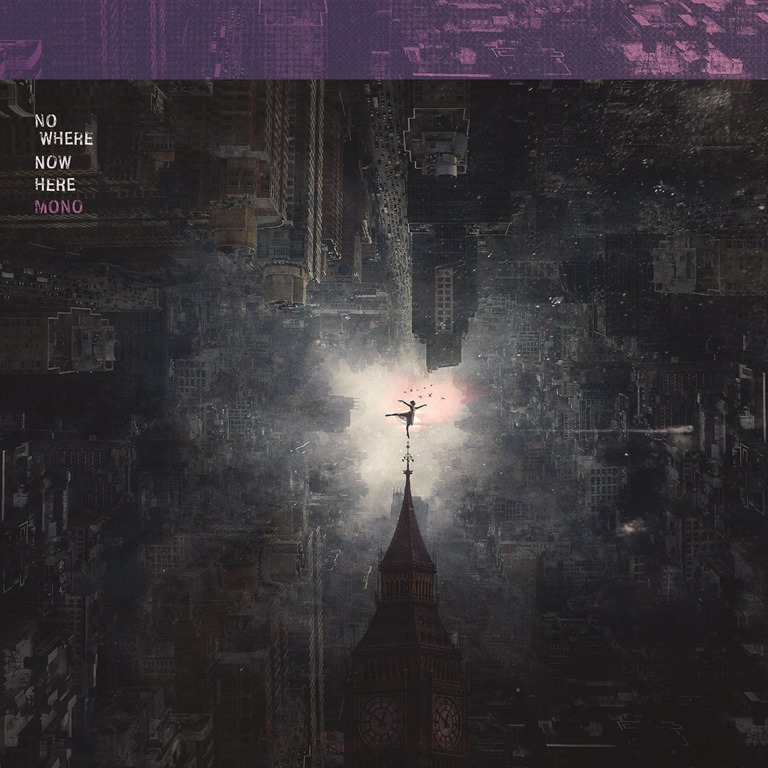
I’m something of a latecomer to the Mono party, although given their credentials, I can’t fathom for the life of me why I haven’t explored a single one of the nine albums they’ve released over the last twenty years. Too much music, too little time, is probably the only real reason. And, witnessing them live by way of an introduction, my initial impression was only middling: on the night, I found more in Jo Quail’s surging waves of cello and the gritty abrasion of A Storm of Light. But context matters, and I had gone for the other two acts, and so now, with a large gin and a candle for light, I’m ready to approach their latest, the Steve Albini-recorded Nowhere Now Here with fresh ears.

‘After You Comes the Flood’ lifts the curtain on a proggy post-rock crescendo that offers up every shade of grand. It’s a crescendo that doesn’t only sustain, but swell to even more monumental proportions, with layer upon layer of sound and richer, dirtier distortion filling the background.

Quite a deal was made when Mono featured vocals for the first time not so long ago, and the performance of songs with singing seemed to be a major topic of conversation when I caught them in Leeds last year. They’re used sparingly here, and on the vaporous, shoegaze drift of ‘Breathe’, they serve more as another instrument than a focal point.

The string-soaked epic that is the title track again follows what is by now a well-established post-rock formula of long, gradual builds and rapid drops that pull back from the precipice, but it’s so magnificently executed that it would be churlish to criticise. And herein lies the album’s success: much of the material does fall under the broad umbrella of ‘standard’ instrumental post-rock (although acknowledging that Mono were one of the bands who contributed to the creation of a genre whose tag they reject is important), the compositions and their performance are masterclasses in shifting dynamics and delayed gratification. As they lead the listener through ponderous passages of awe-inspiring grace only to reveal towering cathedrals of sound just around the corner, even the predictable forms hold unexpected twists, like the sonic supernova that explodes at 5’39” on ‘Sorrow’.

Steve Albini is perhaps more commonly associated with ‘noisy’ music, but his reluctance to be credited as a producer is a reflection of his abilities as a technician, and the fact he strives to capture the essence of any given band’s sound rather than impose his own vision on their work. With Mono’s method involving playing live in the studio, the pairing makes complete sense, and it’s fair to say that Nowhere Now Here very much captures not only the sound, but the feel of a live show, with the shifting tension, emotional resonance of chiming guitars brooding in the dark, and the exhilarating rush of catharsis that effuses through a truly blistering crescendo. It’s those indefinable, unmanipulable details which make Nowhere Now Here.

AA

Mono - Nowhere