Philadelphia’s industrial sludge metallers WORST ONES is back with a new powerful single, entitled ‘Deny Reality’. The song channels the bleak pulse of Godflesh, the twisted hooks of Nine Inch Nails and Marilyn Manson, and the sample-driven chaos of Skinny Puppy, creating something both claustrophobic and hypnotic.
‘Deny Reality’ is a mid-tempo industrial sludge anthem built on relentless electronic percussion and skittering hi-hats that slice through layers of noise loops. The guitars have been shredded, resampled, and reconstructed into something ripped and inhuman. A towering chorus cuts through the haze, while a crushing breakdown in the middle drags the listener deeper into heaviness.
Lyrically, ‘Deny Reality’ confronts the culture of wilful ignorance that has metastasized into complicity. Lines like “Cast out your empathy, behold your tragedy” and “My nightmares are dreams, you deny reality” attack the blindness that sustains power and allows violence to thrive. The song reflects a world where denial has become survival, even as that denial drives us toward collapse. In its imagery of poisoned breath, hollow faith, and the erasure of empathy, the track positions ignorance not as escape but as the very engine of destruction.
In addition to its digital release, Deny Reality will appear on Abolish ICE, a compilation CD of Philadelphia-area metal, hardcore, and punk bands. The CD features 16 artists, including Trunk, L.M.I., Sunrot, Boozewa, SOJI, Detox Meds, and Get Well. Copies are available from the bands in exchange for donations to Juntos, a community-led Latine immigrant rights organization based in Philadelphia. Through this release, WORST ONES aligns its music with direct action, using its sound as both protest and support for those most affected by systemic oppression. With Deny Reality, the band continues the mission of turning noise into resistance. The result is not just another sludge anthem, but a dirge for a society choking on its own denial and a demand to confront the truth, no matter how unbearable.
With mainstream music, all you have to do is stay tuned to prominent radio channels, watch TV, let Spotify recommend the next tune, and it lands in your lap. The further away from the mainstream you get, the more it becomes about keeping your ear to the ground, word of mouth, groups and forums – and occasionally, press releases and inboxing. Despite being a fan of a number of the acts involved, I discovered this one quite by fluke via a share in a Facebook group, which announced that ‘OMO DOOM , the Glasgow group who comprise members of Mogwai , The Twilight Sad , Desalvo , Areogramme and Stretchheads put out a new track this week, an intensely claustrophobic cover of a Head of David track – the brilliant late 80s UK Blast First act who everyone seems to have forgotten now’.
I’m perhaps one of the few who not only didn’t forget Head of David, but has a near-complete collection of their releases – and I can tell you it’s taken some years to assemble. While their first album – LP, released on Blast First in 1986, and later reissued as CD in 1990 isn’t too hard to find, and has a buzz around it on account of the fact that Justin Broadrick drummed with the band between leaving Napalm Death and forming Godflesh (although he didn’t actually play on any of their releases apart from their 1987 Peel Session, which features on the nigh-on impossible to find White Elephant compilation), their other releases are like rocking horse shit (as they used to say at record fairs in the 90s.
Their second LP, Dustbowl, which featured ‘Bugged’, was produced by Steve Albini and released in 1988. It’s a belter. While I snagged a vinyl copy in the 90s, I have never yet seen a CD copy in the wild, and it’s never been reissued, either. ‘Bugged’ also appeared on one of the 7” singles in ‘The Devil’s Jukebox’ Blast First 10-disc box set, and that’s hardly common or cheap either.
H.O.D.I.C.A. was a semi-official live album which captured Head of David playing at the ICA in London, delivering a purposefully unlistenable set with the explicit purpose of repelling EMI music execs who were sniffing around, and their final album, Seed State, released in 1991 lacked the same brutal force as its predecessors.
The reason for the history lesson is that they’re largely forgotten because their music is so hard to come by, and because Stephen R. Burroughs has pursued a very different musical trajectory subsequent to their demise, with both Tunnels of Ah and FRAG sounding nothing remotely like HoD.
But if you can hear Dustbowl, it’s aged well, a snarling mess of noise driven by pulverising drums and snarling, grinding bass that tears you in half. And this is where we resume the story, I suppose.
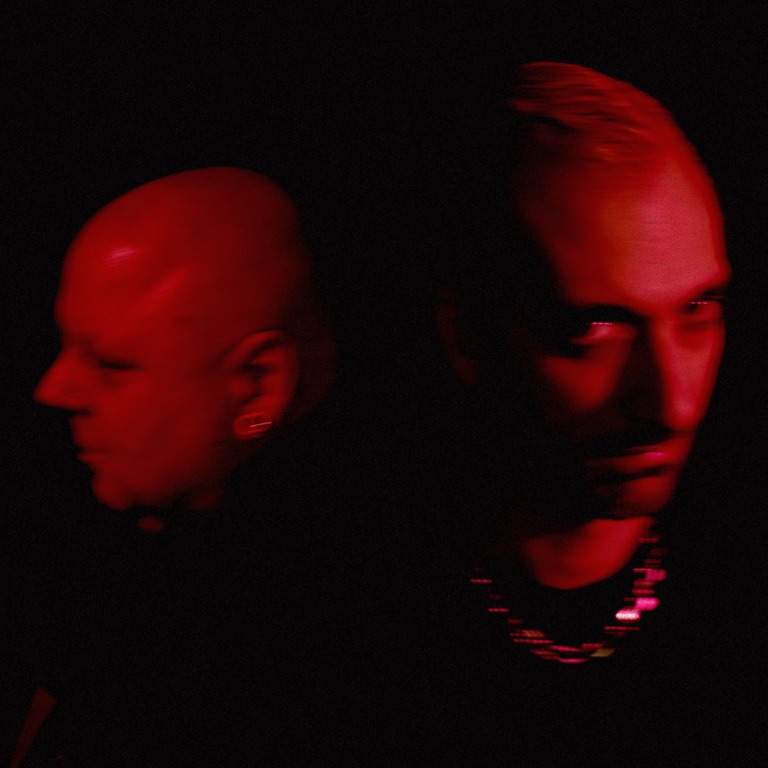
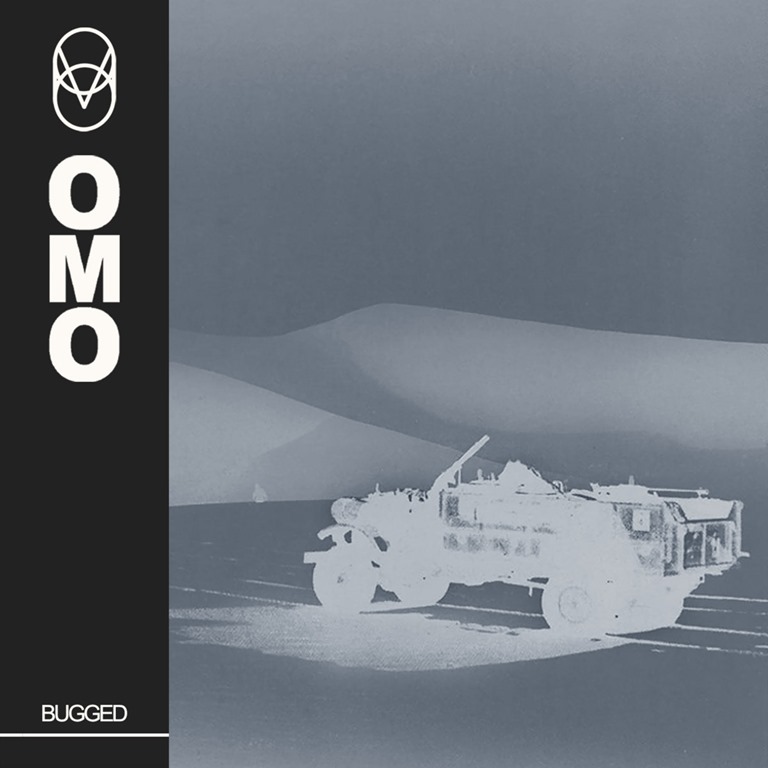
OMO DOOM’s version of ‘Bugged’ is slower, starker, more malevolent and menacing than the original which was ferocious in its unbridled brutality. Here, we get thick synths and punishing drum machines dominating the sound. The bassline is twisted around a way, and sounds for all the world like ‘Shirts’ by Blacklisters, and at around the two-minute mark is slumps into a low-frequency range that’s unsettling to the bowels as well as the ears. This sure as hell brings the dirt. The vocals are rabid. It’s gnarly, alright. Fans of Mogwai and The Twilight Sad and the late, lamented Aerogramme may be drawn to this, but probably won’t like it: it’s the work of a bunch of musicians trying something that’s nothing like their regular work, and it’s unfriendly and inaccessible and noisy and horrible… and of course, I absolutely love it. And maybe it could spearhead a Head of David Renaissance… We can hope.
The second advance single taken from the forthcoming MER Redux Series release Marc Urselli’s Ramones Redux features a stylish collaboration with a creeping groove of Icelandic artist Daníel Hjálmtýsson and Norwegian dungeon synth pioneer Mortiis. These Nordic musicians have taken on the track ‘Beat on the Brat’ and truly made it their own, with the punk-worshipping new Redux Series installment scheduled for release on June 6, 2025.
AA
Daníel Hjálmtýsson comments: “Ramones made me love making music the way I wanted to make music", the Icelander writes. "No excuses. No rules. Taking chances and learning to love the imperfections. Just straight up. Fearless. With this track being a personal favorite, I really wanted to do a kind of 180 spin on it and take a lot of chances. The theme of the song is very dark and hits home for me in many ways, and I wanted to explore the disturbing themes in a darker, moodier way. I’m so grateful to be a part of Marc Urselli’s group of incredible artists on this one!”
Mortiis states: “Needless to say, when you’re asked to work on something as legendary as a Ramones song, even if it’s just a cover, it can be pretty nerve-wracking stuff", the Norwegian muses. “I just rolled with what came natural to me, and hopefully I won’t be lynched by the masses. Marc has always been awesome to work with, and so far he hasn’t tried to kill me, which I think is a good sign.”
It has been said about Icelandic artist Daníel Hjálmtýsson that he “embodies a sonic fusion reminiscent of the likes of Nick Cave, Mark Lanegan, and Depeche Mode, set against a Leonard Cohen afterworld”. With his debut single ‘Birds’, Daníel introduced his dark, neo-goth and atmospheric approach to alternative rock music in early 2020. The late Mark Lanegan wrote: “Daníel makes icy neo-goth music that brings to mind the forbidden landscapes of his native Iceland”, the legendary US-musician stated. “One can envision him on a stage of a church-turned-dungeon, somewhere in the Reykjavik underbelly.”
Iconic Norwegian musician Mortiis has just signed a deal with Magnetic Eye sister label Prophecy Productions. After parting ways with the Norwegian black metal pioneers EMPEROR, Mortiis embarked on a solo career, the so called ‘Era I’, that lasted from 1993 until 1999. In this highly creative period, the Norwegian released six full-length albums (including the “The Song of a Long Forgotten Ghost” demo and “Crypt of the Wizard"). His music during this phase was entirely composed on synthesizers. In the next decade, Mortiis evolved into a band that marked the beginning of the short-lived ‘Era II’, which only consists of the rather electropop oriented 2001-album "The Smell of Rain”. When ‘The Grudge’ came out in 2004, the album had a hard impact of the scene and started ‘Era III’. The Norwegian and his band had turned to heavy industrial rock and as a result made many new friends. This was followed by a factual hiatus between 2011 and 2015, although it was never officially announced. In 2016, the next full-length "The Great Deceiver" surprised global followers of the band that had long hoped for a new release. Although the style of the previous phase is largely continued, it is named ‘Era 0’. On the gargantuan remix album The Great Corrupter, Mortiis again teamed up with a host of exciting artists including musicians from GODFLESH, FRONTLINE ASSEMBLY, DIE KRUPPS, MERZBOW, and APOPTYGMA BERZERK among a multitude of others. Currently, the Norwegian is preparing to release a new album.
France’s industrial metal duo SCARSET REBELLION is proud to reveal a new single, called ‘Orgasm Dissolution.’ Now available on the main digital streaming platforms, ‘Orgasm Dissolution’ is included in the band’s upcoming album Flesh Against The Void, set to be released on May 16th.
‘Orgasm Dissolution’ is a high-velocity assault of death metal fused with industrial chaos. Fueled by crushing, precision-driven riffs, relentless drumming, and raw, defiant vocals, the track captures the fury of a world collapsing under its own weight. This is the sound of revolution – a battle cry for those who refuse to be broken by corruption and lies. It’s about tearing down illusions, breaking chains, and finding strength in the wreckage.
Composed of 7 tracks for over 38 minutes of duration, Flesh Against The Void is a violent clash of death/thrash metal, industrial brutality, and synth-driven unease. SCARSET REBELLION sculpts an oppressive yet hypnotic sound – where metal grinds against metal, where analog screams in a digital world.
Imagine the mechanical aggression of Godflesh, the sharp grooves of Prong, and the dystopian intensity of Fear Factory, infused with the eerie pulse of synthwave.
Somewhere between the fury of extreme metal and the haunting echoes of electronic atmospheres. This is ”Flesh Against The Void” – a soundtrack for collapsing systems, digital ghosts, and the tension between past and future. Through crushing riffs, industrial beats, and ominous synth layers, the album immerses listeners in a retrofuturistic nightmare – a violent yet introspective journey.
Recorded & mixed by Evil Scar in Bayonne, Flesh Against The Void is both an assault and an introspection – a soundtrack for the end times, forged in metal and machine.
For those who refuse to be silenced. For those who scream with the machine.
Philadelphia-based industrial sludge metal band WORST ONES has unleashed the new single ‘Vex’. The track is a crushing, no-holds-barred exploration of Americaʼs decaying ideals. Drawing from the bitter truth of the American Dream’s collapse, the track delves deep into the rise of fascism and the heartbreaking act of protest by soldier Aaron Bushnell, who self-immolated in protest of the war in Palestine.
Musically, ‘Vex’ fuses the raw aggression of ’90s hardcore with the sludgy weight of doom and the mechanical grind of industrial metal, drawing influences from the likes of Biohazard, Eyehategod, and Godflesh. A standout element of the track is the signature “sickness” – rhythmic noise loops that twist and churn alongside the brutal guitars and drums, creating a suffocating atmosphere of unease. It’s a track thatʼs as punishing as it is poignant, reflecting the chaotic, fractured state of the world today.
WORST ONES has explained the meaning of the song as follows:
“’Vex’ is an expression of disillusionment and resistance under the weight of a system built on lies. The lyrics question what freedom is when we live in a country that supports widespread oppression and death. There’s a sense of despair in the verses and searching for answers in the chorus but in the end the song turns into a statement of defiance and resilience.
The opening line “Wasted life is on us, covered all up in flames” addresses the heinous amount of people killed in war and how “the powers that be” utilize new types of bombs that don’t even leave behind a body, literally covering it up.
The lyric “Do you really believe the reaper will bring peace” challenges the concept that violence and killing would bring peace. It questions the false idea that through war or death there can be an end to suffering.
The final lines “They want to destroy us, but we can’t be beat" reaffirm that despite everything, resistance is still possible and even inevitable to triumph. It’s a defiant statement in the face of a system designed to crush individuals, but where the refusal to give up remains unbroken. I wanted to end the song with a statement of positivity and strength.
The story of Aaron Bushnell, who self-immolated in protest of the war in Palestine, deeply resonated with me. He was someone who joined the US Army, maybe out of ignorance or patriotism, only to feel betrayed by what he was asked to do. His act of protest was a refusal to be complicit in a system that had deceived him, and that sense of betrayal and defiance is something Vex reflects. It’s a statement of refusal in the face of violence, war, and manipulation.
As a Syrian American, these themes aren’t just abstract ideas to me. I’ve experienced how propaganda shapes people’s perceptions, how violence is justified in the name of power, and how the most vulnerable are always the first to suffer. I wrote the lyrics with a universal approach to the words because it’s not just now, it’s about the cycles of control, war, and resistance that keep repeating. This song is my way of expressing frustration, grief, and the refusal to be silenced.”
‘Vex’ is accompanied by a lyric video – watch it here:
Once again, I’m playing catch-up. There isn’t only new music released faster than I can even read my emails, but great new music at that. It’s important to stress this. There’s so much grumbling about how there’s nothing new or interesting being released anymore, and the media is bursting with articles on how bands are dying a death because the charts are solid with solo artists and it’s impossible to finance a tour as a band in the current climate, and that’s if there are any venues given that grassroots venues are closing at such an alarming rate, and it’s true, bands are simply not a feature of the commercial charts anymore, the music industry is messed up, streaming platforms like Spotify exist to deliver the precise opposite of trickle-down economics by funnelling revenue from streams for probably 90 per cent of acts up to the major league acts, and venues are in crisis. But anyone who visits these pages with any kind of frequency will be aware that there is an immense wealth of new music being released every single week – it’s just not easy to know where to find it.
When I embarked on my journey from the Top 40 to the underground, in the late 80s and early 90s, there was Melody Maker, Sounds, The NME (to an extent), and John Peel. Annie Nightingale’s request show would air all kinds of non-mainstream stuff directly after the top 40 singles chart on Radio 1 in the late 80s. Hell, even the overenthusiastic snivelling sycophant Zane Lowe would play some interesting stuff. Now, 6Music is pretty much it, and it is not the same. This is the scenic route to why I’m a month behind on covering new releases.
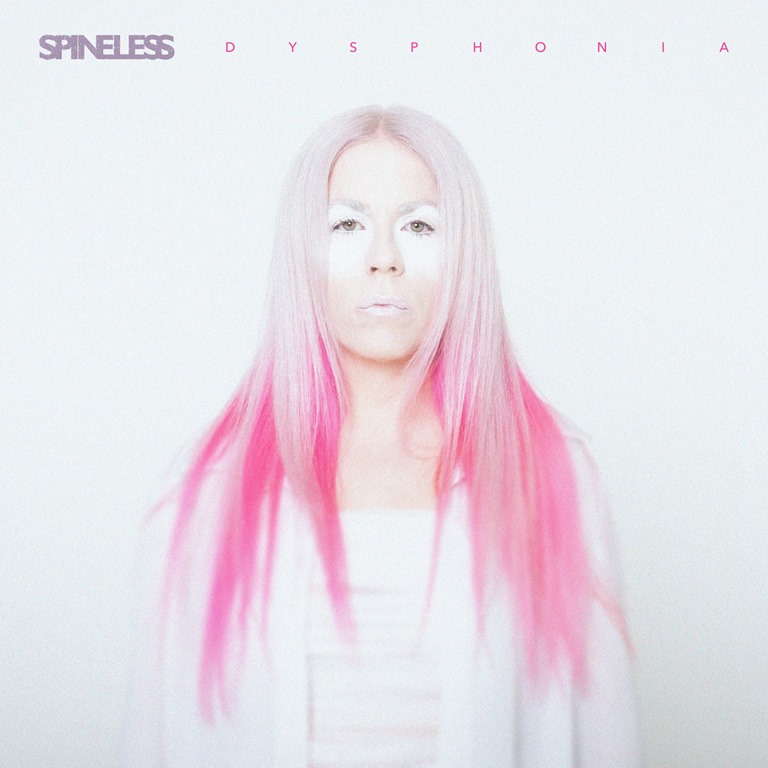
Dysphonia by Spineless is… powerful.
‘Justice’ arrives on a thick, monotonous bass blast and shuddering guitars, at first calling to mind Swans but then swerving into a space that’s both more metal and more atmospheric.
Cited influences which range from Godflesh to Chelsea Wolfe are clearly apparent, as powerful vocals, often ethereal, but at times demonic, top punishing industrial trudges dominated by sparse riffs, just a couple of chords hammered with skull-crushing brutality. ‘Disease’ is exemplary, bringing together a commanding vocal which positively soars, and a punishing, relentless riff adorned with squalls of feedback, with everything pinned together with a snare drum that simply takes the top off your head.
Single cut ‘Me’, showcased here not so long ago, is altogether more atmospheric, emotive, moving, but there are surging currents of noise running throughout, and the piano-based ‘You’ offers a counterpart piece which sees Spineless venture toward the realms of anthemic balladry. It’s quite a departure from the majority of the album, and seems to be mastered differently, too, which makes it a standout for a range of reasons. ‘To the Core’ plunges back to guitar-driven darkness, epic post-metal par excellence.
In another time, despite its weight, its, at times, brutal heft, the popper moments of Dysphonia would have likely won itmainstream airplay, and would have seen Spineless pitched alongside the likes of Evanescence and Linkin Park – not that they’re nu-metal or gothic metal, but because the songwriting is of a standard, and because they have TUNES as well as bold riffs. ‘Where Am I’ brings some stuttering beats and brooding piano, and there’s so much depth to absorb with Dysphonia. ‘Your Drama’ is soulful and industrial, detailed and delicate… and then it ends heavy. And I mean heavy.
‘NOZZ’ is nothing short of a sonic explosion, and it not remotely commercial, and all the better for it. It’s an absolute beast, a raging tempest of overload. Time was you’d buy an album based on the singles, only to find the singles completely unrepresentative. It’s true that the singles from Dysphonia showcase the more accessible end of things, but as a whole, it’s a magnificent set of songs, which really do cross boundaries and explore different spaces.
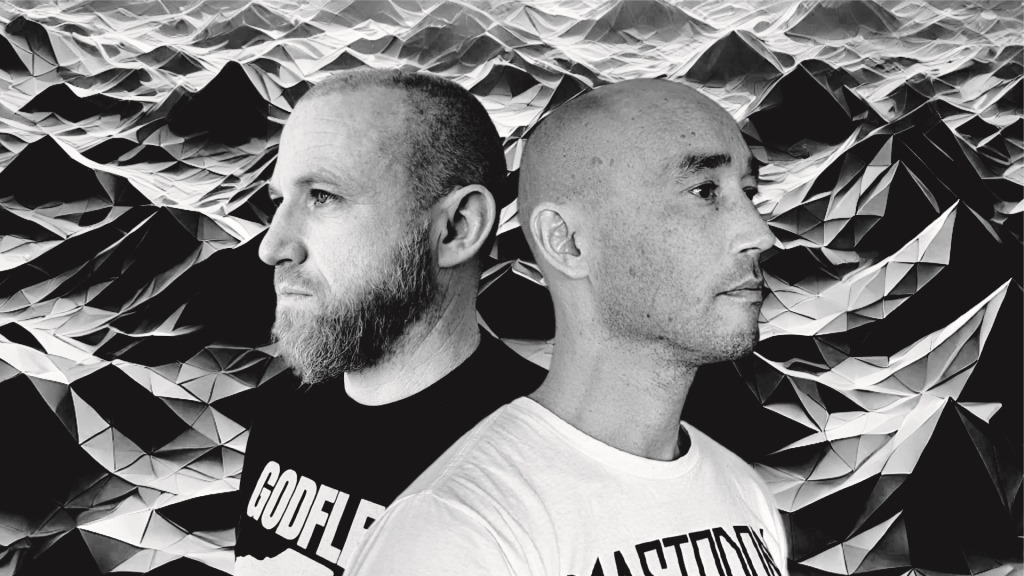
Neil Mackay is perhaps best known for contributing to Loop: having joined after the recording – but before the release – of their 1987 debut, Heaven’s End, he provided the big, solid bass grooves to Fade Out and A Gilded Eternity before they split in 1991. Loop all too often get lumped in alongside Spacemen 3, or otherwise as progenitors of shoegaze, both of which do them an injustice and ‘underrated’ would perhaps be the most appropriate descriptor for their legacy.
Mackay went on to form The Hair and Skin Trading Company, which, too, incorporates elements of drone and psychedelic rock. As Trouser Press outline it, following Loop’s demise, ‘Neil Mackay and drummer John Wills (augmented by ex-Savage Opera guitarist Nigel Webb) cribbed this unsavory moniker from an old warehouse in London and persisted in their efforts to rephrase Metal Machine Music as power-rock.
Having released four albums since their formation in 1991, the most recent being I Don’t Know Where You Get Those Funny Ideas From (2019), as well as a bunch of singles, EPs, and compilations, The Hair and Skin Trading Company continue as a going concern.
John Wisniewski caught up with Neil to find out about what he’s been up to lately, and reflect on a few moments from his lengthy career.
Editor’s note: some interviews, it’s appropriate to proof and tweak interviews conducted by email for spelling and punctuation, as much for readability as what one might sell as ‘professional standards’. But for this one, any substantive ‘tidying’ would feel invasive, and to strip out so much of the essence of the replies. It’s important that artists are presented ‘in their own words’, without being subject to any mangled paraphrases. When an interview reads like jazz, you let it play like jazz. And so this interview is presented more or less unedited, immediate, warts ‘n’ all, as they say.
JW: What are you doing now, Neil?
NM: Silent Invisible Radiation (SIR)
The Hair and Skin Trading Company (HASTCO)
Solo project
I have new album projects on the boil with all of them….
I am jamming regularly with Damon from SIR
And hopefully receiving and swapping more files from John and Nigel from HASTCO
HASTCO last album: I don’t know where you get those funny ideas from: released Sept 2019
SIR last album: Ventifacts : released July 2023 ….check that one out …2.5 hours long !!!
Occasionally I jam at the Vitaim S night at the Wine Cellar in Auckland central Monday nights ….( haven’t been for a while though ) ….Check that night out for some awesome improv / jazz / avant noodlings …. I want to and are planning to do much more live work …gigs etc ……
When and how did you join Loop?
I joined Loop in 1987 just before the release of their 1st album:Heavens End …For some reason the Bass player who played on that 1st album couldn’t be in the band anymore so I was one of only to people to apply for the job from an advertisement in Melody Maker …. The other guy apparently got really drunk when they met at the pub and threw up everywhere …..so I got the job lol….
Do you have any favourite bands?
too long a list
Can Stooges MC5, Moondog Sun Ra Peter Brotzmann , Faust , Einsturzende Neubaten, THe Pretty Things (UK ) , Steve Reich , Alice Coltrane , Arvo Part , Manuel Gottsching , Xenakis , Lee Perry , Dub Syndicate ,The Scientst ,Mad Proffesor, Wire , Sex Pistols, Joy Division , New Order, Aphex twin , Velvet UNderground , THe Doors , THe stranglers , the pop group, The Raincoats , Daniel Johnston , Butthole Surfers , The Clash , Dead Kennedys , Black Flag , Hunters and Collectors , Dplit Enz , Ths Stones (NZ) , The Rolling Stones ( US ) , THe Clean , The Chills , Talking Heads , Favid Bowie , Bjork , Captain Beefheart, The Residents , Sonic Youth, Brian Eno , Roxy Music , John Coltrane , Neil Young , Laurie Anderson , The Pixies , Public Image Limited , Devo , Pere ubu , Luigi Russolo , Boredoms , THe Beatles , Psychic TV , Throbbing Gristle , My Bloody Valentine , Nick Drake ,William Basinski, Beach boys , Elvis , Kraftwek , Swans , Neu ! Massive Attack , King Tubby , Mikey Dread ,Suicide , Alpha and Omega , John Zorn ,,,,,
I like any music really as long as its good !
It’s up to you what defines good
What was the concept for how Loop should sound?
Robert’s baby you should ask him …
Personally – live anyways I was trying to blast people through the back door …
Ridiculous we were too loud (sometimes )
I have really bad tinnitus now ha whatever ….
Why did Loop break up?
Burnt out I reckon …. I have read other band members give their reasons ….all good
i was gutted when we split ….but relieved in a way as well because it wasnt fun on tour at all any more ….
I remember when Loop came back from touring for 9 or so months …. I just wanted to chill out and reax at home …. But 9 o’clock came along and I got a huge energy rush of adrenalin and HAD to go out to a gig ……
When and how did you join up with The Hair and Skin Trading Company?
John the drummer from Loop and I wanted to keep doing music together I immediately contacted my old mate Nigel Webb ,,,, I had been in a band with him called Savage Opera …. We could never get a drummer to stay in the band ….. anyways Nigel is an awesome guitar player …. so walking down turnpike land one Saturday afternoon we saw a decrepid old factory that had a sign that said : The Hair and Skin Trading Company : so we thought that would be a great name for a band … that was it
Do you like jazz and avant-garde music?
Yes big fan ….. I worked at The Rough Trade shops in London for 17 years and used to hang out and buy records from Rays Jazz shop …..European and US jazz/ experimental music … I also love :world : music and have a large collection of Gamelan and African vinyl from labels such as Occora …Also like Dada (1920;s) environmental ,,,I was collecting Peter Brotzmanns label FMP …. Jazz wise IM more into the avant garde type weirdo jazz …..
Any future plans and projects, Neil?
I answered that in Question 1 ….
yes …..maybe thinking about coming to the UK for one more music blast ….
Getting older now at 60 ….
The tour with the loop re union was kinda fun great to see old fans / friends….
….
Could you tell us Neil, about your collaboration with Godflesh called Loopflesh?
And the double header tour in 2014 with Godflesh?
super cool tour ,,, we went into house in the woods and did the cover for the excellent label clawfist ……We were all freinds it was a great time ,,,,, that was a great tour apart from that ….thats it ……
The Shoegaze and psychedelia movement was much maligned, but seems to be experiencing a Renaissance. How do you feel about this?
At the time shoegaze wasn’t a expression we used ….. it was used by the press to get >something? going ….Psychedelia is a better expression ….but yeah all good ….. Im not up on new bands but Im up for new bands / music …always ….who are good in this field now ,,,( answering a question with a question )
Warren Schoenbright isn’t a person, but a noise duo, based in London. And Sunless, we’re told, presents ‘eight tracks [which] chart a blistering course through different circles of misery, abjection and darkness. Alighieri’s Inferno is the armature around which this new record has been sculpted with glimpses of horror plucked straight from Dante and Virgil’s descent. Schoenbright are preoccupied with using the classical trope of a descent into the Underworld to explore how transformative and redemptive navigating the melancholic and horrifying depths of one’s mind can be.’
As the title suggests, Sunless is dark. Really, really dark. Immersed in mythology and biblical references, it’s an exploration of the most torturous sufferings, gouging deep into the depths.
‘Christquake’ made for an obvious choice of lead single: the album’s shortest track at two minutes and twenty, it encapsulates the album’s entire essence in that brief and intense span – but this is an album which is best appreciated in its fullness, with the majority of the tracks extending beyond five minutes and bringing forth almost untold torture and pain.
‘Boiling Vermillion’, the album’s first track, blisters and burns. It brings expansive, tranquil passages, not least of all the vast intro, punctuated by explosions of fiery post-metal rage. There’s blasting industrial percussion and a wall of noise that towers all the way to the sky. And when it slams on the distortion – fuck! This is a sound that you feel gouging at your guts. More often than not, there’s perhaps a tendency to see heavy or noisy music as being primarily cathartic, that the sound itself is a vent, by which to channel emotions which don’t readily translate into more detailed articulation. This tendency is furthered when the lyrics are rendered obscure by their delivery. But while the lyrics are largely impenetrable, there’s another level of articulation here, and so much sonic detail…
Where Warren Schoenbright differ from so many other bands who make bleak, intense noise, is that there is so much space, so much reverb here on Sunless. Most bands this thick and heavy are suffocating in their gravity, their density. This is something I personally appreciate: the capacity for music that has an impact that’s so powerfully physical is a reason to let it enter your being. Sunless is different, though. Sunless is not suffocating. It’s intense, but its texture is different. Its scope is broader, and the album as a whole simply feels immense, in a cinematic, widescreen sense. But that isn’t to say it doesn’t contain moments of pulverising weight and density: they blast hard in short bursts which arrive unexpectedly, something which only intensifies their impact.
‘This Litany They Gargle in Their Throats’ begins fairly gently, a nagging guitar and solid percussion defining the shape of an irregular sonic sculpture which lays the foundations for a rasping, fire-breathed vocal. It’s a slow-build, and the feedback and anguish grow until there’s a sudden switch after a couple of minutes or so, and it takes a turn whereby Young Gods meet Swans circa 1984. It’s stark and intense… and then the monster grind hits like a bomb. The abrupt ending sticks like a bone in the throat.
The wailing feedback of ‘These Drear Abodes’ really tests the listener’s limits, and the hearing. Here, the intensity derives not from crushing power chords, but from a different kind of force – although the grinding low-end feels like a bulldozer excavating unseen depths, and when they do hit a barrelling blast of heavy, it’s as if the sky is falling down, a descent into the inferno indeed. This brutal bludgeoning hits even harder on ‘Minos the Judge’, and again, Swans’ Young God EP and early Godflesh stand as the most representative comparisons, but this fails to convey the soaring, transcendental elements which are every bit as integral to the sound.
While the title track brings dolorous chimes, picked guitar echoes, and burnt offerings, the final cut, ‘Icarus and the Bruised Air’ closes the album with eight and a half punishing minutes of slow grind that weighs in against the best of Godflesh, only with a much more organic feel. The drumming is nuanced, as is the guitar work, which introduces an atmospheric, almost gothy aspect to this remarkably multi-faceted composition, which culminates in a colossal and utterly eviscerating slow climax.
Playing Sunless at great volume not only heightens the impact, but really brings out the detail, and the production is absolutely incredible: the drums hit hard and you feel as if you’re in the room with them as they play, and play hard. Sunless is heavy and intense, but it’s so much more, and it’s cerebral as well as physical.
I’d love to avoid tedious repetition but it’s hard to review yet another Human Worth release without mentioning just how fucking great this label is, because the name means what it says – it’s a label of rare integrity, which always donates a percentage of proceeds to charitable causes, more often than not one local to the artist, and for this release by ‘shape shifting south London noise rock outfit Thee Alcoholics’, 10% of proceeds from this record will be donated to the south London based charity The Lewisham Primary Care Recovery Service.
They’re also outstanding with their radar for quality noise, and Thee Alcoholics sit comfortably on the label’s roster, delivering ‘songs that rail against injustice, intolerance and institutionalised Great British apathy – neatly wrapped around screeching, trash guitar riffs and blast beat driven bass synths. Mixing the gnarly, outsider big muff energy of early Tad and Mudhoney with the industrial crush repetition of Godflesh. Ugly vocals are buried somewhere between the Brainbombs and Girls Against Boys.’
Could it get any better? Well, actually, yes! The EP’s artwork, by Tony Mountford, tips a hat to Therapy?’s live 7inch ‘Opal Mantra’, while the recording itself is pitched as ‘a document of the journey so far – 30 minutes of agro [sic] drunk rock n roll. In the red sizzle of a load of broken equipment. The band barely holding it together in their chaotic element.’ Oh, and it’s mastered by Jon Hamilton of Part Chimp.
Human Worth may be a young label, but the sense of musical history and heritage that informs their choices is remarkable, and all of the references trace a solid lineage to the early 90s – and it’s hard to overstate just how exciting those short few years were. Because as much as it was about Nirvana and Pearl Jam and Soundgarden and Rage Against the Machine breaking the mainstream, it was about a current of alternative guitar-based music which occupied John Peel’s playlists and infinite column inches in Melody Maker (if not so much the NME). And the live ‘Opal Mantra’ EP is absolutely fucking blinder and makes for an admirable reference point, packing as it does raw and ripping renditions of ‘Innocent X’ and ‘Potato Junkie’ alongside one of the best non-album tracks ever. That a band could chuck a song like that out in such a fashion was a revelation at the time and it’s interesting to see all of these references come together here.
For me, Tad was always way more the quintessence of grunge than, say, Pearl Jam, the gritty, sweaty metal heft of songs about farming and manual labour really getting to grips with the reason the Seattle scene emerged representing the blue-collar – or perhaps more accurately the plaid-collar demographic who needed to vent after several hours of slog and grind. And Thee Alcoholics really capture that mood, often at a frantic pace that suggests a strong influence from mid- to late-eighties hardcore melded with nineties noise and grunge.
Live recordings can be difficult: too crisp and clean and so polished and overdubbed it doesn’t sound live, or otherwise just dingy and shit; this one is great because it’s not dingy and shit, but isn’t exactly ‘produced’ either: it’s dense and you can hear the audience – sometimes shouting to one another during the songs, because they’re tossers – and it all makes for a document that’s perhaps flawed to some ears, but is, as a document, absolutely perfect because you really do feel like you’re there.
Live At The Piper features live renditions of songs from their debut album released on cassette, and seven-inch releases, and it’s warts-and-all in the vein of The Fall’s Totale’s Turns – and it needs to be: it’s a proper live document rather than some polished-up, super-dubbed-up, hyper-clean fictionalised reimagination of events, as they power through eight songs in twenty-four minutes.
‘A Ghetto Thing’ is two minutes of throbbing, thrashing fury, rushing its way to the safety of a pub car park in blitzkrieg of noise, while ‘Turn on the Radio’ is built around a driving riff which switches up a key for the chorus; the vocals are half buried and the drums dominate everything and it’s all over in less than two minutes, which is time enough to do the job of grabbing you by the throat and kneeing you in the nuts several times. It’s a hell of a racket, but amidst the frenetic crashing of cymbals and general murk is a song that’s strong enough to lodge in your brain, and it’s rare for bands this noisy, this messy, to incorporate ‘catchy’ elements, favouring instead sheer force and sonic impact – which they do elsewhere, not least of all with the high-impact forty-one second detonation that is ‘Sweetheart’. Then again. ‘She’s the Man’ is built around a nagging locked-in industrial groove, but it’s also scuzzy as hell, and it’s not hard to see where the Godflesh and Girls Against Boys references come in, and it’s arguably the strongest song on the set, a low-sling grinding wheeze emerging from shards of feedback.
Six-and-a-half-minute set closer ‘Politicians’ is low, slow, and grimy – which is extremely fitting, really, and the booming, sludgy bass is just magnificent.
As with the B E L K release, Human Worth have adhered with the old hardcore ethic of releasing a band in its rawest, most unadulterated form, and it works because it preserves the energy and integrity of the moment. It ain’t pretty, but it’s real.
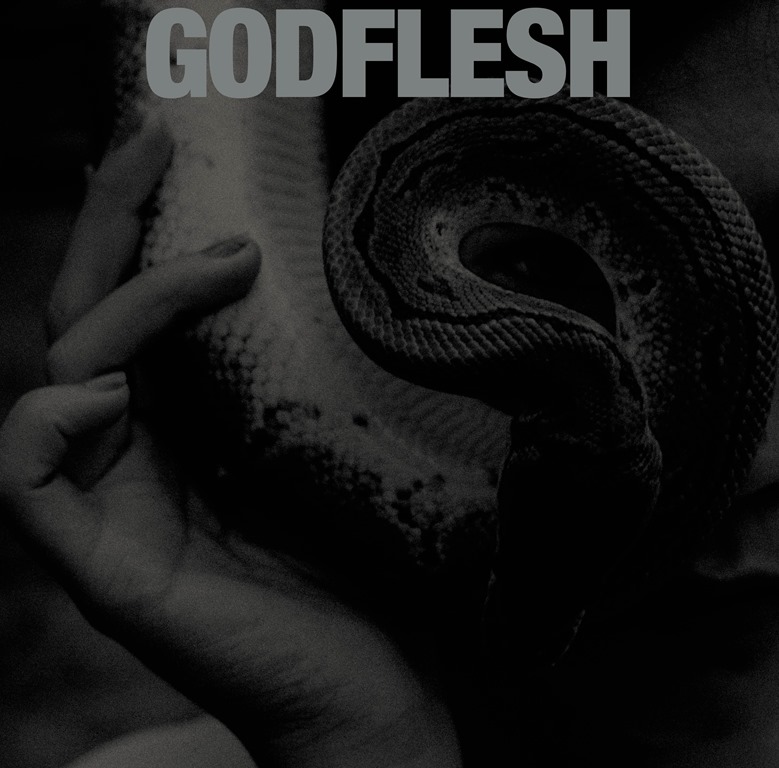
Godflesh share new track "LAND LORD" from their forthcoming album, PURGE. It’s a track which spirals out in pent-up rage from the first second, distorting and mutating 90’s drum and bass through the Godflesh filter.
About the track Justin comments, “’LAND LORD’ references ownership, entitlement and the objectification of human beings, as practised by almost anyone who wields power.”
Listen to ‘Land Lord’ here:
With the highly anticipated new album PURGE, Godflesh brings a whole host of new dirges and laments. Amongst the many layers of dirt, PURGE mangles 90s hip hop grooves and puts them through the Godflesh filter to create something futuristic in style – and utterly unique.
Both minimal and maximal, Godflesh deliver alien grooves that swing whilst also retaining the psychedelic, bad trip edge with layer upon layer of filth and heaviness – that Godflesh have always been known for. This is, and always has been, feel-bad music.
The title alone – PURGE – references directly how songwriter and creator Justin K. Broadrick utilises Godflesh’s music as a temporary relief from his diagnosed autism and PTSD. It’s the next stage in a journey he has been on since he began creating music, feeling alone and like an outsider in any scene or group, from childhood through to adulthood.
The music of Godflesh gives Broadrick the means to express a lifetime of feeling misunderstood and overwhelmed by hyper-sensitivity. The band is the vehicle to provide some sense of catharsis and transcendence; a way of communicating overload, as well as the constant disenchantment at the human condition, and man’s abuse of power and the systems that chain us.
PURGE references the cycle of horror that man always has and always will put us through; those in positions of power revel in the infliction of pain and horror upon individuals – in the name of their religion, their power, their money, their flags…


 Aural Aggravation