Posts Tagged ‘Gentle’

16th October 2025

Christopher Nosnibor

Does the constant flood of bile on social media, the relentless flow of horrible, horrible news, and the general shitness of both people and society make you want to run away, hide, live in the woods? It seems that during the lull that was lockdown – a weird period which threw so many people into a spin of confusion that we really need to accept that there have been long-lasting repercussions from what amounted to a collective trauma – something changed, as if the world shifted on its axis. Some of us were more traumatised than others, it’s true, and that’s for wide-ranging reasons.

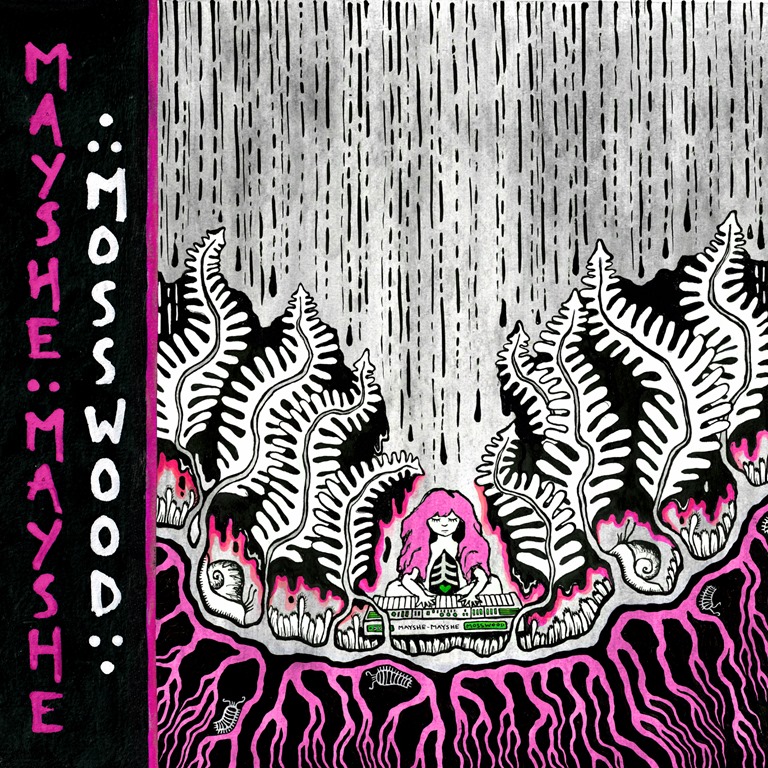
Alice Rowan – aka Mayshe-Mayshe – has documented her own post-lockdown issues with long Covid via her social media, and how it’s impacted her ability to maintain her work-rate. But here she is, finally bringing her third studio album, Mosswood to the world, and it’s the perfect antidote to all the stress and strain of modern life.

She describes it as ‘a dreamy art-pop exploration of mossy woodland and Tove Jansson’s final two Moomin novels… Her music blends dreamy art-pop and electronica with rich storytelling and infectious melodies, with organic elements woven into all aspects of her music.’ You may ask why – why would an adult be so invested in a fantasy world which has such strong connotations of childhood? A reasonable response would be ‘why not?’ In the face of the horrors which surround us everyday, retreating to the comforts of those peaceful, simpler times is the ultimate escapism. And what’s more, there is a strong connection with all things natural here, evoking the woods so many of us yearn to escape to.

Mosswood is introspective and personal, but also a passage to perfect escapism, and Mayshe-Mayshe balances breeziness and an air of naivete with anxiety and inner turmoil. And the result is so, so magnificent, magical, a balm to all of the noise. It’s the twitter of birds, the scratching of bugs, the tinkle of streams. Incorporating field recordings for the first time, on Mosswood Mayshe-Mayshe really brings nature in. Single release ‘Mycelium’ is exemplary: the percussion is more like the footsteps of overgrown insects – I’m reminded of Roald Dahl’s James and the Giant Peach in soe ways. But songs like ‘Tiny Disasters’ push to the fore the tensions and the darker aspects of the creative psyche, and reminds us that sometimes, life is simply difficult to process. ‘I’ll be afraid again…’ she repeats, twitchily, capturing perfectly exactly what it’s like to fret, chew and churn., against a glitchy, flickering beat and buzzing sound backing.

In the main, Mosswood is the sound of dappled shade, of gentility and deep breaths – and the big reverb which surrounds Alice’s voice is less like a cloak and more like a comfort blanket as the listener is led into a soft, gentle soundspace, which evokes snuffling and scuffling, and, more importantly, pure escape. On ‘The Little Things’, she sings in breathy, introspective tones of worries – but the immersive waves wash those worries away.

What Mosswood really tells us is that happy, skippy tunes do not instantly equate to effusions of joy, or endless happiness. That said, Mosswood is the sound of freedom, of connecting with nature, feeling the textures of grass, of bark, of moss. Utilising an array of instrumentation, Mosswood is understated and so, so uplifting. There are so many layers, there is so much detail to absorb. But ultimately, Mosswood reminds us that nature is there, all around, and it’s beautiful and our lives are richer if we engage with it. Look at the trees. Touch the bark. Breathe the air. This is life. Live it. Celebrate it.

AA

Mosswood cover art for digital v2Mayshe promo bug - credit Isobel Naylor

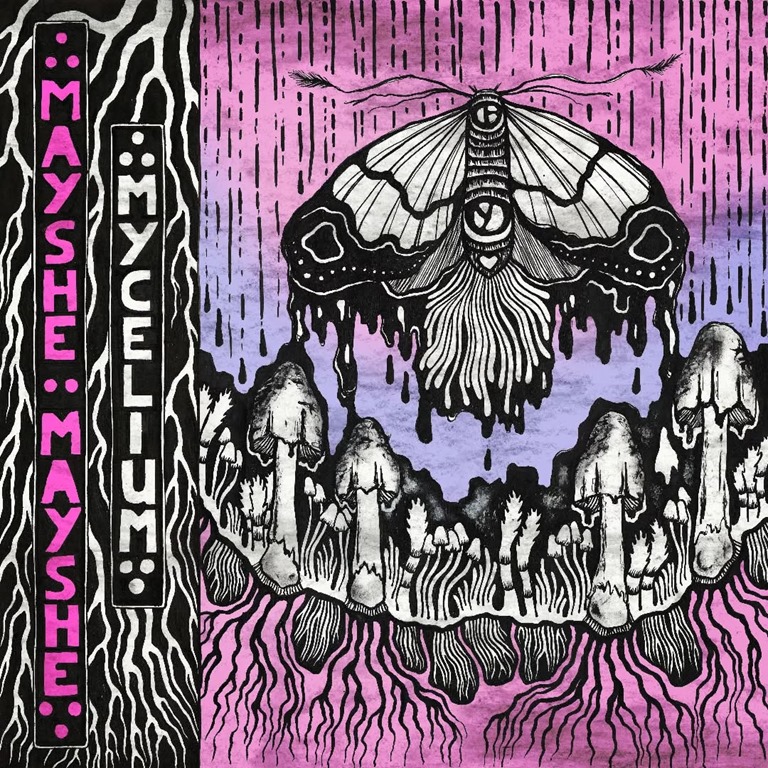
Mayshe-Mayshe has released new single ‘Mycelium’, and an accompanying video.

This is a song is about autumn and decay, rainy woodland walks, lonely adventures, and setting off on a journey at nightfall. (Snufkin setting off on a journey to be specific.)

It’s mellow, and we rather like it…

AA

557431197_18290754487284424_3036890452061560759_n

The forthcoming full-length from Los Angeles–based band Agriculture, The Spiritual Sound, traces a narrative arc through extremes.  The album is largely a fusing of the visions of its two principal songwriters: Dan Meyer and Leah Levinson.  Though distinct, their voices converge in a singular spiritual grammar—one that defines the totality of The Spiritual Sound, not as separate parts, but as one unified expression.

Dan writes like someone clawing toward the divine through noise, channeling Zen Buddhism, historical collapse, ecstatic grief. Leah’s songs move differently: grounded in queer history and AIDS-era literature, amid the suffocating fog of the present, they carry the weight of survival as daily ritual. Dan takes the lead on their next release, a quieter moment amongst the chaos. About the track, he says;

“This is a love song to a future child. It is so moving to me that even though this child does not exist in the form of a child yet, all of the matter that will one day make up their being is already in the world. And of course this is true of all things that have ever existed. So even though I’m talking about a kid that I want to have one day, I’m really talking about the principle that everything is totally connected.”

AA

Agriculture’s formation mirrors their duality. What began as a loose collaboration between Kern Haug and Dan Meyer in the Los Angeles noise scene evolved into a shared pursuit of the sublime through heavy music. With the additions of Richard Chowenhill and Leah Levinson, the project solidified into the band’s current form. The ecstatic black metal foundation that was laid on 2022’s The Circle Chant expanded into something more precise and far-reaching on their 2023 self-titled full-length, and deepened further with 2024’s Living Is Easy: a record that embraced devotional intensity and radiant heaviness in equal measure.

Agriculture’s writing process is built on dismantling and revision of self. Dan and Leah bring songs to the band and then allow them to be pulled apart and rebuilt communally: reshaped through conflict, repetition, and deep trust. Richard adds guitar melodies and solos, and Kern constructs rhythms which are sometimes familiar but often unconventional. Finally, with Richard producing, the final form of each song is realised through intense collaborative work in the studio. Although a time consuming and ego-frustrating process, this allows the band to find the spirit of the songs not through inspiration, but through persistence.

Yet, even in its most ambitious moments, The Spiritual Sound remains rooted in the ordinary and in the day-to-day relationships between the people who made it. Gas station snacks. Inside jokes. Sleeping on floors. Playing shows in rooms that smell like mildew. The spirit here isn’t abstract, it’s live. This is spiritual music that starts with imperfect gear and a long-in-the-tooth tour van.

Agriculture doesn’t offer salvation. The Spiritual Sound isn’t a map out of the fire. What it offers instead is presence: a confrontation with the moment, however unbearable, however divine. It insists that meaning is still possible, even in a world hell-bent on reducing everything to content, and where suffering itself can be conducive to recovery. As the Buddhist saying goes: “the only way out is in.”

AA

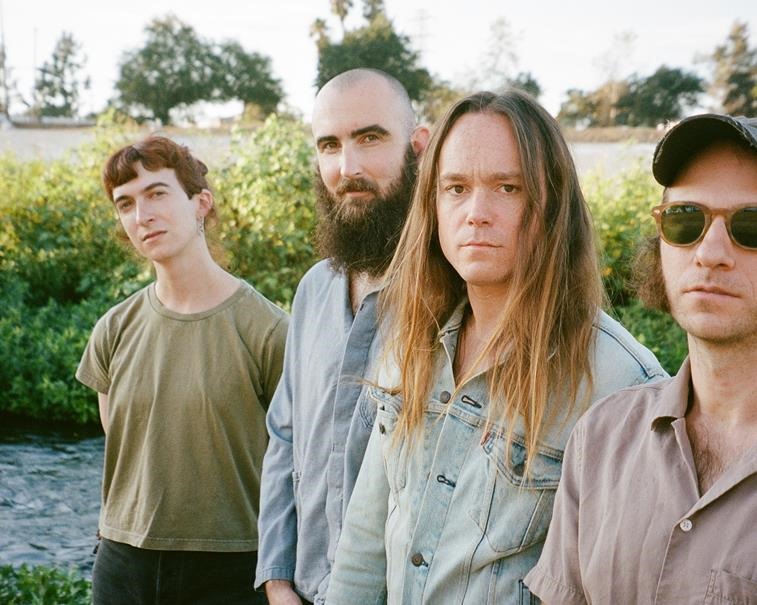
agriculture_river8copy-990451000004513c

Photo credit: Milan Aguire

AGRICULTURE LIVE DATES 2025:

Sep 17  Kortrijk, BE — Wilde Westen
Sep 18  Haarlem, NL — Patronaat

Oct 8  Brooklyn, NY — Union Pool (Record Release Show)

Oct 27  San Antonio, TX — Paper Tiger $
Oct 28  Austin, TX — Mohawk $
Oct 30  Atlanta, GA — Masquerade $
Oct 31  Saxapahaw, NC — Haw River Ballroom $
Nov 01  Silver Spring, MD — The Fillmore $
Nov 02  Philadelphia, PA — Union Transfer $

Nov 04  Louisville, KY — Zanzabar
Nov 06  Oklahoma City, OK — 89th Street
Nov 08  Albuquerque, NM — Launchpad
Nov 09  Phoenix, AZ — Valley Bar
Nov 11  Denver, CO — Hi-Dive
Nov 13  Salt Lake City, UT — The State Room
Nov 14  Boise, ID — Neurolux
Nov 16  Seattle, WA — Madame Lou’s
Nov 18  Vancouver, BC — Fox Cabaret
Nov 19  Portland, OR — Mississippi Studios
Nov 21  Sacramento, CA — Cafe Colonial
Nov 22  San Francisco, CA — The Chapel
Dec 04  San Diego, CA — Soda Bar
Dec 05  Los Angeles, CA — Lodge Room

$ with Boris

Cruel Nature Records – 1st August 2025

Christopher Nosnibor

Nicholas Langley outlines his latest offering with the explanation that “One Square Centimetre Of Light is a continuation of the ideas and techniques I used to compose Thinky Space and especially Cymru Cynhyrchiol. Recorded in spring and summer 2024, this album was an outlet for a lot of thoughts and emotions regarding the involuntary loss of time and memory.’

There are gaps in the narrative here – gaps which I don’t feel it’s necessarily appropriate to probe or plug, particularly when, in his extensive explanation of the album’s final, thirteen-minute piece, ‘Missing Day’ – of which he writes: “‘Missing Day’ can refer either to the mourning feeling of losing whole days to bad health, or to the actual calendar day of mourning, Missing Day, on February 20th. For this piece, as well as layers of tracks 3, 4 and 5, I returned to the generative music techniques I started in 2016. This time around I spent many days getting to grips with programming multiple pieces until I eventually programmed a piece which exactly conveyed my feelings of mourning and hope.”

Memory loss can be a source of panic, anxiety, and while it appears to be a focus, or inspiration of sorts for this album, it feels inappropriate to probe here. But listening to the soft, soporific ambience of One Square Centimetre Of Light, I find myself wondering – where will it go next?

It doesn’t really need to ‘go’ anywhere: the instrumental works which make this album are subtle, sublime. ‘Welsh Summits’ is a beautiful, resonant ambient exploration, while ‘The Weather on the Seafronts’ is magical, mystical, ambient, while ‘Old Age’ quivers and chimes abstractedly, with layers of resonance and depth.

And so we arrive at ‘Missing Day’: fully forty minuses of melodic instrumental exploration, serene, calm, expansive. It’s soft and as much as One Square Centimetre Of Light soothing, the vast sonic expanse of ‘Missing Day’ encapsulates the album’s conflicting and conflicted nature.

One Square Centimetre Of Light is overtly serene and beguiling, but hints at an undisclosed turmoil beneath the surface, a work which is a sonic balm, the result of a process to calm inner strife. As lights at the end of the tunnel go a mere on centimetre is barely there – but there it is. And it is hope. keep the focus on that.

AA

a2057051706_10

6th September 2024

Christopher Nosnibor

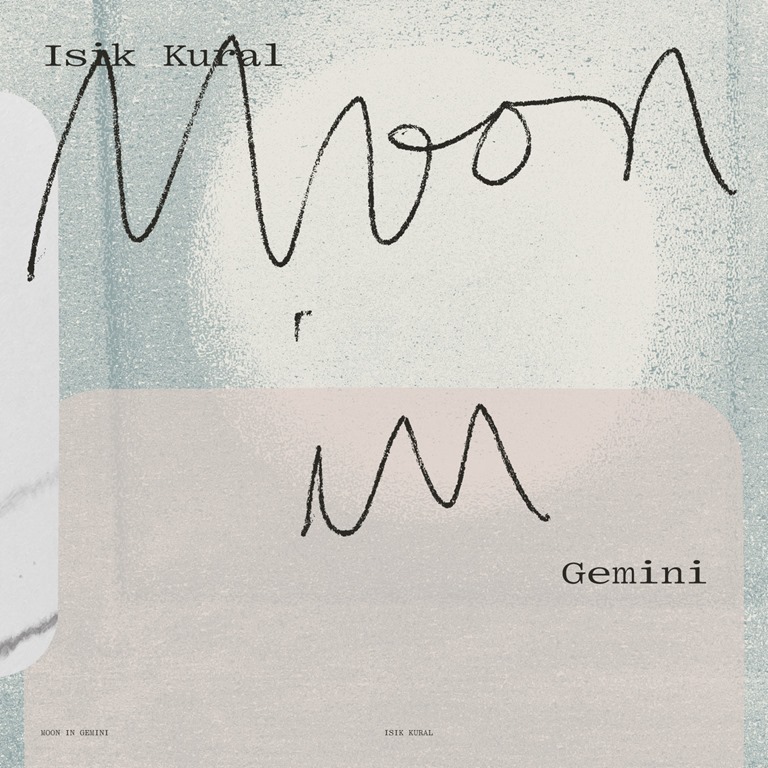
Isik Kural’s Moon in Gemini is described as ‘a luminous scrapbook of slow-flowing narratives couched in intuitive and symbolic storytelling. Awash in woodwinds and strings, lullaby-inflected lyrics and tender imagery, Isik’s voice moves closer to the listener’s ear on his third album, intoning states of being in which the wonder filled sound of everyday life can be heard and felt. Moon in Gemini is a space for wide daydreaming, where the invisible steps forward and dauntless ghosts play under a hazy lunar light.’

This is a charming proposition, and the actuality proves to be even more so. Moon in Gemini contains fourteen compositions, the majority of which are fleeting, ephemeral pieces of but perhaps a couple of minutes in length: a handful extend beyond three minutes, but none beyond four.

The overall effect, then, is soothing, but the fragmentary nature of the assemblage means the flow is broken, and often the smooth, calming flow is disrupted as compositions end – I won’t say prematurely, because who am I to say when a composition should end, how long it should be? These things are purely artistic choices, and my feeling that pieces here sometimes feel incomplete or abridged is simply a that, a feeling, as much from my desire for more than any clear or objective assessment.

The first piece, ‘Body of Water’ is typical in its soothing, tranquil ways. Delicately picked guitar and mellow woodwind drift and trill with a delicate drip-drop sound, and it’s beautifully relaxing, the sonic recreation of the experience of sitting by a still lake in warm – but not hot – sun while a gentle breeze ripples the surface. I close my eyes and find myself on the edge of a tarn in the Lake District: a happy place, a place of tranquillity, of escape. It’s a place I could spend long hours, and in my heart I believe those hours could extend for days. But it fades out, far too soon – after a mere minute and fifty seconds, the moment’s passed. But this is in many ways just how it is to be sitting by a lake, and sensing a moment of true perfection: just as you begin to bask in it, the wind picks up and a cloud drifts over the sun, the temperature drops and you realise that that perfect moment was simply that – a moment. Moments pass before you can grasp a hold on them. They exist in a momentary flicker, the blink of an eye, and so often, they’ve passed before you even realise they’ve arrived.

AA

AA

‘Prelude’ is a dainty, sugary, music box tune which exists out of time but is, at the same time, steeped in an ambiguous nostalgia. Precisely what it’s a prelude to, I’m not sure, but I’m also not sure it matters, while ‘Almost a Ghost’ is haunting, gentle, introspective and flitting with fluttering sounds of nature alongside its rippling pianos and low-key, almost spoken-word vocals. Each piece is shimmery beguiling, the supple and subtle layers rippling over one another while on the pieces where there are vocals – and much of Moon in Gemini is instrumental – it’s true that Isik’s voice is quite special, and an instrument in its own right, and also more about the enunciation and, often breathy, bedroomy, about its contribution to the overall atmosphere. ‘Mistaken for a Snow Silent’ is beautiful, and as much on account off its sparse simplicity than anything else.

We hear ambience and chatter around and even through the songs, and these incidentals work well, in context.

‘Gül Sokağı’ is low and slow and possesses a quality that difficult to define The soft woodwind on ‘Birds of the Evening’ is light and airy and mellifluous. The experience is uplifting, and as a whole, Moon in Gemini is sedate and arresting.

To bemoan that an album doesn’t provide everything that I would like is not a legitimate criticism: it’s not a failing on the artist’s part, and I cannot seriously claim a loss of expectation: with Moon in Gemini, provides everything promised, and more. This is a truly beautiful album, and one which has a rare warmth and softness.

AA

AA

a1909099100_10

‘All the Bees’ are Kirsty McGee and Gitika Partington, two highly experienced writer-musicians who have created an exciting new album of gentle yet deep, pastoral alt-folk that brings together their distinctive styles into a crisp, fresh new collaboration that weaves its stunning, reflective songs like gossamer threads around the ear.

McGee is an award-winning wandering maverick and spellbinding live performer who has been releasing music and performing all over the world for over twenty years. Her fans include Emma Watson and Danny Boyle, for whose 2014 thriller ‘Trance’ the song ‘Sandman’ provided a cornerstone, both in its original version and covered by lead actress Rosario Dawson.

Partington, has had a similarly vibrant and varied career in music to date, releasing seven albums which have achieved critical acclaim and national airplay from likes of BBC 6 Music. She has created 4 books of multi-genre choral acapella arrangements published by OUP and Hal Leonard and multi layered vocal tracks for Warner Chappell and Peermusic. During the lockdown of Spring 2020, she directed nearly 100 community singers and produced 9 award winning, original, quirky virtual choir videos of her choral arrangements.

Introspective, heartfelt and unashamed of straying into poetry, the pair’s lyrics focus on nature themes and cycles including loss, death and rebirth. Following the ethereal ‘Wildflowers’, the second single from the album, ‘King Crow’ is a nostalgic banjo-flecked vocal epic which shows off Partington’s finely honed expertise in choral arranging and McGee’s meandering flute to create a striking evocative ode to the king of the birds, ‘King Crow’.

On the development of ‘King Crow’, Partington explains; "King Crow was one of the early songs on the album, I was still finding a way of highlighting parts of the lyric with vocal washes and bringing into being the ‘All the Bees’ sound. I had a lot of fun creating the end section of the song, so it felt like there was a whole Royal Hall of earthly singers with good solid work boots on who are singing their praises to the King Crow. I wish I had filmed me stomping and wailing whilst recording the track in different areas of my flat. I definitely woke the baby next-door, but they didn’t make it onto the album.”

McGee and Partington crossed paths by chance on a lockdown film and TV sync music zoom course and started working together remotely. Over the next 3 years, through major grief from close family deaths, illness, the crashing lack of usual musical ventures and the whole trauma of the pandemic, McGee and Partington immersed themselves in their new-found collaboration and created the debut, self-titled All the Bees album, which is due for release this winter.

The duo have only met three times in real life – most of that time was spent cooking and eating seriously healthy and beautiful plant-based food. ‘King Crow’ is the next exciting taster of the pair’s journey together as they limber up to launch their debut album.

AA

thumbnail_image0022

thumbnail_image0033

Photos by Emma Drabble

11th August 2023

Christopher Nosnibor

One of the great pleasures I derive from reviewing music, particularly that of experimental and ambient persuasions, is the amount I learn from reading about the inspirations behind the works. Because of the nature of these musical forms, the inspirations are wide and varied, but often reactions or responses to events or places, or even abstract concepts, and unencumbered by the conventions of lyrics, which are so often hampered and constricted by the limitations of meter, rhyme, even vocabulary and simple words themselves, lyrical songs fail to convey things which, on occasion, music alone can do. Because music speaks its own language, and has the capacity to communicate, to convey more than words. As a writer, and writing about ambient compositions, I am often acutely aware both of my limitations and the contradiction of the process, in essence, or reversing the magic of instrumental musical works to ‘explain’ them using rather blunter tools, but at the same time, I relish the challenge. Moreover, I have learned more of history and geography and beyond from my curiosity-led research than I ever did from my formal education.

So much information is simply not given to us, and so much history – recent history – is lost to us, unless it has a specific local interest, and even then, many people who are natives to the very town or city they life often know woefully little of the heritage which surrounds them. I am guilty of this also, knowing comparatively little of my locale, although it was again my own curiosity which compelled me to learn the history behind the existence of a brick and concrete bomb shelter in my own back yard.

Globally, we’re so wrapped up in the moment, and a nostalgia for the recent past that the history of a generation or more ago may as well be Elizabethan rather than Victorian or Georgian.

And so it is that I had absolutely no knowledge of Carabanchel Prison… which of course meant that I simply had to find out about it. How did I not know about the largest prison in Europe, built between 1940 and 1944, and operative until 1998? Disused and abandoned for a decade, plans to convert the immense brick complex to flats came to nothing (can you imagine actually living there) before it was demolished in 2008. So many questions… about its occupants, about it mere existence, about its collapse… so many questions about a place which housed political prisoners after the Spanish Civil War, and many more besides.

This EP is, in fact from the soundtrack to a forthcoming movie, released next month. As the accompanying notes explain: ‘The film portrays a person painting a line from the prison’s epicenter to across the wall. The abstract textures that drown the images are created by streams of water. The film was shot in 2006, inside the prison of Carabanchel, Madrid. The prison had then been closed and abandoned for over 10 years. It was finally demolished in 2008. The tapes were edited in 2023, 17 years after its making. The film features Ragnar Bey as the painter.’

Painting a line through aa disused prison my seem a rather curious film project, but no doubt context bolsters its content. But the soundtrack…

Across three pieces, each around four to six minutes in duration, War San (Swedish composer Kim Warsen) leads us through the building’s structure, and the titles correspond with the location: ‘Wall’, ‘Cell’, ‘Exit’.

Despite taking the form primarily of an elongated, wavering drone, ‘Wall’ has soft elements, trilling long notes as though from some pipe or another: not a pipe organ or bagpipe, but something long, droning but at the same time bright, airy. Meanwhile, ‘Cell’ feels almost spiritual. There is an oppressive darkness which pervades, and lingers at the corners throughout, but the overall sensation blends contemplation with optimism, before ‘Exit’ breezes, cloudlike towards freedom.

Perhaps, then, this EP’s function of a soundtrack to a post-abandonment creative project means any presupposition about it being a place of confinement is mistaken. Instead of chewing over its darker history, Carabanchel Prison invites us to reflect on the fact that those days are over now, and looks to a brighter future. It traces a line – quite literally – from confinement to exit, and to freedom. If only this was possible for more historical dates and places.

AA

CARABANCHEL_PRISON_Cover_NEW

Cruel Nature Records – 3rd December 2021

Christopher Nosnibor

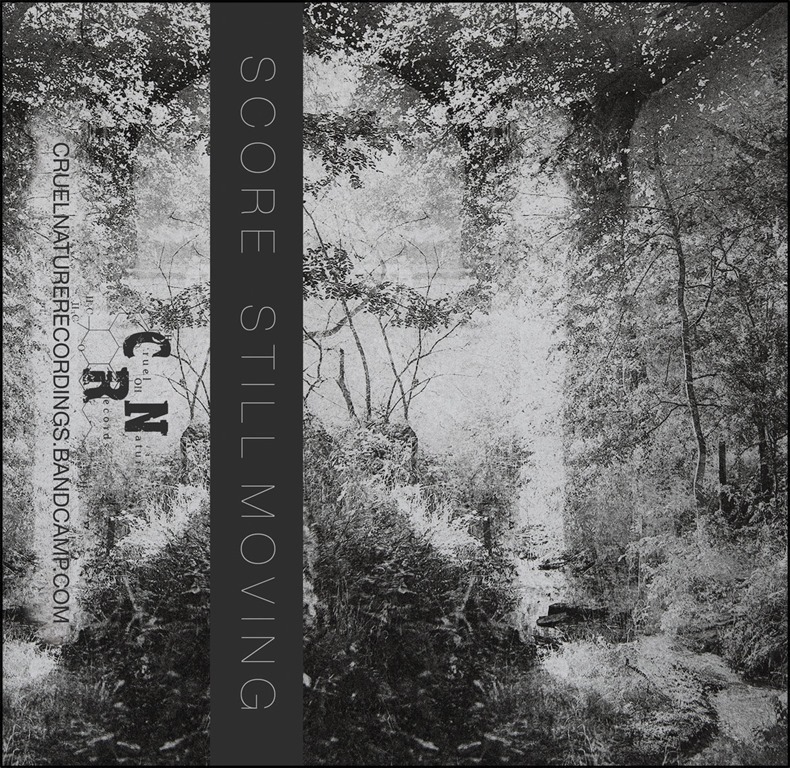
Still moving. We are still moving, despite the fact that the last couple of years have, at times, been characterised by a stifling, crushing inertia. Life on hold. It’s impossible to plan anything, from meeting friends to attending gigs, or going on holiday. Anything and everything could be subject to cancellation or postponement at the last minute. What do you do? Mostly, sit tight, and wait. But in waiting, although the sensation is of time standing still, it isn’t. You’re standing still, half the world is standing still, but the world is still moving; life is still moving.

Still Moving was, in fact, recorded back in 2017; between Slump (2016) and Vent (2018), meaning its original context has no relation to the current situation. And yet, perhaps it does, in some way, with many artists dredging up items from the vaults to create the appearance of movement during a spell of stasis.

Combining elements of ambient, post-rock, and much, much more, Still Moving is a difficult album to pin down stylistically. Sonically, it’s showcases considerable range: from the soft, piano-led ‘Wide Open’, is drifts directly into the altogether more between-space ‘Wherever’, which brings both shades of darkness and light within a single composition, mirrored later in the album by ‘Whenever’, which envelops the lingering piano with mist-like sonic wraiths that swirl in all directions, like will-o-the-wisps flittering, detached and shifting between planes. There are so many layers, so many textures, and so much of it’s mellow, evocative, dreamy, and none more so than ‘Think Through’ where a lonely piano echoes out into a drifting wilderness like a sunrise over a desert.

Darker rumblings underpin the delicate notes of ‘Well Within’, where subtle beats flicker in and out, and each composition brings something new, yet also something familiar. Trilling woodwind drifts in and out as echoes knock against tapering drones and soft-focus synth sounds.

‘Present’ starts dark, but then is swiftly rent by beams of light as grumbling ambience of found sound yields to the most mellow of post-rock moods, with a lot of reverse tape sounds adding to the vaguely unheimlich atmosphere; it’s not weird or creepy, just not comfortably familiar in its subtle otherness.

The title track draws the album to a close, but somehow leaves a sense of inconclusion as the notes hover and hang in the air. Distant waves wash to shore and barely perceptible beats emerge fleetingly, and then immediately fade. Is this it? Where do we go from here? There’s a hint of sadness, but also a sense of stepping forward, hesitantly, towards the new dawn. Breathe. Take in the air and the daylight. We’re still moving.

AA

a0166165718_10

19th September 2020

James Wells

We love an unsolicited approach from bands who just bung all the press blurb and links on a message via FB. Because we’re not already so swamped we can’t read even a quarter of the emails we get sent, which means in terms of listening and coverage – maybe 10% on a good month.

We’ll forgive Swedish psychedelic act Melody Fields, though, since their brand of swirling, paced-out psychedelic shoegaze has heavy hints of early Ride and Chapterhouse as well as more recent acts like The Early Years, but then there are also vaguely baggy hints that call to mind early Charlatans. So when they describe themselves as ‘No retro, no seeking for effects’, and as a band with ‘a depth and a substance in their song writing, that feels unique in an ontherwise effect seeking scene’, my instinct is to ask if they’ve really done their research.

There are heavy far eastern influences in the serpentine guitar lines which they describe as ‘LA meets mystic Far East meets melancholy North’, as much reminiscent of The Mission’s drawing on Led Zeppelin as anything else and it’s not shit it’s just derivative.

The title track captures a hazy 60s vibe – a blandly generic assimilation of the era and the style, there’s a hippy-trippy wide-eyed wonderment spun into its folk-infused pickings, before the pleasant but predicable and somewhat turgid ‘Painted Sky’ brings Black Angels drone into a slow-mo collision with plodding Kula Shaker indie. There are some nice harmonies, but not nearly enough to make Melody Fields special.

AA

Melody-fields-12inch_Album_3mm_spine-FINAL.indd