Posts Tagged ‘Freeform’

17th October 2025

Christopher Nosnibor

From the very outset, this is not easy on the ear. Sometimes, something leaps out about an album in the opening minutes, and here it’s the production – or lack of. The title track heralds the arrival of Benefactor, the first album by Washington D.C. improvisational psychedelic outfit Zero Swann in two years. And it’s a swampy, reverby, dingy mess. It’s integral to the experience, but it’s also likely to be a deterrent for some – but screw them, it’s their loss, right?

Although straddling heavy psychedelic and the dramatic gothic style, it’s the sludgy, feedback-riven outtakes of The Jesus And Mary Chains’s Barbed Wire Kisses which first come to mind when listening to this.

Benefactor is the follow up to 2023’s Amon Zonaris, which, at the time, was a one-off collaborative release with Scott “Wino” Weinrich. This time around, bandleader and Saccharine Underground label curator Jeremy Moore is flying solo, handling guitars, fretless bass, drums and noise assault. And there’s no shortage of the noise assault on this punishing no-wave behemoth. As they tell it, ‘From the noise rock / no wave snarl of Ritual Tension and early Sonic Youth, to the shoegaze sounds of My Bloody Valentine, to doom and free jazz chaos over a backdrop of pure lo-fi abrasion, Moore’s latest outing is a true crosspollination of styles’. It is, and what’s more, many of those styles are melted together to form a dark, disturbing sonic sludge.

‘Grave Wax Horticulture’ is a skull-splitting mesh of noise, equal parts The Jesus and Mary Chain and Christian Death. It’s theatrically gothy, in the vein of The Horrors, but primitively noisy – which is a fair summary of the album as a whole. It’s experimental, overloading in its racketaciousness – and while is a psychedelic album, it’s a full-on assault album, too, which draws parallels with Head of David’s first album, LP, and simply summarises a noise ethos which eschews convention in every sense.

Moore’s commanding baritone brings a sense of drama, not to mention a certain theatricality to the chaotic, palpating grind, and there’s an edge to his delivery which is both world-weary and tense, a voice emerging from the desolation of a society collapsing, a world in flames. This is surely the sound of the apocalypse, the sound of everything ending. Everything is overloading, murky, blown-out, blasted with distortion and reverb, resulting in a discordant thunderous attack which fires in all directions at once. It’s a primal roar reverberating from buildings collapsed to rubble, a brain-bleeding blitzkrieg of ruinous proportions, as mechanised drum sounds fire like machine guns and missile explosions, cutting through the wildest, densest racket. The absence of overt structures only compounds the sense of things falling apart. It’s the sound of unravelling, of societal threads pulling apart in real-time, a descent into mayhem, anarchy, barbarity.

‘Anagrams for Agnosia’ is perhaps jazz, but jazz in the loosest sense: it’s exploratory, experimental, freeform, but more than anything, it’s the sound of fracture, or fragmentation, instruments churning and burning, and pulling in different directions like splinters of an object in the wake of a detonation. As the screams die down, there is the thud of a panicked heartbeat, before the final track, ‘Phaneron’ obliterates with a squalling wall of howling guitar, stuttering drums and raw, ruinous noise.

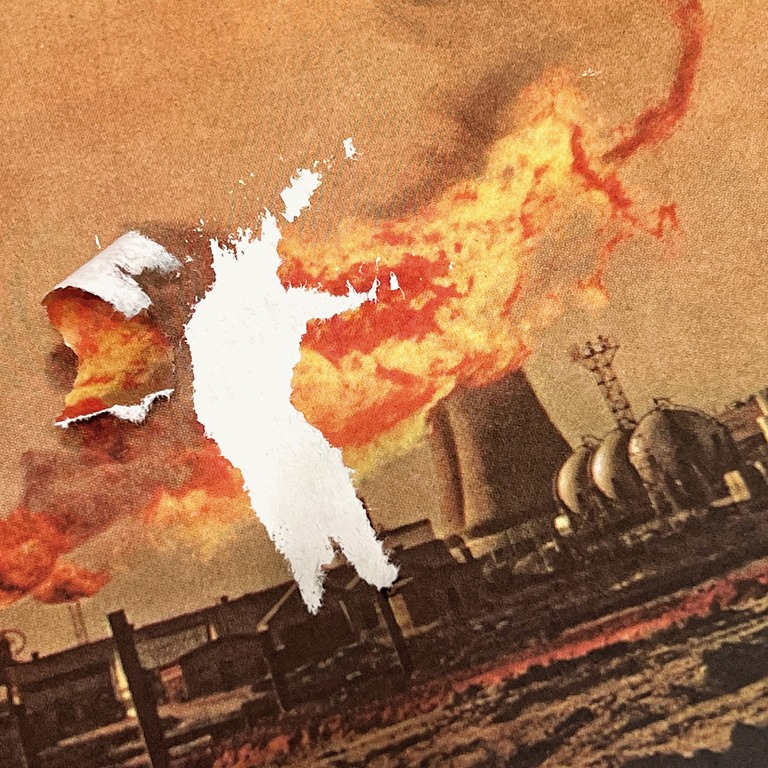
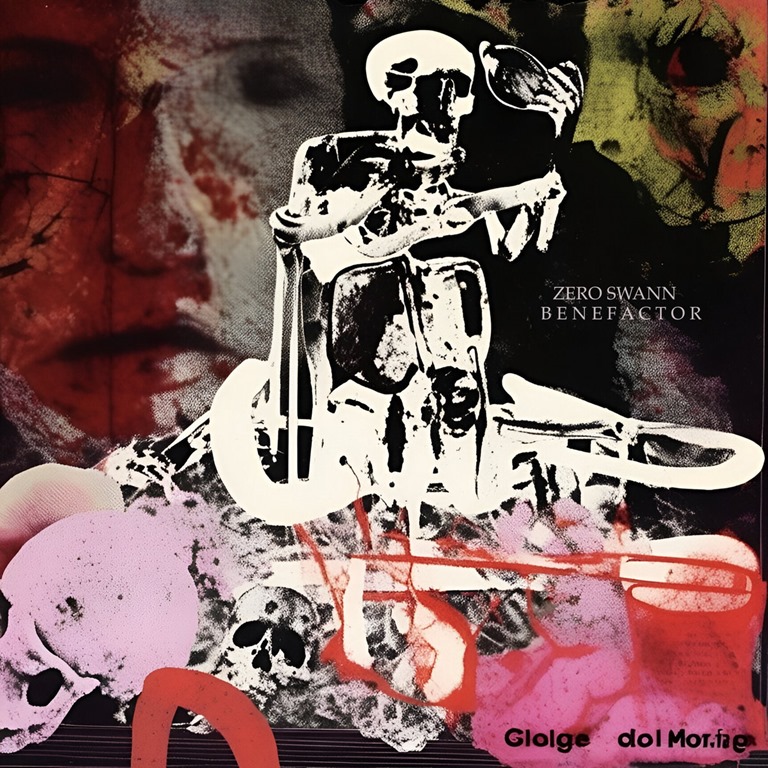
Benefactor is an album without let-up, which provides no breathing space, and is thoroughly relentless in its intensity from beginning to end. Recommended, but approach with caution, and a stiff drink. It sounds like the cover looks.

AA
a0986994420_10

Constellation – 3rd October 2025

Christopher Nosnibor

The third album by The Dwarfs Of East Agouza (Maurice Louca (Lehkfa), Alan Bishop (Sun City Girls, Sublime Frequencies), and Sam Shalabi (Land Of Kush) promises ‘a focussed set of rhythmic psych-trance free/improv’.

As their moniker and the album’s title suggests, they demonstrate a collective interest in urban myths, the strange, the embroidered and embellished tale, perhaps spun with a twist of esoteric mysticism, but at the same time, aren’t entirely serious about it all. That is by no means to imply they’re not serious about the music they make, even when the pieces have titles like ‘Goldfish Molasses’, ‘Saber Tooth Millipede’, and ‘Swollen Thankles’. Because it is possible to be intense and serious and at the same time retain a capacity for humour, a sense of the absurd.

Sasquatch Landslide is an album that’s knowingly ‘out there’, but at the same time, it’s clearly the work of a collective who are completely immersed in the world they’re creating through a conglomeration of sounds which border on the transcendental. Elongated, quavering drones and an array of percussion merge in a haze to forge loose, yet curiously intense grooves. The aforementioned ‘Sabre Tooth Millipede’ is a full-on wig-out jazz frenzy played with the psychedelic loopiness of Gong as their most far-out, and at the same time, amidst the twanging and clattering, there’s something of the spirit of The Master Musicians of Joujouka about it. For an added addling bonus, there are tempo changes galore, and some parts where there are multiple tempos crossing one another simultaneously as the players seemingly detach from this physical realm into different plains of consciousness, separate from one another yet still connected by some kind of telepathy. Because however weird and disjointed it gets, somehow it works.

‘Double Mothers’ goes spaced-out, haunting, and atmospheric. On the one hand, it’s one of the most overtly jazz pieces on the album, but the wandering, reverb-soaked saxophone weaves its way through a nagging twang of a distinctly Eastern influence, while a pulsing heartbeat rhythm creates an underlying tension.

Single cut ‘Titular’ is busy and adds an easy listening, lunge-like organ trill which is completely at odds with the hectic hand drums and frenzied fretwork. They really cut loose on the ten-minute ‘A Body to Match’, stretching things out in all directions – tempo, texture, detail, serving up a pan-cultural smorgasbord of noodlesome improvisation. There, they slowly pick apart the component elements, a slow-motion explosion or deconstruction of the composition, each part slowly moving further from the rest. ‘Goldfish Molasses’ slowly melts, a plodding beat reminiscent of ‘What A Day’ by Throbbing Gristle provides the spine for this slow, pulsating Industrial thudder, where a woozy bassline undulates in the background, and incidental noises and chattering yelps fill the space behind some indecipherable vocal.

Sasquatch Landslide is big on warped, looping drones and layers of intricacy upon layers of intricacy, which weave a shimmering sonic cloth that ripples and shifts before the eyes – and ears. Time itself bends and stretches, taking on an almost elastic quality as the threads unravel to reveal new layers and dimensions. One can feel the instrumentation expanding outwards into infinity – and infinite reverb – in the same way that the universe is continually expanding, only in an accelerated timeframe. For all of its abstraction, Sasquatch Landslide provokes quite visual interpretations of the sounds emanating from the speakers. I expect to have very strange dreams tonight after this.

AA

08 - The Dwarfs Of East Agouza cover art

Not Applicable – 23rd May 2025

Christopher Nosnibor

For about five minutes, AI looked like it may provide some entertaining diversions in terms of creative potentials. It wasn’t so long ago that it produced glitchy, idiosyncratic writing and wild art that was so wrong it was hilarious, and lame synth-loop electronic music which had neither style nor substance. It didn’t look like the threat to humanity that dystopian sci-fi novels had portrayed.

But then more information began to emerge about how AI was ‘learning’ by essentially stealing from all available sources. AI is the worst plagiarist imaginable, and nothing is safe or sacred. Then there came the reports of the vast amounts of energy, and water, required to power it, and it started to look like AI will doom the planet by sapping its resources instead of going rogue and obliterating humanity. But then…AI evolved, and fast. In no time at all, people stopped having additional limbs and appendages, the writing transitioned beyond repetitious babble, and people have begun to use to AI chat as a substitute for expensive therapy, despite reports of rogue AI advocating suicide… and as its usage accelerates and it morphs into the nightmare of sci-fi dystopia we’d dismissed just a few months ago, so the use of energy and water increases exponentially. One way or another, it does now look very much like AI will finish us.

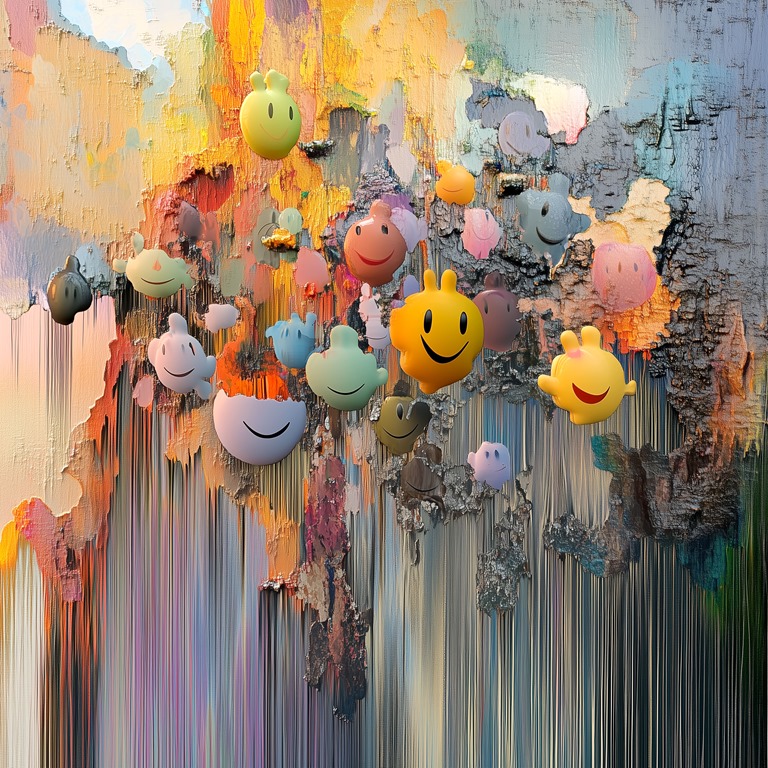
And so there’s a certain discomfort in approaching Put Emojis On My Grave by the spectacularly-monikered Ancient Psychic Triple Hyper Octopus, an album which is sold on the way it ‘boldly explores AI and improvisation on an album of freely improvised, experimental electroacoustic music’.

It features, as the press notes put it, ‘a new lineup of celebrated, British musicians’ (Alex Bonney (trumpet, bass recorder, Strohviol), Will Glaser (drums and percussion) and Isambard Khroustaliov, aka Sam Britton (electronics), and ‘ claims to forges ‘a new musical language’, with an album ‘which eschews traditional musical composition, seeks instead to “adopting the language of AI’s deep learning failures and glitches”, attempts to imagine how AI could make a positive contribution to the creative process’.

It’s hard to know how to really assimilate this. The six compositions which make up Put Emojis On My Grave are fine examples of exploratory jazz, with wandering trumpet tooting in meandering lines across clanking, clattering abstract percussion which sounds like cutlery and wind-chimes being knocked about while bleeps and bubbles interject seemingly at random. It has that avant-jazz, experimental, iprov feel which is in some ways quite familiar in its own strange way. That is to say, while it’s niche, the sonic experience is very much representative of a certain field. A field filled with jackrabbits, apparently.

‘Goats on Helium’ is bubbly, bibbly, scratchy, scrapy, wheezy, groany, a splatter and clatter of sounds piled up and colliding all over, and it gets pretty messy over its six and a half minutes. Warping drones and scratching, gargling abstract drones twist around deranged brass tootlings and crashing cymbals on ‘The Adiabatic Flux Differentials of the Id’, and I would challenge anyone to find a title that’s posier, more wankily intellectual than that this year. And while it’s a bit jazz-jizz in places, it’s certainly better than the title suggests.

This is, in my opinion, a fair summary of the album, a work which is concerned with space and time – not outer space, but inner space, the space which our minds explore in reflection like the clatter of 1,000,000 bongos, the space – or distance – between concept and execution, and virtual space, those our other selves occupy, both in the moment and, subsequently, leaving echoes and traces in infinite corners of the virtual world. It’s impossible to discern where the musicianship cedes to AI intervention here, which is certainly in its favour – and if Put Emojis On My Grave is used to train generative AI, then it could confuse it for a while, making for some interesting results. And Put Emojis On My Grave is certainly interesting.

AA

Ancient Psychic Triple Hyper Octopus – Put Emojis On My Grave cover 4000px

The Quietus

Christopher Nosnibor

It’s not that I like to brag, but I’ve been writing about Sly and the Family Drone since 2012, when they blew me away at the Brudenell in Leeds, with a chaotic, percussion-heavy, audience-participation-led performance (and since when my writing has improved and I’ve become a shade more sensitive, perhaps). Witnessing Matt Cargill standing aloft on a stack of amps while surrounded my members of the crowd battering drums distributed by the band was one of the most exhilarating experiences of my life, and I was an instant convert. In some respects, I was fortunate to witness it: in a recent interview, Cargill was at pains to stress that it’s one of those spontaneous things: “It doesn’t happen at every gig,” he warns. “And I don’t want it to become a thing that people expect or are disappointed when we don’t do it. There are times I’ve seen people write, ‘Bring your drumsticks!’ I’ve never said that and I don’t want you to do that! If we were doing it every night people would be, like, ‘Oh, fuck off! They’re doing their schtick.’”

It’s this spontaneity and true commitment to improvisation that is a significant part of the band’s appeal. You never know quite what you’re going to get, and there’s a sense that nor do they: it all unfolds in real-time.

Their subsequent releases since my introduction in 2012 have never disappointed, and for me, at least, the best thing about Sly is that they embrace the difference between the live and recorded media. As such the recordings are the recordings, the performances are the performances. Explaining the difference to The Quietus, Cargill says “It was nice to be able to do all that spatial and stereo stuff which we wouldn’t be able to do live,” he says. “Because of mics on drums and stuff, it just doesn’t really work in that way. So we were able to spend a bit of time just working on that and doing some quite weird-sounding drum stuff which I’m really happy with.” The same article also explains, ‘The passages of manipulated drumwork are bookended by the band performing together in full skronking and lumbering flow and, in a move that vaguely echoes the ecstasy of their live sets’ endings, it finishes with a warm and symphonic cacophony of horns. “It’s kind of a pieced together track but I think it works as an entire piece,” reflects Cargill.

They have forged a career – or perhaps eked one, on the breadline, with a cult reputation which exceeds the returns a fringe act can attain in this crappy climate, a climate whereby post-Brexit overseas travel is prohibitive and not just financially – from being far out. Embracing elements of jazz and noise and a whole spectrum beyond, it’s fair to say that this is an act who plough their own furrow, and for that, respect is due, and them some.

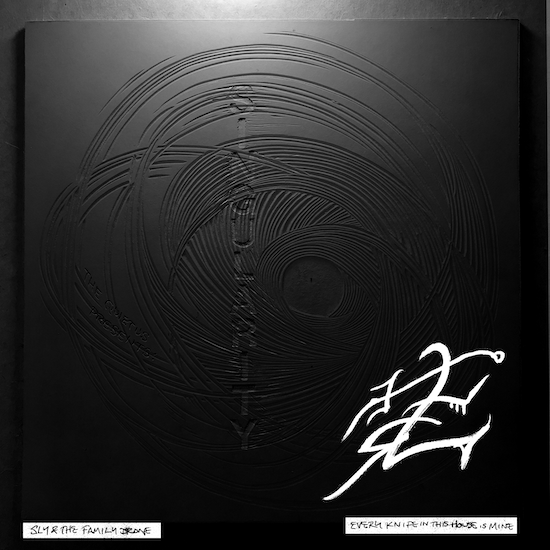
This latest release is – as ever – an interesting one. It’s a limited lathe-cut 12” released via The Quietus, a publication with an immense reputation for its championing of the weird and the wonderful, and which perhaps more than any online publication with a significant readership plugs the gap left when Sounds, and then Melody Maker ceased to be. For non-subscribers, it’s available digitally via the usual platforms.  The ones I don’t use or advocate. But I digress. ‘And Every Knife In This House Is Mine’ is Sly at their best.

As a single track – less a composition than an exploration – with a running time of twenty minutes, it’s an EP or an album by some bands’ standards, but what it ultimately is is an immersive experience which sees them make the most of having access to studio facilities to push their sound further in different directions.

It’s a shrill, rippling wave of feedback that pierces the eardrums in the opening seconds which announces its arrival before a tempest of crashing drums, wayward brass and extraneous noise deluges in, and more happens in the first forty seconds of this tune than the entirety of many albums. Shortly after, it settles into a thunderous groove, the rhythm section grindingly heavy while wild horns – Kaz Buckland’s alto sax and James Allsopp’s baritone sax interplay is a back-and-forth that is timed with perfect precision.

There’s a lot of reverb, and a lot of space here. They pull back from the brink of pure chaos and meander through some expansive gentler passages, before, each time, exploding into a wild crescendo. It’s hard to differentiate snarling electronics from barking vocal yelps , and there isn’t a second where there isn’t something happening. It’s impossible to maintain a commentary on this sequentially.

A tumult of noise, bleeps and glitches, bloops and whirls, all fuse to form a wild cacophony, and it’s pure bliss to yield to this sonic tidal wave. But over the course of the track’s twenty minutes, there are constant ebbs and flows, the lower-level churning swashes rendering the louder segments and extended crescendo’s all the more impactful.

Things get decidedly Throbbing Gristle around the midway point, with swampy electronics and groaning low swoons taking things down, disrupted by random clatterings of percussion, before things take a turn for dark around the fifteen minute mark, with drones that sound like a 747 heading towards the ground in a nosedive… and then the climaxes with an extended jazz frenzy, and… woah.

Running through every form and texture, Every Knife In This House Is Mine is both exhilarating and exhausting… and everything you would expect from Sly and the Family Drone, and all that jazz.

AA

SlyAndTheFamilyDrone_Flat_copy_1669300606_crop_550x550

Northern Spy – 24th February 2023

Christopher Nosnibor

The Necks are never dull: an act that can be depended upon to deliver something different, which is no small feat for a band who’ve been going for more than thirty years. Travel sees them revisit the fundamental methodologies of Unfold, released in 2017 on Stephen O’Malley’s Ideologic Organ label. Admittedly, it’s not an album I’ve revisited all that many times since I wrote about it, but then, that’s true of many records I’ve appreciated. Some of it’s a time thing, but some of it’s an instrumental / jazz thing. I prefer to engage in the moment – and then the moment passes, and I too move on.

Where this album different from the majority of their others is that the format was integral to the form of the content, as the accompanying blurb points out, proving ‘four sub-20-minute pieces – instead of the typical 60+ minute arc for which the band is known – along with an obfuscated track list which leaves play order to the listener’s hand.’

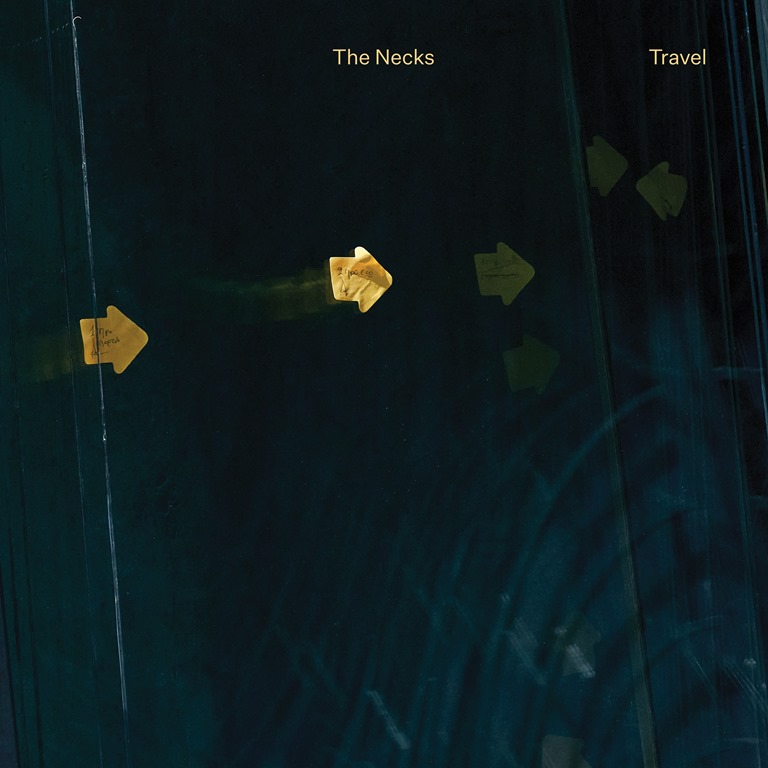
Travel isn’t quite a straight live improv set, but does, they feel, come closest to recreating the live experience, and was recorded – save for some light overdubs and post- production – primarily live. And it’s very much oriented towards slow grooves and rhythmic repetitions. It’s hazy, mellow, almost sultry.

Side one is occupied by the twenty-one-minute ‘Signal’, built around a repetitive bass cycle and some rolling piano that brings with it a classical element, and, propelled by some busy hand drumming which transports the composition some way from what one would ordinarily expect off jazz-orientated works and into the realms of ‘world’ music (a term I try to avoid, with its connotations of western superiority and self-centredness, but sometimes short-cuts are necessary).

On side two, ‘Forming’, which again stretches languorously past the twenty-minute mark, is led by ripping piano, underpinned by some crunching bass stutters and rumbling groans. It’s jazzy in a psychedelic, Doorsy sort of a way. In this sense, it feels more like an extended mid-song workout than a piece in its own right, but it’s both pleasant and tense at the same time as it builds to a crescendo that never fully materialises.

‘Imprinting’, the album’s shortest cut at just over seventeen minutes, brings the multi-layered percussion to a more prominent position, and clanks and trembles along with almost hesitant-sounding keys and twanging strings drift in and out. It’s also perhaps the most overtly ‘jazz’ piece on the album, although it feels stretched out, the pieces pulled apart and as three instruments drift along together on a steady way, the sensation is quite hypnotic.

Organs always create a sense of grand scale and space, and the heavy drone and trill of ‘Bloodstream’ is utterly mesmerising. The piano is soft and ripples along atop the sustained mid-range drone as ethereal notes drift in and out. Part,

The album feels like a moment in time, somehow transient, and yet also something more. Travel may not really go anywhere, but it very much captures a mood – which is, for the most part, whatever mood you project onto it.

AA

Print

PNL Records – 16th December 2022

Christopher Nosnibor

Nice… as you’d probably expect from this three-way collaboration, Time Sound Shape is a work of atmospheric instrumental experimentalism with some strong jazz leanings. That’s not smooth or mellow jazz, of course: more the weirdy, spaced-out non-musical kind of jazz. So not so much nice, as awkward, uncomfortable, challenging. This is not jazz of the cardigan and slippers variety, and you certainly wouldn’t play it at a dinner party, apart from perhaps at thee point when your remaining guests have overstayed their welcome and you want them to fuck off home.

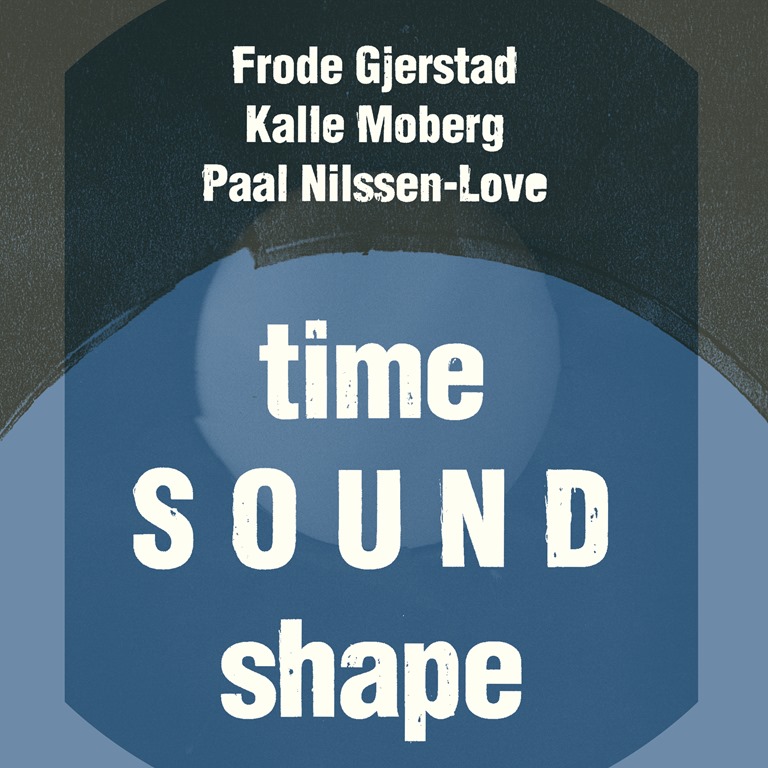
Time Sound Shape is a single continuous piece with a running time of a full-length album, clocking in at precisely forty-nine minutes, and it’s a great example of intuitive improvisational collaborative work, and it sounds far better than the clunky text-based cover art suggests.

There are some dissonant, discordant, even outright difficult to digest crescendos, and moments of queasy chamber orchestral meanderings, as they tweet and toot together in a sort of droning solidarity. It begins gently enough, with some trilling woodwind courtesy of Frode Gjerstad who brings flute, and clarinet to the party as well as sax, but it doesn’t take long before things shift in numerous different directions.

There are moments that almost feel ‘continental’ in vibe, perhaps not least of all on account of Kalle Moberg’s accordion work. And all the while, Paal Nilssen-Love brings texture and atmosphere with his application of a wide selection of Paiste gongs, bringing doomy dolorous chimes and rolling thunder. At times, the crashing gongs are strong enough to vibrate the internal organs within the ribcage.

In many respects, Time Sound Shape delivers precisely what you would expect from these three musicians coming together, and yet at the same time, it brings more. It’s a richly textured work, that evolves as it progresses, and it never stays stull, and yet the changes are often subtle. Time drifts and bends as the sounds transition, changing shape. Let yourself be carried.

AA

PNL052_front

Efpi Records – 18th November 2022

Christopher Nosnibor

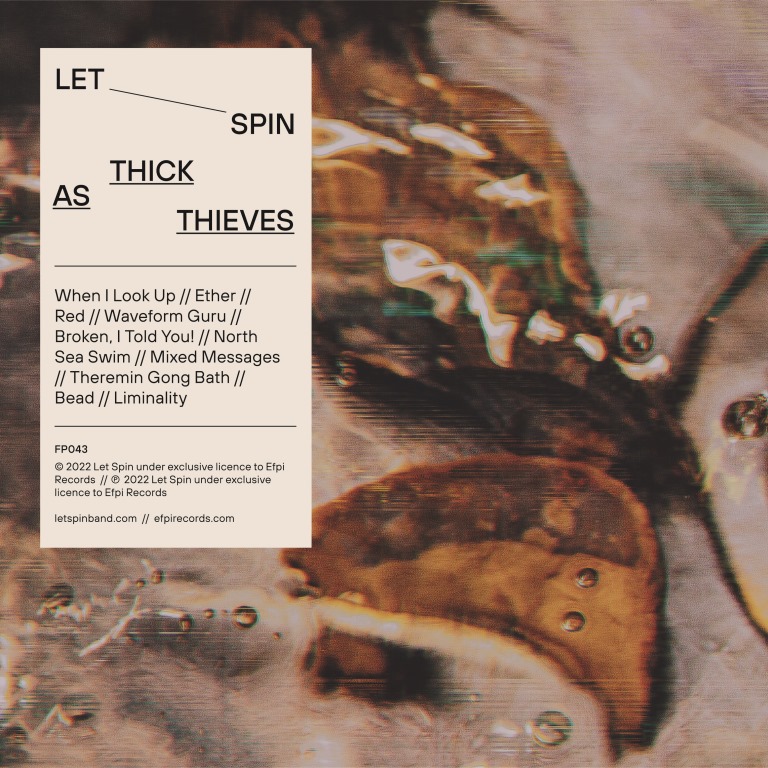
Time flies when… life. And especially when a pandemic and a series of lockdowns rob you of two tears of doing anything. And so it is that Let Spin are marking the ten-year anniversary of their fourth album, Thick As Thieves.

The band are something of a supergroup: Formed in 2012, Let Spin feature four highly acclaimed musicians: Ruth Goller (Melt Yourself Down, Vula Viel), Chris Williams (Led Bib, Sarathy Korwar), Finlay Panter (Beats & Pieces Big Band, Sound 8 Orchestra), and Moss Freed (Union Division, Spike Orchestra), and Thick As Thieves features ten segued tracks of what they describe as ‘adventurous post-rock, experimental jazz’.

Thick As Thieves may be a cliché, but the music it contains is anything but. In fact, quite the opposite is true. Much as it subscribes to aspects of both jazz and post-rock, it’s an exploratory instrumental set that doesn’t really conform to any specific genre trappings, instead borrowing from them in order to form a unique hybrid.

While it’s largely driven by some crunched-up, noodling guitar work, Thick As Thieves very much mines an overtly jazz theme, and while it starts out quite gentle and doodly, on the third track, ‘Red’ it takes a hard lurch into altogether nor challenging terrain, and not just because it gets louder and more percussive: it’s altogether more jarring, the tempos and signatures tumbling into stop/start confusion before the brass ruptures into a cacophonic maelstrom.

‘Broken, I Told You!’ brings a chubby, strolling bassline that’s got some serous groove in a stuttering sort of a way and packs in some deft runs that weave in and out of the wild woodwind and jittery guitar work that’s disorientating and discombobulating. It’s pretty much ok that this feels a bit weird and woozy: it needs to be. ‘North Sea Swim’ takes things down a way and meanders along before swerving into ‘’Mixed Messages’. ‘Bead’ is perhaps the most overtly post-rock / jazz hybrid work, an expansive succession of crescendos with a soaring sax undulating into waves of stratospheric reverb. Closer ‘Liminality’ is almost nine minutes long, and is a space-rock jazz monster that’s absolutely dizzying.

This is one of those albums that not only feels like its album status is essential – you don’t seek out or skip to particular tracks, but experience it as a whole – but there’s a keen sense it would lend itself nicely to being performed live, in its entirety. It flows from end to end, with judiciously-placed peaks and troughs. The ten songs may be marked out individually, but this really feels like a single continuous piece segmented out into ten slices, and it’s a listening journey. At times intrepid, at times curious, it’s got a lot going on, often all at once. Brace yourself!

AA

LS03 Thick As Thieves FRONT

Thanatosis – 7th May 2022

Christopher Nosnibor

Within Reach of Eventuality is the debut album by Swedish duo David Bennet & Vilhelm Bromander. Their notes on the album state that ‘Following a semi-open score, the duo is treating elements such as complex textures, non-pitched sounds, microtonality, beatings and intense pauses in an improvisatory and careful manner’.

I’m not entirely sure what that means, and I’m not certain of the meaning of the album’s title, either. It feels like it almost carries a sense of significant import, but then is equally so vague as to be almost abstract. And in a way, it’s representative of the four pieces on the album. There’s a grainy scratching flicker of extraneous noise running along in the background during ‘Part I’, like a waterfall in the distance, while in the foreground, elongated drones – atonal strings or wavering feedback – hover around the pitch of nails down a blackboard. Occasionally, more conventionally ‘orchestral’ sounds – emerge fleetingly – gentle, soberly-paced percussion, string strikes and soft woodwind, and it comes together to create a somewhat ominous atmosphere.

It’s a hushed, minimal ambience that fades out towards more sonorous drones that ebb and flow across ‘Part II’, and as the album progresses, the interplay between the tones – and indeed, atones – becomes more pronounced, and also more dissonant and consequently more challenging, as long, quivering, quavering drones rub against one another.

The structures – such as they are – become increasingly fragmented, stopping and starting, weaving and pausing. There is a sense of a certain musical intuition between the players, the rests coming at distances that have a sense of co-ordination, if only as much to confound expectation as to sit comfortably within it. In other words, Within Reach of Eventuality feels like a semi-organised chaos, and as it slowly slides towards the conclusion of the sixteen-minute fourth part, the sound thickens, the volume increases, and the atmosphere intensifies, become more uncomfortable in the process. And in this time, the meaning becomes clearer when it comes to understanding their approaching the sonic elements in a ‘careful manner’. There’s nothing remotely rushed about Within Reach of Eventuality. The notes are given space and separation, room to breathe. It all feels very considered, very restrained: it’s no improv free-for-all, there are no frenzied climaxes or blasting crescendos. Instead, they demonstrate a sharp focus on a fairly limited range of sounds and spaces, and the result is an album that has a strong cohesion.

AA

a4211091835_10

Wonkystuff

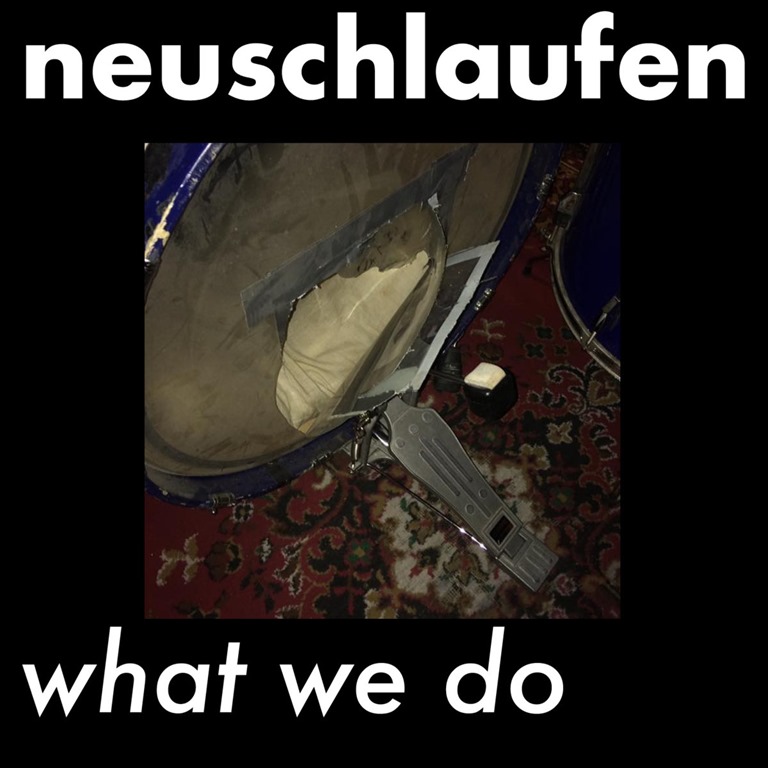
What do Neuschlafen do? The York / Leeds collective which features member of myriad other bands and projects seem to exist more in the ether and in theory than as a tangible entity, despite the existence of a handful of recordings, most of which capture live improvisations in collaboration with other artists.

It’s been some time since the trio, comprising John Tuffen (guitar, synthesiser, vocals), Ash Sagar (bass, percussion, synthesiser, vocals) and Jason Wilson (drums, percussion, synthesiser) combined forces to release anything ‘proper’, although What We Do – a rehearsal room recording committee to (virtual) tape on a Tascam DR07-mkII (with no overdubs) at House Of Mook, Leeds on March 24th, 2019 adheres to their improvised, zero-budget, DIY ethos to the letter. Some of the sound is a little muffled and muddy, and the balance isn’t quite what studio ix would aim for, but it does capture the band’s essence and approach a vast expanse, before

With the exception of the twenty-five second ‘Breath #1’ the eight pieces here are all long-form explorations that sit toward the ten-minute mark. The first, ‘The Set-Up’ could be a literal rendition of its title and is more f a soundcheck than a song, with a wild crash and slash of cymbal mayhem and frenetic jazz percussion over a gloopy, strolling bass.

‘A Slow Hand’, with its wandering, repetitive motifs, has echoes of latter-day Earth and conjures a spaced-out-desert rock / folk hybrid played under sedation. It meanders along, before the playing becomes quieter, and it finally sort of peters out. And yet it doesn’t feel remotely disappointing, because it sounds somehow intentional.

The tracks tend to follow a similar flow in fundamental terms: the drums plod along with frequent and explosive, unpredictable fills punctuating the rhythmic line while the bass wanders around casually while returning to its root motif by way of an anchor just when things start to look like the structure is losing shape and the guitar lays down layers of abstraction and textured atmospherics rather than affecting any semblance of melody or tune.

The title track is a definite standout: landing at around the albums mid-point, it steps up the tempo and goes straight into a chunky jazz-tinged krautrock groove. It’s the rhythm section that dominates, while synths waft and ripple and heavily echoed guitar rings out crisp and clean but at a distance. And whereas the other pieces tend to drift, ‘What We Do’ drives and maintain a linear, forward-facing trajectory as it builds through successive slow-burning crescendos.

It’s the percussion that comes to the fore on the closing tryptic, with the 15-minute ‘Divisions’ constructed around a relentless rhythm around which pulsating synths grind and drone in way that calls to mind Suicide’s debut. Somewhere, maybe about halfway through, when the drums have hit an optimal thump and the cymbals are crashing all over, the bass boosts into an approximation of Joy Division’s ‘Isolation’, while monotone vocals, the words inaudible, drone away in the background as the instrumentation stretches out into a vast expanse, before the final cut, ‘to the end’ breaks loose with a thunderous clatter of freeform percussion and sprightly bass that bounds around freely and fluidly to conclude a set that’s simultaneously tense and mellow, an amalgamation of so many disparate elements that renders it difficult to place. And that’s all the more reason to rate this effort, that broadly sits in the brackets of avant-garde, experimental, jazz, and even post-rock and math-rock, albeit at their most minimal and most deconstructed. And that is what they do.

AA

Neuschlafen – What we do

Panurus Productions – 25th January 2019

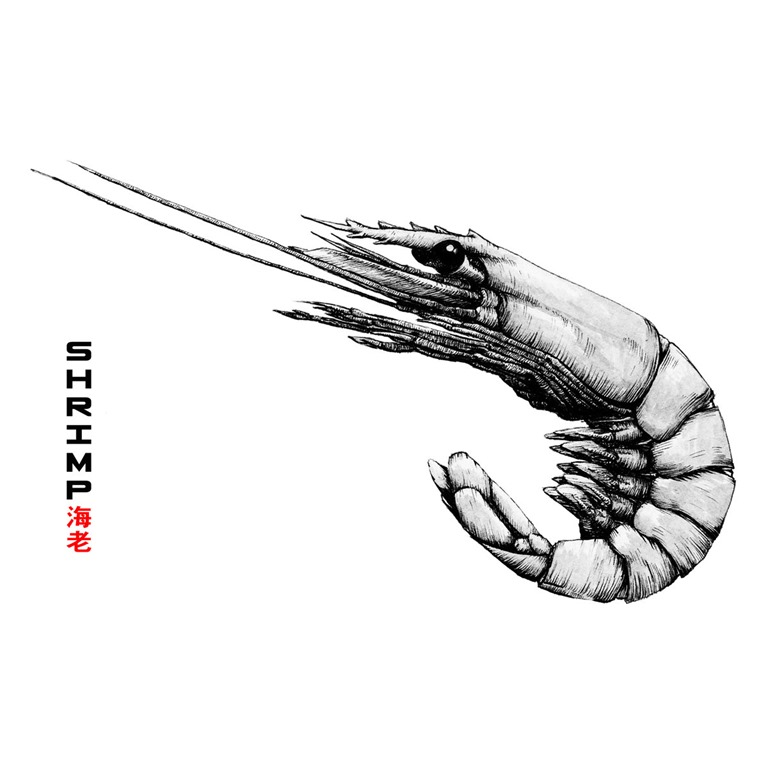
Is it a supergroup if the members of a collective all belong to acts no-one has ever heard of? Shrimp is a project which represents the coming together of Jon O’Neill (The Smokin’ Coconuts, The Shits, Skronk et al), Chris Watson (Snakes Don’t Belong in Alaska, Forest Mourning), James Watts (Plague Rider, Lovely Wife, Lump Hammer et al),Rob Woodcock (Plate Maker, Fret!) and Ryosuke Kiyasu (Sete Star Sept, Fushitsusha, Kiyasu Orchestra et al). Initially converging to perform on the bill at a Ryosuke solo show in Gateshead, this eponymous release captures the intensity of that performance in a studio setting – at least, so they claim.

Listening to this, it’s probably a claim that’s justified: it is, indeed, intense. They promise ‘a maelstrom of clanging, shrieking guitar, relentless frenetic drum savagery and inhuman vocals’, and forewarn that ‘Shrimp, in direct contrast to the weakness implied by its moniker, is the sonic equivalent of being trapped within a chitinous storm of pincers and consists of a thirty minute studio onslaught and a live recording, featuring additional electronic noise.’

Yep. It’s brutal and harsh from the outset. A cacophony of guitar feedback and whiplash explosions of extraneous noise whirl into a tempestuous frenzy around smashing percussion. The first five minutes sound like the climactic finale of something immense. And it just keeps on going from there. On and on, notes and beats and crashing cymbals flying in all directions, slowly bringing things down only to resurge and burst into a raging sonic storm once more. Deranged shrieks lie half-buried in the mix amidst all kinds of chaos that combines stoned desert rock, psychedelia and free jazz.

Twenty-two minutes in and the speakers are melting with a blistering stream of frenetic noise, formless, atonal, punishing in its complete lack of shape or musicality. After half an hour it bleeds into second piece, ‘Light as Hell’. It’s more of the same – an ear-bleeding aural tidal wave that continuously threatens to break but never does. It’s dizzying, and difficult. And yet, supergroup or not, it is definitely super, in a wild, chaotic, insane way.

Shrimp