Posts Tagged ‘field recordings’

Dret Skivor – 5th December 2025

Christopher Nosnibor

This last week or so has been good for noisy, weird, abstract, experimental stuff. It’s pure coincidence, but these things to very much arrive in waves. There’s no thyme nor reason to it: Some weeks I’ll find my inbox abrim with guttural metal – and I’m by no means complaining – but sometimes I will crave noise, and there is none. Not proper noise, anyway. That said, this isn’t abrasive, full-on noise, but a work of abstract ambience dominated by field recordings, mostly of birds and billowing winds.

The last klôvhôvve release, which came out in the spring of 2024, was recorded live in Nottingham just a few weeks previous, and similarly this one was recorded live in November of this year. That’s about all you’re likely to learn with a dret release, although the accompanying notes are generous in their praise to the album’s contributors: ‘Thanks go to the wonderful animals and nature of Hammarö whose sounds you can hear being manipulated by klôvhôvve’. This is laudable: we don’t thank or celebrate nature nearly enough. There are gulls aplenty here, among other creatures less obvious by their calls (at lest to me).

It begins with the rumble of thunder, and it grows closer and more menacing. And then comes the rain. I assume it’s the rain. I’ve heard enough of it in the last couple of months. It feels like it will never stop raining. Again. Öljud rumbles and creaks and billows: a lot of this sounds like heavy rain and high winds, conditions which simply make me want to hibernate rather than reconnect with nature. There are quack and quarks, and all kinds of trilling sounds. Nothing much happens – if anything, really. It doesn’t need to.

Is it ok to drift off to an ambient work? I would have to argue that when listening to a studio work that’s particularly tranquil, it’s a compliment rather than an insult. Öljud is subtle, rumbling. Not a lot happens, and what does happen takes place slowly. Very slowly.

AA

a2852538014_10

Mortality Tables – 1st August 2025

Christopher Nosnibor

The latest instalment of the ambitious and wide-ranging Impermanence Project curated by Mortality Tables is a document, as the artist explains, simply and succinctly: ‘This is the sound of my footsteps. I walk through some woods every lunchtime when I’m at work. I try to take a different route every day. The recording starts and ends at the office door. There are two gates which separate a lake – one of several – from the woods.’

This simple premise of recording a walk – a few seconds short of seventeen minutes in duration speaks on a number of levels: the first, in context of the project’s premise, is also the context of the walk itself – the lunch break at work. A brief window in which to seek separation from the work and the workplace. Too few workers really use this time as their own, with many scoffing a sandwich as their desk, or nipping to a canteen or a supermarket for a prepackaged meal deal, instead of something more beneficial to both physical and mental health. I must stress that I’m not judging, and it’s not easy, but as a walker myself, when I was office-based, I would make a point of getting out on a lunch-break, and now home-based, divide my day with a walk. This time out from work is but brief, but affords an opportunity to decompress, to recalibrate.

The fact the artist reports trying to take a different route every day is interesting. Treading new ground, or even walking a known route in the opposite direction, or otherwise questing for variety keeps things fresh, and opens one’s eyes to new sights. These things are often in the detail, but also change with the seasons, noting the changes in the colour of the leaves, a toadstool, hearing birdsong. The world is ever changing, and while work can all too often manifest as a groundhog day of ‘same shit, different day’ which often feels like ‘same shit, same day again – and what day even is it?’ the outdoors paints a different picture. Even when the realisation hits that it only seemed as though Spring was beginning to break mere weeks ago and now summer has past and the air smells of Autumn, and that nagging sense of another year having evaporated and life slipping past settled awkwardly in the gut – a soft but palpable blow which serves as a reminder of how short life is, the outward signs of the passage of time are evidence of being alive.

Listening to 17 Minutes, we get to accompany Xqui on their walk in real-time. They keep a decent pace, too, and as one tunes the attention, changes in echo, background sounds, the metallic scrape of a gate hinges, the different terrains underfoot, all become significant. There is traffic. There are few people, at least speaking along the way. I abhor having to listen to people’s conversations as I walk. And yet I find I’ve been unable to listen to music while walking since lockdown, and simply have to hear everything.

Although documenting a walk through woods, the backdrop to 17 Minutes sounds somewhat urban, or at least overtly inhabited, a setting where human presence dominates nature. A couple of minutes from the end, a gate swings and clangs shut. Although we’re not yet back at the office door, it feels significant. I even feel myself slump a little inside, feeling that passing through this gate – which in the opposite direction represents the opening up of a path to freedom – signifies the end of this escape. And with this, comes the hard appreciation of the fact that nothing last forever, especially not a lunch break.

AA

a1847342772_10

The Helen Scarsdale Agency – 8th August 2025

Christopher Nosnibor

When the accompanying notes and press release which replicates them describes a release as ‘dire’, you know you’re in for an uncomfortable ride. In the world of noise, such a choice of adjective doesn’t carry quite the same negative connotations as is the majority of musical spheres. When it comes to noise, and certain strains of metal, the objective is to make it as unpleasant as possible. It will alienate most people, and that’s precisely the objective: those who can withstand the torture are the right people.

And so it is that Mutual Consuming is described as ‘a dire piece of isolationist thrum, spectral caterwaul, and heavy gloom through an oblique and abstracted coupling of electronics, noise, and ominous field recordings.’

To quote further from the accompanying notes, Roxann and Rachal Spikula, the twins who make up Relay for Death’, offered the consideration that “Mutual Consuming comes from a concept in the philosophies that underpin traditional Chinese medicine theory, where the two opposing states (yin and yang) are 2 states on a continuum and their interactions produce an infinite possible number of states of aggregation. Within this interplay, there is a dynamic balance that is maintained by a constant adjustment of their relative levels. So an excess of yin consumes yang and vice versa.” We asked if this has anything to do with the concept of the Ouroboros, to which they responded, “We hadn’t thought about Ouroboros, but the eternal cycle of things makes sense too. The gorge fest of existence.” Does this relate to previous works? The twins concisely respond to that question in a rare interview in Untitled, “No.”

The album features but two pieces, each clocking in around the seventeen minute mark. An awkward length, but plenty of time to make for an uncomfortable, unsettling, and even torturous experience. And it is.

‘intone the morph orb’ is a darkly unsettling expanse of dark ambient, the sounds of thunder and cavernous growls from the pits of hell are collaged with scrawling metallic drones. Distant detonations reverberate, like volcanic eruptions beyond the horizon, as wispy ominousness lingers in the air. Very little tangible takes place, but the tension grows. There is a dark thriller / horror aspect to this: the hairs on the back of your neck prickle and you fear whatever may lie around the corner. The second half of the track is less precipitous, given to a protracted mid-to-high-end drones that swirls and eddies, cut through with occasional whistles of feedback.

There’s something vaguely Ballardian about the title ‘terminal ice wind’, and it is, indeed, a cold atmosphere which runs forth from the speakers, churning an ever denser sonic murk as the first few minute pass. It’s a seeping morass of dark discordance which takes cues from Throbbing Gristle. Three minutes in, thunderous explosions register, and all is noise, albeit for a brief time. In time, dissonant drones, thrumming reverberations and low rumbles emerge and come to dominate the mix in what is an ever-shifting soundscape, where light is in limited supply. This is, indeed, dark, and oppressive.

Everything about Mutual Consuming is as it should be. A collage of challenging sound on sound, any underlying concept fades to insignificance as the sounds assail the ears without apology. Mutual Consuming is not harsh, and on the noise spectrum, it’s fairly gentle, but it’s by no means accessible or easy on the ear.

AA

AA

RFD Promo

Mortality Tables – 11th July 2025

Christopher Nosnibor

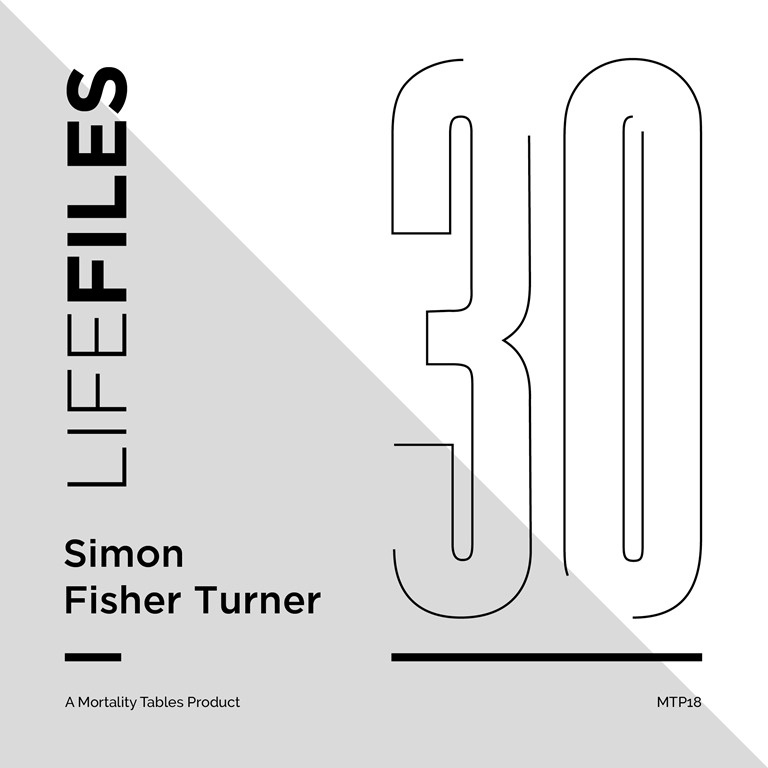
And so it is that the third season of Mortality Tables LIFEFILES series – and, indeed, LIFEFILES as a project, closes as it began just over two years ago, with its thirtieth instalment coming courtesy of Simon Fisher Turner. As such, this release is appropriately titled.

The premise of the series, which we’ve covered quite extensively here over the course of its running, is that curator and Mortality Tables label owner, Mat Smith, furnishes an artist with a field recording for them to more or less do as they please. Some of the reworkings and manipulations have been quite radical; others, less so. But what each has offered is a snapshot of a particular place at a specific time, reimagined and retold at distance by a third party. If this sounds rather absurd, it’s worth considering that this is essentially how history is formed – by the interpretation and re-presentation of primary source material to create a linear narrative. But how much can we trust the narrator? Even that primary source recording is just that – a recording. It is not the actual event. Therefore, with each revision, there is a move further away from the actual event. There evolves a certain historical layering, not so much akin to the degradation of a photocopy of a photocopy, but a drawing of a drawing, subject to ever-increasing distortions, deviations, corruptions.

As the accompanying notes inform us – quite factually – ‘The LIFEFILES series commenced in March 2023 with a piece by Simon Fisher Turner made using sounds recorded at an exhibition of works by the Memphis collective at Milton Keynes Gallery. The series concludes with a final piece from Fisher Turner, again using sounds recorded at Milton Keynes Gallery, this time at an Andy Warhol exhibition.’

This piece is only a little over eleven minutes long: a single or EP rather than an album – but Simon Fisher Turner packs a lot into that time. It begins with the slow-echoing of voices, a low mutter, the sound of voices, perhaps, chattering in a gallery – slowed and distorted, there’s a sense of discomfort, of the unheimlich, before a mid-range chimes in and hovers. So far, so ambient – but then some crushing percussion batters in and from nowhere things go a bit Test Dept. Trudging industrial beats slog away relentlessly, and they’re multi-layered and multitracked and hammer away from all angles in surround sound. There are some lulls, some drops in pitch and volume, occasional rests in tempo, even – but this is first and foremost a full-on beat assault. The speakers crunch and crackle and the beats thump and stomp.

Glitching, grinding bass enters the fray around the mid-point, albeit briefly, before swiftly vanishing, replaced instead by a subsonic sonar – and then things really get ugly. There’s a violence to this beat-driven blast, which even during the moments where it’s taken down a notch or three, there’s a sense of menace, something underlying that’s uncomfortable. The delicate chiming of a singing bowl or somesuch in the last couple of minutes, even when it yields to a quiet, low rumble, does little to dissipate the tension which has built – and built. But in the end, as is always the case, the ultimate end is silence. And so it is that the circle finally closes.

AA

AA

cover

Futura Resistenza – 27th January 2025

Christopher Nosnibor

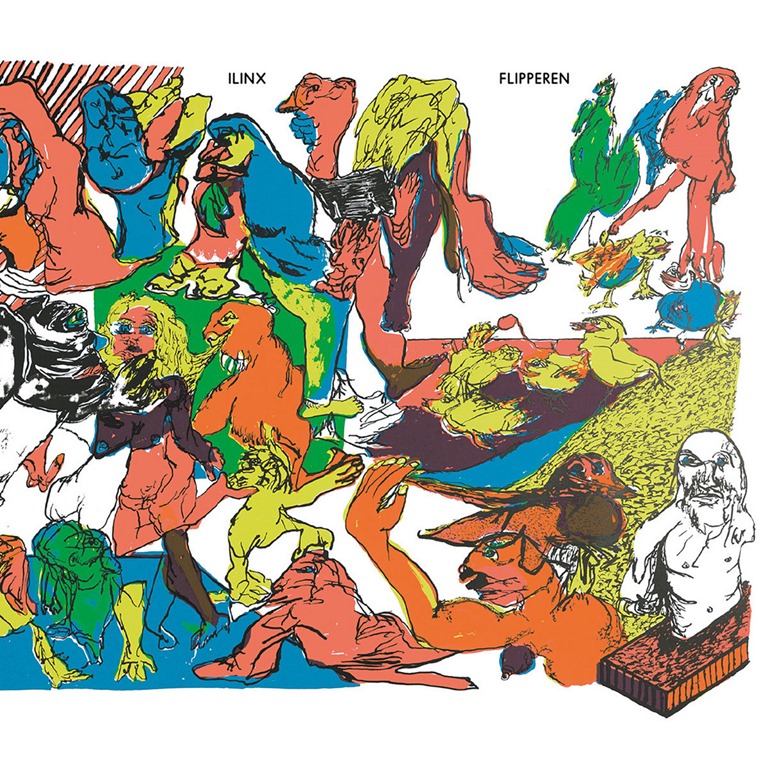
Some years ago (like about seventeen years ago), when I embarked on my reviewing journey proper, I was introduced to whacky experimental work and the world of microtonality. It was an absolute revelation. Just as, growing up in the 80s and raised on the Top 40 singles and Now That’s What I Call Music, discovering goth, alternative, John Peel, and Melody Maker completely changed my head, so did entering this new world. Onje thing that completely spun me was the way in which some artists extrapolated and academicized some pretty stupid or mundane stuff. This is a reasonable example. To quote: ‘Flipperen takes the randomness of pinball and turns it into music. Using recordings from old pinball machines, the music mixes chaos and structure, reflecting the Fluxus spirit of play and chance. It’s a wild ride through sound, where things don’t always make sense–but that’s the fun of it.’

Flipperen began as a lockdown / COVID project, of course. As they detail, ‘During the quiet and strange Covid days, Suzana Lașcu, Robert Kroos, and Reinier van Houdt began a recording project based on the soundbites of pinball machines. They visited the empty Dutch Pinball Museum in Rotterdam and captured field recordings of machines from the 1960s to the 1990s. From these, they selected 28 samples to serve as thematic starting points for what they called ‘game pieces,’ recorded in two sessions at Sonology Studios in The Hague. The recordings were then shaped into sound collages using cut-up techniques and probabilistic processes.’

These processes mean that the end product is a very long way removed from the actual sounds of metal balls pinging and rolling about inside a glass-covered case. Instead, landing between Brion Gysin and John Cage, we get a collection of weird and woozy fragmentary pieces – compositions would be something of a stretch – ranging from awkward ambience to crashing and banging that sounds like a prepared piano fitted with lump hammers. There’s playful, whimsical sighing and trilling, psychedelic trippery and some fairly straight jazz-flavoured piano in the mix. There’s Clangers-like whistling and clattering and clanking, pops and thuds, explosive industrial noise and frenzied country. There are moments which sound like someone grunting through a comb with greaseproof paper, others which sound like the strumming of an egg-slicer, others still which create the impression of a piano being dropped down a flight of stairs.

The final cut features twenty-six tracks, the majority of which are around a couple of minutes long, or even significantly shorter. But there are a couple which run to around six and a half minutes of uncoordinated chaos, and it’s a lot to take in.

The appeal from a sonic and experimental perspective is that ‘Pinball is a game that combines control and randomness—each action leads to an unpredictable result, and the outcome is always uncertain’, and as such, the patterns which provide the material for these pieces are erratic, unpredictable, and ultimately, not really patterns at all. And so it is that Flipperen shunts forwards and backwards, crackles and pops with zany snippets of this, that, and everything, conjuring a wild collage of disparate elements and all kinds of discord.

As much as pinball machines lie at the heart of Flipperen, it’s really a wide-ranging collage work with randomness at its heart. It’s fun, it’s fascinating, it’s brain-bending – and one might say it’s a work of Flipperen genius – but you definitely have to be in the mood for something quite this far out.

AA

a2489366009_10

Mortality Tables – 17th January 2025

Christopher Nosnibor

Given Mortality Tables’ liking for location-based field recordings, Circuits From Soft Frequencies makes for a comfortable fit in their rapidly-expanding catalogue.

As the liner notes explain, Circuits From Soft Frequencies originated ‘as a four-channel sound art installation developed using field recordings from sites around the South East of England.’

‘Drawing on soundtracks taken from 70s minimalist sci-fi films, both the samples used and the overall composition are based on different terrains encountered during Jamie’s field trips, describing huge shingle beaches, swamps and clifftops. The installation which was exhibited at MK Calling in Milton Keynes during the summer of 2024 also consisted of fabricated ‘cymbal speakers’, incorporating sensor-based technology to respond to changes in their environment.’

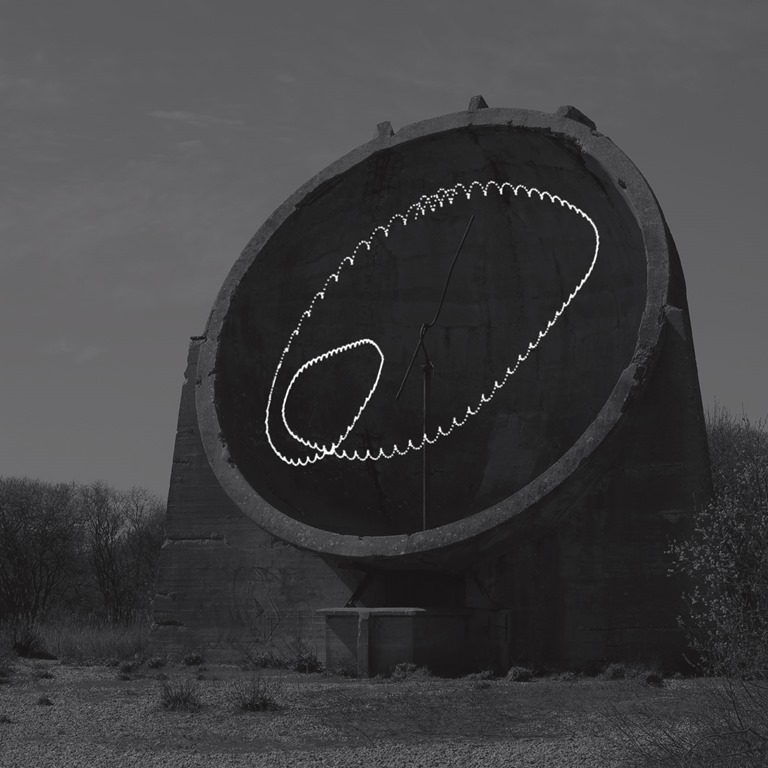
The cover art depicts one of the ‘sound mirrors’ which were constructed at various sites around the UK shortly between the world wars as an experimental early warning system, as a precursor to radar. While there are sound mirrors at two sites in Kent, those at Denge are the most renowned and best preserved, and it was here, one assumes, that the recordings of percussion, ‘incorporating cymbals, bells, gongs and clocks’, took place.

The installation, the notes go on to explain, ‘repurposes four cabinet speakers to transmit sounds collected during field trips to sites featuring [the] huge, concrete sound mirrors’.

This release contains a nineteen-and-a-half-minute recording of the installation, and highly atmospheric it is, too. Ther ticking watch not only keeps time, but gives a sense of tension and urgency which runs fast, in contrast to the long, low, reverby thuds and slow splashes of cymbals. That everything – apart from the watch – sounds somehow dulled, muffled – only adds to the atmosphere. It’s likely that this eerie, swampy echoiness is the product of the location, which features not only the thirty-foot concave ‘ear’ shown on the cover, but a two-hundred foot concrete wall. Images of the site stir the imagination, and one gets the impression to actually be in the presence of these strange-looking objects must be truly awe-inspiring. The sounds which emanate from the speakers while listening to Circuits From Soft Frequencies evoke the same sense of the alien, the otherworldly. Spurs of noise occasionally burst through, interjections of dissonance pulse through the building layers of sonic collage to unsettling effect.

It’s a reminder that often, the most alien and seemingly otherworldly creations are, in fact, man-made – and often connected in some way to war, and mankind’s destructive tendencies. I was struck, not so long ago, by the quite chilling experience of touring the cold war bunker in York – not a place of refuge, but a cramped and claustrophobic subterranean observatory which, in the event of the fulfilment of its purpose, would assure the deaths of its crew.

The sound swells and glitches, scratches and hums, and at times exudes a nightmarish quality that makes your muscles tense and your scalp tighten and crawl. It’s a remarkable piece of work, but one of those where the end comes as something of a relief.

AA

cover

Room40 – 3rd January 2025

Christopher Nosnibor

Ian Wellman’s works are usually responses to environmental issues, be they derived from articles covering global matters or more immediate or personal situations. His latest, Can You Hear The Street Lights Glow, sits very much in the latter category, as he details in the accompanying notes, which I shall quote in full:

I moved to Pasadena during the fall last year. One of the first new sounds I noticed were the mercury-vapor street lights that filled the air as the sun went down every evening. Under the sidewalks, exhaust vents hummed along to the song of crickets and the rumble of traffic. Being away from the inner city, more individual details in the soundscape emerged.

As a way to explore the new area, I walked around at night with my equipment. I placed geophones and contact mics on every metal surface I could. I ran electromagnetic sensors across electronics accessible by the sidewalk. I put mics out on quiet streets, behind shopping areas, and in parking lots. I felt very compelled and inspired to listen and learn about my new home. Can You Hear The Streetlights Glow? is the result of these listenings.

Certainly, the first part of this is something I find quite specifically relatable – not due to relocation, but to finding myself suddenly discovering a heightened awareness of my immediate surroundings. Like many people, I used to walk around with earphones in, listening to music to cut out the noise around me. This was essential on my daily commute, as listening to music as I walked through town created a separation between home and work, and while on the bus from town to the office, it shut out the babble of other people, and created a barrier between myself and anyone from work on the bus who may have been inclined to strike up a conversation. And on the way home, the same was also true but listening to music also helped me decompress – or mirror my angst – after a day in a noisy open-plan office. Lockdown changed that. I suddenly felt the need to be alert in case of approaching runners or cyclists or people kicking off in queues for the supermarket because someone wasn’t observing the two-metre rule or otherwise losing the plot over COVID restrictions. In short, I was scared – terrified, even. Not so much of the virus, but other people. I felt I needed to be on high alert at all times, because people are simply so unpredictable. One byproduct of this was that when I left the house form my allotted hour of exercise, I became acutely aware of the quietness – the absence of the thrum of traffic, the absence of chatter, and in their absence, I could instead hear the wind, birdsong, my own footsteps. In fact, I could hear everything. In the quiet, the small sounds were suddenly so much louder. The quiet wasn’t nearly as quiet as it first seemed. It was the aural equivalent of one’s eyes growing adjusted to the dark.

The auditory voyage of discovery Wellman charts on Can You Hear The Streetlights Glow bears clear parallels to my experience, but takes things a step or three further with his use of an array of equipment in order to capture sonic happenings in these spaces and his interrogation of the sounds in order to reach a deeper, more intimate understanding of his environs.

The results are quite fascinating, and range from a cluster of brief snippets, of under a minute and a half to just over two minutes, to more expansive segments – 5G Antenna Power Box is almost five and a half minutes, and ‘Mercury-vapor Lights’ is a full twelve and a half minutes in length. The titles of the pieces are location-specific, and some are quite evocative in themselves – notably ‘Time Depleting on Bird Scooter’ and ‘Gas Pipes Behind Smoothie Shop’. On the one hand, they’re utilitarian in their descriptions; on the other, they create an image of a filmic world in which sound events happen in particular places.

Most of those sound events are different levels of hum and drone, but these varying levels of low-level throbbing serve as reminders of how mankind has interfered with the naturally-occurring sounds which are the true sounds of the outdoors. While I am likely to note the hum of the power lines as I pass a pylon, and so on, I am still attuned to the wind in the trees, the scurry of squirrels. The sounds on Can You Hear The Street Lights Glow are all entirely man-made, mechanical, and despite Wellman’s relocation to a more rural setting facilitating the opening of his ears, the locations are all noteworthy for their constructed, non-natural nature. People may interpret this differently, and Wellman’s intentions may have been different again, but the leading thing I take away from this is just how hard it is to truly escape the mechanised world we’ve made. But equally, Can You Hear The Street Lights Glow is a document which highlights the extent to which even in silence, there is sound – lots of it.

AA

a1805176232_10

German electro-industrial mainstays Haujobb have just dropped the sinister sounding retro-futuristic slo-mo banger ‘In The Headlights’ as the first single from their forthcoming new album, The Machine In The Ghost. Scheduled for release on 20th September, it is the 10th full length record by the Prague-based group, which formed in 1992 and has existed as the duo of Daniel Myer (vocals/programming) and Dejan Samardzic (programming) since the mid-‘90s.

“’In The Headlights’ was actually one of the first tracks written for the album,” explains Myer. "Dejan recorded and sampled his exhaust hood, which kind of sounds like a jet engine, and we built the song around that sample. There is also a sound that might be identified as a tambourine, which is really just a key chain dropping onto the floor. This and other physical constructions that are sampled throughout the album act as relics of interfaces between man and machine.”

Maintaining an impressive penchant for refusing to do the same thing twice on each studio album, The Machine In The Ghost deploys field recordings to create some of its most prominent sounds. In order to achieve the desired effect, the duo used a mix of software and hardware in the shape of everyday items. This deliberate nod to a previous era with more analogue shifting of the dials complements the retro theme of The Machine In The Ghost (albeit without indulging in nostalgia for its own sake), the album revolving around the highly charged relationship between mind and matter, analogue and digital.

Despite their constant artistic evolution, a unique musical handwriting is present throughout the Haujobb catalogue. Originally founded as a trio in the West German city of Bielefeld, they were initially influenced by the ‘Vancouver school’ of industrial electronics (the likes of Skinny Puppy and Front Line Assembly), but it did not take long for them to be recognised as figureheads of a more modern take on this sound that incorporated elements of IDM (intelligent dance music) that helped catapult them onto the wider international scene.

Co-founding member Björn Jünemann left the band after their second album, with Myer and Samardzic subsequently releasing the acclaimed ‘Solutions For A Small Planet’ (1996) and thereafter maintaining a strong strike-rate that has included New World March (2011), their 7th record and regarded as another milestone effort.
 The Machine in the Ghost has seen Haujobb begin another exciting chapter in their career. As we enter the next industrial and creative revolution that has been ignited by the rise of AI, it shows that they still have their musical fingers on the pulse.

Listen to ‘In the Headlights’ here:

AA

a03d5a2e23424b479e8fd8436c63d138f40a6be3

Mortality Tables – 7th June 2024

Christopher Nosnibor

Mortality Tables have continued to release titles from their ‘Life Files’ series at a remarkable rate, with instalments 18 and 19 landing in May, and hot on their proverbial heels, this, number 20, in the first week of June.

The premise remains consistent, namely ‘Recordings of places, people, objects, moments in time, environments and quotidian events [which] are shared with a range of artists working across different disciplines. Those artists are free to respond to the recordings in any way they like. And so, as ever, the field recordings, courtesy of Mortality Tables main man Mat Smith provide the foundation and inspiration.

Killiegrew Monument is a peculiar thing. Located in Falmouth, and intended as a memorial to the last surviving member of the Cornish family, the monument is a sharp obelisk constructed in 1738. It looks altogether more contemporary, and ultimately anomalous with its surroundings. And one might say that this release is similarly anomalous. I can imagine that beholding this curious construction would inspire an array or reactions. But why the fuck would you play a stone monument with a sharp stone? Is that really one of the responses you’d likely have to coming face to face with such a construction? Well, perhaps, if you’re possessed of an avant-garde mindset, whereby instead of reflecting on the origins of The Wind in the Willows, you find yourself contemplating ways of making unusual noises.

Once again, when it comes to the ‘Life Files’ series on Mortality Tables, we don’t know what the source materials actually sound like.

‘Killigrew Monument Played With A Sharp Stone (Part One)’ is an odd sound work: there’s chatter and ambient drift and scratches and shuffles and scrapes, but what on earth is going on? Seagulls wheeling and cawing – and on those squawks the sound echoes and reverberates, and the collage of sound collides with a strange rendition of ‘One, two, three four five, once I caught a fish alive’.

There’s lots of processed echo and cawing gulls at the start of ‘Killigrew Monument Played With A Sharp Stone (Part Two)’, as well, and it does, in some respects, sound like someone crooning abstractly into a child’s echo mic just to see how it sounds. The longer of the two pieces, at almost thirteen minutes in duration, it creates a deeply strange and disorientating atmosphere, which is likely evocative of this curious monument, which stands out of time and out of keeping with its surroundings as a testament to human folly, and, ultimately to vanity.

Too abstract to be ‘songs’, too much happening to be ‘ambient’, the result is a haunting and somewhat disorientating soundwork of a rare quality.

AA

a4230686863_10

Mortality Tables – 3rd May 2024

Christopher Nosnibor

As much as this is an album it’s an historical document, and one they’ve had to blow the dust off ahead of its release. Kullu was recorded by Carl M Knott, aka Boycalledcrow, as a series of field recordings as he traversed India in 2005 and 2006.

As the accompanying notes explain, ‘The album is an audio travelogue of Knott’s travels through India in 2005 and 2006, just after he’d graduated. That journey was part of Knott’s concerted efforts to overcome the intense feelings of stress and anxiety that had gnawed away at him throughout his adolescence. Along the way, he documented his travels in a blog and accumulated countless memory cards of photos and videos.’

Life has a habit of delaying projects, of getting in the way (I have a number of book-length projects which I embarked upon circa 2010 which are languishing, incomplete, on my hard drive, and have every sympathy). When a project has lain so long, has been placed on a backburner, or whatever else, how viable is it after eighteen years? Is it really worth resurrecting? Yes. Always, and especially if / when it’s personal.

You read and hear often talk of ‘closure’, and usually it’s in relation to a bereavement or a specific trauma. But life is trauma: a path strewn with rocks of trauma to trip you unexpectedly.

Kullu is a road trip, a narrative, and also an exorcism, a sequence of processing, a coming to terms.

More than anything – and any critic’s outlook is limited to their experience – I’m struck by the range of sounds and the way in which Kullu is an album that expands over so much ground. At the outset, the beats are to the fore and Joujouka come to mind initially, as percussion thunders loud and hard, but before long, things start to melt and dissolve into entirely less form-shaped compositions. Twisting between ambience and various shades of dissonance and slow-shifting pulsations, Kullu grates and scrapes its way through a twisted journey of difference, of fresh terrains, ranging from ominous vocal and semi-orchestral compositions like ‘Kanashi’, to clanging, clattering, altered and warping. There’s a lot going on and I sometimes wonder if I’m equipped to cover this. But ultimately there is always room

Kullu presents all the moods, all the vibes, all the breadth of experience. It’s often discordant and difficult, and that’s as it should be.

AA

a2597800960_10