Posts Tagged ‘Experimental’

ROOM40 – EDRM426 – 4th November 2016

Christopher Nosnibor

This is one for the David Lynch fans, but also fans of experimental industrial noise, and those who appreciate works which exist in the realms between media.

Factory Photographs was one of a number of commissions made by the curator of the exhibition David Lynch: Between Two Worlds, a retrospective exhibition held at Brisbane’s Galley of Modern Art in 2015. The exhibition featured Lynch’s works in painting, sculpture, installation and photography, and included a large section of his Factory Photographs: shots of factories in various states of disuse, taken over several decades.

Raised in the country, surrounded by woods and farms, Lynch developed a fascination with the architecture, the machines and ‘the smoke and fear’ of factories from his visits to his mother’s native Brooklyn. HEXA is Laurence English and Jamie Stewart (Xiu Xiu), and Factory Photographs is their sonic response to Lynch’s images.

While Lawrence English’s work is often typified by a delicate approach to sound and the use of delicate field recordings, it’s clear that the inspiration and the collaborative input of Stewart have pulled him toward something altogether more visceral: Factory Photographs is an intense and brutal work.

‘Sledge’ rumbles and crashes in with some heavy noise, an amorphous roar barrels and funnels a dense sonic cloud, from amidst which shuddering throbs grind and thrum. Each piece is a blast of earthmoving noise, more evocative of a super-scaled atomic destruction than heavy industry or its demise and dilapidation. Yet as noise without clear definition or shape, it’s still highly evocative, and does correspond with Lynch’s conception of ‘the ideal factory location’, with ‘no real nature…’ This is sound which is brutal, harsh, unrelenting and unnatural, wholly man-man made yet wholly inhuman. The barrage of noise is built from a conglomeration of hums drones and thunderous sounds on sounds, roiling, churning. The rhythms are not percussive, but born from cyclical undulations, the churn of industry at its heaviest, in its earthiest form: the mine, the quarry, the drilling rig, the smelting of ore and the forging of metals. But of course these are only echoes of an industrial past: the factories lie empty now, derelict or inching toward dereliction, and the workers have gone, transferred, replaced, relocated, on the same scrapheap as the rusted machinery or otherwise forced into alternative careers.

As crushingly depressing as the factory may have been, its absence leaves only a lack and the question of progress, but as what cost? But equally, the earth-gouging sounds of Factory Photographs reminds of the finite nature of the earth’s resources, in particular fossil fuels. What is left apart from irreparable scars on the landscape once every last scrap has been excavated? Where is the future?

Dark, sonorous notes hang heavy on ‘A Breath’, and Factory Photographs is rich in gloomy atmosphere. Sheet metal thunder resonates through vast empty spaces, and clusters of clangs reverberate in the grimy darkness to create a bleak and oppressive sensation. The turbulent roar of ‘Vertical Horizons’ is harrowing and unforgiving, building to a shrieking howl of feedback while the regular rhythm of heavy machinery rotating is replicated on ‘Over Horizontal Plains’, while thuds and distant rumbles continue endlessly beneath. Digging, dredging…

It’s unsettling but exciting, and the prospect of an audiovisual work, featuring, with Lynch’s approval, the original visual montage of his photographs in 2017 is a thrilling one. Meanwhile, the album more than works in its own right as a dark, stark and uncomfortable collection of pieces which shake the listener’s sensibilities and leaves a hollow, uneasy sensation in its wake.

https://f4.bcbits.com/img/a0775137879_10.jpg

Clang records – clang049 – 4th November 2016

Christopher Nosnibor

So, what did actually happen? I’m reminded of William Burroughs’ theories around the cut-up and the construction of history, specifically a quotation from a 1974 interview:

“The past only exists in some record of it. There are no facts. We don’t know how much of history is completely fiction… There’s no record this conversation ever took place or what was said, except what is [recorded]. If the recordings were lost, or they got near a magnet and were wiped out, there would be no recordings whatever. So what are the actual facts? What was actually said here? There are no actual facts.”

So, when Lars Graugaard and Moritz Baumgärtner convened to record an album, what actually happened? Crashing cymbals and thunderous percussion in slow-mo roll through ‘Space Twist’, before uptempo jazz drumming crashes through electronic eddies on the seven-minute freeform workout that is ‘Fourth Quolandrum’. If it all sounds fairly standard in the world of avant-jazz, perhaps the arrangements in themselves are, but there’s something murky about the production: the sound has a booming density, a thickness. The sounds bounce back on one another, the bulbous bass tones bending and bow.

Some of this spatial strangeness is likely to derive from what the blub describes as the ‘unusual setting of drums and percussion’ and the ‘musical interactions and sonic scenery of real-time electronics,’ but to what extent to we believe that this is a wholly unadulterated document of the moment, as it happened?

Perhaps it is. It’s not a question of honesty. But the very process of recording introduces an element of distance between the event and the playback. An, indeed, the playback is another experience in itself. The amplifier, the speakers. The placing of the microphones, the recording device(s), the equalisation. There is no such thing as a precise master or a replica of the live event. Every stage equals a layer of distance between the happening and the review.

We may never know what actually happened, and so will have to rely on this album as a true document, until new evidence emerges.

https://i0.wp.com/images.junostatic.com/150/CS3228936-02A.jpg

Tavern Eightieth (TVEI) – 31st October 2016

Christopher Nosnibor

Don’t read too much into the Hallowe’en release date for this solo offering from Matt Christensen, who is more usually found lending his voice to Chicago genre-straddling guitar-based act Zelienople. There are no guitars to be found here, or vocals, and despite the album title’s connotations of the predatory, the sinister and the dangerous, this is no haunting horrorshow or ultra-dark ambient work coughed up from the bowels of the earth, although the five tracks on Prowl are certainly strong on atmospherics.

The title track sets the mood, a murky groove softly bounces along, the insistent beats largely submerged by a thick, opaque subaquatic sonic murk which strangely deadens the sound and creates a sensation that’s almost physical rather than simply auditory. When the rhythms are completely absent, as on ‘Mountains of Fire (Remix)’, Christensen glides effortlessly into what one may reasonably call ‘pure’ ambience: the forms are vague, intangible, with no discernible sense of structure as the soft and slowly-drifting washes of sound shift and turn gradually.

‘Spending It’ is perhaps the most haunting track on the album, crackles and pops – somewhere between the click and clatter of worn vinyl and the cracks and snaps of burning wood – form the distant rhythmic undercurrents which echo through the warping tones before being carried away into silence on a long, low wind-like drone. In contrast, ‘Junk Test’ is altogether more buoyant, bubbling beats flit beneath rippling Tangerine Dream synth motifs.

Everything is kept low-key, the sounds dissolving into one another and in a slow but continual evolution. It’s a radical departure from Christensen’s work with Zelienople, but, as one may expect, it’s an album that demonstrates a keen awareness of the dynamics of texture and tone. In the context of Prowl, these elements are explored in their most delicate and subtle forms, and in its field, it’s an accomplished and enjoyable work.


Matt Christensen – Prowl

ETYMTONE – ETYM-005 – 22nd November 2016

James Wells

Takamovsky’s second solo album works on the basic premise of juxtaposing the harmonies and structures of early music with electronic sounds. Specifically, the tracks – according to the press release – revolve loosely around a bourrée from Bach’s Cello Suite No 4, BWV 1010, which also simultaneously forms the start and end of Sonic Counterpoint.’ As such, it’s both an electroacoustic work, and a work of traditional and contemporary classical music.

Thudding bass beats and clicky microbeats flicker through the spaces in the delicately picked acoustic guitar notes. Initially, the swirling synths are soft-edged, rounded with, the overall feeling is of a very organic nature, but on ‘Sun’, burrs of white static fizz and cut through the soft tones, bringing a harsher edge to things, and the medieval-sounding picked string motif accompanied by a drum ‘n’ bass rhythm and squiggling blurts and bleeps brings the notion of contrast and counterpoint prominently to the fore.

The balance and relationship between electronic and acoustic sounds swings between the tracks. It’s perhaps noteworthy, albeit in some small way, that the ‘electronic’ aspect of the compositions is limited to beats and extraneous noise, and as such, the separation between the two worlds is rendered apparent in Takamovsky’s approach. ‘Running in the Background’ is the first and only track to feature vocals, and consequently stands out as something of an oddity – but then again, vocals and lyrics provide a counterpoint to instrumental works, so perhaps it works in context of the theme. The final track, ‘D.C’ is a deep, fuzz-tines swirl of dense, overloading semi-ambient noise, a purely electronic revisioning of the bourrée.

It’s interesting, both sonically and conceptually, and although it does seem that it’s not an especially original concept, or that its execution is exactly the height of innovation, it’s still not without merit.

https://player.vimeo.com/video/181293885


SONIC-COUNTERPOINT_Cover-300x272

Hubro – HUBROCD2578 – 7th October 2016

Those who have heard Kim Myhr’s 2014 album All Your Limbs Singing (or his collaboration with Jenny Hval and the Trondheim Jazz Orchestra) will find Bloom a rather different proposition. In place of 12-string explorations which sit between American folk and 60s avant-garde, electric guitar and electronics fuse to create something quite intriguing. There are lengthy passages which sound like formless noodling, a single chord strummed and subject to tonal variations, running through permutations of effects on a pedal board to achieve different equalisation, gain, overdrive. But while the five tracks on Bloom are clearly of an experimental and seemingly improvisational bent, there are definite structures and a sense of composition, with washes of electronic sound and layers building over one another.

‘O Horizon’ turns the focus toward rhythm, while also building ambience through long, hovering guitar sustain. The one thing Myhr does not do frequently is play the guitar conventionally: he does, however, demonstrate just how massively versatile the guitar is as an instrument. Where he does strum, as he does with a clean tone on ‘Swales Fell’, uses a zither to achieves a sound somewhere between a harp and a sitar, the notes tumbling and fluttering in gentle cascades. The scratchy tonalities and rich textures which emerge through the shimmering summery shades of ‘Milk Run Sky’ create a balance and contrast. It’s on this final track that Myhr plays most conventionally, but still filtered through a psychedelic, kaleidoscopic prism.

Bloom is a rare beast, in that it’s an album which is very much about technique, and about the effects and sounds that exploratory techniques can create. But at no point does Myhr become excessively self-focused or lose the listener.


kim-myhr-bloom

Southern Lord – 30th September 2016

Christopher Nosnibor

It’s a new release on Southern Lord. What more do you need to know? I mean, it’s not going to be some delicate chamber pop or winsome indie effort, is it? Hurry on by if you’re on the market for some chilled-out glitchtronica or ambient, or indeed anything that isn’t ball-bustingly nasty… right? Well, almost. With Okkultokrati’s new album, Raspberry Dawn, the label with a reputation based on its commitment to gnarly, guitar-based brutality takes a break from business as usual to offer something rather different – although it’s still by no means commercial, accessible, or easy listening.

Pitched as being ‘weird, wired and quite possibly the holy grail for those looking for radical rock reinvention and new sensations in the current era’, Raspberry Dawn promises an amalgam of ‘classic 70’s riffing, snotty punk, and brash old school metal, inventively mixed with pulses and spikes of dark wave and ice cold, psychedelic repetition.’

In truth, it’s oftentimes a pretty ‘what the fuck?’ kind of album: ‘World Peace’ is a four-chord punk stomper at heart, but with piston-pumping drums, black metal vocals and all sorts else, not least of all some doomy synths, thrown in. It’s kinda like a mash-up of the Sex Pistols and The Damned in their ‘gothic’ phase with Quorthon on vocal duties. There are changes in tempo and eardrum-busting leaps in volume, too. What DO you make of such a mess of stuff? Christ – or Satan -only knows what’s going on with the title track, a punching punky-pub rocker at heart, it also tips a nod to the old-school speed-metal of Mötörhead Frenzied, fucked-up fun, t’s probably the most straightforward track on the album, even when a piano enters the mix in the final bars.

It’s experimental, but not in the conventional sense: aside from the dark ambient passage at the start of ‘We Love You, which starts out as a darkwave electro groover before rupturing into a psychotic industrial/metal reimagining of The Psychedelic Furs, Raspberry Dawn is very much centred around solid, square 4/4 rhythms played at high speed and fairly standard chord sequences knocked out on overdriven guitars. The snarling vocals in themselves aren’t all that unusual. But that doesn’t make it ordinary.

‘Suspension’ is a lurid, hypnotic opiate haze of a nightmarish dreamscape, woozy and uncomfortable. The psychotic psychobilly attack of ‘Hard to Please, Easy to Kill’ is a snarling synth-driven beast with a throbbing bassline, and ‘Hidden Future’ is a snarling black metal Big Black squall.

There’s a lot going on. A lot going on. You need to concentrate to appreciate.


Okkultokrati

Antime – Antime#018 – 14th October 2016

James Wells

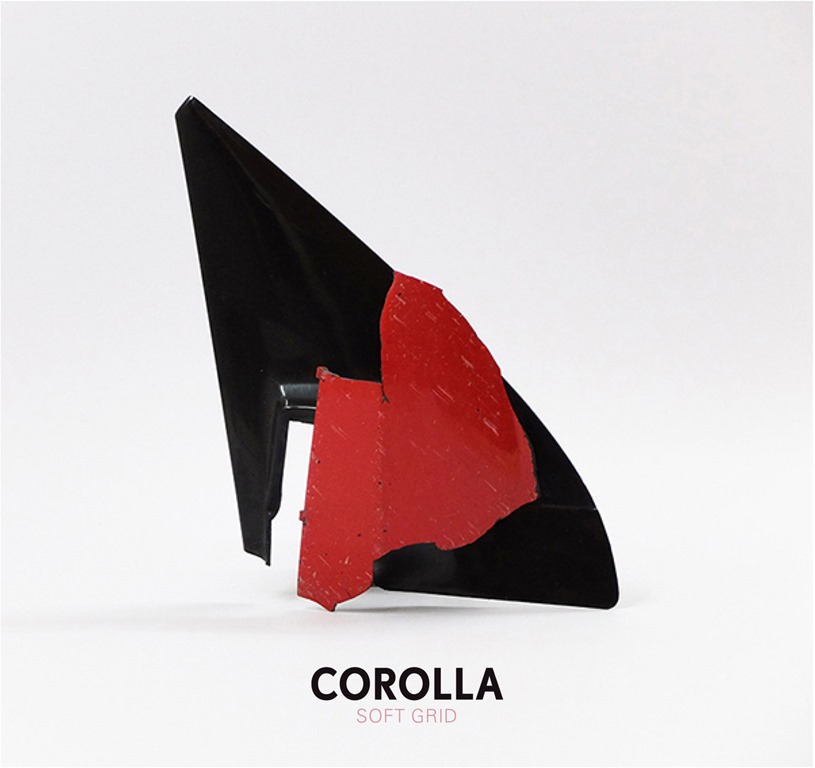
There’s something perversely apt about the fact that members of Soft Grid, Jana Sotzko and Theresa Stroetges (ala Golden Disko Ship) met in an abandoned hospital ward. The album begins with the slow, dense electro-throb of ‘Herzog on a Bus’. Hefty percussion underpins looping, layered vocals. From the mechanised murk emerges a rolling, picked guitar line, delicate and tranquil. Harmonies play a major part in the album’s overall focus and form: while there are huge ruptures of noise and bursts of dynamic drum and guitar, in places reminiscent of latter-day Swans, it’s the vocal harmonies which really captivate and provide the focal point.

The twelve-minute ‘Minus Planet’ provides the album’s towering centrepiece, with a mellow electronic pulsation reminiscent of Tangerine Dream breaking out into a surging crescendo before taking a sharp turn around the mid-point and swelling into a The stripped-back and downbeat ‘Two Barrels of Oil’ is low, slow and haunting, a sparse bassline providing the backing to near acapella vocals. The final track, ‘Corolla’ has elements of folktronica and flamenco, and again, through a kaleidoscopic Krautrock transition, the sound builds to a shimmering crescendo.

Corolla is the sound of a band who take the progressive ethos rather than the vintage 70s sound, and actually make music that’s forward-facing and inventive.


Soft Grid - Corolla

clang records – clang045 – 19th August 2016

Christopher Nosnibor

A note hangs in the air, sustaining, resonating, slowly decaying. Just before silence encroaches, the next note is struck. It hovers, hangs and gradually fades. A slow, oscillating drone crawls beneath. There is movement, but it’s evolutionary.

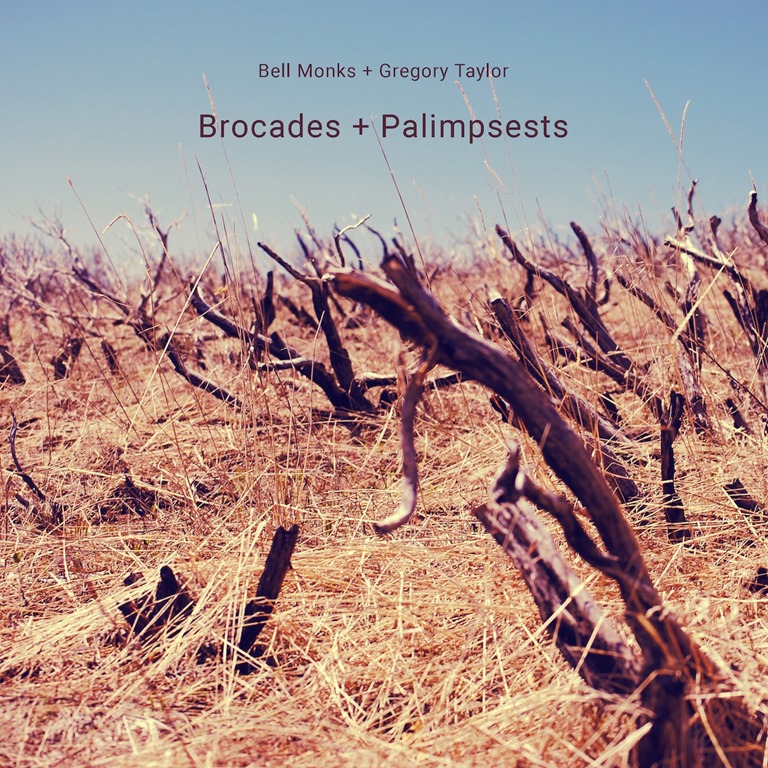
‘Brittle Evenings’ is led by an unfurling picked guitar line, deliberate, ponderous, reminiscent of the later Earth albums. Ghostly tones remain, sonic erasures which correspond with the idea of the palimpsest, and offer clues to the way the pieces formed. 14 short, quiet guitar pieces penned by Bell Monks for an art opening in 2012 provided the basis for the work. Later, they invited Ben Willis and Matt Sintchack (contrabass and saxophone respectively) to play over the tracks. Despite the addition of these new layers, they still felt the work seemed incomplete, and so called upon Gregory Taylor to rework the tracks digitally. Finally, with over 100 minutes of audio, it was Lars Graugaard’s editing which shaped the ten pieces which comprise the final track-listing. As such, the album is the result ofnear-infinite layering, relayering, additions and deletions.

But as to where one individual’s contribution ends and another’s begins is impossible to determine, and the beauty of the album is the way in which the parts blend, smudge, and blur together, folding into and over one another, obscuring, reshaping and remoulding to accommodate or obliterate previous layers and edits.

Each piece is also formed around shifting tones and sounds, the shapes and structures indistinct, fluid. Indeed, very little of the original guitar work is in evidence on listening to these pieces. Warm tones and an organic feel permeate the album’s fabric, although this is touched by a counterpoint of mechanical sounds, whirring, grating, rumbling. As one layer of sound fades, another emerges, leaving the shadows of the one before. Long, mournful strings quaver over rippling electronics and dulcimer-like chimes flicker in soft washes of sound. On ‘…Et Tremblant Feuilles’, perhaps the album’s most linear piece, a sonorous bass with gothic overtones builds a darkly ominous atmosphere.

The semi-industrial dark ambience of ‘Caress of Sun’ is constructed of layers of sound, heavy drones and interminably elongated scrapes, growing denser, deeper and more abstract as it progresses, emerging in a dazzlingly kaleidoscopic world. It isn’t until the album’s eighth track, ‘Sublimation Residue’, that the guitar becomes prominent once again, and once again, it gradually fades out to be engulfed by a soft sonic cloud.


Bell Monks   Gregory Taylor

Karlrecords – KR024 – 15th July 2016

Edward S. Robinson

How I hadn’t encountered the work of Iannis Xenakis previously, I will never know. Nevertheless, it was at the 2016 European Beat Studies Network conference that I first saw – and then heard – examples of his work, courtesy of Antonio Bonome in his talk on ‘Polytopy and Burroughs’ Coordinate Points’. The crazy, three-dimensional graphs, or polytopes, which accompanied Metastasis were utterly mind-bending. Given that I’m neither a musician nor a mathematician, they didn’t mean a great deal to me, but as visual pieces, they were stunning. Conceptually, Xenakis’ fusing of two disciplines, music and architecture, breaks new ground in itself, with the combination of architecture and music translating to the architecture of music. And then Bonome played the sounds these images represented. Huge, extended, quivering, brain-draining walls of sound. Powerful, immense, they seemingly took solid physical form. This was truly something.

La Legende d’Eer was composed in 1977 and 1978, when Xenakis was in the midst of his far-reaching explorations of mythology and philosophy. La Legende d’Eer is another of Xenakis’ monumental polytopes, and was created to mark the opening of the Pompidou Centre in 1978. While previous editions have presented the music as a single track and across different releases, featuring an array of errors, this latest reissue from Karlrecords (which makes the work available on vinyl and download for the first time), uses the eight track version Xenakis himself presented at Darmstädter in 1978.

La Legende d’Eer represents one of Xenakis’ most renowned and celebrated electroacoustic compositions, and is a challenging work to sat the least. Not being musically minded in the compositional sense, or scientifically minded in the sense of the technicalities of the mechanics and frequencies and all that jazz, I’m perhaps rather ill-equipped to respond to the fullness of Xnenakis’ objectives and achievements. As such, this is less of an academic analysis and more of a straightforward review, and pulled more from the gut than drawn from anywhere else. However, this is sound which elicits a cerebral, emotional and physical response first and foremost. This is extreme music, which many would likely dispute even constitutes music, and a similarly extreme response is surely a natural one.

Those who are wired to actually derive enjoyment from it are likely a very small minority, but one I happen to belong to. The eight tracks segue together, and begins as a series of trilling whistles of feedback, building into a screeding, shrill mesh of treble, howling drones and pained hums that bow, bend and scrape. If sounds reminiscent of Whitehouse (the resemblance of ‘Wriggle Like a Fucking Eel’ to moments on track seven is remarkable, but then the twittering, jittering top-end noises Xenakis creates are also very like those which make up the majority of the Great White Death album) and the entirety of the careers of Merzbow and Kenji Siratori can be heard, then La Legende d’Eer marks the foundation stone of power electronics and noise. Amidst the earthwork rumbles and the buzzing swarms of hornets and the atomic detonations, shrieks, rattles and crashed are churned together to form a huge, excruciating aural assault.

Acute listening reveals complex internal polyrhythms of the sonic vibrations as they bounce together and against one another. And as the tones and velocity of the sounds shift, so the rhythms change. Indeed, La Ledenge d’Eer is a work in which sound is in perpetual flux. Bleeping arcade game sounds bubble from a tidal wave of noise which resembles a landfill sit’s worth of tin cans, blooping laser modulations surge and swell before devouring themselves and being carried away in an avalanche of static and pink noise. Extraneous jazz honks through a kaleidoscope of sparkling circuitry and low-end interference. In short, there’s a lot going on, and what goes on changes over the course of the piece(s).

It’s a three-dimensional attack on the senses, designed to inflict maximum disorientation and temporal dislocation. And it succeeds. It will necessarily and inevitably twist the psyche and create an almost indefinable sense of discomfort, and it doesn’t require a mathematical equation to calculate the unsettling effects of the sound on the listener. 38 years after its composition and it’s still an astounding and quite devastating work.


Iannis Xenakis - La Legende d'Eer

2nd September 2016

Christopher Nosnibor

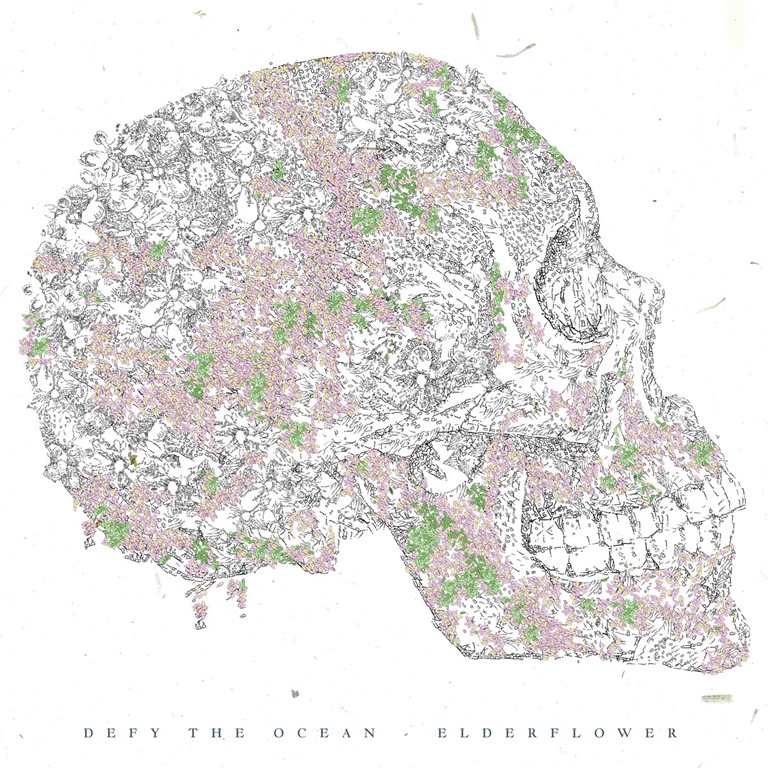
With seven tracks and a running time in excess of half an hour, it’s one hell of an EP. ‘Elderflower’ is also a whole lot more than the prescriptive ‘post-rock’ tag attached to the duo. Much as I appreciate labelling as much as the next time-pressed music journo struggling to place a band and clutching for pointers for pitching a band in a review, and much as I like a lot of what slots into the post-rock bracket, Defy the Ocean are a band who create music that simply cannot be readily classified on their expansive and accomplished new release.

For a start, it’s more rock than post rock. It’s pretty loud. It’s pretty heavy. There are a lot of vocals. None of these are bad things, and ‘Elderflower’ is a work of depth, range and power. From the get-go, they demonstrate a knack for shifting between segments and moods with real panche, dragging the listener along with them: ‘Rest’, the first track may only clock in at two minutes and fifty-five, but it’s got more twists and turns and ideas and emotional range than some bands’ entire albums.

‘Veils’ is restrained, darkly atmospheric, moody and is perhaps the most post-rock track of the set. But it’s got a bleak, metallic edge that also tips a nod to the mid 90s alternative rock sound.

The title track breaks into full-on grunge mode, the quiet / loud dynamic and brooding atmosphere more Alice in Chains and Soundgarden than I Like Trains, and the crushing power chords are thick and heavy, and paired with a drawling vocal delivery, it calls to mind Melvins – the mellow piano breakdown notwithstanding. ‘Brine’ is serpentine, stripped back, and provides a distinct contrast with its chiming guitars which does call to mind I Like Trains – but then again, the burst of powerchords, distorted vocal and full driving climax, alludes to millennial progressive acts like Oceansize, Amplifier, Porcupine Tree, Anathema, and if anything, ‘Vessel’ amalgamates neoprog with the desert rock vibe of Queens of the Stone Age and their ilk. There’s a lot going on here, and it’s all well-assembled and musically articulate.

Everything about ‘Elderflower’ points to a band who aren’t confined to any one format or bank of instruments, which makes for a refreshingly varied collection of songs, and one which demands repeated listening in order to reveal its full richness.


Defy the Ocean EP