Posts Tagged ‘Experimental’

Nakama Records – NKM014 – 23rd March 2018

Christopher Nosnibor

The title sounds like a Radio 4 quiz, or perhaps some selections for ‘Call my Bluff’. The accompanying blurb outlines how the album consists of three nonsensical musical conversations between Malaysian nylon guitar player Goh Lee Kwang and Norwegian bass player Christian Meaas Svendson, and describes it as ‘the story of the first encounter between two different mindsets, nationalities and generations trying – and totally failing at – making any sensible dialogue with their respective musical languages.

Success and failure are relative, of course, and one may contend that there’s no success like failure. It’s in the disconnect between artistic vision and the material realisation that unexpected creative outcomes emerge. The three pieces – I would probably hesitate to describe them as ‘compositions’ given that they are, in effect, haphazard jumbles of notes played over and across one another – are indeed sonic babble. But it’s still just freeform jazz to my ears. And for once, this isn’t a complaint or criticism.

The description reminds me of those days when every conversation feels like a misfire, and you miscommunicate with everyone you encounter. Try as you might, you never connect as intended. A jovial quip lands as an insult, a reply to a simple question leaves your interlocutor nonplussed and you realise you’ve misunderstood or misspoken, or otherwise just gabbled a stream of random bollocks for no apparent reason. You question whether the fault lies with you, or the world at large. You burn with shame. You want to hide away, an avoid people for a while. I say ‘you’; I mean me, of course, and as usual.

It takes a certain – nay, special – ability to separate and absorb any shame or embarrassment to place a document of those misfires and disconnects out into the public arena with the free admission of failure. But then again, failure in intent does not necessarily equate to artistic failure. And the disjointed, discordant jumble of notes on the three pieces – respectively entitled ‘Gibberish’, ‘Balderdash’, and ‘Drivel’ are entertaining and stand as art in the sense that they document a collaborative creative process.

At the heart of Gibberish, Balderdash and Drivel is an exploration of language, and the apparent obstacle of linguistic disparity. I’d long assumed -and believed – that the language of sound transcended linguistic boundaries. But on delving into the development of this skewed collaboration, I realise that while this may be broadly true, it is not a universal truth, and am reminded that context counts for a lot.

But the language itself matters. Dialogue doesn’t have to have explicit meaning or linear cohesion to convey something. It’s as much about interpretation as intention: the receiver / listener will inevitably bring their own perspective and one man’s throwaway nonsense is another’s serious art. The accompanying pencil for the owner to draw their own art into the blank white cover is a nice touch, which adds to the interactivity. The listener is inevitably – and incontrovertibly -implicated in the process, and this inclusion only serves to accentuate this point.

And for all its self-effacing flippancy, Gibberish, Balderdash and Drivel stands as a work of art. The very word selection is telling. In dismissing its very own existence as lesser, it does so using elevated language, indicative of an advanced and expanded vocabulary, while also adhering to the rule of threes. This is not by any means an illiterate work. Quite the contrary, in fact: Gibberish, Balderdash and Drivel is a celebratory work.

AA

AA

Goh Lee Kwang & Christian Meaas Svensen – Gibberish, Balderdash and Drivel

PNL Records – PNL040 – 20th April 2018

Extra Large Unit is an appropriate collective moniker: More Fun Please! is a live recording of an expanded iteration of Paal Nilssen-Love’s Large Unit ensemble, and features some twenty-seven musicians, in a line-up which features three grand pianos. Yes, three grand pianos. Excessive? Hey, if you’re going to go large, why not go uber-maxi, all-out massive?

The accompanying blurb explains that ‘The challenge of composing for so many musicians, while also maintaining the qualities and identity he had established with Large Unit, pushed Nilssen-Love to new creative levels. This was a monumental task…’ And More Fun, Please! is a monumental album. The question is, how much fun can you handle?

In his liner notes for the album Nilssen-Love writes, ‘When writing music, I search for extremes, pushing boundaries: physical, dynamic, instrumental limitations, if any, how fast and how slow can one play, how loud and how quiet. I search for unusual ways of thinking. I want to give the musicians trust and have them take initiative and to feel the responsibility of what it is to be an individual player in a group context’.

More Fun Please! is a thirty-minute aural rollercoaster, half an hour of highs and lows. At times, it sounds like a classic cartoon soundtrack, parping brass and sudden bursts of percussion; at others, it’s brimming with oriental exploration and eastern promise, and at others still, it’s utter bloody chaos, discord and cacophonous mayhem. In between, there are passages of trilling, tooting, droning and scraping, brought to abrupt halts by immense orchestral strikes – and I mean immense, earth-shaking, and borderline galactic in scale – and plinking, bibbling xylophone breaks.

The brass is beyond wild. Words simply aren’t enough.

The whole thing is an orchestral frenzy, a riotous ruckus of everything all at once, with sustained crescendos that seem to last forever.

It’s a lot of fun… but half an hour is probably about as much of this kind of fun as anyone can handle.

more_fun_please-42547043-

Bearsuit Records – 20th April 2018

Christopher Nosnibor

Try as I might – and I do, I really do – I find it impossible to avoid words like ‘weird’ ‘whacky’, and ‘oddball’ in reviews of anything released on the Edinburgh micro-label Bearsuit Records. This is no reflection of a lack of vocabulary on my part: it’s simply what they do. Every boutique label needs some kind of signature or house style, and a micro-label really needs a niche. Bearsuit specialise in stuff that’s so far out it’s beyond.

Fear of the Horizon is actually pretty conventional by Bearsuit standards – but these things are all relative. ‘Eamon the Destroyer’, the album’s first cut, arrives in a flourish of expansive prog-rock guitar and twittering electronics, all on top of a thumping beat that’s pure dark hip-hop. And then the guitars really takeover and we’re in territory that’s suspiciously close to be being categorizable as ‘rock’. But then ‘The Positive Approach of Talkative Ron’ swings into view in waltz-time and goes all weirdy… and then there’s whistling and another epic guitar solo.

Pancultural influence are infused within the glitching electronic fairground fabric of ‘Woman With the Plastic Hand’, with its stuttering beats and woozy organ sound, while ‘Vandal Schooling’ brings with it a crunch of industrial noise and stabs of bold orchestral brass, taking a sharp turn from abrasive to mellow around the mid-point and locking into a metronomic hard, industrial-disco flavoured groove near the end. For the most part, though, the sounds are soft-edged, mellow, supple, analogue.

‘The Horizon Project’ brings together mellow and woozy, its mellow motifs and nod-along beats cracked with a stylophone break and underlying hiss of distortion. It runs contra to the chilled beats and quite accessible lead melody.

‘Weird’ ‘whacky’, and ‘oddball’… they’re all entirely appropriate adjectives, but fail to account for the depth and range of Fear Of The Horizon. As hard as it may be to take seriously an act going by the name of Bunny & the Invalid Singers, there’s real merit to this work that goes far beyond the superficial quirkiness. ‘Weird’ ‘whacky’, and ‘oddball’ don’t convey the wistfulness, the melancholy, the nostalgia, range of emotions, moods and mindsets.

This is where I should sign off with a suitably witty flourish, or some pun-based punchline, but such flippancy would be to only further undermine the true merits of an album which clearly shows no fear. Fear Of The Horizon is a fun, entertaining, and enjoyable work but don’t let the oddness and goofiness lead you to believe it isn’t serious, or art. Because it’s most definitely both.

AA

Bunny & the Invalid Singers – Fear Of The Horizon

Jahmoni Music – JMM209 – 23rd February 2018

James Wells

Straight into weird shit territory here. Wordless, atonal vocals layer up, ululating and droning and whatever, the tape stretched and slowed and generally fucked about with, while a monotonous bass throb and thumping industrial beat holds an insistent four/four. Think The Fall crossed with Throbbing Gristle. It’s not the full picture, but is a flavour of ‘To Evacuate is Difficult and Infrequent’. It may or may not be a song about bowels. But probably is.

DJ Marcelle is certainly not a DJ in either the conventional or contemporary sense: nor does she present the image of the club DJ throwing down bangin’ tunes for the euphoric masses. Her website uses a kind of Scooby Doo Mystery Machine typeface, and her tour photos all document the soups she’s consumed. This explicit lack of coolness is a cause to celebrate her as an artist. This is not about trends or commercial endeavours: this is about making art with sound.

‘To Reveal the Secret’ is a lo-fi mess of sample loops and clattering drums, and calls to mind the jittery experimentalism of the early 80s avant-garde scene: again, the shadow of TG looms, but equally, the playful oddness of early Foetus and lesser-known acts like Meat Beat Manifesto offshoot Perennial Divide. It pretty much bleeds into ‘Walking Around Aimlessly’, another mash-up of looped samples and old-school tape effects, mining that seem of William Burroughs cut-up inspired audio experimentalism that marked Cabaret Voltaire’s first few albums. Firecracking percussion and wild analogue bleeps provide the fabric of the frenetic finale, which lands in the form of ‘To Sing Along’. The irony is as heavy as the bass, and it rounds of a set that’s noteworthy primarily for its weirdness and apparent celebration of the random.

And random’s where it’s at. Psalm Tree is weird but groovy.

AA

DJ Marcelle

30th January 2018

Christopher Nosnibor

On the strength of the cover, with its sombre-looking black and white image of a fledgling gull (I think – I’m not David Attenborough) perched atop a post with the sea behind it, all the way to the horizon where it meets a brooding sky, you would expect The Earth Swan Sings Again to mark a turn towards serious, introspective and altogether less hectic approach to music-making. And in some respects, it is.

While still incorporating the wildly disparate elements of his recent previous albums – of which there are many, and then some (he’s put out a full dozen in the last decade) – The Earth Swan Sings Again feels less manic, more refined, but no less magpie-like in its amalgamation of a broad range of genres. And on this outing, Reaks has gone even further out on the jazz trip he embarked upon with Track Marks last year. This may seem strange for an artist who doesn’t really like jazz, but Reaks is an artist who doesn’t allow genre prejudice to contaminate his creative process. This is postmodern art at its intertextual best: everything is equal, and it’s all material. What counts is how that material is used, recycled, adapted. Etc.

This all makes for a more accessible set of material, but of course it’s all relative, and songs with titles like ‘I Stroked Her Like a Leper’, ‘Her Body Convulsed’ and ‘Today Hurts More than Mercy’ are never going to have the commercial appeal of the mediocre shit of Ed Sheeran or Bastille or whatever cal R1 is spinning on an endless brainwashing loop these days, and that’s before you even get to the music itself. ‘She stretches open like a parasite’s echo,’ Reaks sings by way of a refrain on ‘She Stretches Open (Like a Parasite’s Echo)’. It’s vaguely disturbing, and entirely surreal, but in keeping with his abstract / cut-up approach to the creation of art.

Bringing a more low-key vibe that’s dominated by a post-punk atmosphere, The Earth Swan Sings Again is darker and challenges in different ways from preceding efforts. The basslines are still dubby but less rampantly wild, and more about driving by stealth. The guitars are still choppy, but veering toward the picked and understated – apart from the immense and brain-meltingly OTT jazz/prog wigouts that splurge all over the place unexpectedly and incongruously – they’re altogether more subtle. Well, the guitars, maybe: the OTT jazz/prog wigouts are maybe less so, but they work, and there’s a sense that Reaks knows all of this. As one of the most singular artist practising at this moment in time, Reaks knows what he’s doing, and also knows that one chooses art of commercial success. And this is art.

The Earth Swan Sings Again is dark and stark, low-key yet eclectic, and at times inexplicable. Of course it is: it’s an Ashley Reaks album, and when it comes to walking the line between genius and madness, Reaks has forged a career by joyously straddling it and raising two fingers to convention of any kind. Outré creative talents like Reaks are few and far between, and while the mainstream grows ever safer, ever more diluted, ever more background and by-numbers, the need to artists who rub hard against the grain grows ever greater.

AA

Ashley Reaks – The Earth Swan Sings Again

Klangbad Records – 20th October 2017

Christopher Nosnibor

This is one difficult album to digest. It’s hard to assimilate, or even comprehend precisely what Audiac are aiming to achieve here. At first, the title track comes on like some kind of electro-soul effort with a soft-focus, analogue-hued retro vibe, augmented by some doodlesome 80s synths. But then everything goes haywire with eternal delay overlaps and there are overloading circuits and the soul turns to strain and… oh, it’s bending my brain.

Thankfully, the album’s second song, ‘People Going Places,’ is a relatively conventional piano-led post-rock ballad, with heartfelt vocals and soaring, quasi-operatic backing vocals. It perhaps goes without saying, then that conventionality is relative. It’s brimming with theatricality and bombast, a wildly extravagant composition

And back and forth it goes, alternating between weirdy and vaguely fucked-up experimental electronica and relatively straight piano songs with odd twists. There are moments of absolute beauty here, moments which not only tug on the heartstrings but nag at the corners of the soul. Audiac’s website places them as having ‘roots in the German Romantic Lied, chansons, theatre music traditions and the burlesque’.

‘Not Bound to Anything’ is scratchy and soulful: grandiose and , and there are hints of Scott Walker circa Tilt on ‘Doberman’, a bleak, piano-led piece that’s less post-rock drama than a warped and intense sonic smorgasbord, while the soft-edged ‘Dreamadream’ borders on the dreamy lounge side of synth pop. And then there’s ‘When You Say My Name’, which is subtle and sensitive, with its acapella opening and soft piano that gives way to brooding atmospherics before things get dramatic and a bit odd. JG Thirlwell’s post-millennium Foetus releases are something of a touchstone here.

Audiac could only ever hail from Germany. There’s something about the way they’re unbound by convention, about the undocumented, unspoken undercurrents of their sensibilities which belongs to Germany. Ultimately, though, So Waltz is an album that exists out of time and stands free of geography.

AAA

Audiac – So Waltz

Störung – str011 – 7th July 2017

Christopher Nosnibor

I need to work a better filing system for my to-review albums. As it stands, it’s literally a pile, with new deliveries being tossed on top of the pile or otherwise littering the floor next to my desk. The chaotic disorder doesn’t sit comfortably with my innate sense of order and organisation, but the pile has a life of its own. Logically, new arrivals should go to the bottom of the pile, but lifting the pile, precarious as it is, is a risky operation. The teetering stack reached a height and degree of instability this morning that lifting the disc and accompanying press release from the top caused the whole thing to slide in several directions at once. Gathering the strewn and scattered discs and press releases, many of which had become separated from one another, I happened upon The Broken Glass. This seems to be something of a recurring theme, with Miguel Frisconi’s Standing Breakage standing out as a work centred around the exploitation and exploration of a cracked glass bowl. Rather later, I located the press release, too.

The pieces on The Broken Glass aren’t nearly as haphazard as my filing, but there’s a loose and spontaneous, improvised feel to much of the album, whether the composition is a sparse (dis)arrangement of electro / acoustic instruments (‘The Broken Glass v1’) or rippling, rhythmically pulsating electronica (‘The Broken Glass v2). There is a strong sense of variation and variety between the two complimentary yet highly contrasting versions – so much so that it’s difficult to discern how it’s the same piece performed differently. On the face of it, their commonality lies in the organic incorporation of Asférico’s field recordings and the subtle washes of sound.

The album’s third and final track (a CD-only bonus), ‘Sonidos del Subconsciente II’ (‘Sounds of the Subconscious II’) is different again, and has a running time of some forty minutes. An exploratory piece which evolves gradually and naturally, it begins with what sounds like the sound of the wind, a hushed and distant rumble. way off, distant machines clank and grind, the sound of heavy industry blown many miles on the breeze Brooding string notes creep in. The low tones surge and grow and build… and then there is silence. Abrupt, unexpected and unexplained silence. It simply arrives after nine minutes. The disc is still playing. Straining my ears for the faintest hint of sound above the whirring of the CD player and my hard-drive. I stop typing, so as to listen for sounds buried by the clatter of keys. But no: there is nothing.

Is this the sound of my subconscious? How long do I resist skipping the track forward thirty seconds, a minute? Why does the silence unsettle me so? Suddenly, I’m called to leave the room. On returning, the track is at the fourteen-minute mark, and there is sound. I skip back to discover where sound resumes I turn up the volume, to discover that there had been no silence, only extreme quiet. I go back to the beginning.

And from the so-quiet calm slowly, almost imperceptibly builds a funnelling storm of noise, a howling gale of tempestuous noise, amidst which crashing explosions of metallic noise, like sheet steel against sheet steel, reverberate. And the volume and intensity continues to grow and swell, to a level that’s difficult to bare. It’s no longer mere sounds, but a physical force. It’s all-encompassing, and I find myself cowering as though on a small boat in the middle of a violent storm, while the only land is an erupting volcano.

And yes, sometimes my subconscious does sound like this: a raging barrage of relentless, surging noise, amorphous, indistinct, it’s abrasive and it hurts. Not so much the sound of breaking glass, but sound to break the psyche.

AAA

Mia Zabelka & Asférico – The Broken Glass

Miasmah Recordings – MIALP037 – 25th November 2017

Christopher Nosnibor

Svarte Greiner is in fact Erik K Skodvin. But identity is mutable, and on Moss Garden, Skodvin explores the mutable identity of sound in space. And by space, I mean both in terms of the spatial creations of soundscapes, and outer space: through the former, Moss Garden evokes the latter.

The album contains two side-long tracks. ‘The Marble’ creates a slow-moving sonic expanse of drifting ambience. Crackles of static create minor interference in the smooth surface which extends over light years of distance. It’s a journey of infinitesimally gradual transition and glacial, galactic expansion. Everything moves in suspension, slowly, moving in its own dense molecular soup.

‘Garden’ begins with a crescendo and works backwards, tapering off into near-silence before beginning to grow at vegetable pace. There’s no specific purpose to this elliptical reference to Andrew Marvell, but listening to musical explorations so overtly background affords the mind space to wander, and it’s always a source of amazement what thoughts and recollections venture to the fore when given the room to surface at will. Sitting back in a dimly-lit room with a large measure of something strong, this is the perfect sonic immersive to lift the listener out of the humdrum and into another dimension.

AAA

Svarte Greiner – Moss Garden

Bearsuit Records – 1st December 2017

Christopher Nosnibor

The album’s acknowledgements indicate that the little Edinburgh label has some high-profile and well-respected champions, including Stuart Maconie, Tom Ravenscroft, Gideon Coe, Mark Riley, David Stubbs… and some guy called Nosnibor. I’m deeply flattered to find myself in such prestigious company. It’s no secret that as a music writer, I’m a fan first and foremost, and Bearsuit stand out for their unswerving commitment to the weird and the wonderful – and, indeed, the wonderfully weird.

From minimal, brooding electro-pop to experimental avant-folk via haunting, spectral gothtronica, and space-prog in waltz-time, it’s all here on this latest compilation. Psychedelic dreampop, scratchy, glitchy trip-hop, stark post-industrial noise, and a jumble of all other elements which should never meet cozy up side but side and on top one another. Quirky isn’t in it.

Luscious, sweeping strings glide over a softly pulsating throb, and it’s all very cinematic, very John Williams on ‘Fulfilling Eclipse’, Alexander Storadiau’s contribution to this collection. No two ways about it, it’s a grand opening worthy of JG Thirlwell. But then PoProPo bring a busy mess of high-friction jazz-funk-punk, which just wouldn’t be complete without the wibbly Theremin wails. The weirdy, sultry cabaret of Martian Subculture’s ‘Chewing Gum’ contrasts again.

The reason I love Bearsuit isn’t because I love every tune they release, but because every tune they release opens my ears to something new, and because they’re fearless in pushing the most far-out stuff from the deepest underground. Tthere are some truly ‘what the fuck?’ moments on here. ‘Tous Les Rochers’ by Yponomeutaneko leads the way. Swaggering brass and monotone spoken word breaks into discord and a load of crazed shouting. I haven’t a fucking clue what they’re shouting about, or why, or why the track even got recorded, but the fact it did, and that it’s on here is utterly brilliant. The sing-song vaudeville oompah of ‘World Travel of the Piano Tuner’ by Shinnosuke Sugata is music completely out of time, complete with muffled wax cylinder production.

The Moth Poets offer up some glacial post-punk disco hybrid collision with operatic bombast. Swords Reversed bring a palace of oddball melody and thumping beats, while Petridisch – one of three acts with two tracks featured – cultivate an air of otherness. No two acts featured are alike, and yet they compliment one another perfectly. Sequencing matters as much as selection on a compilation album, and The Invisible & Divided Sea flows nicely.

It’s a gloopy, tangential, often disorientating concoction of disparate sounds that somehow stands as the perfect representation of both the artists involved and the label itself.

AAA

Bearsuit Comp Cover

Ici d’ailleurs – 15th September 2017

Christopher Nosnibor

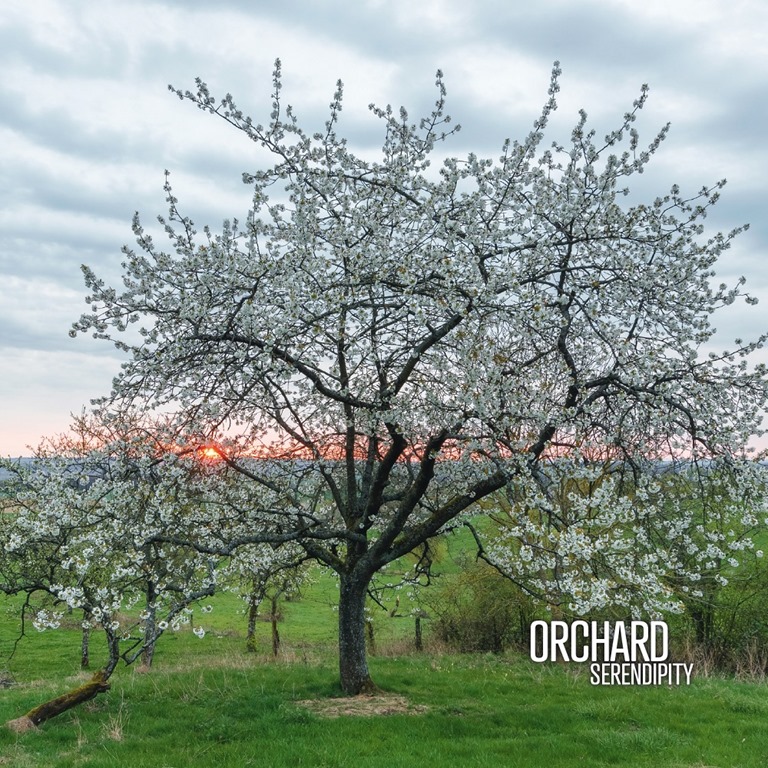
The gathering together of Aidan Baker (guitar), Gaspar Claus (cello), Franck Laurino (drums) and Maxime Tisserand (clarinets) was engineered by Stephane Gregoire, Ici d’ailleurs’ artistic director for the purpose of simply seeing what would happen. The four were selected because of their musical dissimilarities, and the fact they did not know one another personally or musically. As such, the element of chance was one of the leading factors in the emergence of the pieces which make up the album. All of this makes Serendipity an appropriate addition to the ‘Mind Travels Series’ releases, of which it is the eighth.

Serendipity brings its share of unexpected twists and turns, sudden changes in tone and direction, but what’s more remarkable is just how smoothly it flows. And while there are expansive ambient passages, it’s certainly not an ambient record.

‘A day staring at eternity’ part 1 begins with an elongated, broad sweeping drone before strolling percussion and a wandering bass brings a sense of structure and more linear movement on ‘part 2.’ Through disconsolate, minimal jazz – horns lost in a wilderness of sighing drones – to a funereal darkness and eventually racing, urgently towards…what? eternity is not fixed, but stretching out across myriad horizons, all of which are uncertain.

‘Drawn with the wind,’ also in four parts, works a seam of expansive space-age prog with ambient undercurrents. A motoric swell of urgent percussion propels the composition relentlessly forwards, before stepping back in tempo and position to forge a distant thunder amidst eddying drones. The fourth part blossoms into a spectacular sonic sunburst, a slow groove at its heart. The performance and production coalesce to create a spellbinding moment.

The twenty-one-minute ‘After all the sun is awakening’ is immense in every sense, a widescreen krautrock drone that sways and swirls hypnotically. Strings drift and drape over rumbling sonic abstraction which envelop the listener.

The last two pieces, ‘We host you’ and ‘Fructification’ stand somewhat apart from the rest of the release. Shorter, more linear and overtly psychedelic, the former is a nifty noodlesome nugget, while the latter somehow represents the culmination of Orchard’s objective, incorporating as it does all elements of the album with condense concision, weaving around a paired-back yet insistent groove.

As a whole, Serendipity is an impressive work which demonstrates the power of collaboration when the right people come together – making Orchard a fruitful collaboration indeed.

AAA

orchard_1000px_rvb