Posts Tagged ‘EP Review’

2nd July 2024

Christopher Nosnibor

Unless I’m looking in all the wrong places, one genre you don’t seem to find many emerging acts coming through in is hardcore punk. Reissues of vintage bands – even minor cult acts who were criminally overlooked in their time – are coming (back) to light with releases on Southern Lord and the like, but new true hardcore punk acts are few and far between, with many presenting a more metal

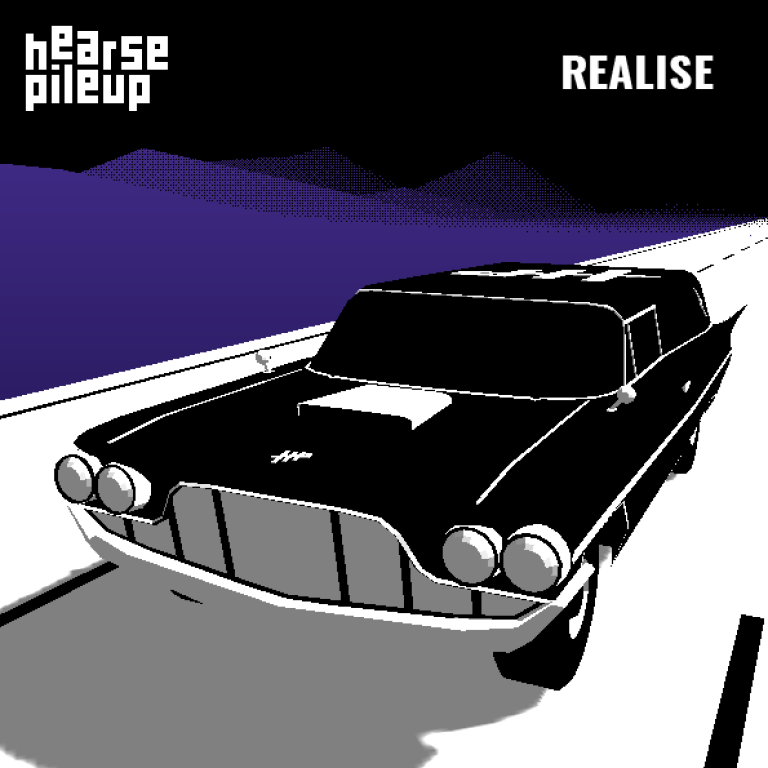
This is raw, fast, gritty, and angry. And political. ‘Realise’ is a fist-pumping roar of rage, positively foaming at the mouth with the fury of betrayal. Told from the position of the punter for whom the penny’s dropping that they’ve been lied to and done over, ‘Realise’ rails against the system and the way in which politics serves politicians rather than the people. As they put it, ‘Writing with the credo “Shit’s fucked – call it out”, the song highlights that politics doesn’t, and cannot, happen only once every five years. Obviously, these guys get it, but it still shocks me that there’s such a thing as working-class Tories. They seem to proliferate in run-down rural areas, places like Lincolnshire, North Yorkshire, Norfolk, and Suffolk. Many of these regions are agricultural, and the (ageing) populations have bought the myth that the migrant workers picking and sorting veg for minimum wage – the same migrant workers who serve them their coffees and also service their health in evermore dilapidated hospitals – are stealing their jobs. Those would be the jobs they’re retired from, and would never have done on account of the pay and conditions being poor. But this is the way of capitalism – blaming the most vulnerable for your own plight while aspiring to higher things and buying into the idea of trickle-down economics is simply pissing on the head of the person on the next rung down because the person on the rung above is pissing on you, and because they’re on the higher rung, it must be right. It is, of course, a complete con. Shit is, indeed, fucked.

The bass-rattling blast of ‘Grindstone,’ which first surfaced a few years ago, finally makes it to an EP, and it perfectly summarises the wearying, dulling, life-robbing effects of drudge labour and the living hell of working all hours and multiple shit jobs to make ends not even meet. ‘I got my nose to the grindstone every day / I’m grinding so hard I grind my face away / I leave blood on the floor wherever I go / If I grind much more I’ll be grinding bone’ paints a visceral picture and take the notion of working one’s finger to the bone to its logical conclusion. This is precisely what proponents of capitalism and governments who support it want. A people too busy killing themselves with work just to stay alive hasn’t the time or the energy to protest, to uprise, to vote. Notably, the main parties all spoke of rewards for ‘hard-working families’, reinforcing the idea that both families and hard work are both normal and desirable goals. This is clearly false: not everyone is suited to family life, and rewards should not be based on one’s level of conformity, and a question I have asked elsewhere is why should work be hard? It should be enough to simply work, to earn a day’s pay, and still have the energy – physical and mental – to have a life outside it. Promoting the idea that hard work is something we should want to spend our lives on is simply another means of oppression. And yes, making art is work: art and culture are essential, and the existence of cave paintings is testament to the fact that the need for art is in our DNA. So fuck the pitch that work has to be long hours grinding out shit earning a pittance to fund the CEO’s multi-million pound package as if it’s somehow noble. It’s not: it’s exploitation, pure and simple.

This brings us to the final cut, ‘We’re All Going to Hell’, is a full-throttle rabble rouser with a strong chorus. It’s simple, direct, unpretentious. Much as I admire poeticism in songwriting, every form has its time and place, and Hearse Pileup are agitators, looking to shake people awake. You might think their fanbase would be young and left-leaning, but so many who have grown up under the last government are prematurely world-weary, dead on their feet, and apathetic to the whole circus. These are the people Hearse Pileup are reaching out to. And for this purpose, they don’t need to be subtle, but instead deliver a sonic slap round the chops. And with this EP, that’s precisely what they deliver.

AA

AA

Hearse Pileup Artwork

ant-zen – 12th February 2024

Christopher Nosnibor

First – the format! So much is being made of the vinyl renaissance right now, and much as I love vinyl, it’s hard to be entirely comfortable with this comeback, in this form. Back in the 90s, when CDs were in the ascendence, I often bought vinyl because it was cheaper: I could pick up an LP for £7.50 when a new-release CD was £11. I still have the receipts in my vinyl copies of PJ Harvey’s Rid of Me and Pandemonium by Killing Joke, among other treasures. Now, vinyl is a luxury item. Even a standard LP is around £25, and many are pressed on two pieces of heavyweight vinyl and cost closer to £40, or more if released on Record Store Day. This isn’t right. It’s not honouring the format, it’s another example of exploitation.

But this is rather different, and altogether cooler on so many levels: ant-zen have brought us this release by Kojoohar & Frank Ursus in the form of a 7” EP, with two tracks on each side. You can’t blame them for the price tag given production costs, but the unique hand-printed inlays, etc., at least make each copy unique and make this release a million miles removed from the capitalist conveyor belt.

The thing that matters here is that this release is completely suited to this retro format: a 10” or LP release would have been extravagant, indulgent, and frankly, ill-keeping.

It’s worth quoting the liner note for the back-story here, too: ‘The spark that ignited this collaboration came from a conversation between KOJOOHAR and FRANK URSUS – aka Te/DIS – about the kojoohar album that has just been released at the time and about angst pop and its position in the music scene. talking about new tracks kojoohar was working on, the decision was made to start a collaboration.’

And so we’re presented with Frost Drought, which they describe as ‘a 4-track ep that offers edgy angst pop with analog, gripping synthesizer sounds, metallic rhythms and enigmatic melodies, complementing by frank ursus’ vocals… music and lyrics of FROST DROUGHT describe a world of isolation, mistrust, alienation and the individual’s distance from itself. left alone in the dark…’

Entering the ‘debris field’, we’re presented with dark synths, groaning, whining, whistling, and a slow-tempo-echo-heavy beat. If the baritone vocal is distinctly from the gothier end of post-punk, the instrumentation is equal parts post-punk and ultra-stark, bleak hip-hop. ‘never compromise’ pushes into stark, dark, electro territory, in the realm of mid-80s Depeche Mode. Ursus’ vocals are commanding, but so dark, and the music is so claustrophobic as to be suffocating. ‘never compromise’ sounds like a manifesto, and whipping snares sounds crack and reverberate in an alienating fog of synth, and with hints of Depeche Mode’s ‘Little 15’, it’s as bleak as hell, too. ‘threshold’ is dark and boldly theatrical, like Bauhaus battling it out in the studio with Gary Numan.

There’s no light here: this is dark and it feels like a dragging weight on your chest, on your heart. Drawing on early 80s electro but adding the clinicality of contemporary production – and a dash of Nine Inch Nails – Frost Drought is a challenging work, thick, dense, and intense, it’s a heavy listen, and one that’s incredibly intense.

AA

a3285530151_10

Mortality Tables are blasting out the second series of LIFEFILES releases at quite a pace, and LF17 is the seventh release in the season.

Describing LIFEFILES as ‘creative exchanges’; the premise is simple: ‘Recordings of places, people, objects, moments in time, environments and quotidian events are shared with a range of artists working with sound. Those artists are then free to respond to the recordings in any way they like, either through manipulation or composition.’

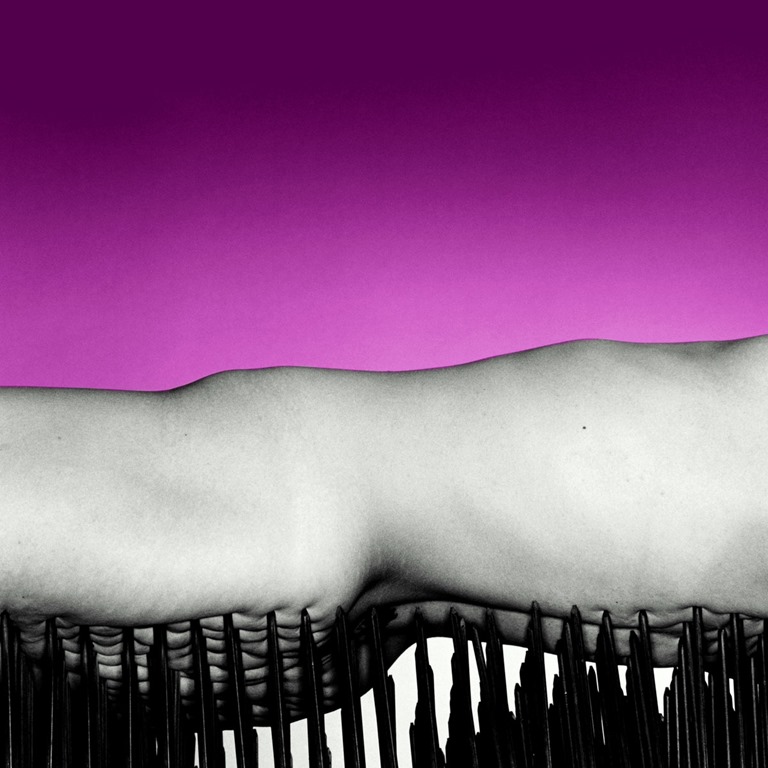
LF17/Edinburgh is Elizabeth Joan Kelly’s response to a set of recordings made in Edinburgh in August of 2021 by Mat Smith, namely Emeka Ogboh ‘Song Of The Union’ installation, Calton Hill (24.08.2021), Princes Street Gardens (24.08.2021), and Car on Calton Road cobblestones (25.08.2021).

The titles are plain, factual, locational, without any sense of the temporal or any indication of connotation, association, or resonance. And this is fitting, since the three compositions – ‘Calton Hill’, ‘Princes Street Gardens’, and ‘Calton Road Cobblestones’ are gentle, electroambient works which speak little of either the time or the place. These pieces are very much responses to the recordings themselves, rather than their location. Based in New Orleans, and purveyor of ‘post-apocalyptic junkyard drone pop’, Kelly has brought her own perspective to the source materials. Of course, this is precisely the spirit of the project – to see how each artist interacts with the material to forge something new, and the fact that each artist will have a completely different approach is what makes this so interesting. Because when given material and parameters, however much freedom an artist has, those parameters will also have a bearing on the output alongside the variables of the input itself and the artist’s methodologies.

In Elizabeth Joan Kelly’s hands, the sounds of a vibrant city are rendered, smoothed, with cross-hatching, delicate shading, some light smudging, a soft blending, by which everything clamorous is faded out to leave a slow hazing. There is, ultimately, no sense of Edinburgh itself here, and we find ourselves adrift, drifting on slow tides of sound with no connection to time or space. It’s not an unpleasant experience, by any means.

LF17/Edinburgh couldn’t be further removed stylistically from Ergo Phizmiz’s release, The Tin Drummer Has Collapsed, which came out only the week before. Where there was collaging, there is blending, mixing, reshaping, and where there was noise, there is calm. Neither release is in any way ‘better’ than the other – just different. And these differences are to be embraced.

AA

a2155768596_10

23rd February 2024

Christopher Nosnibor

On the Ropes started out in 2012, but called it a day with a farewell show in November 2019. Not a bad run for any band, but especially not for a ‘local’ band with dayjob commitments and all the rest. Being in a band, and maintaining it, is hard work – really hard work, especially in recent years. Even pre-COVID, unless you’re filling O2 arenas and selling fucktonnes of albums and merch, sustaining a band as anything more than a hobby was a challenge, and as such beyond the reach of most working-class people who can’t afford luxuries like guitars or amps. In the early days of punk, anyone could pick up a guitar, learn three chords, and for a band. Those days are gone: even if you can afford a guitar and learn three chords, where are you going to play? The industry is fucked – at least for all but the major labels, and acts who score deals without even playing enough gigs to build a following before being scooped up and being handed major support tours and slots at Glastonbury before the debut single even hits Spotify.

I know I’ve been sniffy – to say the least – about pop-punk. I’ve been sniffy about a lot, and I make no apology for it. As a critic, as much as I try on the one hand to be as objective as possible, I also am of the fundamental view that music is personal, subjective. Music that demonstrates more technical proficiency certainly isn’t superior because of it. But, as I say, I’ve been pretty down on punk-pop. But I’ve always said that there are two kinds of music – good, and bad, and maintained the position that there are great songs, even great bands, within every genre, even emo, nu-metal, and ska-punk. Well, maybe not ska-punk. There’s always a bridge too far somewhere.

Anyway, a full nine years on from their last proper release (discounting a cover of The Spice Girls’ ‘2 Become 1’ at Christmas, following a return to live shows last year, On the Ropes have reconvened for a new self-titled EP, with seven songs which stand some way above your identikit punk-pop template stuff, and I suppose it’s the sameness – and the endless buoyancy – of so much of the genre that grinds my gears. There’s a melancholy, a wistfulness, that pervades even the most upbeat songs on offer here, and while the vocals are super-clean and super-melodic – the pop, you might say, the guitars are beefy and up in the mix and the drumming is fast and hard, very much placing the emphasis on the punk element.

‘Deserter’ kicks off with a blast of energy and some well-timed minor chords which create a dynamic twist and an emotionally-rich – and yes, I suppose emo – edge. This is very much the characteristic form of their songs. And it works. This isn’t dumb, cheesy pop-punk, and nor is it self-pitying, whiny emo: it’s emo gone grown up, reflective, and exploring themes of love and loss, but letting it all out, and the songs are both punchy and catchy thanks to the contrast between the instruments and the vocals.

The slower, sadder, introspective ‘West Coast Living’ is certainly more Placebo than Panic! At the Disco, while ‘Broken Shutter’ packs a delicate verse with an explosive chorus and manages to be aching and epic and achieves it all in two-and-a-half minutes. ‘Saturnine’ has a Twin Atlantic vibe to it, and while it’s perhaps not the strongest song of the set, it’s hard to deny the quality of the songwriting, or the fact that this EP feels like the work of a much, much bigger band.

Local fans are going to relish this return, for sure – and given the quality on offer here, maybe they’ll actually become the much bigger band.

AA

OTR

1st December 2023

Christopher Nosnibor

My introduction to West Wickhams was the day their debut single ‘He’s Acquired a New Face’ crashed my inbox in the Autumn of 2019. Something about it absolutely gripped me. Something about it was strange and different. And of course, it’s no longer available anywhere. But it was the only thing they had out at the time, and for various reasons, I didn’t get wind of subsequent releases, the first of which arrived almost a year later, and now it turns out I’ve got some catching up to do, as it turns out they’ve knocked out not one, but two five-track EPs since June 2022. But first, Vivre Sa Vie. A nine track EP!!!

Admittedly, when most of the tracks are around two to two-and-a-half minutes in length, it’s definitely got an EP running time, and would easily fit on a 10” record, but still.

It’s a joy to discover that while the songwriting has evolved and expanded, they’re still magnificently idiosyncratic, and still revel in every layer of echo and reverb going. ‘I am Sparkling Cyanide’ is a mid-tempo shimmery tune that’s almost poppy, bringing together early 80s synth pop with a dash of The Jesus and Mary Chain, all spun through a shoegaze filter. But ‘The Maddening Crowd’ is a piston-pumping blast of fucked-up psychedelic surf rock with an agitated bassline and relentless cheapy drum machine creating a rigid spine, over which even cheaper synth notes tinkle and twinkle.

With its nagging bassline and monotonous programmed beat ‘Carla Suspiria’ plunges into haunting early 80s goth territory, its heavy atmospherics reminiscent of early Danse Society. The vocals – like the guitar – are almost lost in a cavernous reverb. The atmosphere gets darker still on ‘I’m Spinning I’m Spinning’: the fat bass sound is pure Cure and listening to it feels like floating in space – detached, disorientated, out of body.

‘At the Cinema’ transforms the mundane into a heightened emotional experience, channelling Joy Division all the way, even down to the sounds of breaking glass.

The large number of tracks is by no means an indication that they’ve just bunged everything on there just because they’ve got it: Vivre Sa Vie is quality all the way, and they’ve utilised the space afforded by the longer format to structure the sequence in a way that feels like there’s a flow and a certain linearity, punctuating the really bleak gloomers with the poppier efforts.

The final track, ‘Damned Defiant!’ crashes in on a barrage of beefy percussion countered by chiming synths, and it’s a total assimilation of The Cure’s catalogue, and it’s rendered so magically, and in the space of two minutes and nine seconds that it can only be described as doomy goth-pop perfection.

AA

a2127070247_10

15th December 2023

Christopher Nosnibor

It’s quite refreshing to find an EP with only three tracks. At the risk of coming on like a nostalgia sap, it takes me back to the late 80s and early 90s, when I first got into music and buying records, when 7” EPs would often contain three tracks. There was something tidy about the format. Then again, a lot of 80s releases would feature two tracks on the 7” and add an additional B-side to the 12”, which was also pretty tidy – before the days of extended remixes and CD EPs which would tediously pack out the space with multiple versions of the single, none of which were often worth the bother, but of course, collectors would feel compelled to buy all of the different formats and the single would achieve a higher chart placing thanks to cynical marketing.

The Supplements, from Fort Lauderdale, describe their sound as ‘moody post-punk meets riff-lead indie rock’, and while post-punk is my thing, it’s the indieness that draws me to this release, and nit only on account of the EP format and the fact the lead track is a mere 2:44, with the longest song being not much over three minutes.

While my loathing of Morrissey and a general sense of ‘outgrowing’ The Smiths in recent years may have eclipsed my one-massive love for the band, there’s no denying that they were the absolute kings of the perfectly succinct single, and there’s clearly an element of that tight songwriting in the zero-fat brevity on the songs The Supplements serve up here.

But another aspect of the band’s sound which is utterly compelling is that darker post-punk element, which is pure Interpol. Now, after hearing all the raving about Interpol being the new Joy Division, I was sorely disappointed the day I picked up their first two albums. But once I had come to terms with the fact that the critics were just wrong in their reviews, I came to love those albums, and the ones which followed (apart from the last one, which is toss). And it’s that dark but jangly thing – think ‘Say Hello to the Angels’, with the kind of descending runs which can be found on ‘Slow Hands’ – which The Supplements do so well.

‘Another Day’, the lead track, boasts a driving bass, and Ted O’Connell’s vocals are pitched around the baritone of Paul Banks’. ‘I Can’t Have Everything’ is defined by a choppy guitar underpinned by a chunky bass groove, and the last few bars seem to lean heavily on the intro to ‘Slow Hands’. ‘Different Light’ – nothing to do with The Bangles – again brings some nagging guitars reminiscent of the intro to ‘Roland’ and the mid-section of ‘The New’ and a strong rhythm section, where a strolling bass holds tight against some urgent drumming. With Moving On, The Supplements deserve to be moving up too, because this is pure quality.

AA

a0154580951_10

Lake of Confidence – 15th December 2023

Christopher Nosnibor

Having worked for far too many years in financial services in order to pay the bills, ‘terms and conditions’ is a term that weighs heavily on my soul and my psyche. All that small print… the devil is in the details, and there’s a good reason customers often feel swindled by the inclusion of impenetrable clauses written in language which only someone with an advanced degree in legalese could even begin to decipher. The title, then, brings fitting connotations to a complex and detailed work, although, mercifully, it’s more rewarding than frustrating and doesn’t leave you feeling bamboozled and shafted over.

Label Lake of Confidence – which sounds like it’s on the moon – informs us that ØrsØ’s debut EP ‘is a reflection on our civilization, offering a gripping critique of consumable culture and post-social network alienation.’ They also describe his style as a fusion of ‘experimental music, indietronica, dark wave and English-speaking pop’, and ‘English-speaking’ is right: ‘Unreal Moment’ has the nagging industrial-strength electro pulse of DAF paired with the electro pop layering of early Pet Shop Boys, topped with a vocal delivery that alludes to the monotone nonchalance of The Flying Lizards.

ØrsØ’s brilliance lies in his ability to amalgamate such a range of elements while still keeping the compositions relatively simple, structurally and in terms of things happening at any given time. These songs – and they very much are songs, even if conventional hooks and choruses aren’t dominant features – are clever and carefully constructed. ‘Dancing Girl’ has something of a recent Sparks vibe about it, while he channels shades of Bowie in the vocals, and this is accentuated on ‘To Yourself’, which could be an outtake from Outside.

The EP’s five tracks showcase the work of an artist who possesses a high level of musical articulacy, matched by a high level of experimental curiosity. There isn’t a weak track here, and significantly, no two tracks are particularly alike: the last of the five, ‘Follow the Wind’ brings a more overtly dance feel, with a pumping bass beat and rippling, trancey synths, but at the same time, there are hints of The Human League and Visage in the mix.

In an ocean – not a lake – of retro-tinged, vaguely dark-hued synthy pop, ØrsØ’s ‘Terms and Conditions’ stands out as being more detailed, more nuanced, and more inventive in its assimilation of wide-ranging elements – and the results are accomplished.

12th December 2023

Christopher Nosnibor

German electro duo ALTR∞ seem like a pretty chipper pair, pronouncing the arrival of their second EP with the theatrical, Shakespeare-referencing proclamation ‘The world is not a stage, it’s a dancefloor: welcome to the Cosmic dancefloor of Eternity!’

They go on to explain how the ‘INFINITE’ EP is a celebration of the complexity and the beauty of life and the connection that binds us all! The broad spectrum of music influences, woven into the EP’s music tapestry, symbolises the infinite flow of ideas and references that shape and drive the Collective Consciousness. We hope that these songs will make you feel free: dancing and releasing all worries and troubles! We wanted to try new things, while exploring a more dancefloor-oriented sound, while still sticking to our own style. The energy was there and the rest just happened as usual – immersing in the magic of the studio and channelling our feelings!’

The EP’s four tracks span just over eighteen minutes, and while they are certainly very rhythmically-orientated, in terms of commercial dance, they’re not what anyone would call bangin’ dance choonz – not even your dad or your grandad. Sonically, Infinite sits somewhere in the middle ground between the minimal techno favoured by Gilles Peterson on his 6 Music show, and the kind of stuff I find modular synth fanatics noodling out at the Electronic Music Open Mic nights we have around the country.

‘I Saw the Future’ is, ironically, a squelchy analogue workout that’s decidedly retro, and the sparse vocals are more 90s dance track dub remix than avant-garde futurism. The vocal snippets add layers or mystique and esotericism, ‘Hurricane’ brings more urgent beats, clattering hand drums rattling over a thudding bass drum and pulsating groove, with weaving synths conjuring an expansive and trace-like atmosphere. The last track, ‘Infinite Mind’ pulses away in an inwardly-focused way.

This isn’t music that will send you wild or dance yourself into a frenzy, but will instead likely catapult you into inner space, and inspect your own psychological circuitry – in a most pleasant way. It kinda sounds like the cover looks.

AA

a0263571887_10

1st December 2023

Christopher Nosnibor

New York’s Panik Flower, purveyors of shoegaze / super washed-out guitar indie rock released their debut single ‘Pretty Face’ in September 2022, and promise ‘dream pop with an understated heaviness. The result is a unique soundscape of soft harmonies, hard-hitting instrumentals and cutting lyricism that evokes the hazy nostalgia of distant memories – ones of love, loss and identity.’

Watching the video to single cut ‘Playground’, which features four of the bandmembers – presumably because it was shot before the current lineup coalesced – pulls a chord of sadness in my chest. It depicts an afternoon spent at a fair, emanating youthful carefree fun, the likes of which is never appreciated at the time, but only ever in hindsight. However aware of the finite nature of youth, there’s a period where it feels that your life lies ahead of you, and every day is a new day. And then, suddenly, it isn’t, and you’re clawing through life a day at a time, strangled by the suffocating sensation that every day that passes is a day lost.

As a jaded, downbeat, saddened old bastard facing decline, I can’t help but be envious of Panik Flower. My youth doesn’t seem so far away until I realize that the bands they remind me of, and the bands from who they draw influence, date from the 90s. The 90s feels like maybe a decade ago: the idea that 1993 was 30 years is both depressing and terrifying. But Dark Blue brings a flighty balance of joy and melancholy.

And so it is that ‘Charades’ brings wistful indie vibes and some bold wells of guitar which grow and grow into crashing waves by the song’s finale. The title track is a solid FX-heavy indie tune with evocative vocals which bear a folksy edge reminiscent of All About Eve’s Julianne Reagan.

The aforementioned ‘Playground’ brings a heavy melancholy and an ache to the chest with its chiming guitars and panging vocal melody, as well as a sturdy chorus. Things get both poppier and also heavier in the choppy, chuggy final track ‘Dilute Me’, which brings big guitars and Garbage vibes and attitude to wrap up a solid EP that packs great songs back to back.

AA

a1899405276_10

1st December 2023

Christopher Nosnibor

The latest offering from Mark Beazley’s Rothko follows 2022’s Let Space Speak EP, and standalone single ‘Summer In October, Winter In July’, which was an uncommonly loud and abrasive work by his usual standards, although, in context, it made sense, as he wrote, ‘Things have been blurred, uncertain, scary…here’s to certainty soon’, adding ‘I got my brain scan results today, they all came back showing nothing untoward. Good news on a personal level after such uncertainty, but close friends of mine have not had such positive news this year. This is for all of us.’

It would be a stretch to say I found solace in those words following the loss of my wife at the beginning of the year, but having found grief to be an extremely isolating experience, even with the support of friends, it helps in some small way to realise that you’re not the only one dealing with extreme personal difficulty. It’s easy to go through life feeling somewhat blasé, shrugging ‘hey, what’s the worst that can happen?’ But when confronted with the stark realisation of ‘the worst’, your mindset changes. And after the worst has happened, what then?

The five compositions on Bury My Heart In The Mountains take their titles from the names of peaks in the Swiss Alps, and capture the brooding beauty of these spectacular summits. Mountains possess a powerful magnetism: simultaneously alluring and foreboding, they can mean so much to so many. It would be misguided of me to even begin to attempt to comprehend or to make assumptions about Beazley’s own relationship with these impressive peaks – I can only know my own relationship with those I have climbed or otherwise stood in awe of, here in the UK, particularly the Lake District, a curious blend of exhilaration and tranquillity, joy and fear. Because the mountains may provide the perfect escape, the ultimate experience of life-affirming freedom, but you can never treat them with too much respect, and while they may in themselves be immutable, they’re prone to rapid change when it comes to conditions, and each mountain has its own character of sorts – and this is something which the six pieces on Bury My Heart In The Mountains conveys in the most nuanced of fashions.

The first track, ‘Monte San Giorgio’ extends beyond eleven minutes in duration and brings together all of the different expressions of terrain and the associated emotions, marking the start of an exploratory adventure that’s contemplative and largely calm, but not without peaks and troughs and moments of mounting drama.

Field sounds create a thick atmosphere at the start of ‘Monte San Salvatore’, with cooing and gurgling, and extraneous sounds, before delicate picked guitar notes drift off into the crisp, clear air, while it’s Beazley’s bass which dominates the grumbling yet expansive ‘Säntis’. A chill wind blows on the arrival of ‘Monte Tamaro’, before drifting into a brittle, cold conglomeration of chimes and drones. The final track, ‘Monte Bre’ is but a brief outro, all of the elements of the preceding compositions compressed into a minute and a half, bringing calm and tension simultaneously. It’s unexpected, sending ripples of disquiet through the stilling waters left in the wake of the slow ebbing of ‘Monte Tamaro’ moments before. One suspects that this brief judder is intentionally placed, and leaves the atmosphere that bit less smooth and soothed than before, a reminder that it doesn’t do to become complacent or too comfortable or settled, because life is full of surprises, and you never know what’s around the corner.