Posts Tagged ‘electronics’

Me Lost Me – the project of Newcastle-based artist Jayne Dent – delights in experimenting with songwriting, creating a beguiling mix of soaring vocals and atmospheric electronics that playfully push the boundaries of genre. She ‘s now shared ‘Ancient Summer’, taken from This Material Moment (out 27th June via Upset the Rhythm), which she describes as “emotionally raw”, and deems it her most honest and vulnerable album yet.

About "Ancient Summer", Jayne comments that "This was the first song I wrote for the album and the first time I’d made a mesostic poem. Taking words from a tourism leaflet for Pont du Gard, a Roman Aqueduct and art museum near Nimes, France, I wrote this song that’s got so much wonderfully hyperbolic and excited language. It reflects quite well how I felt at the time of visiting, I was so moved to be swimming in a river in this beautiful valley under an ancient monument. It’s a song that comes from suddenly noticing your place in time and space, that feeling of being in communion with a past and a future, of being a part of something bigger than yourself. Visiting historical sites is one of my favourite things, and this is a bit of a love letter to the places that I’ve been lucky to visit over the years."

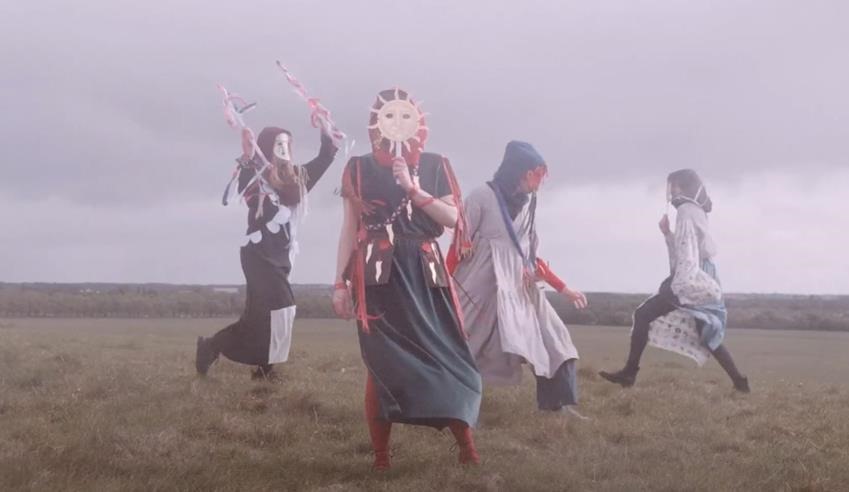
“The music video,” she says, “is a kind of nod to ancient Roman Spring/Summer festivals and the English folk traditions I grew up with, like May Day celebrations, Morris dancing and well dressings. In summer 2024 I worked on some music for a dance project with some incredible performers including Lizzie Klotz, Rosa Postlethwaite and Alys North, which was on the theme Abundance. The process was really beautiful, and I knew I wanted to work with them on this video because it had a similar theme and feeling, plus I knew I could trust them to throw themselves into whatever daft thing I suggested we do! Videographer Amelia Read joined us on Newcastle’s Town Moor to film us dancing and playing games, it was very collaborative and intuitive which was perfect, as I wanted the video for this song to be joyful and light (with a hint of folk horror elements going on too of course!)”

AA

snippet2-99079e079e04513c

Photo credit: Amelia Read Photography

Not Applicable – 23rd May 2025

Christopher Nosnibor

For about five minutes, AI looked like it may provide some entertaining diversions in terms of creative potentials. It wasn’t so long ago that it produced glitchy, idiosyncratic writing and wild art that was so wrong it was hilarious, and lame synth-loop electronic music which had neither style nor substance. It didn’t look like the threat to humanity that dystopian sci-fi novels had portrayed.

But then more information began to emerge about how AI was ‘learning’ by essentially stealing from all available sources. AI is the worst plagiarist imaginable, and nothing is safe or sacred. Then there came the reports of the vast amounts of energy, and water, required to power it, and it started to look like AI will doom the planet by sapping its resources instead of going rogue and obliterating humanity. But then…AI evolved, and fast. In no time at all, people stopped having additional limbs and appendages, the writing transitioned beyond repetitious babble, and people have begun to use to AI chat as a substitute for expensive therapy, despite reports of rogue AI advocating suicide… and as its usage accelerates and it morphs into the nightmare of sci-fi dystopia we’d dismissed just a few months ago, so the use of energy and water increases exponentially. One way or another, it does now look very much like AI will finish us.

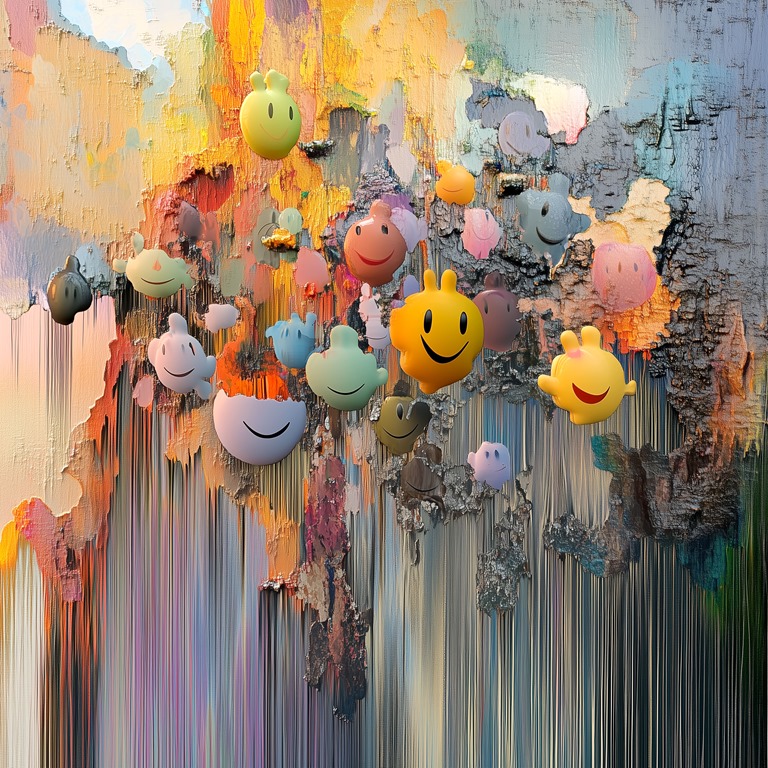
And so there’s a certain discomfort in approaching Put Emojis On My Grave by the spectacularly-monikered Ancient Psychic Triple Hyper Octopus, an album which is sold on the way it ‘boldly explores AI and improvisation on an album of freely improvised, experimental electroacoustic music’.

It features, as the press notes put it, ‘a new lineup of celebrated, British musicians’ (Alex Bonney (trumpet, bass recorder, Strohviol), Will Glaser (drums and percussion) and Isambard Khroustaliov, aka Sam Britton (electronics), and ‘ claims to forges ‘a new musical language’, with an album ‘which eschews traditional musical composition, seeks instead to “adopting the language of AI’s deep learning failures and glitches”, attempts to imagine how AI could make a positive contribution to the creative process’.

It’s hard to know how to really assimilate this. The six compositions which make up Put Emojis On My Grave are fine examples of exploratory jazz, with wandering trumpet tooting in meandering lines across clanking, clattering abstract percussion which sounds like cutlery and wind-chimes being knocked about while bleeps and bubbles interject seemingly at random. It has that avant-jazz, experimental, iprov feel which is in some ways quite familiar in its own strange way. That is to say, while it’s niche, the sonic experience is very much representative of a certain field. A field filled with jackrabbits, apparently.

‘Goats on Helium’ is bubbly, bibbly, scratchy, scrapy, wheezy, groany, a splatter and clatter of sounds piled up and colliding all over, and it gets pretty messy over its six and a half minutes. Warping drones and scratching, gargling abstract drones twist around deranged brass tootlings and crashing cymbals on ‘The Adiabatic Flux Differentials of the Id’, and I would challenge anyone to find a title that’s posier, more wankily intellectual than that this year. And while it’s a bit jazz-jizz in places, it’s certainly better than the title suggests.

This is, in my opinion, a fair summary of the album, a work which is concerned with space and time – not outer space, but inner space, the space which our minds explore in reflection like the clatter of 1,000,000 bongos, the space – or distance – between concept and execution, and virtual space, those our other selves occupy, both in the moment and, subsequently, leaving echoes and traces in infinite corners of the virtual world. It’s impossible to discern where the musicianship cedes to AI intervention here, which is certainly in its favour – and if Put Emojis On My Grave is used to train generative AI, then it could confuse it for a while, making for some interesting results. And Put Emojis On My Grave is certainly interesting.

AA

Ancient Psychic Triple Hyper Octopus – Put Emojis On My Grave cover 4000px

Unsounds – 24th May 2024

Christopher Nosnibor

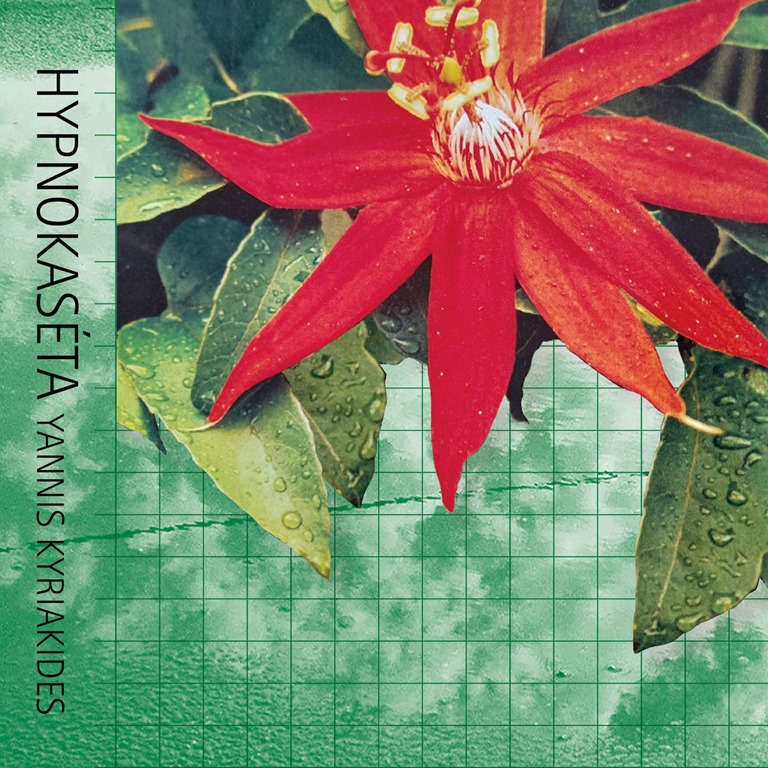
When it comes to being a music writer, for me, at least, perhaps even more of a buzz than getting advance listens of the most eagerly-anticipated releases is being exposed to music I otherwise wouldn’t have. And the nature of the avant-garde means that you have to be in the know to know. Being introduced to the Unsounds label and the work of Yannis Kyriakides certainly opened my eyes – and more so my ears – to a whole expanse of music I assumed must exist, but would have had no obvious means of locating or accessing while going about my ordinary life before.

Although I’ve only dipped in and out of Yannis Kyriakides’ output, more as one with a casual interest than a fan per se, his work has never ceased to impress with its range and constant questing for something different, something new, both sonically and methodologically and “Hypnokaséta (2020-2021) is no exception.

Kyriakides’ introductory notes explain both the concept and the practice behind the recording of the album: “Hypnokaséta (2020-2021) is a continuous set of 16 pieces for string quartet, improviser (playing cassettes and any instrument) and live electronics. The source material is based on dreams that I had during the first few months of lockdown, April-June 2020. Accounts of these dreams are encoded in the music that is played by the quartet and also encrypted in the sound textures that surround this.

“The pieces alternate between quartet as the foreground and electronic interludes, where solos or duos underpin the soundscape. The title of the piece (Greek for ‘sleep-cassette’) refers to a theory of dreams proposed by Daniel Dennett, that says that dreams are loaded into consciousness like a cassette tape during the night and played just before waking.”

It’s longtime collaborator Andy Moor who provides the guitar and tape work on these recordings, and together with Kyriakides’ electronics, which move between shuddering skitters and unsettling scratchiness and quite abstract sounds, when juxtaposed with the strings – which span playful to mournful to droning discord.

The sixteen pieces have been mastered as six separate tracks, but they flow as one immense composition in a continuous state of transition. Within each of the six numbered tracks, the individual segued pieces bear titles, with their time markers also noted. The titles present, if not strictly a narrative, then a guide to the theme, the idea, the inspiration.

‘Hypnokaséta I’ comprises ‘The government’s new cultural scheme’, ‘All roads to the airport are blocked’, and ‘Everyone is nervous, everyone is lost’, titles which serve to encapsulate the events and the sensations they engendered within the populace at the strangeness and uncertainty of lockdown.

‘Hypnokaséta III’ is a stunning work of contrasts, containing as it does the gentle, almost light-spirited string-led ‘The reluctant hotel manager’ and the dramatic, jarring ‘She lifts the mountain’, a dark, alien drone brimming with electronic tension that crackles and tweets. The rapid switches in mood and form recall the sudden and wild extremes I experienced myself during this time: it was impossible to keep up with the constant stream of developments in the news, while at the same time entrapped within the confines of the house, where the world outside felt so very far away, while also having to accommodate the changeable and diverse headspaces of friends, family, and colleagues. No-one knew what the fuck was going on, or how to cope.

There was an air of unreality about it all, and at times it became difficult to distinguish between the bewildering nightmarish reality of the wakeful hours and bewildering nightmarish sleep, and in drawing on dreams in the creation of Hypnokaséta (2020-2021), Kyriakides captures the essence of that abstract space forged in the mind where everything blurs. This blurring and abstraction is also reflected in the titles: ‘The concert promoter complains that not much happens in the piece’ sounds like something that could happen in one of those self-reflective semi-anxiety dreams, and ‘Bridges are being dismantled

across the city’ has an apocalyptic sense of separation, while ‘Body swap opera’, ‘Swimming pool synthesis’, and ‘Mutations on an empty grid’ are altogether more surreal in their connotations.

Throughout the album, the lister is jolted from a moment of tranquil reverie by some abrasive thud or rasp, an unexpected spike in volume, and a turn towards an altogether more disquieting atmosphere.

The composition is nuanced, the placing of the switches and transitions perfectly timed to achieve optimal impact, never allowing the listener to truly settle, to relax, to sit back and enjoy, and the moments of tension are indeed tense; but credit must also go to the performers: the strings are played with a keen awareness of the importance of both dynamics and detail, and Moor, in his capacity of ‘improviser’ brings texture and tone delivered with an infallible intuition. The album’s structures may be subtle, almost invisible, but they’re affecting, and as a whole, Hypnokaséta (2020-2021) is an experience which permeates the psyche in unexpected ways.

AA

a2874939530_10

Following on from our effervescent review of All Are to Return’s monumentally brutal harsh assault in the form of their new album III, we’re inordinately proud to present a video exclusive of the track ‘Archive of the Sky’.

As the duo’s bio sets out, this is bleak music born of bleak times:

‘We have entered a new age of extinction – of poisoned lands, habitat destruction and encompassing climate catastrophe. AATR III reflects the harshness of life laid bare to the vagaries of capital, of uncaring generations heaping misery on their successors and the life-forms with which they share a fragile biosphere… Manmade disasters borne from decades of unfettered greed, of carbon capital plundering the earth and choking its habitants – capital unleashed through self-interested short-sightedness, decades of
corruption and denial of clear fact.

‘Our habitats swallowed by rising seas, engulfed in flames. As we drown, burn, or slowly parch and wither, we remember. Oceans heat and corals die as pale sludge in bright blue waters – thousands of years of unfathomable complexity undone in decades. Forests burn and ancient trees that were young when the pharaohs build their monuments perish in the flames. Poisons have spread through all ecosystems. The product of profit-maximizing agriculture at war with life. As insects disappear they signal extinction on a massive scale.

‘What is lost, is lost forever.

‘We will remember you through your shattered bones, your battered skulls turned fossil. We will remember you through your plastic deposits, your carbon waste, your radio-active poisons still leaking into our bodies. We will remember your bright and brief existence – and the inevitability of your demise.’

Dark times call for dark music, and All Are to Return bring it.

We are proud to present the apex of bleak in the form of ‘Archive of the Sky’. It hurts and we love it. Watch it here:

AA

AATR III Promo photo © Dejavie

Pic: Dejavie

Dret Skivor – 2nd February 2024

Christopher Nosnibor

Nostalgia sucks. On so many levels, nostalgia sucks. It’s something which looms a longer, darker shadow over life with ever years that passes, as every memory recedes further into the past until eventually it tips over the horizon, beyond sight, to a distance whereby its very happening takes on a dream-like quality and you begin to question if the even was real or imaginary, a myth which has grown from the creeping spores of hazy recollection.

I was probably ahead of the curve when I began feeling pangs of nostalgia on moving to secondary school in 1987. Nostalgia wasn’t big business then, and didn’t even strike me as something that so many people felt deep pangs of back then, although perhaps shows like The Golden Oldie Picture Show which I would often watch with my parents after coming home from Cubs should have given me a clue as to how adults mire themselves in their past. It was on reaching my thirties when I began to separate from my peers who constantly bemoaned the state of music, now there was no good new music, how it had all turned to shit since they left school.

Today, I took myself for a quiet pint, only to find myself eavesdropping inadvertently on a couple of old bastards complaining how there’s no proper music anymore, how it’s all 70s and 80s bands which headline Glastonbury and it’s all rap like 10-bit and one began spouting on how he saw Dave Grohl’s band, Metallica, on TV and wasn’t into it. Then they raved about Pink Floyd and The Eagles and now awesome they are, and how their songs are ‘minutes, minutes long… And then there’s a guitar solo. And Dire Straits… and how Blondie’s career ended with Parallel Lines, but they did this comeback song, like Duran Duran. I wished I was deaf, and congratulated myself for not being so painfully moored to the past – or so ill-informed.

But for all of this, I feel a pang of sadness on the arrival of a new Legion of Swine release. I miss Dave Procter’s presence in the UK for a start, surely one of Brexit’s biggest losses, at least on the underground music scene. I miss his crazy noise shows, particularly back when he would don a latex pig’s head and lab coat to crank out harsh noise. I have a particularly fond memory of our two collaborations, but especially the room-clearing effort where I yelled like a maniac as he ambulated the venue with a portable speaker emitting screeds of feedback in the middle of the afternoon.

Beyond this particularly personal context, of course, the latest offering from Legion of Swine is by no means a nostalgic work, although it does explore wibbly analogue synth and lasery sounds which hark back to the early 80s, when primitive synths were becoming widely available. But then, it equally passes nods to early Tangerine Dream, and to the bubbling pink noise and synthy waves of Throbbing Gristle early Whitehouse. But, on balance, the listening experience alone does not evoke nostalgia. What the hovering hums do evoke is a sense of awkwardness, if difficulty.

Legion of Swine’s output has never been about commercial success, but noise for the sake of simply making. Art as it should be. It it’s for the benefit of Legion of Swine first and foremost, for whom it’s entertainment. It’s for the benefit of an audience as a secondary concern, and the number of people who are likely to be entertained by this is few. But it’s a storming album, which really explores tones and texture. Consisting of a tow longform tracks each with a running time around twenty minutes, it’s an evolutionary piece, and within each continuous composition, the various segments flow from one to the next.

It reminds us of the fundamental difference between albums made up of ‘songs’ and shorter pieces and longform works, in that the former can contain ideas and concepts in a compartmentalised way, with no necessary correspondence between them, while the latter is a journey, and requires an altogether different level of focus and concentration in order for it to work as such. Gloopy alien soundscapes and long, low, ominous drones are rent with laser blasts and trickling ominous electronics worthy of some vintage sci-fi works, and ‘jag hör röster’ is a lot less overtly noise-orientated than previous Legion of Swine releases and live outings, sitting very much within the domain of dark ambience rather than abrasive noise. But it’s well-executed and with occasional blasts of overloading, needles-into-the-red distorting drone, it’s not as mellow as all that, with skronking feedback and earwax-vibrating buzzing and an array of organ-vibrating oscillations pouring their way into your ears. ‘hör du röster?’ is absolutely head-melting thick, buzzing noise abrasion all the way, a monstrous wall of distorted drone amped up to the absolute max, with surging, sloshing swells of dense analogue noise, and a relentless barrage at that.

Uncomfortable as always, under ytan ligger nåt is one hell of a racket. All hail the Swine!

AA

a3325660179_10

The Helen Scarsdale Agency – 8th December 2023

Christopher Nosnibor

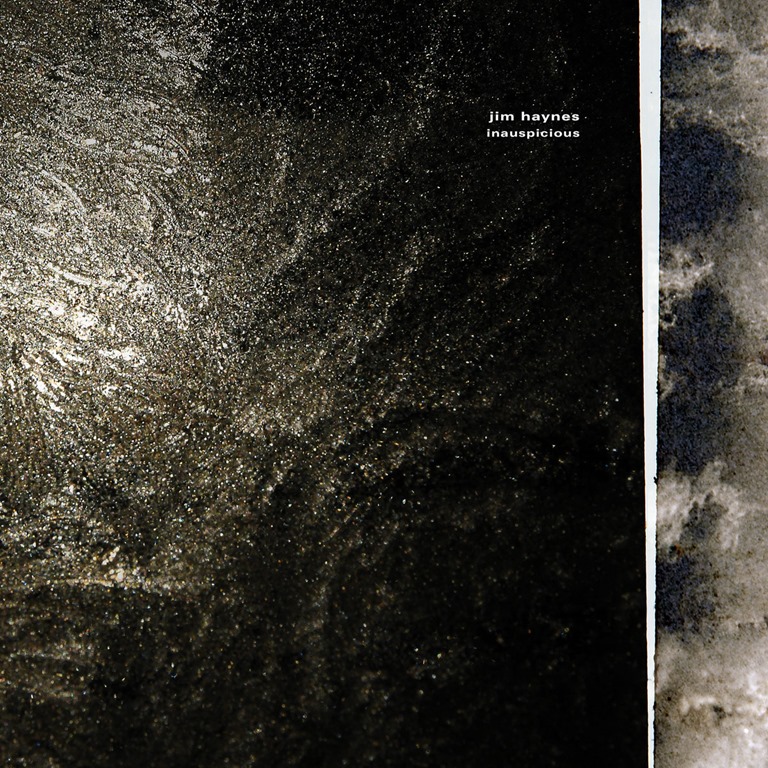
It’s often difficult to keep up with artists’ outputs, especially the super-prolific ones. Jim Haynes not quite make the super-prolific category, but having first written on his work with a review of The Decline Effect back in 2011, I’ve covered three albums between 2017 and 2021 alone. I tend to take a particular interest in albums released through The Helen Scarsdale Agency, which despite sounding rather prim and literary, is a label which has a particular knack for platforming music of an experimental and often difficult and noisy nature.

Haynes’ work has become progressively harsh over time, and the press release for Inauspicious notes that this has been particularly true post-pandemic, while acknowledging the cliché that the pandemic marked a pivotal point for many musicians. Crucially, it notes that ‘The tools for Haynes’ work remain limited: motors, electronics, shortwave radio, found objects, all applied with considerable pressure. Compositionally, Inauspicious is a very rough moire pattern from overlapping elliptical structures that can negate and obfuscate just as easily as they can compound and aggregate. The album surges and collapses upon the two twenty minute chunks of controlled noise that follow an internal logic that snakes from brooding power drones, spectral radio transmission, and an aktionist demolition cast upon metal, glass, and unfortunate wooden objects. Rupture and release. Purge and pulse.’

As such, while the output, and the dynamic may be different, Haynes’ fundamentals remain unchanged, and this matters, in that it demonstrates that more often than not, the end product is not so much dependent on the input and the raw materials, but their application and the process.

Inauspicious features just two compositions, ‘Variant, Number Fourteen’ and ‘Variant, Number Fifteen’, which each run to precisely twenty minutes apiece. It’s a work that’s seemingly designed for a vinyl release, with each piece occupying a side of the LP, and I daresay that the dank ambient rumblings have their greatest impact when rolling from the grooves of a thick chunk of vinyl. Still, it works digitally when played through some decent speakers which afford air to the album’s slow, granular churnings. It’s not that fat into ‘Variant, Number Fourteen’ that it’s built to a brain-shredding blast of drilling noise. Beneath the ear-destroying mesh of treble and shredding abrasion, there are swells and surges of lower-end noise. It’s easy to overlook the slight details in the face of such a wall of abrasion, but it matters. While Haynes is bringing a relentless assault, it’s important to pause by the details, and Inauspicious is abrim with them, although ‘Variant, Number Fourteen’ spins into a restless ancient howl in its final minutes and tapers into a dank rumbling that brings a heavy tension.

‘Variant, Number Fifteen’ brings more of the same: heavy drone, grainy texture, harsh noise, spluttering and droning,  a deep sense of ominous foreboding, only with lower, deeper, more resonant bass, the tone of which drags on the lower abdomen among the swishes and swirls. And then grating mid-range abrasion. It’s hard to know how to react to this truly painful grind. By turns, I feel as if I need to defecate and vomit, although in the end I do neither as I simply clench my stomach during passages of this dark mess.

This is an album that brings noise and it brings pain. It’s a relentless grind and growl, and not for the first time, Jim Haynes has tapped into a sense of awkwardness which really grates and grinds.

AA

a3232720135_10

zeitkratzer productions / Karlrecords – 22nd September 2023

Christopher Nosnibor

SCARLATTI represents something of a departure for zeitkratzer, the neoclassical collective headed by Reinhold Friedl, master of the prepared piano and a renowned avant-garde composer in his own right. While their performance and recordings usually focus on modern composers and avant-gardists spanning Stockhausen and John Cage via Whitehouse and Lou Reed, with a reinterpretation of Metal Machine Music, here they turn their attention to the altogether more historical figure of Domenico Scarlatti (1685-1757). He is best known – although this is relative – for composing some five hundred and fifty-five keyboard sonatas, and his being a progenitor of classical music. But a large portion of his work went unpublished in huis lifetime, and much has only been available sporadically since.

As the notes which accompany the album explain, ‘Little is known about Domenico Scarlatti… His music is, so to speak, left to its own devices: free, cheeky, playful, sonorous, surprising… Harmonically strolling again and again into unforeseen regions, the ear leads, not the theory; and also the fingers get their right: playful and haptic it goes. Scarlatti explained, “since nature has given me ten fingers and my instrument provides employment for all, I see no reason why I should not use all ten of them.”

But Scarlatti does not contain music by Scarlatti. Instead, the six tracks presented here are all composed by Friedl in response to Scarlatti’s work.

As such, this is much a celebration of Scarlatti’s ideas and approach to composition and so the explanation of the process and thinking behind it bears quoting: ‘Freedom, friction and listening pleasure instead of convention: “He knew quite well that he had disregarded all the rules of composition in his piano pieces, but asked whether his deviation from the rules offended the ear? He believes there is almost no other rule than that of not offending the only sense whose object is music – the ear.”

‘Reinhold Friedl applied this principle and composed the music for a choreography by dance company Rubato. Dance music drawn from Scarlatti, who was so inspired by dance music. The material of the piano sonata F-minor K.466 is twisted anew in all its richness, shifted back and forth, declined, frozen, noisified, sound structures extracted, floating. Those who know the sonata, will more than smell it’s [sic] shadows.’

The six pieces are indeed varied, in terms of mood and form. ‘lias’ is booming, droning, woozy, slow discordant jazz, low, slow, and with lengthy pauses. It’s not something anyone can dance to, and rather than light and playful, it feels dark and sombre. This is less true of the altogether sparser, but stealthily atmospheric ‘muget’.

‘pissenlit’ blasts in with churning industrial noise, a snarling blast that lurches and thunders, crashes and pounds withy relentless brutality. It’s clearly as far removed from the music of the seventeenth century as is conceivable, but beside the lilting piano and quivering, droning strings and subsequent stop-start levity of ‘reine des prés’ the sequencing of the pieces serves to highlight Scarlatti’s versatility, if not necessarily his predilection for playfulness. The playfulness manifests differently and unexpectedly here: ‘pissenlit’ is in fact the French word for ‘dandelion’, a plant often associated with a certain element of fun, of lightness, so the fact that this piece is three and a half minutes of gut-punching abrasive noise worthy of Prurient or Consumer Electronics is illustrative of the disparity between expectation and actuality.

Discord and discomfort abounds as drones and strings tangle amongst one another, heaving and wheezing and occasionally offering glorious, sun-hued vistas through the breaks in the widely varied forms, which feel elastic, and as if Friedl and co are stretching the fabric of the material to see just how much it will give. And it turns out, there is a fair bit of room. ‘reine des prés’ explores space, the gaps and pauses between the notes, and feels like a sort of musical cat-and-mouse which would equally work as soundtrack piece, but it has a cartoonish quality which means it’s more Tom and Jerry than anything else. But it is by no means flippant, throwaway. Entertainment is serious business, after all.

‘violette des marais’ brings pomp and drama… while the final track, ‘astis’, is skittish, playful but also frustrating in its hesitant, halting structure.

Scarlatti is interesting, entertaining, and bold, going out on a limb to present such an unconventional interpretation of a historical artist’s career. But this is largely the purpose of zeitkratzer: together, they re-present music, excavating the archives but presenting them through a prism of contemporary and avant-gardism, with jazz leanings but without being jazz in the way most would interpret it. In short, zeitkratzer continue to push and redefine musical boundaries, and long may they do so.

AA

a1585066167_10

We’ve been tracking Plan Pony’s progress since the release of ‘Martyr’ back in the summer of 2020. Now, two years on, we’re getting another slice of experimental electroacoustic noise conjured from the array of vintage kit in Plan Pony’s stable in the form of the Creative Writing EP, released on Nim Brut.

Exploring the interplay between electronic sounds (courtesy of an old Korg ER1 drum machine) and acoustic sounds (from a variety of percussion, including a set of African dun duns) with a variety of samples captured on a Boss SP303. Recorded on a Tascam 488mkii cassette multitracker, pushing the levels high and experimenting with mic placement, the ingredients are a recipe for something exciting.

AA

AA

282057970_3167423913498745_2748022126975425973_n

Artwork from a photograph by Takafumi Otsuka.

Industrial band Panic Lift continues the unraveling of its themed EP release cycle with the band’s first release of 2022 titled Stitched.

This four song EP features two new songs titled ‘Every Broken Piece’ and ‘Bitter Cold’ with remixes from Mechanical Vein and Tragic Impulse.

Lyrically, “Every Broken Piece” and “Bitter Cold” continue with the familiar themes of stress, coping, and concerns of self-image. Hardcore Panic Lift fans may remember “Every Broken Piece” from Panic Lift’s lockdown shows in 2020 that were broadcast online during the height of the COVID19 Pandemic.

For Stitched, Panic Lift explores a harsh ebm sound more stylistically similar to their landmark debut record , Witness To Our Collapse. James Francis explains “I’ve always tried to find a happy medium between what I’m doing now, and where I started” he continues “but now that I’m doing smaller releases, I have the ability to experiment with different styles without having to worry much about how they fit with the rest of my catalog.”

Watch ‘Every Broken Piece’  here:

AA

141322

Important Records – IMPREC511 – 29th April 2022

Christopher Nosnibor

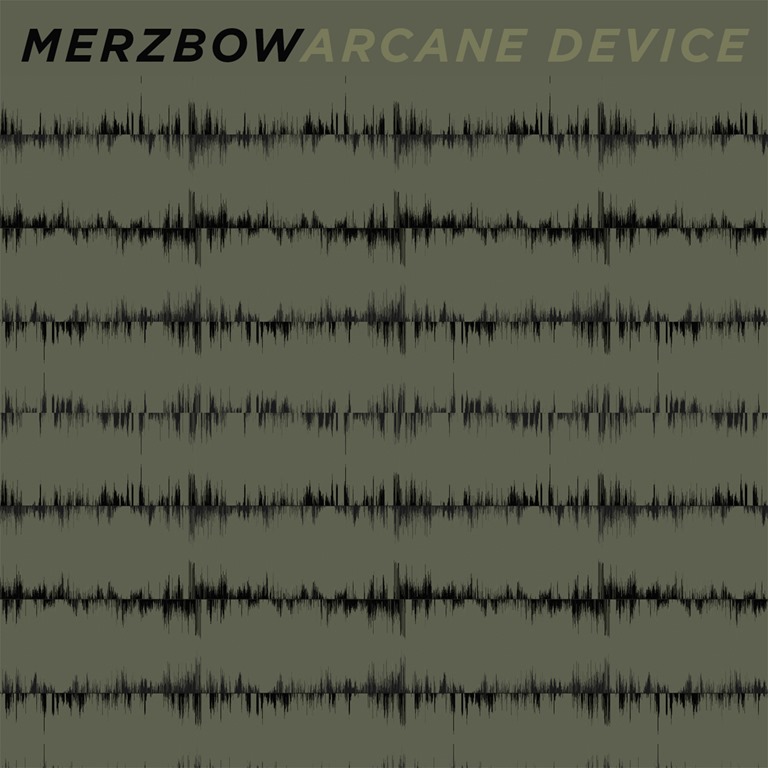
Merzbow releases are rather like proverbial busses, with this collaborative release with Arcane Device being releases simultaneously with a 20th anniversary reissue of his Merzbeat album and a CD reissue of his 1983 album Material Action, all on Important Records. The difference between Merzbow and busses is that you never have to wait long for a Merzbow album.

Merzbow & Arcane Device is a coming together of two very old hands at this experimental / noise stuff. David Lee Myers aka Arcane Device has been building electronics and creating feedback based electronic music since the late 70’s. Merzbow’s career also began at the tail end of the 70s, and the last forty-odd years has witnessed the release of a truly staggering body of work, with as many as twenty or more albums being released in a single year. It’s a daunting, overwhelming output, and the same is true of the music itself. Perhaps more than any other artist, Merzbow has pushed the boundaries of music – and even the boundaries of noise – to the absolute limits, and then continued to push beyond.

The premise of Merzbow & Arcane Device as a split LP is straightforward: each takes a piece by the other and remixes it, each presenting a longform piece correspondent with a side of vinyl.

The two pieces here are very slow, low, and drony, with the EQ geared toward the mid-ranges and lower, rather than harsh walls of treble. ‘Arcane Device Remixes Merzbow’ is particularly dense, murky, and unhurried in pace. Bubbles and pops blister the crinkled surface of churning sods. There are brief, momentary stalls to the crunching earthworks, filled with swarming hornet buzzes and wippling ripples of analogue synth sounds and skimming laser blasts. A Geiger counter crackle is pitched down and slowed to register around the gut and occasional trills of feedback break through the swampy soup. But for the most part, it’s half an hour of thick, wind-blown drone.

Merzbow’s treatment of Arcane Device’s sound is similarly given to bleeps and drones, but at a higher pitch and faster tempo; the laser bleeps are machinegun rounds by the barrage, and there are wailing siren cries of elongated feedback notes. As the drones drill deeper, the washes of static grow louder and harsher, and as the layers build, so does the volume and the tension. By the eight-minute mark, the tonal separation has become most pronounced, with barelling low-end underpinning a veil of squalling pink noise. Perhaps uncommonly for Merzbow, there are lulls, and they’re most welcome – but when the noise swells once more, the impact is amplified.

In the scheme of harsh noise, Merzbow & Arcane Device is not particularly harsh, but it’s tonally varied and its comparative subtlety is effective, as it gives the album a more considered feel, and it in no way diminishes its impact. The fact the two tracks are different – perhaps not so much for the casual listener, but to a noise enthusiast – the variations on a theme hold the attention, and draw the listener into the details of texture. These works are restrained, respectful, even, but not reverently so, and in offering two sides of a melted, battered, and pulverised coin, Merzbow & Arcane Device makes for a tough yet immersive listen.