Posts Tagged ‘electronica’

Misanthropic Agenda – 20th June 2022

Christopher Nosnibor

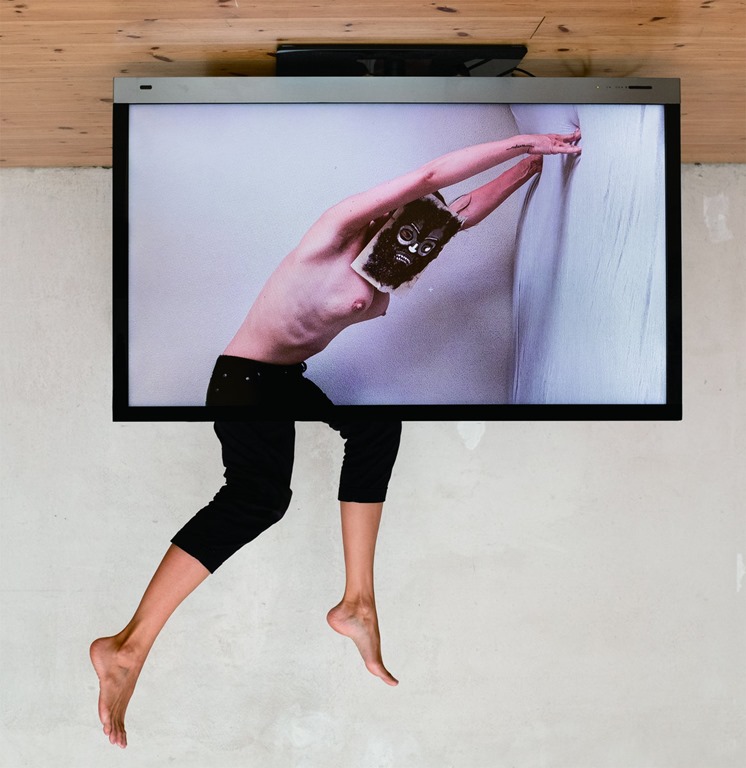
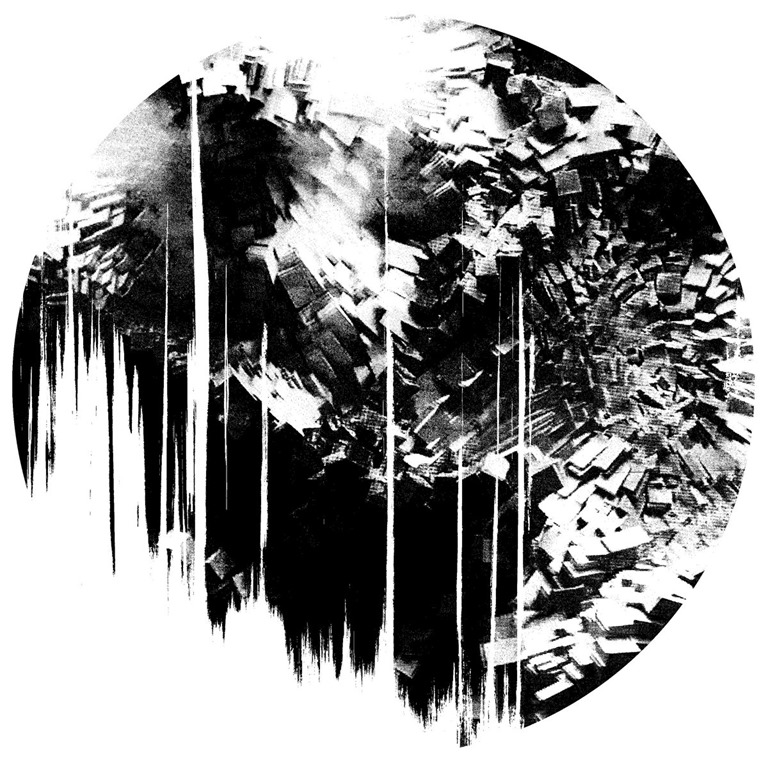
I’ll admit, I was struck by the name when this landed in my inbox. Success! With an insane number of submission emails day, I don’t even open most, let alone play the albums attached. But then I learned that PWIS is Nathalie Dreier – who’s interesting for her visual work as well as her audio – and Dave Phillips, who’s To Death I covered last year – which deepened my intrigue. And it’s one hell of a cover, too.

Meaning What Exactly? is quite a different proposition – from pretty much anything, in truth. Presenting four lengthy compositions, it’s fundamentally an electronic album, but it’s far more than that, or anything. The title is a challenge, a query, a – what I keep hearing as a phrase in my corporate dayjob – a ‘provocation’. It comes down to ‘exactly’. The word is weighted; even without explicit emphasis, it feels emphasised, vaguely stroppy even. The addition is the lexical equivalent of a hand on hip, a raised eyebrow, a scowl, a sneer of condescension to a worker from another department who has no facts. ‘Yeah, do your research, bitch’, is what it says.

And who really knows what it means, or what anything means? Exactly. And what this album means – exactly – I can’t quite fathom. The titles conflict with the contents, at least, based on my lived experience, on my reception. They say it’s a ‘dialogue mixing treated field recordings with organic acoustics and digital sources, brought together in long trance-inducing sessions of meticulous audio de/construction and philosophical debate’. But how much of that is apparent in the end product? Well, that’ debatable.

‘Pangolin’ is otherworldly eerie: a booming drum echoes out through a shifting reverberation of spine-shaking synths. It doesn’t readily evoke aardvark-like creatures, apart from perhaps in the final minute or so when Drier’s monotone vocals are replaced by snuffling barking sounds. It’s weird, but then, what did you expect? I don’t know what I expected, if I’m honest, but probably not this. This is dark, disorientating, disturbed and disturbing, and even more challenging for the absence of context. Meaning is the end product of intent, of purpose, and there’s no clear indication of where this is coming from, meaning we’re left to face the strange with no guidance.

A grinding bass and muffled, muttering voices, whispering about fish all build to a hellish tumult of murmurs and doom-sodden low range hums and thrums, and nothing feels right. It’s awkward, and unsettling. You – certainly I – don’t really tune into the words delivered by Drier in her suffocating spoken word passages, not out of disregard or disrespect, but because all of it comes together to create a claustrophobic listening experience. Meaning What Exactly? is not an album you sit and dissect, or sit and comfortably disassemble or analyse. I find myself, instead, contemplating the meaning of meaning.

‘Us vs Us’ plunges into deeper, darker territories, with a grinding, driving bass worthy of Earth, propelled by thunderous sensurround drumming, with purgatorial howls echoing all around. It’s heavy, harrowing, and it’s that simple, tribal drum style that defines and dominates the eerie eleven-minute closer, ‘The House is Black’. The house is black and the atmosphere is bleak: the vocals are mangled and distorted and play out against a murky, fragmented, fractured backing, to unsettling effect. The beats are sparse, subdued, distant, yet taut, crashing blasts and ricochets. You make it want to stop. The clock is ticking. Your chest tightens. The nerve rise, jangling, fearful. It’s like walking through a graveyard at night, knowing there’s someone lese shuffling around nearby. Make it stop, make it stop!

A crackle, a crunch. What is this, exactly? Perverts in White Shirts don’t only excavate darker domains, but scour and gouge their way into the darker, deeper territories where tension pulls tight and tighter still. It’s the sound of trauma, of suffocation. Meaning it feels like a direct passage to the depths, meaning it’s dark, uncomfortable, like it’s almost unbearable at times. Meaning it’s good.

AA
a2108573613_10

MFZ Records – 24th June 2022

Christopher Nosnibor

Conceived and recorded between the end of 2021 and the beginning of 2022, this set reflects ‘the everyday troubles Davide [Nicosia, aka Acid Youth], deals with as an individual but also as part of a community’.

The title refers to his ‘desire to get out of the gloom and seek for a reassuring light’, and explores this theme by the vehicle of dance music exploiting the vintage Roland TB-303, produced only for a short time between 1981 and 84. It was supposed to sound like a bass guitar. It didn’t. Of course, it would later come to be appreciated, and Reverse Darkness is a concise encapsulation of the appeal of these vintage analogue machines.

Against shuffling drums – heavy echoed with some thudding bass beats – there are simmering synths that drift and wash, and a flock of fluttering tweets, all underpinned by a thick, bouncing bass groove, ‘Vibrato Brilliance’ is simultaneously sparse yet dense, and Nicosia really starts to warp things up on the dislocated retro-futurist title track.

Acid Youth very much captures not only the sound but also the feel of those early 80s dance cuts, the kind of meandering, gloopy synth works that appeared on soundtracks of movies where computers had green text on little monitors and neon lights were synonymous with the future. Being nine or ten in 1985, it felt exciting; with hindsight, it feels like the future we ended up with is a whole lot less of a rush, but hearing this inspires a kind of nostalgia, not for anything specific, but for a feeling, a sense of a near future, thanks to rapidly evolving technologies, that held near-infinite potential. Setting aside any gloom over the disappointment that those potentials now feel chronically unfulfilled as we stumble through every dystopia ever envisioned rolled into one colossal morass of shit on shit, Reverse Darkness tugs me back to the crackle of excitement that once coursed through culture.

He goes really deep on the uptempo ‘Modded Dub’, full-on bass squelch wobbling and rippling atop an insistent kick drum – but it’s toppy, and really packs a punch towards the chest rather than the gut, and in context creates a different kind of tension by way of the contrast with the thick, bassy bass, and it’s true – they don’t make ‘em like they used to.

MFZ23_art

Rocket Recordings – 10th June 2022

Christopher Nosnibor

International Treasure is the second album from the ‘collaborative collision’ of Steve Davis, Kavus Torabi, and Mike York. And, of course, much has – and will – be made of the Steve Davis factor: he may have kept his musical interests largely under wraps during the lengthy heyday of his snooker career, but the fact is that he’s long been a fan and supporter of ‘interesting; music, and this is a musical unit that stands on the strength of its work – and its work is (utopia) strong.

As the accompanying notes explain about the origins of International Treasure, ‘All three musicians here found themselves operating outside of their comfort zones – Torabi’s purchase of a guzheng (a Chinese plucked zither) led to Shepherdess’s lambent allure and York’s spectacular and evolving array of pipes and wind instruments contributed just as much as his ruthless editing. Davis meanwhile, whose speciality lies in rich tapestries of modular electronics, sums up their relationship in characteristically self-effacing fashion: “I see myself as a strong midfielder, or a centre back. Kavus and Mike are like the Lionel Messi or Ronaldo of the equation, and I’m setting situations up for them”.

Davis’ application of an extended football analogy is amusing in context, and one suspects it’s an intentional slice of drollery. The music itself is not amusing – as in, there are no chuckles to be found here – but instead is intensely focused, with magnificent results. There’s a tangible sense of an intuition flowing between the three of them on this album as the sounds ebb and flow and weave and quaver, the elongated drones and meandering organs melting together like a stream of butter.

There are some odd samples – probably animal, rather than vegetable or mineral – flow together into a soft mass, with no hard boundaries, no distinct edges… ‘Shepherdess’ is spacious, meditative, but shifts over time to emerge as a more pulse-based modular synth work, and ‘Disaster 2’ brings all of the various elements together perfectly, as well as bringing together ambient, post-rock, and folk. It’s a beautiful and uplifting experience, and one which acknowledges the pains, trials, and tribulations of life, how it may not be possible to function all day every day.

There’s something soothing, even soporific, about the slow, mellifluous tones that drift together smoothly, seemingly effortlessly, to coalesce into some form, however cloud-like and abstract, to create International Treasure. Even when deep, resonant notes hang like the slow decay of a chimed gong, as on the title track, the darkness is always tempered, by light.

It’s not ambient and it’s not Krautrock – but International Treasure finds the three musicians drawing on elements of both to conjure something magical, something mystical. The final track, ‘Castalia’ is a calypso party party, and if it at first feels somewhat at odds with the rest of the album, it’s worth bearing in mind that the album exists at all because the players are keen to explore different terrains and territories. And explore they do: International Treasure mines many seams, and excavates a wealth of listening pleasure.

AA

525397

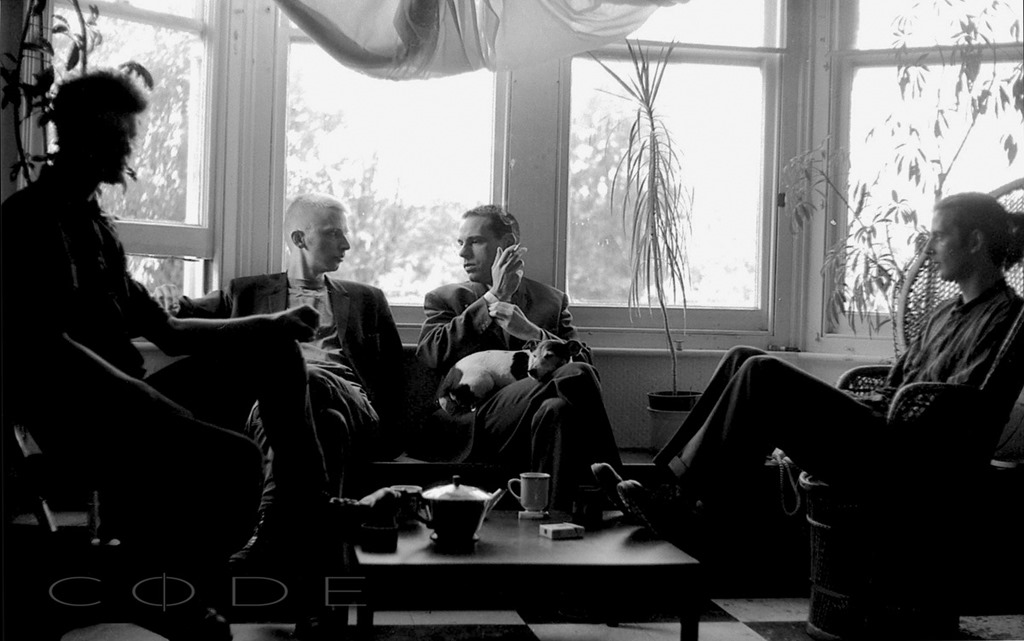
UK electronic quartet CODE earned their stripes in the electronic scene of the early 1990s and were championed by the likes of John Peel, John Digweed and Kiss FM presenters Colin Dale and Colin Faver. Their debut album, The Architect, was issued on the Third Mind label in 1995 just as that company folded, but has often been cited as a cult classic. Its follow-up, Ghost Ship, finally arrived in late 2020 after a 25 year journey and was enthusiastically received by critics and fans.

Like that album, Continuum has been assembled by remodelling material from archived studio sessions and sounds like it could have been made yesterday. Emotionally engaging and exquisitely produced, it is timeless music that, although carrying traces of influences such as Kraftwerk, The Blue Nile, Talk Talk, David Sylvian and Depeche Mode, also has a romantic techno intensity all of its own.

‘Acheron’ is the second single to be teased ahead of the album. An instrumental, it sits in contrast to its predecessor, ‘Pleasure’, which was a slinky slice of pop existentialism. Acheron is known in Greek mythology as the ‘river of lost souls’, although sci-fi fans are likely to be more familiar with ‘Acheron LV-426’, one of three moons orbiting the gas giant Calpamos. It was here that a crew member of the USCSS Nostromo first discovered the eggs of a species of alien that would go on to spawn a highly successful movie franchise.

CODE had embraced the tactile nature of analogue tech from the outset and often jammed ideas as their DAT machine recorded, with each band member presiding intently over one or more pieces of kit, including their pre-MIDI SH101 and Korg PolySix synths, slightly newer Roland drum pads, guitar, 16 channel mixing desk and cassette deck. One of these sessions saw them focus on a version of an existing piece entitled ‘Atlantic’, with the resulting new track being entitled ‘Acheron’.

The band explain that “the challenge was to retain the warmth and idiosyncrasies of the original recording whilst subtly enhancing definition and clarity. This primarily involved reshaping the original nine minute jam into a more concise form whilst enhancing key elements to create a more dynamic soundscape.”
‘Acheron’ appears on the CD and digital formats of Continuum, with the 2xLP release featuring a remixed/remastered version of ‘Atlantic’, which had been included on their debut album.

Watch the video here:

AA

fac0974c27ee288fc93c1e5f929c789fddc655ff

Constellation are releasing three stylistically diverse electronic albums throughout May and June: the dazzling polychromatic avant-jazz-driven Familiar Science by JOYFULTALK (out now); the psycho-geographic glitch-noise minimalism of Gap/Void by Automatisme & Stefan Paulus (out May 20th); and the pulsing corrugated mantric-alluvial Miracles by T. Gowdy (out June 3rd).

The Montréal label has shared a video from each of these fine albums. Check ‘Üble Schlucht’ from Gap/Void by Automatisme & Stefan Paulus here:

AA

a1f13855-db47-5f53-51f3-df539e40a027

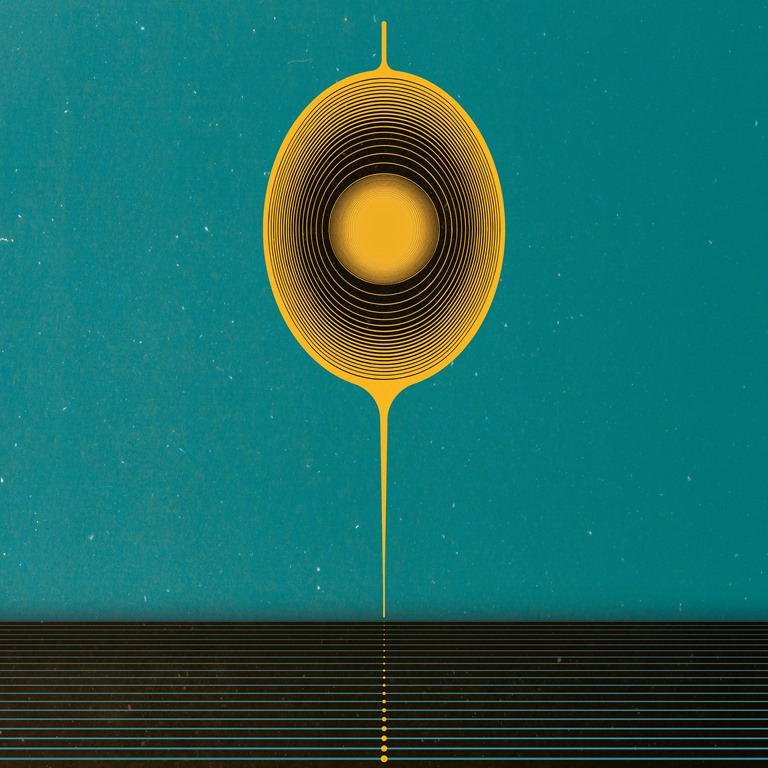
Coming from the playfully intangible modular synth and multi-instrumental collective The Utopia Strong, is ‘Castalia’, a new taster of the voyage to come from their second full length International Treasure (Rocket Recordings, 10th June).

Here, the band share their thoughts on the second single and album closer:

"Castalia was one of the first tunes we started for International Treasure, it felt so optimistic and forgiving which was such a tonic during the somber period in which the album was recorded. Castalia initially felt at odds with the rest of the album which generally has a much bleaker, melancholic tone – to our ears at least – but by putting it in as the last tune it somehow makes sense of everything that went before.

Kavus continues, "It has this end of the night kind of feeling, it put us in mind of Orbital’s Belfast or Ashra’s Sunrain. Steve and I thought it would sound perfect as the last tune we’d play in a DJ set, in fact initially I wanted to call it ‘Last Song Of The Night’ but thankfully Mike wasn’t having any of it! The vocal at the end once again comes from Katharine Blake who sang on the last piece of our debut album, Moonchild. We liked the conceptual continuity of that but also, along with the use of acoustic instruments, the way it humanises the track too.

"Mike Bourne, who created the video, has been a friend before we were even a band. It was he who inspired Steve to take up the modular synthesiser in the first place. We loved his work anyway and he’d created an astonishing video for The Holy Family, another Rocket band Mike York and I are involved with, so we were very keen to work with him. He’d specifically asked to do the video for Castalia and knowing his work we gave him a free hand. I think the end results absolutely crystallise the vibe and atmosphere of the piece, we couldn’t be happier."

Watch the video for ‘Castalia’ here:

AA

US2

Photo credit: David Ryder Prangley

Kohlhaas Records – 22nd April 2022

Christopher Nosnibor

Simon Whetham’s notes which accompany (II)ntolerance – the sequel to his 2017 collection, InTolerance – are informative, albeit perhaps more so when reading between the lines: ‘InTolerance consisted of a selection of combined scenes and activities in various global locations. Through the process of constructing the piece, it became clear that it was as much about my ability and fortune to be able to travel and cross borders with relative ease as it was about the situations I was able to document. (II)nTolerance is a sequel and a response to InTolerance. It is a personal reaction to the global pandemic and its wide-reaching effects through suffering, fear, misinformation as much as confinement and curfews. It is a personal response to the (somewhat incorrectly named) United Kingdom leaving the European Union and all the resulting events that are continually unravelling.’ He continues: ‘Travel has been limited when not impossible. Cultural exchange is only possible through mobile, online, remote communication. Tactile contact is feared. Families and friends have been divided physically, mentally, politically.’

The pandemic but a block on everyone’s lives, but everyone was affected differently, and while I struggle to find sympathy for those bemoaning their inability to take their 204 kids on their half-term skiing holidays and the like, touring artists who depends on mobility for their livelihood, it’s a different matter, especially as that transit and a shifting geography is integral to the creative process. Reading Whetham’s notes, it’s clear that his obstacles have not been purely pandemic-related: The ‘United’ Kingdom has degenerated into a cesspit of division where not only ‘tactile contact’ is feared, but so is anything from ‘outside’. Never has this felt like a smaller, more isolated, island, and not just geographically.

Tolerance is something many of us – mostly those of us who wanted to remain – can now only dream of, as we hide our faces behind our hands as we peep at Twitter and Facebook, where it’s bordering on a virtual civil war.

Whetham describes (II)ntolerance as a personal response to all of this, and ultimately, that’s the only real response any artist can make. The idea that we’re all in the same boat has been proven untrue, for while we all endured the pandemic, everyone experienced it so very differently: home schooling while working from home was, for example, in no way comparable to living alone or in a shared house while on furlough. Similarly, the effect of Brexit for a container driver, versus that of, say, a hedge fund manager is simply not comparable. But this in itself is an issue: increasingly, it seems people have become unable to relate to experiences and situations which differ from their own.

As an artist, of course, one can really only represent oneself, and hope that through the personal there is an element of universal therein, and on this level, (II)ntolerance succeeds, containing as it does fourteen abstract compositions that state nothing explicitly, and yet convey so much implicitly.

There are a number of pieces that form sequences, namely the ‘Angry Earth’ pieces and the three ‘Kinetic Readymade’ pieces, which give the album a sense of cohesion and thematic unity (while making a small nod to avant-garde greats like Marcel Duchamp). And (II)ntolerance is an album of movement, of turbulence: the first piece, ‘Angry Earth Seething 1’ sounds like a harsh deluge of rain, and the lashing precipitation sets the tone for a stormy sonic journey, riven with growls and gulps and crashes of static and ominous drones and clicks and stammers.

(II)ntolerance marks a shift from field recordings and a focus on geography to shift the focus inward in a response to a shrinking environment, and the result is claustrophobic and uncomfortable. ‘Moving Sentry 2 – Angry Earth Seething 3’ is a gurgling mess of abrasion, while ‘Reception – Windpipes’ whips and gurgles in a fog of phase. Oftentimes, such as on ‘Angry Earth Seething 4’, Whetham conjures a dark, gravel-shunting grind of uncomfortable noise, while ‘Kinetic Readymade (Turbine)’ embraces all shades of difficult, dominated by churning, scraping noise – and as a whole, (II)ntolerance is not an ‘easy’ album. It’s noisy, with serrated edges and low-end growlings that unsettle the intestines. A difficult album for difficult times.

A

Simon W

This is it Forever – 25th March 2022

Christopher Nosnibor

There are many artists who can boast bodies of work that are solid, and illuminated by outstanding gems along the way, but there are few artists with bosies of work as consistent as worriedaboutsatan. Fifteen years into the project’s existence, that’s a significant achievement. Some artists go off the boil or seem to struggle with maintaining that level once they achieve a certain degree of success, whether it’s simply through a perceived pressure to deliver something or create something that will replicate whatever it was that achieved that success, or simply diminishing returns, but worriedaboutsatan, despite having tracks featured on Coronation Street and Adam Curtis’ Hypernormalisation documentary, not to mention radio play on both 6Music and Radio 1, and the very vocal support of one Ian Rankin, remain unstinting in their path.

Operating solo since 2019, Gavin Miller has maintained a constant flow of output: so constant that since Providence last May, Miller’s slipped out a brace of album-length single track releases (Circles I and Circles II) and an EP Live from the Studio that entirely bypassed me while I was, well, I don’t know, what was I doing?

The thing about consistency is that it absolutely does not equate to sameness, and worriedaboutsatan’s output is defined by its evolution, incorporating wide-ranging stylistic elements from delicate post-rock to pounding beats within the overall sphere of haunting, reflective ambience of varying shades of darkness and light. And while satan’s sounds exist in a rarefied space all of their own, no-one lives in a complete bubble. We live in dark times, and not insensitive to this, this latest offering finds Gavin channelling that global turbulence through his work.

Bloodsport promises a departure, and it delivers. Miller describes it as ‘still very much a worriedaboutsatan album, albeit a fairly angry one.’ It’s a fair summary. The intro piece, ‘Je Suis Désolé’ is a classically ‘electronic’ composition with oscillating waves cutting across one another, but the treble tones sound like sharpening knives, and it has an edge that scrapes at the skull quite unexpectedly.

Making a linguistic and stylistic switch, ‘Bis Ich Komme’ is slow and dubby, a dense bass and backed-off beats holding the structure of a drifting ambience, before it solidifies and hardens around the mid-point. There’s a tension, a simmering aggression in the tone of the barbed synths, something uncomfortable and uncertain in the samples, before jungle beats hammer through the woozy, stomach-clenching undulations like machine gun fire

Released ahead of the album as an EP with three remixes, ‘Sigourney Weaver Fanclub President’ is the theoretical lead single, and it’s a brooding eight-and-a-half minutes of echoes guitar sustain and crashing sheet metal. It’s the sound of shattering destruction and trepidation. It’s classic ‘satan in that it’s all the layers, all the atmosphere, but it’s also steelier, with a certain bite previously unheard.

The two parts of the centrepiece, ‘An Absolute Living Hell’ are definitive and are a statement in themselves. Dark, dank, oppressive, bass-heavy and bursting with shards of extraneous noise, rippling in deep, deep echo, this diptych is the soundtrack to this bleak moment in time. ‘Part 2’ goes full industrial with a throbbing bass and crashing percussion worthy of Test Dept or Neubauten.

The stark robotix of the brief but claustrophobic ‘Perfekt’ makes for possibly the least WAS-like track of their career, before the metronomic thud of ‘Slur They Words’, dives headlong into the territory darkest hi-hop: the origins of the vocals are unclear, but they’re abrasive, and ‘Apex Redditor’ draws the curtain in a bleak fashion, but with a redemptive hint of a rippling piano and twitchy percussion that – I hope – alludes the prospect of a new dawn. Because surely, surely, there has to be a light at the end of this tunnel.

AA

a2575977490_10

Mille Plateaux – MP40 – 11th March 2022

Christopher Nosnibor

The last time I engaged with the work of Cristian Vogel was when his double-disc compilation, the archly-titled Classics in 2016. This retrospective covered his 90s output, and traced his evolution as an innovator in underground techno and electronica. His catalogue has doubled in size since then, and it’s apparent that Vogel isn’t only prolific, but an artist who doesn’t like to retread old ground, constantly questing and striving to develop and explore new directions. 1Zhuayo explores many new directions, all at once.

Penning notes to accompany the release of this album, Lain Iwakura and Achim Szepanski wrote that ‘The new Cristian Vogel album 1Zhuayo sounds as if non-musicology & ultra-blackness is not an end or a destination to be arrived at, but as if it is the point of departure, much like tomorrow relates to the day after tomorrow. As if we have left the space of certainties and are moving instead into one of manifold possibilities. They are anticipated in the micro-structures of sound, which is the process of playing with and against the software.’

But then I start to get lost when they continue to explain how Vogel ‘creates a rhythmight that is constructed from the anticausality of Rhythm as counter-counted, the tracing of the rhythmicity of Rhythm in the creation-in-Rhythm. Rhythm is foreclosed to hearing. Non-music radicalizes this notion by subtracting hearing from the framework of experimental music, which claims that everything is heard from Rhythm. The material of music is the continious flow itself. Cristian Vogels method for this way of creating sound is called Rhythmics.’

I feel as if I’m wandering through Deleuze and Guatarri’s A Thousand Plateaus while drunk and on drugs. Words lose meaning – as does sound. It’s bewildering, disorientating. 1Zhuayo is, on most levels, a dance album. But it’s not an easy one, and it’s pretty dark and dense in the main.

The album starts as a churning roar, scraping feedback and industrial machinery grinding away like a tumble drier full of broken bricks, before ‘Hyphadelity’ plunges into booming bass groove-orientated dance. But it’s not comfortable or commercial: the vocals are menacing, half-submerged as they are amidst the busy layerings and the surges of extraneous noise. ‘Astrocumbia’ sees things turn nasty: dance music you can’t dance to, a frenzy of distorted beats exploding all over amidst a gruelling churn or super-low, super-hectic bass that pounds at the pit of the stomach and crushes the cranium. ‘Emanations’ slows it down with an almost dubby vibe.

Things unfold differently on ‘S18’. Again, the dance tropes are prominent, but they’re fractured, pulled apart, before a tsunami of solid sound crashes through on ‘1Zhuayo Express’, which swells to immense proportions, like Godzilla rising from the deep, flexing its muscles as a wall of sound, gloopy bass and grating mid-range pulsating in a monstrous behemoth of power electronics.

The Strom Stadt remix of ‘Transferenz’ is a brutal exercise in monster hardfloor techno that makes The Prodigy’s later works sound like bouncy chart pop, while the Disintegration Mix of ‘Angle Phase Life’ is a brutal mesh of noise with mangled beats partially submerged by the successive detonations of low-end. It sounds like an erupting volcano and missiles launching in slow motion. And amidst it all, electronics pop and squelch like fireworks.

‘Cables’ isn’t a cover of the Big Black song: in fact, it’s quite the opposite being stark and minimal, stuttering glitchy, with a crunching bass drum thudding mercilessly throughout, before the last piece, ‘Serpent Acid’, a splattering blast of jamming percussion and nagging, repetitive, cyclical synth motifs.

Less is more, and this is largely minimal, but at the same time, builds up later from unexpected angles to create something different. It leaves you feeling somewhat dazed – in a good way.

AA

a1006963432_10

Musician and actor, Eric Oberto has just unveiled his new video and single release for the song, Closer Than Ever Before. The song appears in the forthcoming Hollywood theatrical film, Malibu Horror Story due out in late 2022.

‘Closer Than Ever Before’ paints the dark picture of a man running from himself and racing against his own mortality. While being stalked by “Death” himself, he encounters memories from his past and startling entities that chase him closer to that final closing door.

The music video for ‘Closer Than Ever Before’ will mark the second collaboration between Eric Oberto and Erik Gustafson of the band, Adoration Destroyed!

Both Eric and Erik co-directed the music video shoot. Eric Oberto also took on the role of Producer with the invaluable help of Video Shoot Production Manager, Micha Marie Stevens. Erik Gustafson Cinematography brilliantly handled all of the post-production and editing work. Watch the video here:

AA

88049dbf-b190-954b-417a-824332a6f485