Posts Tagged ‘Drone’

Front & Follow – 22nd February 2019

Christopher Nosnibor

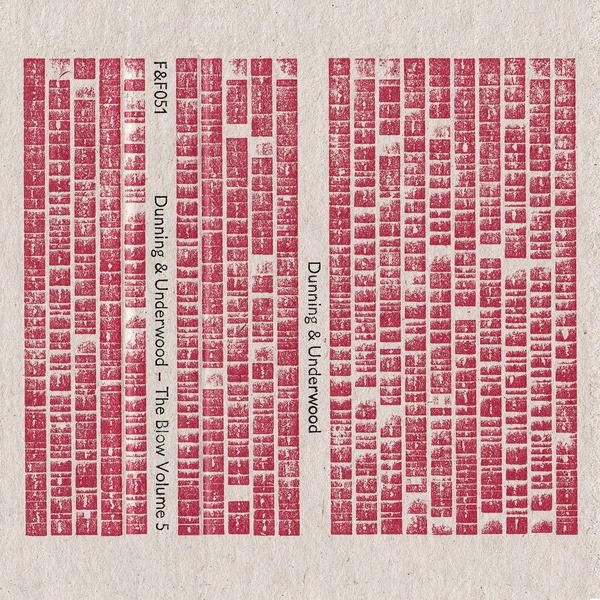
Front & Follow continue their ever-fascinating The Blow series of split / collaborative releases with an album by Dunning and Underwood, aka Graham Dunning and Sam Underwood, who’ve used this release to showcase their Mammoth Beat Organ project.

I’m mature enough to refrain from making any puerile quips about mammoth organs and instead get down to the business of reviewing an album which showcases the sound of a machine they describe as ‘a modular, mechanical music contraption, designed as a two-player, semi-autonomous musical instrument’ which ‘plays unusual, sometimes erratic compositions drawing on drone music, minimalist repetition and fairground organ techniques’.

None of this prepares me for the reality – which is, arguably, one of the strongest, and also the most far-out – releases of the series yet. I’ll focus here on the music rather than the machine – which has some kind of quirky steampunk look to its construction – because while in a live context, it’s no doubt quite a spectacle, in the medium of recorded sound, the sound is all you have to engage with. And the sound is rich in strange, unsettling atmospherics, a work that nether light nor dark but hovers uncertainly in the shadows of its own casting.

The first piece, ‘Song or Chimney Sweeps’ transitions from elongated, atonal drone to trilling fairground organ, although the notes waver and wheeze, and assonance and order are rapidly replaced by dissonance and disorder and the different notes play in different times, and what begins as something playful and lighthearted pretty soon becomes a horrible headfuck. This, of course, is a good thing. The headfuckier the better as far as I’m concerned. Clearly, this is an album that calls for more vodka. Lots more.

The peeping, parping, tooting, quavering atonality of ‘Blown Coda’ is constructed around droning not-quite chords which droop like deflating bagpipes. There’s an almost child-like naivete to the mismatched conflicts of key. The way young children have no concept of key and will simply play notes to hear a sound and will play randomly – and for protracted, torturous periods – comes to mind here. Only, these are long, slow nots that trickle and weep over erratic arrhythmia. Contrastingly, ‘Acorn Factory’ is largely percussive – or at least sounds that way. Tinny, irregular beats – the sound of something hitting the bottom of a metal bucket or something – peculiar, difficult to place in a musical context.

‘Demon’, one of the pieces that’s more overtly ‘structured’ or ‘composed’ sounds like some kind of primitive drum ‘n’ bass, with clattering, ramshackle rhythms proving the backdrop to honking horn and woozy drone, all muffled by a blanket or raw, barely-there-production.

Then there’s what anyone – even the most passionate avant-garde aficionado – would likely describe as ‘weird shit’, starting with the woozy atonal discordant mess of ‘Odd Duty’ placing the emphasis on ‘odd’ and ‘Padlocks on a Bridge’ bringing together wheezing bellows notes with off-kilter percussion.

All the vodka isn’t quite enough to make sense of this sonic derangement. It isn’t abstract, it’s just warped and wilfully perverse. And it’s little short of genius.

AA
Blow 5

Midira Records – MD044 – 23rd November 2018

Christopher Nosnibor

N + [ B O L T ] aren’t the most imaginative when it comes to naming their albums: this, their third collaboration, is, like the two which preceded it, is without title. But then, they’re in the company of The Bronx and Peter Gabriel, and the lack of titles on whose first four solo albums didn’t exactly damage his career. As is often the case with untitled albums, which come to be identified by the prominent features of their cover art, so “die Krähe (the crow)” follows the albums known as “der Hase (the rabbit)” and “das Hörnchen (the squirrel)”.

Since recording the album, [ B O L T ] have expanded to a four-piece featuring two bass players and a drummer, but this captures them still sparse, taut, minimal, and the accompanying text sets the scene: ‘Imagine an industrial area, with big smokestacks and metal architecture, mostly quiet and sometimes interrupted by machine noises and from somewhere you hear the sound of N + [ B O L T ] coming through the walls. This is what you see and hear around the studio in Duisburg (Germany), where the band recorded the album’.

While the album is by no means determined specifically by the environment in which it was produced, said environment is nevertheless a factor, an integral part of the backdrop to its formulation. And so emerges a sound described by the band as ‘black drone’.

It seems a fair description. It’s dark, gnarly, and droney after all. I’ve been around a while and this crushing, low-tempo, low-octave, percussion-free sludge-drone sounds very much like a refined retake of Earth 2. A1 bleeds into the heavy grind of A2, a gritty, cyclical stop/start bass trudge. It never stops: it’s hypnotic, all-immersive. And it’s all about the trudging bass. It’s the album’s defining feature, and if anything, it becomes more prominent, more dominant, as the four pieces progress. Progress is a relative term: it doesn’t go anywhere: it doesn’t need to and isn’t designed to. Its purpose is to trudge, while guitar feedback wraps around like… like… twisting vines, serpentine, wisps of mist.

Time slows and weight evolves over the course of the four pieces: B1 stretches its funereality over some ten minutes, the guitars only bursting in around a third of the way through. It wells to a mesh of pulverising, overdriven noise ad leaves the listener hollowed, drained. It all heads slowly and incrementally down towards the plodding grind of ‘B2’: an epoch passes between each below-the-earth bass note, while guitar feedback strains all around. The final piece stretches out over almost fourteen minutes, and begins with the lowest, lowest of bass grinds amidst a swirl of layered feedback. And it goes on: an eternity passes as a simple double-strike of the same note, so low as to register below the range of cognisance, instead nudging at the spectrum marked ‘subconscious’. And it’s as we slide into this area that the impact of this wordless exercise on weight really registers its impact.

It’s music beyond words, music beyond music. The richness and density, paired with the almost indistinguishable, melted tempo of droning sound without rhythm has an effect that resonates on an almost biological level.

AA

N46

Panurus Productions – 19th November 2018

Christopher Nosnibor

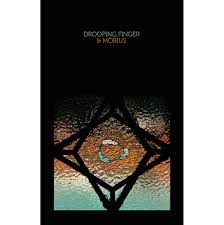
What have we got there, then? It would appear to be a collaborative release from Drooping Finger and Möbius, utilising the former’s lo-fi minimal electronic drone as a setting for the latter’s looped wordless vocal textures.

I must admit that I’m unfamiliar with ‘Newcastle gloomlord’ Drooping Finger, but ‘melancholic vocal duo’ Möbius I am aware of. Their first collaborative work, imaginatively titled Drooping Finger & Möbius is pitched as combining their talents, and consists of their set at The Gosforth Hotel’s Sumner Suite and material recorded during a session at First Avenue Studios in Heaton.

And what does is give us? The BandCamp write-up tells us that ‘Guttural gurgles are embedded in glacial electronics whilst siren songs tumble overhead. The tones hover above the murk at times whilst disappearing into its eddies at others as the collaborative trio draw you into their bleak atmospherics’. And all of it’s true. Although mostly it’s the murk that dominates, with sounds and tonal ranges all but buried beneath a sonic smog.

The live side, (at least corresponding with the cassette release) containing one track simply entitled ‘Sumer Suite’ is first, and is 26 minutes of dark ambient rumblings and janglings and mid-range drones, punctuated at first by stuttering, echoic beats, a shifting soundscape of disquiet. Ominous hums and swells of distant thunder provide the backdrop to disembodied, angelic voices low in the mix and veering between euphoric grace and the anguish of entrapment. Sonorous low-end booms out like a warning signal and cuts through the rising cacophony. But this is not a linear composition, there is no obvious trajectory: instead, the objective is the creation of atmosphere, and while it does naturally ebb and flow, peak and trough, the sustenance of tension is the priority here. Amidst slow crashes and waves of darkness emerge… nothing but nerve-tingling tensions, and even as the piece faded to silence, its hard to settle completely.

The studio side – again, consisting of a single track called ‘Stung’ which spans a full half an hour – provides more of the same, and with similar sonic fidelity at least on my speakers. Heaving drones like distant passing motorcycles drift in and out of range. Ghostly voices drift around nerve-chewing mid-range drones that shimmer and churn like foam on sand. On and on. Again, it doesn’t go anywhere, but that it’s the intention: it funnels and eddies to immersive effect. The tension builds not by any increments within the music, but by accumulation.

It’s a lights off, candle lit, eyes closed type of album, whereby there are no dominant features, and barely any features at all. In context, features are surplus to requirement: Drooping Finger & Möbius makes its presence known subtly, indirectly, creeping under the skin and weaving its dark magic subliminally.

AA

Drooping Finger   Mobius

Christopher Nosnibor

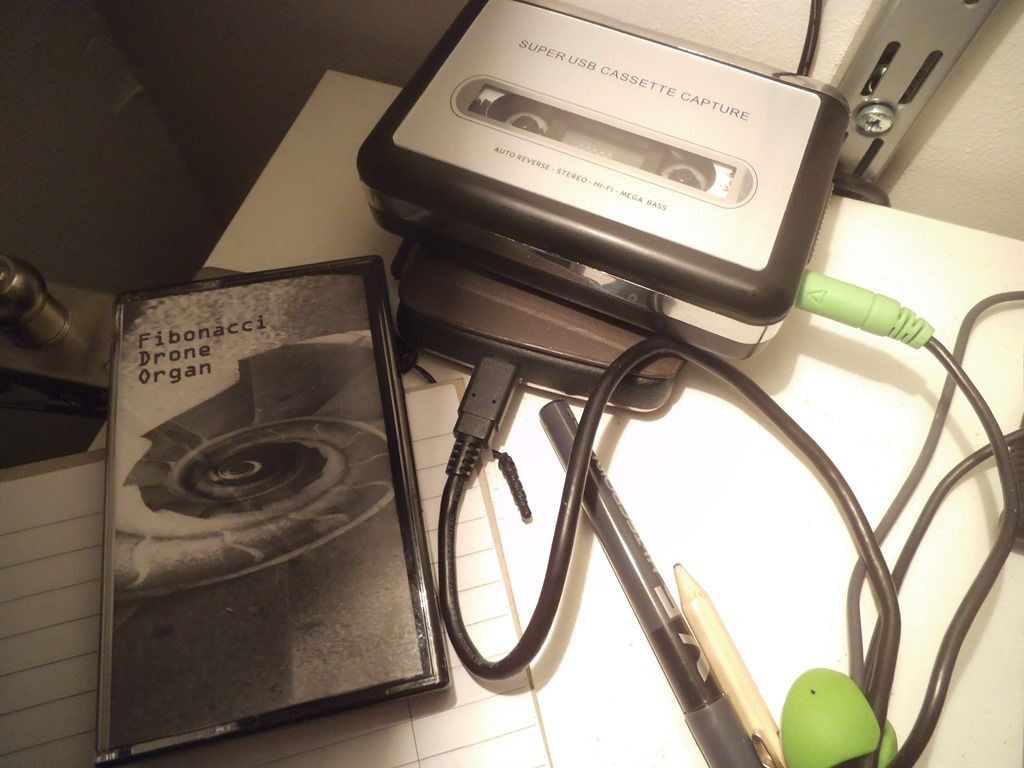
Fibonacci Drone Organ: three random words spliced together, unshackled from the constraints of context to allow free association to determine interpretation? Or a descriptive indication of what Dave Procter’s second- or t(h)ird-latest (this month saw the debut of HUNDBAJS, which is Swedish for dogshit, the absolute latest) of his myriad projects which include the Wharf Street Galaxy Band and Legion of Swine? The cassette release contains precisely no information whatsoever, even down to a track listing, but a spot of digging reveals that it’s the latter – which should come as no surprise, given that the man behind FDO curated a ‘10 Hours of Drone’ event a while back. The album contains two pieces, each occupying a side of the tape, and they’re formed around droning organ notes. Long, long droning organ notes.

And my (rather limited but suitably fruitful) research uncovered that FDO ‘uses the Fibonacci Series as part of the compositional process,’ that ‘the notes are chosen via dice rolls and coin tosses,’ and that ‘the durations of the notes are chosen by the Fibonacci Series. Notes are added at the appropriate time.’

From this, I infer that in technical / theoretical terms, FDO compositions emerge from an intersection of John Cage-inspired randomness and the mathematical precision of Fibonacci. What this actually means, ‘m not entirely sure, and thankfully, the technical aspects don’t impinge too heavily on the output from a listening perspective. Ultimately, it’s all drones. And on this outing the ‘appropriate’ time for adding noes is seemingly after an eternity.

This means that across the tape’s duration, not a lot happens. Notes may be added, but at such distance that the layers build so gradually that the pieces are over before much depth, resonance or layering has occurred. This is all testament to Procter’s unswervingly uncompromising approach to music-making, and encapsulates the reasons I personally hold him in such high regard (and it’s fair to say that if there’s one person I’ve worked with who’s intuitively understood my vision for creating spoken word with the most hellishly mangled noise, it’s Dave who’s been behind the majority of my best and most exhilarating collaborative live work). With more projects, pseudonyms and releases to his credit than seems humanly possible, he’s practically a one-man underground scene in his own right. Look up ‘northern avant-garde’, and you’ll likely find a picture of Dave Procter – or a bloke in a lab coat sporting a pig’s head or something.

Procter gets art, and is an artist, but doesn’t espouse the pretentious trappings of being an ‘artist’ (or, worse still, an ‘artiste’). Which means he can not only get away with releasing a tape containing 40 minutes of theory-backed drone without appearing a tit, but delivers some of the most brilliantly self-aware electronic drone you’re likely to find.

Side two (not that the sides are marked) brings a quavering decay to the elongated drones – which hover toward the higher frequencies – by way of contrast to the strong, stable drones of side one. The effect is cumulative and ultimately soporific, and it’s definitely the music and not the beer as I listen to the spindles rotate on my tape deck and the notes drift from the speakers. Sometimes, there’s no shame in sleep.

DSCF6863

AA

Gizeh Records – 23rd November 2018

Christopher Nosnibor

In their biography, FOUDRE! are described as ‘a telluric drone quartet composed of Frédéric D. Oberland (Oiseaux-Tempête, Le Réveil des Tropiques, The Rustle Of The Stars, FareWell Poetry), Romain Barbot (Saåad), Grégory Buffier (Saåad, Autrenoir) and Paul Régimbeau (Mondkopf, Autrenoir, Extreme Precautions) who meet punctually for sessions of ritual improvisation where they invoke noise and drone and the deities of chaos.’

I’m not sure I’m entirely convinced by the punctual meetings given my years of experience dealing with musicians, but no matter: KAMI , the collective’s fourth album, was improvised and recorded live at Le Rex de Toulouse while supporting French doom metal band Monarch! at their tenth anniversary show.

The five compositions which comprise the forty-five minute set are expansive, as much is sonic breadth and depth as duration, and as such, extend in all directions as the players audibly feed off one another intuitively to create immense aural vistas which are every bit as enigmatic as the titles, all of which reference Shinto gods.

Opening with a twelve-minute epic that evolves from dark, low rumblings and sparse down-tuned scraping string-like drones, tremulous, haunting, and hesitant, to a simmering ripple of waves that forge a subtle but sustained crescendo, ‘Raijin’ very much evokes images and sensations worthy of a god of lightning, thunder, and storms. ‘Raijin’ indeed.

Disembodied voices rise wordlessly, ghostly and demonic, against a heartbeat-pulsing beat. It’s all about the atmosphere, and it’s all about the slow burn. And because the shifts are so gradual, so slight, the listener’s attention becomes focused on the detail, attenuated to the tonality and texture of the individual sounds.

‘Ame-no-Uzume’ inches toward a pulsating hybrid of ambience and chillwave, with the eerie motifs of ‘Tubular Bells’ twisting into a funnel of extraneous noise against a stammering beat, and the pieces all segue seamlessly into one another, with an elongated organ drone rising up on ‘Fujin’ (the Japanese god of the wind) before the final piece, ‘Hachiman’, opens with a heavy, head-crushing crescendo of discord. All hell breaks lose amidst feedback and screeds of extraneous noise as the volume intensifies and things get ugly. Unintelligible screams and barks, distorted and inhuman, tear the air across a clattering industrial beat and blistering electronics forging a whorl of sound in a brutal blast reminiscent of Prurient.

If ever the opening and conclusion of a set emerged leagues apart, KAMI carves a most extreme trajectory, taking the full duration of the set to build from a whisper to a terrifying scream. And it’s this arc that makes KAMI so accomplished and so exciting.

More often than not, live recordings leave the impression that something is missing, and that being distant from the actual event is to subtract from the experience. KAMI is different, in that the hi-fidelity recording means it doesn’t sound like a live album, and sitting back while the sound in all its detail emanates from the speakers affords the opportunity to take in those details, the layers, the textures, and to reflect in a way that the in-the-moment experience simply cannot allow. This highlights the differences of the way we as an audience receive and experience different media and modes of delivery; the in-the-moment intensity may offer catharsis, instant gratification, and a sense of immediate impact, but when there is this much to absorb, the distance and benefit of time to reflect and repeat is invaluable. And KAMI is a work to digest at leisure.

AA

FOUDRE! – KAMI 神

Gizeh Records – 31st August 2018

The Great Lake Swallows is a collaboration between Canadian cellist Julia Kent and Belgian guitarist/tape machine manipulator Jean D.L. The former came to my attention some time ago, and her nuanced style of playing had yielded some compelling works. Jean DL, however is an unknown quantity to me, and I came to approach the release without any real preconceptions. I leave it with none either. It’s ambient and droney, but offers infinite layers. The Great Lake Swallows doesn’t really fit anywhere in terms of genre, and this is very much a positive. Sometimes, music simply is.

The Great Lake Swallows is a graceful and co-ordinated suite in four parts, and finds the duo creating sonic interplay that displays a certain musical connection, even telepathy. Collaborations of this type, which find musicians with such different approaches (and modes of instrumentation) requires a certain intuition to achieve coherence.

Its brevity contrasts with its scale and scope. The four tracks have a total running time of a shade over 25 minutes, but the aching cello bends and melts over hushed, brooding atmospherics to create compositions of great atmospheric depth and imbued with great significance. At times manifesting as dark portent, others seeping sadness without words to describe it, the layers build and pull at the senses almost subliminally.

The press release informs us the album was recorded in Charleroi, Belgium in 2015 during a video installation with Sandrine Verstraete, and that the music was created using field recordings, processed guitar and cello and serves as a soundtrack to the video of the same name. And the soundtrack qualities of the compositions are very much evident: the parts bleed together to forge a single, continuous piece, which slowly and subtly transition between place and mood.

On ‘Part 3’, a low throb slowly oscillates beneath the ebb and flow of strings that weft and warp, before ‘Part Four’ forges an expansive vista of surge and swell, as ghostly voices echo in the shadowy background. The effect is haunting, but also beautiful and as a whole, the work is deeply evocative. The Great Lake Swallows doesn’t just occupy space, but creates it.

AA

GZH84DP-Sleeve

Christopher Nosnibor

There’s no such thing as a night off. I may habitually tweet that I’m taking the night off for beer and live music, but that’s simply my way of telling the world I won’t be posting any reviews, I won’t be active on social media and probably won’t be responding to emails either. Watching bands and drinking beer has been a hobby of mine for a long time now, and I still enjoy it, but even when not guest-listed for reviewing, I tend to take notes and photos out of habit and for posterity. I’m naturally assuming my memory won’t be able to store all of the live shows I’ve attended when I get older, give that I struggle now, so the reviews are rather like postcards to my future self.

The WonkyStuff nights aren’t so much niche as ultra-niche – and that’s a good thing. The mainstream is oversaturated, and to cater to those tastes is a huge gamble. Focusing on a niche and knowing it well means that while there’s a very definite ceiling on audience potential, those being catered for are far more likely to actually bother. And so it is that on a hot Wednesday, around thirty people take seats in front of the stage to witness a smorgasbord of the most far-out experimental music you’ll find anywhere.

My future self, if presented with a photo of New Victorian Architecture’s performance would likely be ‘Christ, you have seen some weird shit’. Which corresponds with the multiple texts I received bearing the letters ‘wtf’ in response to sending pictures of said performance to friends. Certainly, the visual aspect – luminous yellow fishing kit, hood up, dust mask and heavy-duty latex gloves in blue – is striking, and if anything trumps the music or its delivery. There’s a lot of silence: some just awkward pauses, others more protracted periods of hush. At one point, he checks his phone, is momentarily animated as she scrabbles around the pile of pedals before him, then stops, stands (most of the set is spent kneeling) and addresses an inaudible question to the audience. Met with silence, he shrugs and resumes. The whole spectacle is odd – which is, of course, the idea.

DSC_0678[1]

New Victorian Architecture

How Buildings Fail – the musical vehicle of Simon Hickinbotham – brings a different kind of odd, and one that’s much more song-orientated. The array of DIY and customised kit packed onto a small table includes an inverted Pot Noodle carton (chicken and mushroom) which appears to contain a set of controls. The material’s centred around the grainy and the granular, analoguey synthy sounds are modulated into gloopy oscillations and swerving sine waves which collide with overdriven, clattering drum tracks. Hickinbotham rattles off rants about philosophy and reading comics. It’s a weird, nerdy clash that lands somewhere in the field next to The Fall, Meat Beat Manifesto and Revolting Cocks. ‘Creative supply is outstripping demand!’ he calls by way of a refrain in the final song of the set. He’s right, but those gathered tonight are appreciate of their demands being catered for.

DSC_0681[1]

How Buildings Fail

They may look like they’re playing chess, but Ash Sagar and John Tuffen are in fact pondering a rack of effects units on the table before them. The pair sit, almost motionless, mannequin-like, expressionless, and decked entirely in black. Tuffen, another self-solder gear enthusiast, appear to be playing open circuit boards, while Sagar tweaks at a more conventional-looking mixer unit. It’s difficult to determine the actual sources of the sounds which they sculpt expansive, glitchy drones that crackle and hum. Not a lot happens over the course of the set: instead, the emphasis on slow-evolving sonic shifts, and the focus is on detail rather than drama. Distortion ruptures smooth sonic arcs and beats like bursting bubblewrap forge subtle dynamics which balance grind and levity to immersive effect. It’s a meticulous performance, and for a few moments, time stands still.

DSC_0691[1]

Orlando Ferguson

Stocker / Eyes – that’s Canadian-born percussionist Beau Stocker and multi-instrumentalist Ben Eyes – are celebrating the release of their new album, Earth Asylum. However, they showcase quite a different sound live in comparison to the album, which is extremely mellow and almost of a post-rock persuasion. Their set, driven by jarring, stop-start drumming and soaring, layered guitar and sweeping synths, and occasionally punctuated by jolting, halting guitar bursts, is certainly a strong contrast with the other acts on the bill. But for all of this, their set feels, perversely, the most conventional, working as it does established experimental / avant-jazz tropes. Although overtly improvised and fluid, and perhaps a shade overlong, there’s a clear sense that they have a tight rein on their performance, and it’s hard to find fault technically.

DSC_0696[1]

Stocker/Eyes

In fact, it’s hard to find fault with the night overall: WonkyStuff pitch a varied but perfectly complimentary set of acts, the likes of whom will never achieve anything beyond cult status (if even that), and provide an essential platform for the oddballs and fringe performers. And essential is the word: in an age where capital and homogenisation is killing pretty much everything but the lowest common denominators, culturally, we need nights like this.

Ritual Productions – 4th May 2018

Christopher Nosnibor

Silence. Hit play and get silence. This is a Bong album, and they’re in no hurry to get going. Why should they be? They have all the time in the world. And beyond.

For a band whose name suggests herbal inertia, and whose brand of stoner doom conveys the same elongation of time, they’ve hardly been slack in creating a substantial body of work since their formation in 2005. Over that time, they’ve evolved, developing from heads-down sludge toward more expansive territories. Thought and Existence is nothing if not expansive and exists in a territory somewhere between the infinite expanses of inner and outer space.

At first, the drone is quiet, distant. A voice rings out, monotone, ominous, ceremonial. The ceremony is about to begin. The guitars don’t so much kick in as glide, rising in thickness and volume, like a mudslide. It’s over three minutes in, but barely two bars have elapsed before the murky, muffled drumming arrives. A single chord hangs, sustaining forever. Slow is not the word: the pace is beyond glacial, as light years elapse between each beat, each cymbal crash ringing out like a supernova in a distant galaxy. Movement so slow as to be barely perceptible, yet strangely beautiful and utterly compelling.

The eternal drone condenses the weight of all matter. And the voice… The voice booms sonorously, elongated vowels protract each syllable to wordlessness.

Thought and Existence consists of just two side-long compositions, the second of which, ‘Tlön, Uqbar, Orbis Tertius’ (the title of which is taken from a work of speculative fiction by Jorge Luis Borges which is heavy on concept for its brevity) rolls in slow, deliberate waves, a simple riff repeating on, and on, and on. The effect is absorbing, hypnotic, immersive. It’s also curiously uplifting and transportative, a form of sonic meditation.

AA

BongThoughtAndExistenceCover

Oh yes…. Known first and foremost as the lynchpin of instrumental band Earth, Dylan Carlson has become one of alternative music’s most ambitious pathfinders. It seems beyond appropriate, then, that Carlson’s new solo endeavour is titled Conquistador. The five-track record channels the indulgent drone of Earth while traversing uncharted sonic terrain. Listen to the album’s first single, ‘Scorpions In Their Mouths’.

,

AA

DylanCHollyCarlsonlores--1

Dylan Carlson by Holly Carlson

This is it Forever – 28th February 2018

Christopher Nosnibor

Capac are an electronic duo, currently based Athens and Bristol. But geography is a state of mind, and while details about the context and circumstance surrounding Through The Dread Waste are limited, the music stands for itself. Yes, it’s supposed to contain ‘ten interpretations of the coldest traditional winter music in the form of dark drone and atmospheric ambience’, but without a priori knowledge of the original versions, all that is left is drone and ambience.

The ‘dread’ ascribed to the ‘waste’ is entirely redundant: waste is surplus, unnecessary, for disposal. Why dread it? The sense of portent, of impending doom… Yes, in a world where there is no time to waste, no money to waste, we may rightly dread it. And yet. The waste: anything waste is unnecessary, and should be confronted, not dreaded or feared. And without value or purpose, anything is waste.

On the subject of disposal, the order page for the physical edition of the album is most telling, containing as it does the following: ‘The physical form and true embodiment of the concept behind Through The Dread Waste… You receive a fire log with a metal plate hidden deep inside. After burning the log, among the ashes you will find your metal plate revealing instructions to access the original constructions of the traditional pieces of music, prior to their deconstruction. Destruction, after all, is a form of creation.’ This echoes a classic and fundamental tenet of the avant-garde, namely the premise that one must destroy in order to create anew.

Postmodernism’s defeatism and acceptance of the death of originality is either the last gasp of the avant-garde, or the point at which is necessarily destroys itself to re-emerge, the creative equivalent of stubble-burning at the end of the cycle of growth and croppage. It would be easy to deride the ‘fire log with a metal plate’ but this is art, and there’s precious little the production and release of music by and large, especially in the mainstream. And this is art which is more than merely willing to be ephemeral, and actually invites its own destruction.

The album’s ten compositions are by no means indicative of a conventional, square set-up, as longer tracks are separated and segued by fragmental pieces. And over its duration, there is a lot of piano, and a lot of space. A lot of space. Through The Dread Waste is a sparse, ominously atmospheric set. This is music to stare into space to. At times, its presence is so sparse as to be beneath detection. The lilting piano, the endless resonant air between them, is captivating, yet so understated as s drift into the ether.

The overlaid and unintelligible snippets of voice on ‘Winter Morning’ call to mind the scratchy, pre-fade in discord of ‘Disintegration’ by The Cure. But here, there is no swampy tune riding in on oppressive drums to hammer it all home. Instead, it drifts into another space, and we consider valiant spaces and parallels. Elsewhere, monasterial voices hover in fogy darkness and drones crackle, from eternity.

As such as it’s a spiritual, transportative, and eventually an immediately accessible release (and not in the same sense of ‘accessible’ which is at the centre of the divisive and heated debate which is raging in the poetry sphere right now). Through The Dread Waste has infinite inroads, and is not abrasive or overtly difficult. Yet equally, it’s not dull or unchallenging. It has melody, and drifts in a way you can get lost in.

AA

Capac – Through The Dread Waste