Posts Tagged ‘Dret Skivor’

Dret Skivor – 5th December 2025

Christopher Nosnibor

This last week or so has been good for noisy, weird, abstract, experimental stuff. It’s pure coincidence, but these things to very much arrive in waves. There’s no thyme nor reason to it: Some weeks I’ll find my inbox abrim with guttural metal – and I’m by no means complaining – but sometimes I will crave noise, and there is none. Not proper noise, anyway. That said, this isn’t abrasive, full-on noise, but a work of abstract ambience dominated by field recordings, mostly of birds and billowing winds.

The last klôvhôvve release, which came out in the spring of 2024, was recorded live in Nottingham just a few weeks previous, and similarly this one was recorded live in November of this year. That’s about all you’re likely to learn with a dret release, although the accompanying notes are generous in their praise to the album’s contributors: ‘Thanks go to the wonderful animals and nature of Hammarö whose sounds you can hear being manipulated by klôvhôvve’. This is laudable: we don’t thank or celebrate nature nearly enough. There are gulls aplenty here, among other creatures less obvious by their calls (at lest to me).

It begins with the rumble of thunder, and it grows closer and more menacing. And then comes the rain. I assume it’s the rain. I’ve heard enough of it in the last couple of months. It feels like it will never stop raining. Again. Öljud rumbles and creaks and billows: a lot of this sounds like heavy rain and high winds, conditions which simply make me want to hibernate rather than reconnect with nature. There are quack and quarks, and all kinds of trilling sounds. Nothing much happens – if anything, really. It doesn’t need to.

Is it ok to drift off to an ambient work? I would have to argue that when listening to a studio work that’s particularly tranquil, it’s a compliment rather than an insult. Öljud is subtle, rumbling. Not a lot happens, and what does happen takes place slowly. Very slowly.

AA

a2852538014_10

Dret Skivor – 7th November 2025

Christopher Nosnibor

Dave Procter is / has been involved in more musical projects than your mum’s had hot dinners. Having left Leeds for Sweden, not least of all on account of Brexit, he’s currently paying the UK a visit with a tour which features performances by no fewer than five of them – last night’s set in York was one of two halves, featuring the polite extreme electronica of Trowser Carrier and the whacked-out post-punk infused racket that is Loaf of Beard. So about these ‘Brexit benefits’… and the fear of taxing the rich for fear they’ll leave the country. Since they’re not paying much tax anyway, where’s the loss there? Meanwhile, we’re losing migrant workers who keep the NHS operating, who harvest crops, and flip burgers, AND we’re killing creative industries by making it harder for artists to tour here. A few years ago, there was considerable coverage given in the media about the country’s so-called ‘brain-drain’; there’s been rather less coverage given to the slow murder of the arts. The Guardian and The Independent have raised their hands in quite anguish over the killing off of arts degrees, degrees which are being targeted as not providing a route to a well-paying career, but in the main, this is happening quietly. What’s painful is that there’s so much raving about ‘small boats’, hardly anyone is noticing, and even fewer care because they’re too busy buzzing over the Oasis reunion or Taylor Swift. I’ve got no specific beef with Taylor Swift and her sonic wallpaper, but the point is that there is so much life and art and creativity beyond the mainstream. There is an extremely diverse array of subcultures, an underground that’s as big as the overground, only more diverse, eclectic, fragmented, and this is what’s suffering.

To return to topic, somehow, amidst all this activity and while in transit, Procter’s managed to launch both a new release and a new project via his Dret Skivor label, in the form of OSC, the debut – and likely one-off – album by the imaginatively titled oscillator.

The accompanying notes are unusually explanatory for a Dret release, forewarning of ‘Glitch, ambient and toy keyboard experiments. Play through decent speakers and headphones, the lows are LOW!!!’ The tracks were created during some free studio time in Copenhagen in October 2024, and, as ever, the CD run is minuscule, with just 6 copies. This, of course, is typical of the DIY cottage industry labels, particularly around noise circles. It’s not only a sign of an awareness of just how niche the work is – and it very much is that: no point doing 50 CDs or tapes when it’ll probably take a year to sell four – but also indicative of a certain pride in wilful obscurity. Just think, if the bigtime ever did beckon, those spare copies sitting under the bed may actually acquire some value. Just look at how much early Whitehouse albums go for, for example.

OSC is very much an overtly experimental work, featuring six numbered pieces – the significance of said numbers remains unclear, if there even any significance, although notably, they’re all zeros and ones, or binary – which range from a minute and twenty seconds to just over eight and a half minutes.

‘01’ is a trilling electronic organ sound skittering over long drone notes, and abruptly stops before the bouncing primitive disco of ‘10’ brings six and a half minutes of minimal techno delivered in the style of Chris and Cosey. It’s monotonous as hell, but it’s intended to be, hypnotic and trance-inducing. Zoning out isn’t only acceptable, but a desirable response. ‘100’ is seven and a half minutes of dense, wavering low-end drone, the kind which slows the heart rate and the brain waves. As the piece progresses, the rumbling oscillations become lower and slower and begin to tickle the lower intestines, while at the same time some fizzy treble troubles the eardrums. Nice? Not especially, but it’s not supposed to be. Sonically, it’s simple, but effective.

‘101’ is so low as to be barely audible: not Sunn O))) territory, so much as the point at which the sun has sunk below the horizon and the blackness takes on new dimensions of near-subliminal torture. The final track, the eight and a half minute ‘110’ is a classic example of primitive early industrial in the vein of Throbbing Gristle, with surging oscillations which crackle and fizz, a thrumming low-end pulsation. It ain’t easy, but it’s magnificent.

Procter loves his frequencies, just as he loves to be eternally droney, and at times Kraut-rocky. OSC reaches straight back to the late 70s and early 80s. OSC is unpredictable, and tends not to do the same thing twice. It’s in this context that OSC works. Embrace the experimental.

AA

a2917884968_10

Dret Skivor – 3rd October 2023

Christopher Nosnibor

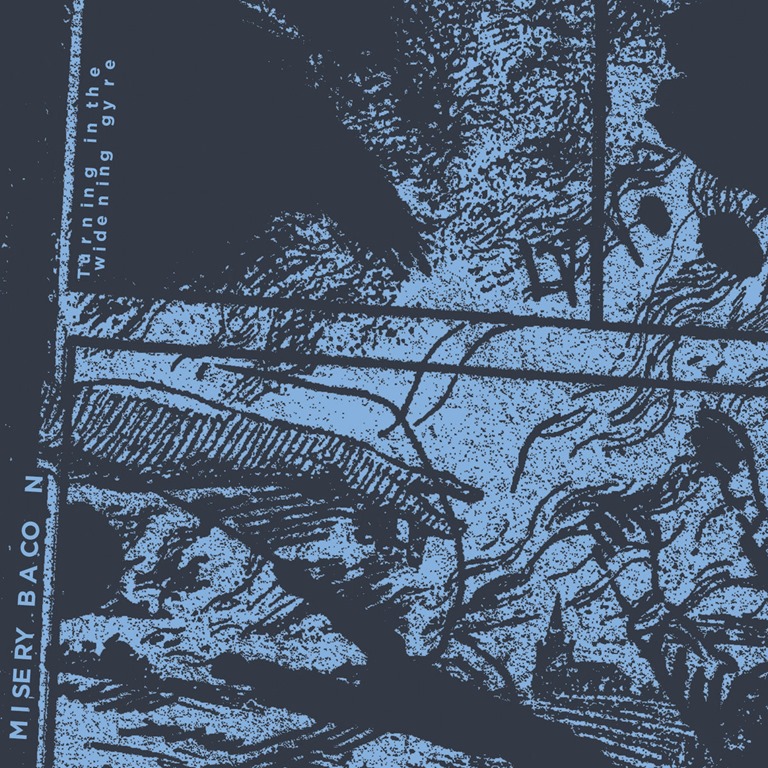
This is proving to be a particularly good week in the world of noise, what with Foldhead’s Paris Braille and this being released on the same day. There’s more information given about this release than most to slip out from Swedish underground label Dret Skivor – in that there is actually some. We learn that the work was ‘Recorded and assembled on residency at Bergen Centre for Electronic Arts, Leveld AIR and Gallery ASK, Norway 2025’, and that the ‘Album and song titles taken from / inspired by WB Yeats ‘The Second Coming’’. We also learn that Misery Bacon is the vehicle of Bergen’s Luke Drozd. It’s not clear if this is one of those monikers that’s amusing because translation, or if it’s a case of humour that doesn’t translate geographically, like Die Toten Hosen. I’m sure dead trousers are a massive wheeze in Germany, but here it’s vaguely surreal but mostly a bit odd. Then again, ‘Misery bacon’ makes me think of all the moaning gammons we have here in the UK, red-faced and chuntering into their Carling about ‘immagrunts’ and how everything’s ‘bloody woke’ nowadays.

It contains two longform pieces, each filling a side of the cassette release – of which there are just six copies – ‘Every finger double crossed as things fall apart’, and ‘Shambling onwards in the shadows of indignant birds’, and neither literary allusions or social commentary are apparent in the work itself.

‘Every finger double crossed as things fall apart’ starts with some sampled dialogue and an array of pops, clicks, whirrs and glops, a swampy collage of seemingly random elements layered across one another. It’s atmospheric, but also difficult to get a handle on any idea of where it’s headed, if there’s any theme or concept that connects the diverse sources. But soon, serrated drones and distortion build to a sustained whorl of noise atop a quivering bass judder. Five minutes in, and it’s an all-out assault worthy of Merzbow or Kevin Drumm. It’s noise, and it’s harsh, but it’s an ever-shifting, seething mass of tinnitus-inducing tones and textures, at time fizzing and crackling in such a way as to give the impression that the sound is actually inside your own head, rather than reaching the brain from an external source. There’s a niggling crackle of static that sounds like there might be a problem withy your equipment. This is most pronounced and unsettling during a quieter spell of jangling metal which sounds like a light metallic object being rattled against a metal fence, or the clattering of cutlery. It’s a piece that slides and slithers hither and thither, and sits well against Throbbing Gristle’s most experimental, abstract works. Towards the end, it does feel like it could be the soundtrack to the collapse of everything. Listening to it while the US government is in shutdown, Israel seemingly continues to level Gaza despite a supposed ceasefire, hundreds of people are arrested in London and other cities for protesting against genocide, and Russia continues to expand its campaign of interference across Europe, it’s hard to feel much positivity.

On a personal level, the present feels overwhelming. The world is at war. The world is on fire, and at the same time that we have drought, we have flooding. But instead of coming together collectively to address this global crisis, as a species, we’d rather bomb the fuck out of one another. And with shootings, mass knife attacks and all manner of savagery taking place daily, it really does feel as if humanity has descended into a spiral of insanity and self-destruction. And there are really no words to articulate the panic and anguish of all of this. Music and literature may provide a certain comfort and distraction, but it’s in sound alone – more specifically, sense-shattering noise – that I find something which articulates the experience of living in these torturous times.

And so it is that ‘Shambling onwards in the shadows of indignant birds’ returns to the sampled dialogue which opens ‘Every finger double crossed as things fall apart’, before plunging into a mess of static cackles and hiss. It’s a Bladerunner world of rust and robotics gone wrong. It’s murky and it’s unsettling. A blast like the roar of a jet engine momentarily hampers the hearing, and we sit, dazed, in the comparative quiet of crackles and pops. There’s a mid-track lull, which feels uncomfortable as whistles of feedback and laser bleeps criss-cross before collapsing into a broken wall of noise on noise.

Turning in the widening gyre is harsh, heavy, bursting with uncomfortable frequencies. The final minutes are nothing short of punishing. And yet, at the same time, that punishment offers vital release. This is where you get to let go. At last.

AA

a2298054435_10

Dret Skivor – 1st August 2025

Christopher Nosnibor

Having debated the merits – or otherwise – of the extensive, expansive, hyperdetailed press release, and having felt a certain trepidation when tackling a work rooted deeply in weighty postmodern theory beyond the peripheries of my personal field of – perhaps rather specialist – expertise, I find myself on altogether more confident footing here. The latest release on Dret Skivor, a Swedish label devoted primarily to drone, noise, (darker) ambient, and general weird shit, offers up two longform tracks, each corresponding with a side of a C30 cassette, accompanied by precisely zero information, beyond the fact that it was ‘Mastered by Dave Procter at Svinig Studio, Skoghall.’ Hell, it doesn’t even have any capital letters.

I’m at ease with this. When it comes to abstract / instrumental / experimental works, I don’t need to know who the musician or musicians are, what gear they’re using, and unless there’s something quite specific which inspired or motivated the work on a theoretical or personal level, I generally prefer to allow the music to speak for itself, and for my mind to do the work of interpreting how the sounds affect me.

The tracks are, in fact, both exactly 14:27 in duration – which is oddly precise. It’s the only thing which does seem to be precise, but not odd, about the compositions – such as they are, with ‘my crustacean brother’ manifesting as a huge, churning wall of full-spectrum noise. It’s the mod-range that fills the space and fills your ears and your head as it barrels from the speakers, a dense, relentless rumble like a mangled engine – but there’s low end that hits around the gut and enough treble to add an extra level of pain. Sometimes, it sounds as if there may be fucked-up vocals gnarled up in the machine, distorted, fractured, and buried in the mix – but it’s as likely that it’s my ears deceiving me as my brain tries to subconsciously find form in the formless. If you mic’ed up a tractor engine and then ran the recording through half a dozen distortion pedals, it would likely sound like this. The sound feels mechanical, analogue: rather than harsh in the way pure digital often is, this is the sound of moving parts, or rusted metal flapping as it slowly disintegrates. Around eleven minutes in, it seems to gain in volume and intensity, but this again could be an auditory hallucination. Yes, this is how methods of torture involving sonic elements, the likes of which were trialled as part of MK Ultra, work. It’s not sensory deprivation, but complete sensory overload. When it stops, the silence feels wrong.

‘gås!’ is a fraction less dense, favouring treble a little more, and also containing more detail, or at least more clarity, which allows the detail to be heard. There is a distinct throb which creates a rhythm – one which glitches and stutters as it snarls and roars. It’s harsh, pure, brutal sonic punishment, taking the Merzbow template and… replicating it perfectly, not just sonically, but in the spirit of inflicting damage, both physical and psychological, on the listener, knowing that the whole thing is insane, beyond excessive, testing the patience as well as the stamina over the course of almost a quarter of an hour. It’s nasty, and I love it. You (probably) won’t like it, sugar…

AA

a0540901673_10

Dret Skivor – 7th February 2025

Christopher Nosnibor

I do like an album with a story. With Korset i Röjden by D L F, we get half a story, but one which builds a sense of mystique, enigma, a sort of allusion to local folklore, set out in the notes which accompany the release:

‘There’s a place in the forest, in the shape of a cross, where nothing grows. No one knows how it got there, or why.

60°33’48.6"N 12°39’15.6"E

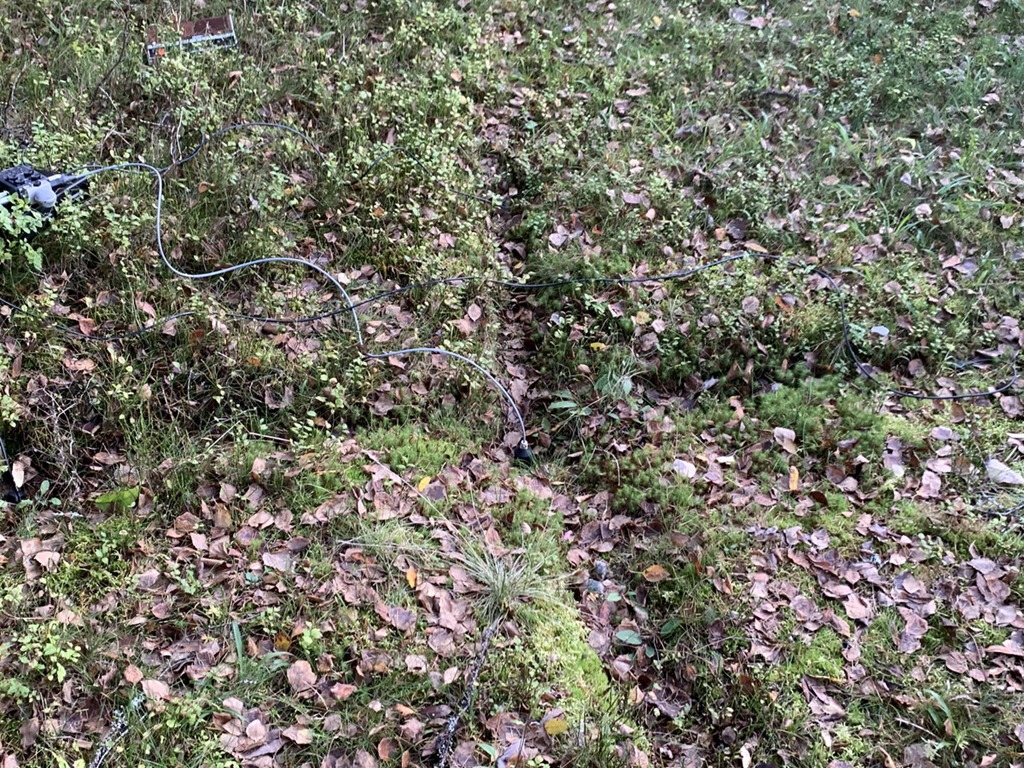
The two recordings on Korset i Röjden capture sounds and vibrations in and around the cross. A geophone, a few contact mics, an H6, a smartphone, and a broken cassette recorder. Track two, ‘Den onda ska pressas ur’, features samples from a 1963 television documentary, an old Finnish lullaby, and taped interviews with locals from the 1990s.’

This has got it all: mythology, mystery, co-ordinates – a map, in other words – and the kit, the foundations for a sonic retake of The Blair Witch Project, perhaps. There is a strong sense of there being something hat isn’t right. Granted, I get that from simply breathing the air, from turning on the news – but this is quietly unsettling. Very quietly, in places: the first two minutes or so of ‘Korset’ are almost the sound of silence. Turn it up, and there is the sound of air, a soft breeze, perhaps, some kind of background noise. Insects? Footsteps? The rustle of leaves? Perhaps, but just as nothing grows in that unexplained cross marked in the forest, so it seems there is little sound. No birdsong, no… nothing. Has anyone ever run a metal detector over the sight? Considered digging?

I mention digging with caution. There is a wood close to where I live, a portion of which has been decimated in the last three years or so by dirt bikers who have turned the space into a track with jumps and ditches. It’s clearly not just the work of a couple of kids with spades: these are proper earthworks, excavations, the likes of which have involved adults turning up with mini-diggers. I once witnessed a woman challenging a family who had turned up with motorbikes who were revving around and scaring pedestrians and dog-walkers being met with aggressive verbal abuse. My email reporting the matter was of no consequence. Rather like this narrative detour.

‘Det onda ska pressas ur’ offers another ten minutes of haunting dark ambience – unsettling, disorientating. It rumbles and echoes around infinite subterranean corridors, leading to who knows where? There are sounds – possibly the pushing through undergrowth, possibly almost anything else. Wraiths whisper through the clicks and crackles, hums and pops… is that breathing or simply the breeze?

Korset i Röjden tells us nothing, other than that the world is a dark and unpredictable place. It’s a dark and unpredictable album. But it hints that we should fear, and fear the worst. There are dark forces all around, and while the insanity of the world right now is more than reason to take cover, it’s worth remembering that there are other things a play.

AA

a2167462165_10

Dret Skivor – 6th December 2024

Christopher Nosnibor

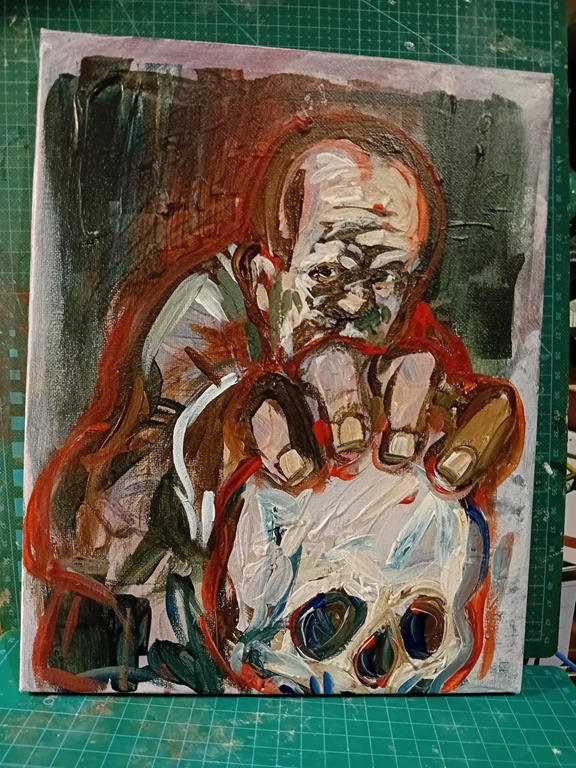
Another Bandcamp Friday, and another release from Dret Skivor, Swedish microlabel specialising in noise and weird shit on super-limited cassettes. This time, they promise a ‘beast of a release with artwork by the manbear that is Christian Blandhoel’. Side A of this cassette is supposedly the ‘hard side’ and Side B the ‘soft side’, but these things are relative. Mellow it is not, and it really is a beast. I’d been forewarned that it was a long one, and landing the same day I received my copy of the new Swans live album, which clocks in at a solid two and a half hours, I kinda shrugged it off, thinking ‘yeah, it’s long, but it’s not that long…’ and while that’s true, I perhaps should have paid more heed. It’s not just about the length with this one. It’s about the intensity. For the records, Swans’ Live Rope is intense, and anyone who’s seen them live in the last couple of years will appreciate this. But the recordings simply do not capture the experience of being in the room, the decimating volume.

The thing is, there’s listening to music, and listening to music. I listen to music while I’m cooking, but it’s simply on, whereas listening to music with focus is a true commitment, and takes some energy. Listening to and knowing is half the battle takes a lot of energy.

Only a minute or two into ‘bad things keep happening’, the first of the album’s seventeen tracks, there’s some extreme panning that’s churning my guts and making me dizzy, and that’s without the feedback whistles that land just in the region of tinnitus. It’s a challenging six minutes, which culminates in a slugging blast of lung-rattling bass sludge.

‘Danger draws near to what you hold dear’ is an ominous piece of dark ambience with static and hum, crackles and horrific ruptures of noise. There’s a low-end mechanical thrum, low-end doom frequencies which flicker and throb, and nothing comfortable. Trilling feedback whistles for what feels like an age before more bass frequencies hit, and then static and distortion hums and hovers from left to right. This feels like an album designed to inflict optimal pain and anguish. ‘Loaded for bear what a nasty spectackle’ hums and drones and bursts distortion to a point at which is inflicts pain at first, before diminishing in its confrontational intensity.

Scraping strings and ominous drones and unsettling discord and dissonance are all the things one might expect from a track bearing the disturbing title ‘i always hope to find you fully dilated and bleeding’, and when it suddenly ruptures into a surge of fizzing distortion, the experience becomes quite overwhelming – and it only grows more intense and anguishing as it progresses.

‘rendering flesh’ is a horrible mess of buzzes and hums, feedback trills and screams, snarling whirls and blips and glitches. And the unpleasant frequencies, the serrated waves, the tension-building noise just keeps on coming, with the pieces packed back-to-back with no pause for decompression. At times it sounds like a bulldozer ploughing through the speakers, at others it’s more akin to the soundtrack to psychological torture or one of those anxiety dreams from which you wake, drenched in sweat, which fuck the entirety of your day.

Christian may be in pain, and and knowing is half the battle is his way of letting it out. Or perhaps he’s a sadist who derives pleasure from inflicting pain on others. Either way, and knowing is half the battle is likely to stand as an endurance test which many listeners will fail. Christian seems to have a knack for finding all the frequencies which resonate in the wrong way: every throb and click is a tension-building, gut-worrying microassault. ‘Abakan hyperburst’ again exploits both wild panning and distortion to distressing effect, before ‘the current trend of selective autism’ presents a sparse but challenging question. What is he trying to say here? Well, it does seem that a certain type of person will defend shitty behaviour by claiming that they may be on the spectrum – undiagnosed, of course – or have some other issue as a justification, which diminishes and undermines those who are truly autistic, in the same way as the people who shout loudest about their mental health and take time off work for mental health reasons aren’t necessarily those who are truly suffering. It is a minefield, and a topic which goes far beyond the reach of this review, but one that we shouldn’t ignore, since Christian has raised it.

Other titles are perhaps less provocative, and instead are more surreal – such as ‘mcdelivery plush trumpet’ and ‘the wonder of phosphorous burned eyeholes’, but ‘exploding heads in peacetime’ is a blistering trill of feedback worthy of Whitehouse, underlaid with billowing bass.

This would be a tortuous work regardless of duration, as Christian remorselessly pushes all the buttons for noise which is uncomfortable, distressing, but the fact this album seems to last a lifetime only heightens the tension. and knowing is half the battle is painful, horrible in every way – so needless to say, I love it, but I wouldn’t recommend it.

AA

a1827600571_10

Dret Skivor – 1st November 2024

Christopher Nosnibor

Procter’s been at it again. The only artist I know who can go on tour and play under different guides doing different music – or ‘music’ – depending on the booking. Not that anything he does is commercial or has any kind of mass appeal: it comes down the question of if you’re on the market for harsh noise or something a bit gentler. And how he’s back from one of his excursions, here we have new studio work, which clearly didn’t make the merch table – released in a limited physical edition of just three hand-painted CDs.

One might wonder just how far it might be possible to push the concept of Fibonacci Drone Organ, but since the mathematical Fibonacci sequence is endless, so it would seem are the limits of this project. This particular outing, with a title inspired by Ken Loach, does mark something of a departure for FDO, being less droney and more barrelling bassy murky noise. It’s also more overtly political – nothing new for Dave Procter, but usually something reserved for his other projects.

‘Disenchanted with the state of the fucking world? You’re not alone’ he writes. ‘This is a synthesised reflection of the current state of my brain. I hope it brings you some peace.’

How much peace one can expect from longform tracks entitled ‘war war death death’ and ‘american client state’ it’s hard to really know, but I for one can relate to Proctor finding solace in the cathartic release of creating dense noise. Because there comes a point where words are not enough: indeed, there are no words. In fact, I derive some comfort – small as it is – from this release. It does indicate that the state of Dave’s brain isn’t the best, but with the US election looming and the very real possibility that Trump could become president again, I can’t help but feel a combination of gloom and outright terror. In recent months, as the war in Ukraine has rumbled on, and the hell on earth in Gaza has escalated, and escalated, and escalated, and Israel’s nauseating genocidal mission continues to be funded by the West, it’s felt like a growing weight in the atmosphere. I’ve found myself tense and on edge. Everything is wrong. ‘I find no peace,’ as Thomas Wyatt wrote.

It feels as if the world was waiting for the pandemic to pass, and as if during the successive lockdowns, world leaders were simmering, festering, building their fury to unleash the moment restrictions were listed. Recent years have been painful, and as Procter’s brief notes indicate, there are many of us who are struggling, powerless, as our governments continue to push the line of Israel’s ‘right to defend itself’. No-one would deny that right, but no rational person would agree that a death toll of almost 44,000 – with many tens of thousands of women and children, not to mention other civilians in that figure – is proportional, or merely self-defence. While news outlets do report these figures – which are, it has to be said – beyond nauseating – there is no compassion in the reporting. Deaths are but numbers, the words ‘humanitarian crisis’ but words. The images of smoke and dust and devastation are horrifying, but to actually be in the midst of it, with no safe places to go, as schools and hospitals are targeted, is beyond imagination.

It’s in this context that Procter has created two grey, grating, heaving and ugly tracks, one fifteen minutes in duration, the other over twenty-three.

‘war war death death’ is bleak, and dense. There’s the heavy whip of helicopter blades at the hesitant start of the track, which gradually emerges as a long, wheezing, churning drone, resembling the rumble at the low end of the mechanical grind of the first Suicide album. And this is pretty much all there is. And from this minimal piece emerges a sense of desolation, particularly as the end, which concludes with just rumbling static – and nothing. Devastation. Dust. Annihilation.

‘american client state’ is again, heavy a serrated edged, humming drone that hovers, panning and circulating like a malevolent drone. It’s pitched in the range that really gets under your skin and penetrates the skull, not in an exhilarating way, but instead slowly wears down the spirit, dissolving any sense of motivation. The monotone hum seems to somehow articulate, in ways that words cannot, the sense of powerless I personally feel, and suspect others do, too. There’s something empty in the monotony, not to mention a squirming discomfiture. What can we do?

All digital sales money from this release will go to the Palestinian Medical Relief Society, and while it may be a drop in the ocean, and while what needs to happen is for aid to actually be allowed to be delivered – something which will require an intervention which is long overdue – something, anything, is better than nothing.

Often, there’s a droll humour to Dave Procter’s work, but apart from the title, the higher the monkey climbs, the more you see of his arse is a bleak work, and a depressingly droney as it gets. But it provides an outlet, an expression through which to focus that release, and reminds us that we must hope against hope for better ahead.

AA

a1192190513_10

Drek Skivor – 5th July 2024

Christopher Nosnibor

It’s been a little over a year since we last heard from Fern. Previous release, Deformed, was, as I put it, ‘appropriately titled’ and ‘some mangled shit.’ Such is Fern’s approach to music-making, it would seem, seeing damage as potential, an opening, a possibility. It may be a perverse pleasure, but it can be a pleasure nonetheless, to hark at the sound of breakage and malfunction. Perhaps because it’s noise which possesses an honesty that’s rare in so many musical recordings, where the more common ambition is to create the best, most polished, or otherwise superior version of something, be it a song in the conventional sense, or a live recording of something perhaps less conventional. It’s a rational and valid objective, but the reason I suggest that the sound of something broken is honest is because it feels rather truer to life’s lived experience.

How many obstacles must one surmount to achieve that polished definitive version? Moreover, how many obstacles must one surmount to simply get through the days? Life has a habit of throwing shit at you. Just when you think you’re having a good day, an ok week, something breaks – and it nearly always costs money. Your laptop dies, your phone screen cracks or your charger cable breaks. The shower starts leaking or there’s a power cut. Some days – and weeks, and months – it simply feels like everything is against you. Something goes awry at every turn. Life, then, is imperfect, an endless succession of glitches and breakages, against a backdrop of noise and distortion and shouting and frustration and confusion and just a whole load of shit in general.

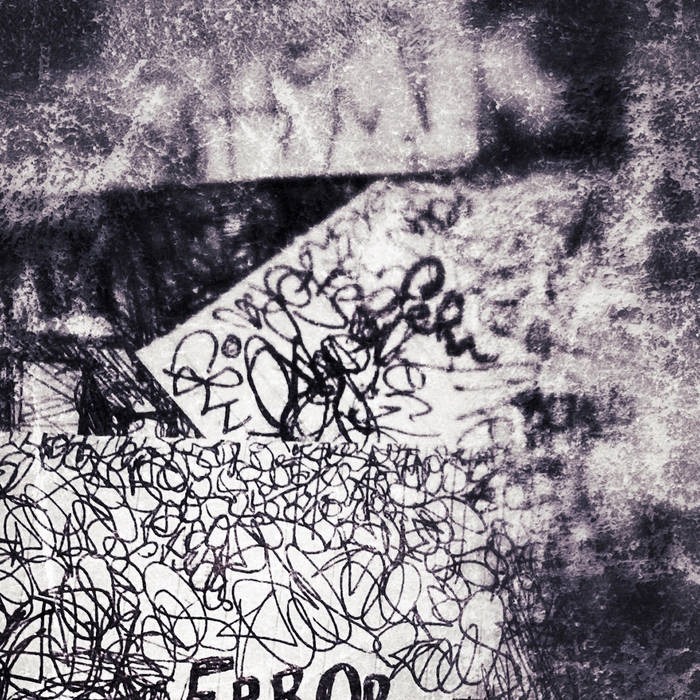
I arrive at Error having recently had a couple of posts removed by Facebook having been flagged by their bots as ‘spam’ due to my attempts to artificially gain likes by tagging people. Those people specifically being the Aural Aggravation page, the band, and their PR and / or label. Somehow, this is spammier than sponsored links to shit I have no interest in that repeatedly crop up every time I return to the site and spammier than the relentless porn links and so on posted in groups. And so I arrive at Errors frustrated, antagonised, feeling that systems are against me, and feeling – in some way – persecuted, as if this is some deliberate obstruction to my efforts to promote obscure music. Music like this.

‘Is this music the result of a degaussing error? Or is it a long gone and forgotten tape shaped and distorted by time and a chewing cassette deck, still here for us to experience……’ This is the way the release is famed on Bandcamp. And I find that Errors isn’t as messed up as all that. It’s not exactly easy listening, but…

The first track, ‘slip ‘n’ slide’ is a fairly standard work of glitchy minimal electronica: a bit dark, a bit stark, bit trip-hop. ‘abrupt morning’ hums and crackles, and something about the production renders everything muffled, distant, in the way The Cure’s Seventeen Seconds feels simultaneously claustrophobic and distant. It is not a comfortable sensation. It is a work of sonic wizardry, to create a sound which stands at such polarity.

‘mellow dream’ is a more conventional ambient work, a buffeting sonic cloud carried by the wind, although there are some less mellow moments where darkness enters the equation and unsettling undercurrents rumble disquietingly.

‘ignite interlude’ goes all-out on deep bass hip-hop, but sounds like listening to a Wu-Tang side-project from the pavement as it plays from a car pulled up at traffic lights with the windows up, before ‘c’mon intro’ hits a slamming industrial dance seam – but again, it sounds as if it’s bleeding through the wall from next door. The album takes a solid turn towards the dancefloor in its second half, although the insistently percussive ‘bits and pieces’ is more reminiscent of Throbbing Gristle. ‘generative form’ feels like something of a collapse into a formlessness defined only by a looping repetition, emanating a kind of fatigue that paves the way for the suffocating collage of loops and electronica of ‘lambs’ – where they sound as if they’re being tortured and strangled. It’s a scrambled melange of sounds collaged from wherever, which brings the album to a suitably dark and unsettling conclusion.

I’m not quite sure what I’ve heard here, or whether I like it or not, but that, I feel, is the desired effect – and it’s certainly a desirable one.

a2358833930_16

Dret Skivor – 7th June 2024

Christopher Nosnibor

Legion of Swine trotted out for a few live exhibitions in the last few months, but Live at Plourac’h documents a show which was something of a one-off among these, with the performance having taken place in a studio (Soundfackery Studios in Brittany) and streamed live, followed by a Q&A, with audio from both featuring here.

Like many noise acts, T’ Swine tends to keep performances brief. The brevity is, in may respects, part of a tradition on the scene, and while Masonna’s explosive three-minute sets take this to an extreme – and why not? Noise is all about extremity, and finding new limits to push beyond. It’s all about the impact of the short, sharp, shock. Leave them wanting more – those who haven’t fled the room, hands clasped to their ears, while holding back the urge to vomit, anyway.

Even in the absence of the old performance aspects of Legion of Swine shows, whereby Dave Procter would be anonymous in a lab coat and latex pig mask, which means we get to witness the bearded, bespectacled northerner looking quite unassuming, sonically, LoS remains a formidable force.

Opening with strains of feedback and scratching buzzes of distortion, the set holds a single, undulating note of wailing, droning feedback noise for what feels like an eternity, the frequencies and tone changing but still offering nothing more than feedback for the first five minutes of the set. The level of strain and the tension builds, but still, holding back, holding back, testing the patience as well as the eardrums. To have been in a room with this, at gig volume would hurt. Then, unexpectedly, things drop in intensity, and it’s a heavy hum, a long, low, whine that nags and throbs.

As a noise sculpture, this is a restrained, patient piece which hovers within the parameters of a very limited range in terms of frequencies and particularly texturally, manipulating feedback in the mid- and lower-ranged for the bulk of the sixteen-minute duration.

Even recorded, with the separation from the actual event, the frequencies and volume are conveyed clearly here, and there’s a gut-trembling grind to the lower-end oscillations. The release notes summarise the kit as a ‘trusty metal roasting tin and a couple of effects pedals’, and whatever the truth of the facts around the gear involved – which I suspect would have been minimal – the racket created is significant.

There’s a long, long fade to nothing.

There is a certain amusement in the fact that the Q&A lasts twice the duration of the set itself. Dave speaks engagingly on the technical processes of his use of contact mics, and, yes a baking tin, and the mechanisms involved in changing pitch and creating feedback, and so on. It’s a nerdfest that Steve Albini would have been impressed by. He discusses room space, PA, body temperature. ‘Every time, it’s a different thing’, he says.

His recollection of room temperatures and their effect on sound is remarkable, and the dialogue is illuminating. Like so many noise artists, there is a yielding to the random, to circumstance, eventuality, accepting that no two performances will be alike as acoustics and the way sounds interact is spontaneous and unpredictable.

The interview is interesting and wide-ranging, but to discuss and dissect it at length here feels like a job for a longer, more academic discursion.

This is a niche release: that’s a given. Side one will inevitably receive more plays. But both warrant same time. Listen, and learn. Enjoyment is probably optional.

AA

a0816152283_10

Dret Skivor – 3rd May 2024

Christopher Nosnibor

Dret Skivor seem to have managed to sync their release schedule to Bandcamp Fridays pretty neatly. Meanwhile, the man behind the label, Dave Procter, has enough different musical projects to fill the entire label’s roster single-handedly.

Not content with pumping out harsh noise as Legion of Swine and ambient drone with mathematical divination as Fibonacci Drone Organ, and spoken word ramblings backed with dark noise as Trowser Carrier, or collaborating with countless other artists, notably Claus Poulsen with whom he (ir)regularly convenes for a release, and a brief excursion as twAt clAxon, Procter has also been operating as Klôvhôvve, a vehicle for ambient / glitch weirdness.

Following on from Is it? It is, an album containing two longform tracks which offered their own call and response, released in March, Live at JT Soar feels on one hand like a bit of a stop-gap, but on the other, a reasonable consolidation. More than reasonable, in fact, considering that Procter devotes a considerable amount of time to performing live – and is perhaps the only artist I can think of who will book a tour and not play under the same guise more than a couple of times, or for two consecutive shows. It is, undoubtedly, easier to get bookings if you have a broad range of styles to offer promoters, even if that range does sit under the wider umbrella of obscure electronic weirdy shit.

Before we ger to the obscure electronic weirdy shit of the recording, it’s worth a brief acknowledgement of the cover art, which is truly classic Procter (the photographs which grace the covers of his two collections of poetry / rants as Dale Prudent are strong cases in point). Gritty, unpretty, urban, and a bit off kilter, snapshots of the everyday strange. Here was have a shot of the outside of the venue, still with its signage for JT Soar, Wholesale Fruit and Potato Merchants, from which it takes its name. Unassuming is an understatement for this building, with graffiti on one door, and a piece of street art depicting Nottingham’s best-known polemicists, Sleaford Mods, replicating the artwork for their most recent and widely-acclaimed album, UK Grim on the garage door. The shot is some real-life documentary, its relevance heightened because the vocally socialist Procter departed the UK for Sweden post-Brexit because… well, Brexit.

Klôvhôvve’s set, which lasts twenty-four minutes, is mellow and mellifluous to begin with, but soon swerves into a melting together of soft tones with scratched, warping drones, the glitching eating into the surface of the looping tapes affected at first. Vocal snippets, fractured, fragmented, distorted, cut in and out, as the music ebbs in and out unpredictably.

There is a sense of nostalgia about this, but the overarching sensation is more that of a post-apocalyptic narrative, a bleak dystopia of degradation, of societal collapse whereby only damaged recordings and fragments of past technologies remain, twisted, rusted, malfunctioning. The set does have distinct segments, although they do flow together to form a continuous set, and as such, it makes sense that it’s released here as one single track. It’s not as if anyone is going to be skipping to hear the hit or their favourite song of the set, and it’s structured around transitions between evermore haunting atmospheres. It’s pretty unsettling stuff, dank and grumbling with thunderous rumblings away off in the background while a continuous slow of babbling and sharp scrapes cut into the foreground. But then there’s something resembling a trilling, twisted rendition of ‘Silent Night’ which crackles and stutters through static, and it warps and crackles its way to a slow fade.

There is some strong tonal separation here, and the interjections which appear unexpectedly are almost enough to make you jump But for the most part, it makes your skin crawl – slowly, in a state of curiosity and ponderous hesitation – as you winder where it may be heading.

Procter understands the importance of music which makes you feel uncomfortable, which tests your limits, and this release captures a live set which really teases at the tenterhooks.

AA

a3905712960_10