Posts Tagged ‘claustrophobic’

17th October 2025

Christopher Nosnibor

…and still, the COVID pandemic continues to yield new offerings, even if some are repackaged, or otherwise documents of events which took place during that strange, strange time. Real live music events were, during those dark days, simply things of memory, which we could only dream of happening again – because, for a while which felt like an eternity, there was no end in sight. Live streaming events were as close as we got. I watched a few, participated in a handful, too, but like having beers on Zoom, as much as they went some way towards filling the gaping chasm that was social life, these things were countered by a certain pang of sadness and consternation, reminding us as they did of what we were being deprived of, highlighting the fact that there is truly no substitute for the experience of live music. I write this as a fairly ardent misanthrope who will sometimes go to quite exceptional lengths to avoid other people. But sharing a room with musicians and people who seek to become one with the sound and the experience is something altogether different. Unless it’s one of those gigs where casuals turn up and yack at one another in loud voices for the duration, of course. I find that this happens less in proportion to the obscurity – and / or extremity – of the music. The more difficult, the more abrasive, the further from the mainstream the artist, the cooler the audience. In this context, Orphax’s audience must be bordering on godlike.

Embraced Imperfections features ‘two live performances recorded during a live video streaming event during the early covid-19 pandemic’, originally released as Embraced Imperfections and Live in your living room, now, remastered, they come as a two-disc release. The title reflects the nature of the recordings – both performances were improvised ‘with various synths, organs, and effects’, and as such are inevitably imperfect. But… how would we know? Artists – musicians in particular – are commonly their own harshest critics. They kick themselves for the most minor flaws that simply no-one else on the planet would notice in a million lifetimes. But still, making peace with and embracing imperfections is a significant step.

The first disc – Embraced Imperfections I – offers forty-one minutes of slow-sweeping organ drone which subtly undulates and quivers, humming on, ebbing and flowing, but in the minutest of microtonal shifts. Above all, it’s a continuous sonic flow, and the shifts in its sounds and structure are made at an evolutionary pace. You don’t listen to music like this to be affected, to feel impact, but instead to be carried along, to feel it envelop you, to wash over you, to experience full immersion. It isn’t that nothing happens… so much as very little happens, and does so incredibly slowly. If listening requires patience, so does the making. It is not easy to hold a single note for long minutes at a time without feeling a certain pressure to ‘do’ something. As this performance evidences, Orphax possesses the Zen-like ability to resist any urge to increase the pace of movement – so much so that time itself seems to stall and sit in suspension here. Even the first fifteen minutes feels like a lifetime, and the secret to appreciating this is to stop listening and simply let it become the backdrop as you slow our breathing and allow yourself to relax. Remember what it is to relax?

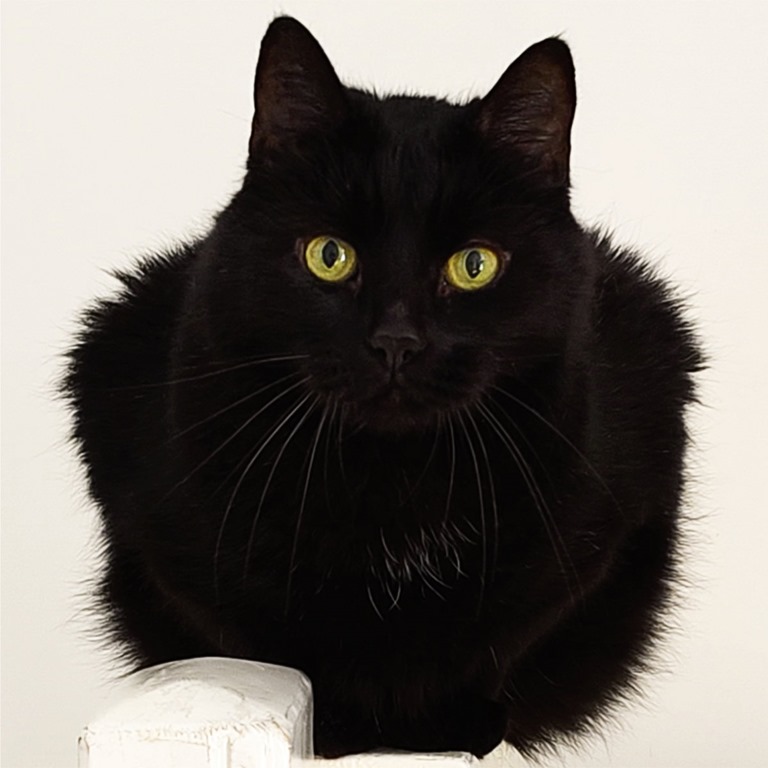
The shorter Embraced Imperfections II, which clocks in at just over thirty-six minutes, is less overtly organ-driven and more constructed around an electronic hum, and it’s dark, claustrophobic. It also feels more low-key, and more ominous. It’s still another extended dronework, the sound of which is absolutely the immersive dronescape, the hovering hum that feels like nights drawing in and claustrophobic depression descending on the dense darkness. It’s a dense, scraping, soporific endless polytone that scratches and hums for what feels like all eternity. While far from accessible or easy listening, it does make for an immersive journey. And cat pics always win… embracing impurrfection.

AA

AA
a0536185753_10

Gizeh Records – 4th April 2025

Christopher Nosnibor

Returning for their eighth album, A-Sun Amissa, purveyors of drone-centric ambience centred around founder Richard Knox pull back from the rather larger avant-rock sound of 2024’s Ruins Era to concentrate once more on ‘unsettling drones and claustrophobic atmospheres’. Knox is joined for the third successive release by Luke Bhatia and Claire Knox, indicating that this is a fairly stable lineup, and perhaps this has been a factor in the album’s exploratory, evolutionary approach.

The promise is that the record’s ‘washed out and ethereal sound drags electric guitar, clarinet, voice and piano through pillows of reverb and distortion to build heaving, desolate dronescapes. Moving through dense, oppressive passages of sound and diffusing into sections of gloomy, haunting restraint. We Are Not Our Dread is filled with majestic, textural detail. It envelops and, at times, smothers you before releasing just at the right moment, resolving in a billowing, melancholic, distorted reverie.’

The first thing that strikes me – as is often the case with any project centred around Knox – is the evocative nature of the title. Perhaps I’m feeling uncommonly sensitive right now, but this one in particular lands with an unexpected impact, and as much as the implication is one of positivity – no, we are not our dread, our dread does not define us or dictate our lives – there is equally the emphasis on the fact that we have that dread. And not you, or I, but us, together, collectively. And so it is that dread become the focus, that thing which looms large over not only the title or the album, but our lives. Why do we have this dread? It would not be an overstatement that the pandemic changed everything: the world that we knew lurched on its axis and no-one knew how to handle it. And since then, insanity has run free. 9/11 may have rattled the rhythm of life for a time, but not it seems that the entire world spent the pandemic years just waiting to wage war, and now nothing is safe or predictable – not your job, your home, your ability to post stuff online. You don’t need to be a prominent protestor or social agitator to attract the wrong kind of attention. The dread hangs over every moment now. We thought we had seen the worst when COVID swept the globe and lockdowns dominated our lives, and began to breathe a collective sight od relief when things began to retract, as we looked with optimism toward the ‘new normal’. But who ever anticipated this today as the new normal the future held?

We Are Not Our Dread consists of four fairly lengthy instrumental compositions, and ‘Electric Tremble’ arrives in a dense cloud of ominous noise which immediately builds tension, and if the rolling piano which drifts in shortly afterwards is gentle, even soothing, the undercurrents of rumbling discord and distant thunder which persist maintain a sense of discomfort which is impossible to ignore.

Ever since his early days with Glissando, melding post-rock with ambient tropes, Knox has had an ear for the unsettling, deftly manoeuvring elements of the soft and gentle with the spine-tingling. And while the eleven-minute ‘All The Sky Was Empty’ is a quintessential work of epic post-rock abstract ambience, rich in texture as it turns like a heavy cloud billowing and building but without an actual storm breaking, instead dispersing to offer breaking light and a sense of hope, the wandering clarinet brings a vaguely jazz element to the sound.

‘Sings Death or Petals’ arrives on trails of feedback and rumbling guitar noise, and is immediately darker, and those dark undercurrents continue with crackles and rumbles and elongated drones which persist beneath the ghostly, ethereal voices and reverb-heavy piano and picked guitar notes. At times, this bears the hallmarks of latter-day Earth, but at the same time there’s a less structured, less motif-oriented approach to the composition, which leaves much open space. I still can’t choose between death or petals here. It builds to a churning whorl, before the final track, ‘Our Hearts Bent As Crooked Lightning’ stirs from a rippling array of simmering noise and evolves into a colossus of rumbling drones, and, over the course of ten-and-a-half minutes, grows supple with softer waves of expansive synth which remind you to breathe again. For all the fuzz and broad swells of abstract, buzzing noise that’s equal parts gripping and soothing, the overall effect is sedative, and welcome.

We Are Not Our Dread leads the listener through some challenging moments, and as each listener experiences works differently, as I hear the final soaring strains of ‘Our Hearts Bent As Crooked Lightning’ this strikes me personally as dark and challenging. The intentions may be quite different, but this is undeniably a work which is sonically ambitious, spacious, resonant. Even as the tension lifts, the mood remains, like a dream you can’t shake, like the paranoia that persists even when you’ve dome nothing wrong.

That We Are Not Our Dread is true, and so is the fact that, to quote from Fight Club, you are ‘not your job. You’re not how much money you have in the bank. You’re not the car you drive. You’re not the contents of your wallet. You’re not your fucking khakis.’ And you are not your dread. It may at times possess you, but this, this is not it. This, however, is a great album.

AA

a1068739543_10

Warren Records – 25th November 2022

Christopher Nosnibor

While Leeds has a strong reputation and record for emerging noise-orientated rock bands, Hull is proving that it’s not far behind as a spawning ground for purveyors of noise-driven angst and anger.

As was the case in the 70s and 80s, social deprivation proves to be a powerful driver for the creation of art that channels frustration and the whole gamut of expression that comes from dark places, and from adversity. Of course, it’s always the North. Leeds spawned goth, Manchester Joy Division, Magazine, Slaughter and the Dogs, The Durutti Column. Sheffield, too, has a strong heritage of bands known for innovation born out of frustration, with Cabaret Voltaire being a strong starter for 10. Hull, of course, brought us Throbbing Gristle, arguably one of the most groundbreaking acts of the 70s and beyond.

Most punk bands, especially the Pistols, simply cranked out pub rock with a sneer and the guitars turned up. Throbbing Gristle went beyond any conventions of music to create a real soundtrack to alienation.

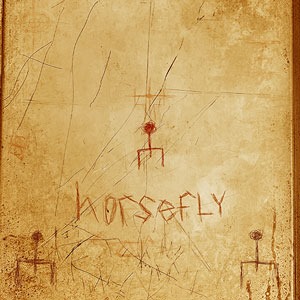
More recently, we’ve had The Holy Orders, Cannibal Animal, Low Hummer, Parasitic Twins, and many more. And now we have Bug Facer kicking out a disaffected din, and ‘Horsefly’ is one hell of a debut single, and clocking in at over six and a half minutes it’s a behemoth of a track.

The band say of ‘Horsefly’, ‘At its core the track is about struggle. It conjures images of being trapped or stuck in a box or something but we don’t want to give away too much! We try to write music that is evocative and suggestive, not being too direct with our lyrics and ideas as we’d much prefer our listeners to tell us what it is they hear and see as they listen to our tracks. Some people have said it’s like battling through and emerging from a storm, others say it’s like someone has angered the gods.’

The sense of struggle is conveyed keenly here: you feel the pain in your bones, in your muscles, nerves, and sinews. It pulls hard at the soul, at the same time as punching away at the guts with a methodical thud.

It’s a hefty, dirgy trudge that oozes anguish, and if the organic feel is rathe in the vein of Neurosis, the bands it’s closest to are Unsane and Kowloon Walled City. It’s bleak, grinding, stark and brutal. Its power derives not from distortion, or from pace, but from sheer density and crushing volume, and from raw power. It’s the kind of claustrophobic, pulverising heaviness that leaves you aching. This is serious. And Bug Facer are instantly my new favourite band.

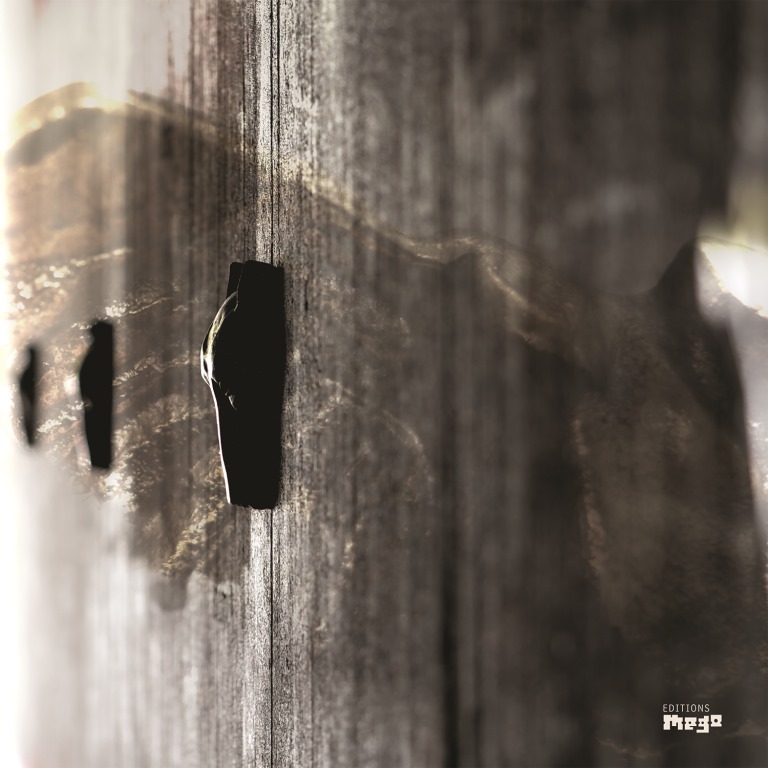
2LP Editions Mego – Digital release date: 4th December 2020 / Physical release date: early February 2021

Christopher Nosnibor

Initially – and indeed, oftentimes – On Feather and Wire sounds very like so many slightly noodly minimal electro albums, incorporating elements of pop and krautrock to forge some neat synthy moments, fairly light and accessible and propelled by soft but insistent beats and bubbling bass grooves, and it’s pleasant enough, with the darker overtones providing depth and detail. Rivet’s reverence and enthusiasm for the technology is apparent, as is his appreciation for the likes of both Chris and Cosey and Kraftwerk. The invited comparisons to COH are warranted, and if the synthy explorations of the 70s and into the early 80s with the emerging industrial scene is your bag, then the appeal here is clear: there’s plenty to like, but then again, not a lot to distinguish Rivet from myriad other artists of the era or his myriad peers operating in the same field, which seems to be increasingly populous.

‘Glietende Liebe’ has hints of DAF, but then equally of Cabaret Voltaire, and even Depeche Mode with its buoyant repetitive motif. Vocals are limited just the occasional phrase, more shouted the sung, and it seems Rivet – that’s Mika Hallbäck Vuorenpää – is more than happy for the listener to wrestle – or not – with the questions of intention and meaning, as, according to the liner notes, ‘interpretation is flung open as the audience are invited to gauge what on earth is going on here… Are these songs? Are these lyrics? Words melt as beat perpetually takes us deeper into flight. Throughout this trip sharp snares punctuate ghost melodies as vocals rise and vaporise. Shadows hover the walls leaving holographic traces of the duality between fun and fear, the unexpected drifts diagonally across the audio plane teasing and taunting the listener’.

‘Keloid’ is an out-and-out minimal dance tune, and ‘Mag Mich’ is pretty much straight-up EBM, and all of this is fine and neatly executed by largely unremarkable. ‘Sodden Healer’, on the other hand is stark, clinical, dangerous in its detachment. Fragmented vocals cut across one another against a backdrop of grating analogue bass oscillations.

But ‘Coral Spate’ comes as if from nowhere, a standout and standalone, the absolute distillation of every feature of the album culminating in five minutes of claustrophobically gripping intensity, It’s the sound of anxiety, of agoraphobic panic, in ways that are difficult to pinpoint and even more difficult to express. Whereas the dislocated retrofuturism of ‘Ordine Kadmia’ sounds like so much cyberpunk and so many 80s sci-fi movie soundtracks, and is the kind of composition that’s affecting because there’s a certain sense of the unheimlich about its stark robotic repetitions and whipcrack snare sound, it’s precisely the extreme familiarity of ‘Coral Spate’ that’s so uncomfortable – suffocatingly so. And yet the experience of discovering that physical spasm articulated, given a soundtrack, is perversely comforting. It’s a rare and dichotomous sensation that’s difficult to reconcile – but then, art is at its best when it challenges us. The more it makes us feel, however much it hurts, it’s fulfilling that function of taking us beyond the limited boundaries of whatever comfort zones we may have and challenging us to confront those innermost fears by mirroring them back at us.

For this alone, this track alone, I wholeheartedly recommend this album, but maybe should forewarn those of a weaker disposition that it isn’t all breezy grooves.

AA

EMEGO293_front