Posts Tagged ‘Christian Death’

Peaceville – 1st November 2024

Christopher Nosnibor

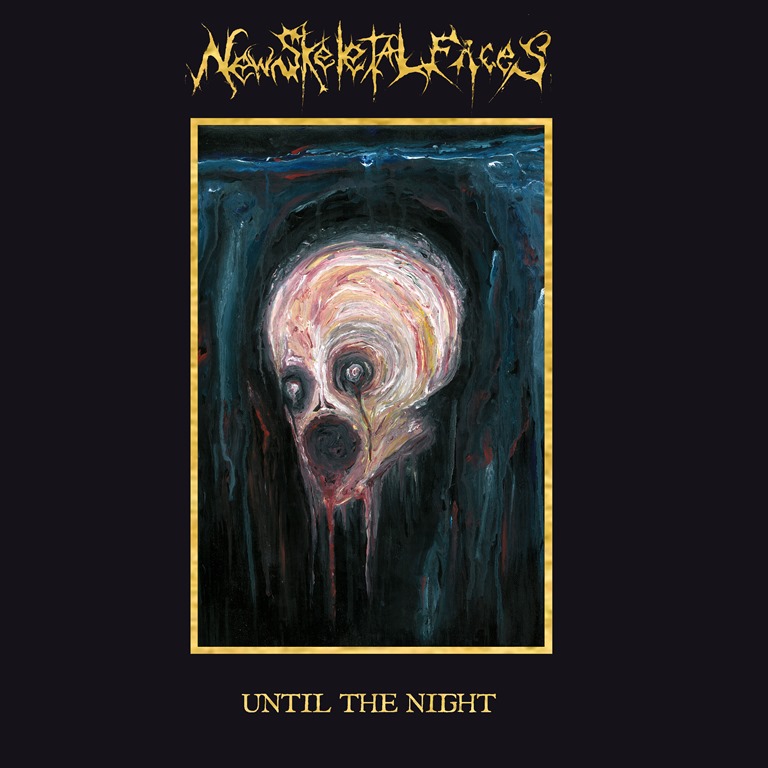
The claim that ‘New Skeletal Faces cast their own black light onto the long dormant corpse of Death Rock, shattering the mirror of modern Heavy Metal into fragments that reflect back a fresh new take on this form of music with an energised & outlandish conviction’ is a bold one. Ominous, menacing, perhaps, or deluded and deranged?

California may be known for its sun and sand, but it has a long history or dark currents which run contra to its popular image, perhaps most notably Charles Manson’s Family being based in The Golden State – which in turn drew Trent Reznor for the recording of The Downward Spiral. In between, Christian Death spawned the proto-goth / nascent death rock sound which, while evolving in parallel to the scene in the north of England, was unique and distinct, and the early eighties saw California home to a thriving hardcore punk scene. I suppose that wherever there is affluence and clean-cut TV slickness, there is bound to be rebellion, a counterculture which stands at odds with it all. No doubt some of these factors drew New Skeletal Faces to California for the recording of Until The Night, the follow-up to 2019’s Celestial Disease.

They proffer an ‘effortless blending of the spirits of old; with the seductive & spellbinding gothic prowess of bands such as Christian Death fused with the raw unbridled energy of early Swedish black metal legend, Bathory to create a bold new statement of intent, in stark contrast to the often overly-refined polish of contemporary metal. Until the Night is, as a result, something more akin to listening to the 1980’s Sunset Strip in an alternate universe from hell.’ For good measure, and to really clarify their position, there’s a cover of Bathory’s ‘Raise The Dead’.

In all, it’s apparent this is destined to be dark from the outset. Across the album’s eight tracks, they paint everything darker shades of black with densely-woven layers of sound. The guitars, while overdriven, are reverby, and quite smooth, and while the riffs take their cues from black metal, there are some overtly gothy licks, and the atmosphere is very much reminiscent of Only Theatre of Pain but with the dial cranked a few notches further over into the ‘metal’ domain for the most part. Then again, the title track, with its thunderous tribal percussion, spindly guitar laced with flange and chorus, and thumping bassline, encapsulates the sound of goth circa 1985, only with shouty vocals which belong more to the hardcore sound of the same time.

Titles such as ‘Ossuary Lust’, ‘Wombs’, and ‘Pagan War’ are fully invested in the trappings of gnarly metal and its themes, but ‘Zeitgeist Suicide’ reflects a self-awareness which may not be immediately obvious.

As I touched on in my recent review of Vessel’s cover of ‘Body and Soul’ by The Sisters of Mercy, while there is a clear interface between goth and metal – even if it does tend to be primarily a one-way street, which finds metal fans embracing goth bands, in particular The Sisters of Mercy and Fields of the Nephilim – its rare to encounter a particularly successful merging of the genres. In the main, goth-metal is cliché and cack. Despite appearances, Until The Night is neither, and is perhaps the most potently-realised stylistic synergy since The End of Mirrors by Alaric in 2016.

AA

Chiming guitars swirl around relentless, barrelling beats on ‘Wombs’, before ‘Zeitgeist Suicide’ leads with a weaving bassline and some fizzy, treble-dominated guitar, and they go at it hard and fast. ‘Enchantment of my Inner Coldness’ brings together vintage goth with a vocal performance that evokes the spirit of Public Image Limited, and in doing so, succeeds in sounding – and feeling – both expansive and claustrophobic at the same time.

Until The Night scratches and drives its way – all the way – to the Bathory cover which drawn the curtain down on this dark, fiery, and furious album. It may well alienate goths, metalheads, and post-punk fans alike, but it feels very much like their loss, being an album strong on songs and confident in its own identity in the way it positions itself uniquely across the genres.

AA
193025

22nd March 2024

Christopher Nosnibor

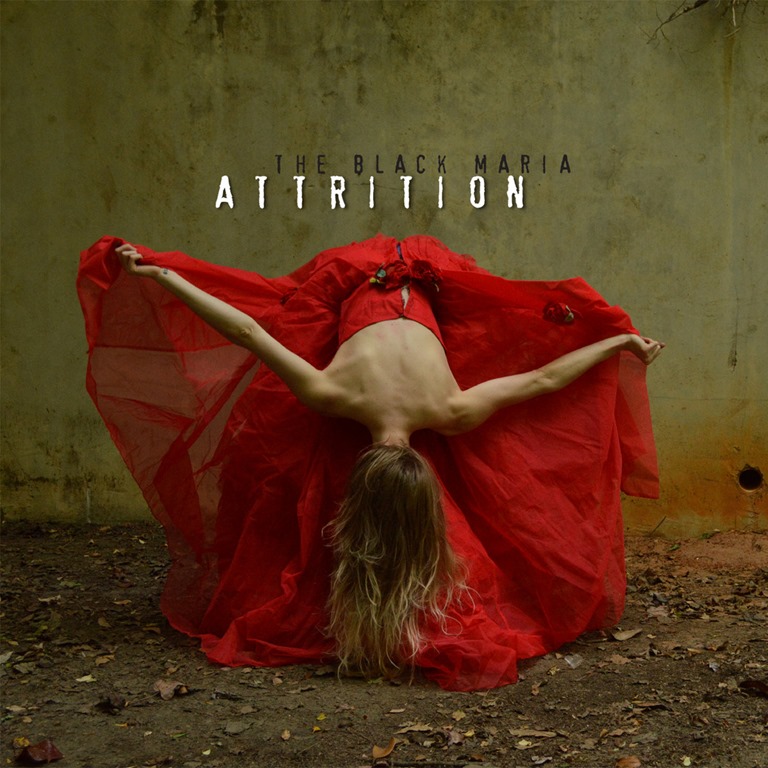
Everyone has a different way of processing, everyone’s cognition operates differently. It’s all a matter of experience and perception. The broader one’s experience, and also one’s exploration of art – in all media, be it books, music, visual art – the broader the network of intertext and references available. Formative experiences and interactions are also a significant factor in the way we come to shape and comprehend our world. And so it s that the moment I encounter the words ‘Black Maria’, my mind immediately leaps to ‘Afterhours’ by The Sisters of Mercy – my first encounter with the term, long before I would understand that it was a term for a police van. Attrition’s latest release certainly doesn’t elicit images of dark vehicles, but does hint at the seedy backstreet scenes that the Sisters song brings to mind, with its sense of disconnection, of being outside yourself, .the paranoid twitch of sleep deprivation

The album’s brief intro track, ‘The Promise’ is a murky ambient piece with hushed spoken-word vocals which is build a mood, a sense of dark atmosphere and foreboding. This intro track thins has really become a vogue in recent years, to the point that it’s becoming predictable and even frustrating to be presented with an atmospheric opening piece which probably isn’t particularly representative of the album it prefaces.

In the case of The Black Maria, it’s a fair primer for the wildly varied, even cacophonous blend of musicality which follows. ‘The Great Derailer’ brings operatic vocals and some bold technoindustrial grooves, before ‘The Switch’ gives us some techno-heavy goth with strong hints of Twitch-era Ministry woven into the mix. But once again, against the busy backdrop that alludes to the likes of PIG and KMFDM, there are ethereal moans and wails which drape themselves hauntingly. I’ve loosely reminded of some of the contributions Gitane DeMone made to Christian Death around the time of Ashes, or maybe Jarboe on Swans’ Children of God, but this is somehow different, and if anything, more difficult to assimilate.

Attrition bring a vast array of styles to the table for a start. ‘The Pillar II’ is exemplary: a low industrial throb brings a heavy tension, an unsettling uncertainty, which manifests as a discomfiture in the lower regions of the gut. But the wailing wordless vocals evoke tortured souls, wandering in purgatory. There are tense strings swelling and holding a tight grip, you find your chest tightening and it’s hard to swallow for this clench of tension. It evokes physical response: I feel my jaw clench and my breathing growing more laboured as the track builds layers of sound: there’s a hum that tortures the ears, and when it falls away, the sensation is strange, empty.

Music box melancholy prefaces more ultra-tense violins on ‘The Alibi’, which really takes a turn for the disturbing. The dual vocals grate against one another, dark sinister, deranged, almost schizophrenic in their whispers. The layers are busy and there are serpentine instrumental intrusions amidst the strolling piano and skittering strings and the wild cacophony of backing vocals: the effect is absolutely dizzying. The title track draws the album to a close with warping, time-bending synth dissonance and pulsating bass which contrasts with operatic quailing providing the backdrop to a growled, menacing spoken word vocal – and then it goes large near the end, with industrial-strength percussion cutting through the melee.

‘Spooky’ feels like such a weak, tame adjective in the main, but it’s the best I’ve got when it comes to summarising the otherworldly discomfit of the experience that is The Black Maria. But throughout The Black Maria, Attrition channel all of the dissociation and disconnection, and I’d challenge anyone to listen to this and keep their feet completely on the ground.

AA

a0847003042_10

Season Of Mist – 6th May 2022

Christopher Nosnibor

Sometimes, in this line of work, an album will land – or however else you prefer to phrase it – and you know it will likely mean almost infinitely more to you than pretty much anyone you’ll see or speak to or who’s likely to read the review. As a reviewer, you pretty much live for opportunities like this, to cover bands you’re not only a huge fan of, but have been since you properly started discovering music, and also reading the music press (something that sadly no longer exists, at least here in the UK, which once had a rich range of reportage and critique, thanks to Melody Maker, Sounds, and last one standing, NME. Sure, they had their failings, but like The Word, Snub TV, and The White Room on TV, and John Peel, Janice Long, and even Zane Lowe on Radio 1, they were key for providing exposure to ‘alternative’ music and breaking new acts.

It was via Melody Maker and Mick Mercer’s Gothic Rock Black Book that I first encountered Christian Death, and purchased Sex and Drugs and Jesus Christ on its release in 1988. This in turn not only led me to excavate their back catalogue and purchase each new release, but to catch them live a couple of times. They’re a band I’ve not so much returned to, but never really left, despite not always keeping up to date with new releases.

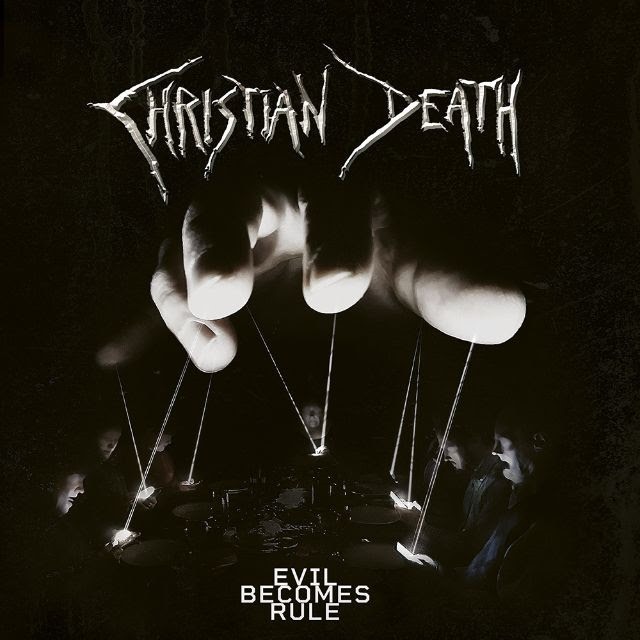
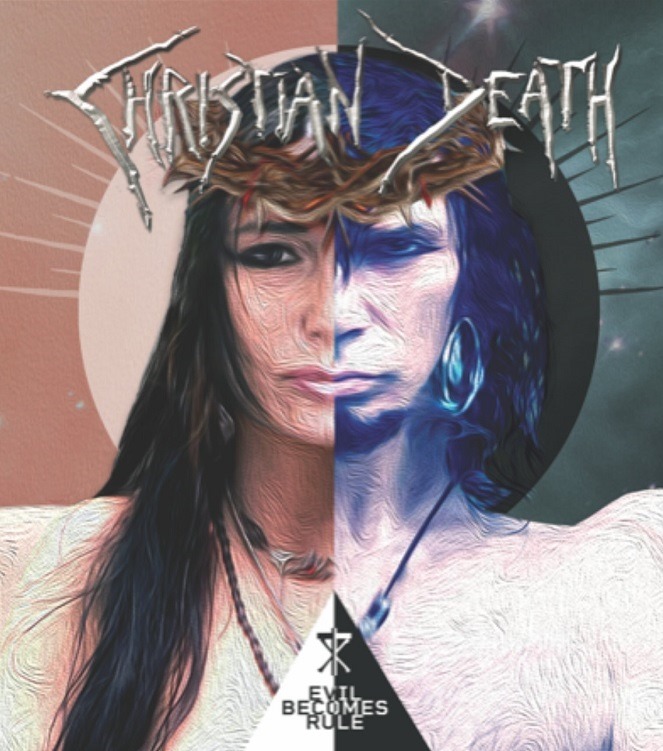
But here we are: it’s the spring of 2022 and after a significant gap since The Root Of All Evilution, Christian Death return with Evil Becomes Rule, which Valor says is, essentially, a sequel, explaining, “Both Evil Becomes Rule and The Root Of All Evilution are pretty much the story of evil. These songs are generally about “The Evil Within Society,” not necessarily stemming from a demon, or a devil, or a God. Instead, it’s about something concerning the evil within mankind… Evil Becomes Rule is a continuation of this theme. We’re going from the present time into the future. When we started writing this album, we anticipated an event like the pandemic; a disastrous event occurring on the earth. So now we’re asking the question, “maybe this is just the beginning of it?”

Evil – and its opposite – is a familiar theme for Christian Death: The simultaneously released All The Love / All the Hate albums explored these diametric standpoints, and essentially aligned hate with evil, taking this idea of the evil within man to its logical end with songs like ‘Nazi Killer’ and ‘The Final Solution’. As such, perhaps the lineage of exploration can be traced a fair bit further back in the band’s career than the last album.

Evil Becomes Rule is quintessential Christian Death, but as is always the case, it’s different from anything before. It’s heavy in places, a shade less metal than things were around the turn of the millennium (Sexy Death God, for example, felt a bit too metal and a shade underproduced), and they seem to have hit something of a sweet spot in terms of balance this time around.

Opening the album, ‘The Alpha and the Omega’ is sparse, but tense, claustrophobic, and initially finds Valor in his best Bowie mode – crooning, stealthy – and this, is the shape of the verses – which contrast with the explosive choruses, there things get dark and, I have to say it, high gothic. ‘New Messiah’ has a quite different vibe, and is almost swingy, smoochy, but does again exploit the quiet verse and big chorus dynamic, and faintly echoing in the dark recesses, there’s the ‘I feel like my heart is being touched by Christ’ sample from Altered States that also appeared on ‘Mors Voluntaria’ from Insanus, Ultio, Prodito, Misericordiaque. It’s still fucking eerie.

Maitri takes the lead vocal on the urgent thrashabout of ‘Elegant Sleeping’, which harks back to their earlier works more than any other on the album, before ‘Blood Moon’ crashes in and already feels like a familiar friend. It’s as strong as any of the singles they put out during their late 80s commercial peak, as represented by ‘Church of No Return’, ‘Zero Sex’ and ‘What’s the Verdict’, and the production is smoother, too, and it very much works in its favour. ‘Abraxas We Are’ is a heavy rock epic which is equally single-worthy, and features some blistering lead guitar work, and they find their rock stride even more solidly with ‘The Warning’ – bursting into a rabid, ragged, industrial stomp about killing sprees in the chorus, and it kicks arse abundantly.

The songwriting – and attention to dynamics – are very much to the fore on Evil Becomes Rule, and the switch to pastoral chamber music in the intro to ‘Beautiful’ brings a nice contrast – the song effortlessly swings into stonking post-punk and is quite uplifting. The album concludes with the suitably dramatic two-part ‘Who Am I’, that combines Spanish guitar and a surging crescendo.

Evil Becomes Rule is by no means their most biting or intense work, and it doesn’t have the raw impact of Sex and Drugs, but instead harks back to the dramatic style of Atrocities, and it works well. It is, perhaps, their most rounded and well-realised release yet, as well as their most consistent. Oh, and yes – we are indeed ruled by evil. These are dark times, where we really need Christian Death and voices of dissent.

AA

166908

Season of Mist – 8th February 2022

Christopher Nosnibor

Christian Death may have ridden a certain commercial crest in the late 80s and early 90s during a prolific spell with the run of albums from 1988’s Sex and Drugs and Jesus Christ, All The Love / All The Hate the following year, and 1991’s single’s collection Jesus Points the Bone at You?, but they’ve spent the majority of the their lengthy career running under the radar, both commercially and critically. Their most prolific spell was plagued by controversy, and would see many tour dates pulled and the band attract a slew of negative press. And that’s suited them just fine. Valor articulated it best on ‘Wretched Mankind’ on the aforementioned Sex and Drugs, ‘Fuck ‘em’. The point is, they’re still here, and while the output’s slowed, they’ve still released three albums since the turn of the millennium.

2022 has seen a sudden upturn in activity, starting with their online release of their cover of David Bowie’s ‘Quicksand’ to mark the fifth anniversary of his death and also his seventy-fifth birthday, swiftly followed by new single, ‘Blood Moon’, the lead single from forthcoming album Evil Becomes Rule.

‘Blood Moon’ is a stonker, too. Vintage Christian Death, it’s what you could reasonably call ‘quintessential goth’ for wont of a better summary. The bass and drums are stitched tight together in a solid four-square formation, and the bass is prominent, too. The guitar soars, heavy on the chorus and sustain, and Valor croons brooding and steely synths streak the sky and add depth to the epic chorus. Balancing dark with solid, rocking, and a catchy hook, it’s a remarkably accessible song that’s an obvious single. The chances are that if it was released by an up-and-coming new band, it’d be a breakthrough hit, but one suspects the band’s name and longevity will likely mean it’s unlikely here – but I’d like to be wrong. C’mon world, prove me wrong. For once.

AA

ChristianDeath-Evil-TourAdMat-2-1

Gothic death rock pioneers Christian Death have announced their highly-anticipated new full-length album, Evil Becomes Rule

About  Evil Becomes Rule, Valor Kand says the following: ‘Both Evil Becomes Rule and The Root Of All Evilution are pretty much the story of evil. These songs are generally about “The Evil Within Society,” not necessarily stemming from a demon, or a devil, or a God. Instead, it’s about something concerning the evil within mankind. Evil Becomes Rule is a continuation of this theme. We’re going from the present time into the future.  When we started writing this album, we anticipated an event like the pandemic; a disastrous event occurring  on the earth. So now we’re asking the question, “maybe this is just the beginning of it?”’

Ahead of the album, set for release in May via Season of Mist, the band have announced a string of tour dates and unveiled a video for ‘Blood Moon’, which you can watch here:

Evil Becomes Rule US Tour Dates:
05/05: Akron, OH @ Empire Concert Club
05/09: Denver, CO @ HQ*
05/10: Salt Lake City, UT @ Liquid Joe’s*
05/12: Albany, CA @ Ivy Room*
05/14-15: Pasadena, CA @ Cruel World Festival [TICKETS // EVENT LINK]
05/17: San Diego, CA @ Soda Bar*
05/18: Mesa, AZ @ Nile Theater*
05/20: San Antonio, TX @ Rock Box
05/21: Houston, TX @ White Oak Music Hall
05/22: Ft. Worth, TX @ @ Rail Club Live
05/24: St. Louis, MO @ Red Flag
05/26: Pittsburgh, PA @ Hard Rock Cafe
05/29: Brooklyn, NY @ Saint Vitus
* w/ LUNA13

AA

bafa1437-62d5-cede-203e-78688ac5e168

Christian Death – Quicksand

10th January 2022

Christopher Nosnibor

Christian Death have long shown a love of Bowie, which has subtly permeated their work but was rendered concrete with their version of ‘Panic in Detroit’ in the Rage of Angels album. But anyone who would think that the Bowie fandom was specific to the Rozz Williams era of the band would be mistaken: Valor has long embraced androgynous elements in his style, and never shied away from pop / art rock elements within the music itself.

There have, of course been numerous covers of ‘Quicksand’, and the one thing that’s apparent from all of them is that a great song is a great song, whoever’s playing it, even Seal. If Dinosaur Jr’s cover was a brilliant example of reconfiguring the song into a slacker anthem, Christian Death’s take, which stretches the original five-minute song well past the seven-minute mark is remarkably faithful to the original and doesn’t goth it up in the slightest. This isn’t a complete surprise: their previous covers, from Garyn Numan’s ‘Down in the Park’ to Jimi Hendrix’s ‘Angel’, which appeared on All the Love, were straight and sensitive, even reverent in their approach.

Performed by Valor and Maitri, it’s predominantly acoustic guitar and piano, but there’s a full backing with drums, bass, and sweeping string sounds, making for a take that’s bold, theatrical, and yet, at the same time, intimate, and fitting at a time when Bowie covers and links to his songs are proliferating on social media: it may be the fifth anniversary of his death, but the week also marks what would have been his 75th birthday, and it’s fair to say few, if any artists have had quite the impact he did. Elvis, The Beatles, The Stones, may have all broken immense ground, but Bowie was an entirely different proposition, on so many levels, and it’s clear the shock and grief are still strong for so many. This, then, is a fitting and well-executed, heartfelt tribute.

AA

129354

James Wells

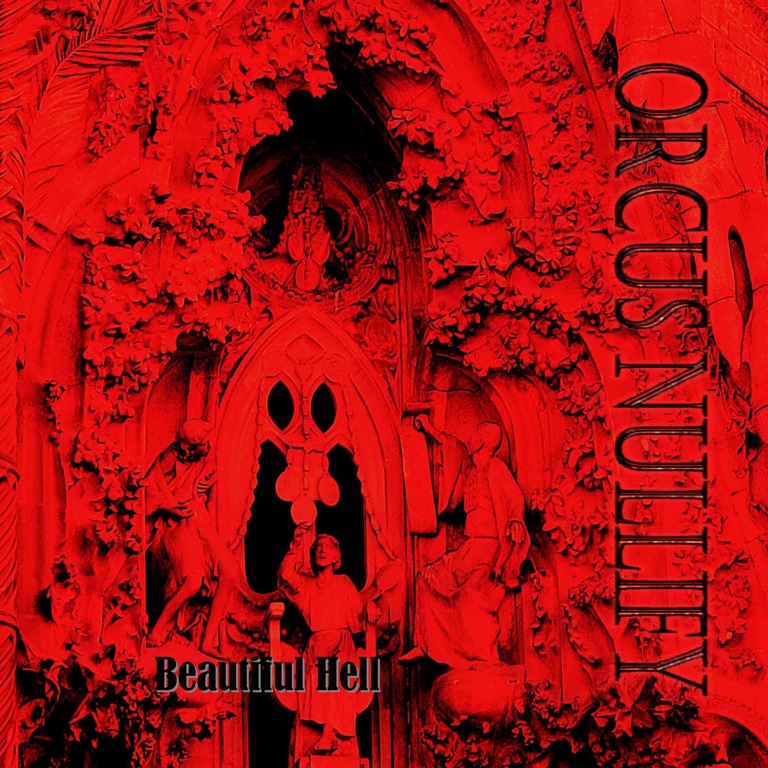
In advance, we learn that ‘The songs on Beautiful Hell will take you on a tour of the wreckage that is the contemporary state of affairs brought about during the reign of the Orange Beast. There was the destruction and reversal of environmental policies like withdrawal from the Parris Climate Accord, termination of the Clean Water Act & turning back the clock on human rights’, and that ‘the title track ‘Beautiful Hell’ draws a juxtaposition between the beauty of this planet and decaying state of political affairs. The tune ‘Under his Eye’ is focused on what is seemingly a path toward a Neo-Nazi Christian state. ‘Night Bird Cries’ is a lament for the decline of our environment and morality, that increasingly vie for our attention but go unheeded.’

The sound of Orcus Nullify – headed by bassist / vocalist Bruce Nullify – on this release is very much vintage goth, with fractal guitars, heavy in chorus and flange and setting spindly frameworks around thundering bass and tribal drums, the murky production evolving the sound and style of early Christian Death.

The intro to the title track sounds very like that of The Mission’s ‘Severina’ before it goes all splintering, spirally Nightbreed-sounding second-wave goth. For the record, that’s no criticism, just a contextual referencing placemarker. ‘Night Dance’ showcases a raw, dingy sound where the guitars are trebly and the bass is muddy and everything combines to create something dark and intense. ‘Fall from Faith’ is The Mission amped up to eleven, it’s The March Violets, it’s Groovin’ with Lucy, it’s Rosetta Stone.

As such, it’s not inventive, and Orcus Nullify clearly aren’t out to reinvent the genre, but to add to the body of the catalogue that could reasonably be labelled ‘classic goth’. Nothing wrong with that, and credit to the band, they’ve got the sound nailed, and some decent choons, too, with Beautiful Hell being a solid and dynamic EP.

AA

AA

a0128427574_10

16th July 2021

Christopher Nosnibor

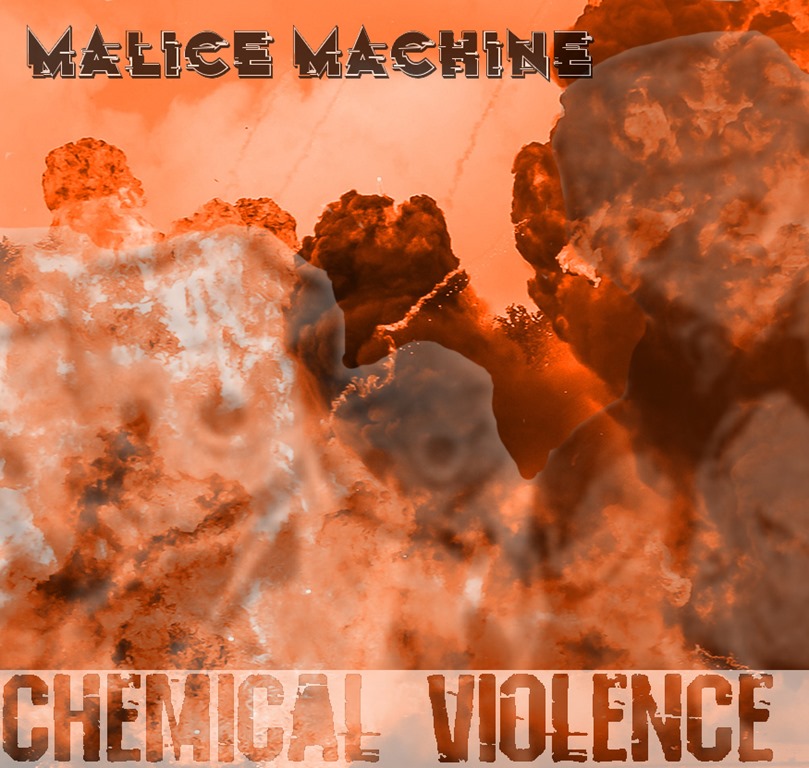
Initially intended as a straight follow up to their 2019 debut, Digital Scars, Chemical Violence evolved as a more technoindustrial work, with less primacy given to the guitars. But having said that, the band explain that they were keen to present a range of elements across the album: ‘We don’t want to be pigeonholed into one sub-genre so all the songs have their own flavor. Retro and post style, Electronic, driven guitar, grinding Noisecore and Aggrotech elements, Synth bass, Drum dominant. We don’t want to be pigeonholed into one sub-genre so all the songs have their own flavor. Retro and post style, Electronic, driven guitar, grinding Noisecore and Aggrotech elements, Synth bass, Drum dominant.’

The album slams straight in with the shuddering synths and thumping beats with the hard-edged stomp of ‘Prototype’. The vocals are gnarly, mangled, snarling, robotic – yes, derivative of Twitch era Ministry and a million Wax Trax! releases from 86-89, but that’s entirely the idea.

It was The Wedding Present who turned a negative music review into a T-Shirt bearing the slogan ‘all the songs sound the same’ and while it served to turn the criticism back on itself, it raises the very fair question of ‘what’s the problem?’ Certain genres particularly require a significant level of sameness.

Dance music is necessarily constructed around a narrow range of tempos, and this strain of electro-centric industrial is in many respects, an aggressive rendition of dance music (no, I’m not going to call it fucking EDM. Or EBM, either. Because there is just so much tribal wankery around genres, and rebranding shit doesn’t make it new shit, it just makes it the same shit rebranded. I never blame bands for this: it’s a press and marketing thing.

Chemical Violence most definitely isn’t shit – it’s an astute work that sees the band really exploit the genre forms to their optimum reach, and the point is that the further you delve into a genre, the more important the details become. Malice Machine know this, and this album is the evidence. ‘Dead Circuit’ presents the grinding sleaze of PIG, while ‘Machine Hate’ is pure insistent groove that’s overtly dance – most definitely drum dominant – but clearly has its grimy roots in that Chicago c86 sound. Flipping that, ‘Techno Pagan’ goes full raging Ministry industrial metal in the vein of ‘Thieves’. It wraps up with a killer rendition of Tubeway Army’s ‘Down in the Park’ that’s quite a shift, being both organic and robotic at the same time, and very much captures the stark spirit of the original. Covered by so many, from Marilyn Manson to Foo Fighters, and it’s become a synth-goth classic. Malice Machine seem to take some cues from the Christian Death version, but brings something unique to the party as well.

Where Malice Machine succeed with Chemical Violence clearly isn’t in its innovation, but its execution, and they don’t put a foot wrong, making for an album that really is all killer.

large explosion

Neurot Records – 6th May 2016

Christopher Nosnibor

The story goes that Alaric (featuring within its ranks current and former members Of Dead And Gone, Pins Of Light, Noothgrush, Hedersleben and UK Subs) began their journey in 2008 with an eye toward creating a moody and compelling music of a sort not often performed in this time and space. A different concept of doom, beginning with influences from such progenitors as Killing Joke and Christian Death to the darkest, heaviest punk bands and the most epic psychedelia. A good-time, feel-good party band they are not.

I am going for a ‘sheets of electric rain’ guitar sound, says guitarist Russ Kent. This should perhaps give an indication of the fact that End of Mirrors finds Alaric exploring some bleak territory, in which guitar riffs are not the driving aspect of the sound, and whereby the guitars provide texture and density instead of shape or form. Using the guitar in this way is by no means new: from the late 70s and early 80s, bands like Sonic Youth, Swans and Bauhaus shifted the emphasis toward the rhythm section, with the guitar serving not a secondary, but alternative musical function. It’s from this background that Alaric’s sound can be found emerging, and End of Mirrors betrays heavy influence from the no-wave and early goth (before it was called goth and was simply a dark strain of post-punk) scenes, infused with a very metal edge. As such, while it’s very much steeped in a number of 80s styles, it’s an album which incorporates them in unusual and innovative ways.

Eight-minute opener ‘Demon’ sets the tone. A lengthy, atmospheric introduction of trudging percussion and simmering feedback gives way to a crushing riff, from which emerges a big, meandering bass-led groove, part Sabbath, part Neurosis. ‘Wreckage’ builds a bleak scene with squalling, spindly guitars layered over a thunderous drum and heavily flanged bassline reminiscent of Pornography-era Cure. But the throaty vocals are more Al Jurgensen circa The Land of Rape and Honey. Moody and intense, the dark despondency carries through into ‘Mirror’. ‘Don’t look in the mirror,’ Shane Baker growls in a deceptively catchy chorus before the song suddenly explodes into grinding thrash riff that piledrives it to another plane.

It’s unexpected twists like this which break the barren expanses of claustrophobic doubt. And do be clear, it’s very much the Rozz Williams incarnation of Christian Death that manifests in the interloping guitar lines of ‘Adore’, and if ‘The Shrinking World’ sounds like an early JG Ballard novel, the metallic scrape encapsulates a near-future dystopia worthy of the great author. The title track is a Melvins-like blast of grinding thrash, a thunderous tempest of a track that sears in at under three explosive minutes, and marks quite a contrast from the longer goth-orientated pieces which dominate the album.

As a whole, it’s a dark, almost apocalyptic sweep of sound. Sitting alongside the recent releases by Se Delan and Madame Mayflower, 2016 is starting to look like the year goth is reborn. Forget darkwave and all that cal: emerging from a protracted period of social and economic turmoil, uncertainty, unrest, fear and an all-pervading sense of existential trauma, we’re back in the late 70s and early 80s, and this is the real deal.


Alaric_EOM_cover copy 72 pixels


Alaric Online