Posts Tagged ‘Avant-garde’

Bisou Records – BIS-019-U-B – 2nd December 2021

Christopher Nosnibor

Maybe it’s because I’m tired, and I’ve had quite a bewildering couple of weeks in terms of dayjob and quite simply life, but this is one of those band bios that leave me wondering quite simply ‘what the fuck?’ and more specifically ‘is this for real?’ Either I’m delirious, or this really is completely off-the-wall nutsness.

The facts, it seems are that The Snobs were ‘Formed by brothers Mad Rabbit (singer and producer) and Duck Feeling (multi-instrumentalist) near Paris’ and that Blend The Horse! was written and recorded between spring 2019 and autumn 2020.

Is this a real band? Then I read that the track ‘Long Winter Evenings’ follows a sonata form blending ethereal singing and a motorik groove’ and that ‘Over a minimalist rhythm section borrowing from Joy Division, Miles Davis and Kraftwerk, The Snobs restate their loyalty to rock music with Tropical Fuck Storm’s sharp guitars. Tropical Fuck Storm sounds like a character from Mark Manning’s warped rock-band novel Get Your Cock Out, and this is surely satire… right? Right?

Nope, it’s just whacky and irreverent, and it reminds me that not so long ago, humour and irony were commonplace, and art was whatever it wanted to be. And so since their formation at the turn of the millennium, The Snobs Have built quite a body of work, with a substantial number of releases recorded in collaboration with artists of various disciplines and styles. Blend The Horse! presents six compositions – bookended by songs that stretch beyond the ten-minute mark – that explore a massive range.

‘Long Winter Evenings’ is a minimalist protoindustrial effort, but then about three minutes in, there’s a kind of baggy / rappy break, before it spirals into some kind of psychedelic electro that’s a bit trippy, driven by a droning bass while squdgy bleeps and all kinds of going on go on. It’s an intense and eye-opening way to open an album. It feels cohesive, but it feels uncomfortable at the same time, and not just because it’s a genre-defying melting pot of hybridization.

There is a lot going on, even when there seemingly isn’t. ‘The Low Angle’ is sparse and minimal in its arrangement, with a thick, ambulating bassline dominating the arrangement. It’s low, slow, and dubby, and an exemplar of the ‘less is more’ adage.

What to make of this? It’s kinda trip-hop, kinda low-tempo hip hop with an experimental leaning, kinda… kinda what, exactly? There are expansive reverbs and echoes in the mix is, too, and it’s hard to know what to make of it.

Sonically it feels dislocated and difficult, with no real specific plan set: lo-fi, bedroomy wooziness lumbers and lurches as old-school drum machines provide crispy snare cracks around the reimagined Bowieness of ‘Plastic moon’, and as the thumping industrial drums of ‘Cable Call’ that combines the looping synths of KMFDM and the easy 90s popness of Jesus Jones and the like.

It’s a mish-mash of everything, and some of the elements work better than others, although there’s likely little benefit to dissecting which aspects of which track work or don’t, not least of all because there’s so much happening, and it sort of feels ‘outside’. Neoprog and post–rock melt into dreamy electro and shoegaze all mixed with a hefty dash of psychedelia, and no one of it makes sense, and yet, at the same time, it does. And it’s kinda nice, but kinda frustrating, too. It’s as though the range and exploratory nature of this project is prejudiced by an increasingly conservative market where genres and categories are core to marketing, and I’m aware I’m in some small way complicit in this process. But then, sometimes, an album simply doesn’t fit, and it’s not that Blend The Horse! doesn’t connect to any genres, so much as they’re all thrown in together to create a mind-bending stew.

‘The Sixth Dragonfly’ throws everything into the blender all at once, and it all happens, from mellow ambience to fill Nine Inch Nails guitar attack. It’s an eye-popping climax to an eye-popping set. It’s deranged, but a perfect summary of out times.

AA

BIS-019-U-B_cd_front

Crow Versus Crow – 29th October 2021

Christopher Nosnibor

Yol is, unquestionably, a definitive presence of the self-professed ‘no-audience underground’. If you’re unfamiliar with this (and there’s no shame in that, because the clue’s in the name), it’s a term coined by Rob Hayler who blogs at radiofreemidwich, who says ‘there is no ‘audience’ for the scene because the scene is the audience’. If it sounds incestuous and self-involved, then maybe it is, but in a good way: that is to say, it’s more of a community than a scene, and one defined not by sound or style, but an ethos of mutual support, and it’s an incredibly broad church. Global domination isn’t on anyone’s agenda: this is art for art’s sake, free expression, experimentalism because. No-one is judged on technical competence – in fact, no-one is judged at all. Anything goes, and yol absolutely encapsulates that, with ‘music’ that’s utterly off the wall.

The blurb advises that viral dogs and cats offers ‘five tracks that revolve around the essential ‘found objects / mouth noise / mangled language’ core of yol’s practice, brimming with razor-sharp observations, absorbed and regurgitated to form absurd, looping, distending cantillations. Visceral, cathartic and piss-funny in equal measure!’

The first piece, ‘chunks of tongue’ (it’s not a song, by any stretch), is deranged, demented, with what sounds like some kind of contact mic slattering and random tweets providing the backdrop to some utterly dented shouting and yelping and gargling about expensive ice cream being sold as strawberry, but… well, he doesn’t believe it. The strawberry pieces are chucks of tongue! He splutters and spews like he’s choking on the offensive material, and as amusing and Dadaist as it is, it’s also quite disturbing. Context counts, of course: this is an album (albeit a short one that’s more of an EP), so it’s art, but if you found someone doing this in the street, they’d likely be sectioned.

There’s very little musical backing on here, apart from whistles and trills of feedback and random extranea, meaning that it’s almost a spoken word album of sorts. But it’s crazed, cracked spoken word – there’s no narrative, only crazed spluttering and yelping. More than anything, I’m reminded of Mike Patton’s Adult Themes for Voice album. The simplicity and sparseness is a major feature here: yol shows that you don’t really need anything to make an impact, and when we’ve become accustomed and conditioned to polished, produced song-orientated music , to be assailed by something so primitive as almost nothing but a human voice, contorting every way possible is an unusual experience, and one that will likely freak some people out. Good, I say.

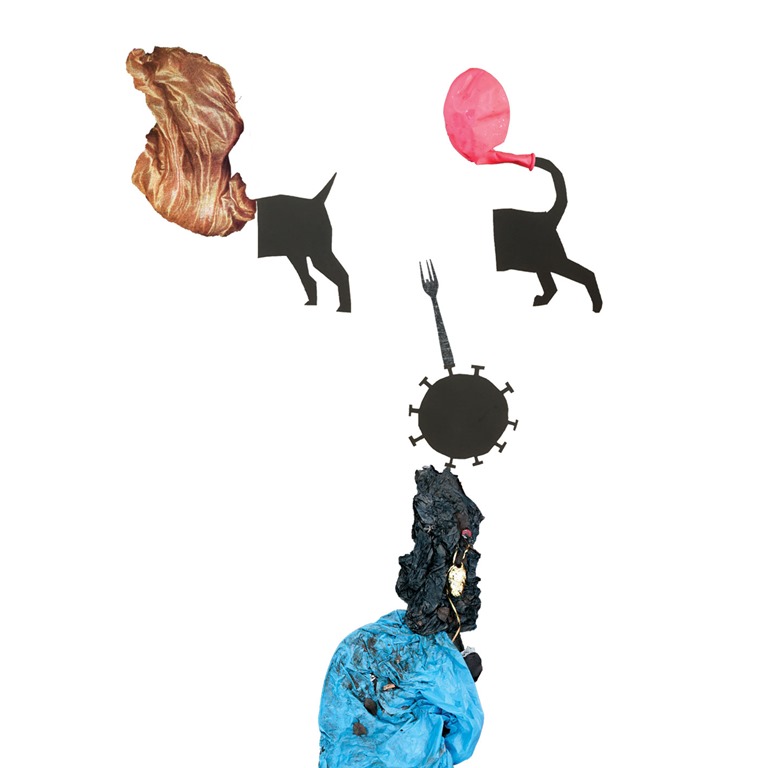
‘eat out to help out’ isn’t only representative of the album as a whole, but a standout. He stammers and mumbles around, catching his breath, panting, while struggling to verbalise some deep, frenzied anguish about a plastic fork with a nugget on it. The repetition of a single phrase with varying emphasis is very much an extension of the permutational technique initiated by Brio Gysin in the late 1950s and early 1960s, only here, the sequence of the words remains unchanged, with the delivery and emphasis changing on each repetition instead. The effect of the repletion is quite challenging and ultimately disorientating.

‘Viral cats and dogs get bored… Get back to shitting everywhere!’ he screams on the title track. ‘Yes, but not in my backyard!’ I want to shout back after waking to frequent turds from neighbourhood cats on the sliver of AstroTurf at the end of my yard. Bastards. And immediately, I find myself foaming at the mouth with fury, and realise that this is it. Tapping that vein into raw emotion and unspeakable fury, I’m seconds away a fit of from inchoate screaming abdabs – which is precisely what yol serves up here.

viral dogs and cats isn’t an album to be judged on technical competency – in fact, it’s not an album to be judged on any scale of merit of whatever, beyond ‘does it have an impact?’ Of course it does. It leaves you feeling weird. Because it is weird. And that’s the fun of it.

cover

Khatacomb – 7th July 2021

Christopheer Nosnibor

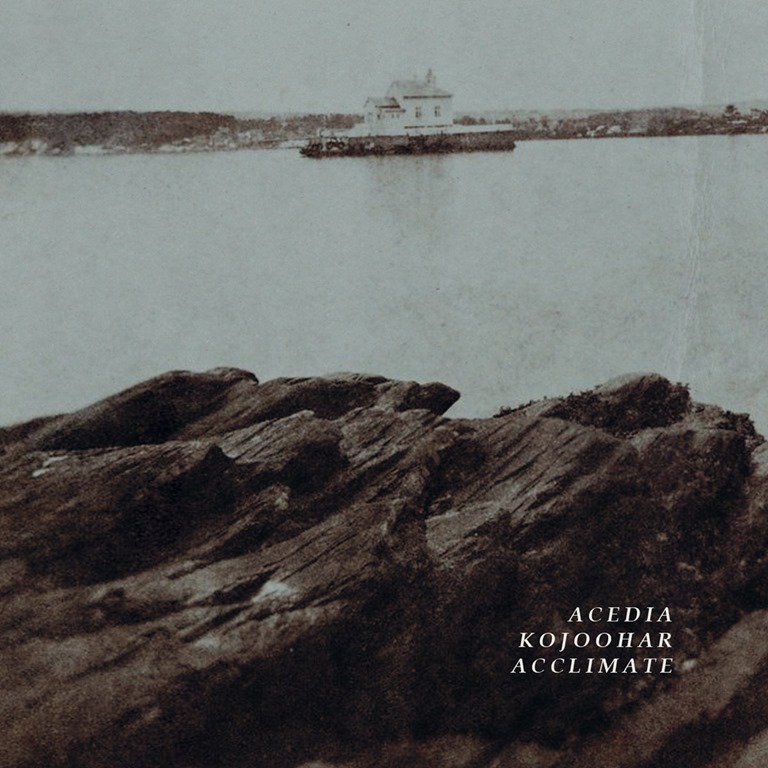
Some artists clearly thrive on collaboration, throwing themselves fully into the possibilities and potentials ideas from other quarters offer. Ukrainian experimentalist Kojoohar, aka Andrii Kozhukhar, is clearly one such artist, with the self-explanatory Split– a collaboration with fellow Ukrainian Acedia and New Zealander Acclimate – is his second release of the year so far.

Split is something of a celebration of darkness, and a coming together of artists with fundamentally divergent styles, and its finding a home on Ukrainian label / webzine Khatacomb is no coincidence, given its commitment to ‘covering various manifestations of Ukrainian post-industrial music, from dark folk to experimental electronics, and art in general’. It’s an immense departure from anything Kojoohar has done before, with his 2019 and 2021 collaborations with ködzid goo exploring the realms of industrial and avant-garde hip-hop.

The way Split is split is interesting in itself, with four solo Acedia pieces, one Acedia and Kojoohar composition, and a brace from Kojoohar and Acclimate, making it very much an album of three segments – and as such, split.

In context, the vocal element of Acedia’s contributions come as something of a surprise: against minimal, stark electronic backing, with snaking percussion and strong snare sounds that cut through, Acedia delivers a vocal that’s glacial yet warm in its human vulnerability. Ugh, comparisons feels like lazy journalism, but serve their purpose: Depeche Mode, Ladytron, and New Order’s Movement coalesce in the tone and style on these chilly tunes.

‘You’re already dead’ she intimates in a blank monotone on the cold as ice ‘Cocoon’, and the insularity closes in as each song progresses: ‘Slaughterous Game’ is as dark and dangerous as it gets, so cold that it strikes chill to the very marrow. It’s bleak but bold, and the four Acedia cuts feel like an EP in their own right.

I can’t help but feel that this release would work best in physical format, either as n album with the Acedia tracks on one side and the rest on the other, or as a pair of 12” to give each segment clear separation.

Acedia with Kojoohar conjure some darkly dreamy drone with ‘Forget my Name’, with its rolling, woozy bass and whipcracking snare that slashes away at a slow pace, and dark gets darker with ‘Enwomb’, the first of the pieces jointly forged by Kojoohar and Acclimate. It’s nearly ten minutes of ambient drone that billows and rumbles while treble bubbles and bounces eddy this way and that amidst the grumbling mid-range fog. Sparks fly and stutter incidentally but without effect, and the horizon grows broader in the face of this vast vista despite the grumbling discomfiture and whispering in tongues. It’s unsettling, a squirming, churning, twisting and turning with no breaks in which to find a position that’s comfortable. The same is true of the final track, the second Kojoohar and Acclimate cut, and it’s a cut that cuts deep: serrated edges burr and saw away, and tribal percussion thuds away insistently against subdued but wince-inducing trails of feedback.

None of this is comfortable; none of this is easy. But it’s a contrasting set that strains the edges of convention to create something quite, quite different.

AA

a4099095908_10

CD Epicentre Editions EPI-2101

Christopher Nosnibor

It’s testament to his degree of innovation and influence that John Cage’s works remain a source of fascination for so many almost 30 years after his death. Few composers have reached across so many fields, let alone a composer as radical and overtly experimental. But Cage singlehandedly broke all the ground, especially when it came to exploring elements of the random, of the relationship between the performance and the audience, and of incorporating strands of philosophy into the creative process.

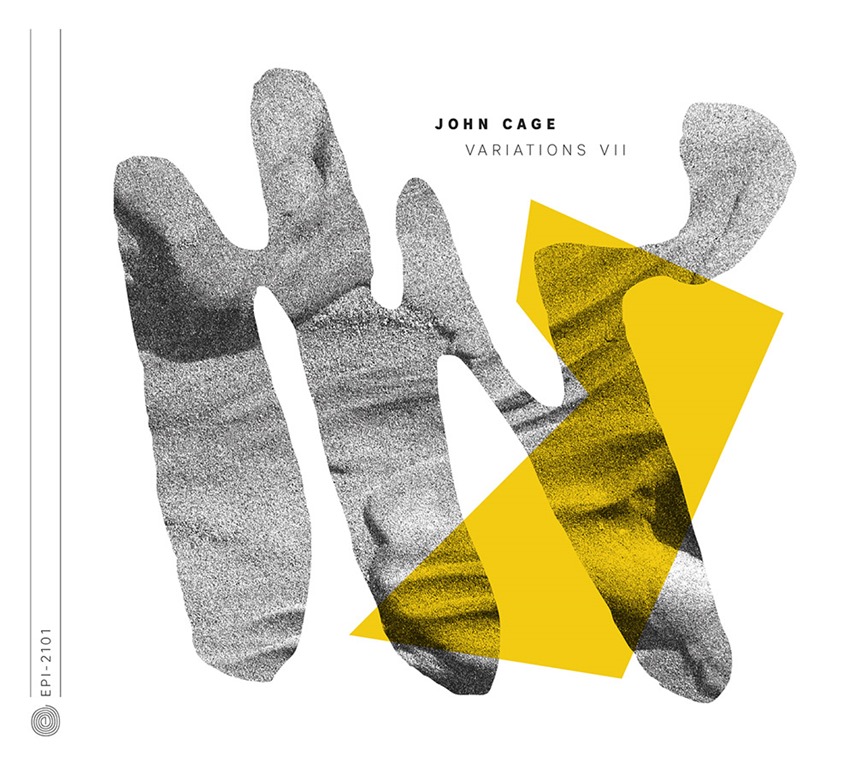
This recording of Variations VII is very much an unadulterated document of a specific event, best detailed in the liner notes:

Variations VII was created by John Cage to be performed at a special event, 9 Evenings, Theatre & Engineering, held from 13th to 23rd October 1966 in New York and in which a team of engineers, led by Billy Klüver, worked with ten artists from the American “avant-garde”, with the aim of enabling them to extend their exploration of the possibilities of electronics in their own art. Here is how John Cage described this piece in the programme for the event:

« It is a piece of music, Variations VII, indeterminate in form and detail, making use of the sound system which has been devised collectively for this festival, further making use of modulation means organized by David Tudor, using as sound sources only those sounds which are in the air at the moment of performance, picked up via the communication bands, telephone lines, microphones together with, instead of musical instruments, a variety of household appliances, and frequency generators. »

And so ‘Intro’ is four minutes of audience chatter, a throng of conversations, all in French, over and across one another. It may feel superfluous to some, but in so many ways, it’s integral to the experience. It not only captures the moments before the performance as it happened, but also transports the listener there, and reminds us that this is not a studio work, designed to capture some kind of perfect realisation of the piece for all time. There is no trickery or manipulation after the fact: this is a live performance, in front of a live audience, something that happened in the moment, and the moment is all there is, and the life of the piece is tied to that specific moment. And then, there is the fact that Variations VII is, effectively, about chatter.

Crackles of static, whistles and whines rent the air as the performance begins; the sound of radio dials turning, tuning in, finding – or failing to find – the right wavelength. Hums, hisses, and snippets of conversations, fragments of music. Whups and whirs, shill shards of feedback and blizzards of white noise emerge from a myriad pieces of sound, booming yawns of interference all criss-crossing over one another in a disorienting real-time sonic collage. Machines grind, babies cry, there are explosive, thunderous blasts of distortion, It’s like walking down a busy street, hearing pieces of conversation, radios blaring from cars, engines revving, and the parallels with William Burroughs’ cut-up technique, for those familiar, are clear. This replicates the experience of life in real-time, and real-time experience is not linear, but simultaneous: a plane flies overhead and you catch sight of an advertisement, and a reflection of a face in a shop window while conducting a conversation, and all around, other people conduct their own conversations…

The mechanics of it are complex and ambitious, but also typical of Cage’s approach to composition:

‘Ten telephone lines connected to the sounds of ten different locations in New York City. History has taught us that one of the first uses of the telephone at the end of the 19th century was, besides transporting voices, the live re-transmission of concert performances of opera. A few privileged listeners could therefore listen to the music in their own homes. Several decades later, John Cage reversed this, so to speak, by inviting the sounds of several distant environments into the concert venue!’

And so it is that the 1966 piece was performed live once more on August 15th, 2020 at the festival Le Bruit de la Musique. The performance lasts for an hour and eight minutes, during which time we’re subjected to a bewildering array of sounds, unconnected, disparate, all completely independent of one another, uncoordinated, random, haphazard and hither and thither. It’s a bewildering experience: not a lot happens, but at the same time, everything happens, a lot of it simultaneously. For the duration of the performance, the spell remains unbroken. For some reason that I really can’t explain, I find myself sitting, ears pricked, on tenterhooks, listening out for details. Towards the end, a blitzkrieg of overlapping extranea build to a tempestuous tumult of harsh noise that sounds like Throbbing Gristle a whole decade before their conception. And as it gradually tapers down, a cough from the audience cuts through the quiet – but it’s not quite finished. We wait, on edge.

Suddenly, there is silence.

Only when the performance ends is the tension broken.

There is a pause, a few seconds of uncertainty, before the applause breaks. There are a few whoops, but mostly, it’s polite. Enthusiastic, but polite. There is no chatter now. One suspects that having witnessed this – bearing in mind that it’s 1966 – many would have been simply stunned of vocabulary. The era may have been accustomed to all kinds of newness, all kinds of shocking, taboo-breaking art, but this…?

Variations VII hasn’t dated, and not lonely does it still sound contemporary, it remains incredibly relevant: if anything, its relevance is greater in 2021 than it was in 1966, perfectly recreating the experience of total media and sensory overload. Never mind The Beatles, here’s John Cage.

Edelfaul Recordings – 5th June 2021

Christopher Nosnibor

Just as you should – at least ideally – never judge a book – or an album – by its cover, so you should never judge a musical project by its geographical origin, or judge the population by their government. This is particularly important as a point of note right now, and especially in context of this release. At home, we’re often led to believe that arts are of a lesser importance in the face of a pandemic or any other crisis, but history – and social media – will tell you otherwise: the natural human response to any trauma or crisis is to immerse oneself in either the creation or consumption of art or music. When bombs are dropping, people write poetry. It’s both a coping mechanism and a means of documenting events, and there is a clear logic to it: for me, writing helps to order things, both events and my own thoughts. The very act of writing gives mental effluvia a sort of solidity.

Spirit Skinned, the press release informs us, is ‘a duo rooted in the musical underground of Tel Aviv and Jerusalem’ and goes on to note that ‘The area is known worldwide as a high tension zone, and the small musical scene that bred Spirit Skinned enjoys a reputation for an uncompromising and often radical sound approach, paired with a rare level of perfectionism. If anything, their music lives up to that notoriety.’

Watching the news, one would be forgiven for being shocked and amazed that there would be any kind of music scene in Tel Aviv or Jerusalem, let an underground one. But even during sporadic war, life does go on, and citizens are always desperate to maintain some sensed of normality, and this is clearly true of Ben Ronen (aka diburnagua), former vocalist in various punk and noise projects in the Tel Aviv area and Ofer Tisser, producer/instrumentalist and a central figure in Jerusalem’s underground music scene, who have come together as Spirit Skinned.

The pair’s eponymous debut is pitched as ‘spanning the gaps between grime, industrial, hardcore, musique concrete, politics and expressionism’, and across the course of the album’s seven tracks, Spirit Skinned wanders far and wide stylistically. And you can’t criticise an album for any lack of focus when its focus is set so wide.

Many of Ronan’s crazed, yelping, barking vocals are largely impenetrable, and often partially submerged beneath layers of noise, not least of all highly dominant percussion: heavy industrial clanks and cracks dominant, but then again there are swamps of alternative and buoyant indie lurking in the mix.

‘Dry Season’ introduces the album with a slice of minimal DIY that’s brittle, spiky, and more than just a bit quirky, and lands somewhere between Young Marble Giants and Einstürzende Neubauten. Reverb bounces all over the place, while a slow, lowdown bass squirms away. They conjure seme tense and atmospheric scenes, and the claustrophobic, repetitious throb of ‘Leaving Room’ evokes the impotent rage of early Swans: it’s the sound of frustration vented through shouting into the void against a backdrop of music that bludgeons. ‘The Root’ is built around a monotonous pulsation that passes a significant nod in the direction of Suicide, but then there’s braying free jazz sax all over the top of it, and in combination, they’re pretty punishing. There’s a physicality to the music that’s affecting as they lunge from doomy drone to fractured, splintering harsh noise.

The album’s final track, the eleven-minute ‘Once Was Blind’ is sprawling monstrous hybrid of dark hip-hop, jazz, and psychosis. It’s like a beat poetry night on a bad trip. It’s a suitably weird end to a weird album, and one that’s well worth hearing.

EFT003_front

11th May 2021

(kröter) don’t do things by halves. Back in 2018, the landed not just one album, but three, all culled from the same sessions, with two of those albums arriving simultaneously. Fifteen minutes of (kröter) can be quite the headfuck, but three hours? (kröter) are a melting-pot of madness, and how much of their derangement does anyone need?

Well, from seemingly out of nowhere, they’ve dropped a further two albums, *d and *e, again drawn from the epic sessions in 2017-18.

‘avantgarde’, the first piece on *d is typically whacky, and knows it. A picked guitar, hesitant, and sounding more like tuning up than an actual composition, is immediately obliterated with a squelchy squirt of digital diarrhoea. ‘How much water does an avocado need to grow?’ they ponder by way of an introduction to some abstract lyrical ponderances. ‘This is avantgarde’. And yes, it is: and this is also an exercise in avantgarde self-reflexivity, art reflecting on art reflecting on art.

‘soul monkey’ does have that cack pop vibe of associated act Wevie Stonder and Mr Vast’s solo works, white soul played limp and strange, before a really dingy bassline grinds in like a bulldozer and distorted vocals rant and yelp half-submerged in the mix. The ten-minute ‘flattening shades’ marks a distinct shift of style and pace, manifesting as a slow, ponderous, piece with chorus-heavy guitar and a sparse, strolling that combine to create some palpable atmosphere. Despite some odd vocal segments, there are some moments of both menace and beauty, which show that beneath all the zany shit, these guys have some real talent and ability.

Not that you’d know it from the discordant chaos of ‘lambs brain’, which is twelve minutes of demented racket and shouting, and a bunch of twanging and sampling and whatever else happens to be at hand that ended up bring tossed into the blender. Then there’s ‘tomatos’ and ‘omatose’, companion pieces that are daft, quirky interludes. Because.

The album really only has one song that’s recognisable as such, and that’s ‘up to chance’ which incorporates elements of country and prog and autotuned Radio 1 chart pop, and of course, it gets pretty weird pretty quickly.

*e, described as ‘another bucket full of toad spawn fished out of the kröters sessions’ is more of the same, only more, containing four longform tracks that showcase leanings towards more spacey-electro and jazz. Tinkling synths and a wandering horn amble all over an insistent beat that in combination provide the disjointed backdrop to monotone chanting vocals on borehole (prelude), which provides an extended introduction to another aspect of their oddball stylings. It paves the way for the twenty-minute ‘borehole (suite)’, which is both more and the same, an extended drone of froth and foam and bubbling electronics, propelled by a swampy, looping, pulsating bass. It’s certainly darker in hue, and the expansive forms only add to the bewilderment.

The hypnotic weirdness continues through the snickeringly-titled ‘glandfather’, culminating in the eighteen-minute ‘coloumns’, another off-kilter spoken word piece accompanied by minimalist instrumentation that scratches and scrapes

If some of this feels like the whacky weirdness is something they’ve worked on, it’s equally something that they feel comfortable with, as if they derive pleasure from making you feel uncomfortable. As such, while there’s a certain self-awareness about all of this, it doesn’t feel particularly contrived or forced, and we leave this duo of albums with the conclusion that this isn’t a gimmick and that these guys are genuinely fucking barmy. And we should embrace that: while people all around us are losing the plot, (kröter) celebrate the idea that plot is overrated and they never had any grasp on it to lose in the first place. At their best, (kröter) evoke some of Bauhaus’ more experimental moments,, but mostly, (kröter) just sound like (kröter), and utterly deranged. Which is all the reason to like them, even if their music isn’t for everyone.

a1761606725_10

a4069748634_10

Miasmah Recordings – 16th April 2021

Christopher Nosnibor

It was the heavyweight score of his debut album, Hold, that provided my introduction to the work of James Welburn, and very much piqued my interest – because in some way, sonically at least, it seems I like to be published. Almost six years to the year on, Welburn delivers another immensely heavy set with Sleeper in the Void.

According to the accompanying blurb, the album ‘feels like a story in two parts, rising lethargically, but with gargantuan power. The second begins with the momentous In and out of Blue, where Juliana Venter’s disembodied, spectral dirge takes center stage among the furious drums and bassy riffs, reaching a full crescendo with seconds to go. Parallel marks a release – Hilde Marie Holsen’s nostalgic soundscapes, pristine as glass, meeting the distant thunder of Welburn’s strings on the horizon. And finally, Fast Moon ends the record in a most surprising way – a tribal industrialized banger, complete with vile distorted beats and every other spice in demand on a blackened dancefloor.’

It’s intense from the outset, and ‘Raze’ is anything but lethargic. It begins with a modestly middling dark ambient drone, but before long, pattering drums are hammering like machine-gun fire and whipping up a frenzy while all around the drones increase in volume and intensity until there’s a veritable cyclone of sound raging all about. The experience is dizzying, suffocating.

The percussion is again punishing on ‘Falling from Time’, but while the sound is still dense and murky, the thundering rhythm, is far more mechanised, more industrial, thudding in a furious frenzy amidst an impenetrable smog of sound. The tempo is fast, and it’s relentless: you could perhaps even dance to it, although that’s not so much my thing: instead, I found my pulse accelerating and a glow of perspiration as the tension grows. Finally, the synths break into a softer swirl, although there are ominous tones eddying around as the drums finally peter out and it’s finally possible to catch your breath and compose yourself. It’s but a brief respite before crushing percussion crashes in on the doomy dirge of the title track: stuttering, stop-start detonations cut through the shoegaze on ketamine crawl of the blurred blizzard of extraneous noise.

Julia Ventner’s vocal on ‘In and Out of Blue’ and ‘Fast Moon’ (the latter of which is a grating, bulbous bass-driven beast of a cut that loops and lunged in a trill of treble and a crackle of fizzing distortion) are haunting, ghostly, and pitched against the lurching cacophony of drums and juddering blasts of noise that hit like a taser to the abdomen, it’s not only a contrast and a change of atmosphere her presence brings, but a new level of trembling intensity.

Sleeper in the Void unquestionably makes an evolution for Welburn: while incorporating many of the same elements fundamentally, their application is quite different on Sleeper in the Void in comparison to its predecessor. The basslines are less overtly structured, and Sleeper in the Void sees Welburn move further from any loose conventions of ‘rock’ toward something more abstract. It may be less direct, less bludgeoning, less reminiscent of early Swans, but it’s certainly no less intense or powerful, and it’s still dense and percussion-driven. If anything, the greater sense of nuance and Welburn’s expanded palette only amplify its menacing resonance, making Sleeper in the Void an album that may be challenging, but achieves optimum impact.

AA

MIA050_front

25th April 2021

Christopher Nosnibor

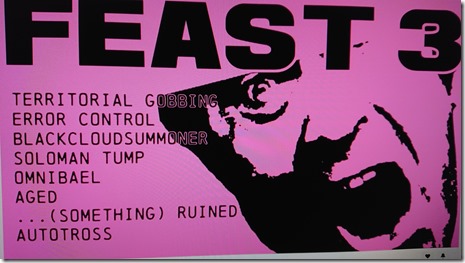
While real gigs still aren’t possible, nim_brut are keeping the fringe noise community together with their ‘FEAST’ streams – and it’s an appropriate moniker, as they offer a veritable smorgasbord of experimental, noisy, and weird shit that fans of this disparate (anti)scene can fill their boots with at one of these events – eclectic, engaging, and inclusive, with something for everyone (as long as they’re into this kind of niche). Admittedly, the lineup was predominantly white and male, but that’s by no means an issue unique to experimental / electronics / noise, and the chat that ran alongside the stream was both welcoming, supportive, and encouraging for all comers. And in terms of replicating the live experience, it’s pretty good: something obscure provides a backdrop as people arrive and there are greetings in the chat, much like turning up at a similar show in person: a fair few people know one another from the circuit, and it’s relaxed and accommodating. In real life, these are some of the places I feel happiest: there’s no pressure as such, and people are accepting and accommodating of others not feeling particularly sociable, and the shared appreciation of diverse and indigestible music is simply accepted as enough.

So we’re here, and it feels comfortable.

The gig poster is replaced by footage of a lot of knobs and wires… a lot of panning and close-ups of this complex kit accompany drippling, blipping, bleeps and whistles, trickling, babbling sounds create a light, skipping mood. It’s Autotross, and they certainly don’t outstay their welcome with this short set. A nice taster, it would be interesting to see what more they make of this setup.

Soloman Tump’s pulsating dark ambient electronica is quite a contrast, and the rumbling, droning groan is accompanied by a walk in the woods, blurred, rasterised and colourised to render it most uncanny and unsettling. Clicks and burrs spike through the murk, the thudding beats thick and heavy, slow and deliberate, while will-o-the-wisp lights flicker and skip in the upper tonal regions, bringing a full sonic spectrum with good separation. The walk ends in a strange place with what looks like pouring paint and the sound winds down slowly like the life is slowly being sucked from it. While it would no doubt he great to see and hear in a real live setting, it does work well through phones.

DSC_6899

Soloman Tump

I was rather anxious ahead of the slot reserved for …(something) ruined: technical difficulties meant that the intended set wasn’t good to go, and I had stepped in last minute with a solo track I’d been working on, which I had about an hour to add visuals to before submission, thus making the debut for instrumental offshoot …(everything) ruined. Seven minutes of gnarly digital distortion accompanied by an eight-second clip of a sink-unblocking chemical in action looped for seven minutes seemed to go down pretty well.

Grating electroindustrial and eye-bleeding, fit-inducing flickering visuals are the order of the day from AGED at the start of the set – and then things start getting really weird as skeletal birds begin to drift back and forth against low oscillating scrapes and hovering drones.

OMNIBAEL had threatened a set involving banging railings and that’s what they delivered. Somewhere between Test Dept and Einstürzende Neubauten, it’s a heavily percussive clanging racket, and it’s brutal and oppressive. Marking a significant shift from their previous FEAST appearance, it’s a short, sharp shock of a set, and its impact is immense.

DSC_6904

OMNIBAEL

Blackcloudsummoner’s set starts out dark and sense with a grimy, distorted bass booming. Not a lot happens: the drone drones on, as shrill whistles of feedback strain through a discoordinated chatter of sound that reminds of being in a crowded place… it’s unsettling and tense. Red lights drop like lava against a dark background in a loop, and in combination, the effect is hypnotic.

There’s a whole lot of gnarly nasty noise from Error Control, and there’s a definite sense of performance here too, as we see him twiddling the knobs on his compact but knob-dense kit while blindfolded. On one hand, this could be taken as a critical comment on the nature of harsh noise and the lack of technical prowess required to create it, as well as the S&M subculture associated with some corners of the scene, but I feel it’s more about exploiting the ransom elements of music making – and he works his patches well, generating some head-shredding tones with some abrupt tonal shifts.

DSC_6907

Error Control

Even if you ‘get’ and dig Territorial Gobbing, Theo Gowans’ outré approach can’t fail to evoke a certain ‘wtf’ response. Sonically, this set is very much standard territory, a series of groans, drones, bleeps, blips, burp and farts, with random samples flying in from all angles to dizzying and bewildering effect. Only this one, he’s dialled in from bed with a hot water bottle and some kind of elephant trunk hat thing made out of foam and paper mache or something. He coughs, splutters, wheezes, mutters, and snores, the din stops and starts and you wonder if he’s perhaps unwell, maybe delirious, but then you remember that’s just how he is, and he’ll probably be doing shit like this on his deathbed. It’s a cracking set that reminds us that there really isn’t anyone else doing anything quite like this.

DSC_6910

Territorial Gobbing

It’s a top end to a top night. At some point in the future, this will happen in a small room, at extreme volume and will be observed and appreciated with a fervent enthusiasm by a dozen or so people, and it will be aMAYzing. For the time being, it’s a real joy that the creativity continues and the sense of community remains.

And you can watch it all here:

DSC_6900

DRET 05 — 2nd April 2021

The fifth release on Swedish label Dret Skivor, which coincides with another Bandcamp Friday, is Blue Oblivion by Tore Honoré Bøe. Information about the artist or the material is non-existent, so everything is left open for the listener to extract and interpret from these layered sonic collages. My initial response is the ocean, being immersed in the vastness of the expanse – or, more specifically, drowning, before my thoughts turn upwards, to the eternal endlessness of the sky. Starring up on a cloudless say, it’s easy to lose yourself in the infinite space.

But the sonics captured here evoke neither. This is, for the most part, a snarling, swirling tempest of electronics pushed to – and beyond – their limits, a shrilled, shrieking assault on the senses that utterly engulfs: this is not a pleasurable or ecstatic oblivion, but the oblivion that arrives as a welcome relief from a relentless battering.

On the first piece, ‘Foosa!’ a piano note fades into the fog as a crackle of static builds to a sustained fizz. Scrapes and drones take on the presence of creeping chords in the absence of any overt musicality. It howls and wails and drills into the cranium randomly, one shill blast of noise replaced by another shrill blast of noise of a different frequency. Like cowboys armed with two pistols shooting from each hand alternately, Tore fires off drill-like frequencies one after the other, hand over hand, whirring and buzzing… and then it’s all down the toilet in a single plunge.

‘We Love King Julien!’ is less abrasive, at least initially, but no less challenging: a woozy, stammering mess of glitching drone that cracks and churns through a succession of misaligned subsequences that stammer and lurch, it’s a different kind of discoordinating. Metallic smashes scrape and buckle to forge brain-clenching streams of static noise that bubbles and churns. In time, it all breaks down into a mess of fractured noise and fizzing static, a horrible mass of treble that jumbles all focus. It descends into alternating drones and explosive blasts of speaker-shredding noise, and culminates is a tsunami of churning while noise and synapse-melting overload across a wheezing drone so flat it feels like it died a long time previous.

There is no kind or considered response to this, no neat finisher. It’s not an easy or pleasant release – but then, that’s not what Dret ‘do’, and seemingly, it’s not what Tore Honoré Bøe does either.

Blue Oblivion is unquestionably immersive, but it’s not entertainment: this is harsh, uncomfortable nose. It’s noise to lose yourself in.

AA

a3756016703_10

Bankrecords – blank037 – 12th March 2021

Christopher Nosnibor

In his everyday work, Tobias Vethake composes music for theatres, installations, radio plays, television and film, and while also participating in various collaborative projects, including Mini Pops Junior, his primary outlet for his experimental explorations is Sicker Man. With electric cello at the heart of the compositions, Vethake incorporates myriad additional sound sources and draws on a vast cultural spectrum spanning jazz and industrial, from east and from west to forge expansive and quite intense works of range and depth.

Like Jo Quail, Vethake plays the cello in ways that rarely sound recognisably cello-like: it’s apparent that the instrument’s versatility is severely underrated. So while there are certainly orchestral elements present on Dialog, it’s by no means an overtly orchestral album, and by absolutely no means an overtly ‘cello’ album. It’s more of an abstract, ambient, (post) rock work. Moreover, collaboration has a way of drawing different ideas and methods out of artists, with the potential to realise works which are infinitely greater than the sum of the parts, the product of the ‘third mind’, if you will.

Dialog contains a collection of pieces recorded in collaboration with different artists – all improvised and unarranged. The dialogs therefore represent the musical exchanges between the musicians in the moment as they respond, spontaneously and intuitively, to one another, often as they meet and ‘converse’ for the first time.

The album’s first track, ‘dialog with Manuel Klotz’ begins with a weaving air of eastern mysticism (a Turkish marriage orchestra Tobias would pass as they played on his way to the sessions), and I’m reminded of the Master Musicians of Joujouka, only with more prominent percussion – but before long, a yawning swell of noise engulfs it, the wave finally breaking to a heavy tidal drone with an instant beat. Eventually, everything collapses to a buzzing drone.

Each piece has its own distinctive style, indicating not only the merits of what each collaborator brings, but also Sicker Man’s versatility. There’s a swampy swagger to the piece recorded with Lip Smh, where drill-like drone buzzes vibrate against serpentine scales that twist enigmatically into a desert haze.

Aidan Baker gets everywhere, and here he is bringing brooding shadows of melancholy the a mournfully lugubrious piece, which is, for my money, one of the standouts. Of the others, there are lengthy passages of gentle, abstract ambience in succession, but the dialog with Kiki Bohemia brings all the dingy bass, as well as all the shimmering space-rock synths, while Scheider TM goes all out on the electro pulsations. Clocking in at over nine and a half minutes, it makes for one mighty finale, building into an immense wall of overdriven guitar that’s absolutely crushing in its weight and density. It has the elements of Earth 2 and Sunn O))), but played at pace, a swirling black metal vortex of overloading distortion. It’s absolutely punishing, and its relentless.

After the curious journey that is the rest of Dialogs, this is just a devastating finisher. There is nowhere to go from here, other than to turn out the light and stare at the ceiling.

AA

blank037_front