Posts Tagged ‘Avant-garde’

Clang – 29th September 2017

Christopher Nosnibor

There’s probably a press release somewhere, but I should probably just listen and lose myself in this. Endless Undo is a work of infinite subtlety, layered and detailed. It is, of course, the result of meticulous editing, a restive mind working and reworking, doing and endlessly undoing in order to achieve moments of microtonal bliss.

Böhm’s field is, ostensibly, the space between ambience and beat-propelled electronica: the compositions are rhythmic at heart, and while there are distinct and definite beats, they’re rarely dominant, and are often subdued, restrained or otherwise bouncing agitatedly in the background.

‘Heissenberg’ is built around bleeps and whistles, crackles drones and some swampy avant-electro percussion, and creates an enticing atmosphere without disclosing even a fraction of the range of the album as a whole.

‘Liub’ goes scratchy and glitchy against clanking electronica, explosive blasts of shuffling, processed beats and while it’s paired back and sparse on the surface, there is a lot going on: ‘Dezembur’ bumps and scrapes, bumps and scrapes its way through tremulous fear chords and dramatic yet understated piano. Glass tinkles and chimes while a single picked note hangs in the air for an eternity, swelling before a slow decay. It segues into the dense swell of ‘Klicker’, which builds to a bubbling, bassy groove which is far from ambient, bit so swampy as to be submersive.

There’s a definite arc to Endless Undo, and while it may only contain five tracks, over the course of its thirty-five-and-a-half-minute running time, Böhm may not exactly develop a sense of narrative, but does build upwards in solidity and intensity before the sparse, crystalline ‘Madeira’ turns in on itself to bring the album to a delicate yet moody close.

There’s a sense that Endless Undo is an album about potentials: the end product is simply the version the artist has settled on after a relentless tweaking and adjustment. It could have been a very different album. But then again, perhaps not, but we will never know.

Volker Böhm – Endless Undo

MC/CD/DL – Nakama Records –NKM012 – 22nd September 2017

Christopher Nosnibor

I’m not entirely sure what a no-input mixer is, and I’m not sure I have the energy or motivation to find out. But it’s one of the ‘instruments’ Utku Tavil ‘plays’ on this album, in addition to snare drum and sampler.

What I do know is that Juxtaposition is a studio work of four Oslo based improvisers (and not the indie mongs who went by the same name who came round to my flat in Glasgow in 2000 to be photographed by my achingly hip flatmate) recorded in the spring of 2016. Various timbres of opposite extreme, as a result of each musicians’ different approach and background, coexist without hierarchical restrictions. Having that in mind during playing, the mixing process played a crucial role to deliver a concrete body of equalitarian sonic output. Without compromise, moments of joy and pain, screams, feedback and bird sounds are layered on top of each other.

This is not music that’s easy to listen to, let alone love. Scraping, distorted clanks and clatters echo atop growling, prowling, near subsonic bass intrusions and an elongated howl of sustain. And that’s just the first thirty seconds. An overloading mass of shuddering, screeding extranea rapidly builds to skull-crushing intensity, as shrieks of treble erupt like solar flares from amidst the tempestuous racket.

‘Pakistansk Mango’ is a fiendish mash of vocals – Natali Abrahamsen Garner does not sound of this world, and it’s hard to compute that the sounds emanating from her being are untreated, unprocessed – shudder and judder to a babble of stuttering repetition, against a backdrop of bubbling synths, ear-shredding bursts of pink and white noise, and nail-scraping feedback reminiscent of Total Sex era Whitehouse. Pleasant it is not. In fact, as distorted metallic bangs and hammers batter through a sonic riot of indeterminate origin, I’m feeling pretty fucking tense.

A yammering percussion that sounds like a cross between a locomotive and a nailgun provides the spine behind a whirling aural assault for ‘Revolver’.

Natali Abrahamsen Garner and Agnes Hvizdalek’s voices exist outside the realm of the human, and serve to add a disturbing, unheimlich aspect to the already hellish, grating sonic torture. Screams, shrieks howls and growls are all integral to the traumatic experience. ‘1000 Poeng’ features a host of primal screams over growling synth bass and brutal, waspish feedback. On ‘Enkle I’, a deranged bleating entwines with a surging skitter of overloading electronics and a swirling vortex of nastiness, and a mess of brown noise buzz blasts in around five minutes into the final track, ‘Trost’.

Juxtaposition is a cruel and punishing work, which exploits the full sonic spectrum and every texture, from grainy abrasion to the razor-sharp to inflict maximum pain.

AAA

- dsn - JUXTAPOSITION - VIDEO titles

Gusstaff Records – 2nd September 2017

Christopher Nosnibor

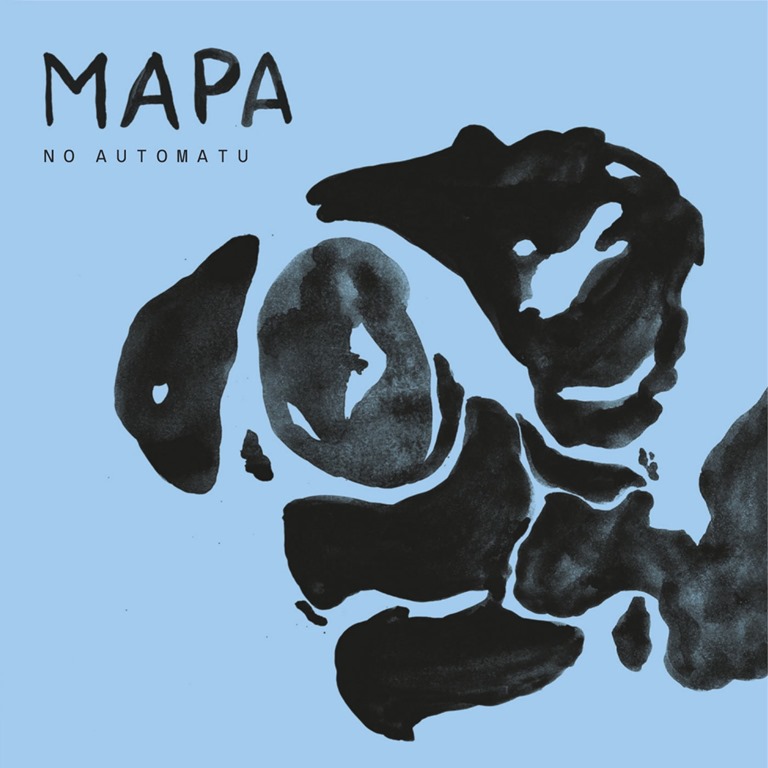
It may have bene groundbreaking and have acquired a legendary status, but I have to confess to being unfamiliar with Mapa’s previous album, Fudo, released some nineteen years ago. That said, No Automato is billed as being quite an evolution and reveals a newfound simplicity and sense of minimalism.

Not that you could exactly call any of the album’s nine compositions simple or minimal, because there’s a lot going on, but there is a directness and energy which emanates from the music. Stylistically, it’s all in the mix, incorporating elements of punk, avant-garde jazz, instrumental hip-hop and experimental electronica.

There’s a playfulness about the way they forge juxtapositions: slow, ritual percussion booms and rattles tribalistically as if marking the pace of a funeral march deep in the jungle. In contrast, warping bass tones and flickering, glitchy electro whirs and bleepy scrapes shape the sound: this is ‘MPA Jazz’, and this is how Mapa introduce themselves on No Automatu, and it’s clear that working with Marcin Dymiter brings out a different side of Paul Wirkus.

The mad, lo-fi disco of ‘Burnt Tragiczny’ transitions into the world of the weird as the juddering retro beats slip their sprockets, and the rapid-fire retro snare explosions which pin the woozy bass undulations of ‘Heute Tanz A’ in place evoke a bygone era of experimental electro recordings. ‘Heute Tanz B’ juxtaposes surging waves of analogue synth with a beat lifted almost directly from Cabaret Voltaire’s ‘Nag Nag Nag’, and it’s the primitive drum machine sounds that define the album’s sound throughout.

‘Rudyment’ may be instrumental, but its sparse plod is harrowing and oppressive, and it’s clear that Mapa are abundantly capable of forging an atmosphere more or less out of nowhere and pulsing throbs build the backdrop of the infinite layers that build on top. The title track is the album’s closer, and it’s a dense, relentless attack built around motoric drums and woozy, abrasive synth-bass.

Mapa are all about the clatter and clang, and No Automatu is a curious album whichever angle you care to view it from. Messy, noisy, unpredictable, the range of atmospheres and vibes packed into the album keeps it moving at pace, and means it’s never less than fascinating.

AAA

mapa-no-automatu

Christopher Nosnibor

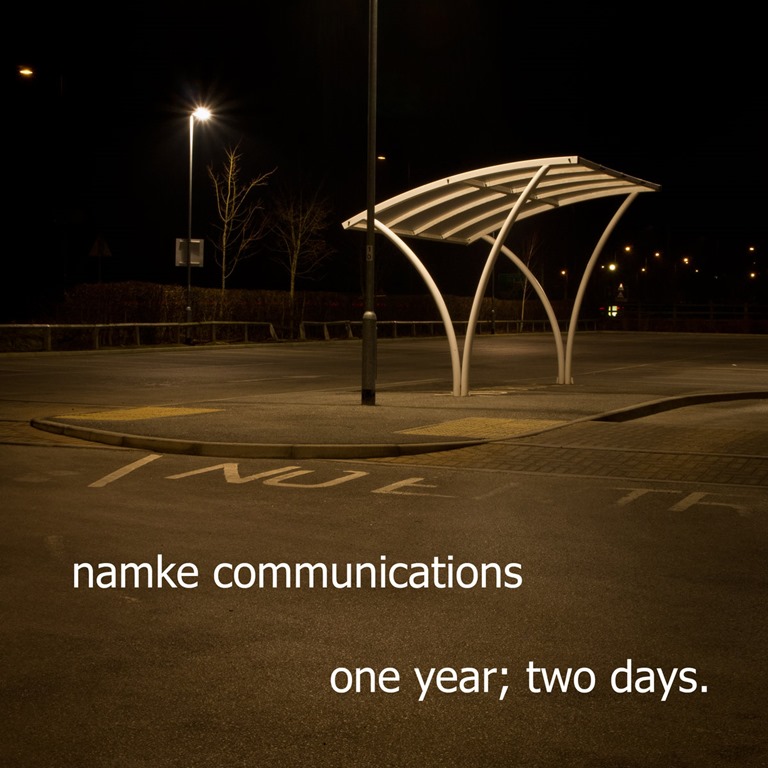
I know very little about this release, at least in terms of specifics. I do know that it’s the work of the prodigious John Tuffen, who also performs as part of Neuschlaufen and Wharf Street Galaxy Band amongst others. I know its physical edition is in a hand-numbered run of 50 CD-R, housed in a paper foldover sleeve in a PVC wallet, with an appropriately blank image by way of cover art. There’s a bleak, quasi-modernist feel to the night-shot photograph of a structure constructed as some kind of shelter. But a shelter without people and a car-park without car is simply dead space. One Year, Two Days is a night-time work. Recorded at night (we’ll return to that shortly), it’s the soundtrack to empty spaces and time without people. And abstract as the sound sequence are on One Year; Two Days, it’s reasonable to summarise the project as a work about time and space and a certain absence.

I do know that John likes his kit, and to fiddle with it, and that a lot of his works are ‘project’ based, centred around either a piece of equipment (e.g. 808 // Whammy (2016) and Field Memory Recorder (2017) recorded exclusively with a novation circuit) or specific times / locations. I also know that John has been working under the Namke Communications moniker for some seventeen years now, and has built quite a body of experimental work in this guise.

The track titles are simply dates and times, and show that the four pieces were recorded over two days in 2016 – as the EP’s title suggests. In some ways, it marks a continuation of the 365/2015 project, which saw Tuffen record – and release – a track a day for the entirety of 2015.

This project and its predecessor provide a considerable insight into Tuffen’s creative modus operandi, which could equally be described as a work ethic. It’s one I can personally relate to, as I strive to produce and publish at least one review a day. This does, of course, raise the inevitable question about quality control, but there are two very different positions on creativity: the first suggests creativity is something which cannot be controlled, is spontaneous. It says you have to wait or the moment, the idea, the impulse. To wait and to go with the flow. The second says that creativity is like a muscle: the more you do, the more you’re able. In time, quantity begets quality as a committed, systematic approach to making art.

‘2016-08-08-2202’ sets the tone, a distorting oscillation provides the backdrop to creeping notes which gradually rise majestically before bleeding into ‘2016-08-08-2318’. It may be growing later, but the mood grows marginally lighter. The sequencing of the tracks is a major factor in the listening experience here, as there is an overall arc from beginning to end. The mid-section, as represented by ‘2016-08-10-1909’ transitions into hushed ambience, before fragmenting into darker territory with fractured distortion and dislocation taking hold. Eventually, it spins into hovering metallic drones, the frequencies touching on the teeth-jangling.

The final track, ‘2016-08-08-2256’ forges a cloud of amorphous sonic drift, a sonic cloud without tangible form. It’s immersive, but at the same time entirely engaging, as the oscillations and quavering notes which fade in and out of the rumbling thunder slowly dissipate in a drifting mist.

While locked in time and space in terms of their creation, in terms of reception, the four tracks on One Year; Two Days transport the listener beyond both time and space. And herein lies the power of this release, in that it both freezes time, and stretches it out over a frame which has no fixed limits.

HHHHH

Namke Communications – One Year Two Days

24th August 2017

Christopher Nosnibor

Although he’s released two solo albums under the guise of Wiekie, Adam Weikert is perhaps best known as the drummer of Her Name is Calla. This first release under his own name marks something of a departure, and given its inspiration and evolution, it’s perhaps not unreasonable to say that Weikert’s decision to release an album as ‘himself’ represents a stripping away of the layers of artistry to reveal a work which is more directly personal.

The blurbage contextualises the release as follows: ‘Born years ago as response to cope with a traumatic event of his youth, and revived years later after ill health forced Adam to temporarily stop singing – USIDOH showcases the scattered fragments of poems alongside happenstantial Neoclassically themed works, creating a unique and personal experience.’

Attempts to unravel the meaning of the album’s title, which I take to be more of an initialism than an acronym, during the writing of this review bore little fruit of use. The poems – which are contained in an 80-pagebook which accompany the physical release – are considerably more instructive as to the true meaning of the project. That isn’t to say they’re in alignment with the album’s eleven (instrumental) tracks, because the poems – plural – essentially blur into a single, drifting longform work which has its own shape and tempo, as well as illustrations which augment rather than impinge on the experience. That is to say, the two elements of the project are complimentary rather than directly parallel. Nevertheless, the poems are absolutely integral to the overall experience, rendering USIDOH more of a multimedia work than simply a musical piece.

The words are weighty and the presentation is not only highly visual but intrinsic to the execution. Just as the music on USIDOH draws on aspects of the postmodern and the avant-garde within its broadly neoclassical framework – Wiekert conjures a vast array of atmospheres and emotions through the use of abstraction and semi-ambient field recordings and found snippets in conjunction with mewling saw, sweeping strings, brooding piano and nagging banjo – so the poems pull on high modernism, postmodernism and concrete poetry to further accentuate the lines, disparate and abstract yet unified by virtue of emanating from the same mind, over a period spanning the six years from 2005 to 2011.

‘Die Puppe’ weaves in and out of experimental atmospherics, before ‘Vardøhus Festning’ forges an imposing, imperious mood. ‘Sloth’ is a simply beautiful piano composition, which rolls and drifts mellifluously. There’s almost a playfulness about ‘A Constant Repose’, which first aired via YouTube aired a couple of months ago, the nimble piano work affecting a lightness of mood. But beneath it lies a subtle undercurrent of nostalgic melancholy. And if anything, it’s this emotional layering and the depth of nuance and detail which makes USIDOH such an appealing and compelling work, musically.

As a complete package, there’s a lot to unravel. USIDOH is very much art: Wiekert has poured everything into this, and it shows. There are times when it’s not easy to penetrate, but that in itself is reason to set aside some time to explore a work that multifaceted, deep and resonant, and achieves this without slipping into pretentiousness. There’s no question that USIDOH is ambitious, but Wiekert succeeds in delivering something which conveys the vision.

USIDOH

Christopher Nosnibor

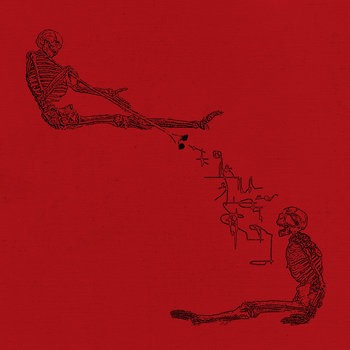
Fractal, stripped back strumming and spacious strings define the compositions Skeletikon. Having misplaced the press release, I know next to nothing about Fjellstrom’s purpose or intention with Skeletikon.

‘Born out of shattered dreams and an obscured vision of the future, Skeletikon is a delirious yet lucid exploration of the farthest and most conflicted reaches of the heart, teeming with confusion, passion, and ghostly shadows. Being no conventional composer in any way, Marcus stumbles further down his musical domain of detuned orchestral (re-)arrangements and pain-inducing synth passages, arriving at a most unique and personal result.’ So says the blurb accompanying the album.

Across the album’s ten compositions, Fjellstrom explores all of the essential elements, namely texture and tone, atmospherics and dynamics.

‘Aunchron’ is a light, lilting folksy composition that in some respects invites comparisons to early 90s Swans in the way it builds. But it’s a magnificently multifaceted piece, which shifts and glides supply though a series of transitions which head in various directions over the course of its six-minute duration, by turns cascading gently over rippling chimes and rolling through delicate thunder.

‘Skeleton Dance 2’ is dark, tense and atmospheric in a brooding, difficult way: it gives way to the lilting yet urgent acoustic strumming of ‘Modulus’. Dark clouds rumble as they gather under tremulous strings on ‘Arboretum’: less a sonic representation of the breeze through the leaves on the trees in Spring, and more of a haunted forest with growling, marauding hunters lurking in the undergrowth.

Skeletikon is one of those albums which never stays still, which slowly trickles around a succession of haunting sonic spaces and does so incredibly deftly. As such, its impact is subtle to the point of being barely perceptible for the most part. Skeletikon is sparse, and reaches in by stealth.

The album closer ‘Boy With Wound’ is a haunting, creepy composition, and while it employs myriad classic tropes common to music which is designed to instil certain sense of dread, of trepidation, it’s also a musical journey through a series of tense moods and nerve-jangling tension.

Skeletikon is not an album to enjoy, per se, but one to experience at leisure and to slowly absorb. It’s an album with the capacity to affect the listener, and to effect the psychological axis upon which they ordinarily exist.

Marcus Fjellstrom – Skelektion

ChristopherNosnibor

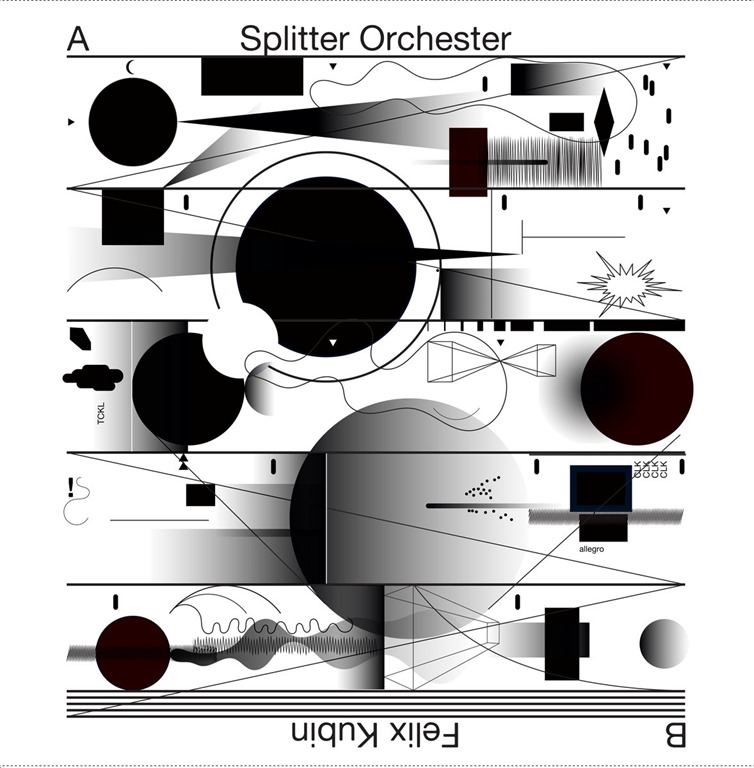
The split album seems to be in vogue again, and it’s a format which perhaps offers more scope for artists who don’t trade in punchy little tunes than the split single or EP. Shine on you Crazy Diagram may only contain four tracks and have a running time of just over thirty minutes, but it allows both contributing acts to showcase the range of their sound by presenting expanded, developed musical works.

The two tracks by Splitter Orchestra explore and examine weird digital percussion: the ever-shifting pitch creates the illusion of ever-shifting tempo (or does it? Perhaps the tempo does shift albeit subtly) beneath whistling contrails of feedback. They sputter and scrape and drone and hum. ‘Diagram 1’, at under four and a half minutes, is but a prelude to its counterpart, ‘Diagram 2’ which hums and wheezes for almost eleven minutes. There are rhythms in the mix, but they’re pinned back in the mix and bounce around against a shimmering backdrop of feedback and extraneous noise.

Kubin’s compositions are altogether less overtly structured, or at least rhythmic, as swampy swashes and thumps rumble and eddy before – from seemingly out of nowhere – faceripping blasts of distortion roar and blast. ‘Lückenschere’ is constructed around a clattering, shifting rhythm.

‘Lichtsplitter’ clatters and moans and hums and drones for an eternity, before stepping up about ten gars. By the end, one has a fair idea of what it just be like to stand within two feet of a Boeing 474 taking off.

This is, without doubt, one of those releases which lends itself perfectly to vinyl: it is, after all, an album of two halves. They compliment and contrast, and showcase two quite different sides of the experimental digital coin.

There’s a digital bonus track from the Splitter Orchester. ‘Diagram 3’ is a ten-minute extravaganza of thick, impenetrable hums and drones. It might not exactly change the complexion of the release, but it does unquestionably fill out and round off the intangible, non-physical format nicely.

Splitter Orchestra   Felix Kubin

Unsounds – 57u – 10th February 2017

Christopher Nosnibor

Unsounds have a history of releasing magnificently-packaged albums, and Subvoice by Yannis Kyriakides is up there with the best of them. The double CD is housed in a chunky hardcover book binding, which contains an actual book, some forty pages in span.

My introduction to the concept of the subvoice came via William Burroughs, who, around the time he was exploring the myriad potentials of the cut-up technique, made innumerable audio experiments. While most of these involved tape splicing, dropping in and cutting out, some investigated the subvoice in a most literal fashion. Some of these barely audible and even more barely listenable recordings appeared on Nothing Here Now But the Recrdings on Industrial records, with the liner notes describing ‘Throat Microphone Experiment’ – if memory serves – as a not entirely successful attempt to capture subvocal speech.

The definition of ‘subvocal’ is ‘relating to or denoting an unarticulated level of speech comparable to thought’. Kyriakides describes the works in the collection as ‘an investigation into ideas of voice and language [which] range from works in which text is directly encoded into music… to ones in which the voice is examined, dissected and pulled apart’. He explains that ‘in both approaches the underlying idea is to explore what happens when material has a clear semantic form, whether communicated in text or speech, is translated into musical structure’.

While thematically and theoretically linked, the nine pieces – which have a combined running time of almost two and a half hours – are from quite distinct and separate collaborative projects Kyriakides was involved in between 2010 and 2015.

The first piece on disc one, ‘Words and Song Without Words’ is the shortest work, being a couple of seconds under ten minutes, but appropriately introduces the kind of sonic palette Kyriakides and his collaborators – in this instance, Francesco Dillon, who contributes cello – work from. ‘Paramyth’ is eerie, disconsolate, the cracked ramblings splayed in all directions over tense piano and uncomfortable strings, but ultimately peters out into something softer. Skittering strings scurry busily in brief and disjointed flurries, hectically flying here and there, on ‘Toponymy’. Muffed voices bring a discomforting sense of the unheimlich, a sense of the intangible and of something just out of the reach of understanding.

Ominous notes hover and ring on the last piece on the first disc, ‘Circadian Surveillance,’ a twenty-five minute exercise in haunting atmospherics, where distant voices are barely audible under a rumble of turning static and hovering notes which resonate into dead air.

Onto disc two, ‘Der Komponist’ – a composition for orchestra and computer – begins quietly, ominously, with protracted near-silences between delicate, low, slow builds, before horns begin to add cinematic drama. It’s very filmic, very – for wont of a better word – soundtracky, and is reminiscent of some of JG Thirlwell’s more recent orchestral works. The climax is a slow, swelling succession of surging brass, underscored by a rippling digital churn.

‘Politicus (Dawn in the Giardini’ is perhaps the lightest and most playful composition of the nine, and utilises the variability and versatility of the prepared disklavier. The original work was a twelve-hour sound installation. The booklet explains the technical aspects in great detail, and Kyriakides outlines the way in which algorithms based on speech drive the formulation of the piece, here in an abridged fourteen-minute segment. The immense complexities behind the composition are completely hidden from the listener, with the surface completely masking the mechanical depths.

The final piece, ‘Oneiricon’ is a work for ensemble and computers. It’s an exploration of dreams, and is often subtle to the point of subliminality. And because Subvoice is very much a ‘background’ work, while it often drifts for significant stretches without really pulling particularly hard on the attention, it does mean that its immense duration is not an issue. Equally, because Subvoice is a collection rather than a work conceived as a single continuous whole, it’s possible to listen and appreciate in segments, without absolute commitment. And it is an album to listen to and appreciate: Kyriakides’ compositions are varied and textured and demonstrate an attention to form and sonic detail which extends far beyond the basic premise of ‘the voice.’

a0933203676_10

Hominid Sounds – 30th May 2017

Christopher Nosnibor

Matt Cargill’s project still has one of the best names around: it’s not only an example of punning genius, but also one of those band names which sets expectations as to what you’re going to get musically. I say musically, but that’s very much a matter of perspective. SATFD don’t make music in the conventional sense, and Molar Wrench is as sonically challenging as any of the previous releases SATFD have put out. On this outing, they’re joined by Dutch/British free jazz unit Dead Neanderthals, to form what they describe as ‘the ultimate tag team of the murky European underground’.

Given that the two acts featured on a split release last year, this collaboration seems like a logical progression. It certainly marks a departure for Sly, in that the trademark subterranean grind of endless, dark drones and unsettling atmospherics is matched with and at times consumed by the maddest jazz shit going.

The album contains just four tracks, but packs in a hell of a lot of racket. It all kicks off with a frenetic, a wild, free jazz cacophony, a melange of clamorous, ultra-hyped parping horns, sonorous lowed drone and is dominated by truly frenzied, cacophonous bent. Circuits fizz and hum while the percussion thrashes and crashes arrhythmically, throwing the listener around with reckless abandon a rollercoaster of tempestuous sonic mania.

There are two ‘Muck Man’ tracks and the first is ten minutes of slow, throbbing churn made up primarily of low and mid-range sludge, the drums holding a ragged but hard rhythm amidst a maelstrom of thick, dirty, pulsating noise. It’s almost a riff, but more a succession of waves in a rhythmically surging sonic tide, a with the density of liquid mud. Immersive would be one word.

‘Muck Man Part 2’ is altogether more low-key, a dark, atmospheric piece that manifests as a prehistoric sulphur swamp in sonic form. Slowly, the murky drift builds to a screaming tempest of noise; the brass develops from a low drone to a shrill shriek of pain and the drumming transitions from a sedate trudge to an explosive riot of noise, abrasive blasts of snarling electronica and whatever the fuck else bursting in waves of sonic shock.

The title track closes off the album, and it’s an eleven-minute trudge that calls to mind the claustrophobic brutality of Swans’ ‘Young God’ EP. The plodding percussion provides a doomy and tense prickling spine to the oppressive grind that lumbers on for what feels like a skull-crushing eternity.

There is a definite structure to Molar Wrench, in that it starts off wild and winds down to a grinding crawl, but it by no means feels like the energy displayed at the outset dissipates as the album progresses. It’s more a case that having exhausted the listener with frenetic kinetics and gone all-out on the attack at the front end, the album seeks to bludgeon the listener into submission in the later stages. And highly effective it is, too.

cover

Constellation

Christopher Nosnibor

It’s been 29˚C in the shade today. I’ve been awake since 4am for the second day in a row, and at work in the day-job since 7:30am. I’m a flustered, strung-out sticky mess, dying of hayfever, trying to hold it together and keep myself cool and hydrated with a constant flow of Scrumpy Jack. It’s not working. But I am: instead of kicking back or chilling out, I’m desperately trying to chisel out words in my cramped home office space where it’s so humid I can barely breathe. And instead of taking the easy option of one of the million mellifluous ambient works in my never-ending to-review pile, or taking a soft hit with some straight ahead metal or whatever, I’m battling with this dizzyingly diverse effort by Avec le soleil sortant de sa bouche.

Sold as a kraut-rock ensemble, Montreal collective Avec le soleil sortant de sa bouche (which translates, I believe as ‘with the sun coming out of his mouth’) pack myriad influences into their second album. Although containing ten tracks, it’s ostensibly an album built around three primary movements.

Psychedelic rock, krautrock, desert rock, punk rock, noise rock, afrobeat, experimental pop, post-rock, electronic; all are touchstones for Avec le soleil sortant de sa bouche.

The album’s first track, ‘Trans-pop Express I’ manages to combine hypnotic psychedelic desert rock with wibbly analogue retro-futuristic spacey electronica and some kind of warped gospel/country infusion. It bleeds invisibly into the hypnotic pulsating riff-trippery of ‘Trans-pop Express II’

The opening minutes of the second movement ‘Alizé et Margaret D. Midi moins le quart. Sur la plage, un palmier ensanglanté’ (of which there are three parts) marries a martial beat to some skittering world music vibe and tops it with a desperate, yodelling vocal holler that’s far wide of carrying a corresponding melody, or even a tune. Over the course of the piece as a whole, the band push into new territories by unconventional roads. This is essentially the key to the pleasure to be found in Pas pire pop. Avec le soleil sortant de sa bouche are clearly a band who please themselves first and foremost, and enjoy themselves in doing so. And yet they largely swerve indulgence by virtue of their sense of movement: the tracks build and bed, trip and transition: the explosive crescendo at the end of the aforementioned first part of ‘Alizé et Margaret D’ is killer, and immediately loops back to the opening proggy motif on the second part. It’s like skipping back in time, like a glitch in the time continuum. It’s a minor detail in many ways, but it’s also a minor work of genius.

The final movement – in a colossal five parts – begins with a sweeping orchestral cascade which gushes every whichway over a thumping dance groove. It’s merely the beginning of a crazy journey through jazzy math-rock and noodlesome post-rock via some hefty noise and some Talking Heads-y post-punk oddness that works its way to a nifty finale by route of a tightly-woven funk groove meted to some clattering drums while whizzing electronic details fly like comes into the distance.

I’m oozing perspiration from every pore, especially the backs of my various joints: the knees, the elbows, the groin, and I find myself contemplating the complex musical conjunctions within the framework of the shifting tubular geometry of my limbs in context of the insane, overwhelming heat and its effect on my capacity for focused, linear thought, as if existing in some stylized Ballardian landscape of the mind.


Avec le Soliel