Posts Tagged ‘Ambient’

Kranky – 7th June 2019

James Wells

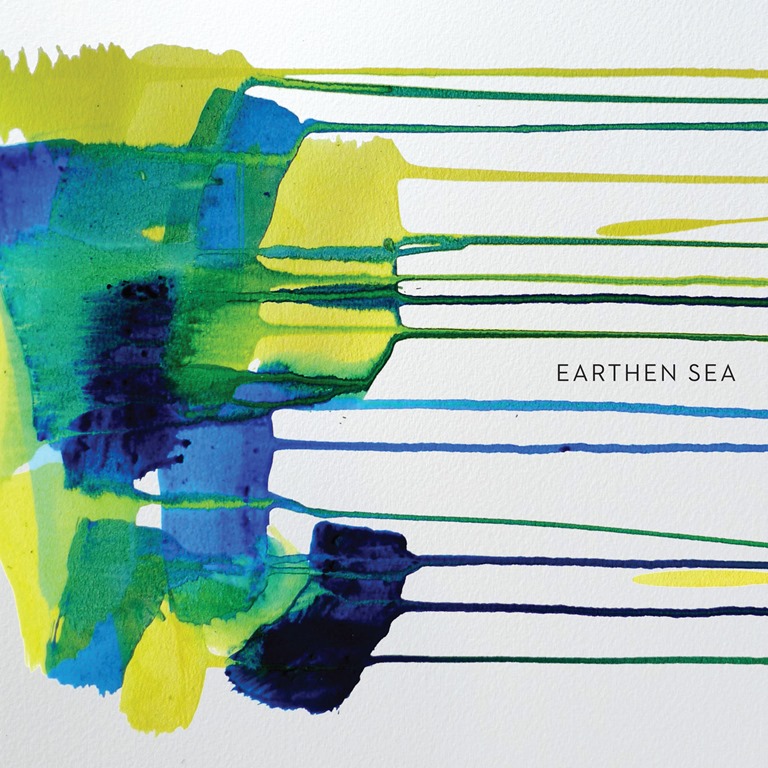
The press release informs us that ‘Jacob Long’s reductionist rhythmic ambient vessel, Earthen Sea, ebbs towards a more purely elemental state on his second excursion for Kranky, Grass and Trees’. But what does this mean?

Long’s approach to the album involved “simplifying things as much as possible,” and the result is an album that’s so simplified as to be almost intangible in its minimalism.

Rhythms are mere ripples, echoes of soft pulsations and clicking microtones. ‘Tidal’ as a descriptor carries connotations of immense, powerful surges and propulsive currents, but here, I’m referring more to the soft lapping of lazy foam on a soft, sandy shore on a still, warm day. The steady flow induces an almost hypnotic tranquillity as the sea remains still and the earth moves almost imperceptibly.

The track titles are less contradictory than self-negating and suggest a sense of uncertainty as their central premise: ‘Existing Closer or Deeper in Space’ and ‘Spatial Ambiguity’ are representative, and are also indicative of the sonic vagueness of Grass and Trees. For all of the pastoral imagery the title invokes, the music (and individual tracks) present more of a preoccupation with space: not just outer, but inner, the infinite space of the mind.

Its effect is to soothe the aching labyrinths of that inflamed infinite space with soft, organic tones, resulting in a work that feels like it’s been sculpted from nature. Not natural, but the natural world re-ordered to mirror the internal flows of the mind and body.

AA

Earthen Sea – Grass and Trees

20th May 2019

Christopher Nosnibor

5 guitars follows very quickly the eponymous debut by n, which is Nathan Lyons (concept, guitars) and Neil Physick (software, field recording, processing, arrangements, production, artwork). Its predecessor was the result of musical free association inspired by ‘random’ words: 5 Guitars is less determined by creative process and emerges from more of a conceptual space, in that, according to the accompanying text, it ‘explores the idea of the instruments having their own spirits, benign or malignant, and of a guitar maturing over time then slowly completing its natural life, remembering the past in distant tones’.

This is a work which is very much geared towards the evocative, the listener finding their own place within abstract works and finding the meaning. Only, the listener doesn’t so much find the meaning as project it from their own experience. Does the universal lie in the personal? Most definitely, although 5 guitars isn’t an album that has any grounding in the personal, as much as a space between.

The spirits of the different guitars float into the air, the concept not so much lost in translation as dissolving into vague sonic nebulousness.

Warm, distant drones define the first piece, ‘Red Kay’, which hovers and hums in a mid-range swell which ebbs and flows in a calm, natural way. It bleeds into ‘Effector’, which almost disappears at times, dissolving into the most vaporous, background of ambient.

The narrative and concept isn’t overtly discernible from the music itself: the tracks don’t demark a clear linear progression from mellow tones to decay.

Picked notes are discernible on ‘Tiesco’, but they’re carried in trembling washes that approximate chords but are much vaguer, less defined…. And definition dissipates to nothing amidst the undulating drones which surge beneath the tempered ripples of notes that drift gently over the indistinct, hazy backdrop.

5 guitars is vague, undefined, indirect and unfocused from a listening perspective. And that’s all fine. The concept may not be clear, but has no bearing on the listening experience, and certainly has no impact on the reception side of the project, which is a pleasurable wash of soft tones that more than fulfils its purpose in terms of background.

https://nsound.bandcamp.com/album/5-guitars

AA

n - 5 guitars

A ‘stripped back electronic companion to Omertà and Fermi’, Reconstructed Memories features just Paul Kirkpatrick and cellist Rachel Dawson. Kirkpatrick describes it as ‘quite different, more ambient but hopefully still engaging and melodic’, and frames it as ‘the story of life in an hour’.

Omertà and The Fermi Paradox were very different albums, with the latter (link) being an ambitiously expansive work, pushing outwards in all directions, not least in its exploration of time and space. Reconstructed Memories is much more inwardly-focused, and while it’s far from claustrophobic or suffocating, its minimal approach is, in itself, enough to redirect the energy and create a very different atmosphere.

As opening piece, the atmospheric, piano-led ‘A Beginning’ suggests, this is a linear, chronological work. The spoken-word intro, presumably delivered by Dawson, is instructive and creates the space for Reconstructed Memories to unfurl. ‘What should I write and tell? Big stories, big memories are always there… Let’s talk about some small, beautiful memories… Life is full of small memories…’ And it’s so very true. Life is not about the events, but the everyday details. It’s is easy to miss those details, too, caught up in simply existing, and waiting for the events, But you won’t move house, get married, have a child, or otherwise experience something momentous daily, or even often. Landmarks are rare and infrequent, and are relative in the context of the trajectory of a life. But life goes on, and is defined by those fleeting interactions. It’s not just the devil who exists in the detail, but life itself which occupies the cracks and recesses, the spaces in between.

And so it moves, in an evolutionary trajectory, gradually unfurling, expanding, revealing new vistas through a series of memories, reflections, and reconstructions. And it’s beautifully executed, each piece a perfectly-formed vignette delicately spun from soft, rolling piano and graceful strings. The moods are varied, at times light and lilting, others more melancholic and pensive, but ever-shifting and ever-evocative.

‘Regression One’ takes a step into darker territories, with a whispered spoken word narrative and connotations of the awkward, disturbing plunderance of the recesses of memory picked psychotherapy. How real and accurate are those memories? Memories are unreliable, coloured by perspective and faded by time. The effect, is, as the title of the next piece intimates, a blurring. Picked guitar echoes hesitantly, decaying into the mist among atmospheric, ambient strings. The arrangements make optimal use of the minimal instrumentation to create music that’s spacious and contemplative.

The artistic success of Reconstructed Memories lies in its vagueness. Such non-specificity places the process of input onto the listener, and it is they who find themselves reflecting on their experiences, their own hazy and tainted memories, prompted by abstract reminders to turn their gaze inwards. It’s the complete absence of context or meaning which renders the album simultaneously universal and personal.
Screenshot_2019-05-16 Reconstructed Memories Pre-Release Listening Masters

Treading that line between elevated art and unnecessarily loftiness and pretension… It’s a challenge. It’s not always easy to differentiate parody and sincerity, not least of all because we exist in a world in which real-life news resembles Brasseye and The Day Today. Irony is dead, and belief is the enemy in a post-truth society.

So when a press release reads half like a sample from a William Burroughs cut-up whereby Lemegeton Party is described as ‘the narcotic and occluded industrial-ambient debut for the Junkie Flamingos,’ it’s difficult to rate its level of seriousness. And, according to the accompanying text, the album is inspired by Friedrich Hölderlin’s Hyperion, [and] is gilded with a neoclassical sheen that alludes to both the divine and the diabolical. Kundalini’s whispered invocations which have so creepily effective in addressing psychosexually abject conditions in She Spread Sorrow are immediately recognizable here. Yet, she shifts the content towards messages of power and strength, even if cast in the shadows of desolation and solitude’.

The chances are – no criticism – that this will go over the heads of many, and returns us to the question of the extent to which understanding the theory behind any work of art should have a bearing on one’s capacity to appreciate it. I don’t believe that it should even one iota. But then again, my own background draws me to note that in their naming, Junkie Flamingos allude to surrealist juxtapositions built on incongruity, something which defined Dada and indicates a strong Surrealist bent.

The detail is that Junkie Flamingos is ‘a project conceived in 2017 by Luca Sigurtà, Alice Kundalini, and Daniele Delogu’, and that ‘Each of these musicians has their distinctive sounds: Sigurtà with his vertiginous electronica, Kundalini best known as the author behind the death industrial project She Spread Sorrow, and Delogu in the bombastic folk of the Barbarian Pipe and. Their collective amalgamation shifts but does not denude each of these aesthetics in the construction of this oblique, sidereal album.’

It’s clear Junkie Flamingos have high artistic ambitions, and ‘Evening of Our Days’, the first of the albums five expansive tracks sounds pretty serious: even a line like ‘you are a small man’ sounds menacing, threatening, dangerous when whispered, serpentine, from the mouth of Alice Kundalini against a rising tide of electronic manging. The backdrop is sparse, but ugly. ‘Shape of Men’, the album’s eight-and-a-half minute centrepiece is dolorous, sparse, and funereal as a single bell chime rings out over a low, thudding bass beat.

‘Restless Youth’ rumbles, grinds and glitches amidst flickering beats, ominous rumbles, hushes, barely audible vocals, and a general radiance of discomfort and disquiet. The lower, slower, and quieter they take it, the more you feel your skin crawl and your nerves jangle. Sitting between ambient and sparse electronica, it’s darkly atmospheric not in the ambient sense, but in the most chilling, semi-human, psychotic sense. ‘The Language of Slaves’ continues on the same path, the semi-robotic, processed vocals creating a distance between event and emotion. There’s no obvious entry point, and this is music of detachment and cognitive dissonance. These are the album’s positives. It isn’t easy to get into, but why should it be? But where Lemegeton Party stands out is in its subtlety, something chronically underrated right now. With Lemegeton Party, Junkie Flamingos steel in by stealth… and then fuck with your psyche. And that’s why I love it.

AA

Junkie Flamingos – Lemegeton Party

Opa Loka Records – OL1902 – 10th May 2019

Christopher Nosnibor

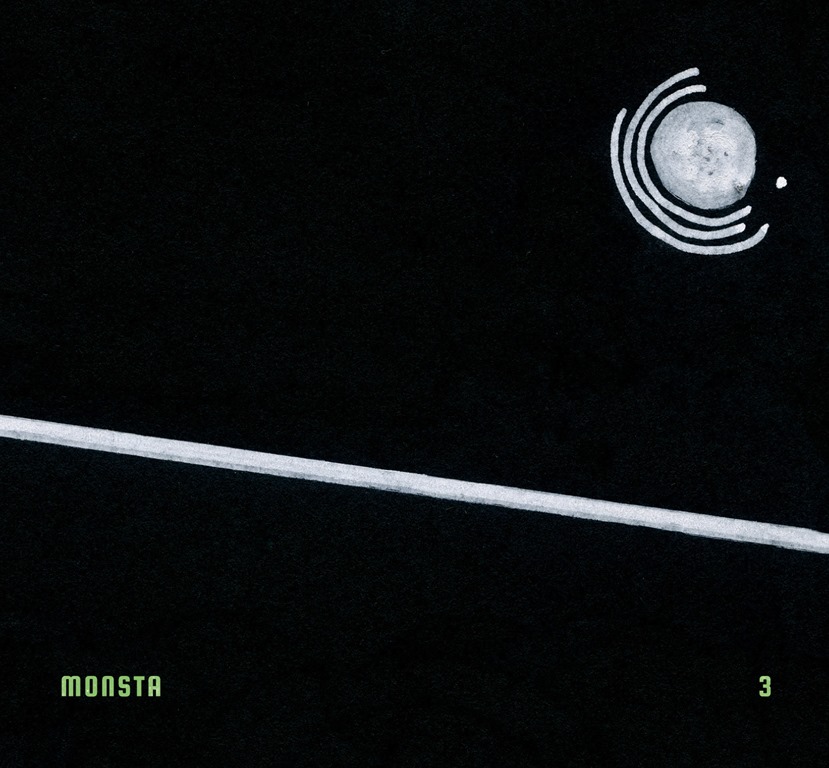
Monsta is a solo project by Boaz Bentur, bass player and producer from north of Israel combining elements from psychedelic music, electronic and experimental.

III is Bentur’s second release as Monsta, and comprises two (very) long tracks, ‘A3’ (28:00) and ‘B3’ (36:54). According to the accompanying text, ‘This album is a part from a series of live psychedelic/meditative sessions performed in special locations and atmospheres when people are lying down on the floor with eyes closed’.

At first, there is nothing, and I forgot I’d even started the thing playing. Then, after a minute or so, a vague sound, barely audible… then something resembling the sound of a distant plane…. The continuous hum swells in volume, but changes barely, if at all. Over time, echoic rumbles and soft, nebulous drones spread to fill the air. Besides this, not a lot happens. But one senses the purpose behind the music here is about anything but events, what happens or doesn’t happen, but about the sensations it inspires. And that sensation is incredibly soothing, as the sounds somehow render time an irrelevance and lift the mind out of the body into a state of great calm. You don’t step out of time, as much as slowly float above it, the bonds of corporeal existence gradually loosening as you slide into another dimension.

Around 18 minutes into ‘A3’, you realise it’s still going and that the echoing notes and vespers that tinge the air have changed, although it’s impossible to describe how or why. There just seems to be more… space. More echo. This feels more controlled somehow, more composed, note consciously layered, the reverberations more formulated, but it still feels and sounds fluid, and every layer of vaporous drone seamlessly transitions into the next. And consequently, you’re actually feeling relaxed, ok.

Yes, by you, I mean me. I’m not really listening: because Monsta III is ambient to the max. I’m pottering about doing other things, reading news items and Facebook comments, but as ‘A3’ tapers into the turning contrails of ‘B3’, I’m vaguely aware that this is ‘background’ music at its best. My heart rate is normal, I’m not twitchy or anxietised, and without my doing breathing exercises. I’m light, at ease. Vaguely bewildered, uncommonly separated and approaching a certain contentment.

And even now, the title remains a mystery.

OL1902_front

Crónica – 9th April 2019

Christopher Nosnibor

Useful points worth noting by way of a preface: Unwritten Rules for a Ceaseless Journey

documents three pieces composed for dance, commissioned by Ballet Teatro for the play Revoluções (Revolutions) by choreographer Né Barros. The in three parts are designed to embody formal idealisations of the three decisive layers of time — past, present, and future.

The three tracks each span around fifteen minutes, and the first, ‘Something’s Missing (Utopian) begins with elongated, scraping drones… and continues onwards with ominous hums that swirl and eddy around a barely-audible hissing buzz. A rolling organ while emerges from a clamour of shuffling intangibility to provide a vague semblance of form and instrumental musicality, but the it’s sad and sinister in equal parts, conveying a sense of loss while reminding us that the past is dark. The muttering voices, inextricable individually: are those the voices of the dead?

It seems entirely fitting that the pieces should melt into one another: time always transitions seamlessly, and in terms of life lived, it’s difficult to appreciate the fact that every passing second is stacking up the record of time past as the present slips away instantaneously. It’s also fitting that the present, as represented by ‘The Pulsating Waves (Reality)’ flattens into an indistinguishable mid-range hum that groans and sighs and whispers. Metallic sparks hiss way off on the horizon, forever out of reach. There’s a sense of emptiness and despondency about this inhospitably bleak sonic wasteland, even as it swells into an altogether smoother, denser, broader droning hum. It’s the sound of absence, a dulled absence that lacks dynamism or detail. So much positive, pro-mindful life-coaching material and contemporary self-help verbiage tells us that we should live in the moment; but the fact of the matter is that the moment is invariably empty, bleak, depressing.

‘Don’t Look Back, Run (Trauma)’ is solid advice: it’s impossible to retreat to the past, or to recreate it, despite the booming nostalgia industry’s suggestion otherwise. To commit too much time to reflection is to lose oneself to the past and deny the possibility of progress; but, to run to the future without due attention to history is to be doomed to repeat the mistakes of the past. There is a balance to be found. The album’s final track suggests a certain degree of balance: it’s slow, its form emerging from dragging pulsations drawn out in bowed strings – or ersatz assimilations thereof – which gradually diminish into a rumbling gust of wind, blowing grey, blurred particles into a formless mass. The future is, and will forever be indistinct, unclear, as unpredictable as the weather, fashion, and our fragile emotions. And in the dying minutes, it crumbles to a cloud of grey obscurity, lacking shape, form, and tonality, a vaporous viscosity of… what? Uncertainty. Murky, messy, abstraction. What the future holds, we know not: the present is unsettled, dangerous, turbulent. The present is well out of hand, and the future yet more so.

AA

H_CE_ARTES_FINAIS

Kranky – 10th May 2019

Cristopher Nosnibor

As with its predecessor, Konoyo, Anoyo draws its inspiration from traditional Japanese music, but very much reconfigures it not only through an ambient lens, but through Hecker’s own unique musicality.

Anoyo is very much a sequential, linear work, to the extent that the song titles create poem, and also a form of micronarrative:

That world / is but a simulated blur

Step away from Konoyo / into the void

Not alone / you never were

This sense of narrative also extends to the overall listening experience. ‘That World’ begins tentatively, tightly-wound strings picked, twanging. Washes of sound, reversed, flit like will-o-the-wisps as the tapers run the wrong way and slow, warm pulses flesh out the immense spaces between the notes. It’s ambient, and it’s (superficially) background, and quite hypnotic, but not without points of interest: in fact, while it’s easy to simply allow it to drift past, turning up the volume a way and concentrating reveals almost infinite details and ever-shifting forms. This is where Tim Hecker stands out in his field.

‘Is but a simulated blur’ presents a very different dynamic, dominated by irregular percussion. The arrythmia contrasts with the soft wave forms which drape, mist-like around the beats, which evaporate into the air, and the tracks bleed into one another. Things become fuzzier, less distinct, less clearly focused on ‘Into the void’, as piano notes stutter and glitch, warp and bend in the most disorientating ways.

‘Not alone’ brings bold, thunderous drums, but again the beats are erratic and ever-changing in pattern, before melting into the static-rumbling ‘You never were,’ which fractures and stammers like something’s damaged in the playback mechanism, like something in the process is broken, and the effect is disconcerting, discomfiting.

And so it is that Anoyo subtly transitions from delicate and mellow to something altogether more fragmented and more difficult. The subtlety is the key here: it creeps up on you, barely noticeable… and then, by the end, you find yourself wondering how you got here from there.

AA

449080

Houndstooth -15th March 2019

Christopher Nosnibor

And We Are Passing Through Silently is pitched as ‘a collection of songs reworked by Abul Mogard between 2015 – 2018’, with the press blurb describing it as ‘the sublime first survey of reworks by [the] cult synthesist’. It’s also keen to point out that while there may only be five tracks on offer, here, the stature of the artists with whom Mogard has had involvement, noting ‘divine renderings’ of songs by Aïsha Devi, Penelope Trappes (The Golden Filter) and nick nicely (heralded by luminaries of the US underground Ariel Pink & John Maus), with the album culminating with Brian Eno’s collaboration with Irish avant-folk band Fovea Hex.

The 2LP, CD and digital editions also feature Abul’s brand new rework of Becoming Animal’s ‘The Sky Is Ever Falling’ which features vocals from Cinder (This Mortal Coil/Cindytalk) and Massimo Pupillo on bass (Zu/Thurston Moore/Stephen O’ Malley),

The album opens with Mogard’s reworking of Aïsha Devi’s ‘O.M.A.’ The minimalism of the original, as well as its woozy atmospherics are substituted for a mellow sonic wash, and while it’s eminently listenable, there is a certain sense of loss. The darker, more disturbing aspects are stripped out in favour of something less psychologically traumatic, but… I’m torn between the function of a remix bringing something different, and it taking out the essence, and this very much feels like a stylised dilution.

In contrast, his rendition of Penelope Trappes’ ‘Carry Me’ distils that essence and concentrates it, while also drawing out three mellow minutes into twelve and a half of droning organ abstraction, and Mogard’s reworking of nick nicely’s ‘London South’ follows the same trajectory, stretching out four minutes of soft, wistful psychedelia into a fifteen-minute drift, with long, sonorous drones expanding to cinematic proportions. The vocals are preserved, but spaced out, pushed to the back, partially submerged in reverb.

Everything reaches a perfect coalescence on ‘The Sky Is Ever Falling’. Which combines cinematic and operatic, minimalism and maximalism, as the sparse yet full, widescreen instrumentation comes to crate the backdrop for a soaring vocal performance that lifts and soars. The piece warps and wefts on a solar wind for almost a quarter of an hour, before the contrails bleed into an eternal scraping drone that creates a soporific calm that flows from foreground to background in an imperceptible transition.

On the one hand, there isn’t much to it, and Mogard’s method is simple – but it’s not only effective, but has ‘signature’ stamped all over it: his style is distinctive, to the point that his reworkings relegate the original artist and their work to a secondary placing while his own sound and style dominate. On occasion such an approach to remixing may appear ‘insensitive’ or even ‘selfish’, but Mogard seems to have established himself as a re-creator more than a remixer, with artists lining up to submit their work to his reworkings, he’s clearly got some leverage in the musical community, and fair play.

AA

Abul Mogard – And We Are Passing Through Silently

The accompanying text records that ‘n is a collaboration between close friends Nathan (London) and Neil (Devon). The first album is a collection of seven words which were sent by text and used to inspire and direct the playing and production’. And so, we have insight into the title and the process, but what matters is the end result.

Delicate notes, distanced apart in time, hang in the air, dripping slowly like drops of water from an icicle. And so ‘Trust’ forms, slowly, gradually, imperceptibly, a ringing note at a time; the mood is optimistic, but tentative, fragile. Deeper, fuller, piano notes creep in, but remain at a distance.

‘Subtle’ certainly fulfils its title’s promise, and while there is a gradual growth of an ebb-and-flow, the form is very much forged from soft, rippling notes from beneath which incidental bumps and scratches occasionally emerge.

The power of music like this is the infinite room given for the listener to interpret, ad to project: to fill the vast expanses of space with their own emotional response. I’m as guilty as the next music critic of describing music as ‘haunting’, but what does tat actually mean? For me, it’s about a personal resonance, the way a single note, hanging in a suspension of reverb, evokes memories and feelings, likely completely unconnected in any way to the music itself. But, when the mind is given subtle stimuli which encourages introspective wandering, sensations buried and locked away suddenly rise to the surface, free of the constrictions of linguistic association.

Minimalist is the word: n is sparse both compositionally and sonically, with a hushed ambience rendering the sparing works in a way which accentuates their quietness. One wouldn’t listen to a work like this and highlight a standout track, although ‘Awe’ marks something of a departure from the barely-there spatiality with a fuller sound comprising long, turning, drifts of sonic mist and chirruping birdsong – something which returns in the final track, ‘Truth’, which is uplifting in its tranquillity as I’m reminded of the sounds of early spring, the trilling chatter a confirmation that winter’s gloom is finally losing its grip and light and life can blossom once more.

N is a wonderfully simple, yet meticulously considered and exquisitely executed work, which contains and emanates everything and anything you want it to.

AA

n

Front & Follow – 3rd May 2019

I genuinely had no idea that this would be landing with me just days after my review of the split release on worriedaboutsatan’s This is it Forever records, featuring Gavin Miller and Polypores. Not that knowing would have altered my decision to mention the outstanding contribution to the split release format of Front and Follow vie their ‘The Blow’ series, but still. Serendipitous is most definitely the word.

The same is perhaps an apt description for this release, on which Polypores (Stephen James Buckley) and Field Lines Cartographer (Lancaster-based electronic musician Mark Burford – aka techno producer Impulse Array) contrived to create an album about ‘alternate realities and altered states of consciousness.

They write: “We’d both been reading books relating to this, and after a few weeks of book-swaps and numerous Youtube wormholes (some valid science, some pure conspiracy theory madness) we each started writing music with this in mind. The idea was to see what would happen if we both wrote from the same starting point, and came up with alternative interpretations of the same subject matter.”

According to the accompanying text, ‘specific inspirations included the life and works of Philip K Dick, MK Ultra experiments, Shamanic drumming, Migraines, the work of Anthony Peake, Neuroplasticity, Aldous Huxley, Hinduism & reincarnation, Superstring & Brane Theory, alien abductions.’

And so it is that, once again, serendipitously, I’ve spent recent weeks sifting through material relating to The MK Ultra project while researching the novel I’m working on, as well as migraines, and while not especially well-versed in the works of Philip K. Dick, I’m more than acquainted both with classic sci-fi and its particular tropes, and Huxley, and what the pair proffer here is a quintessential work of retro-futurism, espousing the spatiality of early electronica and krautrock, with the soft, supple but simple beats of Kraftwerk and the ebb-and-flow of sonic washes underlying textured layers of broad brushstrokes and noodly doodles reminiscent of Tangerine Dream.

It’s the kind of spacey trip that evokes kaleidoscopic visuals, and the rippling synth waves pull the listener into another dimension: listened to intently – and believe me, I listened intently with my newly-positioned speakers that seem to inject music directly into my brain ad in perfectly but sometimes dizzying stereo – the gauzey granularity of the tones becomes apparent.

And it’s with intent listening that Polypores and Field Lines Cartographer‘s collaboration really reveals itself and takes life. The differences which separate the two artists’ work are subtle, as they strive toward the same objective, and clearly cross-pollinate one another’s ideas. With heavy, pulsating repetitions dominating and surging and swelling throughout the duration of the album, but equally countered by sonorous drones and rippling solar winds, it’s apparent just how much attention to detail both artists pay to the construction of their music.

Ultimately, this proves to be the strength of this collaboration: while the concept remains fuzzy, the execution is superlative in its field.

AA

Blow Vol 6